Home Blog Page 1142

Belt and Road Initiative contributes to global connectivity

Belt and Road Initiative contributes to global connectivity

By He Yin, People’s Daily

Trains loaded with Southeast Asian agricultural products such as durians and mangosteens are now frequently entering China through the Mohan railway port in southwest China’s Yunnan province, along the China-Laos Railway.

Since the beginning of this year, the China-Laos Railway has transported over 14 million tons of goods to and from Laos, Thailand, Vietnam, Myanmar and other countries. The logistics vitality of the China-Laos Railway continues to rise, serving as a vivid example of the Belt and Road Initiative (BRI) promoting connectivity and fostering interconnected development.

Over the past 10 years, the BRI has taken “hard connectivity” of infrastructure as an important direction, “soft connectivity” of rules and standards as an important support, and “people-to-people connectivity” among partner countries as an important foundation. It has vitalized global connectivity and common development, improving global economic governance and promoting the healthy development of economic globalization.

The essence of the BRI is to promote infrastructure development and connectivity, enhance coordination of economic policies and synergy of development strategies, foster synergetic and interconnected development, and achieve shared prosperity.

Over the past 10 years, the “hard connectivity” of infrastructure has been constantly enhanced.

Connectivity is about connecting physical structures. China’s cooperation should extend to wherever roads, railways, air routes and the Internet take it.

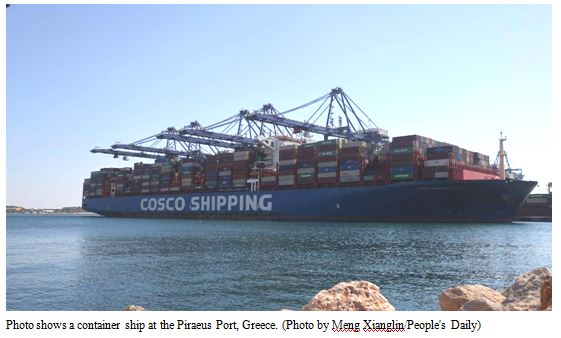
The construction of six major international economic cooperation corridors and the development of surrounding infrastructure have been steadily advancing. Iconic projects such as the Jakarta-Bandung High-Speed Railway, the Mombasa-Nairobi Railway, the Addis Ababa-Djibouti Railway, and the Piraeus Port have been successfully completed. The China-Europe freight service now operates on 84 routes, connecting 211 cities in 25 European countries. The New International Land-Sea Trade Corridor reaches 465 ports in 120 countries and regions worldwide.

Thanks to Belt and Road cooperation, many countries have tackled long-standing infrastructure bottlenecks and integrated into the global supply, industrial and value chains.

American futurists the Nesbitts remarked that never before in history has anyone attempted to connect so many countries and continents in the economic realm by implementing a series of policies.

Over the past 10 years, the “soft connectivity” of rules and standards has been significantly strengthened.

Connectivity is about connecting rules and regulations. When coordination and cooperation are enhanced and regulatory obstacles are reduced, logistics will become smoother and exchanges more convenient.

In the past decade, China and other Belt and Road countries have made positive progress in areas such as aligning work systems, coordinating technical standards, mutually recognizing inspection results, and networking electronic certificates. The benefits of the Regional Comprehensive Economic Partnership have started to emerge, and China ranks first in the world in terms of the number of Authorized Economic Operator agreements.

From 2013 to 2022, China’s trade in goods and non-financial direct investment with other Belt and Road countries grown 8.6 percent and 5.8 percent each year on average, respectively, and their cumulative two-way investment exceeded $270 billion.

According to Belt and Road Economics, a report released by the World Bank, the BRI, when fully implemented, will increase intra-BRI trade by 4.1 percent.

Over the past 10 years, the “people-to-people connectivity” among partner countries has become increasingly splendid.

Connectivity is about connecting the hearts of people. With enhanced mutual understanding, countries can achieve better communication and be more successful in their endeavors.

The 600 wells drilled by a Chinese company in Malawi have become “wells of happiness” benefiting 150,000 local people. The Luban Workshop has imparted vocational skills to young people in Tajikistan and other countries. China’s Juncao technology has taken root in over 100 countries, becoming a “grass of prosperity” for local people…

The BRI adheres to a people-centered development philosophy, and focuses on eliminating poverty, increasing employment and improving livelihood, so as to ensure that the fruits of cooperation benefit the people of all countries involved.

The BRI promotes sharing of development experiences, thus reinforcing many countries’ confidence in pursuing development paths suited to their national conditions.

The BRI also fosters a stronger people-to-people bond, building mutual appreciation, understanding and respect among the peoples of participating countries.

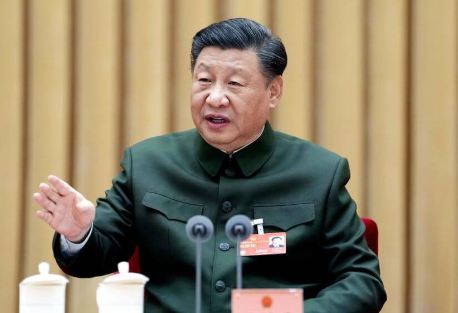
“We need to promote a global partnership of connectivity to achieve common development and prosperity. I am confident that as we work closely together, we will transcend geographical distance and embark on a path of win-win cooperation,” said Chinese President Xi Jinping.

Currently, economic globalization is facing headwinds, and global trade remains sluggish. The importance of strengthening connectivity has become even more prominent.

At the upcoming third Belt and Road Forum for International Cooperation, China will collaborate with all relevant parties to outline a new blueprint for connectivity, promote coordinated and interconnected development and inject new impetus into the recovery of the world economy.
China’s economy keeps recovering in first three quarters

China's economy keeps recovering in first three quarters

By Liu Zhiqiang, People’s Daily

China’s GDP grew 5.2 percent year on year in the first three quarters of 2023, reaching 91.3 trillion yuan (about $ 12.7 trillion), according to statistics recently released by the country’s National Bureau of Statistics (NBS).

The growths in the first, second and third quarters were 4.5 percent, 6.3 percent and 4.9 percent, respectively.

In the first three quarters, China’s economy withstood downward pressure and continued to recover, said Sheng Laiyun, deputy head of the NBS, during a press conference on Oct. 18.

Particularly in the third quarter, multiple sectors and indicators showed positive changes, and the trend of overall economic recovery has become even more prominent, he added.

Deducting the base effect, the average two-year growth in the January-September period this year stood at 4.4 percent, 1.1 percentage points higher than the Q2 figure. China’s GDP increased by 1.3 percent quarter-on-quarter in Q3, 0.8 percentage points higher than that of the second quarter.

Whether looking at year-on-year growth in the third quarter or cumulative growth in the first three quarters, China was among the top-performing major economies, Sheng said.

Employment performance was better. In the first three quarters, the surveyed urban unemployment rate nationwide was 5.3 percent, a decrease of 0.3 percentage points compared to the same period last year, and it improved month by month. In September, this figure stood at 5 percent, 0.2 percentage points down from August.

Overall price levels remained stable. In the January-September period, China’s consumer price index (CPI) went up moderately by 0.4 percent, and the producer price index (PPI) for industrial products fell by 3.1 percent year on year, with a narrowing decline for three consecutive months.

In particular, in September, the PPI decreased by 2.5 percent year-on-year, nearly 3 percentage points less than the lowest point in June, indicating a stable and improving domestic demand.

High-quality development was steadily advanced. For example, innovation momentum remained abundant. In the first three quarters, investment in high-tech industries grew 11.4 percent year-on-year, with the production of electric vehicles, lithium-ion batteries, and solar cells maintaining rapid growth. Also, resident income increased steadily. In the first three quarters, the per capita disposable income of residents nationwide was 29,398 yuan, up 5.9 percent in real terms after deducting price factors, higher than GDP growth.

“These positive changes fully demonstrated that China’s economy has continued to recover and improve in the first three quarters, and also highlighted the tremendous resilience, potential, and vitality of the Chinese economy,” Sheng said.

Looking ahead, Sheng said growth will likely pick up in the fourth quarter given the continued recovery trend and stimulus policy measures taking effect gradually.We are very confident in achieving the annual target,” he said.

Consumption will continue to recover and improve. Sheng Laiyun explained that in the first three quarters, commodity consumption, service consumption, and household consumption expenditure have steadily rebounded, and local governments are accelerating the implementation of policies to promote consumption. Additionally, improvement in employment and growth in residents’ income have laid a foundation for the recovery and growth of consumption, he added.

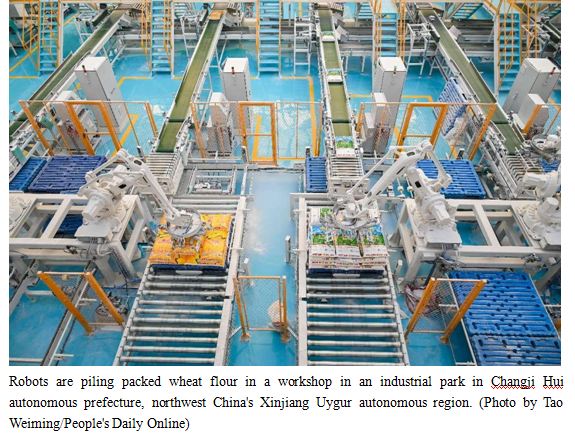
The industrial economy also bounced back steadily. In the first three quarters, the value-added industrial output of enterprises above designated size grew 4 percent year on year. In Sheng’s view, a series of operational indicators have also released positive signals: purchasing managers’ index returned to expansion territory; PPI declines narrowed for 3 consecutive months; industrial profits turned positive in August; in the first three quarters, the capacity utilization of industrial enterprises was 74.8 percent, and the sales-output ratio of industrial enterprises above designated size was 96.8 percent, up 0.4 and 0.6 percentage points respectively from the first half.

“Some of the positive changes in the economic sphere are preliminary, and the sustainability of these changes needs further observation. The foundation for stable economic recovery still needs to be consolidated,” said Sheng. He added that in the next stage, it is crucial to ensure policy implementation and further cement the foundation for economic rebound.

Man in Inner Mongolia leads fellow farmers to prosperity through horse-head fiddle manufacturing

Man in Inner Mongolia leads fellow farmers to prosperity through horse-head fiddle manufacturing

By Wu Yong, People’s Daily

The horse-head fiddle, also known as the morin khuur, is a representative musical instrument of the Mongolian ethnic group. It is named so because of its neck surmounted by a carved horse head. The making of a horse-head fiddle involves dozens of processes, and high craftsmanship is required to manufacture a great one.

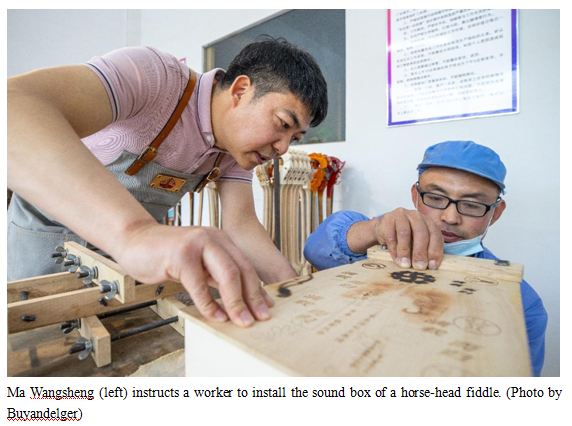
In a workshop of a horse-head fiddle factory run by farmer-turned craftsman Ma Wangsheng in a business incubator for university students in the economic and technological development zone of Ulanhot, Hinggan league, north China’s Inner Mongolia autonomous region, more than a dozen craftsmen were busy making horse-head fiddles, while Ma was providing detailed instructions to each of them regarding important aspects to focus on.

“The horse-head fiddle has changed my life. The craftsmen here are also farmers, and I want to make their lives better via the business of horse-head fiddle manufacturing,” Ma said.

Since last year, Hinggan league has been implementing a rural craftsman nurturing program, which, by continuously improving training systems and strengthening evaluation and incentives, aims to tap the leading role of rural craftsmen in driving the development of characteristic industries, with a goal to increase the income of farmers and herdsmen through imparting practical skills.

When Ma was 19 years old, he worked part time as a student and developed a connection with the horse-head fiddle. He told People’s Daily that making a horse-head fiddle involves several major processes, including material selection, cutting, and the manufacturing of the sound box, neck, and horse head. These processes are further broken down into dozens of smaller steps, each of which captivates him, he added.

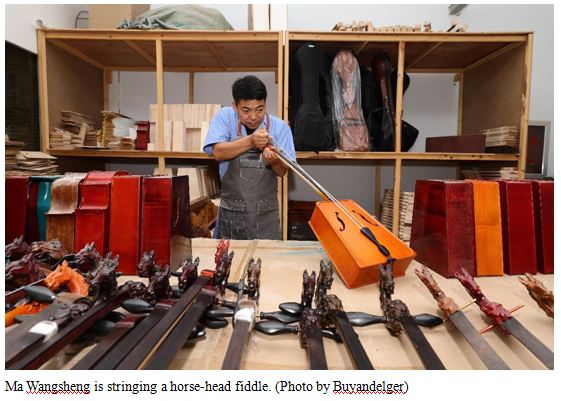
As a stringed instrument, stringing is one of the key steps for making a horse-head fiddle. Ma explained that the strings of the horse-head fiddle are made of two bundles of nylon threads, with each thread thinner than a hair.

“Only by ensuring each strand maintains its position and order, and the tension across all the strings is even, the tone can be made clear and resonant after stringing. Otherwise, it will sound ‘muted’,” he said.

The People’s Daily reporter took a bundle of strings that Ma had prepared and tried stringing it following Ma’s demonstration. Though it looked simple, the reporter had to use all his strength. His fingers ached but the strings were still unevenly tightened, producing nothing but “muted strings.”

“It takes practice to perfect the technique. It took me about seven or eight years of practice to be able to string the instrument so that the tones produced are consistently clear and resonant,” Ma noted.

In 2022, the man’s exquisite craftsmanship earned him recognition as a representative inheritor for making stringed instrument of the Mongolian ethnic group, an intangible cultural heritage of Hinggan league.

Today, Ma’s factory employs over 20 workers, all from nearby villages. Craftsman Bagertule was once a farmer in a neighboring village. When the factory first opened, he worked for the factory in his spare time. Under Ma’s guidance, Bagertule’s fiddle-making skills grew increasingly adept, and he became a full-time carver of the fiddles’ horse heads. Last month, he earned a salary of 13,000 yuan ($1,807).  

In June this year, Ma was awarded the title of advanced rural craftsman in Hinggan league. This honor was intended to inspire him to remain deeply rooted in his community, using his practical expertise to lead farmers and herdsmen in cultivating distinctive local industries and boosting incomes.

Rural craftsmen are mainly those engaged in traditional crafts and rural handcraft industries. They remain deeply embedded in the countryside, inheriting and advancing traditional skills as well as adapting and applying them. These craftspeople catalyze development of local industries and employment opportunities for farmers.

In November 2022, the National Rural Revitalization Bureau along with seven other departments jointly released a guidance on nurturing rural craftsmen. Based on the document, Hinggan league formulated relevant methods for identifying and nurturing rural craftsmen.

“The evaluation and certification of craftsmen is intended to both inherit fine traditional culture and promote rural cultural revitalization, as well as to boost rural industrial development and invigorate the rural craftsmen group. We hope to build brands of rural craftsmen and drive steady income growth for the people,” said Wang Dayi, an official in Hinggan league.

Since last year, Hinggan league has cultivated and certified over 400 rural craftsmen across various domains including agriculture, construction, home services, rural e-commerce, and traditional crafts. Around 4,000 people have been employed or started their own businesses under the mobilization of these craftsmen. Hinggan league has also accredited 45 vocational skill training institutions to train more rural craftsmen.

“I didn’t expect making horse-head fiddles could earn me the title of rural craftsman. This is tremendously encouraging as I continue my instrument-making endeavor,” Ma said excitedly.

It is learned that to better leverage the leading role of rural craftsmen, Hinggan league provides incentive mechanisms to support them in establishing innovation and entrepreneurship incubation and training bases. Priority services and subsidies are also given to rural craftsmen, including information technology support, financing assistance, and more.

“I owe today’s success to the government’s policy support. From the initial startup period, I have benefitted from interest-free startup loans, free venue usage and other preferential policies,” Ma explained.

“I will do my best to give back to society.” After being named a rural craftsman, Ma felt an even greater sense of responsibility. He said he aims to engage more farmers and herdsmen in horse-head fiddle production, so that they can gain more money and live better lives.

BRI cooperationushers in heartening stories of the times

BRI cooperationushers in heartening stories of the times

By Guo Jiping, People’s Daily

The third Belt and Road Forum for International Cooperation (BRF) is slated to take place in Beijing from Oct. 17 to 18. Themed “High-quality Belt and Road Cooperation: Together for Common Development and Prosperity”, the forum, to be held on the 10th anniversary of the Belt and Road Initiative, is set to bring together representatives from over 140 countries and more than 30 international organizations.

Since it was proposed 10 years ago, the BRI has ushered in many heartening stories of cooperation of the times.

British scholar Martin Jacques has pointed out that it is not an exaggeration to argue that over the decade of its existence the BRI has “changed the world”.

A reviewof the BRIcooperation in the overall context of globalchanges and development of the times can help better understand how ithas changed the world.

The BRI was proposed at a time when the deep impacts of the GlobalFinancial Crisis continued to emerge, and the international community faced the common task of exploring new growth points and starting a new cycle of world economic growth.

At that time, the foundations of global economic growth were unstable, trade and investment were sluggish, and economic globalization suffered setbacks while imbalances in development intensified.

In an effort to help the international community jointly meet the challenges of the times and overcome obstacles to development through cooperation, China proposed the BRI, a solution full of Oriental wisdom.

“The Belt and Road Initiative embodies our pursuit of common development. The Initiative aims to break development bottlenecks, narrow development gaps and promote the sharing of development fruits among countries. It envisions a community of common development where we work together through thick and thin for a shared future,” Chinese President Xi Jinping pointed out.

Focusing on the fundamental issue of development, the BRI aims to realize economic integration, interconnected development, and the sharing of achievements through the alignment of development strategies, injecting impetus into global economic recovery.

In June 2019, the World Bank released a special research report, whichpresented the concept of “Belt and Road Economics”. According to the report, BRI transport projects,if fully implemented, could contribute to lifting 32 million people who live on less than $3.20 a dayfrom moderate poverty, and are estimated to increase trade by as much as6.2 percent for the world.

Development is an inalienable right of all countries, not a privilege reserved for a few. However,the reality in recent years is that the global development gap continues to widen, andimbalanced development has become the biggest imbalance in today’s world.

The BRI has unleashed the development potential of developing countries and promoted balanced, coordinated and inclusive global development.

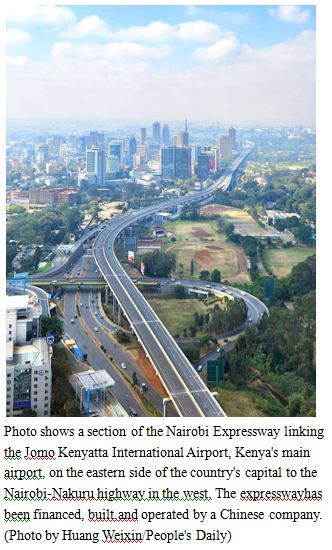
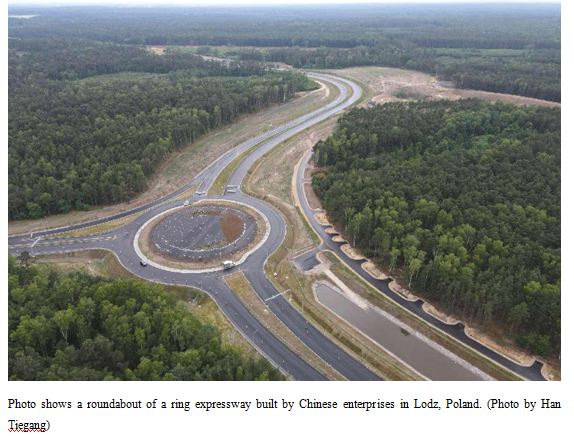
It has helped many countries improve infrastructure, establish their own industrial systems, and solve long-standing problems such as power and talent shortages.Thanks to cooperation projects under the framework of the BRI, many countries have built their first expressway, first modern railway, first industrial park, among other key infrastructure facilities.

A foreign scholar noted that the BRIhas created development opportunities for countries in the Global South and changed the prospects for many developing countries.

For a long time, some developing and least developed countries have become “forgotten corners” in the tide of economic globalization. The international community has increasingly recognized the need to reform the traditional global economic governance model and establish a new global development philosophy that is fair and inclusive.

Upholding the aim of facilitating policy coordination, infrastructure connectivity, unimpeded trade, financial integration and closer people-to-people ties, the BRIhas promoted connectivity over land, maritime, air and cyberspace.

It has facilitated the building of high-quality, sustainable, risk-resilient, reasonably priced, inclusive and accessible infrastructure, promoting the orderly flow of production factors, efficient allocation of resources, and deep integration of markets. This has helped more countries better integrate into global supply, industrial, and value chains, making it an effective solution to promote healthy economic globalization and build an open world economy.

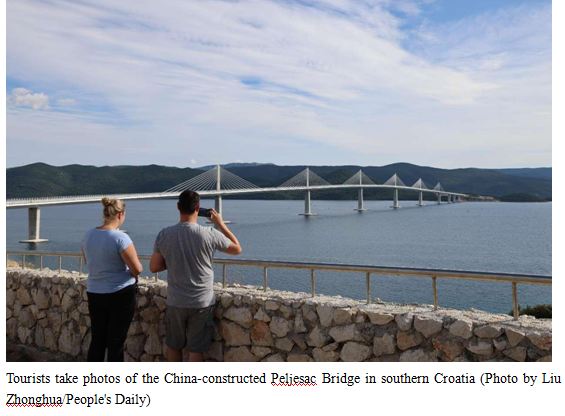
For many countries, the development opportunities brought about by the BRI are unprecedented. Because of these unprecedented development opportunities, Kazakhstan, the world’s largest landlocked country, has gained access to the sea, Croatians held grand celebrations on the day the Peljesac Bridge opened,Madagascar’s PresidentAndryRajoelina joined the public in cheering “Goodbye, mud!” at theopening ceremony of the Route Nationale 5A after a renovation project. The list goes on.

The BRIhas brought to the world a new type of economic globalization and a new model of global economic governance.

The BRI is very timely and is a better benchmark for economic globalization, said former German President and former International Monetary Fund Managing Director Horst Koehler.

BRIcooperation represents a new model of international relations and world trade that will make globalization fairer and more humane, pointed out former Kyrgyz President Almazbek Atambayev.

Publishing cooperation promotes mutual learning between China, Arab countries

Publishing cooperation promotes mutual learning between China, Arab countries

By Zhang Zhiwen, People’s Daily

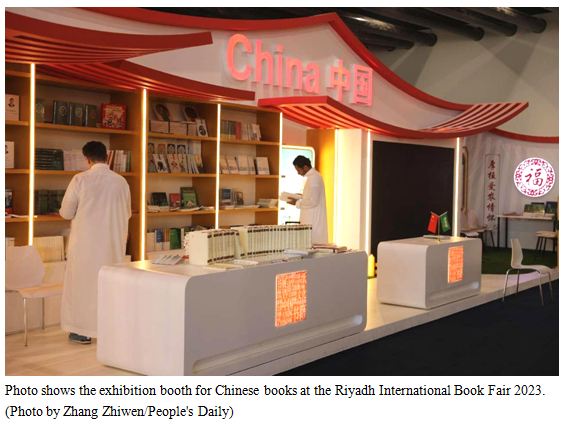
The Riyadh International Book Fair 2023 recently concluded in Riyadh, capital of Saudi Arabia. As one of the largest book exhibitions in the Arab world, the event was attended by over 1,800 publishing houses from some 30 countries and regions, and received over 1 million visits.

During the book fair, Chinese publishing companies gathered to showcase a collection of excellent China-themed books to Arab readers. Various cultural exchange activities between China and Saudi Arabia, as well as China and other Arab countries, were held to inject new vitality into promoting China-Saudi Arabia publishing cooperation and enhancing mutual understanding and exchange between civilizations.

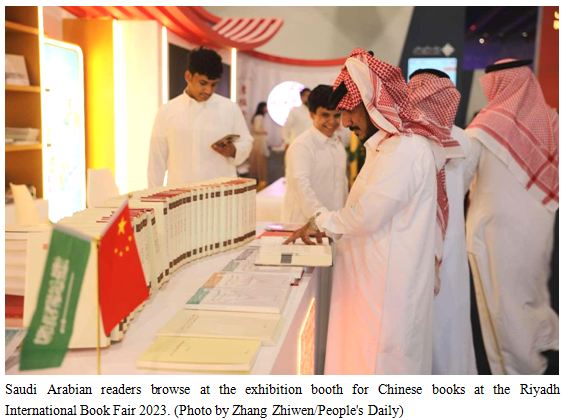
An exhibition booth in the exhibition hall No. 3 with an eye-catching red color caught the attention of many visitors. Neatly arranged on several rows of shelves were China-themed books in Chinese, Arabic, English, and other languages. Among them were notable titles such as “Xi Jinping: The Governance of China” and various books on Chinese history, philosophy, and tourism.

Bayt Al-Hekma Cultural Group, a publishing house mainly devoted to the Arabic translation of Chinese books as well as Chinese language learning books and courses, is the sales agent of “Xi Jinping: The Governance of China” in Arab countries. Ahmed al-Saeed, CEO of the group, told People’s Daily that the fourth volume of the book in Arabic is popular among readers in Arab countries.

“Many readers hope to gain a comprehensive, multi-dimensional, and vivid understanding of China’s achievements today through this work,” he added.

As this year marks the 10th anniversary of the Belt and Road Initiative (BRI), many books on Belt and Road cooperation in Arabic were displayed at the book fair, such as “The Belt and Road Comparative Studies on Regional and National Economic Development” and a picture encyclopedia of the Silk Road history. They served as valuable references for readers to gain a deeper understanding of the achievements of the BRI.

Dr. Hamad A. Altowaijri, assistant professor of Economics at the College of Business Administration, Saudi Arabia’s King Saud University, told People’s Daily that the deep synergy between the BRI and Saudi Arabia’s Vision 2030 formed in recent years has forcefully driven the development of the relations between Saudi Arabia and China.

“It is believed that the publishing cooperation between the two countries will inject more wisdom to the steady and long-term development of Saudi Arabia-China ties,” he noted.

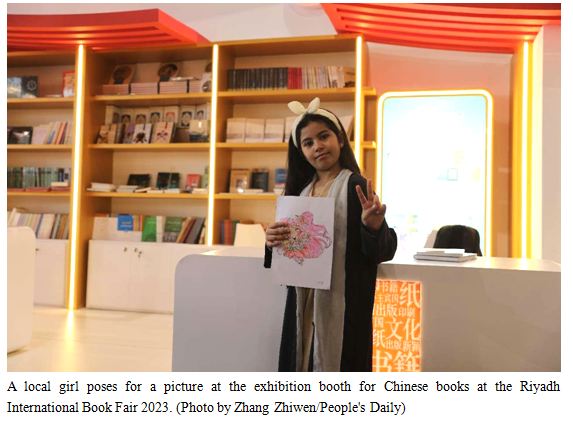
“Do you have any books related to ancient Chinese history?”A 14-year-old boy from Saudi Arabia named Rakan, who was attending the book fair, said that he had been studying Chinese for 10 months, and an increasing number of his friends were beginning to learn the language as well.

“I hope to have the chance to delve into Chinese history, which will allow me to gain a deeper understanding of Chinese culture,” he added.

As China-Saudi Arabia relations continue to develop, there has been a surge of interest in learning the Chinese language in Saudi Arabia.

Since 2019, the Saudi Arabian government has incorporated the Chinese language into the country’s national educational system, and launched a series of measures to stimulate students’ enthusiasm for learning the language.

Relevant enterprises have also released Chinese language textbooks and supplementary materials tailored to the specific conditions of Arab countries and catering for learners at different proficiency levels.

At the book fair, there was a constant flow of Saudi Arabian readers seeking to purchase Chinese language textbooks.

During this book exhibition, China and Saudi Arabia signed an implementation plan for projects in the fields of literature, publishing, and translation, which was a high on the agenda of the event. It marked the beginning of a new chapter of publishing exchange and cooperation between the two countries.

Yahya Mahmoud Bin Junaid, Chairman of Saudi Arabia’s Center for Research and Intercommunication Knowledge, pointed out that China has a long history and a splendid culture, and in recent years, more and more international readers are eager to understand China as the country constantly increases its global influence.

“Arab countries attach great importance to the Arabic-Chinese translation and publishing industry, aiming to help more Arab readers gain a deeper understanding of China through these efforts,” he noted.

In recent years, the copyright trade between China and Arab countries has shown a positive trend of increasing quantity, improving quality, and stable momentum. The annual volume of copyright trade between China and Arab countries has reached 2,000 items for consecutive years, accounting for 10 percent of China’s total copyright trade with countries worldwide.

In response to the new trend of digitalization around the world, publishing institutions in China and Arab countries have collaborated to develop Arabic e-book websites, Arabic digital reading platforms, and China-Arab copyright trade platforms, successfully bringing high-quality books from China and Arab countries into the digital realm.

According to Guan Hong, the Deputy General Manager of China Intercontinental Press, the downloads of the digital reading mobile application launched by the company have exceeded 8.8 million, with users from 175 countries and regions. The application currently ranks second among the digital reading platforms of local publishers in the Arab region, Guan added.

Abdullah Kaabi, Chairman of the Emirates Publishers Association, stated that Arab countries and China make an exemplary model for cross-cultural exchange and dialogue.

In recent years, the book copyright trade between China and the Arab countries has flourished, with Chinese writers gaining popularity among Arab readers, he noted, adding that the experiences of China also provide valuable insights for the development of the publishing industry in Arab countries.

It is hoped that the two sides can continue to strengthen cooperation and exchange in the publishing field, and play a greater role in promoting mutual learning and exchange between the two great civilizations, he remarked.

Nawaz Sharif is back; will it make a difference?

Nawaz Sharif is back; will it make a difference?

Analysis

Ansar M Bhatti

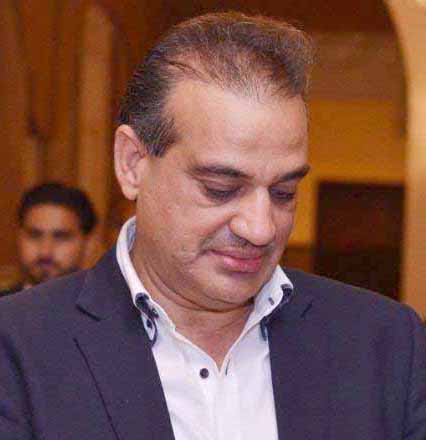
The return of Nawaz Sharif, the PML-N’s leader and former Prime Minister, after nearly four years of self-imposed exile, stirred a wave of poignant moments. As he graced the stage with his presence, the audience witnessed heartfelt scenes, such as his warm embrace with his daughter, Maryam Nawaz, and his younger brother, Shehbaz Sharif.

The sheer scale of the attendance at this homecoming event was undeniably massive, and this is hardly surprising, given the substantial support the PML-N received from the state machinery. It evoked memories of PTI public gatherings, where the turnout was nothing short of phenomenal. However, it’s worth noting that during that era, PTI held a special status with the Establishment, which contributed to the massive crowds they attracted. Nawaz Sharif’s return marks a significant moment in Pakistan’s political landscape, underscoring his enduring influence in the country’s politics.

His return on one hand promises to breathe new life into the PML-N, which has faced significant challenges, particularly following the 16-month tenure in government after the PTI was voted out. On the other hand, it also raises the possibility that the upcoming elections could proceed according to the Election Commission’s previously announced schedule or be delayed by a few weeks. Given the Senate elections scheduled for March 2024, there is a shared interest among the ECP and the participating political parties in ensuring that the electoral process concludes before that crucial deadline.

Nawaz Sharif, during his speech, provided insights into his previous terms in office when, in his view, accessibility was widespread, even for those less fortunate. While avoiding specific reference to the PDM period, he attributed the entirety of the nation’s troubles to the PTI government. Without explicitly mentioning Imran Khan, the former prime minister questioned the authenticity of his religious gestures. According to Sharif, the PTI chairman publicly counting beads attempted to project himself as a devout figure, which, in Sharif’s opinion, did not align with his actions.

Nawaz Sharif exhibited a remarkable degree of discretion when discussing his removal from power. Though he refrained from directly naming the Establishment, his insinuations left little doubt about who he believed was responsible for his ouster. With a touch of literary finesse, he chose to invoke the words of Mirza Ghalib, hinting at the immense reservoir of untold secrets. In a poetic flourish, he implied that if he were to reveal the full extent of what transpired in the past, his tears alone could inundate the entire world. This combination of careful words and poetic allusions conveyed the depth of his experience while maintaining a sense of dignity and intrigue. However, the real question remains: can he maintain this level of self-control in the days ahead?

Nawaz Sharif has a long history of strained relations with the establishment in Pakistan. Each time he clashed with the powerful stakeholders in our political system, it ultimately led to his removal from office. In his three previous tenures as prime minister, he was unable to complete a full five-year term due to these confrontations. Considering his track record and his approach to dealing with establishment involvement in political matters, it’s reasonable to predict that even if, by some stroke of luck, he manages to come into power for the fourth time, the outcome may not be different from what we’ve seen in the past.” Winning back the trust of the Establishment may indeed pose a formidable challenge for him. His closest allies have repeatedly counseled him that unless he reconciles with the Establishment, his political prospects could remain in the shadows.

He presented a comprehensive 9-point agenda aimed at steering the country out of its current crises. However, it’s worth noting that two vital aspects appear to be absent from this agenda. Firstly, there is a conspicuous absence of any clarification regarding the role of the Establishment in politics. Secondly, there is a noticeable lack of details about his vision for combating corruption in Pakistan.

The absence of a clear stance on the role of the Establishment in politics may be due to the significant challenges it poses to his survival despite the fact that he earnestly believes addressing this issue is crucial for the country’s democratic stability and transparency.

Furthermore, the urgent need to tackle corruption cannot be overstated. Corruption has been a persistent roadblock to Pakistan’s progress, despite its abundance of resources. It is high time to address this issue head-on, as it is a major factor contributing to the country’s ongoing struggles. In summary, while the 9-point agenda is a promising step, it should be supplemented with a clear strategy for dealing with the Establishment’s role in politics and a robust plan for eradicating corruption in Pakistan to truly lead the nation out of its current crises.

All said and done, there seems a long way ahead for him to be able to present himself as the future prime minister of Pakistan. Since the PML-N seems to have been ‘chosen’ as the next ruling party, there is a strong possibility that Nawaz Sharif will receive some legal relief from the courts. However, the complete exoneration of his sentence will require him to remain cautiously optimistic until he obtains an unequivocal clean chit, which is a prerequisite for his eligibility to participate in coming elections.

To break new ground of public communication, culture work in new era

To break new ground of public communication, culture work in new era

By Ren Ping, People’s Daily

A national meeting on the work of public communication and culture was recently held in Beijing. The most important outcome of the meeting was that Xi Jinping Thought on Culture was formally put forward, which is of milestone significance in the history of the Communist Party of China (CPC) in developing public communication and culture.

Xi Jinping, general secretary of the CPC Central Committee, Chinese president and chairman of the Central Military Commission, has maintained an accurate perspective on the trends of collisions taking place worldwide between different ideas and cultures, as well as of the profound changes in Chinese people’s ways of thinking, putting forward a series of new thoughts, new viewpoints, and new assessments on cultural advancement.

On multiple important international occasions, he has expounded on China’s positions and plans on the culture of the world, the development of civilizations and exchanges and mutual learning among civilizations.

Xi Jinping Thought on Culture is summaries of the practical experience of the cultural advancement under the Party’s leadership in the new era. It has enriched and developed Marxist cultural theories. It demonstrates that the CPC has reached a higher level in its understanding of the right way for the development of socialist culture with Chinese characteristics.

The 20th National Congress of the CPC drew an ambitious blueprint for building a modern socialist country in all respects and advancing the great rejuvenation of the Chinese nation on all fronts through a Chinese path to modernization. According to it, China will build itself into a strong country in culture by 2035 with its cultural soft power growing much stronger.

Culture is a country and nation’s soul. Without full confidence in its culture, without a rich and prosperous culture, the Chinese nation will not be able to rejuvenate itself.

Chinese modernization is the modernization of material and cultural-ethical advancement. Cultural development is the fundamental way to satisfy people’s cultural and intellectualneeds and to safeguard people’s cultural rights and interests.

Promoting Chinese modernization is a pioneering undertaking unprecedented in history. It requires inspiring the confidence and fortitude of all Chinese people, and encouraging them to work together.

A country will thrive only if its culture thrives, and a nation will be strong only if its culture is strong. The CPC’s innovative theories for the new era have taken deep roots in the hearts of the people. Socialist core values have spread far and wide. The creative transformation and innovative development of fine traditional Chinese culture continues to advance. Cultural undertaking and industries are booming. The online environment keeps improving. Cultural confidence among all Party members, ethnic groups and people across the country has increased markedly. The national spirit is more determined and upbeat. Full of confidence, the Chinese people are writing an impressive new chapter in China’s development in the new era.

Innovation propels Tibetan carpet industry into new prospects

Innovation propels Tibetan carpet industry into new prospects

By Sun Yi

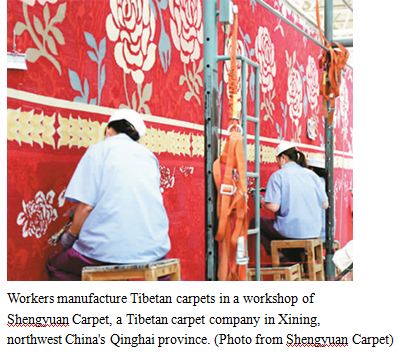
When a Tibetan carpet unfolds before one’s eyes, it’s hard to tell whether it is a functional household item or a work of art because of its distinct ethnic patterns and colors, soft and delicate texture and exquisite craftsmanship.

As one of the world’s three famous carpets alongside Persian and Turkish carpets, Tibetan carpets are renowned far and wide for their vibrant colors, strong ethnic styles, and distinct regional characteristics.

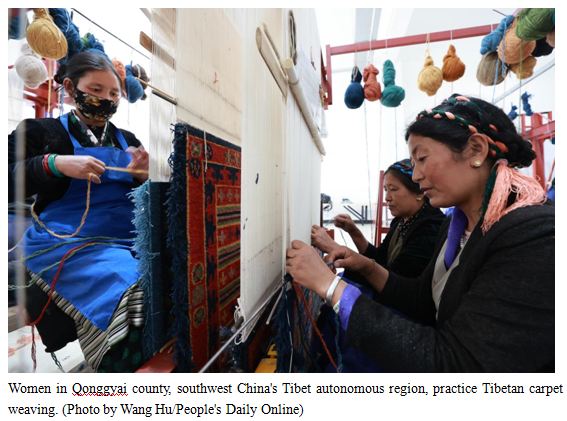
The Tibetan carpet weaving skills have been passed down for thousands of years. In the Neolithic Age, ancient residents of the Qinghai-Tibet Plateau already formed a unique weaving culture.

According to historical records, 3,500 years ago, nomadic tribes there were adept at weaving woolen fabrics into clothes and quilts to fend off the cold. These weaving techniques were handed down generation after generation, forming the Tibetan carpet weaving skills still in use today.

Carrying profound Tibetan culture, the Tibetan carpet evolved from a simple household item into a work of art. Tibetan carpet weaving also grew into a featured industry, with the products being sold worldwide.

The development of the Tibetan carpet industry has not always been smooth sailing. Traditional Tibetan carpets were mostly handmade in small workshops, with high labor and time costs. Facing competition from lower-cost machine-made carpets produced in bulk, many Tibetan carpet companies saw shrinking orders and losses.

In recent years, affected by factors like the COVID-19 pandemic, hotel occupancy was on a decline, which decreased the demand for carpet replacement, hence a depressed Tibetan carpet market.

The ever-changing market demands have pressed Tibetan carpet companies to take the initiative through innovation. A number of leading Tibetan carpet companies have blazed a trail of innovation for the industry.

To better incorporate ancient skills into modern life, some Tibetan carpet companies have combined modern carpet weaving techniques with traditional hand-knotting skills.

They use special materials and techniques on Tibetan carpets, turning their products from hand-woven carpets to machine-woven, hand-knotted, and fluorescent ones.

They are gradually moving away from mass production and traditional marketing models in the past days, and start embracing digital production methods.

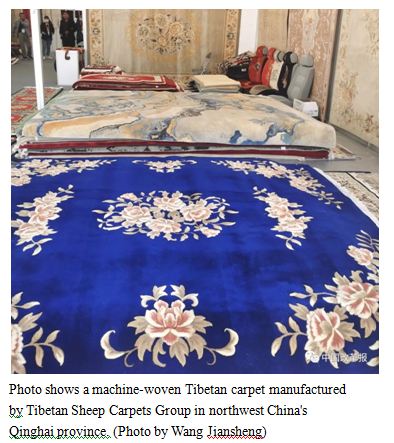
By adopting advanced weaving techniques and innovating pattern designs, a batch of machine-woven Tibetan carpets with cost advantages, fine workmanship, and exquisite patterns are winning the favor of the market.

Nowadays, Tibetan carpet enterprises design patterns and use materials based on customers’ preferences and home decor styles, and customize the sizes of carpets according to the need of customers.

Some Tibetan companies have shifted production from large-scale manufacturing to personalized customization, in order to meet diverse individualized customer demands. They have even developed antibacterial and flame-retardant Tibetan carpets using new technologies to meet modern requirements for eco-friendly home furnishing.

Tibetan carpets from China are seen in many parts of the world, from the Jumeirah Emirates Towers in Dubai to Marriott hotels, and from Las Vegas to Carnival Cruise ships. With continuous innovation in recent years in functions, designs, craftsmanship and standards, Tibetan carpets are increasingly gaining an “international style,” becoming the first choice for many foreign customers.

Tibetan carpets are a treasure of Chinese ethnic traditional crafts. In the interplay between tradition and modernity, in its interaction with the world, the Tibetan carpet industry has undergone an innovative transformation. This not only injects new vitality into the traditional skills passed down over thousands of years, but also provides valuable experience for the industrialization and modernization of other ethnic traditional crafts.

Innovation propels Tibetan carpet industry into new prospects

Hangzhou Asian Games presents openness, inclusiveness to world

Hangzhou Asian Games presents openness, inclusiveness to world

By Zheng Yi, People’s Daily

Since the opening of the Hangzhou Asian Games, many touching moments and brilliant stories have unfolded both on and off the fields.

All-out competitions as well as heartwarming behaviors have emerged. These inspiring stories have shown the splendor of sport and brought people together in friendship.

In the women’s 1500m freestyle final, as all other swimmers reached the finish line, one athlete from Vietnam remained alone in the pool, striving tirelessly to the end. The crowd cheered for her with shouts again and again, paying tribute to her indomitable spirit.

Even finishing last, she forged ahead with all her strength. The competitive arena glorifies not just victory but the sporting ethos of exceeding one’s limits.

In the tennis women’s singles match, Ushna Suhail of Pakistan still wore a radiant smile after her loss. Departing the court, she enthusiastically exchanged badges with Chinese player Zhu Lin.

Though having varied performances, athletes from across Asia united in Hangzhou with a common wish to foster exchange and friendship.

In the men’s 3×3 basketball, players from the Maldives were at a significant height disadvantage compared to their opponents, which made it extremely difficult for them to score inside. Yet the team persevered, tirelessly running outside to seek opportunities to shoot.

One of them said after the game that the opponents were far more competitive, but he and his team still battled on and made progress. Striving bit by bit, they wrote their own story of perseverance at the Asian Games.

In the men’s volleyball final, against the formidable Iranian team, China’s young squad battled with every ounce of effort. Though the long-sought victory eluded them, earning an Asian Games silver after 17 years marked the team’s growth.

“We will depart tomorrow for the Paris Olympic qualifying tournament,” said head coach Wu Sheng of the Chinese team. Continuously learning from its experiences and charting a path for advancement, this young team is setting out afresh with hope, he added.

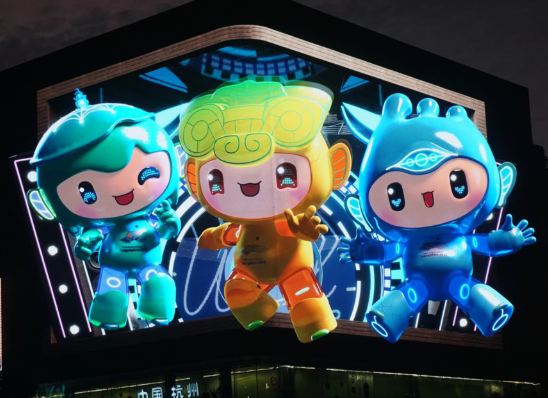
The stories of perseverance at the Hangzhou Asian Games inspire people with their transcendent spirit and hopeful visions. The interactions fostering bonds of friendship between athletes, and between athletes and spectators, have sown the seeds of “Heart to Heart, @Future.” The Hangzhou Asian Games has presented the ethos of openness and inclusiveness to the world.

Work together to broaden Belt and Road as ‘path of happiness’ benefiting whole world

Work together to broaden Belt and Road as 'path of happiness' benefiting whole world

By He Yin, People’s Daily

The high-profile third Belt and Road Forum for International Cooperation is expected to be held in Beijing. It will be not only the grandest event to commemorate the 10th anniversary of the Belt and Road Initiative (BRI), but also an important platform for relevant parties to advance high-quality Belt and Road cooperation.

Together, participants in the forum will learn from past experiences, draw a blue print for future cooperation, and lead Belt and Road cooperation toward better development. They will scale new heights, enhance their partnership, and demonstrate their strength in coping with challenges of the times and building a global community of shared future.

Chinese President Xi Jinping extended sincere invitation to relevant parties at the 23rd Meeting of the Council of Heads of State of the Shanghai Cooperation Organization. He said, “Ten years ago, I proposed the BRI, and on its tenth anniversary, China will hold the third Belt and Road Forum for International Cooperation. I welcome your participation. We should work together to broaden the Belt and Road as a ‘path of happiness’ benefiting the whole world.”

His invitation received warm response. Russia said the BRI conforms to the development of Eurasia, and the Russian side is looking forward to the third Belt and Road Forum for International Cooperation. Vietnam said it firmly supports the major initiatives proposed by Xi and supports China in holding the third Belt and Road Forum for International Cooperation. Hungary said it would actively join the forum.

As of the end of September, representatives from over 130 countries and multiple international organizations had confirmed participation in the forum. It fully indicates the international community’s confidence in and expectation for high-quality Belt and Road cooperation.

Over the past decade, the BRI has transformed from an abstract overall outline into a meticulously detailed blueprint, becoming the most welcomed global public good as well as the largest platform for international cooperation.

By July this year, more than three quarters of all countries in the world and over 30 international organizations have signed Belt and Road cooperation documents with China. The BRI has so far established more than 3,000 cooperation projects and galvanized nearly $1 trillion of investment.

Over the past decade, participating countries have sowed the seed of cooperation and jointly reaped the fruits of cooperation, achieving shared prosperity through mutually beneficial cooperation.

The Asian Infrastructure Investment Bank and the Silk Road Fund have provided financing support for hundreds of projects. The China-Laos Railway has converted Laos from a landlocked country to a land-linked one. The Jakarta-Bandung High-speed Railway is the first one in Southeast Asian countries to run at a speed of 350 km/h. The Mombasa–Nairobi Standard Gauge Railway has boosted local economic growth by over two percent.

The fruitful outcomes of the BRI fully proves that the “belt of development” and “road to happiness” for all humanity will deliver more prosperity to more people and constantly enhance the sense of fulfillment and happiness for people of participating countries, as long as it follows the principle of wide consultation, joint contribution and shared benefits, pursues open, green and clean cooperation, aims at high-standard, sustainable and people-centered growth and continues seeking high-quality development.

The third Belt and Road Forum for International Cooperation will further build consensus and pull efforts from relevant parties, so as to deepen Belt and Road cooperation.

Today, the world has entered a new period of turbulence and transformation. It is undergoing major shifts, division and regrouping, leading to more uncertain, unstable and unpredictable developments. The journey of global economic recovery remains long and tortuous. Unilateralism and protectionism are mounting. Particularly, certain countries are pursuing decoupling and severing of supply chains in the name of “de-risking,” posing threats against the security and stability of international industrial and supply chains.

Facing common challenges, relevant parties need to strengthen political mutual trust, connectivity, trade facilitation, financial integration, and people-to-people exchanges, actively launch cooperation in health, green development, digital industry and innovation, foster new areas of growth, and demonstrate their will and capability to share opportunities, tackle challenges and jointly build a better future.

The third Belt and Road Forum for International Cooperation will include an opening ceremony, three high-level forums on connectivity, green development and digital economy, and six thematic forums on trade connectivity, people-to-people communication, think tank exchanges, clean Silk Road, subnational cooperation and maritime cooperation. A CEO conference will also be held during the event.

Like-minded partners will come together to discuss cooperation plans and outline a development blueprint. Together, they will practice true multilateralism and set new milestones of Belt and Road cooperation. This will inject confidence into addressing the challenges of the times and achieving global sustainable development.

“Buteither in good times or bad, either on a smooth road or a thorny path, we will uphold the spirit of partnership, keep in mind what brought us together, and march forward without hesitation,” said Xi at the welcoming banquet of the second Belt and Road Forum for International Cooperation. Looking forward to the third Belt and Road Forum for International Cooperation, each participant should have the belief that people of all countries deserve a better future, and Belt and Road cooperation will definitely bring about a better world.

Stay Connected

64FansLike
60FollowersFollow

Latest Reviews

Exchange Rates

USD - United States Dollar
EUR
1.17
GBP
1.35
AUD
0.72
CAD
0.73