Home Blog Page 1141

Why has China achieved remarkable successes in promoting cooperation under Belt and Road Initiative?

Why has China achieved remarkable successes in promoting cooperation under Belt and Road Initiative?

By Guo Jiping, People’s Daily

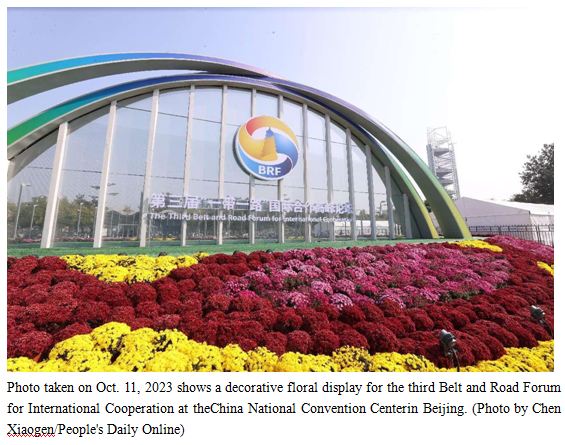
China will host the third Belt and Road Forum for International Cooperation (BRF) in Beijing from Oct. 17 to 18. It is reported that representatives from over 140 countries and more than 30  international organizations have confirmed their attendance at the event.

Despite the turbulent international situation, China has rolled out the red carpet to welcome guests from all over the world, which demonstrates the country’s unswerving commitment to promoting world peace and development.

Over the past decade since Chinese President Xi Jinping proposed the Belt and Road Initiative (BRI), stories of win-win cooperation have continued to unfold along this public road of shared opportunities and common development.

So far, over 150 countries and more than 30 international organizations have signed more than 200 BRI cooperation agreements with China;the Asian Infrastructure Investment Bank has grown from 57 founding members to 109 members,which account for 81 percent of the world’s population and 65 percent of global GDP; andmore than 80 routeshave been launched for the China-Europe freight trains,reaching 217 cities in 25 European countries.

Experience over the past 10 years has fully proven that the BRI is an open and inclusive platform and a global public good jointly built by all partners.

International analysts have eagerly sought to understand what allowed China to conceive the grand initiative and accomplish significant achievements in furthering its development.

The BRI is the result of China’s reflections on the future and destiny of humanity. In March 2013, in the face of the profound questions of “What is wrong with the world?” and “What should we do about it?”, which concern the world, history and the times, Xicreatively proposed the concept of building a global community with a shared future for mankind.

By launching the BRI, China aims to put this concept into practice and build a practical platform and open up paths for creating an open, inclusive, clean and beautiful world that enjoys lasting peace, universal security and common prosperity.

The BRI stemmed from China’sunshakeable pursuit of world peace and development. China unswervingly follows the path of peaceful development. It safeguards world peace to ensure its own growth, and contributes to world peace through its own development.

Taking the path of peaceful development is China’s response to international concerns about its development direction, and also a reflection of the confidence and consciousness of the Chinese people in achieving their development goals.

By proposing the BRI, China strives not only to pursue its own development and enhance its capacity to safeguard world peace, but also to benefit the world by strengthening the forces for upholding world peace and development.

In pursuing Belt and Road cooperation, China will not resort tothe outdated geopolitical maneuvering, but will create a new model of win-win cooperation. It will not form “a small groupdetrimental to stability”, but will try to create “a big family of harmonious coexistence“.

The success of the BRIrepresents the success of China’s development path and experience. China has achieved the two miracles of rapid economic growth and long-term social stability,resolved its problem of absolute poverty once for all, and realized its first centenary goal of building a moderately prosperous society in all respects. The fundamental reason for these achievements is that China has found a successful development path that is suited to its national conditions and people’s aspirations and supported by its people.

With nine percent of the world’s arable land and six percent of the freshwater resources, China feeds nearly one-fifth of the world’s population. In 2022, China’s GDP expanded to 121 trillion yuan ($16.56 trillion), while its share of the global economy rose to 18 percent, demonstrating remarkable development achievements.

The success of China’s development path has strengthened other developing countries’ determination to pursue paths based on their own national realities, and China’s great achievements in development have boosted other developing countries’ confidence in realizing national prosperity, national rejuvenation and improving people’s wellbeing. The BRI has provided valuable opportunities for other developing countries to draw on China’s development experience.

The success of the BRI is the success of China’s commitment to open development. Only when a country is strong enough can it have the confidence to open its doors to the world, and opening up in turn enhances itsprosperity. The BRI is a major initiative China has launched to expand opening up. It is not a solo endeavor by China, but a collaborative effort involving all stakeholders.

In the face ofa rising tide of de-globalization, China remains firmly committed to high-level opening up, creatingan even brighter future for cooperation under the BRI.

The BRI has continuously broken deadlocks, removed bottlenecks and spurred innovations, showing the world that only by building an open world economy can countries improve the wellbeing of their peoples.
As former Spanish Prime Minister Jose Luis Rodriguez Zapatero pointed out, the BRI upholds an open and inclusivevision for development that transcends borders and zero-sum game mindset, which is precisely the development philosophy the world urgently needs today.

CIIE’s spillover effect highly anticipated

CIIE's spillover effect highly anticipated

By Liao Ruiling

The sixth China International Import Expo (CIIE) is scheduled to be held in Shanghai from Nov. 5 to 10 this year, signifying the first complete return to in-person exhibitions for the event since COVID-19.

Attending trade fairs and showcasing products is one of the channels for many companies to explore new markets and boost their sales. As a major international exhibition platform for China’s opening up, the CIIE is widely recognized by businesses as a crucial channel for expanding their market presence.

Many enterprises said they were looking forward to the event, emphasizing their hope to leverage this opportunity to deepen their foothold in the Chinese market.

Hou Mingjuan, vice-president of Qualcomm, said that Qualcomm was among the first group of American companies to participate in the inaugural CIIE back in 2018. Over the following years, Qualcomm has become a regular participant in the expo, and this year it has already begun preparations for the event, she added.

“Honeywell will focus on showcasing our innovative technologies and solutions at this year’s CIIE, and we will also unveil our flagship product. Through this global platform, we hope to leverage our company’s strengths in aviation, energy transformation, digitalization, and automation to explore more mutually beneficial opportunities with Chinese enterprises,” said Yu Feng, President of Honeywell China.

Why do companies regard the CIIE as a “major event” of the year? Many attribute it to the significant spillover effects of the exhibition.

“The CIIE is an important platform for companies to showcase new technologies and products, as well as a vital channel for staying updated on the latest industry trends and information. Through major exhibitions, we have the opportunity to connect with potential customers and partners. In fact, we met the Ambassador of Mongolia to China at the CIIE, which led to the application of our electrochemical air management products in Mongolia’s National Center for Maternal and Child Health,” said Chen Zhihua, chairman and general manager of Chinese high-tech enterprise Qingyue Technology.

“It can be said that the CIIE injects more momentum into the development of small- and medium-sized enterprises like us,” he added.

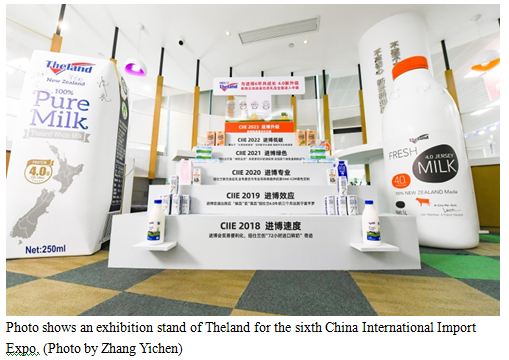
“The CIIE has become a significant platform for China to promote high-level opening-up and a crucial bridge connecting foreign enterprises with the Chinese market,” remarked Yan Zhijun, marketing director of Theland, a dairy farm group from New Zealand.

As a staunch supporter of the CIIE, Theland has been showcasing its latest products at the expo for five consecutive years, Yan noted.

He said that the growing demand of Chinese consumers for high-quality products has provided new business opportunities for global companies.

With the support of the CIIE, Theland has experienced rapid development in the Chinese market. According Yan, one of every three cans of milk powder exported from New Zealand to China is manufactured by Theland.

At the same time, China’s trade facilitation has been continuously improving. Yan said that when Theland first entered the Chinese market, China’s tariff on milk from New Zealand was 15 percent. Thanks to China’s efforts in recent years to implement preferential policies, the tariff on liquid milk from New Zealand, for example, has now been fully exempted, Yan added.

In line with the trend of China’s high-quality economic development, exhibits to the CIIE from around the world are becoming more and more tech-savvy in recent years, with a stronger emphasis on their green and low-carbon performance.

“Driven by the goal of high-quality development, China is vigorously promoting the deep integration of digital technology and the real economy, while continuously pushing for a green transformation of its development model,” Yu said.

According to him, Honeywell, pursuing sustainable development, designs around 60 percent of its new products with an aim of improving customers’ environmental performance and social benefits.

The company’s core business aligns with the demands and development trends of the Chinese market, he said, adding that the trend of high-quality development of the Chinese economy also creates development opportunities for Honeywell and other companies.

As many multinational companies continue to expand their presence in the Chinese market, they are also increasing their investment in China.

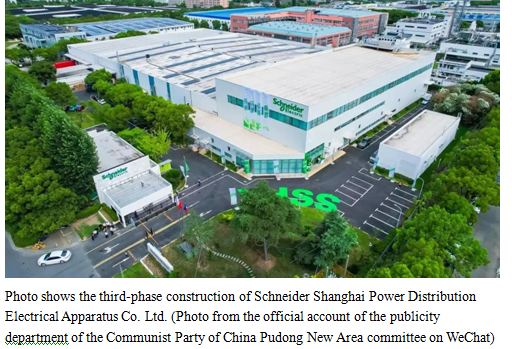
Recently, Schneider Shanghai Power Distribution Electrical Apparatus Co. Ltd. had its third-phase construction completed, erecting a brand-new digital and automated “zero-carbon factory.”

With an operational area of 6,500 square meters, the factory is expected to increase its overall production capacity by 30 percent. In the future, more low-voltage circuit breakers for energy management will be produced in this factory, contributing to the safe and stable operation of China’s power system and accelerating the green and low-carbon transformation of the energy system.

According to statistics, the number of newly established foreign-invested enterprises in China reached 24,000 in the first half of this year, representing a year-on-year increase of 35.7 percent. The quality of foreign investment continued to improve. Foreign investment in high-tech industries grew 7.9 percent year-over-year, accounting for 39.4 percent of total foreign investment, up 3.9 percentage points. Of this, foreign investment in high-tech manufacturing increased 28.8 percent.

Ten years on, Shanghai free trade zone becomes pacesetters of opening-up

Ten years on, Shanghai free trade zone becomes pacesetters of opening-up

By Liu Shi’an, Xie Weiqun, Fang Min, People’s Daily

Building pilot free trade zones (FTAs) is an important strategic measure of China to comprehensively deepen reform and expand opening up in the new era.

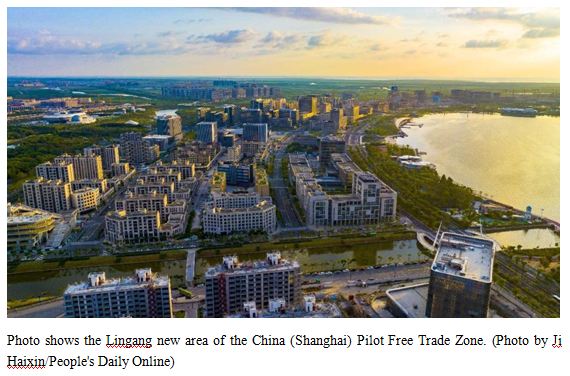
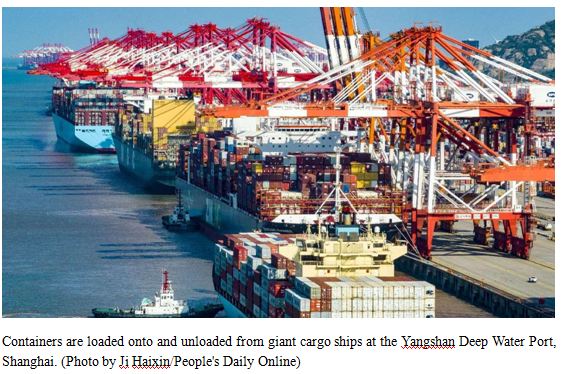
This year marks the 10th anniversary of the establishment of China’s first pilot FTZ in Shanghai. Over the past decade, the China (Shanghai) Pilot Free Trade Zone, or Shanghai FTZ, has achieved a series of important outcomes in liberalizing and facilitating trade and investment, promoting financial openness and innovation, and enhancing governance capability of the government.

Aligned with international economic and trade practices, the Shanghai FTZ introduced a negative list for foreign investment upon its establishment. Market access for foreign investment has transitioned from a review-based system to a filing-based one. Today, there number of items on the list has been shortened to 27 from 190 , with no restrictions imposed on the manufacturing sector.

This July, leading circular materials technology company Umicore headquartered in Belgium set up a technology development company in the Waigaoqiao Bonded area of the Shanghai FTZ, with an investment of 15 million euros ($15.92 million).

“Less items on the negative list mean less restrictions. The market access for foreign investment is getting wider and wider, which better facilitates the investment of enterprises,” said Zhang Kefang, an executive of Umicore.

As the negative list shortened, the Shanghai FTZ has implemented a number of first-in-China projects in 60 areas of opening up including automobile manufacturing, financial services, medical services, and value-added telecommunications. It promoted the formulation of the systems of pre-establishment national treatment and negative list for foreign investment, as well as their incorporation in the foreign investment law, and introduced the negative list for foreign investment to cross-border service trade and market access sectors.

The establishment of a “single window” platform for international trade marked a significant innovation of the Shanghai FTZ in promoting trade facilitation.

As the head of the planning department of Shanghai-based E&P international, a company specialized in the development of information technology in aspects of international trade and port logistics, Pan Xiaodong was involved in the development of the “single window” platform ten years ago.

“Similar to ‘one-stop online service’ in the field of international trade, this platform seamlessly integrates customs, quarantine, maritime, and border inspection information, greatly facilitating customs clearance and trade,” Pan said.

So far, the “single window” platform has served over 600,000 trade enterprises, facilitating the data processing of more than a quarter of China’s total trade in goods.

The Shanghai FTZ takes institutional innovation as its core task, with a focus on generating replicable and scalable institutional outcomes. Of the 302 institutional innovation outcomes for FTZs promoted nationwide, nearly half were pioneered or synchronously piloted in Shanghai.

Finance is a crucial area for the experimentation of free trade. Speaking of the opening up of the financial sector, Lu Fang, CEO of J.P. Morgan Securities (China) Co., Ltd. noted that foreign investment in the financial sector used to be subject to equity ownership restrictions. “The Shanghai FTZ has been at the forefront of financial liberalization,” Lu added.

The free trade account introduced by the Shanghai FTZ is a “pioneer” in innovative cross-border RMB business, with integrated financial services for cross-border settlement and financing in both RMB and foreign currencies.

As of now, Shanghai has cumulatively opened 144,000 free trade accounts, handling the equivalent of 142 trillion yuan ($19.5 trillion) in cross-border settlement transactions, with an average annual growth of 61 percent. The total financing that enterprises have obtained through free trade accounts in RMB and foreign currencies totaled 2.8 trillion yuan.

International asset management institutions are increasingly flocking to the Shanghai FTZ. Since 2020, nine of the world’s top ten asset management companies have chosen to establish offices in Shanghai’s Pudong New Area.

“We firmly believe in the potential of the Chinese market and will continue to bring our diverse range of resources to Shanghai, exploring new models for the development of asset management companies in China,” said general manager of Schroder Investment Management (Shanghai) Co., Ltd. Zhang Lan.

By combining the expansion of opening up with institutional reforms, Shanghai has been actively promoting the transformation of government functions, innovative management models, optimized operational mechanisms, and a shift in service approaches.

It continuously works to optimize the market-oriented, law-based, and internationalized business environment. It is reported that Shanghai has delegated over 100 municipal-level administrative approval matters to the government of Pudong New Area.

“Recently, a new Lawson convenience store opened in Pudong, and the procedures went smoothly,” said Jin Ye, deputy director of the business risk control department of Shanghai Lawson, Inc.

“In the past, it would take nearly two months to complete the procedures for opening a store, but now it only takes two to three days,” Jin noted.

After a decade of hard work, the Shanghai FTZ has achieved remarkable success. By the end of 2022, over 84,000 enterprises had been newly registered in FTZ, along with more than 14,000 new foreign-funded projects. The total amount of foreign investment reached $58.6 billion.

In 2022, Pudong New Area’s GDP hit 1.6 trillion yuan, 2.5 times higher than that of 2013. Since its establishment, the Lingang new area of the Shanghai FTZ has experienced an average annual GDP growth of 21.2 percent.

Intelligent technology at Hangzhou Asian Games

Intelligent technology at Hangzhou Asian Games

By Wang Hailin, People’s Daily

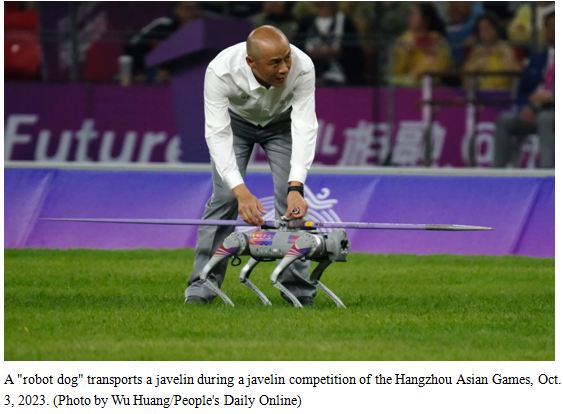
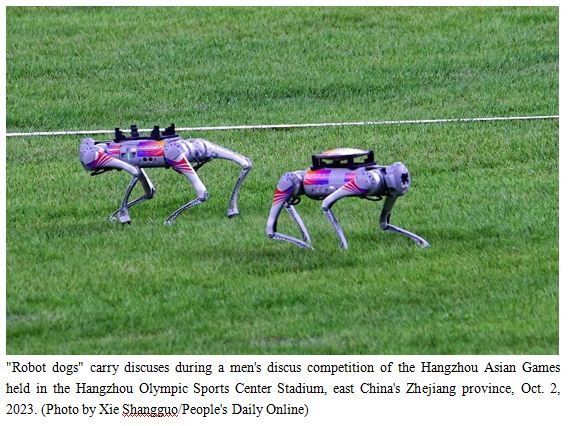
At the track and field events of the Hangzhou Asian Games, people’s attention was drawn to several “robot dogs” handling discus and javelin back and forth. After completing their assigned tasks of transporting equipment, these four-legged machines would wait obediently at the sidelines for their next commands.

These “robot dogs” are also known as quadruped robots. Shen Hongbin, a Chinese technology officer of the competition department of the Hangzhou Asian Games Organizing Committee, said using “robot dogs” to transport sports equipment like discuses and javelins could greatly save manpower and ensure safety.

Intelligence was one of the key concepts of the Hangzhou Asian Games, and the “robot dogs” used in track and field events exactly embodied the vision of a smart Asian Games.

At the Hangzhou Asian Games Village, passengers lined up early at an augmented reality (AR) bus demonstration area. Buses there employed visual perception, laser radar perception, and other technologies to operate, without the intervention of a safety personnel. Those buses could predict pedestrian and vehicle movements, automatically planning and executing avoidance programs.

With the on-board AR function, passengers could not only see real-time scenes outside the bus when observing through the window, but also view virtual scenarios such as the mascots and sports events. This created a magical fusion of virtual reality with real-life scenes.

From debuting a digital torchbearer to introducing electronic ID registration, and to exploring 5.5G technology, the use of digital technologies and technical innovations at the Hangzhou Asian Games has helped break through the limitations of time and space, allowing more people to participate in the sports events virtually and fully enjoy the excitement of sports.

Vibrant holiday activities highlight resilience of Chinese economy

Vibrant holiday activities highlight resilience of Chinese economy

By He Yin, People’s Daily

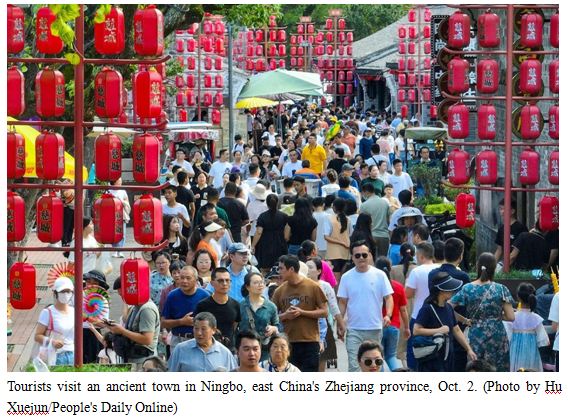
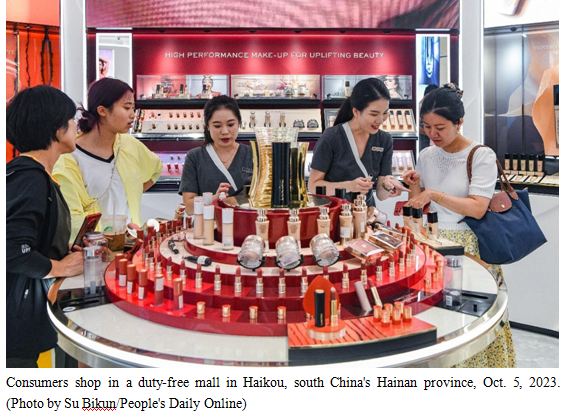
This year’s Mid-Autumn Festival and National Day holiday saw packed tourist sites, sold-out cinemas and restaurants, and record-high numbers of travelers, showcasing vigorous vitality across China.

This has drawn significant global attention in recent days. It is believed the vibrant holiday activities mirrored the steady upward trajectory of China’s economy, and conveyed to the world the country’s confidence in and strength of economic development.

Some said the snapped-up air and train tickets as well as the fully booked hotels represented powerful momentum of the world’s second largest economy, and some said the surge in domestic consumption and sustained high railway passenger volumes boosted the country’s economy.

Facing a complex external environment this year, the Chinese economy has withstood pressure and continued recovery, stabilizing its scale while improving quality. China’s economic growth remained among the top of major economies globally.

The latest released data shows that in September, as policy effects continue to accumulate, positive factors in economic performance kept increasing, China’s manufacturing Purchasing Managers’ Index (PMI), non-manufacturing business activity index and Composite PMI output index stood at 50.2 percent, 51.7 percent, and 52 percent respectively, all staying in the expansionary zone. It indicates an upward turn in economic prosperity.

Citibank recently raised its forecast for China’s economic growth this year. Rebeca Grynspan, Secretary-General of the United Nations Conference on Trade and Development (UNCTAD), said China has significant fiscal room to deliver a rebound and support the economy.

The demand of China’s massive market is a key advantage for the country’s economic growth. During the eight-day Mid-Autumn Festival and National Day holiday, China saw 826 million domestic trips and 753.43 billion yuan ($104.72 billion) in domestic tourism revenue, up 71.3 percent and 129.5 percent year-on-year respectively on a comparable basis, and 4.1 percent and 1.5 percent higher than 2019. This once again demonstrated to the world the resilience and vitality of the Chinese market.

With a population of over 1.4 billion and more than 400 million middle-income earners, China is the world’s second largest consumer market, largest online retail market, and an emerging middle-to-high end market, as well as one of the most promising mega markets globally. As policies to restore and expand consumption take effect, China’s consumption potential will be further unleashed, playing a bigger role in driving economic growth.

China is steadily expanding opening up, making its market increasingly attractive.

Recently, the country has introduced a series of targeted measures to further optimize the foreign investment environment and attract more investment from overseas.

China’s general manufacturing sector is now fully open, and the negative list has removed restrictions on foreign investment in the manufacturing sector in free trade zones.

A survey released by the China Council for the Promotion of International Trade shows nearly 90 percent of foreign companies are satisfied with aspects like acquiring business premises, taxation, market access, cross-border trade, and promoting market competition in China. Over 90 percent are also satisfied with foreign investment policies introduced since the fourth quarter of 2022.

In the first eight months this year, 33,154 new foreign-invested companies were established in China, up 33 percent year-on-year. The active investment by multinational corporations demonstrates their confidence in the Chinese market and economic development.

China firmly supports openness and cooperation, and its steady economic growth presents important opportunities for the world.

From expanding a globally-oriented network of high-standard free trade areas to implementing the Regional Comprehensive Economic Partnership, and from expanding the Belt and Road partnership to working actively to join the Comprehensive and Progressive Agreement for Trans-Pacific Partnership, China has constantly deepened bilateral and multilateral economic partnerships for mutual benefit and common development.

This month, China will host the third Belt and Road Forum for International Cooperation. Representatives from over 130 countries and international organizations have confirmed to attend the event.

“The Belt and Road Initiative is an ambitious economic cooperation project that seeks to revive the ancient Silk Road and promote orderly flow of economic factors, efficient allocation of resources, and market integration regionally and globally,” wrote Juan Esteban Musalem, president of the Chilean-Chinese Chamber of Commerce, Industry and Tourism in an article. He said China remains a non-stop economic engine powering global growth and development, just as it has for the past 40 years.

The vibrant Chinese market during the holiday demonstrated the resilience, potential and dynamism of the Chinese economy. By accelerating the construction of an integrated national market, further leveraging its advantages as a super-large economy, stimulating market vitality and social creativity, and expanding high-level opening up, China will continue supporting global economic growth and creating more opportunities for all.

BRI always pursues open, green, clean cooperation

BRI always pursues open, green, clean cooperation

By He Yin, People’s Daily

To pursue open, green and clean cooperation is the vital code to the fruitful achievements of the Belt and Road Initiative (BRI), and is absolutely necessary for achieving high-quality Belt and Road cooperation.

As Chinese President Xi Jinping said in his keynote speech at the opening ceremony of the Second Belt and Road Forum for International Cooperation, “We need to pursue open, green and clean cooperation. The Belt and Road is not an exclusive club; it aims to promote green development. We may launch green infrastructure projects, make green investment and provide green financing to protect the Earth which we all call home. In pursuing Belt and Road cooperation, everything should be done in a transparent way, and we should have zero tolerance for corruption.”

The BRI is committed to open cooperation. It represents an open and inclusive collaborative process that transcends national borders, ideological differences, developmental disparities, social system variations, and geopolitical conflicts. Facilitating policy coordination, infrastructure connectivity, unimpeded trade, financial integration, and closer people-to-people ties, the initiative aims to promote interconnected development through expanding opening up.

The rising unilateralism and protectionism in recent years have posed a risk of dividing the global economy, therefore safeguarding an open world economy has become even more important.

A high-level forum on connectivity is expected to be held during the third Belt and Road Forum for International Cooperation, which will further promote connectivity and enhance the complementarity and synergy between the Belt and Road cooperation and the development strategies and agenda at national, regional and international levels, thus making the pie of common interests evenbigger. This is of great significance for promoting world economic recovery and development.

The BRI is committed to green cooperation. The initiative emphasizes respecting and protecting nature and following its laws, and respects the right of all parties to pursue sustainable and eco-friendly growth. It responds to the demand of all relevant parties for sustainable development and builds a consensus for a green Belt and Road.

China has formed the BRI International Green Development Coalition with more than 150 partners from 40-plus countries, and launched the Initiative for Belt and Road Partnership on Green Development together with 31 countries.

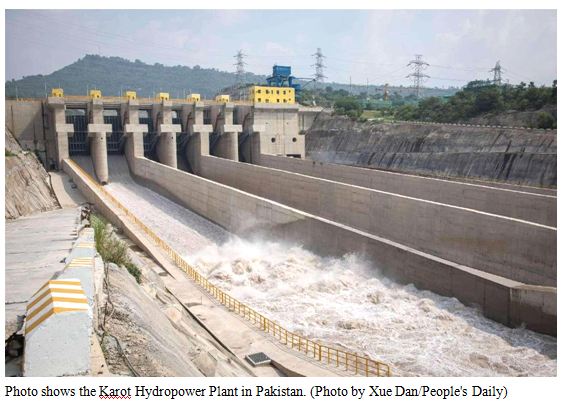
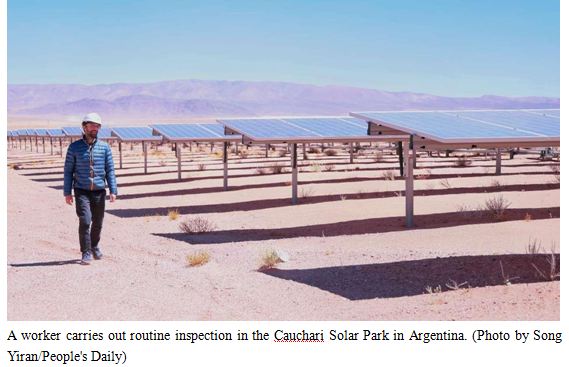
The Zhanatas wind farm in Kazakhstan has turned desert into a frontier of development; the Cauchari Solar Park in Argentina has become the photovoltaic power station project with the largest installed capacity and highest altitude in South America; the Karot Hydropower Plant in Pakistan has helped alleviate Pakistan’s energy shortage…

Leveraging its expertise in renewable energy, energy conservation, environmental protection and clean production, and employing Chinese technology, products and experience, China actively promotes BRI cooperation in green development.

A high-level forum on green development will be hosted during the third Belt and Road Forum for International Cooperation. It will build further consensus and a closer partnership for green development, so as to contribute to the sustainable development of the world.

The BRI is committed to clean cooperation. Clean governance is considered an intrinsic and necessary condition for the steady and sustained development of the BRI, with a commitment to transparency in cooperation.

All participants joined to combat corruption, strengthening their legal systems and mechanisms, harmonizing their laws and regulations, and fostering international cooperation. Together with relevant countries, international organizations, and representatives from the business and academic communities, China launched the Beijing Initiative for the Clean Silk Road. This initiative calls for a clean Silk Road characterized by extensive consultation, joint contribution, and shared benefits.

Chinese companies expanding globally are committed to compliance and lawful operations, adhering to the laws of both China and the host countries and to international norms. They have particularly heightened their capacity to mitigate overseas operational risks, strengthening project supervision and management to ensure the delivery of clean, cost-efficient and high-quality projects.

A thematic forum on clean Silk Road will be held during the third Belt and Road Forum for International Cooperation. Relevant parties will jointly build an even closer partnership of clean governance, enabling capital and projects to operate efficiently with cleanness, better implementing various cooperation projects, and making the Belt and Road a path of integrity with a clean and righteous environment.

The BRI has become a popular international public good and international cooperation platform, which fully demonstrates the vitality and appeal of open, green and clean cooperation. China will work with all relevant parties to pursue openness and inclusiveness, promote green development, build a clean Silk Road, and pursue steady progress of high-quality BRI cooperation.

China-Egypt cooperation zone contributes to Egypt’s industrial modernization

China-Egypt cooperation zone contributes to Egypt's industrial modernization

By Zhang Zhiwen, Zhang Mengxu, Shen Xiaoxiao, People’s Daily

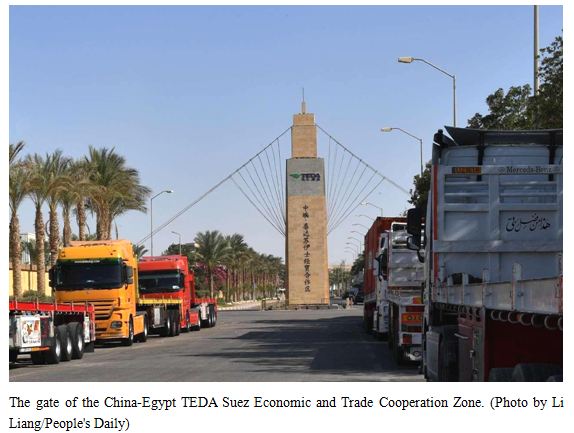
The China-Egypt TEDA Suez Economic and Trade Cooperation Zone(SETC-Zone), which sits on the shores of the Red Sea and south of the Suez Canal, and just celebrated its 15th anniversary, has developed into a thriving hub for trade and investment with well-built infrastructure, abundant industrial clusters, advanced logistics and warehousing facilities, and comprehensive amenities.

The cooperation zone, while accelerating strategic upgrading, has become a key platform of investment and cooperation for Chinese and Egyptian companies.

After two phases of construction, the SETC-Zone has grown into an industrial park featuring the best comprehensive environment, the highest density of investment, the highest per-unit output that attracts the most Chinese enterprises in Egypt.

It is now home to more than 140 companies, with actual investment exceeding $1.6 billion, total sales volume of over $3.7 billion and taxations of more than $200 million. The cooperation zone offers nearly 6,000 directjobs and about 50,000 employment opportunities in related industries.

Egyptian President Abdel-Fattah al-Sisi called the cooperation zone the most successful project of the Suez Canal Corridor.

“I’ve made many visits to the SETC-Zone and each time I had new discoveries. The SETC-Zone is getting better and better, with more and more enterprises settling in,” said Abdul-Majeed Saqr, governor of Egypt’s Suez governorate, adding that the complete supporting facilities and favorable investment policies in the SETC-Zone are hugely attractive. He noted TEDA, the developer of the SETC-Zone, is a reliable partner of Egypt.

Chinese enterprise Jushi, which specializes in the manufacture and sales of fiberglass and its finished articles, has been investing in Egypt since 2012. Its subsidiary company in Egypt named Jushi Egypt Fiberglass Co., Ltd.(Jushi Egypt). It has a gigantic factory in the SETC-Zone, which has over 2,000 workers, as well as some 30 Chinese management personnel and technicians. Most of the jobs in production and management are taken by local Egyptians.

No one would imagine that the bustling factorywas still a desert 10 years ago. Wu Ping, general manager of the company, said that Jushi encountered a series of challenges when it first entered Egypt, such as short power supply and water scarcity. However, it rose to these challenges and launched mutually beneficial cooperation with relevant parties in Egypt. In the past decade, Jushi Egypt built four production lines of fiberglass and assisting facilities. The factory, after four phases of construction, boasts an annual capacity of 340,000 tons, and is the largest production base of fiberglass in the African continent.

Jushi Egypt also actively fulfills its social responsibility, working to improve local environment and contributing to community development. It provides assistance for local orphanages and impoverished residents, and donates teaching and living materials to local schools.

Egyptian Prime Minister Mostafa Madbouly said that as China Jushi expands its investment in Egypt, it has created a large number of job opportunities and driven the development of Egypt’s manufacturing industry.

Nurturing talents that align with industrial and societal needs is one of the key objectives of Egypt’s industrial modernization.

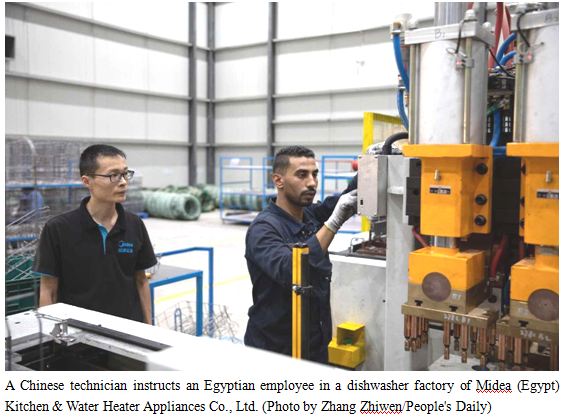
Lining the wide roads of the SETC-Zone stand rows of gleaming new workshops, which constitute a dishwasher factory of Midea (Egypt) Kitchen & Water Heater Appliances Co., Ltd. In the factory, local workers are always seen assemble parts along the production line, test equipment, and learn new techniques under the guidance of Chinese technicians.

Chinese companies investing in Egypt are not only creating quality products for local residents, but also helping equip the local workforce for Egypt’s industrial modernization.

General manager Chen Weiwei of Midea (Egypt) Kitchen & Water Heater Appliances Co., Ltd. said that the dishwasher rack production line introduced by Midea has filled a technological gap in Egypt’s dishwasher manufacturing sector. It has not only cultivated a batch of local welders, but also driven the localization of a series of key technologies, reducing the cost and price of dishwashers, and making dishwashers more affordable and accessible for Egyptian consumers.

Kamel, a team leader of the factory, was among the first batch of employees to join the company in December 2022. He received on-the-job training and learned the whole process of dishwasher manufacturing under the guidance of Chinese employees.

After three months of systematic training, Kamel turned into a skillful worker and was recently promoted to a team leader. Batches of new employees have acquired work skills under the instruction of key technicians.

“I’m glad that I can work here. I will keep working hard to create a better life with my own hands,” said Kamel.

Chen noted that the current production capacity of this dishwasher assembly line can meet the market demand in the Middle East, and new assembly lines will be set up in the future to produce more dishwashers.

“We will further promote localization in research and development, manufacturing, and employees, and focus on the local market to provide a wider range of home appliances for users in the region,” Chen added.

Belt and Road Initiative contributes to global connectivity

Belt and Road Initiative contributes to global connectivity

By He Yin, People’s Daily

Trains loaded with Southeast Asian agricultural products such as durians and mangosteens are now frequently entering China through the Mohan railway port in southwest China’s Yunnan province, along the China-Laos Railway.

Since the beginning of this year, the China-Laos Railway has transported over 14 million tons of goods to and from Laos, Thailand, Vietnam, Myanmar and other countries. The logistics vitality of the China-Laos Railway continues to rise, serving as a vivid example of the Belt and Road Initiative (BRI) promoting connectivity and fostering interconnected development.

Over the past 10 years, the BRI has taken “hard connectivity” of infrastructure as an important direction, “soft connectivity” of rules and standards as an important support, and “people-to-people connectivity” among partner countries as an important foundation. It has vitalized global connectivity and common development, improving global economic governance and promoting the healthy development of economic globalization.

The essence of the BRI is to promote infrastructure development and connectivity, enhance coordination of economic policies and synergy of development strategies, foster synergetic and interconnected development, and achieve shared prosperity.

Over the past 10 years, the “hard connectivity” of infrastructure has been constantly enhanced.

Connectivity is about connecting physical structures. China’s cooperation should extend to wherever roads, railways, air routes and the Internet take it.

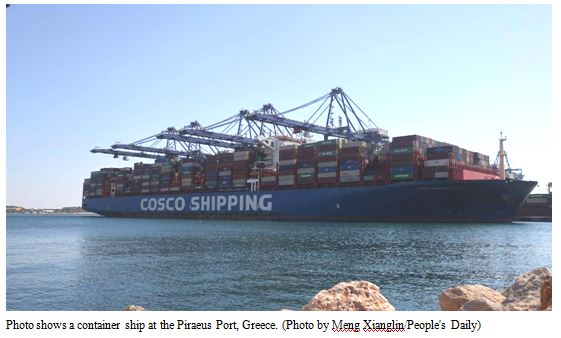
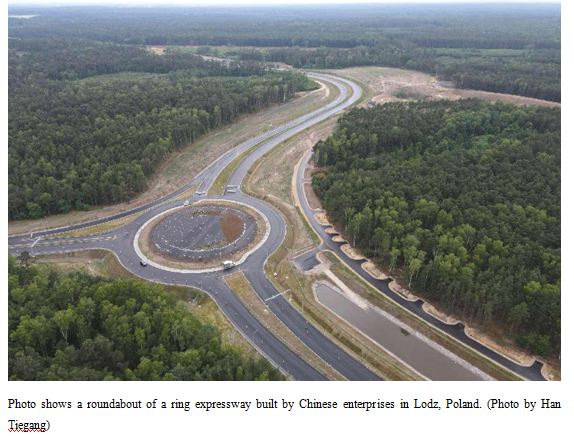
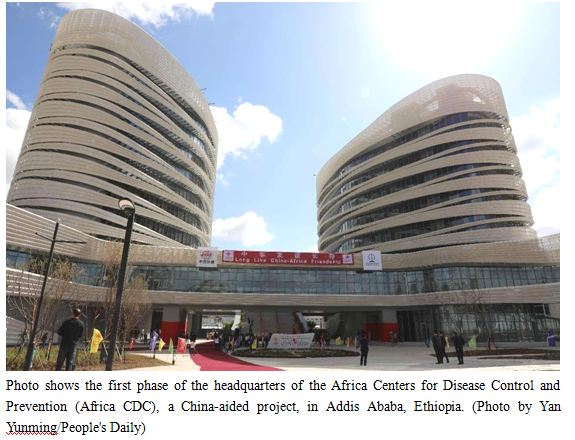
The construction of six major international economic cooperation corridors and the development of surrounding infrastructure have been steadily advancing. Iconic projects such as the Jakarta-Bandung High-Speed Railway, the Mombasa-Nairobi Railway, the Addis Ababa-Djibouti Railway, and the Piraeus Port have been successfully completed. The China-Europe freight service now operates on 84 routes, connecting 211 cities in 25 European countries. The New International Land-Sea Trade Corridor reaches 465 ports in 120 countries and regions worldwide.

Thanks to Belt and Road cooperation, many countries have tackled long-standing infrastructure bottlenecks and integrated into the global supply, industrial and value chains.

American futurists the Nesbitts remarked that never before in history has anyone attempted to connect so many countries and continents in the economic realm by implementing a series of policies.

Over the past 10 years, the “soft connectivity” of rules and standards has been significantly strengthened.

Connectivity is about connecting rules and regulations. When coordination and cooperation are enhanced and regulatory obstacles are reduced, logistics will become smoother and exchanges more convenient.

In the past decade, China and other Belt and Road countries have made positive progress in areas such as aligning work systems, coordinating technical standards, mutually recognizing inspection results, and networking electronic certificates. The benefits of the Regional Comprehensive Economic Partnership have started to emerge, and China ranks first in the world in terms of the number of Authorized Economic Operator agreements.

From 2013 to 2022, China’s trade in goods and non-financial direct investment with other Belt and Road countries grown 8.6 percent and 5.8 percent each year on average, respectively, and their cumulative two-way investment exceeded $270 billion.

According to Belt and Road Economics, a report released by the World Bank, the BRI, when fully implemented, will increase intra-BRI trade by 4.1 percent.

Over the past 10 years, the “people-to-people connectivity” among partner countries has become increasingly splendid.

Connectivity is about connecting the hearts of people. With enhanced mutual understanding, countries can achieve better communication and be more successful in their endeavors.

The 600 wells drilled by a Chinese company in Malawi have become “wells of happiness” benefiting 150,000 local people. The Luban Workshop has imparted vocational skills to young people in Tajikistan and other countries. China’s Juncao technology has taken root in over 100 countries, becoming a “grass of prosperity” for local people…

The BRI adheres to a people-centered development philosophy, and focuses on eliminating poverty, increasing employment and improving livelihood, so as to ensure that the fruits of cooperation benefit the people of all countries involved.

The BRI promotes sharing of development experiences, thus reinforcing many countries’ confidence in pursuing development paths suited to their national conditions.

The BRI also fosters a stronger people-to-people bond, building mutual appreciation, understanding and respect among the peoples of participating countries.

“We need to promote a global partnership of connectivity to achieve common development and prosperity. I am confident that as we work closely together, we will transcend geographical distance and embark on a path of win-win cooperation,” said Chinese President Xi Jinping.

Currently, economic globalization is facing headwinds, and global trade remains sluggish. The importance of strengthening connectivity has become even more prominent.

At the upcoming third Belt and Road Forum for International Cooperation, China will collaborate with all relevant parties to outline a new blueprint for connectivity, promote coordinated and interconnected development and inject new impetus into the recovery of the world economy.

China’s economy keeps recovering in first three quarters

China's economy keeps recovering in first three quarters

By Liu Zhiqiang, People’s Daily

China’s GDP grew 5.2 percent year on year in the first three quarters of 2023, reaching 91.3 trillion yuan (about $ 12.7 trillion), according to statistics recently released by the country’s National Bureau of Statistics (NBS).

The growths in the first, second and third quarters were 4.5 percent, 6.3 percent and 4.9 percent, respectively.

In the first three quarters, China’s economy withstood downward pressure and continued to recover, said Sheng Laiyun, deputy head of the NBS, during a press conference on Oct. 18.

Particularly in the third quarter, multiple sectors and indicators showed positive changes, and the trend of overall economic recovery has become even more prominent, he added.

Deducting the base effect, the average two-year growth in the January-September period this year stood at 4.4 percent, 1.1 percentage points higher than the Q2 figure. China’s GDP increased by 1.3 percent quarter-on-quarter in Q3, 0.8 percentage points higher than that of the second quarter.

Whether looking at year-on-year growth in the third quarter or cumulative growth in the first three quarters, China was among the top-performing major economies, Sheng said.

Employment performance was better. In the first three quarters, the surveyed urban unemployment rate nationwide was 5.3 percent, a decrease of 0.3 percentage points compared to the same period last year, and it improved month by month. In September, this figure stood at 5 percent, 0.2 percentage points down from August.

Overall price levels remained stable. In the January-September period, China’s consumer price index (CPI) went up moderately by 0.4 percent, and the producer price index (PPI) for industrial products fell by 3.1 percent year on year, with a narrowing decline for three consecutive months.

In particular, in September, the PPI decreased by 2.5 percent year-on-year, nearly 3 percentage points less than the lowest point in June, indicating a stable and improving domestic demand.

High-quality development was steadily advanced. For example, innovation momentum remained abundant. In the first three quarters, investment in high-tech industries grew 11.4 percent year-on-year, with the production of electric vehicles, lithium-ion batteries, and solar cells maintaining rapid growth. Also, resident income increased steadily. In the first three quarters, the per capita disposable income of residents nationwide was 29,398 yuan, up 5.9 percent in real terms after deducting price factors, higher than GDP growth.

“These positive changes fully demonstrated that China’s economy has continued to recover and improve in the first three quarters, and also highlighted the tremendous resilience, potential, and vitality of the Chinese economy,” Sheng said.

Looking ahead, Sheng said growth will likely pick up in the fourth quarter given the continued recovery trend and stimulus policy measures taking effect gradually.We are very confident in achieving the annual target,” he said.

Consumption will continue to recover and improve. Sheng Laiyun explained that in the first three quarters, commodity consumption, service consumption, and household consumption expenditure have steadily rebounded, and local governments are accelerating the implementation of policies to promote consumption. Additionally, improvement in employment and growth in residents’ income have laid a foundation for the recovery and growth of consumption, he added.

The industrial economy also bounced back steadily. In the first three quarters, the value-added industrial output of enterprises above designated size grew 4 percent year on year. In Sheng’s view, a series of operational indicators have also released positive signals: purchasing managers’ index returned to expansion territory; PPI declines narrowed for 3 consecutive months; industrial profits turned positive in August; in the first three quarters, the capacity utilization of industrial enterprises was 74.8 percent, and the sales-output ratio of industrial enterprises above designated size was 96.8 percent, up 0.4 and 0.6 percentage points respectively from the first half.

“Some of the positive changes in the economic sphere are preliminary, and the sustainability of these changes needs further observation. The foundation for stable economic recovery still needs to be consolidated,” said Sheng. He added that in the next stage, it is crucial to ensure policy implementation and further cement the foundation for economic rebound.

Man in Inner Mongolia leads fellow farmers to prosperity through horse-head fiddle manufacturing

Man in Inner Mongolia leads fellow farmers to prosperity through horse-head fiddle manufacturing

By Wu Yong, People’s Daily

The horse-head fiddle, also known as the morin khuur, is a representative musical instrument of the Mongolian ethnic group. It is named so because of its neck surmounted by a carved horse head. The making of a horse-head fiddle involves dozens of processes, and high craftsmanship is required to manufacture a great one.

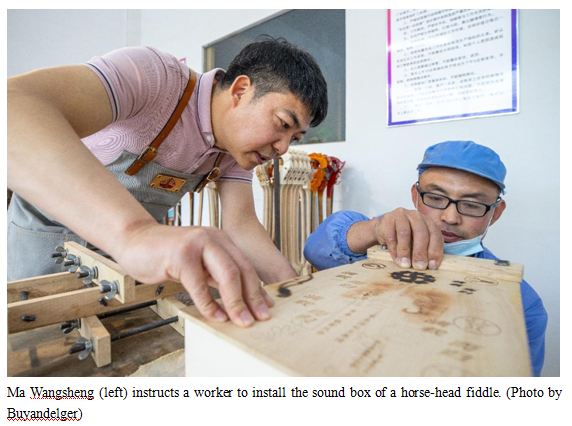
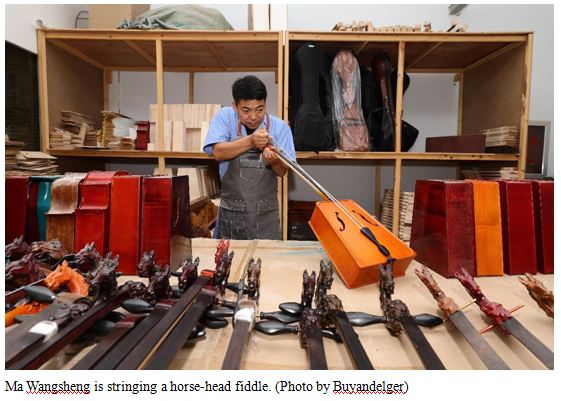
In a workshop of a horse-head fiddle factory run by farmer-turned craftsman Ma Wangsheng in a business incubator for university students in the economic and technological development zone of Ulanhot, Hinggan league, north China’s Inner Mongolia autonomous region, more than a dozen craftsmen were busy making horse-head fiddles, while Ma was providing detailed instructions to each of them regarding important aspects to focus on.

“The horse-head fiddle has changed my life. The craftsmen here are also farmers, and I want to make their lives better via the business of horse-head fiddle manufacturing,” Ma said.

Since last year, Hinggan league has been implementing a rural craftsman nurturing program, which, by continuously improving training systems and strengthening evaluation and incentives, aims to tap the leading role of rural craftsmen in driving the development of characteristic industries, with a goal to increase the income of farmers and herdsmen through imparting practical skills.

When Ma was 19 years old, he worked part time as a student and developed a connection with the horse-head fiddle. He told People’s Daily that making a horse-head fiddle involves several major processes, including material selection, cutting, and the manufacturing of the sound box, neck, and horse head. These processes are further broken down into dozens of smaller steps, each of which captivates him, he added.

As a stringed instrument, stringing is one of the key steps for making a horse-head fiddle. Ma explained that the strings of the horse-head fiddle are made of two bundles of nylon threads, with each thread thinner than a hair.

“Only by ensuring each strand maintains its position and order, and the tension across all the strings is even, the tone can be made clear and resonant after stringing. Otherwise, it will sound ‘muted’,” he said.

The People’s Daily reporter took a bundle of strings that Ma had prepared and tried stringing it following Ma’s demonstration. Though it looked simple, the reporter had to use all his strength. His fingers ached but the strings were still unevenly tightened, producing nothing but “muted strings.”

“It takes practice to perfect the technique. It took me about seven or eight years of practice to be able to string the instrument so that the tones produced are consistently clear and resonant,” Ma noted.

In 2022, the man’s exquisite craftsmanship earned him recognition as a representative inheritor for making stringed instrument of the Mongolian ethnic group, an intangible cultural heritage of Hinggan league.

Today, Ma’s factory employs over 20 workers, all from nearby villages. Craftsman Bagertule was once a farmer in a neighboring village. When the factory first opened, he worked for the factory in his spare time. Under Ma’s guidance, Bagertule’s fiddle-making skills grew increasingly adept, and he became a full-time carver of the fiddles’ horse heads. Last month, he earned a salary of 13,000 yuan ($1,807).  

In June this year, Ma was awarded the title of advanced rural craftsman in Hinggan league. This honor was intended to inspire him to remain deeply rooted in his community, using his practical expertise to lead farmers and herdsmen in cultivating distinctive local industries and boosting incomes.

Rural craftsmen are mainly those engaged in traditional crafts and rural handcraft industries. They remain deeply embedded in the countryside, inheriting and advancing traditional skills as well as adapting and applying them. These craftspeople catalyze development of local industries and employment opportunities for farmers.

In November 2022, the National Rural Revitalization Bureau along with seven other departments jointly released a guidance on nurturing rural craftsmen. Based on the document, Hinggan league formulated relevant methods for identifying and nurturing rural craftsmen.

“The evaluation and certification of craftsmen is intended to both inherit fine traditional culture and promote rural cultural revitalization, as well as to boost rural industrial development and invigorate the rural craftsmen group. We hope to build brands of rural craftsmen and drive steady income growth for the people,” said Wang Dayi, an official in Hinggan league.

Since last year, Hinggan league has cultivated and certified over 400 rural craftsmen across various domains including agriculture, construction, home services, rural e-commerce, and traditional crafts. Around 4,000 people have been employed or started their own businesses under the mobilization of these craftsmen. Hinggan league has also accredited 45 vocational skill training institutions to train more rural craftsmen.

“I didn’t expect making horse-head fiddles could earn me the title of rural craftsman. This is tremendously encouraging as I continue my instrument-making endeavor,” Ma said excitedly.

It is learned that to better leverage the leading role of rural craftsmen, Hinggan league provides incentive mechanisms to support them in establishing innovation and entrepreneurship incubation and training bases. Priority services and subsidies are also given to rural craftsmen, including information technology support, financing assistance, and more.

“I owe today’s success to the government’s policy support. From the initial startup period, I have benefitted from interest-free startup loans, free venue usage and other preferential policies,” Ma explained.

“I will do my best to give back to society.” After being named a rural craftsman, Ma felt an even greater sense of responsibility. He said he aims to engage more farmers and herdsmen in horse-head fiddle production, so that they can gain more money and live better lives.

Stay Connected

64FansLike
60FollowersFollow

Latest Reviews

Exchange Rates

USD - United States Dollar
EUR
1.17
GBP
1.35
AUD
0.72
CAD
0.73