Home Blog Page 1137

China removes defence minister, ousts ex-FM from cabinet

China removes defence minister, ousts ex-FM from cabinet

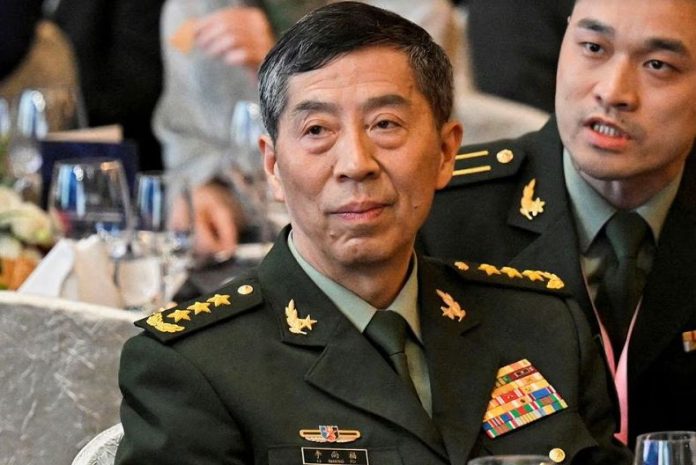
Beijing, OCT 24: China on Tuesday removed defence minister Li Shangfu and ousted former foreign minister Qin Gang from its cabinet, state media reported, as part of a major reshuffle of its top leadership.

The news comes after months of speculation about China’s cabinet, after Qin was abruptly removed from office without explanation in July, and with Li not having been seen in public for months.

Both Qin and Li are believed by experts to have been personally selected for their roles by President Xi Jinping.

On Tuesday state broadcaster CCTV announced the removals in its regular evening bulletin, but did not give reasons for the ministers’ fall from grace.

No replacement for Li as defence minister was announced.

Previously it had been reported that the US government believed Li was under investigation and had been stripped of his ministerial duties, but China had refused to comment on the matter.

Li travelled to Russia in August to attend a security conference near Moscow on August 15. Two days later, the government of Belarus released handout photographs of Li meeting with Belarusian President Alexander Lukashenko in Minsk.

But since then, he has vanished from public view.

Li’s now confirmed removal means there is no apparent host for China’s regional security dialogue, the Xiangshan Forum, which takes place next week.

The US Department of Defense is due to send a delegation to the event.

As well as being removed as defence minister, Li has also lost his position on the State Council, China’s cabinet.

Former foreign minister Qin, who was removed from his post without explanation in July, has now also been stripped of his State Council position.

Qin was removed from office by Beijing’s top lawmaking body after just 207 days in the job, following weeks of speculation that he had fallen out of favour.

He has been replaced by Wang Yi, a veteran diplomat who served as foreign minister before Qin and who outranked him in the Chinese government hierarchy.

Beijing has offered no explanation for Qin’s dismissal.

That opacity was also evident when China announced recently a new leadership for its Rocket Force, the army unit that oversees its nuclear arsenal, as media reported a corruption probe involving its former chief.

The navy’s former deputy commander Wang Houbin was named as the new commander of the force in a brief article by state news agency Xinhua reporting his promotion to the rank of general.

His predecessor, Li Yuchao, had not been seen in public for weeks and the Xinhua article gave no explanation for his removal.

CCTV also announced Tuesday that science and technology minister Wang Zhigang and finance minister Liu Kun had also been removed from their posts.

They will be replaced by current Ministry of Science and Technology party secretary Yin Hejun and finance ministry party secretary Lan Fo’an respectively.
Palestinian ambassador expresses gratitude for Red Crescent Pakistan’s support

Palestinian ambassador expresses gratitude for Red Crescent Pakistan's support

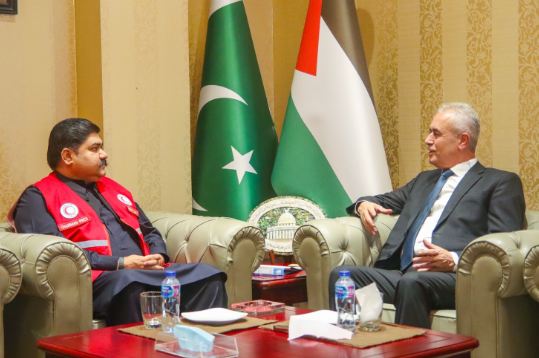
Islamabad, OCT 24 /DNA/ – The Chairman Pakistan Red Crescent Society, Sardar Shahid Ahmed Laghari, visited the Palestinian Embassy and met with Palestinian Ambassador Ahmed Jawad Rabei. Discussions centered on the current situation in Gaza, expressing sorrow over losses in lives and property.

During the meeting, Ambassador Ahmed Jawad Rabei highlighted the severe humanitarian crisis in Gaza, emphasizing the urgent need for water, food, and medical assistance. Chairman Shahid Ahmed Laghari assured that the Pakistan Red Crescent Society is fully aware of the situation in Gaza and pledged support.

Chairman Laghari announced that the Pakistan Red Crescent through the National Disaster Management Authority, will dispatch 4,500 first aid kits, 3,500 hygiene kits, and 3,500 dignity kits. Additionally, a shipment of medicines will be sent through the NDMA.

He urged individuals willing to contribute cash donations PRCS to directly send them to Askari Bank G-8 Markaz Islamabad, account number 01771650501737, or to the Palestine Embassy’s bank, Alfalah Bank, account number 0494-1003784913. For inquiries related to medical donations, Dr. Hashir Parvaiz, Red Crescent’s Health Representative, can be contacted at 0333-5132452.

In a gesture of solidarity, the Pakistan Red Crescent will also contribute $100,000 to the International Federation of Red Cross and Red Crescent Societies for the aid of the Palestinian people. Ambassador Ahmed Jawad Rabei expressed gratitude for the support and acknowledged the significant role of the Red Crescent Pakistan at national and international levels.

The meeting was attended by the Secretary General PRCS Muhammad Abaidullah Khan. On this occasion Chairman Laghari, shared his impressions in a commemorative book placed at the Embassy.

PM vows to resist anti-vaxxers to achieve dream of polio-free Pakistan

PM vows to resist anti-vaxxers to achieve dream of polio-free Pakistan

ISLAMABAD, Oct 24 (DNA): Caretaker Prime Minister Anwaarul Haq Kakar on
Tuesday vowing to resist the individuals propagating against the polio
vaccination, resolved to achieve the dream of polio-free Pakistan by
carrying forward the journey with unshakeable commitment.

“I can assure that we gonna have it. We will realise this dream. We will
never step back, may be an inch, may be a foot or may be a mile. This
will always be a forth-going journey,” the prime minister remarked
addressing a ceremony to mark the World Polio Day.

The event was organised by the Pakistan Polio Programme to pay homage to
the resilience and dedication of frontline workers on World Polio Day
which is commemorated on October 24 every year.

Federal Health Minister Dr Nadeem Jan, Federal Health Secretary Iftikhar
Ali Shallwani, representatives of polio partners Rotary, WHO and UNICEF,
and frontline workers and their families were in attendance. The prime
minister said by opposing the polio vaccine, the anti-vaxxers,
intentionally or unintentionally, were partnering with the forces of
darkness.

He emphasised the role of faith leaders and the society to make such
people realise that they were actually partnering with the destroyer of
the humans. This is unacceptable. We will resist this,” he resolved.

He expressed his gratitude to the global partners who continued to
supporting Pakistan in its andeavour of polio eradication. Recognising
the sacrifices of the polio workers and the security personnel guarding
them, the prime minister said they had paid the highest price for the
cause.

He said the frontline health workers were the heroes of Pakistan, who
were working in challenging environments, facing social barriers and
even threats to their safety without ever losing their dedication.

The prime minister recognised the services of three police constables
who were martyred while on polio duty and to two vaccinators who were
injured. He also presented appreciation shields to the former
coordinator of the Sindh EOC, Fayyaz Abbasi and the family of Huma
Ashraf, who was severely injured in a train accident while on polio duty
in September. The prime minister also announced to personally visit Huma
as a gesture to recognise her services in the mission of polio-free
Pakistan.

“Today is a day to remember how far we have come and how crucial polio
eradication efforts remain. Pakistan cannot be the reason to hold the
world back. We must move forward to 2024 with the realization that the
weight of global eradication lies on our shoulders. We must leave no
room for the virus to spread and reach every child with the vaccine
before the virus has a chance to permanently change their lives,” he
remarked.

Caretaker Health Minister Nadeem Jan, in his address, paid homage to the
polio workers who were striving to accomplish the mission of polio-free
Pakistan while facing many odds and hardships. He emphasised that the
community health workers should be acknowledged and honored as
motivation would be enhanced their performance.

He called for changing the narrative from “Pak Fights Polio” to
“Pakistan Winning Over Polio.” He expressed the hope that the World
Polio Day next year would mark the complete eradiation of polio from
Pakistan.

Federal Health Secretary Iftikhar Shallwani said the campaign was
started in 1994 and continued across Pakistan with dedication to date
with support from the aid agencies. Besides the polio drive, other
related subjects including maternal and neonatal healthcare were also
worked on, he added.

WHO Representative in Pakistan Palitha Mahipala said the Day was
observed to commemorate the global journey. He said the Polio
eradication was one of the major commitments made by the WHO which
provided technical support to Pakistan. He said the day was not far when
Pakistan would get rid of the crippling disease within next few years as
the number of paralysis had sharply declined.

Unicef Chief Polio Officer Melissa Corkum said the credit for the
successes went to the health workers who despite challenges went door to
door in every campaign. She said the Day was not only to commemorate the
successes but also to remember those who sacrificed their lives during
the struggle. DNA

Artificial Intelligence and Human Cognition

Artificial Intelligence and Human Cognition

By: Zahra Ali

Artificial Intelligence and Human Cognition

From a psychological standpoint, with an understanding that the integration of Artificial Intelligence (AI) undoubtedly brings forth numerous conveniences and efficiencies. It is crucial to recognize and impede the potential detriments and the multifaceted ways in which an overreliance on Artificial Intelligence can be damaging for human intelligence and cognitive development.

One of the first and foremost concerns lies in the potential stagnation of cognitive growth

One of the first and foremost concerns lies in the potential stagnation of cognitive growth. Human intelligence thrives on challenges, problem-solving, and learning from experiences. Overreliance on Artificial Intelligence, particularly for tasks that require mental exertion, may strip individuals of the opportunity to engage in these cognitive processes. When Artificial Intelligence takes over decision-making, critical thinking or complex problem-solving, the brain’s natural capacity to adapt and evolve is underutilized, leading to a potential stunting of intellectual development.

Jean Piaget, a pioneer in developmental psychology

Jean Piaget, a pioneer in developmental psychology, emphasized the importance of active engagement with the environment for cognitive development. Individuals construct knowledge through interactions with their surroundings. When Artificial Intelligence takes over tasks that involve problem-solving and decision-making, individuals may forgo on these crucial interactions.

Also Read: From river to the sea

Lev Vygotsky argued that social interaction plays a fundamental role in cognitive development. He introduced the concept of the Zone of Proximal Development (ZPD), which is the difference between what a person can do with help and what they can do alone. Excessive dependency on Artificial Intelligence might limit the opportunities for individuals to work within their ZPD, hindering their potential for growth.

Mihaly Robert Flow Theory argued achieving a state of flow

Mihaly Robert Flow Theory argued achieving a state of flow, characterized by deep concentration and a sense of being fully absorbed in an activity, is conducive to optimal cognitive functioning. Excessive use of Artificial Intelligence may limit opportunities for individuals to experience this state, potentially depriving them of the cognitive benefits associated with it.

Human intelligence draws its strength from creativity

Human intelligence draws its strength from creativity, enabling individuals to venture beyond conventional boundaries, devise fresh strategies, and progress. Yet, an overdependence on Artificial Intelligence may inadvertently suppress this innate creative prowess. When tasks requiring imaginative thought or aesthetic expression are taken over by AI algorithms, individuals are deprived of the opportunity to nurture and employ their creative capacities. Over time, this can lead to a decline in ingenuity and imaginative thinking.

Another detrimental consequence of heavy Artificial Intelligence

Another detrimental consequence of heavy Artificial Intelligence reliance is the erosion of problem-solving skills. The act of grappling with challenges, even if aided by Artificial Intelligence, fosters resilience, adaptability, and the development of diverse problem-solving strategies. When individuals bypass this cognitive process and defer to Artificial Intelligence for solutions, they forgo invaluable opportunities for skill-building. Consequently, there is a risk of a gradual decline in the ability to independently approach and resolve complex problems.

Cognitive load refers to the mental effort required to process information

Cognitive load refers to the mental effort required to process information and make decisions. Over time, excessive reliance on Artificial Intelligence for information retrieval and decision-making may lead to a reduction in an individual’s capacity to handle cognitive loads. When confronted with tasks that demand substantial mental effort, individuals accustomed to heavy Artificial Intelligence use may find themselves ill-prepared to effectively process and analyze information, potentially leading to feelings of cognitive strain and reduced efficacy.

Artificial Intelligence undoubtedly offers remarkable benefits

Artificial Intelligence undoubtedly offers remarkable benefits, it is imperative to approach its integration sensibly. The detriments associated with excessive Artificial Intelligence reliance on human intelligence are not to be overlooked. Striking a balance between utilizing Artificial Intelligence as a valuable tool to enhance knowledge and nurturing our own cognitive capacities through critical thinking, creativity, and meaningful social interactions remain paramount in ensuring the holistic development of human intelligence in the age of Artificial Intelligence.

Outlook on China’s Foreign Policy on Its Neighborhood In the New Era

Outlook on China’s Foreign Policy on Its Neighborhood In the New Era

DNA

BEIJING: China and its neighboring countries enjoy geographical proximity, cultural affinity and integrated interests with a shared future. The millennium-old friendly exchanges between the two sides are a vivid history of exchanges and mutual learning among civilizations. Such friendly bonds are best captured by the Chinese saying: “true friendship weathers the changing seasons without fading away and is made even stronger by hardships.”

The neighborhood is where China survives and thrives and the foundation of its development and prosperity. As a member of the Asian family and a responsible major country, China attaches great importance to neighborhood diplomacy, always prioritizes the neighborhood on its diplomatic agenda, and remains committed to promoting regional peace, stability, development and prosperity.

Outlook on China’s Foreign Policy on Its Neighborhood in the New Era, based on the assessment and overview of the current situation and future trends in Asia, comprehensively outlines the achievements, policies, visions and objectives of China’s neighborhood diplomacy, and declares China’s commitment to the path of peaceful development, to promoting development of the neighborhood through its own development, to working with regional countries to advance modernization, to jointly building a community with a shared future among neighboring countries and to realizing the vision of a peaceful, secure, prosperous, beautiful, amicable and harmonious Asia in the new era.

COAS highlights unlawful use of force by Israeli defense forces

COAS highlights unlawful use of force by Israeli defense forces

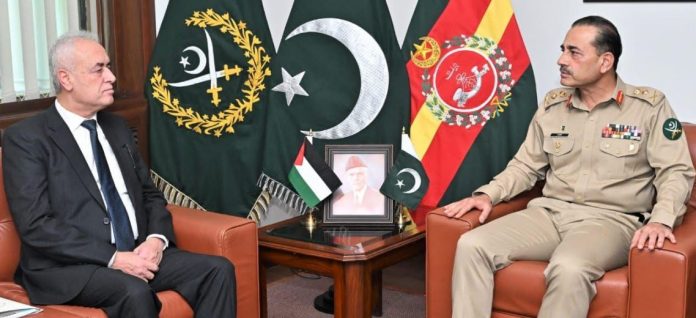
Rawalpindi, OCT 24 /DNA/ – General Syed Asim Munir, NI(M), Chief of Army Staff (COAS) met the Ambassador of Palestine to Pakistan, Ahmad Jawad Rabei at General Headquarters today.

COAS expressed condolences on the loss of Palestinian lives in the ongoing war in Gaza. COAS expressed grave concern over unabated violence and willful, indiscriminate killing of innocent civilians by the Israeli Defence Forces in the war. Incessant attacks on civilian population, schools, universities, aid workers, hospitals and the forced exodus of Palestinians from Gaza are manifest crimes against humanity.

COAS reiterated the call for immediate cessation of hostilities, opening of humanitarian corridor to Gaza, protection of civilians and adherence to the International Humanitarian Law.

COAS also reiterated Pakistan’s principled support for an independent, viable and contiguous state of Palestine established on the basis of pre-1967 borders with Al-Quds Al-Sharif as its capital.

“Pakistan believes that the fresh spate of violence in Gaza is the result of unabated repression, continued human rights violations and state-sponsored sacrilege of Al Aqsa mosque. Conflating this war with terrorism would be naïve; taking a narrow and self-serving view of the issue as an isolated attack, obscures brutal oppression spanning decades that has led to this outcome” COAS remarked.

COAS said “At this critical juncture, it is imperative that the international community mobilizes to put an early end to unfolding human tragedy due to disproportionate and unlawful use of force by Israeli Defence Forces and desist from encouraging them to continue perpetrating atrocities in manifest violation of all norms of civility and humane conduct”.

Pakistan keen to further develop ties with Hungary

Pakistan keen to further develop ties with Hungary

Hungary is grateful to Pakistani diplomacy for supporting the cause of the Hungarian revolution in the United Nations: Ambassador Fazekas

Ansar M Bhatti

ISLAMABAD: Jawad Sohrab Malik, Prime Minister Special Assistant on Overseas Pakistanis has said Pakistan and Hungary enjoy excellent relations adding these relations are poised to grow further even in the days to come.

Malik expressed these views while speaking as chief guest on the occasion of the National Day of Hungary. A large number of guests hailing from various walks of life attended the reception.

The chief guest further said that Hungary had supported Pakistan on all occasions especially on the issue of GSP Plus status. He hoped trade and economic relations would also be strengthened.

Ambassador of Hungary Bela Fazekas in his speech said, on the 23 October 1956 a student protest in Budapest turned into a national uprising against Communist dictatorship. The joy of freedom lasted only two weeks when the Soviet military aggression crushed the heroic struggle of the freedom fighters.

He added, it was only 33 years later Hungary regained its independence. After defeating the revolution of 1956 the so called “Hungarian question” was still on the agenda of UN General Assembly for many years. 

‘Hungary is grateful to the Pakistani diplomacy for supporting the cause of the Hungarian revolution in the United Nations. In 1962 Sir Muhammad Zafrulla Khan the President of the General Assembly played an important role in  forcing the Hungarian authorities  to release hundreds of Hungarian freedom fighters from the prisons’, he added.

Ladies and gentlemen, although diplomatic relations between our two coutries are only 58 years old, the people-to-people relations between Hungary and this part of the subcontinent have started much earlier. The cultural and intellectual life of the 19th and early 20th century Lahore would not have been so rich and vibrant without the Hungarian artists, professors, doctors, orientalists who lived and worked there. A few years back our Embassy has started a project to make the Pakistani public realize the extent of the intellectual footprint of this humble Hungarian presence.

Ambassador Fazekas said, Hungary is not a big power. Neither politically, nor economically. But there is something, which gives  us a soft power status, something  we Hungarians are very proud of. Just three weeks ago two Nobel Prizes, one for Medicine and one for Physics were awarded to Hungarian Scientists.

 The first one was the recognition of the  mRNA molecule discoveries by a Hungarian lady professor that paved the way for COVID-19 vaccines saving the life of millions of people all around the word during the COVID pandemic. Since the introduction of the Nobel Prize, this prestigious prize was awarded to 19 Hungarian scientists.

This is quite remarkable for a country with a population of 10 million people. It is also the recognition of the high quality of the Hungarian higher education. Hungary is ready to offer this rich educational, academic and scientific background for everyone including young Pakistanis. Every year the Hungarian government provides 400 state sponsored scholarships to Pakistani students. Investing into knowledge and skills pays the best interest. You never know if there is a future Pakistani Nobel Prize winner among those currently studying with scolarships in Hungarian universities.

He said, the frequent political contacts, regular visits and meetings between our two countries provide a solid political basis for enhancement of our multilevel cooperation.  In February 2023 we had the first ever visit of a Pakistani Foreign minister to Hungary. The minister was offered a podium to deliver his message in front of 130 Hungarian Ambassadors from all around the world. The visit created a new momentum for every aspect of our cooperation.  Our trade has doubled in the last four years. There are more and more Pakistani-Hungarian joint ventures in the field of water management and agriculture.  

The flagship of the Hungarian companies present in Pakistan is the MOL, which is one of the largest foreign investor in the oil and gas industry and the second largest producer of oil in Pakistan.

Pakistan’s efforts and struggle in achieving Sustainable Development Goals (SDGs)

Pakistan’s efforts and struggle in achieving Sustainable Development Goals (SDGs)

By Huma Arshad

The SDGs are an urgent call to the world to shift towards a more sustainable path and approach. In 2015, all member-states of the United Nations including Pakistan adopted the Sustainable Development Goals(SDGs), a global agenda to end poverty, protect the planet, and ensure prosperity for all by 2030. The SDGs are ambitious set of 17 goals, 169 associated targets, and 232 indicators pursued through national action and international cooperation according to the United Nations, 2015.

While the SDGs are not legally binding, governments are expected to take ownership and establish national frameworks to achieve the goals, a challenging prospect given competing government financial and programmatic priorities. The targets have been grouped into three broad themes: people, planet, and prosperity highlighting the UN’s focus on social, environmental, and economic pillars of development.

Pakistan integrated the SDGs into its National Development Agenda NDA in Feb 2016, The government, like other developing countries, faces huge fiscal challenges to meet SDGs.Pakistan was the first country to adopt SDGs 2030 agenda through a unanimous resolution of parliament. The government conducted discussions on post-Millennium Development Goals (MDGs) with all stakeholders for coordinating and strengthening efforts at federal and provincial levels to achieve Pakistan’s sustainable development and poverty reduction targets.

The seven pillars of Vision-2025 are fully aligned with the SDGs, providing a comprehensive long-term strategy for achieving inclusive growth and sustainable development. At the federal level, a SDGs Monitoring and Coordination Unit, in coordination with UNDP, has been being set up to serve as a national coordinating entity with similar units in the provinces.

The focus of the government from the start was on inculcating  SDGs in planning processes, ensuring strong monitoring and reporting on SDGs, ensuring public financial allocations are aligned to SDGs and alternate financing modalities are being explored, and to benefit from use of technology to accelerate progress towards SDGs.Pakistan affirmed its commitment to the 2030 Agenda for Sustainable Development by adopting the Sustainable Development Goals (SDGs) as its National Development Agenda through a unanimous National Assembly Resolution.

SDG support units have been established at federal and provincial levels with the planning institutions (Ministry of Planning Development and Special Initiatives and Provincial Planning and Development Departments) to guide SDGs implementation and monitoring it progress. Earlier the Government designed and approved a National SDGs Framework that envisages a national vision to prioritize and localize SDGs. Localized provincial SDG Frameworks are being formulated.

UNDP is supporting the Ministry of Planning, Development & Special Initiatives (MoP&SI), Government of Pakistan for localizing the SDGs by applying UNDG. MAPS approach focusing on mainstreaming SDGs in Plans, Policies and Resource Allocation aligned to 2030 Agenda, SDGs monitoring, reporting and evaluation capacities and strengthenedFinancing flows.

Pakistan, like many other developing countries, has not been able to meet the United Nations Millennium Development Goals of 2015, largely because of weak institutions and a lack of policy enforcement. SDGs are not moving forward and we do not see much progress due to frequent changes in the government sector. Pakistan still ranked 129th out of 165 countries in a recent Sustainable Development Goal Index ranking, Population growth remain the major obstacle in achieving goals. Energy crisis, education reforms are still needs lot of changes and immediate attention.

Here we cannot forget or overlook that Pakistan has the highest rate of urbanization in South Asia. All the political parties, government has to take serious measures to attain the goals by 2030. Several challenges remain to achieve the SDGs in Pakistan. Financing the SDGs in a slow-growth economic environment is a difficult task. There is also a knowledge and technology gap in developing local solutions and improved governance. The path towards sustainable development is not easy if a country is acting alone.

In the case of Pakistan, development has been hampered by fluctuating levels of foreign investment, trade, and development assistance over the years. As long as global partnerships are not encouraged worldwide, the prospects for the development of SDGs remains weak.

This global partnership must have different elements, such as development assistance aid, debt relief, trade agreements, and foreign funding. If Pakistan is to achieve its SDGs, it has to pay extra focus on building robust partnerships which priorities integration through cooperation. Lastly, Pakistan needs strong institutions which can transform the current business trajectory of the country.As a country we must remember the motto of United Nations for achieving the Sustainable Development Goals ( SDGs ) i.e. “LEAVE NO ONE BEHIND”— the motto is the  guiding principlein solving the most pressing problems of today.

“We will only secure a prosperous, peaceful and livable planet if we harness economic growth and development to social solidarity across and between generations.”― Oscar Auliq-Ice (humanist, Philosopher )

China’s outbound investment ranks among highest globally

China's outbound investment ranks among highest globally

By Liao Ruiling

China’s outbound direct investment (ODI) in 2022 reached $163.12 billion, ranking second in the world, according to a report jointly released by the Ministry of Commerce, the National Bureau of Statistics and the State Administration of Foreign Exchange.

The report comprehensively reflects China’s ODI in 2022, including the flow and stock, the country’s ODI in major economies, the composition of outbound direct investors, and the composition of ODI enterprises.

The Thar Coal Block-I Coal Electricity Integration project in Pakistan operated by Shanghai Electric supplies electricity to 4 million local households. In Hungary, a server is being produced every minute on average in an automated and intelligent factory built by Chinese technology company Lenovo…

In recent years, Chinese companies have accelerated their pace of “going global,” continuously increasing their overseas investment.

According to the report, China’s ODI flow has ranked among the top three globally for 11 consecutive years, and accounted for over 10 percent of the world’s total for seven years in a row. The country’s ODI stock reached $2.75 trillion at the end of 2022, ranking among the top three in the world for six consecutive years.

Chinese enterprises are now doing business in over 80 percent of the countries and regions in the world. By the end of 2022, domestic investors in China had set up 47,000 overseas enterprises in 190 countries and regions worldwide, with nearly 60 percent in Asia, 13 percent in North America and 10.2 percent in Europe. Among them, 16,000 were established in Belt and Road countries.

“As evidenced by China’s high global rankings in ODI flow and stock, Chinese enterprises are developing rapidly and strengthening their presence in the global market, and improving local infrastructure and creating massive jobs with their projects launched worldwide,” said Yu Miaojie, president of China’s Liaoning University.

By doing so, Chinese enterprises have promoted unimpeded trade, financial integration and people-to-people bonds, thus driving global economic development, Yu added.

Chinese companies are increasingly expanding their presence overseas and investing in a wider range of industries. According to the report, in 2022, China’s ODI spanned across 18 major sectors of the economy. Notably, investments exceeding $10 billion were made in areas such as leasing and business services, manufacturing, finance, wholesale and retail, mining, and transportation.

Green investment has become a major highlight. “In recent years, China’s outbound investment has maintained steady expansion, and the quality has also improved, with significant growth in the field of new energy,” said Liu Qiao, Dean of the Guanghua School of Management at Peking University.

Statistics showed that new energy was the sector that saw the highest number of outbound investment projects in the power industry last year, accounting for approximately 58 percent of the total.

Among them, there were eight solar power projects, accounting for 33 percent, with an investment of $1.33 billion. Six projects were wind power projects, accounting for 25 percent, with an investment of $519 million.

Chinese enterprises pursue win-win cooperation to assist other countries’ economic development when they go global. The report said that in 2022, Chinese enterprises overseas paid a total of $75 billion in taxes to the countries they invested in, up 35.1 percent. The total number of employees of these companies surpassed 4.1 million at the end of 2022, of which nearly 2.5 million were local employees.

In 2022, China’s outbound investment stimulated $256.6 billion worth of imports and exports of goods. Additionally, non-financial Chinese enterprises operating abroad generated $3.5 trillion in sales revenue, a 14.4 percent increase compared to the previous year.

Dorothy Tembo, Deputy Executive Director of the United Nations International Trade Center, said at the 23rd China International Fair for Investment and Trade that trade and investment will revive the global economy, promote economic development and create more jobs in a sustainable manner, no matter the capital is to or from China.

China’s outbound investment has maintained a sound momentum since this year. According to statistics released by the Ministry of Commerce, China’s non-financial ODI increased 18.8 percent year-on-year to 585.61 billion yuan ($80.3 billion) in the first eight months of the year. In particular, Chinese enterprises’ non-financial ODI in Belt and Road countries reached 140.37 billion yuan, up 22.5 percent year-on-year.

Meanwhile, the turnover of the overseas contracted projects amounted to 648.62 billion yuan, up 6.1 percent from a year ago, and the total value of the newly signed contracts was 863.34 billion yuan, up 2 percent from a year ago.

China's outbound investment ranks among highest globally

Afghanistan defeat Pakistan by 8 wickets in World Cup match

Afghanistan defeat Pakistan by 8 wickets in World Cup match

Afghanistan defeat Pakistan by 8 wickets in world cup match. it is considered another big upset in this world cup. Afghanistan had already defeated another world champion team England.

Pakistan gave a target of 282 to Afghanistan which they chased with 8 wickets in hand.

This is Afghanistan’s first ever win against Pakistan in one day cricket.

Stay Connected

64FansLike
60FollowersFollow

Latest Reviews

Exchange Rates

USD - United States Dollar
EUR
1.17
GBP
1.35
AUD
0.72
CAD
0.73