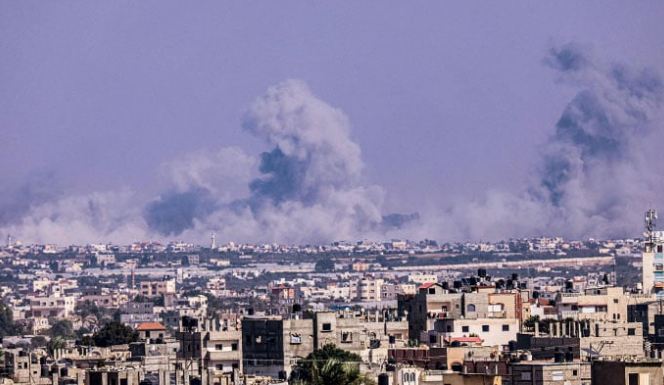
UN chief ‘horrified’ by Israeli attack on ambulance convoy outside Gaza City’s Al-Shifa Hospital
Cultural diplomacy connects nations for collaborative peace, development
DNA
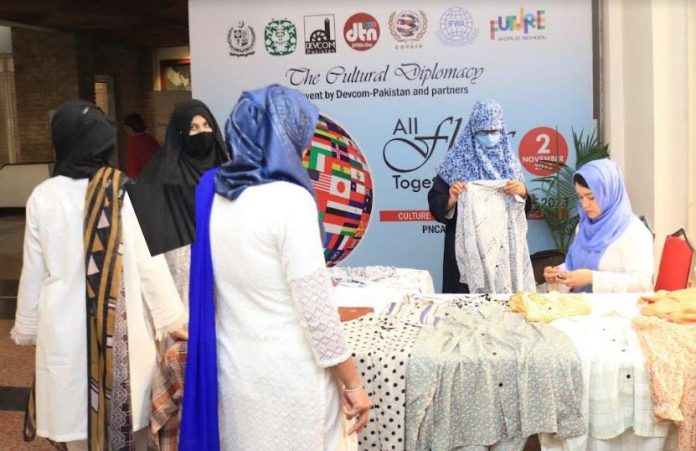
Islamabad – The colourful cultural diplomacy event ‘All Flags Together’ (AFT 2023) attracted large crowds of locals and foreign nationals. The daylong second edition was organized by the Development Communications Network (Devcom-Pakistan) in collaboration with Pakistan National Council of the Arts (PNCA), Islamabad Foreign Women Association (IFWA), Roots Future World School and COPAIR.
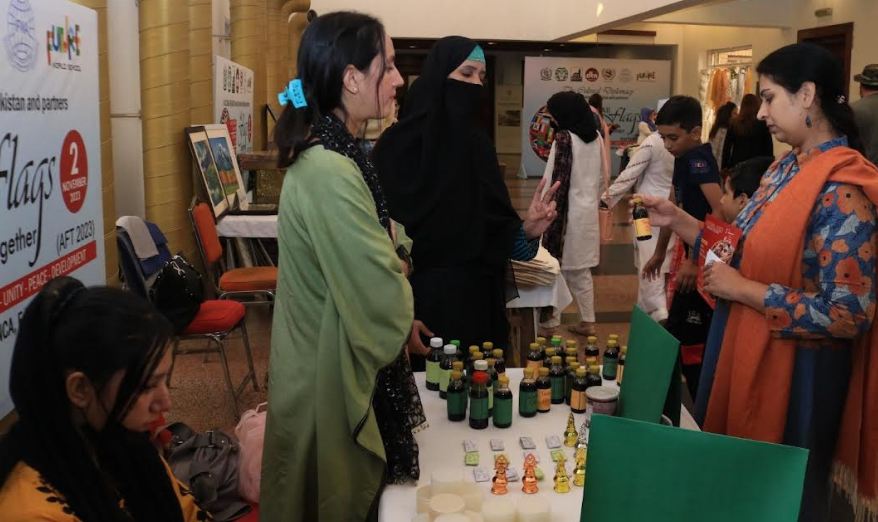
Different educational institutions, national and international organizations, and individuals showcased handicrafts, food, art and culture to inculcate cultural understanding and strength of cultural diplomacy. The event also included a cultural diplomacy dialogue, ‘Cultures for peace and development’.
The Roots Future World School students presented a scene from a Shakespeare’s play along with a tableau depicting Pakistan’s cultural fusion. The PNCA National Performing Arts Group (NPAG) presented the dances from Kalash and Sindhi jhoomar. The national award-winning sitar-player Aamir Hussain performed different compositions to enthrall the audience.
The IFWA stalls offered Moroccan meatballs, Italian mini pizza, Indonesian honeycomb cake and nasi lemak, spring rolls with delicious Yemeni sauce, Danish meatballs, Belgium’s waffles, and Bahraini kebabs. As many as twenty Pakistan women put up their food and handicraft stalls.
Speaking at the cultural diplomacy dialogue, the experts called for mainstreaming the cultural intelligence in society, and cultural diplomacy in the core public policy. The multilateral arena is especially vital for cultural diplomacy. Some countries are increasingly investing in regional or global forums including China, US, South Korea and Kazakhstan. Cultural diplomacy in the multilateral sphere has existed in the form of World Expos, which began in 1851 in the United Kingdom.
The Caretaker Federal Minister for National Heritage and Culture Jamal Shah said: Cultures are imperative bridges between communities and nations. Unfortunately, Pakistan is one of the countries spending least in cultural diplomacy despite having diverse and rich cultural strata. He appreciated Devcom-Pakistan for relaunching the ‘All Flags Together’ for realization of cultural importance in the public policy and country’s international relations.
The US trainer and intercultural intelligence consultant Daniela Draugelis said: Understanding cultural differences promotes appreciation of cultural assets to foster cooperation, understanding and trust that enables effective functioning across cultures. Building trust and relationships among communities and nations fosters harmony, peace and development while different cultures make a colourful bouquet of nations.
Amna Malik, president of COPAIR, said: We are living in the digital age that provides ample cost-efficient solutions for cultural diplomacy. Digital diplomacy compliments cultural diplomacy if the social media platforms are used in the best manner for strategic interventions. They are the best tools to promote any nation’s culture and nation branding. The public diplomacy activities and cultural diplomacy events such as ‘All Flags Together’ bring diverse cultures together and improves foreign relations and positive image of Pakistan.
Aftab ur Rehman Rana, the managing director of Pakistan Tourism Development Corporation (PTDC), in his presentation highlighted the rich potential of tourism in Pakistan. He said, Pakistan is one of those countries in the world which are blessed with a diverse inventory of tourism attractions which are based on the unique endowments of natural landscape features and its rich culture and heritage. Thanks to its historical, geographical and ethnic diversity, Pakistan’s culture is a melting pot of Persian, Afghan, Indian, Central Asian, South Asian and Western Asian influences.
Rana said, tourism plays a significant role in promoting cultural diplomacy by facilitating cross-cultural interactions, fostering mutual understanding, and building positive international relations. It promotes people to people contact so very strongly serves as a bridge for cross-cultural interactions, enhancing mutual understanding, and positively representing the country’s rich cultural heritage.
The Secretary Youth, Culture and Tourism Midhat Shehzad of the AJK government said: Cultural diplomacy doesn’t make alliances of powers or solve geopolitical problems with wars but it is a journey through souls which wins through minds and hearts. It is through languages, literature, artists, artisan, students, food, dresses, heritage and traditions. Let’s make it clear through a region’s old story of cultural linkages and harmony. Himalayan Karakoram region encompassing China, Tibet, Central Asian Republics, Afghanistan and subcontinent or South Asia even Russia as well.
Earlier, Devcom-Pakistan Executive Director and founder of All Flags Together Munir Ahmed briefed the audience about the objectives of the event. He said the cultural showcasing helps understanding each other and closing the gaps while working in collaboration leads to unity for peace and development. We shall aim to understand each other’s national heritage and the valuable work for peace and development. The AFT 2023 has provided different national and international stakeholders to come together and share their thoughts, culture and work.
The more a woman is covered, the more beautiful she is: Javed Sheikh
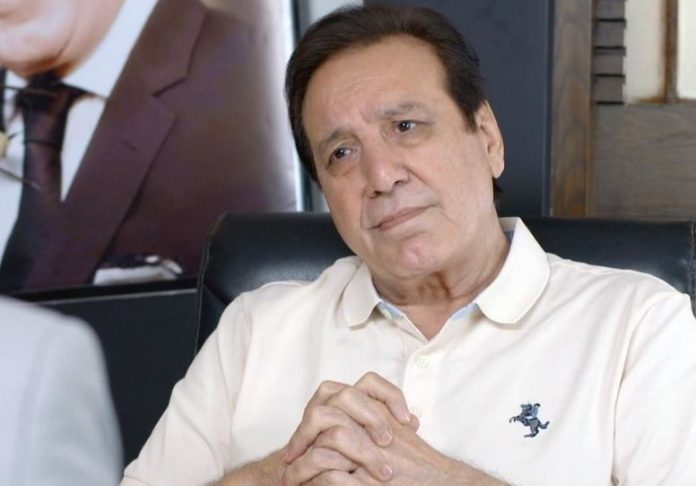
Pakistani actor Javed Sheikh has made waves on the internet with his forthright opinions on the hotly-debated feminist slogan ‘Mera Jism Meri Marzi’. The veteran actor sat down for an open chat on the podcast FHM Pakistan with host Adnan Faisal.
“I am against ‘Mera Jism Meri Marzi’”, Sheikh expressed his unwavering position. “If you ask me, it isn’t even proper for girls to say this like it’s my choice to do whatever I want,” the Bin Roye actor furthered, commenting on the popularity of the slogan among young women.
The slogan has been criticised since it first appeared on the protest scene in 2018 at the first Aurat March in Karachi. Over the years, feminist organizers, activists, and workers have repeatedly shed light on the slogan’s utility in raising awareness of reproductive rights, gender-based violence, and consent education. Despite countless rebuttals, ‘Mera Jism Meri Marzi’ continues to be misrepresented as Western propaganda aiming to destroy traditional values.
“It’s an Islamic country, you’re born in a Muslim household, you come from a family,” added Sheikh, elaborating his take on the slogan’s unsuitability in Pakistan’s religio-cultural context. In response, podcast host Faisal pointed out that the feminist call aims to raise awareness about bodily consent, a right that applies regardless of gender.
The Teefa in Trouble actor said, “I disagree with this. It’s just my opinion. Sure, we live in very ‘modern’ times now but my belief is that a woman has her own distinct essence. There’s a sense of modesty about her.” The celebrity went on to say, “In my opinion, the more a woman is covered, the more beautiful she is,” reiterating that he was entitled to his belief even if mainstream culture is growing in its acceptability of alternative lifestyles.
Responding to the host’s argument that a culture of ‘jeans and t-shirt’ is commonplace now and preserving old-school ideas about modesty is near impossible in such times, Sheikh stated that the culture may be ‘like this’ but he is not.
The veteran Pakistani star, whose extensive portfolio boasts successful supporting roles in Bollywood blockbusters such as Om Shanti Om and Namaste London, is among many entertainment figures with strong opinions on the slogan. Just recently, an interview clip went viral online where Pakistani actor Faysal Qureshi put his two cents about ‘Mera Jism Meri Marzi’, also on Faisal’s podcast.
“People have distorted ‘Mera Jism Meri Marzi’ into a joke!” the Fitoor actor remarked on the slogan’s contentious reception. “It’s about consent. I am a man, but even I expect regard for my consent,” he added in agreement with the podcast host.
The actor discussed his views about consent and marital rape within cultural and religious expectations. He said, “Yes, our religion says that when men call their wives, they are obliged to go but there is a certain reason. There are a lot of things that precede such a demand that men are obliged to fulfil first. That includes the five prayers, charity, earning through the right means.”
The Bashar Momin star referenced the Prophetic model (Sunnah) in Islam as a comprehensive guide to approach marital relations without isolating them from other religious compulsions. “You haven’t learned that but you have fixated on one particular thing,” Qureshi said, disapproving of the cherry-picking of religion.
KP reschedules MDCAT to ensure transparent medical college admissions
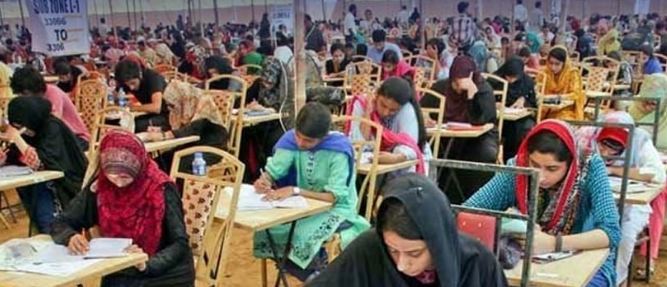
Khyber Pakhtunkhwa province has announced the rescheduling of the Medical College Admission Test (MDCAT) to be held on November 26.
The decision was made during a high-level meeting chaired by the Caretaker Chief Minister, Azam Khan, to ensure the transparent and fair conduct of these examinations.
During the meeting, Caretaker CM announced the establishment of test centers in various cities, including Kohat, Peshawar, Mardan, Dera Ismail Khan, Swat, and Abbottabad.
This decision aims to facilitate the students aspiring to pursue medical education across the province.
Emphasizing the need for meticulous planning, CM directed that comprehensive arrangements should be put in place to ensure the MDCAT is conducted with utmost transparency and fairness.
The rescheduled test will accommodate a total of 46,220 registered candidates who were initially set to take the Medical Entrance Test on September 10.
Pak vs NZ: Babar Azam & Co face monumental task to stay alive in World Cup 2023
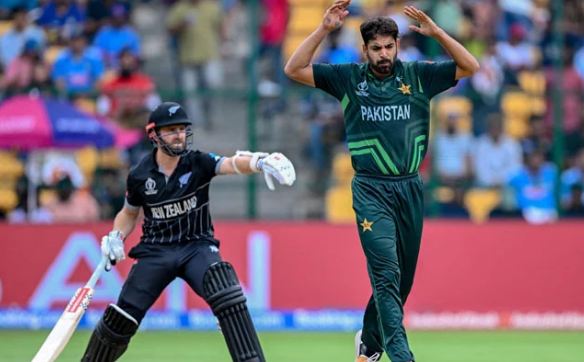
New Zealand set a massive target of 402 runs for Pakistan on Saturday in the ongoing ICC World Cup 2023 match which is being played at Bengaluru’s M.Chinnaswamy Stadium.
Earlier, Pakistan skipper Babar Azam won the toss and decided to bowl first in the must-win game against the Black Caps.
The team made one change inducting Hasan Ali in place of Usama Mir while the Kiwis made three changes in the squad. Ish Sodhi, Mark Chapman and Kane Williamson are playing today in place of James Neesham, Matt Henry and Will Young.
When asked to comment on his preparation, Williamson said: “My personal prep has been slightly limited but nice to be back.”
However, Babar Azam appeared confident of his bowlers, saying “we bowled well in previous matches”.
The winner of today’s game will become a strong contender to qualify for the semi-final.
Pakistan suffered four humiliating defeats against India, Australia, Afghanistan, and South Africa. However, they gave some hope to fans by beating Bangladesh by seven wickets in their last match in Kolkata.
On the other hand, despite a bright start and having four out of four wins at one point, the Black Caps suffered three consecutive defeats — India, Australia and South Africa.
A defeat to either of the teams today would seriously damage their chances of playing the event’s semi-final, especially Pakistan since they are not just behind in net run rate (NRR) but now also have to rely on Afghanistan’s matches after Hashmatullah Shahidi’s men clinched a significant win against the Netherlands on Friday.
A day earlier, team director Mickey Arthur expressed his focus on both winning the game and improving their net run rate. He also indicated a change in Pakistan’s game plan.
Pakistan are likely to play with four pacers considering the favourable pacey conditions in Bengaluru but the decision will be taken after closely monitoring the pitch and weather conditions today. They only have two players — Shadab Khan and Imam-ul-Haq — who remain a doubt for today’s clash while the Black Caps will be without pacer Matt Henry, and the participation of Lockie Ferguson, Kane Williamson and Mark Chapman remain a doubt.
Pitch report
The pitch at the M Chinnaswamy Stadium supports batters as it is easy to score runs there because of short boundaries and quick outfield. The surface in Bengaluru is also favoured for pacers but looking at tomorrow’s weather forecast, where there’s a 50% chance of rain, especially during the second half of the game, winning the toss would be key.
Head-to-head record
The two sides have faced each other nine times in the ODI World Cup history with Pakistan emerging winners seven times. New Zealand’s highest total against the Green Shirts is 302, while Pakistan’s highest is 281. Overall, Pakistan and the Kiwis have played one another 115 times in one-day cricket and the Men in Green leads there as well with 60 wins as compared to the Black Caps’ 51.
Playing XI
Pakistan: Abdullah Shafique, Fakhar Zaman, Babar Azam (c), Mohammad Rizwan (wk), Saud Shakeel, Iftikhar Ahmed, Agha Salman, Mohammad Wasim, Hasan Ali, Shaheen Shah Afridi, Haris Rauf.
New Zealand: Devon Conway, Rachin Ravindra, Kane Williamson (c), Daryl Mitchell, Tom Latham (wk), Glenn Phillips, Mark Chapman, Mitchell Santner, Ish Sodhi, Tim Southee, Trent Boult
Azerbaijan’s Role in Regional Connectivity: Bridging Nations and Cultures
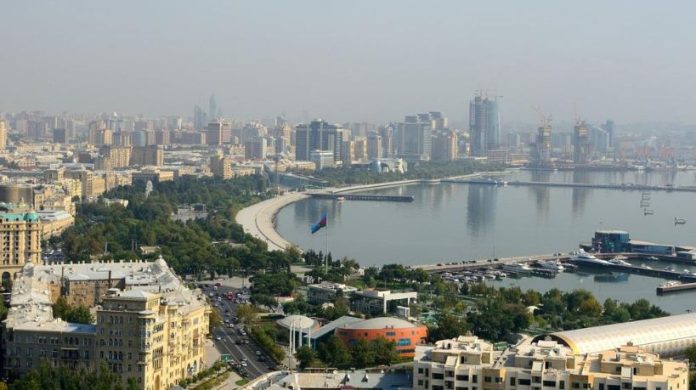
The inspiring story of Azerbaijan reflects resilience, cultural preservation, and a transition to a promising future, having overcome historical challenges and embraced modern opportunities.
Syed Ali Nawaz Gilani
Azerbaijan’s strategic positioning not only makes it a central player in regional affairs but also a land of immense opportunity,” said President Ilham Heydar oghlu Aliyev. Indeed, this diverse nation at the crossroads of Europe and Asia has much to offer. Let’s delve into the key facets that make Azerbaijan stand out.
Azerbaijan, often referred to as the ‘Gateway to the Caspian,’ is more than just a dot on the map. It’s a linchpin of trade and connectivity, linking Central Asia to nations like Russia, Kazakhstan, and Turkmenistan. To the west, it forges connections with Turkey and Iran, granting access to the Middle East.

Beneath its surface, Azerbaijan conceals a treasure trove of valuable minerals. Think copper, iron ore, rare earth elements, aluminum, gold, silver, zinc, mercury, and lithium. This rich geological endowment is estimated to be worth a staggering amount, forming the foundation for economic growth.
Azerbaijan is paving the path for regional cooperation with projects like the Belt and Road Initiative. Improved infrastructure and transport links can rejuvenate its economy and boost trade with neighbors. India, one of the largest regional markets, is within reach through efficient ground routes. As populations grow in the region, the need for energy rises. Azerbaijan, as a gateway to resource-rich Central Asian republics, can play a pivotal role in meeting this demand, contributing to regional stability and prosperity.
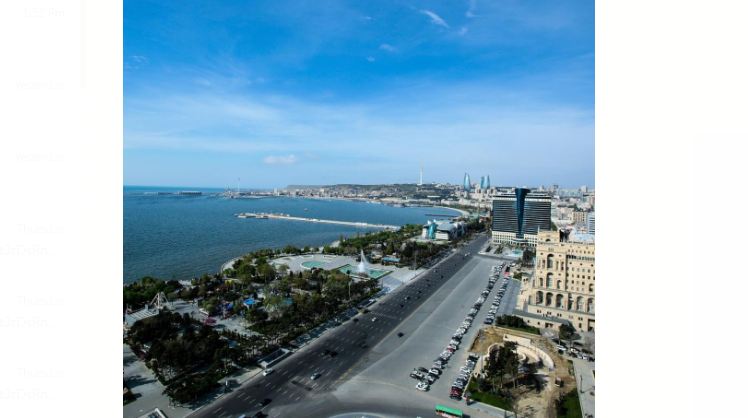
Azerbaijan’s cultural identity is rich and vibrant. Music, poetry, and dance are integral, with traditions dating back millennia. The nation cherishes its customs and artistic expressions.
Azerbaijan’s journey to self-determination in the 20th century was a turbulent odyssey through the annals of history. In the wake of the crumbling Russian Empire, the nation valiantly hoisted the flag of independence, only to see it swiftly eclipsed as the Soviets imposed their rule, subsuming Azerbaijan into the USSR. This era of foreign dominion cast a long shadow, subjecting the Azerbaijani people to a litany of challenges and hardships. However, amidst the darkest pages of Azerbaijan’s history, a chapter of unparalleled resilience and sacrifice emerged during World War II. The nation bore the weight of colossal losses, with a staggering 350,000 lives laid down in the battle against the Axis powers. These sacrifices stood as an indomitable testament to the unwavering spirit of the Azerbaijani people, their unyielding resolve, and their ardent yearning for self-determination. Then, in the dawn of 1991, Azerbaijan emerged from the looming specter of the USSR, once more unfurling the banner of independence. This time, the nation stood resolute in its determination to safeguard its sovereignty and set forth on a path toward prosperity, with a renewed sense of purpose and the unwavering spirit of a people who had weathered the storms of history.
Under President Ilham Aliyev’s visionary leadership, Azerbaijan has not only achieved remarkable economic diversity but has also emerged as a prominent player in enhancing European energy security. The President’s steadfast commitment to sustainability and environmental responsibility is exemplified by the nation’s transition towards renewable energy sources, marking a crucial step in mitigating the global climate crisis. Azerbaijan’s strategic promise to double its natural gas exports to Europe by 2027 is set to yield substantial benefits, not only for the nation itself but for the entire continent. This commitment positions Azerbaijan as a dependable and substantial contributor to Europe’s energy stability, further solidifying its role as a key player in the region’s energy landscape. The President’s forward-thinking approach has not only paved the way for economic growth and diversification but has also set a sustainable and environmentally responsible trajectory for Azerbaijan. By harnessing the potential of renewable energy sources, the nation is not only securing its own energy future but is also making a vital contribution to the global effort to combat climate change. With President Ilham Aliyev at the helm, Azerbaijan stands as a beacon of progress and environmental responsibility, demonstrating that economic prosperity and sustainability can go hand in hand, benefiting both the nation and the broader European community.
As Azerbaijan spreads its wings in the global trade arena, its strengthening bonds with countries like Pakistan are akin to a symphony of partnership. With the launch of direct flights and the lifting of customs duties, Azerbaijan’s dedication to international cooperation becomes an unmistakable crescendo. Together, they’ve created ‘Working Groups,’ like artisans crafting a masterpiece, to weave a tapestry of collaboration across diverse sectors.
In short, the story of Azerbaijan is one of promise and prosperity. It serves as an inspiration for resilience, determination, and the preservation of cultural traditions. The nation has not only weathered the storms of history but also embraced the opportunities of the modern world. In a world where the fusion of geopolitical significance and cultural heritage is like a mesmerizing dance, Azerbaijan emerges as a luminous guiding star—an embodiment of strength, unity, and boundless growth, extending an open invitation for all to bask in its radiant glow.
[The writer is the Secretary General of Pakistan China Friendship Association Khyber Pakhtunkhwa chapter and a Senior Media Consultant based in Peshawar. Readers can reach him at [email protected]]
14 soldiers martyred in terrorist attack

Six killed in blast targeting police van in DI Khan
Staff Report
RAWALPINDI: At least 14 soldiers were martyred when terrorists attacked two vehicles carrying security forces in Gwadar, the military’s media wing said Friday.
The Inter-Services Public Relations (ISPR), in a statement, said that the unfortunate incident occurred when the security convoy was moving from Pasni to Ormara in Gwadar district.
The military’s wing added that a sanitisation operation was being carried out in the area and perpetrators of “this heinous act will be hunted down [and] brought to justice”.
The ISPR mentioned that the security forces are determined to eliminate the menace of terrorism from the country and such sacrifices of “our brave soldiers further strengthen our resolve”.
The nation of 240 million has faced a surge in terrorism in recent months, with the Tehreek-e-Taliban Pakistan (TTP) and other militant outfits intensifying their actions against security forces.
In response, the state has also launched operations to curb terrorism.
Chief of Army Staff (COAS) General Syed Asim Munir last week said that the armed forces and its security and intelligence setups have fought the menace of terrorism in an exemplary manner despite sustained and varied support of inimical forces.
“Success will be ours InshAllah with the continued support of the people of Pakistan,” COAS Munir said.
Centre for Research and Security Studies (CRSS), in a report released in October, noted that the security forces lost at least 386 personnel in the first nine months of 2023, marking an eight-year high.
In the third quarter of 2023, some 445 people lost their lives and 440 suffered injuries from as many as 190 terror attacks and counter-terror operations.
Khyber Pakhtunkhwa and Balochistan were the primary centres of violence, accounting for nearly 94% of all fatalities and 89% of attacks (including incidents of terrorism and security forces operations) recorded during this period.
Separately, At least six people were killed and 20 were injured after a blast targeting a police van was reported from Dera Ismail Khan, said Caretaker Khyber Pakhtunkhwa Information Minister Firdous Jamal Shah on Friday
According to law enforcement officials, gunshots were also heard after the explosion.
The blast took place in Tank Adda in the city near a police van, injuring 22 people who are being shifted to a nearby hospital. Some of the injured are in critical condition.
The minister also shared that among the 22 included two policemen and said was saddened by the news.
“Those elements involved in the explosion and terrorism will be brought to justice,” assured the minister.
Last month, two blasts occurred in KP and Balochistan, killing scores of people on the day of Eid Miladun Nabi — the birth anniversary of Prophet Muhammad (PBUH).
The blast in KP’s Hangu, which took place during the Friday sermon, killed five and injured 12 people.
Hangu District Police Officer Nisar Ahmed said two suicide bombers were involved in the attack — one targeted the gate of the police station, and the other blew himself up inside the mosque.
Moreover, two policemen were also injured during the firing, officials of the law enforcement agency said, adding that the other militant blew himself up inside the mosque.
Earlier in the day, a suicide blast in Balochistan’s Mastung district killed at least 35 people including a police officer while injuring over 45.
For the past year now, Pakistan has been gripped by a spate of terror attacks, with Balochistan and Khyber Pakhtunkhwa particularly being under the radar of militants targeting security forces and civilians to deteriorate peace.
Security forces, however, continue to conduct operations against terrorists to eliminate terrorism from the country in its resolve to strengthen the sacrifices of its soldiers.
A report compiled by the Pakistan Institute for Conflict and Security Studies (PICSS) stated a sharp increase recorded in militant attacks across the country in August with 99 terror incidents reported.
This, according to the report, was the highest number recorded in any single month since November 2014. These attacks have resulted in 112 deaths and 87 injuries, mostly targeting security forces personnel and civilians.
Deportation drive: Taliban minister threatens Pakistan

Mullah Mujahid urges the international community to exert pressure on Pakistan
Centreline Report
KABUL: Amid Pakistan’s ongoing drive to deport illegal immigrants, including Afghan nationals, a purported audio clip has emerged, where the Acting Defense Minister of the Taliban government, Mullah Muhammad Yaqub Mujahid, has issued a stern warning to Pakistan, urging them to consider the consequences of their deportation efforts before taking “unilateral actions”.
In the audio clip, Mujahid called on the Pakistani authorities not to mistreat Afghan nationals and accused them of seizing the personal property and assets of Afghan citizens. He emphasized that such actions would be questioned and that the Taliban would use all their resources to prevent it, vowing not to allow anyone to confiscate the personal property of Afghan refugees, an Afghan news channel reported.
Furthermore, Mullah Mujahid urged the international community, the United Nations, and other organisations to exert pressure on Pakistan to bring an end to the current situation concerning the refugees. He criticised Pakistan for not ensuring that Afghan refugees are sent back to their homeland with the dignity they deserve.
“Even though it sends the refugees to their country, they [refugees] should be sent to the country with dignity and return to their homeland,” he stated. The Afghan minister expressed concerns that the ongoing situation was severely damaging the relations between Afghanistan and Pakistan.
“So, the Pakistani regime should think of the consequences of whatever it is doing. It should plant as much as it will be able to reap,” he asserted.
Pakistan’s northwestern border crossing has been flooded with thousands of people looking to cross into Afghanistan after the government’s deadline expired for undocumented foreigners to leave or face expulsion on November 1.
IMF talks start with polls date in focus
Mehtab Pirzada
ISLAMABAD: The International Monetary Fund (IMF) on Thursday inquired the Pakistani authorities about the next general elections as well as the functioning of the Special Investment Facilitation Council — the two most crucial issues that affected the country’s political and economic landscapes.
Nathan Porter, the Washington-based lender’s mission chief to Pakistan, raised the points during his maiden meeting with interim Finance Minister Dr Shamshad Akhtar.
Porter set the tone for the 14-day long review talks that are scheduled to end on November 15 — if everything goes according to the plan.
The IMF official praised the government’s performance during the first quarter of the ongoing fiscal year — an area where the finance ministry and Federal Board of Revenue (FBR) had so far exceeded expectations.
The mission chief raised the issues of the next general polls and the SIFC’s functioning, at least two participants of the meeting told The Express Tribune.
They said the interim finance minister said she would arrange the IMF delegation’s meetings with the Election Commission of Pakistan (ECP) and the SIFC secretariat.
Hours after the IMF-Pakistan opening session, President Dr Arif Alvi and the ECP agreed on February 8 as the elections date when they met on the directives of the Supreme Court, clearing the air on the political horizon of the country.
The elections date has direct implications on the next IMF programme review and also on any new deal with the Washington-based lender.
The tentative date for the IMF board meeting for the next review is March 1, implying that the third review for the $1.2 billion tranche should take place in around February next year.
The current $3 billion IMF bailout was given for a period of nine months, ending in April next year on the assumption that the new government would enter into another programme after the elections.
On Thursday, the IMF mission began discussions for the first review of the $3 billion programme, which would pave the way for the approval of a $710 million loan tranche by the Washington-based lender’s executive board in December.
The IMF has imposed a set of conditions in nearly every major area of the budget, with some of them being time-bound and others to be implemented throughout the fiscal year.
The SIFC is a civil-military body set up to attract foreign investment in Pakistan.
According to a recent report by the Policy Research Institute of Market Economy (PRIME), the SIFC may fall short of its mission to attract significant foreign investment because of its lack of focus on structural issues.
The PRIME report cautioned that the inclusion of the military in economic decision-making without the requisite expertise could not only destabilise the country, but also lead to the failure of key initiatives.
However, an SIFC official negated the concerns raised in the PRIME report, arguing that it was too early to make a judgment about the body, which had just started working in June this year.
The sources said the IMF mission chief outlined the energy sector and tax reforms as the primary areas of discussions during the review talks.
The IMF delegation will also review the Circular Debt Management Plan. The plan is being implemented to control the circular debt in the power sector.
The Washington-based lender’s team asked about the government’s policy on the supply of gas to fertiliser plants, while referring to the last meeting of the Economic Coordination Committee (ECC) of the Cabinet.
On Wednesday, the ECC could not agree on the discontinuation of subsidised gas supply to two fertiliser plants and extended it for another two weeks aimed at developing consensus among all stakeholders.
The sources said the IMF team also suggested to the Pakistani government that it should no longer set the fuel prices.
The government fortnightly sets the fuel prices but the IMF is of the view that they should be left to the market forces.
Former finance minister Miftah Ismail had once suggested ending the role of his ministry in determining the fuel prices, but subsequently the proposal was shelved.
The interim finance minister also assured the IMF to arrange a briefing on the Sovereign Wealth Fund, which the government had set up in August and transferred the assets of profitable entities into it.
PTI’s Asad Qaiser arrested from residence in Islamabad: brother
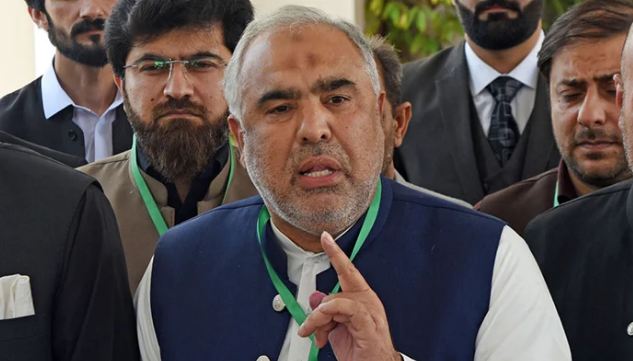
ISLAMABAD, NOV 3: Pakistan Tehreek-e-Insaf (PTI) leader Asad Qaiser has been arrested from his residence in Islamabad’s Bani Gala area, the former National Assembly speaker’s brother said on Friday.
Sources said that Qaiser — who is a staunch supporter of PTI Chairman Imran Khan — was taken into custody by police and Anti-Corruption Establishment (ACE) personnel for alleged corrupt practices related to purchase of medical equipment for Gajju Khan Medical College in Swabi.
Sources said that Qaiser is being shifted to Bani Gala Police Station, where he will be handed over to the ACE Swabi officials.
According to a copy of the First Information Report (FIR) registered against the PTI leader available to Geo News, the PTI stalwart and four officials of the health department face allegations of misusing funds and medical equipment in the medical college.
The FIR registered on the complaint of former ACE investigation officer Hidayat Shah stated that the five suspects caused Rs16.456 million loss to the treasury by “stealing” the equipment and purchasing substandard furniture for the institution.
PTI condemned Qaiser’s arrest, calling it a bid to “affect the transparency of elections”, which are set to be staged on February 8, 2024, as ordered by the Supreme Court after the Election Commission of Pakistan (ECP) and President Arif Alvi agreed on the said date.
“Asad Qaiser’s arrest is a question mark on the role of the election commission in staging fair polls. The series of leaders’ arrests is a conspiracy to keep PTI out of the election race,” the party spokesperson said.
The spox called on the ECP to ensure the provision of equal opportunities to all political parties to contest in elections. He also announced the decision to challenge Qaiser’s arrest on a judicial forum.
After much delay and obstacles, a date for general elections — which have been long due since the dissolution of assemblies in August — was finally decided on Thursday after President Alvi and Chief Election Commissioner Sikandar Sultan Raja unanimously agreed on the aforementioned date.
Today, the Supreme Court ordered the government to ensure the conduct of general elections on February 8, stating that no party has any objection to holding elections on this date.
Qaiser’s arrest comes as another setback for the Khan-led party, which is already embroiled in legal battles as its top leadership remains behind bars in different cases.
It may be noted that Qaiser led a PTI delegation in a meeting with Jamiat Ulema-e-Islam-Fazl’s (JUI-F) Maulana Fazlur Rehman at his residence last month.
“Today, we came to offer our condolences [over the demise of Fazl’s mother-in-law], this is our culture. We did not discuss politics in the meeting,” said Qaiser while speaking to the media after the meeting, which he said had taken place after approval from Khan.
Meanwhile, the PTI chief and vice-chairman Shah Mahmood Qureshi are also incarcerated at the Adiala jail and undergoing trial in the cipher case.
Imran was initially arrested in a graft case on May 9, triggering strong protests from the party across the country in which state installations were targetted.
During the riots important military installations, including the General Headquarters (GHQ) in Rawalpindi and Lahore Corp Commander’s residence, were ransacked.
This led to a crackdown against those involved in the events and hundreds of party workers and leaders were arrested.