Home Blog Page 1124

WHO, Pakistan to upgrade hospitals

WHO, Pakistan to upgrade hospitals

Being executed with the WHO’s support, the project will have zero financial implication for the Government of Pakistan.

Adil Shaheen

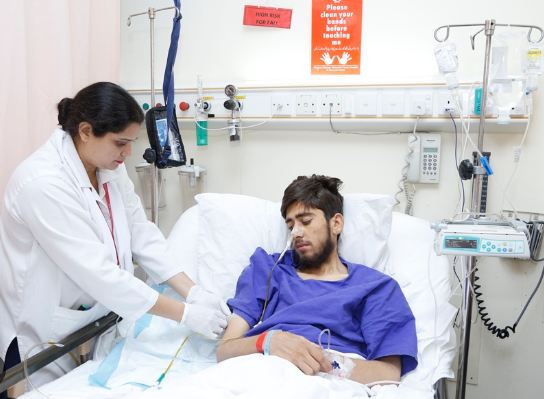
ISLAMABAD: The Ministry of National Health Services Regulations and Coordination and the World Health Organisation on Monday joined hands to refurbish 464 health facilities across the country as a step forward to achieving the government’s “top agenda” of Universal Health Coverage.

In this connection, a ceremony for the signing of Letter of Understanding between the health ministry and the world health body was held at the PM House which also marked the handing over of health equipment worth over Rs 2 billion including mobile health clinics, ambulances, and mobile vaccination vans.

Caretaker Prime Minister Anwaar-ul-Haq Kakar and Caretaker Health Minister Dr Nadeem Jan witnessed the ceremony as Secretary Health Iftikhar Ali Shallwani and WHO Representative in Pakistan Dr Palitha Mahipala signed the document.

Being executed with the WHO’s support, the project will have zero financial implication for the Government of Pakistan.

Under the project, the WHO would support Pakistan in renovation of 464 health facilities across the country including 41 in AJK and Gilgit Baltistan, 131 in Balochistan, 64 in Khyber Pakhtunkhwa, 26 in Punjab and 202 in Sindh.

The WHO would support the upgradation of 21 health facilities, 14 labour rooms and six EPI training centers in AJK and GB; 99 health facilities, 26 labour rooms, and six EPI training centers in Balochistan; and 36 health facilities 21 labour rooms and seven EPI training centers in KP.

The project also consists of refurbishing 15 labour rooms, nine EPI training centers and two nutrition stabilisation centers in Punjab; and 150 health facilities, 46 labour rooms and six EPI training centers in Sindh.

The WHO support for upgradation of the health facilities throughout the country will contribute to meeting the objective of Universal Health Coverage besides creating a better image of the government in the public for provision of decent health care services to them.

This support will also contribute to the SDG 3 for good health and also SDG8 which is decent work environment and economic growth.

The project will help strengthening the primary healthcare system and promote the referral system mechanism besides reducing the burden on major hospitals.

Under the plan, the primary health care facilities would be computerised and equipped with around 70 modern facilities.

The upgdaration of such a huge number of health facilities is a first in the country’s history that would ensure the provision of healthcare facilities to the masses at their doorstep.

While, Caretaker Prime Minister Anwaar-ul-Haq Kakar said that the government would ensure the common man’s access to the basic healthcare, for it being the right of every citizen.

The prime minister, in a meeting with WHO Representative in Pakistan Dr Palitha Mahipala here, appreciated the world health body as well as other partners for extending their support in the reformation of country’s health sector.

He also lauded the WHO’s support for upgradation of health facilities across Pakistan including Azad Kashmir and Gilgit Baltistan.

He said the mobile health clinics and ambulances provided by the WHO would help in provision of basic health facilities to the people at their doorstep, even those living in remote areas.

The prime minister was told that the mega project for upgradation of 464 health facilities would complete in two months. Besides providing health facilities, the mobile health units would also be linked with the central healthcare system that would also enable them to refer the patients to the major hospitals.

Later, the prime minister also witnessed the signing of Letter of Understanding between the Ministry of National Health Services Regulations and WHO, and also inspected five ambulances, a mobile clinic and two vaccination vans donated by the WHO.

Meanwhile, Caretaker Prime Minister Anwaar-ul-Haq Kakar on Monday ordered the police authorities to take strict action against the drug dealers supplying drugs and narcotics in and around the educational institutions.

Chairing a meeting regarding issues related to Islamabad Capital Territory (ICT) here, the prime minister said protection of life and property of the citizens was the primary responsibility of the state.

The meeting discussed in detail the ICT’s administrative issues, law and order situation and anti-narcotics’ issues.

He also directed the concerned authorities to take special measures for the protection of schools besides taking necessary steps on priority basis for the establishment of Dolphin Force in Islamabad.

The meeting was briefed in detail about illegal encroachments, the development projects under Capital Development Authority, performance of the ICT Police and other issues.

The prime minister ordered to immediately resolve the problems created by the showrooms established in various parts of the city to trade vehicles that cause problems of traffic and parking in the respective areas.

A comprehensive plan of a Car City should be made at a suitable location for the exhibition, auction and sale of vehicles in Islamabad, he instructed.

PM Kakar also said that an effective strategy should be devised to reduce the traffic pressure in the city.

The meeting was informed that 160 new buses would soon arrive in the city that would help making the public transport system in the city more effective.

The prime minister directed that a central digital system should be made for registration of cars in all cities across the country including Islamabad.

Fitness certificates should be issued for old vehicles based on the internationally accepted environmental pollution standards, he said. He also directed to make the system of issuance of driving license more effective and transparent across the country.

With respect to Margalla National Park, the prime minister said an indiscriminate operation should be conducted against illegal encroachment on Capital Development Authority lands including Margalla National Park.

With respect to the law and order situation in the capital city, PM Kakar was told that during current year, crimes rate had reduced significantly. The prime minister directed to dives an effective strategy to ensure protection of the citizens.

The meeting was informed that the e-challan system had been fully implemented in Islamabad by using modern technology and safe city cameras.

The meeting was attended by senior government officials including the caretaker interior minister.

Bilawal hopeful next PM ‘won’t be from Lahore’

Bilawal hopeful next PM 'won't be from Lahore'

“Even if our [political] opponents unite [against us] they won’t be able to defeat the PPP

Nazir Siyal

Karachi: Pakistan Peoples Party (PPP) Chairman Bilawal Bhutto Zardari Monday expressed hope that the country’s next prime minister will not be from “Lahore” — the stronghold of Pakistan Muslim League-Nawaz (PML-N).

Speaking to media in Karachi, the former foreign minister said that his party will contest the polls “on its own” and on the basis of its elections manifesto.

“We won’t look towards anyone [else] and [will rely] on public’s [support] for [success in elections],” Bilawal said adding: “[Although] anyone can be a candidate for the prime minister, the final decision is that of the people.”

Bilawal also termed PPP’s success in Sunday’s local government by-polls as merely a “trailer” and said: “The people proved [by voting] that they are with the PPP”.

The PPP leader’s remarks come as the party, on Sunday, won big in the LB by-polls held across 14 districts of Sindh with Karachi Mayor Murtaza Wahab winning the union committee (UC) chairman seat from Karachi’s Saddar Town area.

Meanwhile, Karachi’s deputy Mayor Salman Murad of the PPP along with Saifullah Noor also won the chairman’s seat from Malir district and Maurpur town, respectively.

“Even if our [political] opponents unite [against us] they won’t be able to defeat the PPP,” Bilawal said.

“The PPP won yesterday despite not being in government,” he added.

The party chairman also claimed that his party will mirror LB by-polls success in upcoming general elections.

“It is necessary that PPP forms the government [in order to] introduce people-friendly projects.”

“February 8 will be the day of victory for the manifesto of [Zulfikar Ali] Bhutto Shaheed and Benazir Bhutto,” he added.

It is pertinent to mention that last week, the Election Commission of Pakistan (ECP), in pursuant to the directions of the Supreme Court) announced that general elections will be held on February 8, 2024 — ending months of ambiguity surrounding the polls.

The top electoral body announced the poll date after consulting with President Arif Alvi on the court’s directions.

The apex court’s three-member bench headed by CJP Isa — while hearing multiple pleas seeking timely elections within 90 days — also ordered the caretaker government to “ensure the conduct of general elections on February 8”.

Commenting on the revelation that America-made weapons were used in the attack on the Pakistan Air Force (PAF) base in Mianwali, the former minister said that it was unfortunate that the weapons left by the United States in Afghanistan — during their hasty withdrawal — have found their way into the hands of dacoits and terrorists.

Bilawal was referring to last week’s terror incident where the security forces eliminated nine militants in a clearance operation after a failed terrorist attack on the air base in a swift response by the troops.

“Whether it be Khyber Pakhtunkhwa or Sindh’s Katcha area [the miscreants] have which the US left behind in Afghanistan,” he said.

The ex-foreign minister also reiterated his party’s staunch stance against all forms of extremism and reassured to curb the menace of terrorism via the effective implementation of the National Action Plan — if his party comes into power.

Furthermore, expressing his views on the May 9 riots, the PPP leader was of the view that there should be a provision of some kind of pardon for those “not involved” in the incident.

Get ready for elections: Nawaz

Nawaz Sharif says ‘no wish to take revenge’, seeks support of all ‘constitutional institutions’

Opens process of dialogue with all parties

Abbas Hasmi/DNA

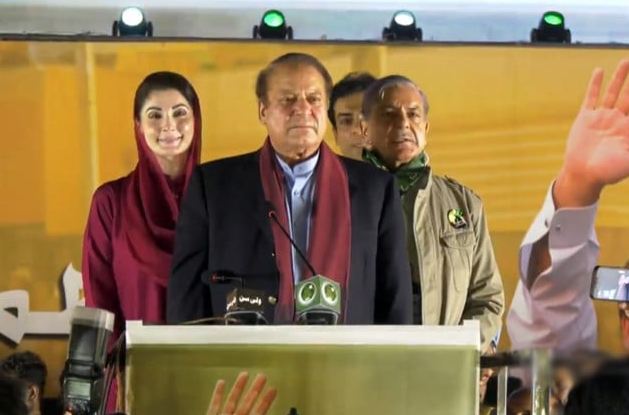
LAHORE: Pakistan Muslim League Nawaz (PML-N) supremo Nawaz Sharif on Monday directed the party leaders to begin their preparations for the elections — scheduled to take place on February 8, 2024. 

The directions were issued in a meeting at the PML-N’s central secretariat in Lahore where the three-time prime minister was welcomed by party president Shehbaz Sharif, PML-N Senior Vice-President and Chief Organiser Maryam Nawaz and other leaders. 

Khawaja Muhammad Asif, Ahsan Iqbal, PML-N Election Cell Chairman Senator Ishaq Dar and Central Information Secretary Marriyum Aurangzeb also attended the meeting. 

The PML-N’s election campaign has entered a new phase as Nawaz starts his meetings with party members, said the party on its official X account, formerly Twitter. 

In the meeting, the members also discussed the future political activities of the party and the current political situation in the country. 

Speaking to the leaders, Nawaz said that they will start the journey to development from where it was left off. 

This was the first meeting of the PML-N supremo at the central secretariat after his return to Pakistan. He arrived in the country on October 21 after four years of self-exile in London. 

Following the meeting, Asif while speaking during a press conference said that Nawaz Sharif will contest in the upcoming elections. 

The former defence minister also addressed the concerns raised by the Pakistan Peoples Party (PPP) about the level playing field. 

“Everyone has a level playing field, there is no unfairness,” he said.

As the time of general elections drew nearer, the rift between the former allies grew with the PPP persistently voicing concerns regarding the absence of equal opportunities to prove itself ahead of the polls.

‘Nawaz Sharif will contest in upcoming polls’

Aurangzeb, while speaking during a press conference after the meeting, said that Nawaz will contest in the February 8 elections and will become the prime minister for the fourth time.

“Nawaz Sharif has started conducting meetings from today and met the senior leadership of the party,” she said, adding that the party is ready for elections under Nawaz’s leadership.

Marriyum also said that the PML-N has formed a committee to work on the party’s manifesto.

“If anyone can steer the country out of crisis, it is Nawaz Sharif. We are ready to end inflation from Pakistan under Nawaz’s guidance,” said the former information minister.

Marriyum said PML-N was ready to bring peace and unity to the country.

Speaking about the rising rifts between PPP and PML-N, Marriyum said that the Pakistan Democratic Movement (PDM) alliance is still established today.

“Asif Ali Zardari, Nawaz Sharif, Fazlur Rehman and others have played their role in the service of the people,” she said.

Marriyum told the PPP to “stop whining about the level-playing field and come to the election field”.

She further said that the demand for a level playing field shows that the people of Pakistan have already given a decision in favour of Nawaz Sharif on October 21.

Taking a jibe at PPP, the former federal minister said that their demand signifies their defeat in the polls. “On one hand, PPP says there is no level-playing field, while on the other hand, it says it will clean sweep the elections,” she added. 

The Supreme Court has ordered the government to ensure the conduct of general elections on February 8. The orders during the hearing of multiple pleas seeking timely elections within 90 days of the dissolution of the assemblies.

The court, in its order, mentioned that the notification of the general election date has also been issued by the Election Commission of Pakistan (ECP), stating that no party has any objection to holding elections on February 8.

Armenia says outline of a peace deal agreed with Azerbaijan

Armenia says outline of a peace deal agreed with Azerbaijan

Over the past week Prime Minister Nikol Pashinyan and other Armenian officials have been hinting that a peace deal with Azerbaijan could be imminent.

They say the sides have reached agreement on three core principles of a deal while “details” remain to be settled.

Pashinyan told parliament on October 30 that a peace deal is “realistic” if the sides remain faithful to the principles of mutual recognition of territorial integrity, delimitation/demarcation of the shared border based on the 1991 Almaty declaration and the opening of transport links in a way that respects the two countries’ sovereignty and customs laws.

Later, ruling party MP Gevorg Papoyan echoed the prime minister, saying that only the “details” of the agreement are left to be hammered out.

Azerbaijan’s deputy foreign minister, Elnur Mammadov, confirmed that “most points” of the peace agreement had been agreed with Yerevan. Mammadov said that reaching a deal had become “easier” thanks to Azerbaijan’s takeover of Nagorno-Karabakh after its September 19-20 lightning offensive.

Following that offensive, several planned meetings between Azerbaijani and Armenian leaders failed to take place in a reflection of the sides’ differing preferences on who should mediate.

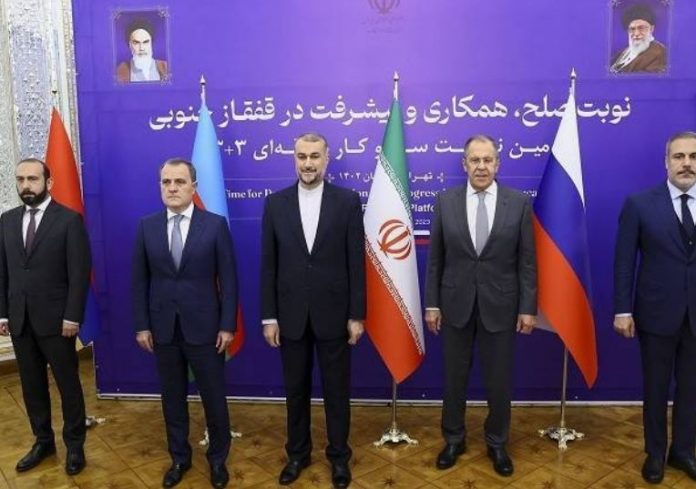
Baku refused to take part in EU-led peace talks in Granada, Spain and in Brussels, while Armenia’s prime minister was a no-show at a CIS summit in Bishkek where he’d been expected to meet with Azerbaijani President Ilham Aliyev and Russian President Vladimir Putin. However, Armenia was represented at a meeting in Tehran on October 23 that involved Russia, Turkey, Iran, and Azerbaijan.

Armenia’s lack of interest in Moscow-brokered peace talks comes as the country looks to the West for new strategic and security allies, signing an arms deal with France and intensifying diplomatic relations with a number of Western states.

Prior to Azerbaijan’s September offensive, which triggered the exodus of the region’s entire Armenian population, the Karabakh Armenians’ fate had been the thorniest issue in the talks. Baku had rejected the prospect of granting the region autonomous status, as well as Yerevan’s calls for an international mechanism that would ensure the Karabakh Armenians’ rights and securities under Azerbaijani rule.

During Azerbaijan’s attack on Karabakh on September 19, Pashinyan announced that Armenia’s priority was to ensure that Karabakh Armenians could remain in the region and live a “dignified” life there. But now that it has been emptied of Armenians, Yerevan seems to have abandoned this demand and instead started the process of granting them refugee status or Armenian citizenship.

“Our policy is that if those displaced from Nagorno-Karabakh do not, objectively speaking, have the opportunity to return to Nagorno-Karabakh – our wish is that they all stay in Armenia, and live and work here,” Pashinyan told a cabinet meeting on November 2.

Another critical issue is “the opening of transport links,” a provision of the 2020 ceasefire agreement that cemented Azerbaijan’s gains in the Second Karabakh War.

Baku long discussed this provision in the context of its “Zangezur corridor” project, which for a time it insisted was to be a seamless corridor connecting mainland Azerbaijan with its exclave Nakhchivan through Armenian territory and beyond Armenian sovereignty.

Azerbaijan stepped back from the maximalist version of this project in February, and, after the September offensive, began giving assurances that it would no longer insist on a corridor and would instead make do with an alternative route through Iran.

But Armenians are wary of these assurances, particularly given Russia’s apparent interest in the Zangezur corridor project.

Fears persist in Armenia that Azerbaijan will use force to make the corridor a reality, and continued rhetoric from Baku about “Western Azerbaijan” is doing nothing to allay these fears. This is the notion that parts of Armenian territory rightfully belong to Azerbaijan, or that, at the very least, Azerbaijanis have the right to settle in formerly Azerbaijani-populated parts of Armenia.

These concerns are shared by the EU, which has called on Azerbaijan to commit to respecting Armenian territory and by the U.S., where, according to Politico, Secretary of State Antony Blinken briefed members of Congress in early October on the risk of an Azerbaiajni invasion of Armenia. (The State Department rejected this report.)

The Lemkin Genocide Prevention Institute issued a “red flag alert” on November 1 over a possible “invasion of Armenia by Azerbaijan in the coming days and weeks.”

On November 2, the US State Department told the Voice of America’s Armenian service: “Any violation of Armenia’s territorial integrity will have serious consequences.”

Stanikzai warns Pakistan not to ‘Force Afghans to React’

Stanikzai warns Pakistan not to 'Force Afghans to React'

KABUL, NOV 6: Sher Mohammad Abbas Stanikzai, Deputy Minister of Foreign Affairs, at the meeting on the “Future Economic Development of Afghanistan” warned Islamabad to treat Afghan immigrants appropriately and not to force Afghans to react against their actions.

Stanikzai said that the reaction of Afghans has been recorded in history and now Afghanistan has a strong defense force and plenty of weapons.

Stanikzai also criticized the deportation process of Afghan immigrants and considered it a unilateral decision by the interim government of Pakistan.

According to the Deputy Minister of Foreign Affairs, Pakistani soldiers are looting the property and assets of Afghan immigrants during their deportation from the country.

The official of the Islamic Emirate emphasized that Pakistan has ignored the demands of the United Nations and the world for the departure of Afghan immigrants, while for years it has earned money and high privileges from the presence of immigrants in its soil.

Referring to the construction of the Qosh Tepa Canal, the Deputy Minister of Foreign Affairs assured the neighbors of Afghanistan that their water rights to the Amu River are being respected.

He clarified that the Islamic Emirate is determined to control the country’s water, but it has no plan to destroy or harm the country’s neighbors.

According to the information of the Refugees and Repatriation Department of Kandahar province, in the last five days, 4,533 families, which reached 31,547 people, have returned from Pakistan.

The Pakistani government gave a deadline for undocumented Afghan immigrants to leave the country by November 1.

Canadian High Commissioner calls on PM Kakar

Canadian High Commissioner calls on PM Kakar

ISLAMABAD, NOV 6: /DNA/ – Canadian High Commissioner, Leslie Scanlon called on Prime Minister Anwaar-ul-Haq Kakar, today at the Prime Minister’s House.

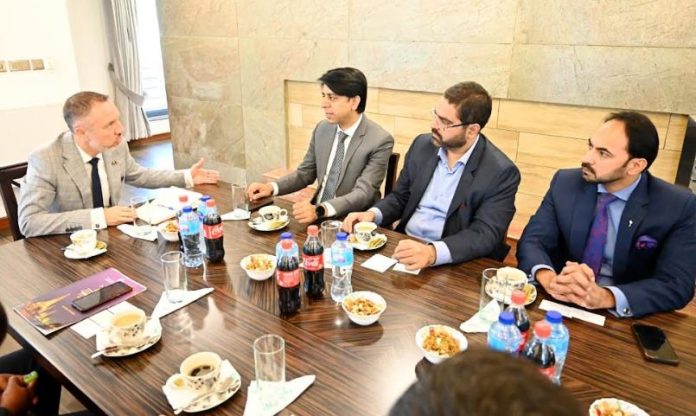
The Prime Minister and the High Commissioner discussed various aspects of Canada-Pakistan bilateral relations, including Canada’s development programs in Pakistan, humanitarian support post 2022 floods, economic and trade ties as well as Canadian investments in Pakistan, particularly the Reko Diq Project.

The Prime Minister emphasized the significance of strong ties between Pakistan and Canada. He highlighted the steps being undertaken by the Government in priority areas, particularly for the stabilization of the economy, facilitation of foreign investment through Special Investment Facilitation Council (SIFC), and repatriation of illegal foreigners.

The Canadian High Commissioner appreciated the support extended by the Government of Pakistan to Canada’s Afghan Relocation Program.

Turkish, Pakistan Red Crescents strengthen humanitarian ties

Turkish, Pakistan Red Crescents strengthen humanitarian ties

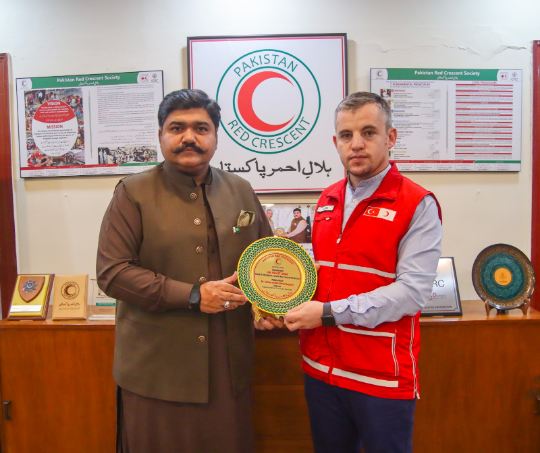
ISLAMABAD – 6 NOV /DNA/ – In a significant step towards strengthening the bonds of humanitarian collaboration, Head of Delegation from Turkish Red Crescent, Mr. Ergest LIMKA met with Chairman Pakistan Red Crescent Society, Sardar Shahid Ahmed Laghari. The call on, held at National Headquarter of Pakistan Red Crescent here on Monday, showcased the commitment of these two esteemed organizations to work hand in hand for the betterment of communities in Pakistan.

The meeting commenced with warm greetings and expressions of solidarity from Chairman Pakistan Red Crescent, who emphasized the longstanding relationship between the two organizations. Mr. Sardar Shahid Ahmed Laghari acknowledged the pivotal role that Turkish Red Crescent has played in providing support and assistance during numerous humanitarian crises, both within Pakistan and on a global scale.

Head of Delegation Mr. Ergest LIMKA, representing TRC, reciprocated the sentiment and reaffirmed their dedication to support PRCS in humanitarian endeavors. He commended Pakistan Red Crescent for its tireless efforts in humanitarian work within the country.

The discussions during the meeting revolved around various aspects of cooperation, including support in on going PRCS Recovery program in Sindh and Baluchistan which may cover Livelihood ,Cash Voucher Assistance (CVA) Nutrition ,Shelter and Migration program and also Strengthen the effective coordination between the PRCS and Turkish Red Crescent, Support for Iftaar and Qurbani project.

Expressing gratitude for the continuous support, Chairman Laghari assured Mr. Ergest LIMKA of a close working relationship to fortify the partnership and deliver impactful, life-saving services to those in need. The meeting culminated with a symbolic exchange of tokens of appreciation, signifying the shared commitment of both parties to alleviate suffering and enhance the well-being of vulnerable communities.

In the end, Chairman PRCS Sardar Shahid Ahmed Laghari presented memento to the TRC Head of Delegation Mr. Ergest LIMKA.

Colonel, three others martyred in Tiran operation

Colonel. three others martyred in Tiran operation

Rawalpindi, NOV 6 /DNA/ – Security forces conducted an intelligence based operation in general area Tirah, Khyber District on reported presence of terrorists.

During conduct of the operation, own troops led by Lieutenant Colonel
Muhammad Hassan Haider, effectively engaged the terrorists’ location as a result of which three terrorists were sent to hell, while three terrorists got injured.

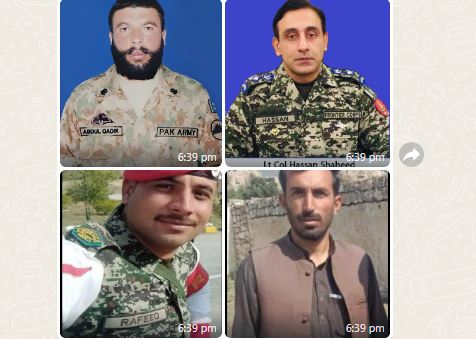
However, during intense exchange of fire, four brave sons of soil; Lieutenant Colonel Muhammad Hassan Haider (age: 43 years, resident of Islamabad), Naik Khushdil Khan (age: 31 years, resident of District Lakki Marwat), Naik Rafique Khan (age: 27 years, resident of District Charsadda) and Lance Naik Abdul Qadir (age: 33 years, resident of District Murree), having fought gallantly embraced Shahadat.

Sanitization operation is being carried out to eliminate any terrorists found in the area.

Security forces of Pakistan are determined to eliminate the menace of terrorism and such sacrifices of our brave soldiers further strengthen our resolve.

Angelo Mathews Timed Out in Historic Cricket Moment

Angelo Mathews

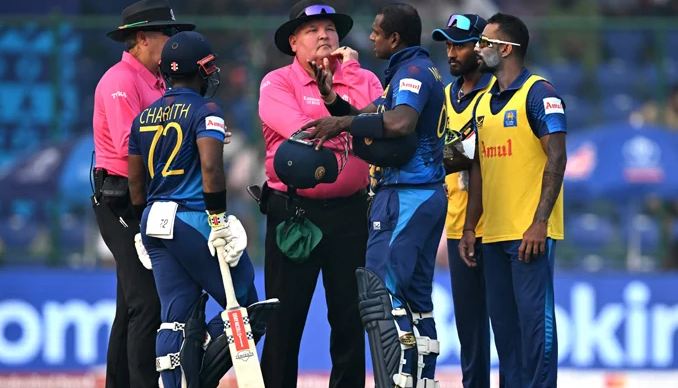
In a groundbreaking moment during the ICC World Cup 2023, Angelo Mathews etched his name in cricket history as the first-ever batter to be timed out in international cricket. The incident took place during a riveting clash between Sri Lanka and Bangladesh in the heart of Delhi. Mathews’s untimely exit added an unexpected twist to the match that had fans on the edge of their seats.

When a batter is dismissed in cricket, the regulations state that the incoming batsman must be ready to face a ball within two minutes of the fall of a wicket. However, Mathews found himself in an unusual predicament. Just as he was about to take his stance, disaster struck when the strap of his helmet snapped. A frantic scramble ensued as Mathews urgently sought a replacement helmet. It was during this interlude that Shakib, the Bangladeshi captain, seized the opportunity to appeal to the umpires, ultimately leading to the unprecedented ruling of Mathews being timed out.

The incident sent shockwaves through the cricketing world, sparking debates and discussions on the validity and fairness of the ruling. The timing of Mathews’s exit was indeed a rare and perplexing moment in international cricket.

Smog-Enshrouded Delhi Hosts a Historic Match

Prior to this dramatic cricketing event, the backdrop of the match itself was nothing short of historic. Delhi, the host city for the Bangladesh-Sri Lanka Cricket World Cup match, had been grappling with severe air pollution. In a peculiar twist of fate, this smog-choked metropolis had the distinction of being ranked as the planet’s most polluted major city.

Delhi’s air quality had fluctuated between “poor” and “severe” in the days leading up to the match. With a staggering population of 30 million, the city had been under the watchful eye of environmentalists and health officials.

The severity of the air quality crisis was so palpable that some players and coaches from both teams had resorted to training with face masks in the days preceding the match. The polluted atmosphere had forced the cancellation of practice sessions, particularly affecting Bangladesh players who suffered from asthma and had to remain confined to their hotel rooms.

As the Sri Lanka innings got underway, alarming levels of PM2.5 particles, notorious for their ability to enter the bloodstream, were recorded at a staggering 184 micrograms per cubic meter, as per data from IQAir. This figure was over 12 times the daily maximum recommended by the World Health Organization.

In a stark revelation, a Swiss-based international monitoring company had declared Delhi as the world’s most polluted major city on that very day. The city’s dubious distinction served as a grim reminder of the ongoing environmental crisis that has become inextricably linked with the Indian capital.

Cricket vs. Environmental Concerns

Cricket is a sport that has often weathered various challenges, including unfavorable weather conditions. According to the International Cricket Council (ICC) guidelines, air quality is typically assessed and treated as a factor similar to weather conditions. The decision regarding the match’s continuation or postponement ultimately rests with match officials who consider the welfare of the players and the feasibility of conducting the game under the prevailing circumstances.

Notably, this was not the first instance of severe pollution affecting a cricket match in Delhi. In December 2017, during a Test match, Sri Lankan players had been compelled to don masks to shield themselves from the toxic air. The pollution levels had soared to such heights that even Indian bowler Mohammed Shami had succumbed to the conditions, vomiting on the pitch.

The incident involving Angelo Mathews and the backdrop of environmental concerns have further fueled the debate about the intersection of sports and environmental responsibility. The world of cricket is now left to grapple with the question of how to ensure the well-being of its athletes while adapting to the ever-evolving challenges posed by our environment.

This historic match in Delhi will undoubtedly be remembered not only for the cricketing drama it brought but also for the environmental concerns that loomed large over the proceedings. As the cricketing world continues to evolve, it remains to be seen how it will address and navigate these pressing issues in the future.

RCCI delegation calls on Eduard-Robert PREDA Charge D Affaires of Romania

RCCI delegation calls on Eduard-Robert PREDA Charge D Affaires of Romania

DNA

Rawalpindi: A delegation of the Rawalpindi Chamber of Commerce and Industry (RCCI) headed by President Saqib Rafiq called on Eduard-Robert PREDA Charge D Affaires a.i/ Minister Plenipotentiary at the Romania Embassy in Islamabad.

Charge D Affaires of the Romanian Embassy appreciated RCCI’s efforts in promoting trade and diplomatic ties. He urged Pakistani businessmen to explore trade and investment opportunities for mutual benefit of the both countries.

Mr. Eduard-Cristian SONEA Political Counselor, Senior Vice President Muhammad Hamza Sarosh, Vice President Faisal Shahzad and Secretary General Irfan Manan Khan were also present in the meeting.

President Saqib Rafiq during the meeting urged for opportunities in non-conventional sectors including Pharma, IT, Services, Surgical Goods, Machinery tools and parts. He said that Pakistan considers Romania an important country not only in the context of the EU but also in view of Romania’s historical role as a supporter of multilateralism.

Matters related to enhancing the bilateral trade, investment opportunities, networking & chamber to chamber connectivity, exploring new markets and visit of trade delegation and information sharing from both sides to enhance trade relations and to explore the potential cooperation between both countries came under discussion.

President Saqib Rafiq also expressed deep sorrow over the death of Mr. Nicolae Goia (late) Former Ambassador of Romania in Islamabad.

Stay Connected

64FansLike
60FollowersFollow

Latest Reviews

Exchange Rates

USD - United States Dollar
EUR
1.17
GBP
1.35
AUD
0.72
CAD
0.73