Home Blog Page 1121

Pakistan calls out ‘Israel backers’ to help end genocide of Palestinians

Pakistan calls out ‘Israel backers’ to help end genocide of Palestinians

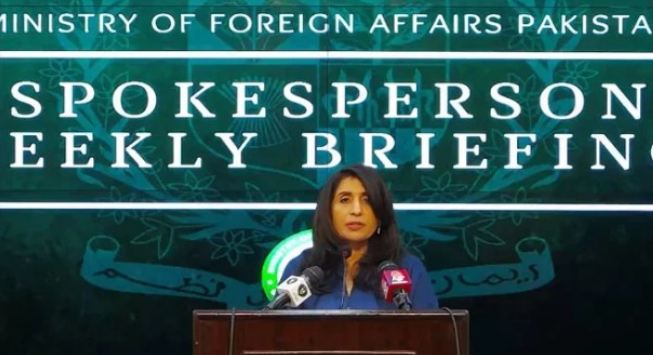
ISLAMABAD, Nov 10 (DNA): Pakistan on Friday said the “backers of Israel” must prevail upon it to abandon the plans for settler colonialism, forced displacement and ethnic cleansing of the Palestinian people.

“As an occupying power, Israel must fulfill its obligations under the Fourth Geneva Convention and forthwith end the carnage in Gaza,” the Foreign Office spokesperson said at a weekly press briefing.

Spokesperson Mumtaz Zahra Baloch said Pakistan was deeply concerned about the heinous crimes being committed against the Palestinian people as Israeli forces continued with their “campaign of terror and brutality” in Gaza.

She said over a month, the people of Gaza had been subjected to the worst forms of collective punishment.

“Israeli forces are committing crimes against humanity with impunity as they indiscriminately massacre defenceless civilians and deliberately deprive them of food, water, shelter and medical care,” she said.

Baloch said the use of phosphorus bombs and threats of nuclear holocaust were being made against the people under occupation who were being forcibly evicted from their land.

She said as a tragedy of epic proportions unfolds in Gaza, the United Nations Security Council must act to fulfill its responsibility to uphold peace and call for an urgent and unconditional ceasefire, lifting of the siege, and commencement of rapid, unhindered humanitarian assistance.

The spokesperson said Pakistan welcomed the forthcoming Extraordinary Islamic Summit being held on 11th November in Riyadh, Saudi Arabia. The OIC Summit has been convened in response to the unprecedented Israeli attacks on Gaza and its environs, which have posed a grave threat to the civilian population and precipitated a humanitarian crisis.

She said Prime Minister Anwaar-ul-Haq Kakar will participate in the Extraordinary Islamic Summit, while Foreign Minister Jalil Abbas Jilani will join the Council of Foreign Ministers preceding the extraordinary session.

“Pakistan will continue to play its role to advance international consensus and galvanize efforts for an urgent end to Israeli aggression against the Palestinian people and urgent provision of relief assistance to the people of Gaza,” she said.

On the situation in Indian Illegally Occupied Jammu and Kashmir, she said India must comply with its international obligations and respect the rights and freedoms of the Kashmiri people who have an inalienable right to self-determination.

“Pakistan will continue to extend political, diplomatic and moral support to our Kashmiri brothers and sisters for the just and peaceful settlement of the Jammu and Kashmir dispute in accordance with the UN Security Council Resolutions,” she said.

Ambassador Adam Tugio says Pak a great country to work in

Ambassador Adam Tugio says Pak a great country to work in

Says there are many potential sectors in both the countries including tourism, trade, technology, energy and agriculture through which both countries can expand their relations

DNA

ISLAMABAD: Ambassador of Indonesia Adam M. Tugio has said that Indonesia and Pakistan have huge potential to increase their trade and economic ties besides further strengthening people-to-people, educational and cultural linkages.

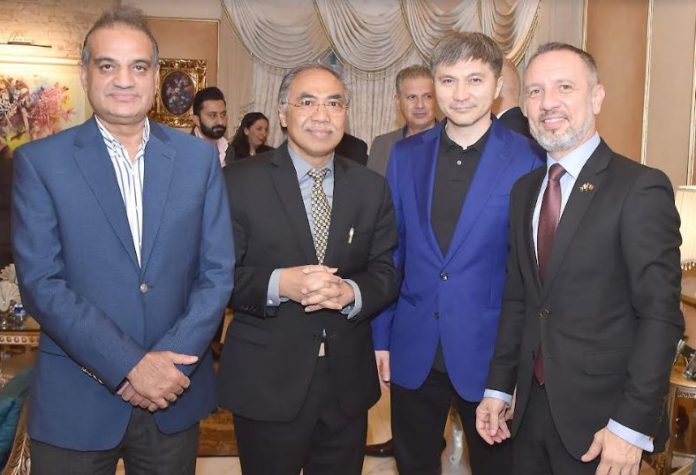
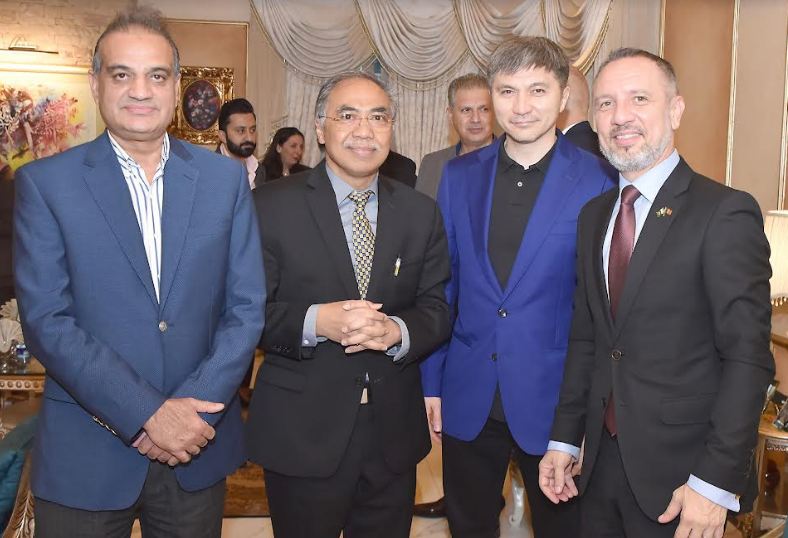
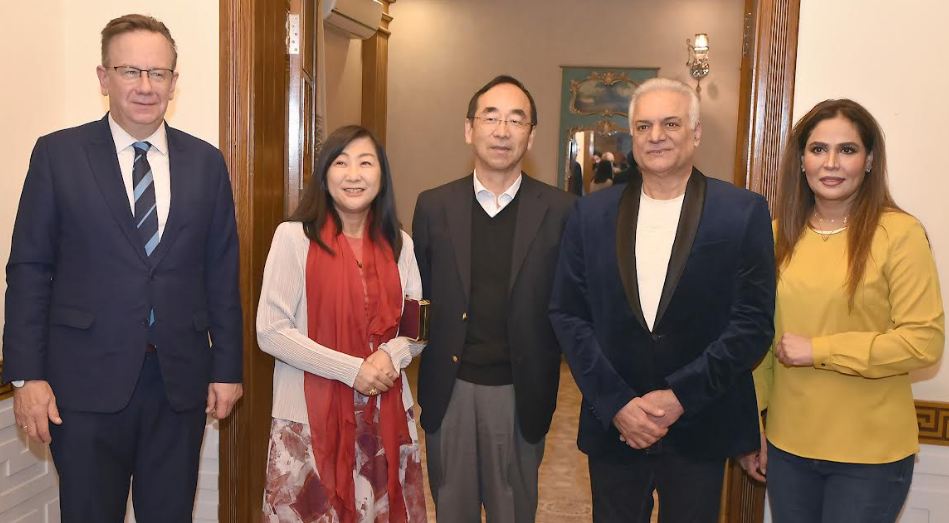
He said he will miss Pakistan a lot adding in Indonesia he would serve as the Ambassador of Pakistan as well.Ambassador Adam Tugio expressed these views while speaking at a farewell hosted by Dr Abrarul Hasnain at his residence. Ambassadors and High Commissioners of Japan, Malaysia, Norway, Poland, Jordan, Romania, Brunei, Kazakhstan, European Union, Philippines, Maldives, Morocco, Turkiye, Kenya, Red Cross and prominent business as well as social figures of Pakistan attended the dinner.

He said that there are many potential sectors in both the countries including tourism, trade, technology, energy and agriculture through which both countries can expand their relations.He said that Indonesia and Pakistan are connected by historical religious ties and we have to transfer this legacy to our next generations.He said that the best memories of his life are associated with Pakistan. This country is extremely hospitable and it is unparalleled in its natural beauty. He said that his experiences as the ambassador of Indonesia in Pakistan were wonderful.There are strong possibilities of Pakistan-Indonesia direct flight being operational and by finalizing it soon, direct air connectivity will be established between the two countries. The free trade agreement between Pakistan and Indonesia will be finalized soon after which mutual trade between the two countries will increase further.He said that he  had  done a lot of work to increase the mutual relations of the people in both the countries and more work is needed on this. Indonesia can be a gateway for Pakistan in ASEAN countries and in the same way, Pakistan can develop trade routes for Indonesia in South Asia and Central Asian countries, he concluded.Dr. Abrar in his welcome remarks today is a sad and a happy occasion as well. Sad in the sense that our dear friend Ambassador Adam Tugio is leaving us after completing his term in Pakistan. But at the same time it is a happy moment as our brother Adam has been elevated to post of the advisor to the Indonesian foreign minister on political and security affairs.He said, there is no doubt that during the tenure of Adam Tugio relations between the two countries touched new horizons. Even during his farewell meeting with the President of Pakistan a few days ago, the President duly and rightly recognized his services.Dr. Abrar wished him success in all his future endeavors. He hoped the ambassador would be able to visit Pakistan again either in his official capacity or on a private trip. In both cases, he shall be accorded a warm welcome and hospitality, he added. 

Defending champions England down Netherlands to bag second World Cup win

Defending champions England down Netherlands to bag second World Cup win

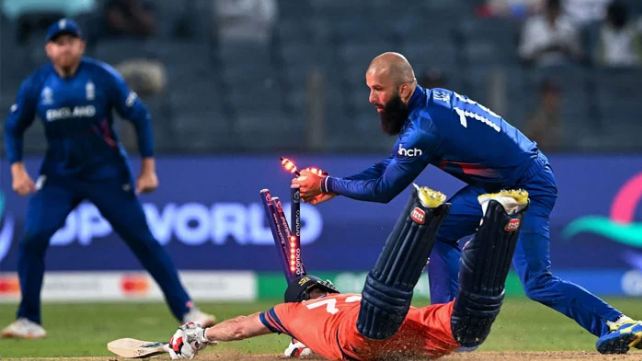
Defending Champions England on Wednesday thrashed the Netherlands to secure their second World Cup 2023 win on Wednesday.

During the match being played at Pune’s Maharashtra Cricket Association Stadium, England secured a comprehensive 160-run victory against the Dutch who were bowled out at 179 runs while chasing a 340-run target.

Ranked seventh on the points table — with six losses and two wins — today’s victory will help England keep their hopes alive for 2025 Champions Trophy qualification.

Earlier, Ben Stokes’ maiden World Cup hundred rescued faltering champions England from another collapse as they made 339 for nine.

Stokes’ 108, only England’s second individual century of the tournament, came when it looked as if his bottom-of-the-table side would struggle to reach 300 after winning the toss.

But together with Chris Woakes (51), he turned the tide during a seventh-wicket stand of 129 after they came together at 192 for six.

England came into this match having won just one of their preceding seven group games.

Meanwhile, the Netherlands — a non-test side by contrast — had won two matches in the tournament including a shock victory over semifinalists South Africa.

For England, opening batsman Dawid Malan led the way as the left-handed batsman completed a 36-ball fifty of which 40 were scored in boundaries.

England, however, lost two wickets in quick succession with Joe Root falling for 28 in bizarre fashion while attempting a reverse scoop and was bowled between his legs by Logan van Beek

He was followed by Malan — as he was nearing his tournament’s second century — who was run out after being sent back by Stokes going for a needless single.

Harry Brook gave his wicket away before England captain Jos Buttler and Moeen Ali both fell tamely in single figures.

Stokes was dropped in the deep off a tough chance and survived a tight lbw review before smashing a no-ball from spinner Aryan Dutt – and the ensuing free-hit – for sixes.

Test skipper Stokes went into the 90s with another six, a straight drive off De Leede.

A reverse swept four off paceman Paul van Meekeren, his sixth of the innings, saw him to a 78-ball hundred that included five sixes.

Woakes and Stokes, who was out in the last over, starred as England scored 124 runs in the last 10 overs, with van Beek suffering in a return of 2-88.

President for promoting trade, cultural ties with Indonesia

President for promoting trade, cultural ties with Indonesia

President Alvi said that Indonesian businessmen should explore investment opportunities in Pakistan and benefit from its investment-friendly policies

Adil Shaheen

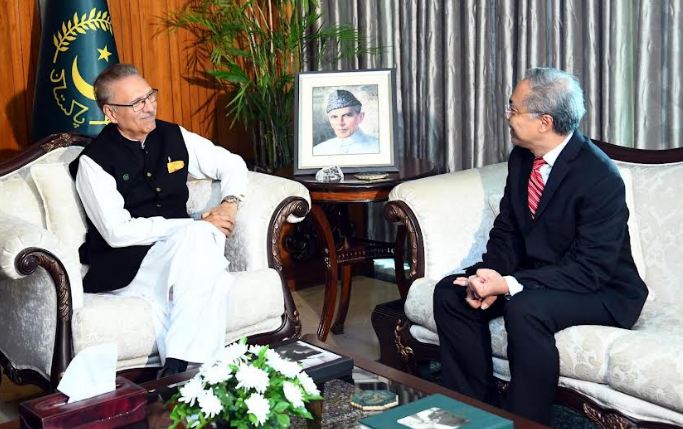
ISLAMABAD: President Dr Arif Alvi on Wednesday called for further promoting trade, investment, economic, cultural and political relations with Indonesia to bring the two countries further closer.

The president expressed these views while talking to the outgoing Ambassador of Indonesia Adam Mulawarman Tugio, who called on him, at Aiwan-e-Sadr.

Talking to the outgoing envoy, the president said that Pakistan cherished its close, friendly, and fraternal relations with Indonesia, which were marked by religious and cultural affinities and commonality of views on different issues.

He stressed that expanded trade, investment, and economic cooperation was a vital element of bilateral relations between Pakistan and Indonesia.

He added that Pakistan was keen to further deepen its cooperation in the fields of commerce, culture, tourism, and people-to-people contacts.

President Alvi said that Indonesian businessmen should explore investment opportunities in Pakistan and benefit from its investment-friendly policies.

He said that increased mutual political and cultural exchanges were imperative to further improve the brotherly ties between Pakistan and Indonesia.

The outgoing Indonesian Ambassador, Adam Mulawarman Tugio said that Pakistan and Indonesia should diversify trade and investment cooperation to further boost bilateral relations.

He informed that they were planning to open direct flights between the two countries that would bring the two nations further closer.

He further apprised that Pakistani students were among the major recipients of academic scholarships in Indonesia.

President Alvi thanked the ambassador for his valuable support and cooperation during his tenure and expressed the hope that the momentum of growth in bilateral relations between the two countries would be maintained.

He also expressed his best wishes for the ambassador for his future endeavours.

Alkhidmat Foundation extends support to Gaza victims through relief

Alkhidmat Foundation extends support to Gaza victims through relief

ISLAMABAD, NOV 08 (DNA) — In response to the urgent humanitarian crisis in Gaza, Alkhidmat Foundation Pakistan has taken swift action by dispatching relief supplies to Al-Arish Airport in Egypt. These supplies, sent via a charter plane cargo Boeing 474, are part of Alkhidmat’s ongoing efforts to alleviate the suffering of the victims in Gaza.

With the collaboration and support of the National Disaster Management Authority, Alkhidmat Foundation Pakistan has sent a comprehensive aid package, including essential items such as food, medicines, hygiene kits, delivery kits, and baby kits. Dr. Hafeezur Rahman, the President of Alkhidmat Foundation Pakistan, emphasized the organization’s commitment to providing immediate relief to those in need.

“While sending the relief goods, President Dr. Hafeezur Rahman announced that Alkhidmat Foundation is prepared to send five additional planes, with the necessary items already in shipping position,” stated the press release.

“Our Vice President, Muhammad Abdus Shakoor, is currently in Egypt, engaging in consultations with government officials and charitable organizations to explore additional avenues for aid to Gaza.”

Alkhidmat Foundation has a deep-rooted connection with the people of Gaza and has been actively involved in providing assistance in collaboration with international humanitarian organizations. The organization recognizes the severity of the current situation in Gaza and acknowledges the need for a comprehensive plan for reconstruction and rehabilitation.

Dr. Hafeezur Rahman urged collective action, stating, “After such a significant loss, the reconstruction and rehabilitation of Gaza will require a concerted effort. Everyone must play their part in supporting the victims during this challenging period.”

Alkhidmat Foundation Pakistan remains dedicated to its mission of serving humanity, and the organization reaffirms its commitment to providing continuous support to the victims in Gaza as part of the international humanitarian response. — DNA

8 November – Victory Day of Azerbaijan

8 November – Victory Day of Azerbaijan

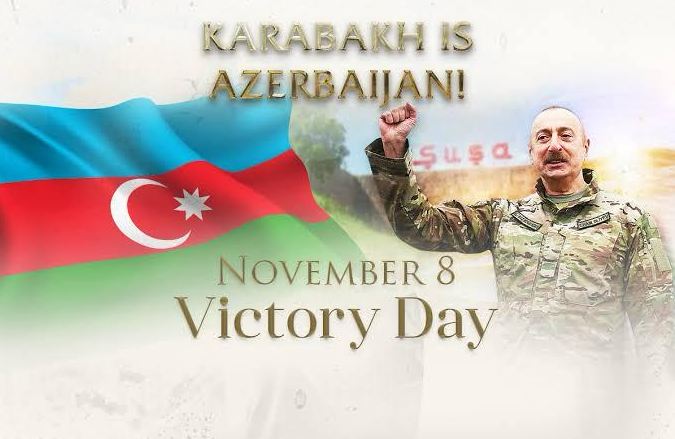
8 November is celebrated as Victory Day in the Republic of Azerbaijan every year. 3 years ago, Azerbaijan liberated its territories from Armenian occupation and restored its territorial integrity.

Almost 30 years ago, Armenia occupied 20% of Azerbaijani lands by committing war crimes in the territories of Azerbaijan. Armenia committed the Khojaly Genocide in 1992, killing 613 innocent civilians, including 106 women and 63 children. They carried out ethnic cleansing against the Azerbaijani population in the occupied territories. All Azerbaijanis have been forcibly expelled from occupied territories. In 1993, the United Nations Security Council adopted 4 resolutions demanding immediate and unconditional withdrawal of Armenian troops from the territory of Azerbaijan.Other international organizations, such as the Organization of Islamic Cooperation, Non-Alignment Movement, OSCE, Parliamentary Assembly of the Council of Europe, and the European Parliament adopted similar decisions and resolutions. Armenia did not implement the resolutions of the UNSC and other international organizations. Azerbaijan tried to resolve the Karabakh conflict through negotiations but Armenia always ignored it and tried to keep the status quo. Armenia even regularly committed military provocations during the occupation times. In 2020, Azerbaijan launched a counter-offensive in response to Armenia’s yet another large-scale military attack on Azerbaijani Army positions and civilian settlements. At the end of the 44-day, under the leadership ofPresident Ilham Aliyev, the Armed Forces of Azerbaijanliberated its territories from Armenian occupation. Azerbaijan implemented UN Security Council resolutions itself by liberating its occupied territories.During the Armenian occupation, Azerbaijani cities and villages were razed to the ground. All cultural and religious monuments were destroyed, mosques were desecrated and looted. Armenians turned mosques into pigsties during the occupation.Hundreds of thousands of mines and booby traps have been planted across Azerbaijan’s territory.Even after the war, Armenia did not stop its heinous military provocations that caused the loss of civilians and military personnel in the liberated territories of Azerbaijan. In this regard, the Azerbaijan Army launched local anti-terrorist measures to ensure the provisions of the Joint Trilateral Statement signed on November 10, 2020, to prevent large-scale provocations committed in the Karabakh economic region, to disarm and withdraw the Armenian armed forces formations from Azerbaijani territories, to neutralize their military infrastructure, to ensure safety of the civilian population returning to the territories liberated from occupation, safety of the civilian workers involved in the reconstruction work, the servicemen and to restore the constitutional order of the Republic of Azerbaijan.Right after the liberation, Azerbaijan started massive reconstruction and restoration works in the liberated areas by allocating more than 7 billion USD so far. Great Return has already been started by the Azerbaijani Government. Many former Azerbaijani IDPs have returned to the Fuzuli, Zangilan, and Lachin. International Airports namely Fuzuli and Zangilan were built, and Lachin International Airport is underway.It should be noted that Pakistan did not establish diplomatic relations with Armenia because of occupation. Pakistan has always supported Azerbaijan morally and diplomatically during the Armenian occupation and 44 days of the Patriotic War of 2020. It is no coincidence that the Pakistani flag is waved along with the Azerbaijani and Turkish flags in Azerbaijan by the common people in this country as a sign of respect and gratitude to the Pakistani brothers and sisters.

Pakistan, Uzbekistan resolve for early finalisation of Strategic Partnership Agreement

Uzbekistan

TASHKENT, NOV 08 (DNA) — Pakistan and Uzbekistan on Wednesday reiterated the resolve to finalize the Strategic Partnership Agreement at the earliest to promote regional economic integration.

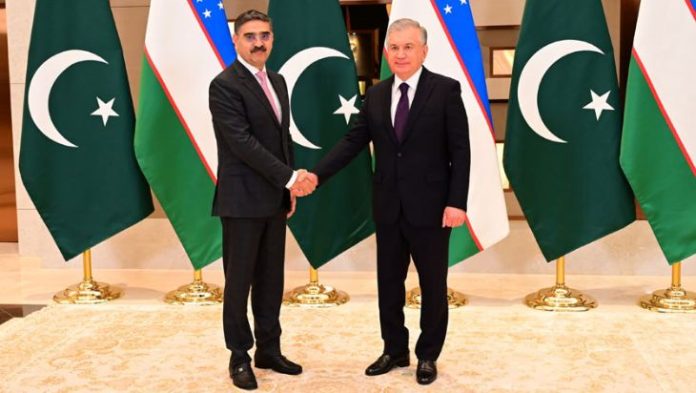
The bilateral ties were discussed in a bilateral meeting between Caretaker Prime Minister Anwaar-ul-Haq Kakar and President of Uzbekistan Shavkat Mirziyoyev, on the sidelines of the 16th Summit of the Economic Cooperation Organization (ECO) being held here.

Both sides reaffirmed their commitment to play an active role for the regional connectivity. The leaders exchanged views on deepening bilateral cooperation in a range of areas including political, trade, economic, security, defence, and connectivity.

Expressing satisfaction at the growing level of bilateral cooperation, Prime Minister Kakar stressed the importance of sustaining the momentum. He underlined that the recent operationalization of Preferential Trade Agreement (PTA) and Transit Trade Agreement (UPTTA) would boost bilateral trade and transit trade in addition to streamlining Economic Cooperation Organization Trade Agreement (ECOTA).

Both sides reaffirmed commitment to the early completion of Uzbekistan-Afghanistan-Pakistan railway project. Prime Minister Kakar and President Mirziyoyev discussed on the ongoing humanitarian situation in Gaza and other regional and global developments. — DNA

Why are the Armed Forces alone countering terrorism?

Qamar Bashir

Qamar Bashir

Press Secretary to the President (Rtd) | Former Press Minister at Embassy of Pakistan to France | Former MD, SRBC

The escalating threat of terrorism and extremism is deeply troubling, especially given the mounting toll on the lives of our courageous soldiers. This concerning trend has been particularly pronounced since 2021, aligning with the Taliban’s resurgence in Afghanistan. It’s important to note that while global terrorism incidents have been decreasing since 2007, the situation in our region has taken a disconcerting turn.

In the year 2023, Pakistan found itself ranked 4th on the Global Terrorism Index with a score of 8.11. This ranking represented a two-notch increase from 2022 when the score stood at 8.4 out of 10, placing Pakistan as the sixth most terrorism-affected country in the world. During 2022 in Pakistan, there were 648 recorded terrorist attacks, resulting in 1,058 fatalities, 602 injuries, and 13 hostages. The economic toll of terrorism in Pakistan was estimated at a staggering $10.6 billion for the year 2022. This figure is nearly nine times higher than the terrorism-related deaths in 2020, a concerning contrast even when compared to Afghanistan, where terrorism incidents dropped by 75%, and fatalities decreased by 58%.

The Western world, including the USA, has witnessed a consistent decrease in the number of terrorist attacks since 2017. In the west, for instance, only forty attacks were recorded in 2022, representing a significant 27% decrease compared to the 55 attacks reported in 2021.

The Global Terrorism Index reports 130 terrorist attacks originating from Afghanistan into Pakistan during 2022. Among these attacks, the Tehrik-i-Taliban Pakistan (TTP) emerged as the most active terrorist group, responsible for 63 incidents. Other groups contributing to the attacks include the Islamic State Khorasan Province (ISKP), the Balochistan Liberation Army (BLA), and the Jamaat-ul-Ahrar (JuA).

Of great concern is the troubling ratio of security personnel martyred versus terrorists killed. According to the Global Terrorism Index (GTI) for 2023, the global average of terrorists killed per security personnel killed in 2022 stood at 1.19. This signifies that for every security personnel lost, an average of 1.19 terrorists were neutralized. In Pakistan, however, the average ratio in 2022 was notably lower, at 0.67. This implies that for every security personnel lost, only 0.67 terrorists were eliminated.

The high rate of casualties among security personnel compared to terrorists killed has profound implications for the nation. It jeopardizes security and stability, creating an atmosphere of fear and uncertainty that can deter economic development, foreign investment, and social cohesion. Moreover, it has a psychological impact on the population, eroding trust in the government’s ability to provide safety and security, which, in turn, can undermine the overall well-being of the nation.

For the armed forces, continuous and high casualties pose operational challenges and strain their ability to counter terrorist threats effectively. Beyond the strategic implications, it takes a toll on the morale and motivation of military personnel. Witnessing a significant number of colleagues fall in the line of duty can be demoralizing and affect their commitment and readiness.

The families of martyred security personnel bear an immeasurable emotional burden. They endure the grief and loss of loved ones who made the ultimate sacrifice for the nation. The economic hardship resulting from the loss of a breadwinner and the long-lasting psychological trauma further compound their suffering.

The perception of a nation facing a high level of security risks can deter tourists. An unstable security situation can result in travel advisories and warnings, causing a decline in tourism. The negative impact on tourism can lead to a loss of revenue, jobs, and opportunities for local businesses.

A security situation in a country may erode investor confidence, leading to a reluctance to commit capital to the country. As a result, potential investments may be delayed or redirected to more stable regions.

High security risks may deter foreign businesses from engaging in trade partnerships with Pakistani companies, affecting the flow of goods and potentially impacting the country’s trade balance. It may also affect the willingness of companies to establish or expand their operations in Pakistan. This, in turn, could impede economic growth and job creation.

Regrettably, in Pakistan, there exists a prevalent perception that the sole responsibility for countering terrorism rests upon the shoulders of the armed forces.

Adding to this issue, the armed forces, weary of relentless political disputes and unwarranted attempts by various political factions to co-opt their support, have come to believe that political forces may not possess the requisite competence to handle sensitive or critical responsibilities.

This predicament has inadvertently pushed the armed forces into domains such as politics, internal law and order, and even diplomatic matters.

The need of the hour is for politicians, intellectuals, opinion-makers, and celebrities to transcend their parochial political rivalries and demonstrate a genuine commitment to addressing critical issues that threaten the very existence of our nation.

They must embrace the responsibilities vested in them by the constitution and laws of our land and release the armed forces from duties that have been shouldered due to political incompetence, incapacity, and inertia.

It is incumbent on the politician and civil society to begin by comprehending the underlying causes of both domestic and cross-border terrorism followed by devising a comprehensive national strategy to effectively tackle and counteract the primary factors that fuel domestic and cross border forms of terrorism, with the ultimate goal of minimizing the casualties suffered by our security personnel and innocent civilians.

Unifying all political parties in the fight against domestic and cross-border terrorism is a formidable task but an imperative one. National security dialogues must be initiated, providing a platform for representatives from diverse parties to engage in regular discussions centered on the shared objective of countering terrorism.

Bipartisan oversight committees within the legislature can play a critical role in monitoring and evaluating the government’s counterterrorism efforts, ensuring transparency and accountability in policy making.

Cross-party conferences and workshops should facilitate dialogue among political leaders from different spectrums, encouraging an open exchange of ideas and experiences regarding counterterrorism strategies and challenges.

The media’s role in raising public awareness about the necessity of a unified stance against terrorism cannot be overstated. Engaging political parties in policy formulation and promoting transparency through regular briefings build trust and consensus.

Political parties should be urged to prioritize national security over partisan interests, emphasizing the collective threat that terrorism poses. Joint statements and declarations condemning terrorism and a commitment to combating it can send a powerful message.

Crisis management protocols that involve political parties ensure swift coordination during critical situations. Ultimately, unity against terrorism necessitates a long-term commitment, recognizing that the fight against terrorism is an enduring effort that demands sustained cooperation among political parties.

In this regard, bringing together the government, political, civil society, intellectuals, opinion makers, artists, celebrities, and religious figures to address domestic terrorism’s root causes and security concerns is a formidable but essential endeavor.

This can be achieved through the establishment of a National Task Force, comprising diverse representatives, entrusted with a comprehensive mandate to tackle this pressing issue.

Armed forces should also take a deeper look into the reasons and causes of high numbers of martyrdom of brave security personnel during counter terrorism operations and should set in place a comprehensive mechanism to minimize casualties.

First and foremost, an unrelenting focus on advanced training and skill development is essential. Specialized training in counterterrorism tactics, intelligence gathering, and urban warfare is pivotal to equipping security personnel with the tools they need to succeed. Promoting special forces training further enhances precision and minimizes collateral damage during operations.

The effectiveness of these agencies also hinges on improved intelligence sharing and coordination. A seamless partnership between law enforcement, military units, and intelligence agencies, bolstered by international cooperation, is paramount.

Embracing technological advancements, such as surveillance drones, night-vision equipment, and artificial intelligence, is key to gaining a tactical advantage and thwarting threats.

Simultaneously, community engagement strategies that foster trust and collaboration with local populations and the development of community policing programs strengthen the security apparatus.

 International collaboration and public support are also integral components of this multifaceted approach. Together, these measures work in concert to create a safer environment, strengthen community trust, and ensure the safety of both security personnel and civilians.

In conclusion, the urgent need to achieve a unified stand by all political parties to counter domestic and cross-border terrorism cannot be overstated. The pressing challenge lies not only in addressing the shared threat of terrorism but also in minimizing the tragic casualties suffered by our dedicated armed forces.

It demands a steadfast commitment to national security, transparency, and prioritizing the well-being of citizens over partisan interests. Building consensus among diverse political leaders is not just a political imperative; it is a moral obligation in the relentless battle against the scourge of terrorism.

In the face of this common and immediate threat, a united front is not only our best defense; it is our resolute stand for the safety, security, and unity of the entire nation, while safeguarding the lives of those who protect us.

The Changing Global Geopolitical Dynamics and the Global Order

The Changing Global Geopolitical Dynamics and the Global Order

Dr. Muhammad Akram ZaheerThe world’s political system change over time is a bit like how living things grow and develop. It is a complicated system with different parts that work together. Sometimes, there’s an imbalance in power between different parts of the world, like big countries having more power than others. When power is spread out more evenly in the world, the system can switch big changes for better. The system needs change to keep growing and develop. As it changes, it creates new parts. These new parts make the system work better because they become really good at what they do. One interesting example of this is the Gateway region. Eastern Europe is becoming a place that connects different parts of the world. In the future, the Middle East might also become a Gateway. And in the next few decades, about thirty more Gateway states might appear. These are small countries that will break away from bigger ones to help the world system connect and work together. These gateways help the system to adapt change, interplay and relationship among countries.Today geopolitical tensions have arisen which depend on a complex interplay of different factors. Diplomacy, conflict resolution and international cooperation play important roles in managing and reducing these tensions. Currently, the United States holds the position of the world’s sole superpower. Over the next decades, the country will adopt new strategies to maintain affordable electricity. This strategy bears similarities to isolationism, as the United States will refrain from significant involvement in regional military conflicts. Instead, it will provide support to its allies through supplies, training and limited airpower, opting for a more indirect approach to addressing regional issues in Europe, the Middle East and Asia. This strategic shift is expected to help the United States maintain its global hegemony. In Europe, the European Union (EU) may undergo dissolution or redefinition as a smaller trading zone covering a reduced portion of the continent. The current free trade structure appears unsustainable due to member states, particularly Germany, becoming overly reliant on exports. This dependence leaves their economies highly susceptible to fluctuations in demand beyond their borders. Germany may experience an economic downturn due to inevitable export market fluctuations, leading to its diminished influence in Europe by 2040. This decline may open up opportunities for Central Europe, notably Poland, to become a more significant regional power. Russia will continue to grapple with the repercussions of relatively low oil prices. The income derived from this sector has been essential for maintaining internal stability. With a significant reduction in this income, Russia may either transform into a confederation or experience separatist movements by 2040, raising important questions regarding the future of its nuclear arsenal. In Asia, as China’s competitiveness in export markets wanes, high unemployment will become a major concern for the Chinese government. To prevent an economic downturn, the government may seek to consolidate its power and embrace authoritarian measures. Nevertheless, China’s diverse regional setting will present challenges to such centralized control. Consequently, by 2040, China may experience a return to regionalism marked by a degree of chaos. As China weakens, a power vacuum in East Asia may emerge, which Japan is well-positioned to fill, given its robust economy and significant military capabilities? In the Middle East, it is difficult to foresee an end to or effective control of Islamic extremism. Instead, it may continue to expand its influence and territory. Turkey and Iran are the only regional actors with the potential to counter these extremist groups, but Iran may not take any such action. Given the ambitions of these extremist groups to reinstate the caliphate, Turkey may find itself compelled to intervene militarily to safeguard its borders. This military and economic assertion by Turkey may lead to a resurgence of a regional power reminiscent of the Ottoman Empire, positioning Turkey as the dominant regional force by 2040.The future geopolitical environment is marked by a complex interplay of factors that will shape global dynamics over the next decades. The United States, as the current sole global power, is poised to adopt a new strategy resembling isolationism to maintain its dominance. Europe faces potential challenges as the European Union may redefine itself, while Germany’s economic vulnerability could shift the balance of power in the region. In Russia, weakened oil prices could lead to internal fragmentation, raising concerns about the future of its nuclear arsenal. In Asia, China’s economic decline may usher in a return to regionalism and give rise to Japan as a leading power. Meanwhile, the Middle East continues to grapple with the persistence and expansion of Islamic extremism, with Turkey potentially reasserting itself as a dominant regional force. The evolving geopolitical landscape will demand careful diplomacy, conflict resolution, and international cooperation to address these emerging trends and strains in the years to come. The dominant theme can be see playing out over the course of the next decades is increasing disarray in Europe and Asia. It is expected the prolong stability in North American with U.S. rivals working to increase their footholds in Latin America. Despite the growing instability in Eurasia, also expect to see three regional powers emerge: Japan, Turkey and Poland. These countries will be outliers in an otherwise fragmented Eastern Hemisphere.The changing global geopolitical scene is a dynamic and ever-evolving phenomenon that presents both opportunities and challenges for nations around the world. As new powers rise and traditional alliances shift, the need for diplomacy, cooperation and adaptability becomes increasingly paramount. In this period of interconnectedness and interdependence, it is essential for nations to recognize the importance of multilateral cooperation, embrace sustainable and inclusive policies and work towards a more peaceful and prosperous global future. The complexities of the 21st century demand creative solutions and a commitment to shared values, as we navigate the shifting tides of global geopolitics in a manner that promotes peace, stability and prosperity for all.

Pakistan, Azerbaijan relations from cordial to excellent: Solangi

Pakistan, Azerbaijan relations from cordial to excellent: Solangi

Ambassador of Azerbaijan Khazar Farhadov says 8 November is celebrated as Victory Day in the Republic of Azerbaijan every year

Ansar M Bhatti/DNA

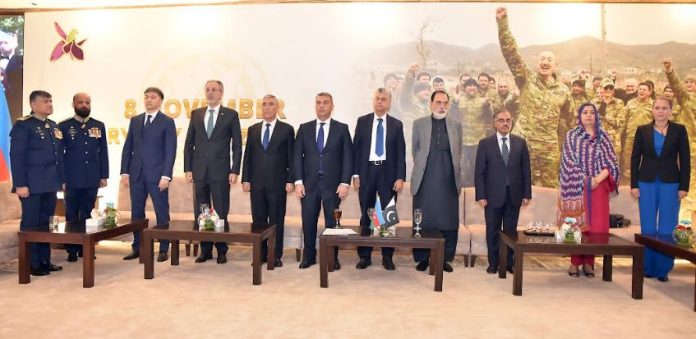
ISLAMABAD: Federal Minister for Information and Broadcasting Murtaza Solangi has said Pakistan greatly values relations with Azerbaijan adding these relations shall further be cemented in the coming days.

He expressed these views while addressing as the chief guest on the occasion of the Victory Day of Azerbaijan.

Murtaza Solangi furhter siad both Pakistan and Azerbaijan enjoy excellent relations in all fields. He said people to people between the two countries have also increased.

The minister also welcomed start of direct flights from Pakistan to Azerbaijan and hoped thiese direct air links will further bring two brotherly nations closer.

Ambassador of Azerbaijan Khazar Farhadov in his speech said, 8 November is celebrated as Victory Day in the Republic of Azerbaijan every year. 3 years ago, Azerbaijan liberated its territories from Armenian occupation and restored its territorial integrity. We honor with deep respect and gratitude our Martyrs who gave their precious lives for the independence, sovereignty, and territorial integrity of our country.

He said, Armenia kept 20% of Azerbaijani territories under occupation for almost 30 years. Almost Armenia committed war crimes in the occupied territories of Azerbaijan. Armenia committed the Khojaly Genocide in 1992, killing 613 innocent civilians, including 106 women and 63 children. They carried out ethnic cleansing against the Azerbaijani population in the occupied territories. All Azerbaijanis were forcibly expelled from occupied territories.

During the Armenian occupation, Azerbaijani cities and villages were razed to the ground. All cultural and religious monuments were destroyed, mosques were desecrated and looted. Armenians turned mosques into pigsties during the occupation. Hundreds of thousands of mines and booby traps have been planted across Azerbaijan’s territory.

But Azerbaijan has never targeted any civilian people and civilian infrastructures during the Patriotic War and local antiterrorism measures.

He said, even after the war, Armenia did not stop its heinous military provocations that caused the loss of civilians and military personnel in the liberated territories of Azerbaijan. In this regard, the Azerbaijan Army launched local anti-terrorist measures to ensure the provisions of the Joint Trilateral Statement signed on November 10, 2020, to prevent large-scale provocations committed in the Karabakh economic region of Azerbaijan, to disarm and withdraw the Armenian armed forces formations from Azerbaijani territories, to neutralize their military infrastructure, to ensure safety of the civilian population returning to the territories liberated from occupation, safety of the civilian workers involved in the reconstruction work, the servicemen and to restore the constitutional order of the Republic of Azerbaijan.

Immediately after the war, the Azerbaijani side whose 20 % of the territory had been occupied by Armenia for almost 30 years, proposed a peace agreement to Armenia. Raising the right of 300.000 Azerbaijanis to return to their historical homeland in nowadays Armenia, Azerbaijan also set up a special reintegration portal for Armenian residents living in the Karabakh economic region of the Republic of Azerbaijan.

Ambassador Farhadov said, during the occupation and 44 days of the Patriotic War, brotherly Pakistan has always supported Azerbaijan morally and diplomatically. Using this opportunity, I would like once again to extend my gratitude to the Government and people of Pakistan for their continuous support. It is no coincidence that the Pakistani flag is waved along with the Azerbaijani and Turkish flags in Azerbaijan by the common people in this country as a sign of respect and gratitude to the Pakistani brothers and sisters.

Stay Connected

64FansLike
60FollowersFollow

Latest Reviews

Exchange Rates

USD - United States Dollar
EUR
1.17
GBP
1.35
AUD
0.72
CAD
0.73