Home Blog Page 1120

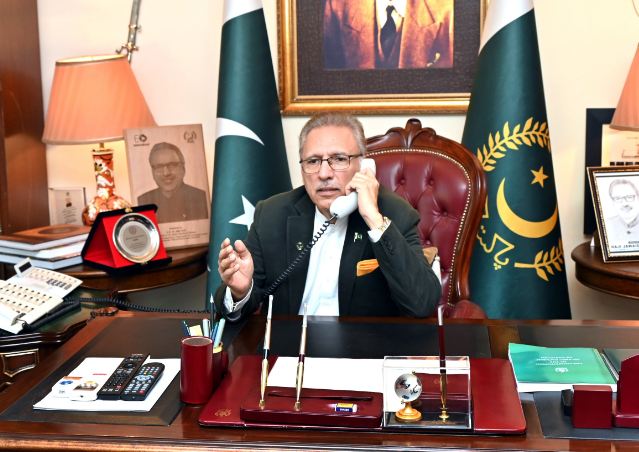
Arif Alvi speaks to Palestinian President, condemns Israeli brutalities

Arif Alvi speaks to Palestinian President, condemns Israeli brutalities

DNA

ISLAMABAD, 10 Nov: President Arif Alvi made a telephone call to the President of Palestine, Mr Mahmoud Abbas, and expressed his heartfelt sympathies and grief on behalf of the people and government of Pakistan over the atrocities being committed by Israel against people of Palestine for over seven decades. He deplored that what was happening in the Gaza was very painful and the entire Pakistani nation was deeply saddened by the brutalities and reign of terror unleashed the Israeli security forces. The President strongly condemned the lethal bombing by Israel that even did not spare schools and hospitals and its barbaric actions resulted in killing of thousands of Palestinians, including women and children, healthcare workers, journalists and UN aid workers. 

The President said that the current situation in Gaza was the reaction of decades of apartheid and unjust policies of Israel. He condemned Israel for ethnic cleansing against the Muslims and pushing them out of their territories.

Talking to his Palestinian counterpart, President Arif Alvi regretted over the lack of action on the part of the international community to stop Israel from its murderous campaign against the people of Gaza. He assured the Palestinian President that Pakistan would continue to support resolving the Palestinian dispute in accordance with the relevant UNSC’s resolutions. The President urged the international community to make efforts for urgent ceasefire, opening of unhindered humanitarian corridor to Gaza, stopping further displacement of the Palestinians from their homeland and permanent solution to the Palestinian dispute in accordance with UN Security Council’s resolutions. The President said that if two states solution was not acceptable to Israel, then one state solution was the only way where Jews, Muslims and a good percentage of Christians could live to exercise equal political rights.

Talking to his Pakistani counterpart, the Palestinian President, Mehmood Abbas said that Israel was committing genocide in Gaza. He called for stopping Israel from fighting across the Palestinian territory. He also demanded for opening of a corridor to Gaza to ensure the delivery of humanitarian assistance as there was no food, medicine and electricity available to the people of Gaza.  

President Mahmoud Abbas thanked Pakistan for supporting the Palestinian cause and sending humanitarian assistance.

IoBM to host Int’l Conference on Islamic Banking and Finance

Islamic Banking and Finance

KARACHI, NOV 10 /DNA/ – The Institute of Business Management (IoBM) has announced that it will be hosting its high-profile 7th Annual International Conference on Islamic Banking and Finance from November 14 to 15, 2023. Chief guests at the conference’s inaugural session include Dr. Shamshad Akhtar, the Caretaker Federal Minister for Finance and Mr. Jameel Ahmed, Governor State Bank of Pakistan. The welcome address will be delivered by Mr. Talib S. Karim, President IoBM.The international conference, now in its seventh year, will be based on the subject of “Sustainable Development and Islamic Finance: Examining the Role of Islamic Financial Institutions in Promoting Sustainable Economic Growth, Ethical Investments, and Technological Innovations”. It will feature leading keynote speakers, international delegates and representatives from various policy making institutions at the administrative level. Some of the notable panelists include representatives from Accounting and Auditing Organization for Islamic Financial Institutions (AAOIFI), Bahrain, Bank Alfalah, Faysal Bank, Dubai Islamic Bank, International Centre for Education in Islamic Finance (INCEIF), Malaysia, BankIslami Pakistan, and Meezan Bank to name a few.The conference will serve as a catalyst for fresh ideas and strategies, driving the future of Islamic banking and finance in Pakistan. It will focus on fostering innovative thought leadership, providing a collaborative environment for intellectuals and senior representatives to explore sustainable development avenues. Sessions focus on the contributions of Islamic financial institutions to global SDGs, steering discussions toward actionable strategies aligned with ethical principles. Delegates engage in insightful dialogues on regulatory standards and challenges faced by Islamic financial institutions, offering comprehensive understanding and paving the way for collaborative solutions.

Final IMF negotiations start; Pakistan to receive $71 million

Final IMF negotiations start; Pakistan to receive $71 million

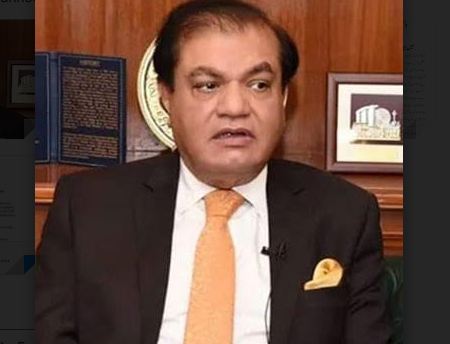
ISLAMABAD, NOV 10 /DNA/ – Chairman of National Business Group Pakistan, President Pakistan Businessmen and Intellectuals Forum, and All Karachi Industrial Alliance, and former provincial minister Mian Zahid Hussain, said on Friday that the first round of negotiations between the IMF and Pakistan have ended without any major disagreement and the final negotiations have started on Monday.

Pakistan is likely to get the second tranche of $710 million after the conclusion of talks, he said.

Mian Zahid Hussain said the government may have to take several measures to increase its revenue, including taxing builders, retailers, wholesalers, and property dealers.

Speaking to the business community, the veteran business leader said that the IMF has also asked the government for a plan to tax wealth. The IMF is also concerned about the blocking of imports.

He said that PIA, which runs 20 aircraft to feed millions, causes a loss of Rs 150 billion per year to the country, hence becoming a serious problem.

PIA should be privatized immediately, while politicians who call this airline a symbol of national prestige should be asked about the prestige of dozens of countries, including the United States, that do not have their own airlines.

He said that for decades, the national airline has been turned into a political orphanage, so its revival has become impossible. A delay in bailing out PIA and other failed state-owned enterprises could strain relations with the IMF again, he warned.

Mian Zahid Hussain further said that recently, PSO had stopped supplying oil to PIA due to non-payment of arrears, which affected its operations badly, and it had to suffer a loss of 30 crores per day.

The management of PIA has recently acquired a loan of eighteen billion rupees, while preparations are underway to acquire another twenty-four billion, as this institution cannot survive without loans and bailouts.

On the other hand, various ministries and departments have also had to pay tens of millions to PIA for a long time. If the payment is made, the financial affairs of this institution will improve somewhat.

Mian Zahid Hussain further said that after the licensing scandal, which was a big conspiracy, PIA has to bear a loss of seventy-one billion rupees annually, but no action has been taken against those who hatched the conspiracy.

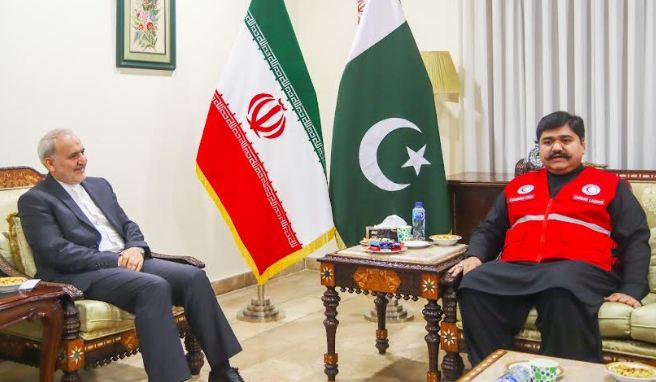
Chairman PRCS reinforces strong bilateral ties in meeting with Iranian ambassador

Iranian ambassador

DNA

ISLAMABAD, NOV 10 – In a significant diplomatic interaction, Chairman of Pakistan Red Crescent Society (PRCS), Sardar Shahid Ahmed Laghari, recently visited the Iran Embassy in Islamabad and engaged in a productive meeting with His Excellency Dr. Reza Amiri Moghaddam, the Iranian Ambassador. The meeting underscored the deep-rooted bond between the two nations, aptly described by His Excellency as ‘Two souls and one body.’

The centerpiece of the discussions was the robust relationship between Pakistan and Iran, characterized by mutual affection and shared commitment. Ambassador Dr. Reza Amiri Moghaddam lauded PRCS for its commendable efforts, particularly highlighting the success of a recent fundraising event hosted in October. The event shed light on the organization’s pivotal role in addressing the challenges faced by vulnerable communities, offering His Excellency a comprehensive understanding of the issues at hand.

Expressing appreciation for PRCS’s proactive role in tackling natural catastrophes, Ambassador Dr. Reza Amiri Moghaddam extended gratitude for the organization’s initiatives during last year’s devastating floods in Sindh, Balochistan, Punjab and KPK regions. While acknowledging the dire situation, Chairman Laghari emphasized the need for continued collaboration not only in times of disaster but also on regional issues.

The meeting delved into the current humanitarian crisis in Gaza, with both leaders recognizing the significance of Red Crescent involvement. Chairman Laghari proposed a pragmatic approach to support people of Palestine, suggesting cash funds for targeted aid, and expressed PRCS’s commitment to rallying support from other national societies.

Additional discussions centered around collaborative healthcare efforts in Quetta, focusing on two dispensaries and the potential engagement of Iranian experts to enhance the training of local staff. Ambassador Dr. Reza Amiri Moghaddam announced the installation of two dialysis plants in Pakistan, showcasing a joint dedication to fortifying healthcare infrastructure. The Iranian experts will provide training to the PRCS technical team for operating the plants, and PRCS will assume responsibility for their operations.

Chairman Laghari highlighted PRCS’s extensive network of 6 million volunteers across Pakistan, proposing collaboration between PRCS and Iran on various healthcare and community-based initiatives. The exploration of additional humanitarian avenues will be pursued through strengthened ties and coordination between PRCS and the Iran Red Crescent Society. The PRCS Chairman extended an invitation to the Ambassador of Iran to visit the PRCS National Headquarters, reciprocated by the Ambassador’s commitment to arrange a visit for the PRCS Chairman to Iran, enhancing coordination between the two organizations and with different stakeholders in Iran.

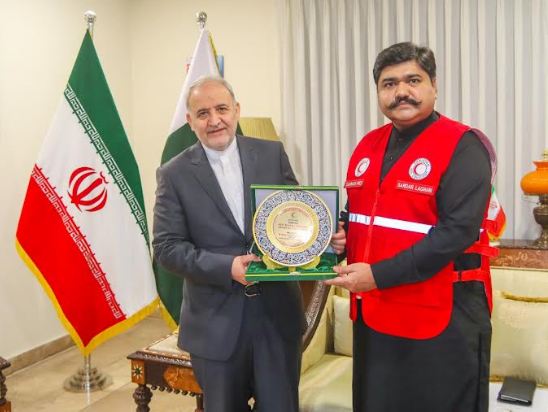
As the meeting concluded, Chairman Sardar Shahid Ahmed Laghari presented a memento to Ambassador Dr. Reza Amiri Moghaddam, symbolizing the enduring partnership between the Pakistan Red Crescent Society and the Iranian Embassy. Both dignitaries expressed their dedication to further fortifying the bonds that unite the two nations.

RISJA honours Faheem Anwar Khan

RISJA honours Faheem Anwar Khan

By our correspondent 

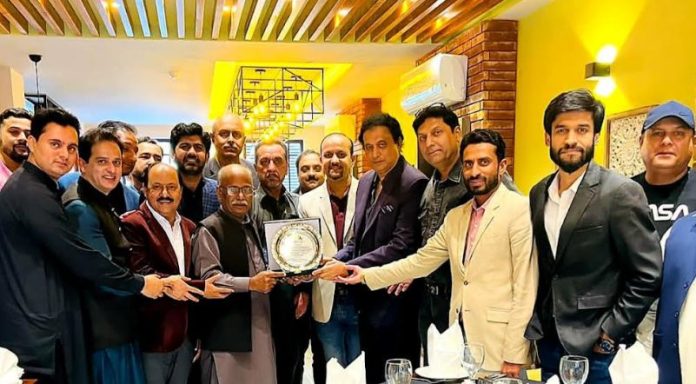
ISLAMABAD: Rawalpindi Islamabad Sports Journalists Association (RISJA) honoured senior journalist and former RISJA President Faheem Anwar Khan at a special ceremony.

In company of big sports journalists gathering, he was presented with a special award for his outstanding journalistic and social services.

According to the details, a special lunch for RISJA members was hosted at a local hotel. The ceremony was also attended by Rawalpindi Islamabad Sports Journalists Association President Afzal Javed, RISJA Secretary General Nasir Naqvi, Senior Journalists Abdul Mohi Shah, Shehryar Khan, Zulfiqar Baig, Arsalan Shirazi, Sohail Raja, Zeeshan Qayyum, Obaidur Rehman and large number of RISJA (R) members

During the ceremony, glowing tributes were paid to Faheem Anwar Khan for his services in the field of journalism and for his recent appointment as the honorary chairman of Pakistan of Turkish welfare organization Yardimeli Türkiye.

Speaking on the occasion, RISJA President Afzal Javed said that Faheem Anwar Khan is one of the senior sports journalists of the country and his presence in the association is no less than a big honour for the members. His guidance and patronage will also help Yardimeli to go extra mile in helping the needy and poor.

Afzal Javed further said that in the near future, RISJA will organize various sports events including workshops, healthy activities for journalists. 

Senior RISJA member Abdul Mohi Shah praised Faheem Anwar for his years of hard work in journalism. “He is like an icon for sports journalism community in the country. He always stood up with the truth and honesty which has been the hallmark of his journalistic career.” At the ceremony, mobile phones were also distributed among some members of RISJA.

Homeopathy is a priceless gift of nature

Homeopathy is a priceless gift of nature

DNA

ISLAMABAD: Homeopathy is a priceless gift of nature which has cured thousands, not millions, but millions of people.

Homeopathy is not only a natural method of treatment, but it is also much cheaper and more effective than other conventional methods of treatment. These views were expressed by prominent home professional Dr. Col. Iqbal Shaheen in a lecture series held in Peshawar under Recog Professional Development Program. The event was organized by Dr. Rekog Germany in which a lecture was given on Mental Health in Homoeopathy.

 Addressing the event, Dr. Najam Al Thaqib, Head of Dr. Saleem Ahmed & Co., Pakistan’s business partners of Dr. Recog, Germany, said that the preparation of medicines at Dr. Recog goes through a rigorous testing, quality control and research process. Even today, hand potentiation at Dr. Recog is done under the same principles as the traditions of 200 years ago. And this is the reason why our medicines have a distinguished status compared to other local and international medicines. 10-7 and cash prizes of 5 thousand were awarded. Colonel Iqbal Shaheen Director Frontier Homeo Medical College and Dr. Ghulam Habib were also given Lifetime Achievement Awards.

 A large number of teachers, students and doctors participated in the event. At the end of the event, a luncheon was also organized.

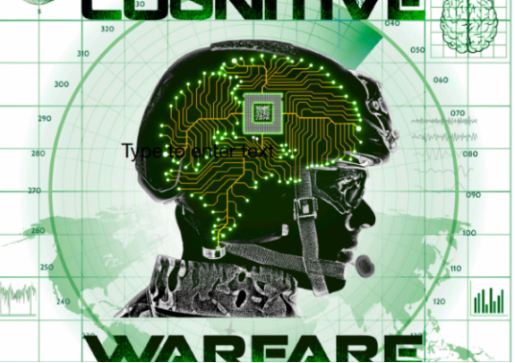
Countering Information Warfare in the Cognitive Domain

Countering Information Warfare in the Cognitive Domain

Air Marshal M Ashfaque Arain (Retd)

Sun Tzu, the ancient Chinese military strategist, had long ago highlighted the significance of information warfare when he said, ‘all warfare is deception’. The term ‘Information Warfare’entered military lexicon in the late ’70s, yet the strategy is as old as warfare itself. It has, however, continued to evolve with technological advancements.

Modern information warfare includes military deception, electronic warfare, psychological operations, and the management of information and operational security. In the 1991 Gulf War, information technology was crucial, enhancing battlefield intelligence, target selection, and command &control. This pivotal role of technology highlighted the significance of information dissemination over its creation, marking a paradigm shift in conflict engagement.

During that conflict, media management evolved significantly, refining the art of shaping public perception. The shift from misinformation, i.e., the inadvertent spread of false information, to disinformation, i.e., deliberate use of misleading information, marked a new era in strategic communication.This subtle change from ‘spin’ to ‘intentionally lying’, altered the nature of the government-military-media and public interface, aimed at aggressively using information as an asset.

Over time, combination of public relations techniques, social psychology theory, empirical research and public diplomacy techniques, all assisted by new technologies aimed at influencing people through deception, have helped mature ‘media wars’. Information superiority became a weapon to make the adversary believe what the deceiver wanted it to believe, obviously for the advantage of the deceiver and to the detriment of the deceived, turning perception into a battlefield where belief shapes reality.With information manipulation gaining significance, a new term ‘Information Operations’was coined; relegating ‘Information Warfare’ to wartime situations.

Information operations are bothoffensive as well as defensive. Defensive operations include operations security and countering deception, propaganda, and psychological operations. Offensive operations include measures designedto mislead the enemy through manipulation, distortion, and falsification of evidence. Psychological operations, an important part of information operations, are aimed at influencing attitudes and behaviour of allies and enemies.

The digital revolution has further intensified competition in the information domain by allowing‘many-to-many’ communication and radically increasing the flow of data. This transformation has helped increase the magnitude of traditional information operations and the size of the audience. In addition to targeting political and military leaderships, broader populations are also manipulatedto influence national decisions.

The advent of social media platforms,AI-enhanced operations, and instantaneous communication has given birth to ‘Cognitive Warfare’. This strategy employs a cross-disciplinary method, combining cyber tactics, information operations, psychological manipulation, and social engineering with emerging technologies. The objective is to manipulate perception and decision-making processes, with the intent to weaken or incapacitate an opponent. Cognitive warfare seeks to sway mindsets and behaviour by targeting,influencing, protecting, and disrupting the very foundations of individual thought and group dynamics, all to secure a strategic upper hand.

While information operations rely on acting on the data that feeds cognition, cognitive warfare seeks to act on the process of cognition itself. The objective is to act not only on what individuals think, but also on the way they think, thus conditioning the way they act. In other words, it aims to hack the heuristics of the human brain in an attempt to ‘win the war before the war,’ making the human brain the battlefield of the 21stCentury. The effort is carefully orchestrated to cloak the operation, concealing its mechanics not only from the intended targets but also from those tasked with its detection, mitigation, or counteraction.

India has,for a long time, been conducting information warfare against Pakistan. Over time, it has graduated to cognitive warfare with efforts dedicated on multiple fronts. It has been exploiting internal fault lines such as sectarian, linguistic, sub-nationalism,regionalism,and political polarisation etc.Internationally, India has been maligning Pakistan for terrorism and nuclear proliferation. Since successful execution of projects like the China-Pakistan Economic Corridor (CPEC)can bring economic revival in Pakistan, India exploits Western concerns about a rising China and links CPEC to military expansionism. It has been manipulating online platforms spread around the globe as discovered by theEU DisinfoLab.  It is employing various social media platforms to spread fake or manipulated news to increase thedivide within the Pakistani societyand misleadthe international community. The substantial representation of individuals of Indian origin in executive roles across social media companies is strategically leveraged to steer and shape narratives.

To counter such threats effectively, Pakistan must foster a ‘whole of society’ approach, engaging both domestic stakeholders and international allies similarly impacted. Given that decision-makers are products of society, the same tactics and susceptibilities affect both the public and official domains, including government and military leadership. Therefore, as a first step, improving the understanding of Cognitive Warfare should be a priority.Guarding against individual and collective cognitive dysfunctions, especially at the decision-making level through education and training is very important.

Fault lines and absence of credibility help false narratives. Therefore, in addition to reducing societal fault lines, the government and mainstream media must establish their credibility. The Armed Forces must judiciously blend human expertise with technology to retain decision-making clarity in intricate combat situations. Command structures need to be attuned to the cognitive aspects of warfare, ensuring a synergy between human judgement and machine precision. Protecting against cognitive attacks is vital, but developing capabilities for cognitive offensives is equally important. Above all, to secure victory in the information-centric battlespace, it is crucial to engage and align all stakeholders in a unified effort.

The author is a retired Air Marshal of the PAF who served as Pakistan’s Air Advisor at New Delhi from 2002-06, presently working as Advisor CAS and Director Technologies and International Coordination at the Centre for Aerospace & Security Studies, Islamabad, Pakistan.  He can be reached at [email protected].

High borrowing rate, inflation, oppressive taxation negatively affect business: FPCCI

High borrowing rate, inflation, oppressive taxation negatively affect business: FPCCI

DNA

ISLAMABAD: The Presidential candidate of the Federation of Pakistan Chambers of Commerce & Industries (FPCCI) upcoming election for 2024 Muhammad Ali Sheikh has observed that the aggressive economic measures, high borrowing rates, inflation, oppressive taxation and unstable currency have been negatively affecting running businesses.

He said that constant hike in power tariff has pushed the electricity prices higher and added to the already soaring cost of trade and industry. He asked the government to shut down all expensive oil-based power plants to ensure availability of cheaper energy for consumers. He condemned the government for shifting power distribution companies’ inefficiencies’ burden to the consumers by jacking up the tariff under the guise of Fuel Charges Adjustment.

He said that high cost of doing business has proved to be dangerous for businesses, as ever-increasing cost of production is the real threat to the economy amidst frequent upward revisions in policy rate and continuous fluctuations in rupee against dollar.

Muhammad Ali Sheikh, who is nominated for the presidential post of the traders’ apex body’s election by the BMP, said that the government liquidity and external vulnerability risks are elevated and there remain considerable risks around to secure required financing to fully meet its needs for the next few years.

With a view to deal with fiscal challenges he asked the economic managers to work on the three-way strategy by implementing short-term goals that will help to keep generating resources for smooth fiscal operations, medium-term goals where the they should focus on financial inclusion, documenting the economy by designing a system where all businesses can be registered and properly document their income including collection of sales tax, initiating the process of privatization as well as improving governance by introducing reforms in each sector. As a long-term goal, the country must focus on improving its human capital, and revamping IT sectors by extending facilitations and providing all the requisite supports. In the same way, we also need to work on designing a comprehensive and proactive strategy to tackle challenges related to strengthening border security and implementing effective and comprehensive Anti-Money Laundering and Terrorist Financing measures holding accountable and taking to task all those who are involved in illegitimate activities, undermining both our economy and national interests.

The FPCCI presidential candidate of the BMP stated that the significant jump in electricity prices and hike in gas tariffs to meet the IMF condition will put additional burden of billions of rupee on consumers. He observed that it is unfortunate that the authorities in all governments continued to approve billions of rupees’ additional burden on consumers through a direct tariff increase and an indirect increase through the withdrawal of subsidies given to exporters and farmers earlier.

It is to be noted that the authorities had pledged to stop any further rise in circular debt adding that around Rs 250 billion was added to the gas circular debt annually though the actual figures are available with Petroleum Division.

Muhammad Ali Sheikh said that the economic managers did not have any pragmatic plan to address this liability, apart from asking for more loans to repay existing debt. Likewise, the target for current financial year’s exports is too low to meet the country’s revenue.

Trumpet of Elections sans PTI..

Trumpet of Elections sans PTI..

Qamar Bashir

The leadership of major political parties seems acutely aware of the challenges surrounding elections, recognizing the potential futility given legitimacy and credibility crises, along with the looming specters of political instability and economic hardship if PTI is not given a free hand to contest the upcoming elections.

This realization has led key figures, such as Nawaz Sharif, Asif Zardari, and notably, Moulana Fazal Rehman, to tacitly acknowledge the difficulties. In a subtle yet strategic manner, these leaders, either directly or through proxies, have communicated messages, often discreetly conveyed through the media, suggesting a cautious acceptance of the need for a fair electoral process which were possible only when PTI is given a level playing field to contest the elections and win or lose on merit.

Moulana Fazal Rehman’s nuanced statement, “I will not say anything about PTI because their hands are tied and mine are open,” implies a calculated acknowledgment of the challenges faced by the PTI leadership. Though stopping short of explicitly expressing a desire for exoneration and a fair chance for PTI in elections, the implication is clear.

The President, as the solitary voice of reason within the system.  An elect of the PTI, is facint daunting challenges to stay in office while advocating for the PTI cause. His efforts extend to connecting with the Establishment, tirelessly appealing for understanding and forgiveness. However, the prevailing sentiment suggests that while the Establishment may be receptive to various discussions, the prospect of letting go of PTI remains a point of contention.

Notwithstanding the political quagmire we are deeply in,  a collective awakening has taken hold among the establishment, intelligentsia, politicians, and civil society, recognizing that Pakistan stands precariously on the edge of a comprehensive collapse. International ratings consistently place the nation at the bottom across various sectors, depicting a bleak image of its overall health. This grim assessment spans numerous parameters, reflecting the country’s dire state across a spectrum of critical indicators.

Pakistan’s global standing reveals a complex landscape. On the Democracy Index, it finds itself at the 108th position out of 167 countries, literacy rate stands at a challenging 59.13%, health expenditure positions Pakistan at 187th out of 192 countries, quality of life places it at 93rd out of 111 countries, current account balance ranks 53rd out of 206 countries, while nominal GDP growth is at the 157th position out of 195 countries. Similar is the case with other parameters except in military metrics where Pakistan shines with the 23rd position in military expenditures out of 155 countries, 6th in active troops out of 173 countries, and 1st in Active UN peacekeepers out of 119 countries. The defense budget proudly stands at the 16th position out of 140 countries. The data highlights a missed focus on developing quality human resources, improving literacy rates, and enhancing the overall quality of education.

Unfortunately, a repetitive cycle of circular motion seems to characterize our national journey, leading to a loss of a clear sense of direction. The need for a reevaluation of priorities and a concerted effort towards sustainable development and informed decision-making is crucial to break free from this circular pattern.

However, a new wave of intimidation targeting PTI leadership, accompanied by re-arrests of PTI leadership those who had previously distanced themselves and criticized their top leadership, paints a dubious nature of these unwarranted moves. The re-invigorated media campaign hurling corruption allegations at PTI and its associates adds to the complexity. This situation raises doubts on holding of free and fair upcoming general elections pushing the country back into an excruciating rut.

Moreover, the formation of both Istehkam-e-Pakistan Party (IPP) and PTI Patriot Party (PTP) has left all political parties perplexed, attempting to unravel the underlying philosophy and logic behind their creation. There is a collective effort among party leaders to discern the hidden agenda behind IPP and PTP, with a specific focus on understanding the Establishment’s perspective.

The rationale for the creation of IPP and PTP could be the Establishment’s dissatisfaction with PTI and its leadership, aiming to weaken the party by fostering rival factions. These factions, represented by IPP and PTP, may serve as potential spoilers, disrupting PTI’s chances of securing a majority in the upcoming election.

Interestingly, both PPP and PML(N) share similar but opposite perspectives on the creation of IPP and PTP, viewing them as B-parties of PTI for specific reasons. The commonality lies in the fact that both IPP and PTP claim to be splinter groups of PTI, advocating for similar policies.

PPP and PML(N) have accused both IPP and PTP of being “spoilers,” alleging that these parties aim to divide votes in KP to benefit PTI in the upcoming election. Both major parties dismiss the claims of IPP and PTP regarding their commitment to social justice and Pashtun rights, branding them as mere political opportunists.

However, the most probable scenario is a hung parliament. Historically, engineered hung parliaments in Pakistan have granted the establishment increased influence over the political landscape. In such situations, smaller parties or independent members may hold the balance of power, aligning with or being influenced by the establishment to form a government. This arrangement provides the establishment with leverage and influence over decision-making processes.

A hung parliament also facilitates horse-trading, where lawmakers receive monetary incentives to switch allegiances. The establishment can use its influence over the media, judiciary, and security forces to pressure parties into forming a coalition with its preferred candidate. Additionally, control over the budget allows the establishment to reward or penalize parties based on their cooperation. Manipulation of the electoral process through influence over the Election Commission of Pakistan is another tool to favor its preferred candidate or party.

Persistent election rigging exacts a substantial toll on both the nation and its citizens. Rigged elections erode the very foundation of democracy, breeding distrust in electoral systems and institutions, thereby diminishing the adherence to democratic values. The consequent political instability that ensues from such practices often leads to widespread unrest and protests, disrupting daily life and creating an environment of uncertainty. The economic repercussions are profound, with investors wary of committing resources to politically volatile environments, and domestic businesses grappling with the consequences of a shaky political landscape.

Moreover, the impact extends beyond the economic realm, permeating the social fabric of the nation. Rigged elections can sow the seeds of social discord, exacerbating tensions among different societal factions. This strife may manifest in violence, deepening social divisions and undermining the cohesion necessary for a healthy and thriving society. Coupled with these social implications are the potential human rights violations that often accompany manipulated electoral processes, including restrictions on freedom of speech, assembly, and political participation. The cumulative effect is a compromised governance structure marked by illegitimacy, corruption, and a disregard for the rule of law, ultimately tarnishing the international reputation of the nation in question.

Free, fair, and transparent elections are the cornerstone of a thriving democracy and play a pivotal role in the progress and prosperity of a nation. When elections are conducted with integrity and openness, several key benefits emerge, contributing to overall development and enhancing a country’s standing on important indicators.

Firstly, such elections foster political stability by ensuring that leaders derive their mandate from the genuine will of the people. This legitimacy strengthens governance structures, promoting effective policy implementation and reducing the likelihood of political crises. Political stability, in turn, creates an environment conducive to economic growth and attracts both domestic and foreign investments. Investors are more likely to commit resources to a country with a stable political landscape, leading to increased economic activity, job creation, and enhanced prosperity for the population.

Moreover, free and fair elections are instrumental in promoting social cohesion and inclusivity. By allowing diverse voices to be heard, elections become a mechanism for resolving societal issues through peaceful means. Inclusive governance resulting from fair elections helps address the needs and concerns of various segments of society, fostering unity and minimizing social tensions. This, in turn, contributes to the overall well-being and happiness of the population.

From an international perspective, nations that demonstrate a commitment to transparent and fair electoral processes often enjoy a positive reputation on the global stage. This can lead to increased diplomatic cooperation, trade opportunities, and partnerships with other nations. International organizations and investors are more likely to engage with countries that uphold democratic values, improving the nation’s ranking on various indicators related to global cooperation, human rights, and political freedom.

In essence, free, fair, and transparent elections are not just a democratic ideal but a practical necessity for a nation’s progress. They create a conducive environment for economic development, social harmony, and positive international relations, thereby contributing significantly to the overall advancement and prosperity of a country and a sure way to improve our ranking on all international indexes.

Qamar Bashir

Press Secretary to the President(Rtd)

Former Press Minister at Embassy of Pakistan to France

Former MD, SRBC

Korean embassy holds reunion event

Korean embassy

DNA

ISLAMABAD: The 2023 Global Korea Scholarships Reunion, organized by the Embassy of the Republic of Korea took place on the 10th of November, 2023.

The 2023 GKS Reunion was attended by the Ambassador of the Republic of Korea, H.E. Mr. Park Kijun, the Director for scholarships at the Higher Education Commission, Mr. Kashif Jehan, the Head of the Department of Korean Language and Culture Mr. Ahtisham Hussain, and the GKS alumni.

The GKS alumni shared their experiences at Korea and how the experience of studying at Korea shaped their career.

After listening to the presentations of the GKS Alumni, H.E. Mr. Park Kijun appreciated each student and laid emphasis on how cultural and educational exchanges between the Republic of Korea and Pakistan have proved to be a pivotal key-point in paving the way towards stronger bilateral relations and people to people interaction between both countries.

The Ambassador of the Republic of Korea further expressed his optimism regarding the future of the Global Korea Scholarships and how it will contribute in the enhancement of the bilateral relations between the Republic of Korea and Pakistan.

Stay Connected

64FansLike
60FollowersFollow

Latest Reviews

Exchange Rates

USD - United States Dollar
EUR
1.17
GBP
1.35
AUD
0.72
CAD
0.73