Home Blog Page 112

Hegseth sounds ‘alarm’ over China’s buildup, urges allies to boost defense spend

Hegseth sounds ‘alarm’ over China’s buildup, urges allies to boost defense spend

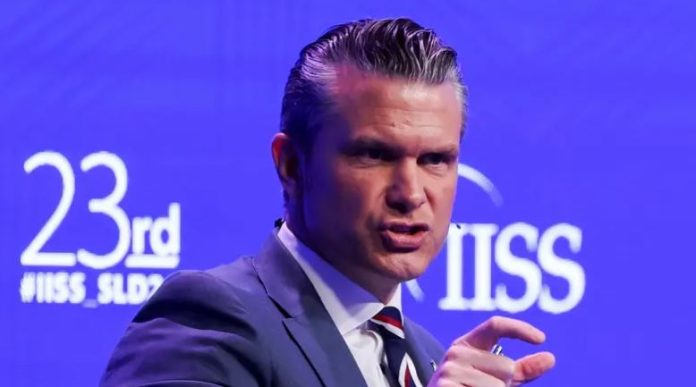
WASWHINGTON, MAY 30: US Defense Secretary Pete Hegseth on Saturday urged Asian allies to ramp up military spending to counter China’s growing power and prevent its dominance in the region, warning of “rightful alarm” over its rapid military buildup.

Hegseth, speaking at the Shangri-La Dialogue in Singapore, Asia’s premier forum for defense leaders, militaries and diplomats, said a stronger, more self-reliant network of allies is essential to deter aggression and preserve the balance of power.

“There is rightful alarm regarding China’s historic military buildup and the expansion of its military activities in the region and beyond,” he said.

“A Pacific dominated by any hegemon would unravel the regional balance of power,” Hegseth said. “No state, including China, can impose its hegemony and hold the security or prosperity of our nation and our allies in question.”

The US expects its Asian allies and partners to increase defense spending to 3.5% of GDP as it pledged a $1.5 trillion investment in its military, the Pentagon chief said.

“Less Shangri-La, more ships, more subs,” Hegseth said, and stressed that allies want stability, not escalation.

“What they want, and what the United States delivers, is strength that is disciplined, resolve that is steady, and leadership that is confident enough to speak and walk softly while carrying a big stick.”

Hegseth also struck a measured tone on US-China ties, saying relations are “better than they have been in many years,” with more frequent military-to-military engagement helping to manage tensions.

“We are meeting more frequently with our Chinese counterparts by maintaining open lines of military-to-military communication.”

Zhou Bo, a senior fellow at Tsinghua University and retired People’s Liberation Army senior colonel who was part of the Chinese delegation, described US-China relations as “complicated.”

Nonetheless, he said Hegseth struck “a much better tone” this year than last, attributing the shift to Trump’s visit to China.

“Both sides have open channels of communication, the situation is not as exaggerated as the outside world makes it out to be,” Zhou said.

China, whose defense minister is skipping the dialogue for a second consecutive year, accused Hegseth last year of making “vilifying” remarks.

“No freeloading”
Hegseth echoed President Donald Trump’s long-standing demand that allies shoulder more of their own defense costs. Trump has pointedly said European and NATO partners should reduce reliance on Washington.

“The era of the United States subsidizing the defense of wealthy nations is over,” Hegseth said. “We need partners, not protectorates,” he added. “We don’t have a strong alliance unless everyone has skin in the game. No freeloading.”

Hegseth praised contributions from allies including South Korea, the Philippines, Australia, Singapore, Malaysia and Thailand, and said Japan was taking concrete steps to bolster its defenses.

Tokyo and Washington “must each pull our weight to strengthen the US-Japan alliance,” he said.

Ready to restart strikes on Iran
On the Middle East conflict, Hegseth said the United States stands ready to resume strikes on Iran if diplomacy fails, as negotiators from Washington and Tehran work to bridge major differences blocking a deal.

“Our ability to recommence if necessary…we are more than capable,” Hegseth said. He added that Trump remains “patient” and is seeking a “strong deal” to ensure Iran does not obtain a nuclear weapon.

Trump said on Friday he would convene advisers in a secure White House setting to make a “final determination” on a proposal to end the Iran war.

Hegseth also pushed back on concerns the conflict would distract from Asia-Pacific priorities.

“We can do two things at one time.”

Arms sales decision to Taiwan is Trump’s call
Asked about arms sales to Taiwan, Hegseth downplayed concerns that a multi-billion-dollar package could be affected as the United States draws down its weapons stockpiles amid the Middle East conflict. “We feel very good about our stockpiles and how we use them,” he said.

Taiwan, which China views as its own territory, has been waiting for the US to approve an arms sale that Reuters reported could be worth up to $14 billion.

Trump sowed uncertainty in Taipei by saying, after meeting China’s President Xi Jinping this month, that he was undecided on whether to approve the package.

Any decision on future arms sales would rest with President Trump, Hegseth said, signaling no shift in Washington’s longstanding approach despite recent engagement with Beijing.

“Those decisions will depend on the president and the nature of that relationship,” Hegseth said. “There’s been no change in our status.”
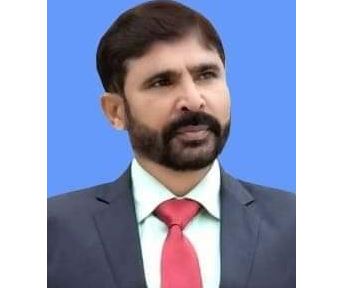
Eurasia and Return of Mackinder’s Geopolitics

Eurasia and Return of Mackinder’s Geopolitics

Dr. Muhammad Akram Zaheer

More than a century ago, British geographer and political thinker Halford Mackinder presented a theory that continues to shape debates on global power politics. Writing in 1904, Mackinder argued that geography was not merely a backdrop to international affairs; it was one of the decisive forces determining the rise and decline of great powers. His famous “Heartland Theory” proposed that the vast landmass of Eurasia stretching from Eastern Europe to Central Asia and Siberia constituted the strategic pivot of world politics. At the time, the theory appeared to many as an abstract geopolitical formulation rooted in imperial competition. Yet in the twenty-first century, the renewed contest over Eurasia has once again brought Mackinder’s ideas into sharp focus.

Mackinder famously wrote: “Who rules East Europe commands the Heartland; who rules the Heartland commands the World Island; who rules the World Island commands the world.” By “World Island,” he referred to the combined continents of Europe, Asia and Africa the largest concentration of population, resources and economic activity on earth. The “Heartland,” meanwhile, was the interior of Eurasia, particularly the territories dominated by the Russian Empire and Central Asia. His central argument was simple: a power capable of controlling Eurasia’s core would possess immense strategic advantages over maritime rivals.

For much of the twentieth century, Mackinder’s theory influenced strategic thinking in both Europe and the United States. During the Cold War, the Soviet Union’s domination of Eastern Europe appeared to validate his assumptions. Western policymakers feared that Moscow’s control over the Eurasian interior could translate into overwhelming geopolitical influence. Consequently, the policy of containment pursued by the United States and its allies was partly rooted in preventing Soviet expansion across Eurasia.

The collapse of the Soviet Union in 1991 led many observers to believe that geopolitics itself had lost relevance. Economic globalisation, technological interdependence and liberal internationalism were expected to replace territorial competition. Borders seemed less important in an increasingly connected world. Yet the events of the past two decades have demonstrated that geography remains central to international politics. In many respects, Eurasia has once again become the arena where major powers seek influence, security and strategic advantage. The resurgence of Russia under Vladimir Putin reflects this reality. Since coming to power, Putin has consistently sought to restore Russian influence in the former Soviet space. Moscow views Eastern Europe and Central Asia not merely as neighbouring regions but as essential buffers for its national security. The conflict in Ukraine, therefore, is not only a territorial dispute; it is also a geopolitical struggle over the balance of power in Eurasia. From the Russian perspective, the eastward expansion of NATO represents an encroachment into a region historically considered vital to Russian security interests.

Mackinder’s theory gains renewed relevance in this context. Eastern Europe, particularly Ukraine, remains strategically significant because it connects European power centres with the Eurasian interior. Control over this corridor has historically shaped the security calculations of both Russia and Western powers. The ongoing war has therefore revived classical geopolitical concerns that many assumed belonged to the past. At the same time, China has emerged as another major actor reshaping Eurasian politics. Beijing’s Belt and Road Initiative is perhaps the clearest contemporary example of a Eurasian strategy grounded in geography. Through roads, railways, ports and energy corridors, China seeks to connect East Asia with Central Asia, the Middle East, Africa and Europe. Although presented primarily as an economic initiative, the project also carries significant geopolitical implications.

By strengthening continental trade routes, China reduces its dependence on maritime pathways vulnerable to American naval power. In strategic terms, Beijing is attempting to integrate large parts of Eurasia through infrastructure and economic connectivity. Central Asia, once viewed as a remote periphery, has become a crucial crossroads linking Chinese industry to European and Middle Eastern markets. This transformation echoes Mackinder’s emphasis on the strategic importance of the Eurasian interior. The growing significance of Central Asia further underlines the return of geopolitics. Countries such as Kazakhstan, Uzbekistan and Turkmenistan possess vast energy resources and occupy key transit corridors. As competition intensifies between Russia, China, the United States and regional powers such as Turkey, Central Asia has become a zone of overlapping strategic interests. The region’s political orientation and economic partnerships increasingly carry implications beyond its immediate geography.

For the United States, the challenge remains preventing the emergence of a single dominant Eurasian power. American foreign policy since the Second World War has consistently sought to maintain a balance of power across Europe and Asia. Washington’s alliances in Europe, the Indo-Pacific and the Middle East are partly designed to limit the consolidation of hostile influence across Eurasia. Even the growing American focus on the Indo-Pacific cannot be separated from the wider Eurasian context, particularly in relation to China’s rise. Yet the contemporary geopolitical environment differs significantly from Mackinder’s era. Technological change has altered the nature of power in important ways. Air power, cyber capabilities, satellite systems and digital networks have reduced some of the barriers once imposed by geography. Maritime trade continues to dominate the global economy despite efforts to develop continental corridors. Moreover, economic interdependence means that states are connected through finance, technology and supply chains in ways unimaginable a century ago.

Nevertheless, geography has not disappeared from global politics. Energy pipelines, transport routes, military bases and territorial control remain central to state strategy. The war in Ukraine, tensions in the South China Sea and competition over Arctic routes all demonstrate that physical space continues to shape international affairs. Eurasia, with its enormous resources, strategic corridors and demographic weight, remains at the centre of this contest. For countries such as Pakistan, these developments carry both opportunities and risks. Pakistan’s location at the intersection of South Asia, Central Asia and the Middle East gives it considerable strategic relevance in the evolving Eurasian order. Projects such as the China-Pakistan Economic Corridor are linked to broader regional connectivity initiatives that seek to integrate Eurasian markets. At the same time, intensifying rivalry among major powers requires careful diplomatic balancing.

The enduring relevance of Mackinder’s theory lies not in its deterministic view of geography but in its recognition that space, resources and connectivity continue to influence political power. Eurasia today is not simply a geographic entity; it is the principal theatre where competing visions of global order are unfolding. Russia seeks strategic depth, China pursues economic integration, and the United States aims to preserve balance and influence. Between these competing ambitions lies a vast region whose importance has once again become impossible to ignore. More than a hundred years after Mackinder formulated his Heartland Theory, the struggle for Eurasia continues to shape the direction of world politics. The methods and technologies may have changed, but the central question remains remarkably familiar: who will shape the political and strategic future of the world’s most important landmass?

Assistant Professor Pakistan Studies ICBS Lahore

[email protected]

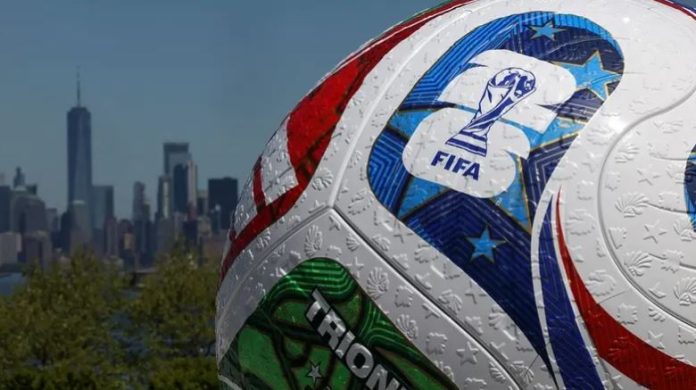
From Ronaldo to Toney: Meet the Saudi Pro League stars playing at the FIFA World Cup 2026

From Ronaldo to Toney: Meet the Saudi Pro League stars playing at the FIFA World Cup 2026

The Saudi Pro League’s transformation into one of the world football’s most internationally recognizable competitions will be reflected at the 2026 FIFA World Cup.

Beyond the Saudi national team, there will be Ballon d’Or winners, Champions League veterans, emerging Asian stars and key figures from Africa’s leading national teams featuring in the United States, Canada and Mexico this summer; Saudi Arabia’s top division will be represented across multiple continents.

Here, Al Arabiya English takes a look at the Saudi Pro League players who look set to feature, and in many cases star, in their nation’s squads at the 2026 FIFA World Cup.

Cristiano Ronaldo (Al Nassr) – Portugal

Even at 41, Ronaldo remains one of the defining faces of world football. The Al Nassr captain heads into a record-breaking sixth and final World Cup after lifting the Saudi Pro League title for the first time this season – becoming the first player to win domestic league championships in England, Spain, Italy and Saudi Arabia.

Ronaldo finished the league campaign with 28 goals and will be Portugal’s skipper and talisman once again at the World Cup. He is international football’s all-time leading scorer, with more than 140 goals for his country across a remarkable two-decade international career.

Ivan Toney (Al Ahli) – England

Many questioned whether Toney’s move to Saudi Arabia would damage his England prospects. Instead, the striker arrives at the World Cup after one of the best seasons of his career. Toney finished second in the race for the Saudi Pro League’s Golden Boot with 32 goals in 32 matches and has become a central figure for an Al Ahli side that also lifted the AFC Champions League title for a second straight year. His movement, hold-up play and penalty-box instincts give England a different attacking profile alongside Harry Kane.

João Félix (Al Nassr) – Portugal

After an inconsistent few years in European football, João Félix has looked like a new man since his move to Al Nassr last summer. The Portuguese forward became one of the Saudi Pro League’s most creative attacking players this season, combining effectively with compatriot Ronaldo while adding goals and unpredictability in the final third. João Félix’s form in Riyadh helped secure Nassr a first Pro League title in seven years, and his place in Portugal’s World Cup squad.


Rúben Neves (Al Hilal) – Portugal

One of the Saudi Pro League’s most influential midfielders, Rúben Neves captained Al Hilal through an unbeaten Saudi Pro League campaign, underlining his status as one of the division’s most influential midfielders. The Portugal midfielder remains vital to Roberto Martinez’s side because of his ability to dictate tempo from deep areas, while his passing range and tactical discipline make him one of the national team’s most dependable performers.

Sadio Mané (Al Nassr) – Senegal

Mané arrives at the World Cup after another productive season alongside Cristiano Ronaldo at Al Nassr, helping the club end its Saudi Pro League title drought. The Senegal captain combined goals, assists and relentless pressing throughout the campaign, demonstrating why he is still one of Africa’s most celebrated footballers. Senegal will look to the 34-year-old for leadership and attacking inspiration as The Lions of Teranga attempt to match the country’s iconic run to the 2002 quarterfinals.

Édouard Mendy (Al Ahli) – Senegal

Mendy’s form at Al Ahli since arriving three years ago has helped restore his reputation after a difficult final period at Chelsea. The goalkeeper became one of only three players – alongside Ahli team-mates Roberto Firmino and Riyad Mahrez – to win the UEFA and AFC Champions League titles last year, and then played a starring role in the Jeddah club’s retention of the trophy this season.


Kalidou Koulibaly (Al Hilal) – Senegal

Koulibaly continues to anchor both Al Hilal and Senegal defensively. The center-back cauthorityilal through an unbeaten domestic campaign, combining his trademark physicality with the authority and composure that have defined his career at the highest level of European and international football. For Senegal, he continues to be both a calming influence and organizer at the heart of the back line as The Lions of Teranga target another deep World Cup run.

Franck Kessié (Al Ahli) – Ivory Coast

The Ivory Coast captain has become one of Al Ahli’s most important midfielders in recent years. Kessié’s athleticism and tactical intelligence have translated seamlessly to the Saudi Pro League, while his leadership is also central to the 2023 African champions. Kessié has repeatedly shown himself to be a player who relishes the big occasions, scoring in the final as Ivory Coast won AFCON three years ago and also netting in the AFC Champions League final as Ahli claimed a historic maiden triumph in 2025.

Fabinho (Al Ittihad) – Brazil

Fabinho’s experience and positional discipline continue to make him a crucial presence for both Al Ittihad and Brazil. The midfielder helped stabilize Ittihad during their Saudi Pro League title-winning campaign – including a stand-in central defensive role at times – and while he is not always a starter for Brazil anymore, he brings substantial big tournament expertise to Carlo Ancelotti’s World Cup squad. He played for Brazil at the 2022 FIFA World Cup and won the Copa America in 2019.


Roger Ibañez (Al Ahli) – Brazil

Roger Ibañez has quietly developed into one of the Saudi Pro League’s most reliable defenders. Strong aerially and aggressive in duels, the former Roma center-back has become a cornerstone of Al Ahli’s defense and now heads to the World Cup with Brazil as a two-time continental champion with the Jeddah club.

Julián Quiñones (Al Qadsiah) – Mexico

After a superb debut campaign in 2024-25, Quiñones kicked on to devastating effect this season – netting 33 goals in 31 games to pip Ivan Toney and Cristiano Ronaldo to the Saudi Pro League Golden Boot. The Al Qadsiah forward’s pace, directness and predatory finishing made him one of the league’s most dangerous attackers and he has been rewarded with a spot in the host’s squad as Mexico looks to impress in its first World Cup on home soil since 1986.


Merih Demiral (Al Ahli) – Turkey

Demiral’s aggressive defending and leadership qualities remain hugely important for Turkey. He cemented his status as a Turkish national-team cult hero during UEFA Euro 2024, when his two goals against Austria sent Turkey into the quarter-finals for the first time since 2008. The center-back enjoyed another strong campaign with Al Ahli, helping the club win the AFC Champions League again and forming one of the Saudi Pro League’s toughest defensive units alongside Roger Ibañez and Édouard Mendy.

Yusuf Akçiçek (Al Hilal) – Turkey

At 20, Akçiçek is among the youngest Saudi Pro League-based players heading to the World Cup, though his first season at Al Hilal was stop-start rather than transformative. The Turkey defender made only a limited number of league appearances, with injuries and competition for places restricting his minutes. Still, his inclusion demonstrates Turkey’s long-term belief in his potential.


Jack Hendry (Al Ettifaq) – Scotland

Hendry is a trusted defensive option for Scotland after establishing himself in the Saudi Pro League with Al Ettifaq. The center-back has now earned more than 40 international caps and was part of Scotland’s squads at both UEFA Euro 2020 and Euro 2024. His aerial strength and experience in tournament environments continue to make him a valuable option for Steve Clarke’s side, which is playing at a first FIFA World Cup since 1998.


Ali Jasim (Al-Najma) – Iraq

Still only 22, Ali Jasim is regarded as one of Iraq’s brightest attacking talents. The winger emerged as one of Iraq’s standout young players during the 2023 AFC Asian Cup and has continued that progress in Saudi Arabia with Al-Najma. His direct dribbling, creativity and ability to carry the ball in transition have already made him a key man for Iraq despite his young age.

Ali Azaizeh (Al Shabab) – Jordan

Ali Azaizeh forced his way into the World Cup picture after an impressive spell with Al Shabab since joining in January. The forward scored twice and set up another in the second half of the season and has rapidly developed into one of Jordan’s most promising attacking players. The German-born attacker only made his international debut last year, adding a second cap in the 2-2 friendly draw with Nigeria in March. Despite this relative inexperience, he has been given the nod and will likely be used as a dynamic option off the bench during his country’s debut World Cup.

Nabil Emad (Al-Najma) – Egypt

Known widely as Dunga’ after Brazil’s 1994 FIFA World Cup-winning captain and later coach, Nabil Emad brings composure to Egypt’s midfield. The Al-Najma man has been part of Egypt’s setup for almost a decade and remains an important squad presence. His inclusion also underlines the growing number of seasoned international players now competing in Saudi Arabia outside the Kingdom’s traditional elite clubs.

Théo Hernández (Al Hilal) – France

One of the world’s most dynamic attacking full-backs, Theo Hernández arrives at the World Cup as France’s first-choice left-back and one of the biggest-name defenders currently playing in Saudi Arabia. The Al Hilal star’s pace, attacking thrust and experience at the highest level of European football continue to make him a key player for Didier Deschamps’ side heading into another major tournament.


Juriën Gaari (Abha) – Curaçao

While not technically in the Saudi Pro League yet, Abha has been promoted to the topflight after winning the Saudi First Division title. Among its players is defender Gaari, who was born in the Netherlands but plays international football for Curaçao. His country will make history on football’s biggest stage this June as Curaçao – with as a population of just 150,000 people – will become the smallest country ever to play in a FIFA World Cup.

Khamenei adviser says Trump ‘betraying diplomacy’ with blockade and excessive demands

Khamenei adviser says Trump ‘betraying diplomacy’ with blockade and excessive demands

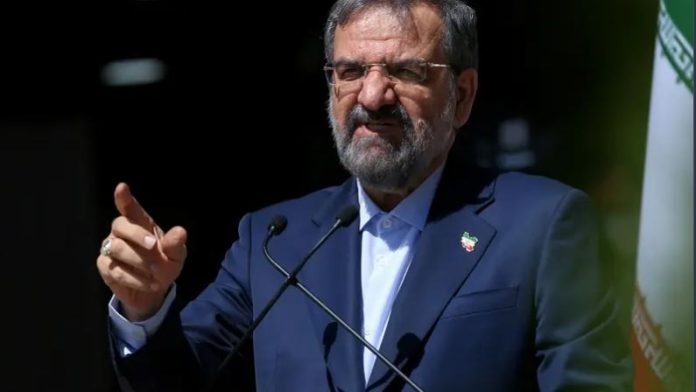
TEHRAN, MAY 30: Mohsen Rezaei, an adviser to Iran’s Supreme Leader Mojtaba Khamenei, said on Saturday that US President Donald Trump was “betraying diplomacy for the third time” by continuing a naval blockade imposed on Iran and making what he described as excessive demands in negotiations.

The United States warned it was “more than capable” of resuming war with Iran after Trump said any peace deal must adhere to his red lines, including Tehran never being able to develop nuclear weapons.

The White House had signaled Trump was close to a decision on an initial deal after weeks of mixed signals in tenuous negotiations, though Tehran denied there was a final agreement on ending the Middle East conflict that has jolted the global economy.

Indian PM Modi’s decade-long efforts to isolate Pakistan ‘failed’, reveals report

Indian PM Modi's decade-long efforts to isolate Pakistan 'failed', reveals report

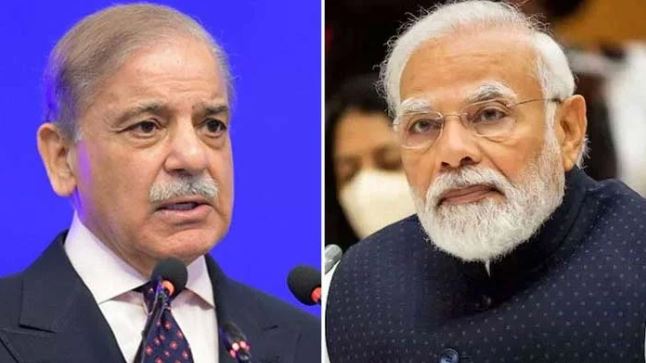
ISLAMABAD, MAY 30: Indian Prime Minister Narendra Modi’s decade-long efforts to diplomatically isolate Pakistan have failed, Al Jazeera reported, with analysts saying that Islamabad managed to make itself an important diplomatic player for superpowers and regional players alike.

The assessment comes nearly 10 years after Modi publicly vowed to isolate Pakistan following a 2016 attack in Indian Illegally Occupied Jammu and Kashmir (IIOJK) that killed 18 Indian soldiers.

Addressing a rally in Kerala at the time, Modi declared that India would intensify efforts to ensure Pakistan remained isolated globally. “We will make sure that you are isolated around the world.”

However, analysts argue that Pakistan today appears far from isolated. The country remains a close strategic partner of China and has also re-emerged as a trusted partner of the United States under President Donald Trump.

Over the past year, both Prime Minister Shehbaz Sharif and Chief of Army Staff (COAS) and Chief of Defence Forces (CDF) Field Marshal Syed Asim Munir have met Trump at the White House, while Pakistan has played a central mediating role in efforts involving the United States and Iran.

“In part, say analysts, that’s a reflection of Pakistan’s success in wooing Trump, and in capitalising on key geopolitical events to make itself an important diplomatic player for superpowers and regional players alike,” the report stated.

Pakistan-India relations have remained largely frozen in recent years, with diplomatic engagement stalled. The two neighbouring countries have also experienced border skirmishes and a brief conflict last year.

In May 2025, Pakistan, during the 87-hour conflict, downed eight Indian fighter jets — four French-made Rafale, one Su-30 aircraft, one MiG-29 aircraft, one Mirage 2000 aircraft, and one “expensive” multi-role unmanned aerial system — as well as dozens of drones.

The war between the two nuclear-armed nations ended on May 10 with a ceasefire agreement brokered by the United States.

While India maintained that any ceasefire understanding resulted solely from bilateral engagement, Trump repeatedly asserted that Washington helped broker the truce and prevented a potentially catastrophic escalation between New Delhi and Islamabad.

The US president also offered to work with the nuclear-armed neighbours to find a solution to the Kashmir dispute, which has defined India-Pakistan relations since 1947.

The report further stated that Trump has since insisted on more than 30 occasions that he brokered the truce between India and Pakistan. The US president also asserted that Indian fighter jets were shot down on the first day of the conflict, echoing the Pakistani narrative.

India’s reluctance to immediately address those claims further reinforced international perceptions that Pakistan had gained an advantage in the global narrative surrounding the conflict, analysts said.

On the other hand, the report quoting analysts stated, India also failed to convince the world of Pakistan’s alleged role in the attack that triggered the May 2025 fighting in the first place, analysts say.

Analysts say Modi’s refusal to give credit to the US president for the ceasefire strained US-India ties.

Pakistan, on the other hand, promptly acknowledged Trump’s efforts in achieving the truce and even nominated him for the Nobel Peace Prize.

Diplomatic relations
Amidst Modi’s failed attempts, Pakistan’s diplomatic ties with Bangladesh have improved dramatically following the ouster of prime minister Sheikh Hasina Wazed, Al Jazeera reported.

On the other hand, Pakistan’s ties with China — the two have long been staunch strategic partners — further came to the fore during last year’s conflict. Pakistan used Chinese missile defence systems and jets.

India has also shifted its position on the Israel-Palestine issue, becoming Israel’s closest ally, its largest weapons buyer, and increasingly abstaining from UN resolutions critical of Tel Aviv.

That alignment with Israel under Modi complicated its standing with Gulf states, at precisely the moment Pakistan has deepened its security partnerships with the oil-rich Gulf Cooperation Council (GCC), the report added.

Amid Israel’s multiple wars — on Gaza and in the occupied West Bank, in Lebanon and on Iran, and its bombing of Qatar and Syria — Gulf nations have increasingly looked beyond their traditional reliance on a US security umbrella.

Earlier in September 2025, Saudi Arabia signed a mutual defence pact with Pakistan. Some reports also emerged that other Gulf nations and Turkiye might also consider joining the Saudi-Pakistan defence agreement.

And last May’s war strengthened Pakistan’s image as a credible security provider, with demands for Pakistani fighter jets having since surged.

The Thucydides Trap in the Age of US–Russia–China Rivalry

The Thucydides Trap in the Age of US–Russia–China Rivalry

Dr. Muhammad Akram Zaheer

The language of global politics has long been shaped by metaphors that attempt to reduce the complexity of international affairs into digestible ideas. Among the most influential in recent years is the “Thucydides Trap,” a phrase popularised by political scientist Graham Allison, drawn from the ancient historian Thucydides, who observed that the rise of Athens and the fear it generated in Sparta made war almost inevitable. In modern strategic discourse, the term has come to describe the supposed inevitability of conflict when a rising power challenges an established one. In the context of contemporary geopolitics particularly the triangular tensions among the United States, Russia and China the idea has gained renewed relevance. Yet, to treat it as destiny is to misunderstand both history and politics. The Thucydides Trap is not a fixed law of international relations; it is a warning about perception, miscalculation and the absence of political imagination. Whether it becomes reality depends less on structural forces and more on the choices made by statesmen.

At the heart of today’s global competition lies the uneasy balance between established and rising powers. The United States remains the dominant military, financial and technological force, but its relative position is no longer unchallenged. The China has emerged as the most significant systemic competitor, reshaping global trade networks, technological ecosystems and regional alignments. Meanwhile, the Russia, though economically weaker than the other two, continues to assert itself militarily and strategically, particularly in its near abroad, seeking to preserve influence in a rapidly shifting Eurasian order. It is in this triangle of ambition and insecurity that the Thucydides analogy is often invoked. China’s rapid ascent is sometimes framed as the “Athens” of the modern world, while the United States is cast as the “Sparta” determined to resist decline. Russia complicates this binary, not as a peer competitor to the United States in global economic terms, but as a revisionist power seeking to reclaim strategic depth and regional authority. The interaction of these three actors creates a volatile equilibrium, but volatility is not the same as inevitability.

History offers more nuance than the Trap metaphor suggests. Not every rising power leads to war and not every established power responds with confrontation. The post-Cold War period itself demonstrated moments of cooperation, integration and managed rivalry. Even today, despite deep strategic distrust, the United States and China remain economically interdependent, while Russia continues to navigate sanctions, alliances and strategic isolation with pragmatic adjustments. The danger lies not in structural change alone, but in how that change is interpreted. When rising power is automatically equated with threat and defensive behaviour is automatically interpreted as aggression, the space for diplomacy narrows. Misreading intentions becomes as dangerous as actual hostile intent. In this sense, the Thucydides Trap is less a prediction than a psychological condition one that can be self-fulfilling if leaders accept it uncritically.

Consider the evolving US–China relationship. Competition in the Indo-Pacific, disputes over technology and rival visions of global governance have all intensified tensions. Yet beneath these frictions lies a more complex reality: shared economic interests, overlapping crisis-management needs and interlinked supply chains. If strategic distrust hardens into ideological confrontation, cooperation becomes politically costly even when it is practically necessary. The Trap, therefore, emerges not from power transition alone, but from the erosion of diplomatic restraint. Russia’s trajectory adds another layer of complexity. Its confrontation with the West, particularly in the context of Ukraine, reflects a long-standing struggle over spheres of influence and security architecture in Europe. Yet even here, the assumption of inevitability obscures the role of policy choices, missed diplomatic opportunities and competing narratives of legitimacy. Conflict was not predetermined; it was the result of escalating cycles of action and reaction, each justified by the perceived intentions of the other.

What makes the current era particularly precarious is the simultaneity of these tensions. Unlike earlier periods of bipolar rivalry, today’s world is characterised by overlapping arenas of competition. The United States and China contest technological leadership; Russia and the West confront each other militarily in Europe; and middle powers navigate shifting alignments in Asia, Africa and the Middle East. This multipolar friction increases the number of potential flashpoints, but it does not remove agency from decision-making. The crucial question, therefore, is whether leadership in these capitals can resist the logic of inevitability. The Thucydides Trap becomes dangerous when policymakers begin to believe in it as destiny. Once war or confrontation is seen as historically unavoidable, restraint appears naïve and compromise appears as weakness. This mindset narrows strategic options and elevates worst-case assumptions into guiding principles.

Yet history also shows that rivalry can be managed. The Cold War, despite its ideological hostility and nuclear danger, was contained through a combination of deterrence, diplomacy and institutional frameworks. Even at its most tense moments, channels of communication remained open. The lesson is not that rivalry disappears, but that it can be structured, limited and, at times, defused. In the present context, avoiding the Trap requires more than rhetoric. It demands sustained investment in crisis communication mechanisms, arms control frameworks and multilateral institutions capable of absorbing shocks. It also requires intellectual humility—the recognition that no single power fully controls the trajectory of the international system.

Equally important is the role of domestic politics. In all three major powers, internal pressures shape external behaviour. Nationalism, economic insecurity and political polarisation can amplify threat perceptions and reduce flexibility. Leaders often find it easier to respond to external competition with firmness rather than nuance, especially when domestic audiences reward assertiveness. Ultimately, the Thucydides Trap should be understood not as a historical law, but as a cautionary framework. It warns of the dangers inherent in transitions of power, but it does not dictate their outcome. Between structural pressure and political choice lies a wide space for diplomacy, misjudgement, cooperation and restraint.

The future of US–Russia–China relations will not be determined by ancient analogies, but by contemporary decisions. Whether the world moves toward confrontation or coexistence depends on whether leaders treat rivalry as a pathway to conflict or as a condition to be managed. The Trap, in this sense, is not destiny. It is a test of judgment in an age where the costs of failure are far greater than in Thucydides’ time.

From Awareness to Action: The Nation Rises Against Proxy Terrorism

From Awareness to Action: The Nation Rises Against Proxy Terrorism

by Muhammad Mohsin Iqbal

History bears eloquent testimony to the immutable truth that no enemy—whether marching openly with banners flying or striking from the shadows with deceit—can ever be mastered without the full and harmonious support of every pillar of the state. Should even a single unit falter or withhold its strength, the grand design for victory collapses. From the sacred struggles of 1948 through successive trials down to the present day in 2025, whenever hostile forces have assailed Pakistan, they have met a resolute and befitting reply. Yet these triumphs have never sprung from military prowess alone; they have drawn their deepest sustenance from the unbreakable solidarity of the people. Without such popular resolve, no enduring success against adversity can be conceived.

Our foremost adversary has revealed itself time and again as both cunning and craven. India, though compelled to taste crushing defeat in honourable, open warfare, has retreated into the darkness of proxy conflicts and cowardly subterfuge. It orchestrates its designs sometimes from Afghan territory and at other times by exploiting and misleading vulnerable souls in Balochistan, turning them into instruments against the Pakistani state, its gallant forces, and its innocent citizens. These acts are not the deeds of brave soldiers but the machinations of those who fear direct confrontation.

The people of Pakistan, hailing from every province and walk of life, have now seen through this veil of deception. They recognise these elements as true enemies of the homeland—traitors who would barter the nation’s future for foreign patronage. Those voices that once sought to drive a wedge between the citizenry and the armed forces have been exposed. The soldiers, officers, and personnel of Pakistan’s army and law enforcement agencies are flesh of our flesh and blood of our blood—sons, brothers, and fathers of this very soil, not agents of any foreign power. When they fall martyr to terrorist bullets, it is Pakistan itself that bleeds. This realisation has rent asunder the curtains of propaganda. Public sentiment has awakened, transforming quiet grief into open defiance.

In this awakening, the people of Khyber Pakhtunkhwa have emerged as a shining beacon of resilience. Long having borne the brunt of violence, they stand silent no more. Along Kohat Road, in the historic lands of Bara, throughout Khyber Agency, and in the bustling streets of Peshawar, ordinary citizens have taken to the walls with chalk and conviction. These are not orchestrated slogans but heartfelt declarations from the common man and woman. They proclaim the total rejection of the terrorist ideology of Fitna-ul-Kharij—a deviant creed that cloaks barbarism in false piety.

As the Almighty declares in the Holy Quran: “And what is [the matter] with you that you do not fight in the cause of Allah and for the oppressed among men, women, and children who say, ‘Our Lord, take us out of this city of oppressive people…’” (Surah An-Nisa, 4:75). This divine call resonates deeply today, urging believers to stand firmly against oppression and protect the innocent. The Prophet Muhammad (peace and blessings be upon him) warned of such fitna-makers, describing groups who would recite the Quran beautifully yet whose deeds remain evil, departing from the faith as an arrow leaves its target. He declared blessed those who confront them, for they are the worst of creation. Another noble Hadith instructs: “Help your brother, whether he is an oppressor or oppressed.” When asked how to help the oppressor, the Prophet replied, “By preventing him from oppression.” These timeless words guide the nation: true faith demands halting tyranny, not enabling it.

The public fury burns bright against such bloodshed. Masterminds of this terrorist activities stand condemned as murderers of the innocent, their hands drenched in the sacred blood of security personnel, policemen, revered scholars, and countless civilians. The terrorists of Fitna-ul-Kharij have claimed over ninety-four thousand Pakistani lives—a staggering toll of martyrs whose sacrifice steels the national will. When ordinary citizens themselves inscribe these messages of rejection, it signals a profound and irreversible shift. The people of Khyber Pakhtunkhwa, ever brave and steadfast, now align unequivocally with peace, national unity, and the stability of the state. They declare with one voice that terrorism and the Khawarij ideology shall find no refuge upon this blessed land.

This noble struggle, however, cannot remain confined to any single region or institution. From the pulpit to the universities, from intellectuals to poets, from the political stage to the media, all schools of thought must play their full and active part. Every voice of influence and every platform of expression must rise in unison to reinforce the message of national unity, expose the enemy’s designs, and nurture a collective consciousness rooted in peace and patriotism.

These are not fleeting scenes but enduring testaments to a nation’s maturing consciousness. The enemy may continue its schemes, striking from afar or through proxies, yet it confronts a people reconciled in purpose. United under the banner of faith, sovereignty, and self-respect, Pakistan draws strength from both divine guidance and its own resilient spirit. History, which has chronicled many trials, now inscribes a new and hopeful chapter—one authored not solely by warriors in the field but by the awakened conscience of an entire people, determined to bequeath to their children a homeland secure, prosperous, and free from the scourge of fear. In this collective stand lies the surest promise of triumph, for when the nation stands as one, no external cunning or internal betrayal can ultimately prevail.

Al-Shifa launches first Pakistan-specific ophthalmic genetics database

Al-Shifa launches first Pakistan-specific ophthalmic genetics database

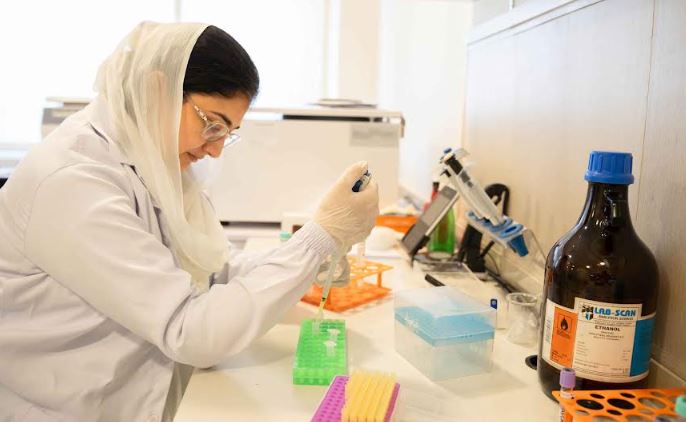
RAWALPINDI, MAY 30 /DNA/ – Al-Shifa Trust Eye Hospital has launched Pakistan’s first Ophthalmic Genetics Gene-Disease Variation Database, a major step toward improving the diagnosis and treatment of inherited eye diseases through precision medicine and locally relevant research.

The database, developed by the hospital’s Department of Ophthalmic Genetics under geneticist Dr Rutaba Gul and senior bioinformatician Abu Bakar, records mutations linked to inherited retinal diseases, congenital cataracts, glaucoma, and corneal dystrophies.

The initiative aims to address a major gap in global genomic medicine, where most reference data comes from European or East Asian populations and often does not accurately reflect South Asian genetic patterns. Pakistan carries a comparatively high burden of inherited eye disorders because cousin marriages increase the risk of recessive genetic diseases.

According to Al-Shifa data, hereditary and congenital conditions account for nearly 40% to 60% of childhood blindness cases in Pakistan. Specialists believe earlier diagnosis through genetic screening can help doctors identify at-risk children before symptoms worsen, improve family counselling, and support future gene-therapy planning.

The hospital’s dedicated ophthalmic genetics laboratory, established in January 2025, has already completed free genetic testing for 150 patients across the country, leading to the identification of 45 different eye-related genetic diseases. Officials said each test can cost nearly Rs100,000 in the private market, making access difficult for many families.

President of Al-Shifa Trust Maj Gen (Retd) Rehmat Khan said the organisation plans to expand the programme into a broader national database and integrate genetic screening services across its hospital network.

“This database is not just a scientific tool; it is a step toward better outcomes for future generations,” Dr. Rutaba Gul said.

She said the initiative could help reduce avoidable disability, lower long-term treatment costs, and improve educational and employment opportunities for children living with inherited vision disorders, while also strengthening Pakistan’s role in global genomic research.

Railway operations in Balochistan resume after three-day suspension

Railway operations in Balochistan resume after three-day suspension

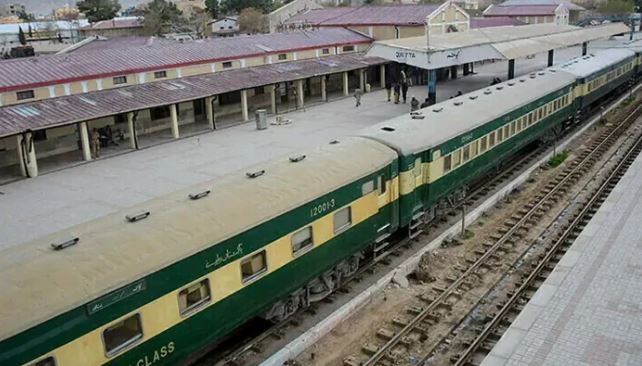
QUETTA, MAY 30: Pakistan Railways has resumed train services to and from Balochistan today under the existing timetable, ending a three-day suspension period, railway officials confirmed on Saturday.

The Jaffar Express departed from Quetta to Peshawar at its designated time, according to railway officials, who confirmed the latest operational update.

The return service from Peshawar to Quetta will also operate on Saturday morning, restoring connectivity after the temporary disruption.

Earlier, train services to and from Quetta and across parts of Balochistan remained suspended for another day on Friday due to what officials described as “unavoidable circumstances”.

They said the Jaffar Express from Quetta would not depart on Friday, while the return service from Peshawar was sent back from Jacobabad; whereas, the operations of Bolan Mail and Chaman passenger trains were also halted.

Meanwhile, several trains departing from Karachi had also experienced delays, including the Tezgam, which left at 1:30am instead of its scheduled 5:30pm departure, triggering passenger protests at Cantt Station.

The Sukkur Express, scheduled for 11:30pm, had also not departed by Friday morning, according to railway police.

It may be noted that at least 14 people, including three Frontier Corps (FC) personnel, were martyred and several others injured in a blast which occurred near the railway track close to Chaman Phatak in Quetta on May 24, the Balochistan government spokesperson said.

Several women and children had also sustained injuries in the explosion and were shifted to hospitals for medical treatment.

Following the blast, Chief of Defence Forces (CDF) and Chief of Army Staff (COAS) Field Marshal Asim Munir stressed that terrorist attacks could not weaken the Pakistani nation’s resolve, and vowed to crush terrorism with full force.

A statement issued by the Inter-Services Public Relations (ISPR) said that CDF Munir visited Zhob District, Balochistan, to celebrate Eid ul Adha with frontline troops deployed along the Western frontiers on Wednesday.

Referring to the recent cowardly terrorist incident in Quetta, orchestrated by Indian-sponsored Fitna-al-Hindustan and its proxies, the field marshal reaffirmed that such inhuman and brutal acts cannot weaken the resolve of Pakistan Armed Forces or the nation.

CDF Munir emphasised that the morale and resolve of troops and the people of Pakistan remained unshaken. He reiterated that the Armed Forces, in close coordination with law enforcement agencies and the people of Balochistan, would continue to pursue all facilitators, abettors and perpetrators of terrorism with full force.

Abraham Accords: DPM Dar reaffirms Pakistan’s position on Israel, Palestine

Abraham Accords: DPM Dar reaffirms Pakistan's position on Israel, Palestine

NEW YORK, MAY 30: Deputy Prime Minister and Foreign Minister Ishaq Dar on Friday ruled out any change in Pakistan’s longstanding policy towards Israel, saying that there could be no change in Islamabad’s stance towards Israel without the establishment of an independent Palestinian state.

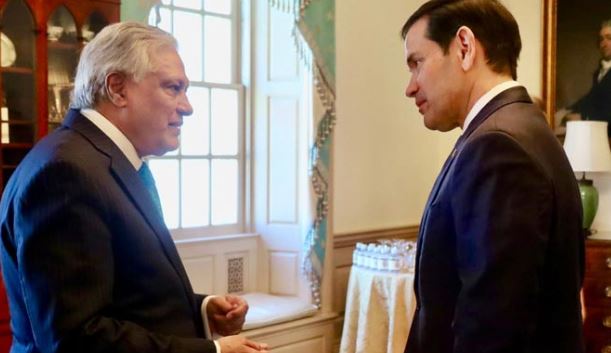
He made these remarks during a press conference at Pakistan’s embassy in Washington after a meeting with US Secretary of State Marco Rubio.


He was responding to a question about US President Donald Trump urging Muslim states, including Pakistan, to join the Abraham Accords as part of a deal with Iran and whether any discussion with Rubio was held on the matter.

“Pakistan remains steadfast in its position on Palestine and Gaza,” Dar said, adding that Israel “must move towards the establishment of a Palestinian state” before there could be any change in Pakistan’s stance towards Israel.

The Abraham Accords are a set of agreements brokered under Trump in 2020 and widely heralded as a foreign policy success. The Accords govern the normalisation of diplomatic relations between Israel and countries that have historically been hostile to it.

While they were welcomed in diplomatic circles as a step towards a more peaceful Middle East, they remain unpopular among the public in many parts of the region, not least because they do not tackle the Israeli-Palestinian conflict.

Earlier on May 25, US President Donald Trump urged Muslim-majority nations across the Middle East and beyond to normalise relations with Israel as part of the emerging Iran peace deal.

In a social media post, Trump listed countries whose leaders he spoke with on Saturday about efforts to end the war with Iran.

“After all the work done by the United States to try and pull this very complex puzzle together, it should be mandatory that all of these countries, at a minimum, simultaneously sign onto the Abraham Accords.”

“Those Countries discussed are Saudi Arabia, The United Arab Emirates (already a Member!), Qatar, Pakistan, Turkiye, Egypt, Jordan, and Bahrain (already a Member!)”

Rubio hails Pakistan’s peace efforts
Meanwhile, Rubio — after meeting DPM Dar — praised Pakistan’s efforts to promote peace in the Middle East.

He said he “thanked [DPM Dar] for the role Pakistan continues to play in advancing peace in the Middle East”.

“We agreed upon the importance of working together to further strengthen a meaningful partnership for better security and more prosperity for our two nations,” he wrote on his official X handle.

Addressing a press conference at Pakistan’s embassy in Washington, DPM Dar said that the meeting with Rubio took place in a “cordial” atmosphere and was attended by Pakistan’s ambassador and other senior Foreign Office officials.

Pakistan played a role in facilitating ceasefires between the United States and Iran, he said, adding that Islamabad helped create conditions for direct engagement between the two countries.

Dar said that the first ceasefire between Washington and Tehran became possible due to Pakistan, adding that the latest truce was also achieved with Islamabad’s efforts.

He added that Pakistan had gained a “new identity on the global horizon” under the leadership of Prime Minister Shehbaz Sharif and COAS-CDF Field Marshal Asim Munir.

Dar’s remarks come amid continued diplomatic engagement by Pakistan with regional and international stakeholders to help end the war in the Middle East.

Stay Connected

64FansLike
60FollowersFollow

Latest Reviews

Exchange Rates

USD - United States Dollar
EUR
1.14
GBP
1.34
AUD
0.70
CAD
0.71