Home Blog Page 1117

Muted OIC-Arab league and dying Palestinians…

Trumpet of Elections sans PTI..

Qamar Bashir

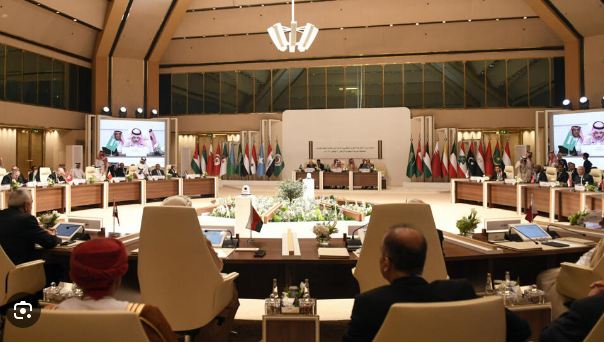
In a pivotal diplomatic move, the Organization of Islamic Cooperation (OIC) and the Arab League initially were scheduled to hold separate sessions, but the gravity of the situation prompted a joint gathering hosted by Crown Prince Mohammad Bin Salman of Saudi Arabia. This unified front aimed to showcase solidarity on a pressing issue: punitive actions against Israel.

The collective anticipation of the entire Muslim Ummah rested on the hope for a unified stance against Israel’s egregious actions. The expectation was for a resolute declaration labeling Israel as a terrorist state, holding it accountable for the ruthless and cold-blooded killing of over 11,000 civilians, perpetrated with total impunity. The desire extended to leveraging oil as a powerful weapon, intended to compel the United States and its ally Israel to yield, humbled at the feet of justice.

The fervent aspiration included a call to deny airspace to Israel and its allies across Muslim nations and among those who champion humanitarian values. It sought to cut off all air, land, and sea routes to Israel, implementing a comprehensive boycott of Israeli products and those supporting its cause. The call further resonated with the imperative of severing diplomatic ties with Israel and its supporters, deploying all available tools and pressures to enforce a two-state solution. This envisioned solution aimed to grant Palestinians the freedom to live in accordance with their religious beliefs, customs, and social values, free from any form of intimidation, coercion, or humiliation.

However, the conference’s impact was diminished by evident divisions among member countries, stemming from concerns about potential repercussions from the United States. The fear of facing the wrath of the USA led to a visible hesitancy among nations, tempering their collective stance against Israel.

Within this divide, opinions diverged on the status of Hamas. While some countries voiced support, viewing it as a legitimate entity spearheading the Palestinian struggle, others, considering it an extension of Iran’s influence, hesitated to endorse its legitimacy. This internal discord weakened the OIC and Arab League’s joint message, hindering the efficacy of their collective diplomatic efforts.

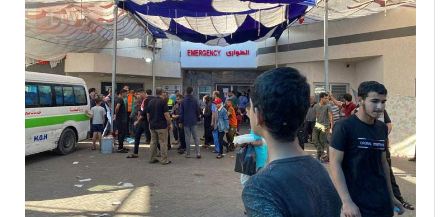
Regrettably, the joint meeting faced dismissive reactions from both Israel and the United States. Instead of heeding its call for restraint, the relentless attacks on innocent civilians escalated. Hospitals, ambulances, and mosques bore the brunt of the aggression, emphasizing the dire humanitarian consequences of the conflict.

Regrettably, the desired unity and resolute action faced stark challenges on the international stage. While the aspirations were noble and the expectations high, the reality reflected the intricate geopolitical complexities and the formidable obstacles posed by global power dynamics. The gap between hope and reality serves as a poignant reminder of the profound challenges in achieving a unified response against the injustices faced by the Palestinian people.

As anticipated, the joint statement fell short of endorsing the comprehensive measures sought by many, culminating instead in a declaration of relatively toothless actions. These included an appeal for immediate ceasefire, a halt to the forced exodus of Palestinians to Egypt or other locations, the establishment of open corridors for the delivery of essential humanitarian aid, and an appeal to the United Nations Security Council for the passage of a binding resolution on Israel knowing that this would once again will be vetoed by USA.

The primary objective of this resolution was to call upon Israel to cease its ongoing killing spree and the alarming acts of genocide against innocent women, children, and civilians—actions that have brazenly surpassed all recognized redlines.

In the process of normalizing relations with Arab states, Iran’s presence in the meeting signaled a noteworthy rapprochement towards the Arab world. Acknowledging its delicate position within the predominantly Arab conference, the Iranian President strategically praised Hamas, the leading resistance movement against Zionist forces in the ongoing 35-day war.

Emphasizing that the Palestinian issue transcends simple human rights concerns, the Iranian President framed it as a matter of human dignity. He condemned the Zionist regime of Israel, alleging that it, with the support of the USA and the West, has consistently denied the Palestinian people their fundamental dignity.

The Iranian President underscores the urgency of meaningful, result-oriented, and time-bound dialogues among Muslim countries to enforce a two-state solution for the Palestine issue. While echoing the call for a ceasefire and the restoration of humanitarian aid corridors, he vehemently opposes allowing the Zionist regime to continue its killing spree with impunity. In contrast to other nations, Iran openly supports and admires the Palestinian resistance movement led by Hamas.

The President warns that if Israel, backed by the USA, persists in killing innocent civilians, the conflict could escalate to engulf other regions like Lebanon, Yemen, Iraq and Syria.

He calls for a unified Muslim voice to compel Israel to leave Gaza and restore the dignity and honor of Palestinians. Advocating for impactful measures, he urges the use of oil as a tool to humble Israel, the USA, and their supporters.

The President calls for the severance of diplomatic relations with Israel, declaring it a terrorist country with a terrorist regime. Additionally, he advocates for a global boycott of Israeli products as a means to exert collective pressure on the nation.

In his impassioned address, the Iranian President stressed that the lasting solution to the Palestinian issue lies in restoring the rightful ownership of the land to the Palestinians, which has been denied for 70 long years through the construction of Zionist settlements.

The Turkish President, Erdogan Tayyip, delivered a carefully crafted speech, urging the holding of an international conference for a lasting solution based on a two-state framework.

 He proposed the establishment of an international fund for the reconstruction of Gaza and the rehabilitation of those physically and psychologically affected by the conflict. Erdogan also advocated taking Israel to the International Court of Justice for alleged war crimes.

In a brief yet carefully worded address, the Qatari representative called for the release of captives by both Hamas and Israel. He condemned the displacement of Palestinians from North to South and towards Egypt.

The leaders, in their respective addresses, largely focused on condemning the indiscriminate killing of civilians and urging the restoration of humanitarian aid.

They characterized Israel’s retaliation for the events of 9 October as inhumane and unacceptable, expressing dismay at the international community’s silence in the face of Israel’s brutality.

The leaders criticized the paradox of the West claiming to champion human rights while simultaneously vetoing a UNSC resolution calling for the cessation of Israeli bombardment.

They underscored the necessity of forcing Israel to compensate for the lives lost and the destruction inflicted upon Gaza and urging Muslim countries to utilize every available tool to achieve a lasting solution to the Palestine conflict.

As anticipated, Mr. Osama Hamdan, a spokesperson of Hamas in an interview  while reflecting on the outcome of the OIC-Arab League joint sitting, deemed the results as falling short and arriving too late.

He emphasized that the ongoing Israeli assault on Gaza, now in its 35th day of relentless and unceasing bombing equivalent to seven nuclear bombs, blatantly violates international laws and human rights.

Hamdan called for an immediate halt to the attacks and the swift restoration of supplies for fuel, electricity, water, and food to address the dire humanitarian situation.

Mr. Hamdan urged Muslim countries to isolate Israel and stressed the need for concrete actions to pave the way for the establishment of an independent and sovereign state of Palestine. The urgency of these measures, he emphasized, is paramount in light of the ongoing crisis and the escalating human toll in Gaza.

The Arab and Muslim countries are confronted with a looming dilemma, caught in a complex web of dependence on the USA and the West for their security needs. Many have granted bases to the USA, facilitating the maintenance of its formidable war machine within their borders. However, the stark reality is that none of these nations possess the economic, financial, or military strength to pose a credible threat to the USA, the West, or Israel.

The strategic use of oil as a weapon in the 1970s, which once had a significant impact, has now become toothless. Lessons learned from the past have led Western countries to minimize their reliance on oil imports, either through developing alternative energy sources or innovative means of energy generation.

Even when combined, all Muslim countries collectively lack the capacity to rival Israel’s economic, financial, technological, and innovative prowess. Attempting to sever diplomatic ties or downgrade economic relations poses a considerable risk, as it could adversely impact the economic and financial well-being of these countries both collectively and individually.

The harsh reality is that none of these nations is prepared to face a potential counter offensive launched by the USA and the West. Their dependencies on satellite systems, global internet infrastructure, reliance on exports to developed nations, and their ties to international financial institutions largely funded by the USA, the West, and Israel leave them vulnerable and comparatively powerless.

In this precarious scenario, the toothless declaration of the OIC-Arab League is somewhat encouraging, signifying a collective understanding of the limitations and potential repercussions of more assertive measures. It reflects a pragmatic acknowledgment of the existing power dynamics and the challenges faced by these nations in navigating a delicate geopolitical landscape.

Qamar Bashir

Press Secretary to the President(Rtd)

Former Press Minister at Embassy of Pakistan to France

Former MD, SRBC

PTI spokesperson strongly condemns abduction of Akbar Tanoli

PTI spokesperson strongly condemns abduction of Akbar Tanoli

Urges SC to order immediate recovery of missing PTI leaders, workers

ISLAMABAD: /DNA/ – Pakistan Tehreek-e-Insaf (PTI) strongly condemned the enforced disappearance of PTI’s tick holder for PP-2 Attock Akbar Khan Tanoli from the federal capital and urged the Supreme Court (SC) to take notice of the unabated incidents of kidnapping of PTI’s leaders and workers and bring those responsible to justice.PTI spokesperson termed the detention of the party’s candidate without any crime was highly condemnable and a part of pre-election rigging.He made it clear that a fresh wave of state terrorism ahead of the general elections was a failed attempt to fortify and terrify the PTI leaders and ticket holders but all such brutal tactics would not serve their deserved goals and objectives.PTI spokesperson noted that the so-called democratic elements were afraid of facing crushing defeat at the hand of the PTI even in presence of their own umpires; hence resorting to such fascist tactics and unleashing a reign of terror.He demanded that the ongoing series of unconstitutional and unethical enforced disappearances and abductions of PTI workers and ticket holders on a daily basis should be stopped now, adding that the Election Commission of Pakistan (ECP) and the caretaker government should play its due role in ensuring the provision of a level playing field.PTI spokesperson urged that they should abandon the chain of criminal facilitation in the pre-poll rigging at the behest of a political party. He demanded that the top court should order the immediate recovery of all the missing leaders and workers of PTI and bring those responsible to justice.

Extraordinary joint Arab-Islamic Summit on Gaza castigates Israeli brutality

Extraordinary joint Arab-Islamic Summit on Gaza castigates Israeli brutality

RIYADH, Nov 11 (DNA): The leaders of the Arab and Islamic countries in
unanimous show of solidarity with the Palestinian people bracing the
brutal onslaught of Israel’s aggression for the last five weeks in Gaza,
on Saturday strongly condemned the ongoing killing of about 11,000
civilians, besides, called for an immediate solution to the issue and
end to the humanitarian crises.

Caretaker Prime Minister of Pakistan Anwaar-ul-Haq Kakar is among the
other Muslim world leaders attending the summit. He is representing
Pakistan at the summit.

Kingdom of Saudi Arabia is hosting a Joint Arab Islamic Extraordinary
Summit, which brings together leaders from the Arab and Islamic world to
discuss the current worsening situation in Gaza and the future strategy.

Addressing the summit, Palestinian President Mahmoud Abbas said the
Palestinian people have been facing the most heinous and ferocious
Israeli aggression. He said we need international protection for our
unarmed Palestinian people.

The Palestinian President said Israel has been violating international
laws and breached all red lines. He said we are the rightful owners of
Jerusalem and holy sites.

Mahmoud Abbas reiterated that Gaza strip is part and parcel of the State
of Palestine and diplomatic solution must be inclusive of all
Palestinian territories including Gaza, Jerusalem and the West Bank.

Mahmoud Abbass thanked the Saudi leadership and that of other Muslim
countries for their support and solidarity with the Palestinian people
at this hour.

In his opening remarks, Saudi Crown Prince Mohammed bin Salman said the
Kingdom holds the Israeli occupation responsible for the crimes
committed against the Palestinians, reiterating calls for an immediate
ceasefire in Gaza.

The Saudi Crown Prince stressed the Kingdom’s unequivocal rejection of
the continued Israeli aggression in Gaza and the forced displacement of
residents.

He pointed to the double standards in applying the international
humanitarian law, condemning the international community’s silence
towards the violations against the Palestinian civilians.

The Crown Prince called for a coordinated and collective effort among
Arab and Islamic states to take effective action to lift the siege and
deliver humanitarian and relief aid into Gaza.

Mohammad Bin Salman said a Palestinian state must be established on the
1967 borders with East Jerusalem as its capital.

President of Iran Ebrahim Raisi, in his address, said that today,
Palestine was the key to the dignity of the humanity as the worst crimes
were being witnessed by the people in the history of the world.

He stressed that entire Islamic world should be united to sort out the
problem, adding that the OIC should play an important role in forging
unity among the Muslim countries.

The Iranian president said the Zionist regime was on carnage and
destruction drive in Gaza which was nothing but “brutality’ and mockery
of the international laws. The Gaza had been the biggest prison in the
world.

All kind of banned arsenal and weapons were being used against Gazans
which resulted in deaths of 11,000 defenceless civilians in the five
weeks of Israeli barbaric aggression, he added.

President Raisi called for an end to the killing of civilians and
opening of humanitarian corridor.

President of Egypt Abdel Fattah el-Sisi denounced the perception of the
collective punishment by killings, laying siege and forcible
displacement of the Palestinians were unacceptable.

“This cannot be interpreted as self-defence and must be stopped
immediately,” he added.

President of Turkiye Recep Tayyip Erdogan and Emir of Qatar Sheikh Tamim
bin Hamad Al Thani, in their remarks, urged the international community
to immediately act to end the Palestinian crises and stop Israel from
continuing with its aggression.

Israel launched relentless and indiscriminate air and ground assaults on
the Gaza Strip including hospitals, residences, and houses of worship
after October 7.

According to official figures, so far at least 11,078 Palestinians had
been killed, including 4,506 children and 3,027 women.

Pakistan eliminated from World Cup 2023

Pakistan eliminated from World Cup 2023

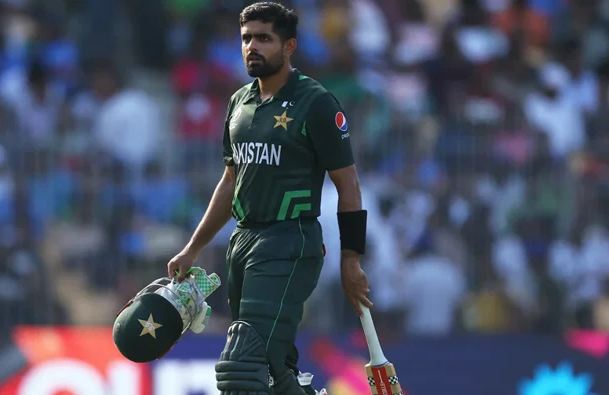
Babar Azam-led Pakistan team were eliminated from the ICC Men’s Cricket World Cup 2023 as they failed to qualify for the semi-final slot on Saturday.After winning the toss in the last group match of the 10-team tournament, England skipper Jos Buttler opted to bat first with Pakistan needing to bowl them out as quickly as possible.As things stand now, the English team has scored 150 runs making it impossible for Pakistan to chase the target in 3.4 overs.The Men in Green only won four out of eight games and are currently in fifth position with a net run rate (NRR) of 0.036. They needed to win today’s match with a heavy margin to surpass New Zealand’s run rate but that is no longer possible.Both the teams are now playing for pride as they are now eliminated from the ongoing tournament as calls for strict scrutiny grow stronger.According to sources, Babar Azam has already started consultations with his close aides about his future and reportedly made up his mind to quit whit-ball captaincy.

‘No pressure of captaincy’

Babar Azam entered the World Cup as the top-ranked ODI batter but his average of 40.28 is behind three of his teammates, while several former players have found his leadership uninspiring.The number three batter’s highest score of 74 came in their shock loss to Afghanistan but the 29-year-old denied that the captaincy was affecting his form with the bat.”I have been captaining my team for the last three years and I have never felt pressure,” he said on Friday.”Once we go back to Pakistan … we will see what happens,” he said when asked about resigning as captain.”I have not performed the way I should have in the World Cup, that’s why people are saying that I am under pressure.”Over the last two and half or three years, I was the one who was performing for the side and leading the team.”It seems everyone has an opinion on me – he should be like this, or like that. If someone really wants to advise me, I think everyone has my number. But I guess it is easy to give advice on TV.”

Air pollution impact on vegetation in Pakistan student M.Phil botany

Air pollution impact on vegetation in Pakistan student M.Phil botany

M Bashir Farhan

Air pollution can have adverse effect on vegetation in Pakistan. Effect depends on the specific pollutants involved and their concentrations. Here are some ways in which air pollution impact on vegetation in Pakistan.

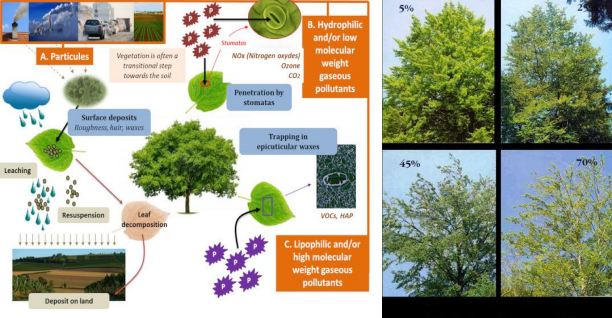
Sulfur dioxide (SO2) and nitrogen oxide (NOx) could be threat for photosynthesis the process by which plants make their food whenever photosynthesis will be reduced ATPs production will be reduced and it will lead to stunted growth and productivity.

Ground level ozone O3 a major component of smog it can lead to damage plant tissues and reduce growth. Symptoms on leaves include yellowing and stippling and can decrease plant ability to produce food through photosynthesis.

When sulfur dioxide and nitrogen oxide bond with each other lead to acid rain formation. Acid rain become threat for for soil pH harm and plant roots Some heavy metals are very toxic for plants such as lead, mercury, and cadmium deposited in to soil.

These metal become serious threat for plant growth and development. Plants also need to breathe When air will be polluted then airborne particulates matter and pollutants can clog stomata due to this the respiratory system of plant is disturbed.

Due to air pollution immune system of the plants is also disturbed pollution make it more susceptible to disease, pest and environmental stresses.

As plants are sensitive to pollution and air pollution lead to change the composition of plants plant have to tolerate that environment otherwise plant decline or die.

Air pollution can have significant economic implications, especially in agriculture. It can lead to food scarcity and economic losses for farmers.

Air pollution can disturb ecosystem by harming vegetation that are the main source of food and habitat and lead to disturbance in entire food web. Air pollution also show impact on desert vegetation. The deposition of pollutants effect their growth and health.Some air pollutants have the ability to disturb the reproductive systems of plants and lead to alteration in flowering and seed production.

Pakistan has taken steps to address the air pollution such as National environmental Quality standards (NEQS) and to produce air quality monitoring, effective enforcement and efforts to reduce emissions form industries and factories.

Raising public awareness and air pollution is difficult for promoting environmental protection and public health. Here are some ways to promote public awareness about air pollution in Pakistan

1) Educational compains.

2) School programs

3) Community workshops.

4) Air quality index information.

5) Public service announcement.

6) Partnership with NGOs.

Food Insecurity Caused By Human Design

Food Insecurity Caused By Human Design

Muhammad Saeed

No youngster should be left behind when it comes to food security, according to my favorite author, Ertharin Cousin. The fundamental right of human beings is food. However, hunger affects one third of the world’s population. Food emergencies are implemented in certain countries, such as Palestine and Somalia.

In Pakistan, 16.4 out of 100 households did not have enough food to feed their child in the 2019–2020 fiscal year.Following COVID-19, the social reform profile image has shifted as a result of supply chain disruption and wealth being concentrated in a small number of hands. Actually, even in industrialized nations, this resulted in a high rate of inflation. Deep worries about food security in developing nations have been raised by the present phase’s rapid rise in cereal and other food prices.

Even though the vast majority of people in poor nations already experience widespread malnutrition, these individuals are expected to become even more vulnerable as a result of the sharp increase in food prices. Since the majority of the impoverished are net consumers of food, food price shocks have an effect on their standard of living.Since the beginning of life, competition for resources has grown, but the introduction of lethal weapons has made it a threat. powerful human races attack the weaker ones.

On our small world, the conclusion of one battle ushers in the next In that kind of crisis, women and children are the ones most impacted; occasionally, the situation is so bad that there isn’t a single meal to eat, not a bottle of water to drink,neither a tablet for pain.The need for sustainable agriculture techniques must grow as the population does, as this could result in overuse of natural resources, deforestation, and degraded soil. The number of newborns born worldwide increases by 200,000 per day.

There is an exponential growth pattern.As time goes on, climate change becomes increasingly significant in contributing to food insecurity. Food security is significantly impacted by climate change, creating a difficult and wide-ranging problem. Droughts, floods, and other extreme weather patterns become more common and severe as temperatures rise due to increasingly erratic weather patterns.Over and beyond quick relief operations, a diversified strategy is needed to address food insecurity. Long-term care is just as important as emergency care. First and foremost, food production may be increased by enhancing agricultural practices and raising crop yields through sustainable farming methods..

Investment in infrastructure, such as irrigation system amd storage facilities, can help reduce post-harvest losses.Enhancing access to education and resources for small scale formers, particularly in developing regions, empowers communities to become self sufficient. A comprehensive approach that encompasses these elements can pave the way for a more food-secure and equitable world. Our holy prophet says; “An individual should not eat until he feed someone who is hungry” We should act upon the saying of our holy prophet as an emergency solution of food security.

Gaza’s Al Shifa Hospital halts operations; 39 babies die due to lack of oxygen and medicine

Gaza's Al Shifa Hospital

Arab and Muslim leaders are in Saudi Arabia for an extraordinary joint Islamic-Arab summit to discuss Gaza situation

Call to improve value-added textile exports by adopting diversified marketing

Call to improve value-added textile exports by adopting diversified marketing

DNAISLAMABAD: There is a need for giving a boost to the export sector by adopting diversified marketing techniques and extending practical support to the industry.

This was stated by the Pakistan Readymade Garments Manufacturers & Exporters Association (PRGMEA) North Zone’s new chairman Amad Hanif, who had been elected recently for the year 2023-24, pledging to continue with his efforts for the promotion and protection of the apparel sector, calling for enhancing value-added textile exports.

Ahmad Hanif said that it was an honour for him to assume the office of the NZ chairman for the year 2023-24. Addressing a ceremony held here today, the new regional chairman vowed to promote the Association to the new heights, thanking the members for reposing confidence on him to lead the PRGMEA in north zone.

He paid tribute to the outgoing regional chairman Wasim Akhtar Khan, also appreciating the whole body, which had been actively promoting the interests of the value-added textile industry throughout 2022-23.

Ahmad Hanif observed that his top priority would be smooth energy supply at regionally competitive prices to the apparel sector, resolution of tax related issues, and a favourable environment for the promotion of garment industry in Pakistan especially in Punjab.

He drew attention of the garment exporters to meet the challenges in international market so that momentum of exports could not only be maintained but also new opportunities be fully exploited. He encouraged the exporters not to worry about threats of globalization, rather the hidden benefits should be explored and utilized. He, however, said that increasing productivity, improving efficiencies and reducing wastages would be the practical remedies to be adopted by exporters to be able to compete in the world market.

PRGMEA Central chairman Mubashar Butt, other leadership, including Naseer Malik, Ijaz Khokhar, Sohail A. Sheikh, Sajid Saleem Minhas and Wasim Akhtar Khan congratulated the newly-elected zonal chairman, expressing the hope that he would continue the excellent work in the best interest of the entire value-added textile sector.

The new zonal chief expressed the confidence of making full efforts to work selflessly to resolve issues and problems faced by the industry in the best interests of PRGMEA members and in further enhancing and boosting the exports.

Pakistan vs England, ICC World Cup: Buttler opts to bat

Pakistan vs England, ICC World Cup: Buttler opts to bat

Kolkata: The match is being played at the Eden Gardens, Kolkata. England’s defence of their 2019 World Cup triumph has been rather disappointing, with the team securing only two wins in eight matches in India. Jos Buttler and his team struggled to adapt to the conditions, leading to an early exit from semi-final contention in the tournament.

They also faced a significant challenge regarding their qualification for the ICC Champions Trophy 2025, as only the top eight teams in the current tournament will make it to that event. However, a substantial victory against the Netherlands has improved their standing.

Opting to bat first against the Dutch, Ben Stokes scored his first World Cup century, enabling England to post 333/9 in 50 overs. In response, the Netherlands struggled against England’s spin threat, with Moeen Ali and Adil Rashid each claiming three wickets. The Dutch team was bowled out for 179, resulting in England winning by 160 runs.

On the other hand, Pakistan’s chances of reaching the World Cup semi-finals depended on a favour from Sri Lanka. Unfortunately, Sri Lanka did not provide the assistance, leaving Pakistan with a nearly impossible task against England. The 1992 champions must defeat the English team by 287 runs or with 284 balls remaining if they bat second.

Their only hope lies in batting first and setting a substantial score. Their recent batting performance against New Zealand in Bengaluru was encouraging, as they emerged victorious despite conceding 400 runs.

Head to Head

England and Pakistan have encountered each other in ten matches in the ICC ODI World Cup. Out of these 10 games, England has emerged victorious in four, while Pakistan has triumphed on five occasions. One match concluded without a result.

The highest total posted by England is 334 runs, while the highest score achieved by Pakistan is 348 when these two teams have clashed in the WC. Pakistan’s lowest total is 134, and England’s lowest is 165 in this prestigious event.

Pitch Report

The surface at the Eden Gardens in Kolkata might favour the batsmen. Therefore, a high-scoring encounter is anticipated on a pitch that offers value for players skilled in stroke-making. As the game progresses, spinners will seek to exploit the conditions. Opting to bowl first could prove to be a prudent decision at Eden Gardens.

Probable lineups

England: Jonny Bairstow, David Malan, Joe Root, Ben Stokes, Harry Brook, Jos Buttler (C), Moeen Ali, Chris Woakes, David Willey, Gus Atkinson, Adil Rashid

Pakistan: Abdullah Shafique, Fakhar Zaman, Babar Azam (C), Mohammad Rizwan (wk), Saud Shakeel, Shadab Khan, Iftikhar Ahmed, Agha Salman, S Afridi, Mohammad Wasim, Haris Rauf

Babar Azam likely to resign as Pakistan captain

Babar Azam likely to resign as Pakistan captain

Pakistan’s skipper will value advice he receives from his father

Sports Desk

NEW DELHI: Disappointed by the behaviour of the Pakistan Cricket Board (PCB) and former cricketers, Babar Azam is likely to step down as the captain of white-ball cricket after returning from India, revealed well-informed sources on Friday.

During the ongoing ICC Men’s Cricket World Cup, the Pakistan team have failed to deliver as the Green Shirts are lingering on the verge of elimination from the mega event.

As per sources, the 29-year-old has been seeking guidance on his future, consulting with former PCB chairman Ramiz Raja and people close to him.

During the training at Kolkata’s Eden Gardens on Friday (today), Azam sought advice from Raja.

The decision whether to continue as captain will be influenced by consultations upon his return to the country. In the current circumstances, Babar values the advice he receives, particularly from his father.

His close aides are advising him to step down from leadership in all three formats, the sources added. The sources further added that the suggestion is based on the belief that prominent captains have faced challenges in Test series in Australia.

Consequently, individuals in Babar’s inner circle have recommended he step down from captaincy roles in both red and white-ball cricket.

Although Babar initially planned to make this decision while in India, he has now postponed it and will finalise his choice upon returning to the country.

The team led by Babar experienced setbacks against India, Australia, South Africa, and Afghanistan, while they emerged triumphant against the Netherlands, Sri Lanka, Bangladesh, and New Zealand.

Stay Connected

64FansLike
60FollowersFollow

Latest Reviews

Exchange Rates

USD - United States Dollar
EUR
1.17
GBP
1.35
AUD
0.72
CAD
0.73