Home Blog Page 1114

Religious leaders unite in joint appeal for ceasefire and humanitarian aid in Gaza

Religious leaders unite in joint appeal for ceasefire and humanitarian aid in Gaza

LAHORE, NOV 13 /DNA/ – Religious leaders from across the nation, representing diverse faiths and beliefs, on Monday joined forces to make a global appeal for an immediate end to Israel’s aggression and brutality in Gaza. Addressing a unified audience at the Palestine Conference here at Cathedral Church, they urged the world powers to immediately play their role in ending the persecution of the oppressed Palestinian people.

Pakistan Ulema Council Chairman, Hafiz Muhammad Tahir Mahmood Ashrafi, and Archbishop Dr. Sebastian Francis Shaw were among the prominent figures who emphasized that the ongoing situation in Gaza was not a matter confined to followers of any specific religion but a violation against humanity itself. Ashrafi who is also the Special Representative to the Prime Minister on Religious Harmony and the Pakistani Diaspora in Middle East and Islamic Countries, stated that Saudi Arabia and the Muslim world were actively playing their role against Israeli aggression, urging the global community to step forward to end Israeli oppression.

He stressed the need for international solidarity to halt Israel’s atrocities and called for an immediate ceasefire to stop the bloodshed in the Gaza Strip so that relief operations could be started in the region. According to a report of United Nations, 300,000 people of Gaza did not have food, water or medicine, he added. Ashrafi warned, “If this war spreads, everyone from Lebanon to Syria will be under its influence and it will harm mankind.” He highlighted the humanitarian crisis in Gaza, where even hospitals had not been spared from Israeli airstrikes and added 12,000 people including 4,000 children had been martyred in Israeli aggression. Archbishop Sebastian Francis Shaw urged the world to raise its voice against the ongoing conflict in Gaza and called for initiatives to provide aid to the affected population.

He said innocent children, women and churches were targeted in Gaza. Syed Kazim Raza Naqvi said the Islamic world must take steps beyond appeals. He said innocent children and churches were being attacked which was inhumane and against the principles of war. He appealed to all the Islamic countries to establish an immediate ceasefire in Gaza. Maulana Asim Makhdoom, Pastor Emmanuel Khokhar, Maulana Muhammad Aslam Siddiqui, Hafiz Kazim Raza, Maulana Asadullah Farooq, Maulana Muhammad Aslam Qadri, Maulana Mubashir Rahimi and others also addressed the conference.

They concluded with a joint appeal for an immediate cessation of hostilities, humanitarian assistance for the people of Gaza, and intensified efforts to end the injustice inflicted by Israel. The religious leaders emphasized the responsibility of the United Nations, Europe, America, Britain, and the Organization of Islamic Cooperation to play a decisive role in resolving the crisis and bringing about lasting peace in the region.

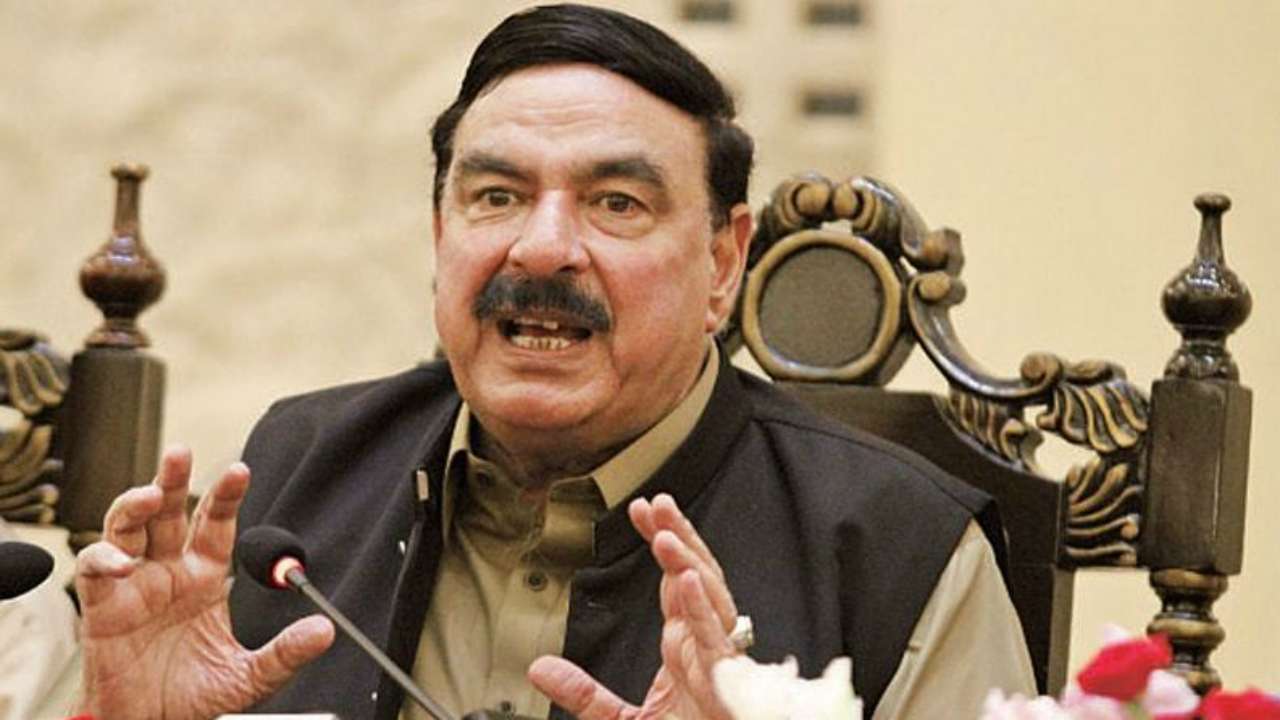
Beleaguered Sheikh Rashid seeks details of cases registered against him

Sheikh Rashid

RAWALPINDI, NOV 13 (DNA) — Former federal interior minister Sheikh Rashid Ahmed said on Monday he always remained loyal to Gate No 4 (a reference to army) but now he had fallen a victim to an “evil eye”.

Speaking to journalists outside the Lahore High Court (LHC) Rawalpindi bench, he bemoaned that cases were being registered against him in cities he never visited. He requested that he be provided details of the cases registered against him.

He said the effects of his ‘seclusion’ persist. “I accompanied former premier Nawaz Sharif at Gate No 4 and I have always remained loyal to this gate. However, now someone has cast an evil eye and I am waiting for a time Sharif will face the music,” he added.

Elections should be held among political parties rather than institutions, he said. “I will not give up and am hoping for Allah’s help,” he said. He said it did not matter that political opponents were running their election campaign.

He said the masses of Pakistan were more intelligent than the politicians and they would decide (the fate of the politicians). Meanwhile, the LHC also fixed the petition filed by Sheikh Rashid challenging a case registered against him in connection with May 9 incidents. Sheik Rashid requested the court through his petition for removal of his name from the case. — DNA

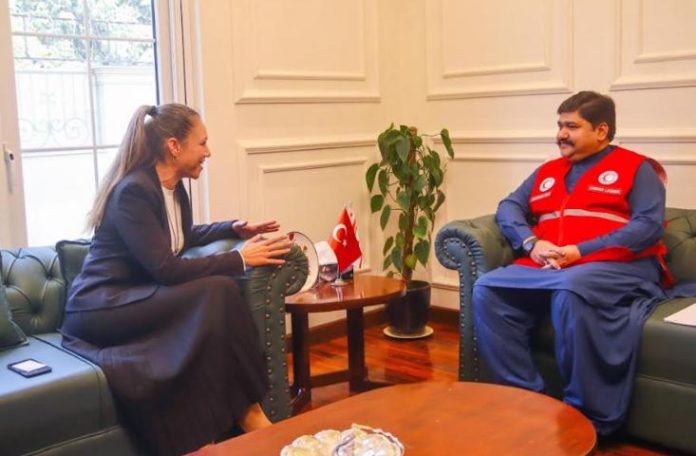
PRCS Chairman calls on Ambassador of Turkish Republic of Northern Cyprus

PRCS Chairman calls on Ambassador of Turkish Republic of Northern Cyprus

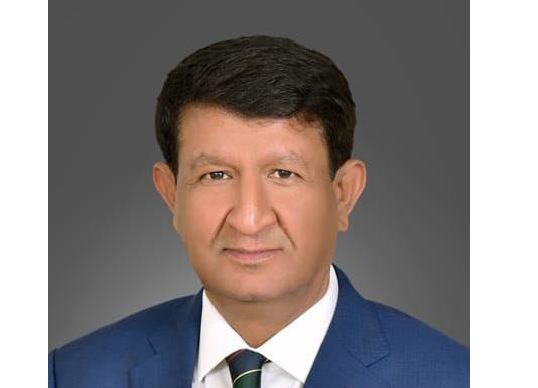
PRCS Chairman Sardar Shahid Ahmed Laghari provided a comprehensive overview of the PRCS’s programs and its initiatives regarding rescue, relief, rehabilitation, and reconstruction following the recent floods in PakistanAmbassador Dilsad Senol praised the exceptional services of PRCS during natural disasters and emergencies, specifically acknowledging their recent humanitarian assistance to flood-affected families; assured cooperation with the Red Crescent to ensure uninterrupted service to humanity.

DNAISLAMABAD: PRCS Chairman Sardar Shahid Ahmed Laghari met with the Ambassador of the Turkish Republic of Northern Cyprus, Dilsad Senol, in Islamabad on Monday. Dilsad Senol warmly welcomed Sardar Shahid Ahmed Laghari to the Northern Cyprus Embassy. Both the dignitaries engaged in discussions encompassing various topics, including bilateral relations and the importance of strengthening cooperation for the betterment of humanity.In the course of the meeting, Sardar Shahid Ahmed Laghari provided a comprehensive overview of the programs and initiatives undertaken by the Pakistan Red Crescent Society (PRCS), particularly in response to the recent floods in Pakistan. He highlighted the organization’s active assistance in 55 districts, benefitting over 2.7 million people through the provision of tents, food, non-food items, shelter, cash assistance, and essential household items.Chairman Laghari also underscored PRCS’s substantial contributions since the 2005 earthquake, with responses to over 45 major emergencies and disasters across Pakistan, aiding more than 12.4 million beneficiaries. He emphasized the extensive network of 6 million volunteers across Pakistan and proposed collaboration between the Pakistan Red Crescent Society and the Northern Cyprus Turkish Red Crescent on various healthcare and community-based initiatives through different programs and projects. Additionally, he extended an invitation to Ambassador Dilsad Senol to visit the PRCS National Headquarters.Ambassador Dilsad Senol praised the exceptional services of PRCS during natural disasters and emergencies, specifically commending their recent humanitarian assistance to flood-affected families. She assured that cooperation with the Red Crescent would be strengthened to ensure uninterrupted service to humanity. During the occasion, Chairman Laghari presented a commemorative shield from PRCS to Ambassador Dilsad Senol.

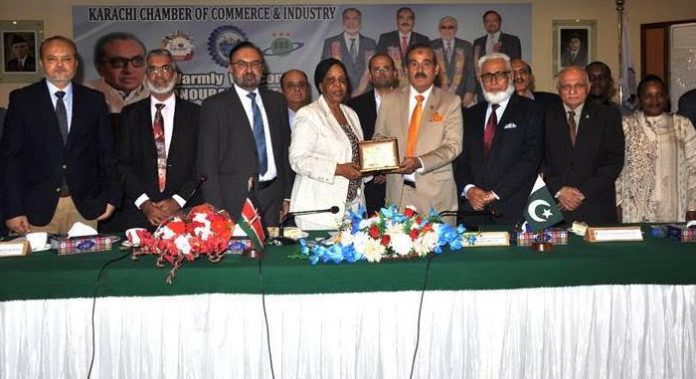
Commerce Ministry gave go ahead, Kenya-Pakistan JTC Meeting soon: Envoy

Kenya-Pakistan JTC Meeting soon

DNAKARACHI: High Commissioner of Kenya, Nyambura Kamau has requested Karachi Chamber of Commerce & Industry (KCCI) to submit its input at the Ministry of Commerce about exportable products which can be supplied by Karachi to Kenya so that the same could also be negotiated in the next Joint Trade Committee (JTC) meeting to be held soon.“We want to ensure that Karachi’s business community is not left behind and they also benefit from expanded trade between the two countries”, said Kenyan High Commissioner, “One of the issues to be negotiated by JTC pertains to exchanging list of tradeable goods between the two countries. Our proposal will be that Pakistan and Kenya should identify at least 20 products each having competitive advantage to expand trade which currently remains confined to exporting tea from Kenya and rice from Pakistan.Exchanging views at a meeting during her visit to KCCI, Ms. Nyambura Kamau said, “Under the bilateral trade agreement between Kenya and Pakistan signed in 1983, a Joint Trade Committee (JTC) was formulated which was scheduled to meet in April 2022 but it couldn’t and now, Pakistan’s Ministry of Commerce has given go ahead for JTC Meeting and we are waiting for confirmation of date from the Kenyan delegation.”Honorary Consul General Kenya Muhammad Hanif Janoo, President KCCI Iftikhar Ahmed Sheikh, Senior Vice President Altaf A. Ghaffar, Vice President Tanveer Ahmed Barry, Former President Majyd Aziz and KCCI Managing Committee Members were also present on the occasion.Kenyan High Commissioner, while identifying Karachi as the most important city in Pakistan, said that the city successfully represents huge percentage of commercial interest of Pakistan. “We recognize the importance of Karachi as this is the place from where most of the Kenyan goods including tea get access to Pakistani market and beyond. We are, hence, really interested in creating linkages with Karachi’s business community through KCCI because of its strategic location to achieve the development agenda of both our countries.”She said that Kenya and Pakistan, who have a long history of relations dating back to 1964, enjoy cordial bilateral relations largely dominated by trade and investment. “Next year, we will be celebrating 60 years since Pakistan opened its mission in Nairobi and 40 years since Kenya opened its high commission in Islamabad.”

She stressed the need to exchange investment opportunities, regular visits of business delegations, technology transfer & information sharing along with expansion of exportable products between Kenya and Pakistan.

She also mentioned that Kenyan High Commission has taken many initiatives to enhance trade, investment and economic cooperation in the light of strong relationship between the two countries. “We are committed to moving forward in the direction of achieving full potential of trade and investment by working closely with relevant stakeholders from the government and private sectors of both countries.”

To strengthen business relations, she suggested to develop a mechanism for addressing barriers to trade and investment, organizing joint business networking meetings, seminars, exhibitions, trade fairs and other promotional activities.

Earlier, President KCCI Iftikhar Ahmed Sheikh, while welcoming the Kenyan High Commissioner, stated that Pakistan and Kenya have been enjoying excellent relations since 60s when Pakistan expressed its support for Kenya in getting independence from the British rule.

He said that Karachi offers a conducive business environment with a rapidly growing market. The city’s strategic location as a major port and its well-established industrial base makes it an ideal destination for foreign investments. “We, at KCCI, are committed to facilitating and supporting collaborations that bring mutual benefits to both countries.”

He also extended full support and cooperation of Karachi Chamber to Kenyan High Commissioner for all its future endeavors towards further strengthening the trade and investment cooperation between the two countries.

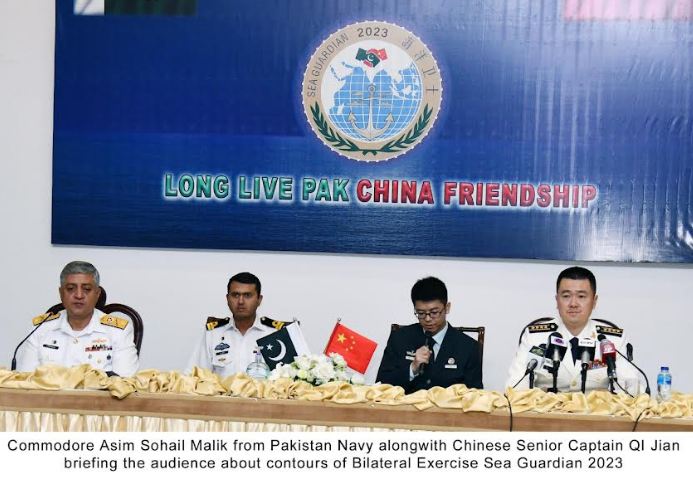
Pakistan Navy, PLA (Navy) conduct joint exercise sea guardian 2023

Pakistan Navy, PLA (Navy) conduct joint exercise sea guardian 2023

DNA

Karachi, A joint press conference regarding Exercise Sea Guardian 2023 was held at Karachi, today. Commodore Asim Sohail Malik from Pakistan Navy and Senior Captain Qi Jian from People’s Liberation Army PLA (N) briefed the audience about objectives, contours and conduct of the exercise.Commodore Asim Sohail Malik said that Pakistan and China have always enjoyed strategically unique and strong relationship. He expressed that this exercise will further strengthen decades old and time tested friendship of both countries and will also open new avenues for future maritime cooperation between two friendly navies against common threats in the region.

While addressing the press conference, PLA (Navy) Senior Captain Qi Jian said that this exercise is committed to strengthen all-weather strategic cooperative partnership between the two countries. It aims at enhancing defense cooperation, deepening professional exchanges, facilitating the establishment of a regular mechanism for joint exercise along with demonstrating the common mission and determination of the two countries to defend China-Pakistan Economic Corridor, and further building a closer China-Pakistan community with a shared future in the new era.

Frontline Destroyer, Frigates, Helicopters, Rescue Ship, Submarine and Special Forces from Pakistan Navy and Peoples Liberation Armys are participating in the exercise.The exercise is divided into two phases i.e Harbour and Sea phase. During harbour activities both navies shared their experiences on contemporary maritime security threats and challenges through various workshops, seminars and table top discussions.While, the Sea Phase to be conducted in North Arabian Sea from 14 till 16 Nov 23, would encompass advance level naval operations i.e. maritime security Ops, tactical maneuvers, various warfare related exercises and Search & Rescue operations to deal with variety of threats at sea.First bilateral Exercise Sea Guardian with People’s Liberation Army (Navy) was held in 2014 and has regularly been conducted each year alternately in Pakistan and China.

Italian ambassador’s cooking class draws huge interest

Italian ambassador’s cooking class draws huge interest

Italian Food Week is a regular feature and we celebrate it regularly, says Ambassador of Italy Andreas Ferrarese

Centreline ReportISLAMABAD – Food enthusiasts in the twin cities of Islamabad and Rawalpindi thronged to the Zigolini restaurant, Islamabad Marriott Hotel to enjoy mouth-watering Italian cuisines.The hallmark of the event was a special cooking session spearheaded by Ambassador of Italy Andreas Ferrarese and his wife Albana Ferrarese.The Italian Ambassador, addressing the gathering, enthusiastically shared insights into the annual Italian Food Week, a cherished tradition that we joyously celebrate each year. With an air of culinary excitement, the Ambassador highlighted a special addition to this year’s festivities – the introduction of a unique and exquisite variety of olive oil.In a culinary feat that delighted the senses, the cooking during the event showcased the exceptional qualities of this newly unveiled olive oil. The Ambassador emphasized the pivotal role of this distinctive oil, infusing each dish with the rich and authentic flavors that characterize Italian cuisine. It was a gastronomic journey that not only celebrated tradition but also introduced a delightful innovation, symbolizing the ever-evolving nature of Italian culinary excellence.He especially thanked his wife and the embassy staff for helping him organize the event in a befitting manner.In his last cooking session on November 26, 2020, the Italian ambassador had cooked pasta, which the guests enjoyed very much. He told the audience he used to cook this dish when he was a student for it was a cheap dish and easy to cook as well.

Uzbek deputy PM visits Pakistan

Uzbek deputy PM visits Pakistan

DNA

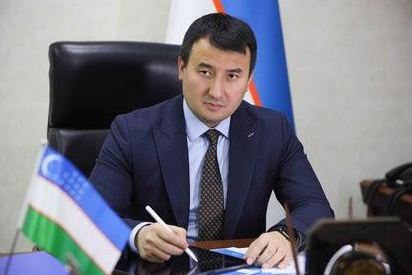
ISLAMABAD: Federal Commerce Minister Gohar Ijaz has welcomed Uzbekistan’s Deputy Prime Minister for Trade and Investment, Dr. Jamshid Khodjaev, to Pakistan for a two-day visit.This visit is a testament to the strong and growing economic ties between our two countries.  In his Tweet he said, ‘I look forward to productive discussions with Dr. Khodjaev on ways to further strengthen our bilateral trade and investment ties, and to explore new avenues for collaboration in a range of sectors, including trade, transit, agriculture, IT, and mineral development.I am confident that this visit will be a success, and that it will lead to increased cooperation between Pakistan and Uzbekistan in all areas of mutual interest’.

LHC orders to close schools, colleges on Saturdays in smog-hit Punjab districts

LHC orders to close schools

LAHORE: Justice Shahid Karim of the Lahore High Court on Monday ordered the government to close all schools and colleges on Saturdays in Punjab as the provincial authorities fail to curb smog.

The directives from the LHC judge came during a hearing today pertaining to measures taken by the Punjab government to control air pollution that has reached dangerous levels in recent days.The judge, reprimanding the Lahore commissioner, also ordered the introduction of a work-from-home policy for two days a week.”Commissioner Lahore has failed completely in controlling smog. He talks big but nothing happens on the ground. Just a notification is issued to shut everything,” he remarked.Justice Karim also ordered the immediate removal of deputy commissioners in Sheikhupura Jhang, Hafizabad, Khanewal, Nankana and Bahawalnagar, saying that the situation is very bad in these districts. He ordered the chief secretary of Punjab to immediately issue a notification to transfer the aforementioned officers.The judge also ordered the removal of the director general environment.”Videos of crop residual burning being shared are very disappointing,” he said.The judge remarked that everything is shut down through a notification, adding that all the officers go on leave after the government announcement.The judge said the entire city gets disrupted if the traffic stops for five minutes. “Most smog is caused by vehicle exhaust.”The Lahore Development Authority (LDA) counsel said the provincial government constructed an underpass in just 70 days.“The smog that will follow this construction will affect us through the winter. You may have become an underpass expert, but also consider other matters,” he observed.Justice Karim ordered the commission member to hold a meeting with the Punjab chief secretary and inform him about the court orders.The court adjourned the hearing till Wednesday.Last week on November 8, the Punjab government announced a public holiday on November 10 (Friday) in Lahore, Gujranwala and other districts due to prevailing smog in the province, announcing the closure of all markets, shopping malls, restaurants, cinemas, gymnasiums, schools and public and private offices.Later, the provincial government lifted the lockdown after a heavy spell of rain in parts of Punjab on Friday which washed away the smog, subsequently improving the air quality.

What if the British had divided Cyprus, like India?

What if the British had divided Cyprus, like India?

he issue of Cyprus remains unsettled because the UN Security Council in its resolution of March 4, 1964, unfairly gave only Greek Cypriots the right to represent the whole of the island as the ‘Government of Cyprus.’

Ishtiaq Ahmad

After a long struggle against the British Empire, which had many twists and turns along the way, the Indian Subcontinent was partitioned in 1947. This led to the emergence of India and Pakistan as two separate states. In the eastern Mediterranean island of Cyprus, however, the British colonial administration opted for a different course: the establishment in 1960 of a Partnership Republic between its majority Greek and minority Turkish communities. But it collapsed within three years, as the Greek side refused to comply with its founding principle of political equality.

These contrasting solutions of Partition in British India and Partnership in Cyprus offer interesting parallels, in both pre-and post-colonial periods. India and Pakistan have evolved as independent states, though in different trajectories, in the past 76 years. The Greek and Turkish Cypriot communities, on the other hand, have lived separately since the breakup of the Partnership Republic in 1963. This division has reinforced since the 1974 intervention by Turkiye in the island and the subsequent establishment of the Turkish Republic of Northern Cyprus in 1983.

In the past half century, consistent international efforts to amicably resolve the Cyprus conflict, which has reinforced the island’s division. The only aberration during the period is that the Greek side has monopolized the status of the Republic of Cyprus and solely enjoyed the fruits of EU membership since 2004. Despite this injustice, however, the TRNC continues to survive, with a functioning democratic but under dire economic conditions.

The current division in Cyprus, with little prospect for a unified solution, begs the question as to why the British did not divide the island into two separate states along the lines of the preceding partition of India. To answer this question, let us review the run-up to the Partition of British India and its co-relation the events that led to the establishment of the Partnership Republic in Cyprus.

To start with, British colonialism in both India and Cyprus was preceded by centuries of Muslim rule, including the Sultans/Mughals (1206-1858) and the Ottomans (1571-1878), respectively. The majority communities in both cases, the Hindus in India and the Greeks in Cyprus, were the subjects of the minority rule. governance. The Orthodox Christian Greeks were the subjects before as well under the Catholic Venetians. The Ottomans, in fact, liberated them from centuries of religious persecution.

Like elsewhere, British colonialism thrived on divide and rule. In order to sustain its control over India and Cyprus, the colonial administration victimized the former minority rulers, the Turks, and favored the former majority subjects, the Greeks. This paved the way for Hindu revivalism in India and Greek Hellenism in Cyprus, which, in turn, contributed to the demise of colonial rule.

The majority Greeks and Hindus turned against their benefactor, including in violent ways, even while the minority Indian Muslims and Turkish Cypriots sought a peaceful transition from colonial rule. Having ruled for centuries, their respective demand for separate electorates and political equality in the post-colonial constitutional structures in India and Cyprus made perfect sense.

The Indian National Congress, instead, sought Hindu domination of Indian politics after the end of colonial rule, rejecting successive British offers to accommodate the Muslim demand for separate electorates. It even refused to accept the 1946 Cabinet Mission Plan, which proposed a loose federation between the Hindu- and Muslim-majority states sharing foreign, defense and communication affairs. Consequently, the Indian Muslim League under the leadership of Muhammad Ali Jinnah was left with no option but to translate the Pakistan Resolution of 1940 into action.

In Cyprus, the colonial administration was able to address the Turkish Cypriot demand for equal political and constitutional rights. The Zurich and London accords, which established the Republic of Cyprus, were deliberately structured to establish and maintain “a delicate but immutable equilibrium between the rights and interests” of the two Greek and Turkish communities. The international agreements of Alliance and Guarantee helped accommodate another unique aspect of the Cyprus situation, which was absent in India’s case: that of the existence of two motherlands for the two Cypriot nations, Turkey and Greece, and their influence in Cyprus.

In addition to Great Britain, which was allowed to retain two sovereign military bases on the island under the Treaty of Establishment, Turkey and Greece became the security guarantors of Cyprus. However, despite such extensive political and security arrangements, the Republic collapsed within three years due to Greek Cypriot unwillingness to share power. The 13 amendments to the Constitution proposed by then-Greek Cypriot President Archbishop Makarios 1963 sought to create a unitary state in Cyprus, a forerunner to Enosis. In fact, the Greek Cypriot paramilitary, EOKA, had already waged a decade-long Hellenic campaign for uniting Cyprus with Greece against the colonial administration. Its successor, EOKA-B, continued this deadly mission against the Turkish Cypriot people until the 1974 Turkish intervention.

On the basis of above discussion, we can argue that it was the fear of Hindu domination that forced the Indian Muslim League to demand Pakistan as a separate homeland for Indian Muslims. On the other hand, the Partnership Republic collapsed due to the Hellenic ambition of Greek Cypriots for Enosis, the island’s union with motherland Greece.

It is clear that the establishment of two separate republics for its Greek and Turkish communities right at the start could have prevented communal hostilities after the breakup of the Partnership Republic in 1963 and the perpetuation of the conflict over the last several decades. These two republics have progressed smoothly with security guarantees provided by their respective motherlands, Greece and Turkey.

While the blame for the collapse of the Partnership Republic falls squarely on the shoulders of the Greek Cypriot leadership, the UK is also at least partly responsible for not doing enough afterwards. After all, as a former colonial power and guarantor state, it was legally and morally bound to intervene on behalf of the Turkish Cypriot minority to prevent inter-communal violence till 1974 and conflict resolution thereafter.

Why did the colonial administration not realize before withdrawing from Cyprus and establishing a federation there that the Greek side, with the paramilitary EOKA in its midst, would not allow the Turkish Cypriots to exercise their right of political equality in a federal republic? It was but natural for this precarious constitutional arrangement to collapse instantly, which it did in 1963.

However, since then, it seems the UK has been more interested in the survival of its two sovereign military bases in Cyprus than any political settlement of the issue. Perhaps, given the strategic location of the island and British interests in the Middle East, the political stalemate in Cyprus suits the British, notwithstanding the gravity of its political and economic cost for the Turkish Cypriots. Meanwhile, the Greek side continues to draw political and economic benefits on behalf of the entire island internationally, especially as EU member.

Last but not least, that the British empire sowed the seeds of conflict in post-colonial states across Asia and Africa is a common belief. Kashmir and Cyprus remain its two bitter legacies. The UN is also to blame here. In the case of Kashmir, it has failed to implement Security Council resolution for holding a plebiscite to determine the right to self-determination of the Kashmiri people. The issue of Cyprus remains unsettled because the UN Security Council in its resolution of March 4, 1964, unfairly gave only Greek Cypriots the right to represent the whole of the island as the ‘Government of Cyprus.’

To be continued.

The writer is an international relations expert.

EU ‘appalled’ by reports of 1,000 killed in Darfur

EU

These latest atrocities are seemingly part of a wider ethnic cleansing campaign

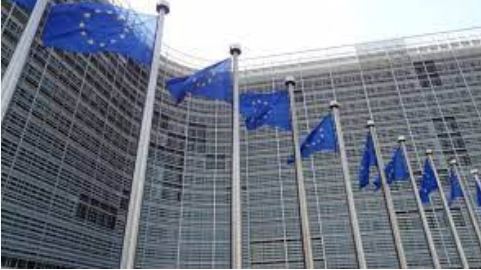
News DeskBRUSSELS: The European Union (EU) said on Sunday it was “appalled” by reports of more than 1,000 people killed this month in Sudan’s West Darfur in an apparent “ethnic cleansing campaign” by the paramilitary Rapid Support Forces (RSF).“These latest atrocities are seemingly part of a wider ethnic cleansing campaign conducted by the RSF with the aim to eradicate the non-Arab Masalit community from West Darfur, and comes on top of the first wave of large violence in June,” EU foreign policy chief Josep Borrell said in a statement.Since April, forces loyal to army chief Abdel Fattah al-Burhan — Sudan’s de facto head of state — have been at war with the RSF commanded by his former deputy, Mohamed Hamdan Daglo.The EU statement said there were “credible eyewitness reports [that] more than a thousand members of the Masalit community were killed in Ardamta, West Darfur, in just over two days, during major attacks carried out by the RSF and its affiliated militias”.The toll was higher than a previous one of 800 given by the UN refugee agency UNHCR, which said 100 shelters in a displaced persons’ camp in Ardamta were razed.

“What is happening is verging on pure evil,” the UN humanitarian coordinator for Sudan, Clementine Nkweta-Salami, said on Friday, citing reports of young girls being raped in front of their mothers.

She voiced fears of a repeat of the genocide campaign that gripped Darfur in the early 2000s.The EU stressed that Sudan’s warring sides “have a duty to protect citizens”.It said it was working with the International Criminal Court to document violations “to ensure accountability”.“The international community cannot turn a blind eye on what is happening in Darfur and allow another genocide to happen in this region,” it said.More than 10,000 people have been killed in the Sudan conflict so far, according to a conservative estimate by the Armed Conflict Location and Event Data project.

The war has displaced more than 4.8 million people within Sudan and has forced a further 1.2m to flee into neighbouring countries, according to UN figures.

Stay Connected

64FansLike
60FollowersFollow

Latest Reviews

Exchange Rates

USD - United States Dollar
EUR
1.17
GBP
1.35
AUD
0.72
CAD
0.73