Home Blog Page 1105

BISP Chairperson urges manpower to serve poor with dedication, utmost empathy

ISLAMABAD, NOV 21 (DNA) — Chairperson Benazir Income Support Program (BISP), Dr. Muhammad Amjad Saqib has urged BISP

ISLAMABAD, NOV 21 (DNA) — Chairperson Benazir Income Support Program (BISP), Dr. Muhammad Amjad Saqib has urged BISP employees to serve needy and poor people of society with utmost dedication and empathy so that BISP may be portrayed as one of the premier organizations of the country.

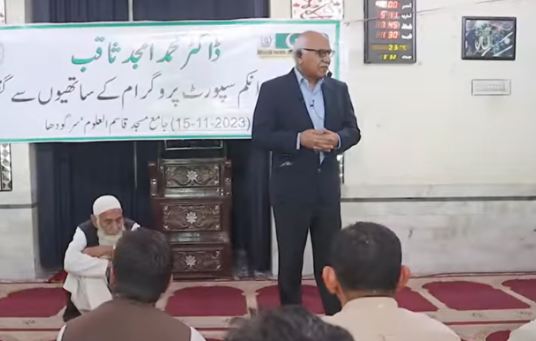
While addressing a gathering of BISP staff at Jamia Islamia Haq Town in Okara, Dr. Muhammad Amjad Saqib stressed the need to encourage donations for the welfare of the needy, reinforcing the program’s commitment to transparency and social responsibility. BISP employees from Okara, Pakpatan and Sahiwal participated in the gathering.

Dr. Muhammad Amjad Saqib said that the database of BISP’s National Socio-Economic Registry (NSER) is authentic and transparent, under which 9.3 million needy families are granted financial assistance every three month.

Dr. Amjad Saqib emphasized the profound significance of mosques as essential centers of governance. “Mosques not only serve as places of worship but also play an important role as an influential entities in promoting ethical values and fostering social cohesion”, he stated.

Later in the day, Dr. Amjad Saqib also visited the BISP office in Okara. He urged BISP staff to provide facilities to elderly needy women. He directed the staff to ensure cleanliness in BISP offices, envisioning them as models of efficiency and service delivery.

Dr. Amjad Saqib has called upon BISP staff for immediate action and redressal of complaints about deduction from the stipends of deserving women. “Transparency should be ensued in disbursement of payment during upcoming Kafaalat Tranche”, he added. — DNA

Netherlands ambassador engages in bilateral economic talks with Pakistan

Pakistan

DNA

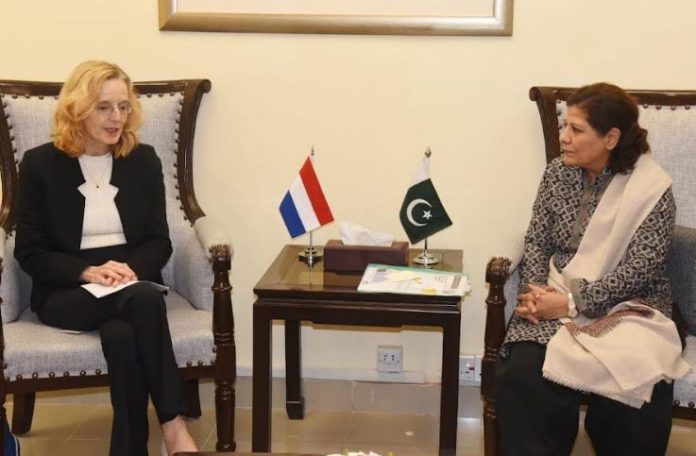
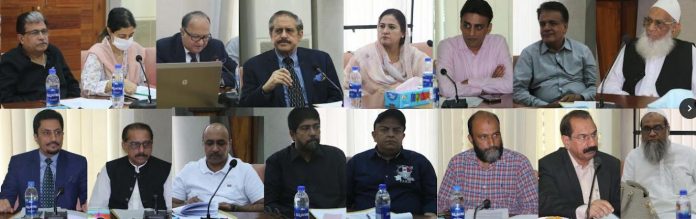
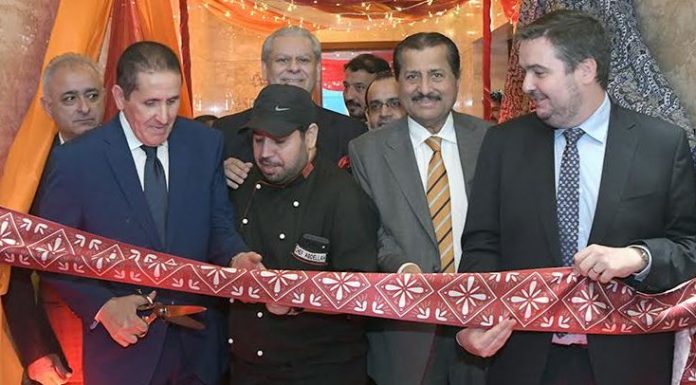
ISLAMABAD, NOV 21 /DNA/ – Ambassador of Netherlands, Henny De Vries, called on Caretaker Federal Minister for Finance, Revenue & Economic Affairs Dr. Shamshad Akhtar at the Finance Division, today.

The discussions covered various aspects of bilateral economic relations between the two countries. Secretary EAD and senior officers from the Finance Division attended the meeting.

The upcoming elections in the Netherlands were a prominent topic of discussion, with both parties emphasizing the importance of Democratic processes. Ambassador Mrs. Henny De Vries congratulated Dr. Shamshad Akhtar, Minister for Finance, Revenue, and Economic Affairs for reaching the Staff Level Agreement of 1st Review of IMF Pakistan Standby Arrangement (SBA) and also on overall improvement in the economic situation in Pakistan.

The Minister Dr. Shamshad Akhtar highlighted the reforms being taken by the Government in various sectors specifically those related to the expansion of the Tax net through the “Broadening of the Tax Base” initiative led by the Federal Board of Revenue (FBR), showcasing the commitment of the Government to improve the Tax to GDP ratio of the country and reduce the Current Account deficit further. The Minister also requested the Ambassador to enhance focus on the Dutch Fellowship Program in the past was one of the flagship foreign-funded scholarship programs for Pakistani students.

H.E. Mrs Henny De Vries acknowledged the positive momentum in economic recovery, highlighting the resurgence of sectors such as agriculture, services, and even industry. She specifically appreciated the initiatives taken by the Government for financial inclusion, particularly those targeting women, and also praised the measures aimed at enhancing the labor participation of women across various sectors of the economy in order to boost the social and economic development of the country. She also expressed the commitment of the Netherlands to bring more investment in the country.

Pressing issues of post-flood rehabilitation and climate change impact on Pakistan, particularly in the context of the 28th session of UNFCCC’s Conference of Parties (CoP) to be held in Dubai were also discussed.

In conclusion, the Minister expressed a strong commitment to strengthening diplomatic ties with the Netherlands and making collaborative efforts for the benefit of both countries.

Hamas says Gaza truce deal ‘close’, death toll crosses 13,300

Hamas leader Ismail Haniyeh

GAZA: Hamas leader Ismail Haniyeh said Tuesday a truce agreement with Israel was in sight, raising hopes that dozens of people taken captive in the October 7 attacks could be released.

There was no immediate response from Israel on the status of negotiation efforts to secure the release of the estimated 240 captives seized during Hamas’s horrific assault. The majority of the captives are Israeli civilians.

Only a handful have been released, freed by Israeli troops or their bodies recovered.

“We are close to reaching a deal on a truce,” Haniyeh said, according to a statement sent by his office to AFP.

According to the Palestinian government, the war has killed more than 13,300 people, thousands of them children.

Speaking to AFP on condition of anonymity, sources from Hamas and Islamic Jihad confirmed that their groups had agreed to the terms of a truce deal.

The tentative deal includes a five-day truce, comprised of a ceasefire on the ground and limits to Israeli air operations over southern Gaza.

Under the agreement, between 50 and 100 Israeli civilian and foreign captives would be released, but no military personnel.

In exchange, some 300 Palestinians would be released from Israeli jails, among them women and children.

On Monday, US President Joe Biden had said he believed a deal was close, as hopes grew for talks brokered by Qatar, where Hamas has a political office and which has behind-the-scenes diplomatic links with Israel.

The International Committee of the Red Cross said Monday that its president had travelled to Qatar to meet Hamas’s Haniyeh.

An agreement could bring some respite for Gazans who have lived for more than six weeks under brutal Israel bombardment and an expanding ground offensive.

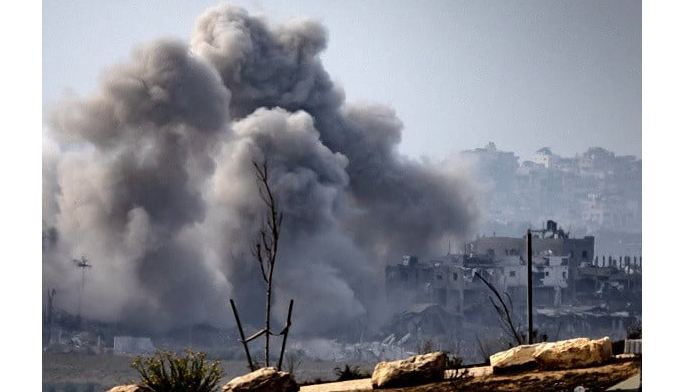
Large parts of Gaza have been destroyed by air strikes that have numbered in the thousands, and the territory is under siege, with minimal food, water and fuel allowed to enter.

According to the Hamas and Islamic Jihad sources, the deal would also allow for up to 300 trucks of food and medical aid to enter Gaza.

Israel has vowed to press ahead with its offensive, pledging to crush Hamas and ensure the hostages are released.

“We will not stop fighting until we bring our hostages home,” Prime Minister Benjamin Netanyahu declared after meeting relatives of those abducted.

In Gaza, medics and patients were again caught on the front line on Tuesday, as Israel expanded its operation across the north of the territory.

Officials in Gaza’s health ministry said Israel struck the Indonesian Hospital on Monday, killing 12 people, before moving in ground forces.

“The Israeli army is laying siege to the Indonesian Hospital,” ministry spokesman Ashraf al-Qudra told AFP.

The Palestinian government said dozens of tanks and armoured vehicles were deployed around the outskirts of the hospital and were firing towards the facility.

“We fear the same thing will happen there as it did in Al-Shifa,” Qudra added, referring to Gaza’s largest hospital which has been besieged and scoured by Israeli troops.

Twenty-eight premature babies were evacuated from Al-Shifa to Egypt on Monday.

The Indonesian Hospital sits on the fringe of Gaza’s largest refugee camp Jabalia, which has become a new focus for the war and has been the scene of intense Israeli bombing in recent days.

The health ministry official said there still were about 400 patients inside the hospital, as well as 2,000 people seeking shelter.

Around 200 people were evacuated from the hospital on Monday and bussed to the relative safety of a hospital in Khan Yunis in southern Gaza.

At the Al-Nasser Hospital in Khan Yunis, an AFP reporter witnessed bloodied children being carried into the facility and lying dazed on gurneys as chaos swirled around them.

“We miraculously got out,” said one man who said he escaped the Indonesian Hospital. “We still have brothers there. I just can’t…” he said, his voice trailing off.

Israel claims Hamas uses medical facilities to hide fighters and as the base for operations, making them legitimate military objectives — while insisting it does everything possible to limit harm to civilians.

But international criticism of Israel’s conduct of the war has grown in recent weeks, with protests erupting across the world, international agencies laying allegations of war crimes, and some governments breaking diplomatic ties.

The World Health Organization said it was “appalled” by Monday’s strike on the Indonesian Hospital and reported it was just one of 164 documented attacks on health facilities and workers since the war began.

“The world cannot stand silent while these hospitals, which should be safe havens, are transformed into scenes of death, devastation, and despair,” the organisation said in a statement.

The Indonesian Hospital was opened almost a decade ago, and was funded by donations from Indonesia — the world’s most populous Muslim-majority nation.

Indonesia’s Foreign Minister Retno Marsudi on Monday “strongly condemned the Israeli attack” on the hospital, adding that the ministry had not been able to contact three Indonesian volunteers believed to have been working at the facility.

Cipher case: IHC to announce verdict on Imran Khan’s plea against jail trial today

Cipher case: IHC to announce verdict on Imran Khan's plea against jail trial today

ISLAMABAD: The Islamabad High Court (IHC) Tuesday reserved the verdict on the intra-court appeal filed by Pakistan Tehreek-e-Insaf (PTI) Chairman Imran Khan against the jail trial in the cipher case.

A division bench comprising Justice Miangul Hassan Aurangzeb and Justice Saman Riffat Imtiaz reserved the verdict on the plea which will be announced at around 5:30pm today. 

Justice Aurangzeb, during the hearing, said that a short order on the appeal will be announced today, adding that the detailed order will be issued later. 

In a hearing on November 14, the high court suspended Khan’s jail trial in the cipher case. The PTI chairman is currently in Adiala jail after he was indicted by the special court Judge Abual Hasnat Zulqarnain. 

The IHC’s order came after the caretaker federal cabinet approved the jail trial of Khan and Shah Mahmood Qureshi in the case. 

Previously, the deposed prime minister — who was ousted from office following a no-confidence motion in April last year — had moved IHC against the jail trial which was rejected by the court’s single bench on October 16.

IHC Chief Justice Aamer Farooq’s single-member bench ruled that there was no apparent malice behind conducting Khan’s jail trial in the cipher case. The court also directed him to approach the trial court if reservations persist.

Later, Khan filed an intra-court appeal against the single bench’s decision.

Today’s hearing

At the outset of the hearing, Khan’s lawyer Salman Akram Raja presented his arguments, saying that there is a proper procedure that needs to be followed for a jail trial. 

Raja told the court that for a jail trial, the court should issue an order with proper reasoning. “Following [the order], the second stage involves the approval of the federal government on the chief commissioner’s request,” he stated. 

He added that the government has to inform the high court after approval from the cabinet. 

“The cabinet has to approve the order, however, in this case, the cabinet hadn’t given any approval before November 12,” said Raja.

Raja further said that the judge should pass a judicial order that also includes the finding, highlighting that there hasn’t been any order like this yet.

“This is the basic illegality in this case,” he said.

Khan’s counsel told the court that the judge had written the letter to the law ministry on November 8, however, it can not considered a judicial order. 

He further said that he believes the first request for a jail trial comes from the prosecution. 

“The judge, in his letter, wrote that the jail trial should be approved to avoid future complications. Despite the approval from the cabinet, the notification will not be applied retrospectively,” he added. 

Raja contended that the judge talked about the future and not the past in the letter, which was sent by the chief commissioner to the home ministry and then to the law ministry. 

Advocate Raja said that a summary was then sent to the cabinet. “The summary which was prepared on November 10 did not include the previous jail trial,” he argued. 

Khan’s counsel said that the cabinet approved the trial and a notification was issued. “However, the judge did not ask for the approval retrospectively. How can the cabinet give its approval to something the [judge] hadn’t requested for,” he asked. 

“Do you believe the November 13 order fulfils the legal requirements?” questioned Justice Aurangzeb. 

At this, Raja said that he did not believe it was legal as the cabinet gave its approval without a judicial order. 

The bench adjourned further hearing till Tuesday (today).

What is ciphergate?

The controversy emerged on March 27, 2022, when Imran Khan — less than a month before his ouster in April 2022 — while addressing a public rally waved a letter before the crowd, claiming that it was a cipher from a foreign nation that had conspired with his political rivals to have PTI government overthrown.

He did not reveal the contents of the letter nor did he mention the name of the nation it came from. But a few days later, he accused the United States of conspiring against him and alleged that Assistant Secretary of State for South and Central Asia Affairs Donald Lu had sought his removal.

The cipher was about former Pakistan ambassador to the US Majeed’s meeting with Lu.

The former prime minister, claiming that he was reading contents from the cipher, said that “all will be forgiven for Pakistan if Imran Khan is removed from power”.

Then on March 31, the National Security Committee (NSC) took up the matter and decided to issue a “strong demarche” to the US for its “blatant interference in the internal affairs of Pakistan”.

Later, after his removal, then-prime minister Shehbaz Sharif convened a meeting of the NSC, which came to the conclusion that it had found no evidence of a foreign conspiracy in the cable.

In the two audio leaks that took the internet by storm and shocked the public after these events, the former prime minister, then-federal minister Asad Umar, and then-principle secretary Azam Khan could allegedly be heard discussing the US cipher and how to use it to their advantage.

On September 30, the federal cabinet took notice of the matter and constituted a committee to probe the contents of the audio leaks.

In October, the cabinet gave the green signal to initiate action against the former prime minister and handed over the case to the FIA.

Once FIA was given the task to probe the matter, it summoned Imran, Asad Umar, and other leaders of the party, but the PTI chief challenged the summons and secured a stay order from the court.

In July 2023, the Lahore High Court (LHC) recalled the stay order against the call-up notice to Imran by the FIA and a formal trial was commenced.

In August, Khan and Qureshi were booked under the Official Secrets Act 1923 in the cipher case after the Federal Investigation Agency (FIA) invoked Section 5 of the said law.

Khan and Qureshi have been indicted by the special court and are currently incarcerated in Adiala jail in the cipher case.

PIDE conference spotlights urgent need for economic reassessment

PIDE conference spotlights urgent need for economic reassessment

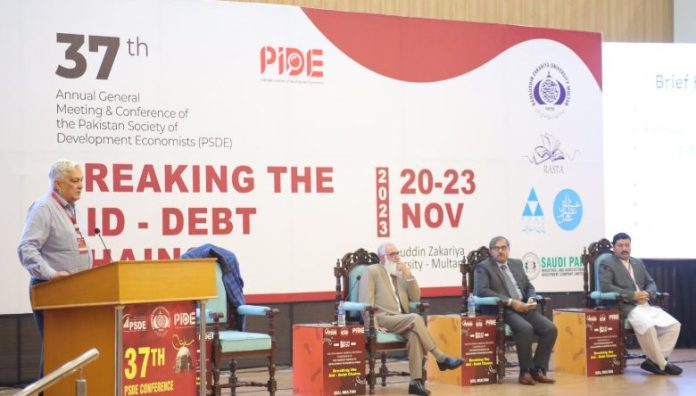
Islamabad, NOV 21 /DNA/ – The 37th AGM and Conference of the Pakistan Society of Development Economists (PSDE), hosted by the Pakistan Institute of Development Economics (PIDE), in collaboration with Bahaduddin Zakariya University, Multan, began at the Jinnah Auditorium of the BZU.

In the inaugural session of the Conference, Dr Nadeem Ul Haque, Vice-Chancellor of PIDE and President of the PSDE emphasized the significant contributions of Mahbub ul Haq to PIDE. He also highlighted PIDE & PSDE’s role in asking pertinent questions and engaging in impactful research exploring the country’s wide-ranging socio-economic issues.

Dr. Nadeem stressed the need for a paradigm shift in thinking and the importance of asking critical questions. He said that the economic system in Pakistan is on a “life support system.” Dr. Nadeem said that there is an immediate to explore challenges such as exchange rates, unemployment, and the aid-debt trap. The PIDE Vice-Chancellor stressed the need for investment. He said that in Pakistan no one is concerned with investment, while everyone’s primary concern is poverty. Thus, the focus should be shifted to investment and finding ways to increase it. Regarding the economic and development plans in Pakistan, he pointed out the irony of having too many plans yet too little development.

Dr Nadeem further pointed out that the solution to our economic quagmire is not getting more debt. He criticized the overreliance on loans, particularly from institutions like the IMF, and likened going to the IMF repeatedly to going to the emergency ward. He said that Pakistan was in the perpetual cycle of aid-debt traps involving IMF, donors, consultants, and Transparency International. Dr Nadeem also questioned the effectiveness of raising taxes and the lack of challenges to consultants in the development process.

In the secretary’s report, Dr Iftikhar Ahmad, Secretary of the PSDE, reiterated PIDE’s desire to initiate and collaborate on further research with researchers in South Punjab. He said that in this year’s conference, two panel discussions are focusing on South Punjab, featuring panellists from academia and regional centers. He highlighted the need for inclusivity by bringing students from all around Punjab to the discussions, which PIDE has been doing for over 4 years now.

The first panel discussion of the Conference was on “Foreign Aid: Boon or Bane?” The discussion was moderated by Shahid Mahmood, Research Fellow at PIDE, Asad Hayauddin, Former Secretary of the Economic Affairs Division, Tobias Haque, Lead Country Economist for Pakistan at the World Bank, and Naveed Aziz, Senior Governance Advisor to the FCDO.

The moderator said that since 1950, Pakistan has received over USD 200 billion in foreign aid. A significant chunk of the foreign aid has been in the form of loans. Also, a large amount of aid has been “tied aid.” He said that the donor agencies influence major policy decisions. However, there is a dearth of cost-benefit analysis of the projects. Despite continued aid programs and projects, the human development indicators of the country remain abysmal. During the last two decades, net resource transfer from Pakistan has turned negative, with repayments amounting to over USD 80 billion. He said that the majority of the debt and aid accumulated during this period was for the balance of payment support.

Asad Hayauddin remarked that the Pakistani government continues to lack direction. Consequently, we turn to the donors to help set our development direction. Pakistan’s strategy for long has been external resource mobilization for short-term gains. He said that India and Bangladesh have also turned to the IMF, but they stuck to the plan to reverse the crises. Pakistan, on the other hand, deviates from the agreed-upon path after gaining some sense of stability following support from the IMF and other donor agencies. He said that over 60% of the aid and loan provided by the US to Pakistan since the 1960s has been for budgetary support with no direct impact on the general public of the country.

Tobias Haque said that there are numerous examples where countries came to the donors with a homegrown development plan and sought development agencies’ financial and technical assistance. On the other hand, in Pakistan is that there exists no indigenous development plan. Thus, Pakistan needs to develop a crisp indigenous development plan and then seek donors’ assistance. In such a case, the donors will have very little wiggle room to deny assistance on Pakistan’s terms. He further emphasized that unproductive utilization of aid can have disastrous impacts on the country’s macroeconomic balances. He said that the country’s governance issues coupled with the lack of institutional capacity are major bottlenecks that need immediate redressal.

Naveed Aziz said that aid utilization has not necessarily been entirely negative in Pakistan, and aid dependence in some areas has come down as well. For example, Pakistan was the largest recipient of Official Development Assistance, which has now come down from 15% to 1%. Currently, the major issue faced by Pakistan is that the government is not an efficient user of money. He stressed that there exists an indigenous poverty of thought in the country.

All panelists agreed that Pakistan needs to develop a long-term development plan with a clear indication of what support it requires from external sources and to what extent. Pakistan’s debt utilization stands as a major issue that has to be immediately improved. Pakistan needs to realize that aid is not the solution to problems, instead, it is just a tool to facilitate the implementation of development plans and achieving the set goals. 

The cohosts of PSDE’s 37th Annual Conference, organized by PIDE, include the World Bank Group, UNICEF, RASTA, the Bank of Punjab, Pakistan Poverty Alleviation Fund, Saudi Pak Agricultural and Industrial Investment Company, and BZU School of Economics.

Mission-oriented training can guarantee excellence on the battlefield: COAS

COAS

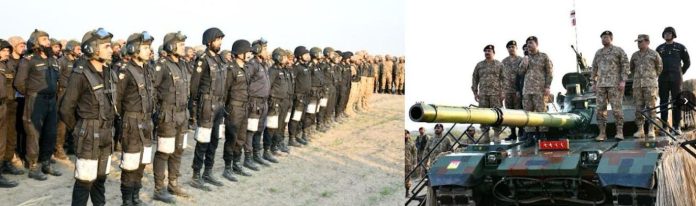
Rawalpindi, NOV 21 /DNA/ – General Syed Asim Munir, NI (M), Chief of Army Staff (COAS) visited Corps Level Collective Training exercise of Strike Corps.

The exercise is aimed at validating offensive operational concepts. He witnessed an impressive display of complex maneuvers undertaken, led by Armoured formation equipped with state of the art VT-4 tanks.

COAS met the troops particpating in the exercise and commended their verve, operational efficiency and professionalism.

Army Chief highlighted the importance of combat readiness and mental agility to respond to multi-spectral threat paradigm. He dilated upon the significance of achieving synergy among various arms in view of rapidly changing threat environment. He also appreciated the proficiency gained in night operations.

COAS reiterated that only realistic, mission-oriented training in peacetime can guarantee excellence on the battlefield should the need arise.

Earlier on arrival, COAS was received by Commander Mangla Corps.

The safe Transfer campaign: ACE money transfer and Bank Alfalah’s push for financial responsibility

ACE Money Transfer

DNA

In a landmark initiative, Bank Alfalah and ACE Money Transfer have joined forces to unveil their longstanding business partnership, a strategic move aimed at bolstering financial responsibility and security for international transactions from overseas to Pakistan. This campaign’s objectives primarily accentuate the benefits and long-term impact on customers, highlighting the commitment of both institutions to foster a safer financial ecosystem in Pakistan.

“The campaign carries massive financial benefits for overseas Pakistanis and the national economic pursuit in terms of stimulated remittance inflows aiding Pakistan’s foreign reserves. ACE and BAFL offer fee-free* money transfers to Pakistan from the UK, Europe, Canada, Australia, and Switzerland at competitive exchange rates throughout the campaign duration.”

*Transactions over 100 USD bear no cost.

In an era where digital transactions are the backbone of global commerce, ensuring the security and responsibility of financial transfers is paramount. Recognising this critical need, ACE Money Transfer and Bank Alfalah have stepped up yet again to support the national interest at a time when Pakistan is set to move on a progressive track aided by the countrywide crackdown against black market forex trade. This groundbreaking initiative is set to redefine the standards of financial responsibility, ushering in a new age of secure and reliable international transactions.

The focal point of the campaign aligns with the vision of the Pakistan Remittance Initiative (PRI) and the objectives of the ongoing crackdown against illegal financial dealers routing massive monetary influx to Pakistan without letting it aid the country’s foreign reserves.

The campaign is not merely a set of guidelines but a comprehensive movement designed to empower customers with the knowledge and tools necessary for protecting their finances. It is a response to the increasing sophistication of financial threats and the growing necessity for vigilance in the digital domain.

Bank Alfalah, a leading financial institution with a robust presence in South Asia and the Middle East, has consistently been at the forefront of customer-centric innovations. By partnering with ACE Money Transfer, a global leader in cross-border financial services, Bank Alfalah reaffirms its commitment to providing customers with services that are not only convenient but also inherently secure.

In a statement, Rashid Ashraf, the CEO of ACE Money Transfer, emphasised, “The campaign is more than a promise; it is a tangible manifestation of our dedication to customer safety. By partnering with Bank Alfalah, we are setting a new industry standard, one that prioritises the financial well-being of our customers above all else.”

The President and CEO of Bank Alfalah, Atif Bajwa, while expressing his opinion, shares, “This partnership has been pivotal in enhancing the ease of sending international remittances to Pakistan, offering an unparalleled blend of convenience and reliability to the Pakistani diaspora. We hope to see positive results of our joint campaign with ACE Money Transfer to encourage overseas Pakistanis worldwide to extend their helping hands to Pakistan’s foreign reserves in the form of remittances sent through regulated channels.”

The cornerstone of the joint venture between ACE and Bank Alfalah is education. Through Babar Azam’s voice as a campaign ambassador, Pakistanis will be enlightened on the best practices for conducting secure transactions. This awareness proves critical for overseas Pakistanis to understand the importance of secure connections while initiating transfers.

Furthermore, the campaign emphasises a set of advanced security measures integrated into the services provided by both ACE Money Transfer and Bank Alfalah. These include biometric verification, two-factor authentication, and real-time monitoring of transactions to detect and prevent fraudulent activity.

The campaign also marks a significant step towards financial inclusion. By making security a priority, ACE Money Transfer and Bank Alfalah are effectively lowering the entry barrier for individuals who have previously been hesitant to engage with digital financial services. This move is expected to have a far-reaching impact, facilitating growth in economies where digital transaction penetration is still emerging.

ACE Money Transfer and Bank Alfalah together take a visionary approach to financial responsibility. It stands as a testament to what can be achieved when industry leaders collaborate with a shared goal of enhancing the security and prosperity of their customers. As this campaign unfolds, it is poised to become a keystone in the architecture of global financial transactions, setting the stage for a safer, more responsible financial environment for all.

About ACE Money Transfer: ACE Money Transfer (registered name “Aftab Currency Exchange Limited”), based out of Manchester, the UK, is a growing remittance provider. It offers impeccable online money transfer services to millions of Pakistani expatriates with an extensive network of 375,000+ locations spread across 100+ countries worldwide.

About Bank Alfalah: Bank Alfalah is a leading commercial bank in Pakistan, boasting over 900 branches across 200 cities and an international presence in the UAE, Bangladesh, Bahrain, and Afghanistan. The bank offers various products and services, including corporate and investment banking, consumer banking, securities brokerage, commercial, small and medium enterprises, agricultural, Islamic, and asset financing to private-sector institutions and governments.

In 2018, Bank Alfalah launched its digital banking group, setting a high standard for the industry to follow with its Alfa app, a revolutionary new application that brings together an unprecedented range of services and features all in one convenient platform. In 2022, the bank was awarded the best ‘Digital Bank’ and ‘Housing Finance’ across Pakistan, highlighting its commitment to simplifying and improving the financial capabilities of its customers.

At least 12 more killed as Israeli forces surround another hospital in Gaza

At least 12 more killed as Israeli forces surround another hospital in Gaza

GAZA: At least 12 more people were reported to have been killed in Israeli strikes since Monday morning after Israeli forces surrounded Indonesian Hospital in Gaza – the fourth hospital to come under Israeli forces’ attack since October 7.

Quoting a journalist based in Gaza, Ismail Al Ghoul, Al Jazeera reported that Israeli forces were shooting whoever was trying to leave the hospital, adding that “the situation in the hospital is catastrophic”.

The journalist further told Al Jazeera that the hospital was full of people; sheltering more than 6,000, including staff and patients.

“It has been difficult to transfer patients from northern Gaza because Israeli forces are targeting anyone that approaches the area,” the journalist informed.

In more updates from the Indonesian Hospital, Munner al-Bursh, General Manager of the Health Ministry in Gaza, told Al Jazeera that, “Israeli forces are continuing to attack the hospital.” He said the attack started in the middle of the night and “targeted the surgical department, wounding the doctors working there and killing 12 civilians who were taking refuge”.

Al-Bursh said the Israeli forces “then targeted people who were leaving the hospital by shooting them near the hospital. Their bodies are still lying on the ground and nobody has been able to bury them”.

According to Al-Jazeera, the al-Kuwait UN school was burned down by the Israeli forces, adding that there were no reports so far of the death toll of the people sheltering in the school.

“In addition to around 700 patients and 5,000 refugees before the attack, there were 10,000 people in the shelter centres around the hospital,” Al Jazeera reported.

Palestinian medics transport injured youths to the Al-Aqsa Martyrs Hospital in Deir Balah in the central Gaza Strip. PHOTO: AFP

Palestinian medics transport injured youths to the Al-Aqsa Martyrs Hospital in Deir Balah in the central Gaza Strip. PHOTO: AFP

“We are using a small power generator that is run by vegetable oil, manufactured by some creative individuals, who sacrificed some of their food supply to run the generator,” the hospital’s general manager said.

Al Jazeera’s Anas al-Sharif described the scenes inside Indonesian Hospital as “chaotic”.

The reporter went around different floors of the hospital to report that “there is an overwhelming state of panic among patients”.

He said the hospital was now “besieged” by Israeli forces, and anyone moving outside was a target.

Jabalia refugee camp strikes

Israeli troops were “expanding” their operation in the Gaza Strip Monday, as Qatari mediators said they were inching closer to a deal to free some of the 240 hostages held by Hamas militants, AFP reported.

The Palestinian health authority says the death toll from Israel’s aerial bombardment and ground operations in Gaza has reached 13,000, thousands of them children.

Israel has warned residents of Gaza’s largest refugee camp Jabalia and a nearby coastal camp to evacuate, as the military said Sunday it was “expanding its operational activities in additional neighbourhoods… of the Gaza Strip.”

After intense bombardment, an AFP journalist in Gaza saw columns of smoke rising from Jabalia on Sunday.

A health official said more than 80 people were killed in twin strikes on Jabalia , including on a UN school sheltering displaced people.

Social media videos verified by AFP showed bodies covered in blood and dust on the floor of a building, where mattresses had been wedged under school tables.

Israel’s military has claimed Jabalia is among the areas of focus as they “target terrorists and strike Hamas infrastructure”.

Without mentioning the strikes, the Israeli army said “an incident in the Jabalia region” was under review.

UN rights chief Volker Turk on Sunday condemned the purported strike on the school as “horrifying”, adding that “the horrendous events of the past 48 hours in Gaza beggar belief.”

On Monday, Palestinian news agency Wafa said the Indonesian hospital near Jabalia had also come under shelling.

‘Stop humanitarian disaster’

Six weeks into the war, Israel is facing intense international pressure to justify its bloody toll.
Israel officials have warned a “window of legitimacy” for the war to rout Hamas may be closing.

Chinese Foreign Minister Wang Yi on Monday called for urgent action to stop the “humanitarian disaster” unfolding in Gaza.

“The situation in Gaza affects all countries around the world, questioning the human sense of right and wrong and humanity’s bottom line,” Wang told visiting diplomats from Arab and Muslim-majority nations.

Al-Shifa Hospital

Israel on Sunday presented what it claimed was evidence Hamas fighters used Gaza’s largest hospital, Al-Shifa, to hide foreign hostages and to mask underground tunnels.

The Israeli military released what was claimed to be CCTV footage from October 7 of two male hostages from Nepal and Thailand being brought into the hospital.

“We have not yet located both of these hostages,” army spokesman Daniel Hagari told reporters.
One clip showed a man in shorts and a pale blue shirt being dragged into an entrance hall by five men, at least three of whom were armed.

In a second clip, an injured man in underwear is wheeled in on a gurney by armed men as several others wearing blue hospital scrubs look on. AFP could not immediately verify the footage.

Israel also accused the Palestinian resistance group of executing a 19-year-old Israeli soldier Noa Marciano at Al-Shifa and presented images of what it claimed was a 55-metre-long underground tunnel under the hospital.

Israel has repeatedly claimed that Al-Shifa doubles as a base for Palestinian fighters, a charge Hamas and hospital administrators deny.

The World Health Organization has called the hospital a “death zone”. Over the weekend, hundreds of people fled Al-Shifa hospital on foot as loud explosions were heard around the complex.

Columns of sick and injured were seen leaving with displaced people, doctors and nurses. At least 15 bodies, some in advanced stages of decomposition, were strewn along the route, an AFP journalist said.

The WHO on Sunday said it evacuated thirty-one premature babies from the facility.

Al-Shifa head of surgery Marwan Abu Sada told AFP that Israeli troops were still in the hospital and it was surrounded by tanks.

“I heard at least two explosions since this morning,” he said Sunday.

A Palestinian woman walks on building rubble following an Israeli strike in Rafah in the southern Gaza Strip. PHOTO: AFP

A Palestinian woman walks on building rubble following an Israeli strike in Rafah in the southern Gaza Strip. PHOTO: AFP

Other doctors said the troops were going from building to building and detonated explosives on the ground floors and hospital basements searching for Hamas tunnels.

The bodies of two female hostages were recovered in Gaza this week, the Israeli military claimed. Four abductees have so far been released by Hamas and a fifth rescued by troops.

On Sunday, Qatari mediators said they were inching closer to a deal to free some of the hostages held by Hamas in Gaza.

Qatar’s prime minister said efforts to bring hostages “safely back to their homes” in return for a temporary ceasefire was now within reach, raising hopes that Israeli, Nepali, American or other captives could soon be free.

“I’m now more confident that we are close enough to reach a deal,” said Mohammed bin Abdulrahman Al Thani, adding that only “minor” practical details remained unresolved.

The hostages include infants, teens and pensioners. Their fate has racked not just their families but the Israeli public at large.

US deputy national security adviser Jon Finer told US media that negotiators were “closer than we have been in quite some time” to securing a deal.

But he added: “The mantra that nothing is agreed until everything is agreed really does apply.”
In London, the teary father of missing 9-year-old Emily Hand begged for her to be brought home.

“There’s just a big, big hole in all our hearts that won’t be filled until she comes home again,” he told AFP.

UAE Ambassador calls on PM Kakar

UAE Ambassador calls on PM Kakar

DNA

ISLAMABAD, NOV 20: Ambassador of U.A.E. to Pakistan, Hamad Obaid Ibrahim Salem Al-Zaabi called on Prime Minister Anwaar-ul-Haq Kakar at the Prime Minister’s House in Islamabad today.

The Emirati Ambassador presented a formal invitation to the Prime Minister for attending the forthcoming COP-28 meeting in Abu Dhabi. He said that Pakistan was one of the leading countries in climate change negotiations and the U.A.E. was hopeful that Pakistan would play its part in ensuring the success of COP-28.

The Prime Minister congratulated the U.A.E. for hosting this important global climate change conference and assured of Pakistan’s active participation in the event.

Progress on bilateral cooperation was also discussed. The Prime Minister expressed satisfaction at the robust and wide-ranging engagement between the two countries and stressed the need to focus on strengthening cooperation in energy, trade and investment.

During discussion on the situation in Gaza, the Prime Minister urged Muslim countries to speak with a united voice to urge the international community to end the violence and brutal murder of innocent civilians in Gaza at the hands of Israeli Occupation forces.

APNS calls for early payment of dues

APNS

Welcomes appointment of Shahera Shahid as the new Information Secretary

KARACHI, NOV 20 /DNA/ – “The APNS expresses its grave concern over the non-payment of advertisement dues by the Federal and provincial governments despite various assurances by the respective governments.

Mr. Sarmad Ali, Secretary General, APNS has stated that the meeting of the Executive Committee held on November 20, 2023 chaired by the President, APNS, Mrs. Nazafreen Saigol Lakhani has noted that the Federal and provincial governments have not paid the dues related to display, SPL and non-budgeted advertisements which has caused serious liquidity crisis for newspapers to meet their expenses. The members of the Executive Committee strongly urged upon the Prime Minister of Pakistan and Chief Ministers of the provinces to advise the concerned departments to release the payment at the earliest.

The APNS in a resolution, welcomed and congratulated Ms. Shahera Shahid on her appointment as Secretary Information for the second time and hoped that during her tenure, the problems faced by the print media, would be addressed and the relations between the APNS and the Ministry would be further strengthened.

In another resolution, the APNS strongly condemn the brutal murder of Mr. Jan Muhammad Mehr, senior journalist, Sukkur Bureau Chief of Kawish Group and urged upon the IG Police, Sindh to expedite the arrest of the culprits who are at large for three months.

The members expressed their profound grief over the killing of innocent peoples including journalists, children and women in Gaza by the Israeli forces and offered fateha for the martyrs.

The following attended the meeting :

Nazafreen Saigol Lakhani, President, Sarmad Ali, Secretary General, Shahab Zuberi, Finance Secretary,  Bilal Farooqui (Daily Aghaz), Mohsin Bilal (Daily Ausaf), Khalid Mahmood (Weekly Family), Muhammad Younus Mehar (Daily Halchal), Kazi Asad Abid (Daily Ibrat), Syed Akbar Tahir (Daily Jasarat), Mushtaq Ahmed Qureshi (Monthly Naey Ufaq), Zahida Abbasi (Daily Nau Sijj), Salman Qureshi (Monthly Naya Rukh) and Faisal Zahid Malik (Daily Pakistan Observer).

Shahid Saati  of Daily Vatan Gujrati ) attended as special observer.

Following attended on ZOOM.

Mohsin Seyal (Daily Aftab), Waseem Ahmed (Daily Awam, Quetta), Ansar Mahmood Bhatti (Monthly Centre Line),  Fauzia Shaheen (Monthly Dastak), Rukhsana Saulat Saleemi (Weekly Nikhar), Jamil Ather (Daily Tijarat) and Nasir Daad Baloch ( Daily Sindh Sujaag)

Stay Connected

64FansLike
60FollowersFollow

Latest Reviews

Exchange Rates

USD - United States Dollar
EUR
1.17
GBP
1.35
AUD
0.72
CAD
0.73