Home Blog Page 1103

China makes positive progress in addressing climate change

China makes positive progress in addressing climate change

By Liu Yi, People’s Daily

China’s Ministry of Ecology and Environment(MEE) recently held a press conference to introduce the progress China has made in addressing climate change. It also released the 2023 report on China’s policies and actions to address climate change.

The report comprehensively summarizes the new progress and achievements of China’s efforts to address climate change since 2022. It also elaborates on China’s basic stance and propositions regarding the 28th session of the Conference of the Parties (COP28) to the UN Framework Convention on Climate Change, which is expected to be held in Dubai, United Arab Emirates at the end of November.

China attaches great importance to addressing climate change. According to MEE official Xia Yingxian, China has implemented a national strategy to tackle climate change, announced carbon peak and carbon neutrality goals, and put in place a “1+N”policy framework for carbon peak and carbon neutrality.

China has been promoting structural adjustment in industry, energy, and transportation, adopting a series of measures such as energy conservation and efficiency improvement, establishing and improving market mechanisms, and increasing forest carbon sinks.

As a result, positive progress has been made in addressing climate change. According to Xia, China’s carbon intensity decreased by over 51 percent in 2022 compared to 2005 levels, and the proportion of non-fossil energy consumption in total energy consumption reached 17.5 percent. The country’s ability to adapt to climate change continued to strengthen, and the Chinese society’s awareness for green and low-carbon development kept improving.

The report indicates that China is actively mitigating climate change while proactively adapting to it.

Significant progress has been made in key areas of green and low-carbon development. China has actively promoted industrial restructuring and optimization, with the sales and production of new energy vehicles ranking first globally for eight consecutive years. Non-fossil energy developed rapidly. The installed capacity of wind and photovoltaic power generation exceeded 750 million kilowatts by the end of 2022, and the clean utilization of fossil energy continuously improved.

Market mechanisms have been continuously improved. China has the world’s largest carbon emissions trading market, which started in July 2021 and currently regulates over 5 billion tons of carbon dioxide emissions annually. As of Oct. 25 this year, the cumulative trading volume of carbon emission quotas had reached 365 million tons, with a total transaction value of nearly 19.44 billion yuan ($2.67 billion).

The report points out that China actively participates in global climate change governance, deepens bilateral and multilateral cooperation mechanisms in the climate field, and has made positive progress in South-South cooperation on climate change. It has joined efforts with other countries to build a green Silk Road.

Xia said that as a responsible major developing country, China has been continuously promoting South-South cooperation on climate change through the Belt and Road Initiative (BRI). It has continuously improved the construction of the BRI International Green Development Coalition, providing support and assistance to other developing countries to the best of its ability.

As of September this year, China had signed 48 memorandums of understanding on South-South cooperation on climate change with 40 developing countries, built four low-carbon demonstration zones in cooperation with other countries, implemented 75 projects to mitigate and adapt to climate change, organized 52 capacity-building training courses, and helped train more than 2,300 officials and technicians from over 120 developing countries.

In 2021, China and African countries jointly issued the Declaration on China-Africa Cooperation on Combating Climate Change and launched a three-year action plan.

In September this year, Minister of Ecology and Environment Huang Runqiu announced the implementation of a solar power project at the inaugural Africa Climate Summit, which aims to utilize China’s advantages in the photovoltaic industry to solve lighting problems for 50,000 electricity-deprived households in Africa.

In 2022, the China-Pacific Island Countries Climate Action Cooperation Center was established to support Pacific island countries in coping with climate change. China has also conducted research on mangroves and building low-carbon schools and communities together with ASEAN countries.

China actively responded to the UN Secretary-General’s call for early warning systems for all. The Ministry of Ecology and Environment signed a trilateral cooperation agreement in May this year with the World Meteorological Organization and the China Meteorological Administration, with an aim to support the enhancement of disaster warning capabilities in other developing countries.

“China has always been a proactive advocate and pragmatic practitioner of South-South cooperation in addressing climate change. The tangible and effective results of this cooperation have received widespread praise from the international community, especially developing countries,” Xia stressed.

Flying Tigers spirit represents trust, friendship: Flying Tigers veteran

Flying Tigers spirit represents trust

By Liu Lingling, People’s Daily

The Flying Tigers spirit is a symbol of U.S.-China cooperation, said Mel McMullen, a Flying Tigers veteran, adding that he hopes more young people from the two countries could get to know this period of history and pass on the spirit from generation to generation.

McMullen, 98, made the remarks during an interview with People’s Daily after visiting the Museum of the War of Chinese People’s Resistance Against Japanese Aggression. He was in China to attend an event commemorating the 80th anniversary of the U.S. 14th Air Force’s participation in China’s war of resistance against Japanese aggression in Beijing.

The suits, helmets and photos of the Flying Tigers exhibited at the museum brought the Flying Tigers veteran back to the old days when he fought side by side with the Chinese people.

During China’s war of resistance against Japanese aggression, a large number of young American pilots, led by U.S. general Claire Lee Chennault, formed the American Volunteer Group (AVG), also known as the Flying Tigers. They fearlessly fought alongside the Chinese people against the Japanese fascists. McMullen was one of them.

In 1944, McMullen was assigned to the 308th bombardment group of the 425th Bombardment Squadron of the 14th Air Force, serving as a B-24 “Liberator” bomber’s gunner and assistant flight mechanic. His bombardment group was initially stationed at the Chenggong Airport near Kunming, southwest China’s Yunnan province, and later moved to Chengdu in Sichuan province after a few months.

McMullen told People’s Daily that he was only 18 back then, and he felt that people of all countries shared the same aspiration that they and their families could enjoy peace.

He told the story of how Chinese people saved the lives of endangered American pilots. During that time, many American pilots were protected during the day and escorted to safe zones at night by the Chinese people.

He said the Flying Tigers respect and admire the Chinese people, and he would never forget that during the war, local residents went all out to rescue American pilots, despite the brutal retaliation from the Japanese army, and this saved the lives of many American pilots.

Lately, Jeffrey Greene, chairman of the Sino-American Aviation Heritage Foundation, Flying Tigers veterans Harry Moyer and McMullen jointly wrote a letter to Chinese President Xi Jinping, in which they introduced the efforts of the foundation and Flying Tigers veterans in helping promote China-U.S. friendly exchanges, and expressed their willingness to inherit and carry forward the precious spirit of China-U.S. cooperation.

On Sept. 12, Xi replied to the letter. Recalling the moment he received Xi’s reply, McMullen couldn’t hide his excitement, saying such care is truly precious.

The Flying Tigers spirit represents trust and friendship, McMullen said. During the war, the Flying Tigers trusted the Chinese people and believed that what they were doing would have a positive impact and be something to be proud of.

He said the Flying Tigers believed that if their planes encountered mechanical failures or were hit by the enemy and they had to parachute, the Chinese people would surely find and rescue them. The Flying Tigers and the Chinese people fought side by side in wartime, and in peacetime, they should also be eternal partners, he noted.

Xi said in his reply that in growing China-U.S. relations, the hope lies in the people, the foundation lies among the people, and the future lies with the youth. McMullen said he totally agrees with Xi, hoping that the younger generations from the two countries could pass on the Flying Tigers spirit so that the friendly ties can be passed down from generation to generation.

In 2015, McMullen visited China and participated in commemoration activities to mark the 70th anniversary of the victory of the Chinese People’s War of Resistance Against Japanese Aggression and the World Anti-Fascist War.

According to him, he and his wife have visited China multiple times, and they sincerely admire the tremendous development China has achieved. This time, he came to China accompanied by his wife, son, daughter-in-law, and other relatives. He hopes to promote a better understanding of the Flying Tigers’ story among more young people, and to continue promoting the spirit of the Flying Tigers and fostering the friendship between the American and Chinese people.

Building a world of common security, lasting peace

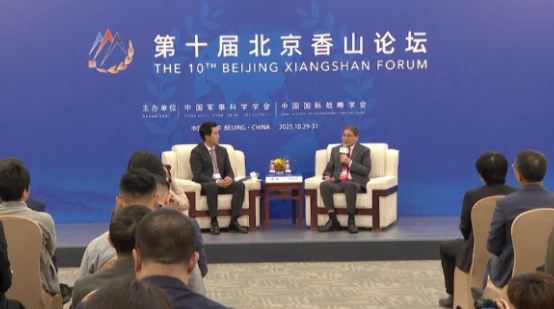
10th Beijing Xiangshan Forum

By He Yin, People’s Daily

The 10th Beijing Xiangshan Forum, themed “Common Security, Lasting Peace,” concluded in Beijing on Oct. 31. This year’s session of the Beijing Xiangshan Forum reached new historic highs in both scale and level. It witnessed extensive and in-depth exchanges and even contention between participants, demonstrating the principles of equality, openness, inclusiveness, and mutual learning and achieving the purpose of pooling wisdom, expanding consensus, and enhancing mutual trust.

The continuously growing influence of the Beijing Xiangshan Forum reflectsthe significance the international community accords to peace and security issues, and embodies various parties’ trust in and support for China’s efforts topromote the implementation of the Global Security Initiative (GSI) and play a leading role in advancing global security cooperation.

In today’s world, security issues are increasingly interconnected, transnational and diverse. Regional security hotspots keep flaring up, local conflicts and turbulence occur frequently, with traditional and non-traditional security threats intertwined.

In the face of global security challenges, it’s imperative that countries strengthen communication and cooperation so as to solve security dilemmas.

Responding to global security hotspots, the topics of dialogues, seminars and other activities at the 10th Beijing Xiangshan Forum, including major-country relations, security in the Asia-Pacific region, artificial intelligence,nuclear risk management and control, a new security architecture in the Middle East and mechanisms for peace in Europe,showedglobal vision and inclusiveness, providing a broad platform for exchanges between various parties.

The candid exchanges of views between participants as they jointly explored the path to global peace and security are of great positive significance under the current international circumstances.

“I strongly believe that this year’s Beijing Xiangshan Forum is an ideal platform to address the impending issues and to initiate proactive approaches to find solutions to problems, in order to have a stable and secure region,”said Vice-Admiral Piyal De Silva, former commander of the Sri Lanka Navy.

Respecting each other’s reasonable security concerns and ensuring all countries enjoy equal rights to express their security needs is an important prerequisite for building and maintaininga world of common security and lasting peace.

Many arrangements of the 10th Beijing Xiangshan Forum were welcomed by developing countries. For instance, one of the topics at the plenary sessions was “the role of developing countries in global security“; panel sessions and seminars coveredtopicsincluding”the Global South and global security governance”, “the significance of BRICS membership expansion”, “the expectations of developing countries for globalization”;and representatives of small and medium-sized countries accounted for a considerable proportion of speaking slots at relevant meetings.

One important contribution China has made is making many voices that were not heard by the international community in the past increasingly louder now,said Joseph Kahama, secretary general of theTanzania-China Friendship Promotion Association.

More and more countries includedin the Global South trust China, because China can help relevant countries make their voices heard on the global stage, he noted.

The Beijing Xiangshan Forum representsa significant event hosted by China to implement the GSI.

Calling on countries to adapt to the profoundly changing international landscape in the spirit of solidarity and address traditional and non-traditional security threats and challenges with a win-win mindset, the GSIaims to create a new path to security that features dialogue over confrontation, partnership over alliance and win-win over zero-sum.

It has injected confidence into countries’ efforts to maintain and achieve common and universal security, and is bound to continue helping build a more peaceful and safer world.

In February this year, China released “The Global Security Initiative Concept Paper”, proposing 20 priorities of cooperation under the framework of the GSI and suggestions on platforms and mechanisms of cooperation.

Defense ministers from many countries attending the10th Beijing Xiangshan Forum fully affirmed China’s contributions to maintaining world peace and promoting regional development.

Belarusian Defense Minister Viktor Khrenin said he hopes the international community will work together to implement the GSI and achieve peaceful coexistence among all countries.

China unswervinglypursues an independent foreign policy of peace. It has always decided its position and policy on issues based on their own merits, and it has strived to uphold the basic norms governing international relations and safeguard international fairness and justice.

It strives to safeguard world peace and development as it pursues its own development, and it makes contributions to world peace and development through its own development.

China has actively participated in and promoted multilateral security cooperation, engaged in mediation diplomacy, made unremitting efforts for the political settlement of hotspot issues, cooperated with other parties in non-traditional security domains such as anti-terrorism, cyberspace, food security, and climate change, and promoted improvement in international platforms and mechanisms for dialogues and exchanges on addressing security challenges.

By carrying out extensive consultation and making concerted efforts withvarious parties, China has pushed for solid implementation of the GSI, demonstrating itsstrong sense of duty as a responsible major country.

In today’s interconnected world, all countries are closely connected and humanity shares a common future. The historical trend of peace, development, and win-win cooperation is unstoppable.

China will continue upholding the vision of common, comprehensive, cooperative and sustainable security, and work with all members of the international community committed to peace and development to actively promote the implementation of the GSI, jointly enrich its connotations and practices, and make new contributions to promoting common security of humankind and lasting peace of the world.

China to build 5th Antarctic research station

China to build 5th Antarctic research station

By Liu Shiyao, Hu Runxin, People’s Daily

China’s 40th Antarctic scientific expedition team, organized by the country’s Ministry of Natural Resources (MNR), set sail from Shanghai on Nov. 1, embarking on a mission that is expected to last more than five months.

The expedition team will build a new scientific research station along the coastal areas of the Ross Sea, which will be the biggest highlight of the expedition. Upon completion, the new station will become China’s third perennial research station after the Changcheng and Zhongshan stations and the first research station dedicated to the Pacific sector. It will also be the country’s fifth research station in Antarctica.

The Ross Sea is the most southward-extending sea among all marginal seas of Antarctica. The top of the bay is located at about 78 degrees south latitude, which is very close to the South Pole.

The unique geographical location of the Ross Sea brings differentiated scientific research value, making it a beneficial complement to China’s Antarctic scientific research layout deserving greater investment for comprehensive scientific observation.

The construction of the new research station is of great significance.

Carrying out surveys, observation and monitoring of marine ecology, sea ice, glaciers, sea level, atmosphere, geophysics, high-altitude atmospheric physics, terrestrial ecology, terrestrial and marine geology, birds and more in this region will provide fundamental support for assessing the Antarctic ecological environment and climate change.

“The Ross Sea region has a strong appeal to scientists because it is like an ‘ice factory.’ It is an important generator of sea ice in the entire Southern Ocean, and a key origin of Antarctic bottom water,” said Sun Bo with the Polar Research Institute of China under the MNR.

The region features multi-circle interactions of the Earth system, including the geosphere, cryosphere, biosphere and atmosphere, which will help researchers explore important scientific issues such as Antarctic changes and global linkages, according to Sun.

The construction of the new station also reflects China’s active efforts to fulfill its responsibilities and obligations under the Antarctic Treaty system.

According to Long Wei, deputy director of Chinese Arctic and Antarctic Administration, a subsidiary of the MNR, China will cooperate with relevant countries in managing the Antarctic Specially Protected Area at Inexpressible Island and conduct ecological monitoring of the Ross Sea region Marine Protected Area, contributing to the protection of the Antarctic ecological environment and supporting China’s participation in Antarctic international governance.

Relying on the new station, China will carry out international cooperation on scientific expeditions and logistical support in Antarctica with neighboring research stations of other countries, striving to make new and greater contributions to the peaceful use of Antarctica by mankind, Long said.

With a building area of 5,244 square meters, the new Chinese Antarctic research station is expected to accommodate 80 expedition team members during summers and 30 members during winters after completion. It is planned to be used for atmospheric, oceanic, glacial, biological and other multidisciplinary observation, monitoring and scientific research.

The philosophy of “green expedition” will run through the entire construction process of the new research station.

While ensuring quality, safety and other basic requirements of the station, relevant personnel will make overall plans and adopt integrated designs for various systems of the station, in a bid to conserve resources and minimize environmental impact during the construction of the new research station.

Customized prefabrication and pre-assembly at home, as well as intensive management of construction materials, will also help the expedition team save energy, water, materials and other resources and protect the environment.

By reducing the disturbed area in Antarctica, cutting the number of temporary facilities and construction personnel, and maximizing control over the scope of construction activities, the expedition team will try to achieve the goal of green and eco-friendly construction.

In addition to the construction of the new station, the expedition team will also investigate the impacts of climate change on the Antarctic ecosystems and relevant consequences, while thoroughly studying the role of Antarctica in global climate change, according to Zhang Beichen, leader and chief scientist of China’s 40th Antarctic expedition.

Collaborative research in the frontiers of international Antarctic science will also represent an important part of this expedition.

During the expedition, Chinese scientists will carry out collaborative aerial surveys of the Enderby Land with their counterparts from countries including Norway and Australia, and explore the ice-ocean-bedrock interactions in the grounding zone of the Antarctic ice sheet, a key data gap region. They will also provide support for accurate assessments of ice sheet mass balance and instability research, and conduct international cooperation on logistical support with scientists from multiple countries.

Booming instant retail brings new experiences to Chinese consumers

Booming instant retail brings new experiences to Chinese consumers

By Wang Ke, People’s Daily

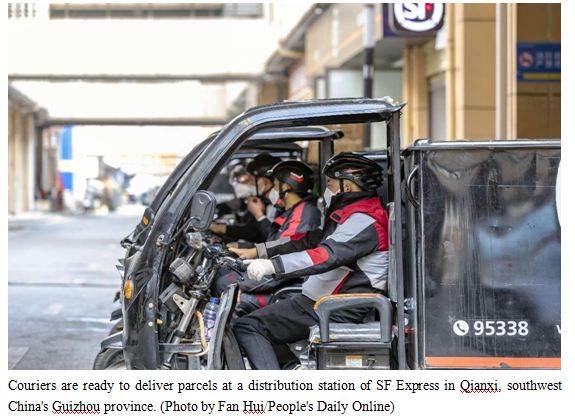
Wang Wei, who lives in Yuelu district of Changsha, central China’s Hunan province, is a frequent online shopper. Whenever he needs a refreshing cold drink or urgently requires medication late at night, he simply picks up his phone, opens an app, and places an order.

“Within half an hour, things I need are delivered right to my doorstep,” he said.

Instant retail, which features online real-time ordering and offline real-time delivery, leverages local retail supply to meet local instant demands.

Currently in China, an increasing number of products, ranging from fresh vegetables to bread and beverages, and from electronic devices to cosmetics, are being delivered to consumers faster through this method.

According to data from the Ministry of Commerce, the number of instant retail orders exceeded 40 billion in 2022, with a market size of over 500 billion yuan ($68.32 billion), and the market is expected to treble by 2025.

The final delivery from merchants to consumers is a crucial part of the commercial distribution system. In recent years, with the continuous advancement of China’s commercial distribution system, there has been ongoing innovation and optimization in the field of last-mile delivery. This has been driven by the accelerated integration of online and offline consumption, giving rise to new models of instant retail and allowing consumers to immediately get commodities they purchase.

The rapid development of instant delivery is driven by the significant demand from consumers, especially young consumers. According to a Accenture report, Chinese Gen-Zers place a greater emphasis on the speed of delivery, and over half of consumers born after 1995 hope to get same-day or even half-day delivery. Seven percent of consumers hope to receive their goods within two hours after placing an order.

“Instant retail, relying on internet trading platforms, is not only a new form of retail, but also a new model of consumption,” said Wu Chuanliang, an official with the Ministry of Commerce.

In the first three quarters of this year, China’s online retail sales reached 10.8 trillion yuan, a year-on-year increase of 11.6 percent, 4.8 percentage points higher than the growth of total retail sales of consumer goods.

The steady growth has brought good opportunities for the development of instant retail. Currently, the instant retail industry is showing a growing trend characterized by a wider range of product categories, expanded service areas, an expanding customer base, and increasingly diverse consumption scenarios.

“It was beyond my imagination that I could sell hundreds of thousands of goods a month,” said Liu, who runs a 80-square meter budget store in Tongzhou district, Beijing. Leveraging the delivery services provided by retail platforms, the service radius of this small store has expanded from 1-2 kilometers to 5-6 kilometers. Hundreds of orders are sent from the store every day, driving rapid growth of its sales.

“Technological transformation has brought about significant changes to both the production and consumption ends of the retail industry,” said Zhang Jixing, deputy director of the market research department of the Academy of China Council for the Promotion of International Trade.

New business forms such as social commerce and vertical e-commerce continue to emerge, while instant retail and home delivery models are flourishing. Such development is driving offline retailers to actively embrace online channels, not only providing convenience to consumers but also converting online traffic into new sources of orders.

According to a report by the China Chain Store and Franchise Association (CCFA), with the rapid development of the infrastructure for new business models and urban delivery networks, instant retail characterized by hour or minute delivery has become a new frontier for retail innovation.

An official with the CCFA told People’s Daily that instant retail, by integrating existing offline resources, enables online platforms to collaborate with offline retailers, creating a synergy where “1+1>2.” This is not only a necessity for the development of the industry but also a result of the advancement in cloud computing, big data, Internet of Things, and intelligent technology.

Hong Yong, an associate research fellow at the e-commerce research institute of the Chinese Academy of International Trade and Economic Cooperation, said the development of instant retail helps accelerate the digital transformation of traditional retail, facilitating the convergence of online and offline channels in the retail industry. It is expected to become a new driver of consumption growth, Hong added.

Kenyan avocado finds ready market in China after CIIE debut

Kenyan avocado finds ready market in China after CIIE debut

By Che Bin, Huang Weixin, Huang Peizhao, People’s Daily

In a lush avocado orchard on the shores of Lake Naivasha in Nakuru County, Kenya, more than 2,500 avocado trees stretched as far as the eye could see. Richard Wafula, owner of the farm, was busy harvesting avocados with his workers.

“Soon, approximately 10 containers of fresh avocados will be delivered to Chinese consumers from here,” he said.

China and Kenya signed a protocol to foster bilateral trade in avocados in January 2022. Seven months later, the first batch of fresh avocados grown in Kenya entered the Chinese market, making Kenya the first African country to export fresh avocados to China.

In November 2022, Kenyan fresh avocados made their debut at the fifth China International Import Expo (CIIE), immediately favored by Chinese consumers. It marked another remarkable chapter in China-Africa win-win cooperation.

Richard Tuwei is an avocado farmer from the western Kenyan city of Eldoret whose orchard was originally planted with 1,200 avocado trees. In August 2022, Tuwei’s products were among the first to pass an access review and export fresh avocados to China.

“In the past, when the avocado season arrived, we had to wait for some time before picking because local traders needed time to find buyers. But now, we pick the fruit as soon as it is ripe. The demand in the Chinese market is enormous, and our products have quickly found a ready market. This new opportunity encouraged us to plant an additional 500 trees last year,” Tuwei told People’s Daily.

Kenya is the largest exporter of avocados in Africa. Currently, 30 percent of the country’s avocados are exported to China, and this trend is expected to continue growing in the future. According to estimates from the local agricultural department, avocado exports to China will increase the annual income of local farmers by 30 percent to 50 percent.

The business with the Chinese market has brought tangible changes to the lives of Kenyan farmers. Tuwei told People’s Daily that in the past, he had to borrow money from friends to pay for his children’s tuition. But now, with a stable income from avocado farming, he can comfortably cover his daily expenses, and his life quality has been significantly improved.

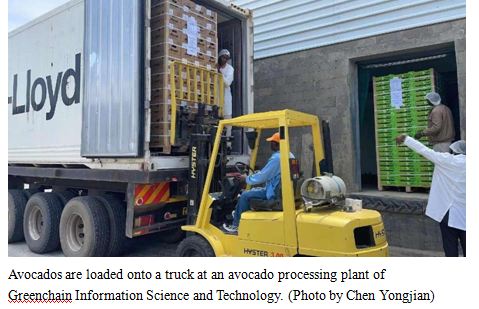
Wafula and Tuwei’s Chinese partner is Shanghai-based Greenchain Information Science and Technology (Greenchain). Greenchain has built partnerships with over 500 avocado growers and manages seven farms in Kenya.

To ensure that the fresh avocados meet the standards of the Chinese market, the company has signed cooperation agreements with local growers, which cover the entire process starting from the planting of avocado seeds all the way to the final sale of the fruit. This helps realize order-based cultivation management.

According to Du Gongming, general manager of Greenchain’s African business division, avocado features high economic value and low cultivation costs, and its cultivation boasts mature pest control techniques. After the successful export of fresh avocado to China last year, many Kenyan farmers started switching to avocado planting, hoping for more cooperation with China, he said.

“China has a huge population, which is a crucial asset for any market. We believe that in the future, more farmers will export avocados to China,” said Kello Harsama, principal secretary in the State Department for Crop Development in Kenya’s Ministry of Agriculture and Livestock Development.

After the fifth CIIE, Greenchain established a new avocado processing plant, in order to meet the growing demand in the Chinese market. The plant officially started operation in March this year.

“We purchased new equipment, introduced new packaging technology, and built a fumigation laboratory. Everyone is confident about the business development,” said Du.

It takes about 25 days for an avocado to hit the Chinese market from being picked in Kenya. Last August, the first batch of avocados from the African country arrived in China in 4 containers. This year, Greenchain has already shipped over 100 containers of avocados to China, and the number is expected to reach 300 by the end of the year.

“The CIIE has brought obvious driving effects, promoting win-win situations for multiple parties,” Du said.

In the past, China mainly imported avocados from South American countries. Nowadays, African avocados have entered the Chinese market, providing more choices for consumers.

“We are continuously expanding our marketing channels and increasing the sales of Kenyan avocados in the Chinese market,” said Du.

The CIIE debut of Kenyan avocados marked the deepening agricultural cooperation, as well as economic and trade exchanges between China and Africa.

In recent years, under mechanisms such as the Forum on China-Africa Cooperation, 16 agricultural products from 11 African countries have gained access to the Chinese market, and China has granted zero-tariff treatment to 98 percent of products originating from 21 African countries. Today, China stands as the second-largest destination for African agricultural exports.

Greenchain has participated in the CIIE for five consecutive years, and will continue to join the sixth CIIE this year. At that time, African specialties such as pineapples from Benin, chili peppers from Tanzania, and seafood from Kenya will be showcased for the first time at the event.

China-Africa practical cooperation enjoys broad prospects, and the stories of mutual benefit and win-win outcomes between the two sides are to be continued at the CIIE.

Zhejiang pilot FTZ an important hub for opening up in east China

Zhejiang pilot FTZ an important hub for opening up in east China

By Jiang Nan, Dou Hanyang, People’s Daily

The China (Zhejiang) Pilot Free Trade Zone, unveiled on April 1, 2017, is among the third batch of China’s pilot free trade zones (FTZs). Since its founding, the Zhejiang pilot FTZ has embraced rapid development and continuously contributed to the high-quality development of the open economy.

Last year, the Zhejiang pilot FTZ, occupying less than 1/400 of Zhejiang province’s total area, accounted for 6.5 percent of the newly registered enterprises, 9.2 percent of the tax revenue, 20.6 percent of the foreign trade volume, and 18.1 percent of the actual utilization of foreign capital in the province.

At present, the Zhejiang pilot FTZ has adopted a “four-area” development model, with each area having a strategic focus based on its strengths. The Zhoushan area is developing as an oil and gas free trade hub; the Ningbo area focuses on logistics and transportation; the Hangzhou area is emerging as a digital free trade zone; the Jinyi area is dedicated to commerce and trade.

The Yiwu International Trade Market, which is located in the Jinyi area, is the world’s largest wholesale market for small commodities. Selling 2.1 million categories of small commodities to over 230 countries and regions, it fuels the development of 2.1 million small and medium-sized enterprises and supports jobs for 32 million people.

The Jinyi area cooperates with some 40 cross-border e-commerce platforms around the world, and is working to continuously improve the support system for digital trade sectors such as cross-border e-commerce. Besides, it is also optimizing its trade models, and has built an official website market “chinagoods.com.”

According to an official, the Yiwu International Trade Market boasts 75,000 business stalls. In the past, purchasers had to go from stall to stall searching for the items they wanted, which was both tiring and time-consuming.

Today, thanks to the efforts to streamline procurement processes, purchases can be made swiftly and thus the trade volume has been significantly improved.

The Yiwu-Xinjiang-Europe freight train route, which starts from the Jinyi area, has developed into one of the China-Europe freight train routes with the most operating lines and highest loading efficiency since it was launched nine years ago. Today, with the train service heading west by land, and the Yiwu-Ningbo-Zhoushan corridor going east by sea, goods and commodities are flowing steadily from the Jinyi area to the world.

Over the past three years, the Ningbo area of the Zhejiang pilot FTZ has been continuously promoting trade liberalization and facilitation, further consolidating and enhancing its status as a global cross-border trade hub.

In 2022, the cargo throughput at Ningbo Zhoushan port reached 1.26 billion tons, ranking first globally for 14 consecutive years. The container throughput reached 33.35 million twenty-foot equivalent units, maintaining its position as the third largest globally.

From January to August this year, Beilun district, where the Ningbo area is located, achieved a total import and export volume of 295.4 billion yuan ($40.37 billion).

The Hangzhou area of the Zhejiang pilot FTZ is leading the way in integrating high-standard digital trade rules, exploring the establishment of a comprehensive institutional framework for the development of digital trade, and nurturing digital industry clusters with international competitiveness.

Currently, Hangzhou’s cross-border e-commerce retail export platforms account for two-thirds of China’s total, and its cross-border payment and settlement volume represents 40 percent of the country’s cross-border e-commerce exports.

In the first half of this year, Hangzhou’s digital service trade volume increased by 19.6 percent compared to the same period last year. Knowledge-intensive service trade accounted for over 80 percent of service trade, surpassing the national average.

In the hall of the Zhejiang Mercantile Exchange, a giant electronic screen is eye-catching. The screen displays not only the trading prices of various oil products, but also China’s Zhoushan LSFO (low sulphur fuel oil) bonded bunker price, known as the “Zhoushan price.”

“The market share of enterprises currently participating in Zhoushan’s bonded bunker price reporting has increased to 84 percent in the local bonded bunkering market,” said Lai Xin, chairman of the Zhejiang Mercantile Exchange. He noted that the “Zhoushan price” was officially introduced on June 21, 2021, marking an important institutional innovation achievement of the Zhoushan area.

“This mechanism breaks the monopoly of overseas markets on LSFO pricing,” Lai stated. In the past, China’s domestic oil and gas trading market lacked pricing power, but now with the “Zhoushan price,” it can effectively promote the use of RMB pricing in the bonded LSFO bunkering sector, and gradually increase the international influence of China’s spot price for bonded bunker fuel.

The Zhoushan area continues to build an international oil and gas industry cooperation platform with global influence. This has led to a spillover effect of expanded industrial chains and outward development in refining, storage, shipping and more. Consequently, the Zhoushan area is seeing the rapid emergence of a trillion-yuan oil and gas industry cluster.

Currently, the Zhoushan area is home to 12,700 oil and gas companies. In 2022, its oil and gas trade volume reached 776.123 billion yuan. Over the past 6 years, the accumulated trade volume has exceeded 270 million yuan, with an average annual growth of 64 percent.

2023 Media Cooperation Forum on Belt and Road held in Beijing

2023 Media Cooperation Forum on Belt and Road held in Beijing

By Lin Rui and Liang Xiaojian

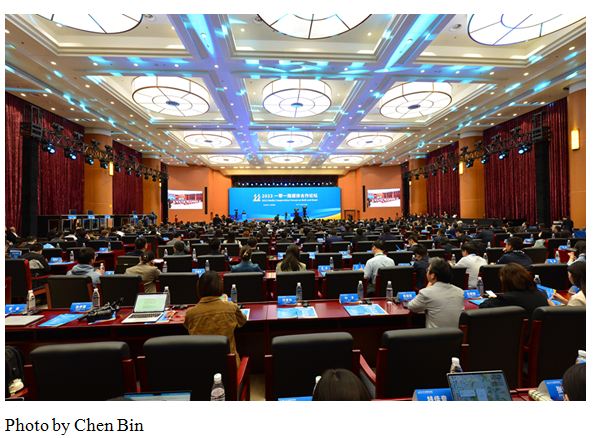
The 2023 Media Cooperation Forum on Belt and Road is being held in Beijing on Oct.19. The theme of the 2023 forum is “Strengthening Media Cooperation for a Brighter Shared Future.” Over 130 foreign media executives, senior editors, and journalists from over 110 media outlets in 75 BRI partner countries participated in the forum.

In the autumn of 2013, Chinese President Xi Jinping proposed the Belt and Road Initiative (BRI). Over the past ten years, with the combined efforts of all parties, it has evolved from ideas into actions, transforming from a vision into a reality and developing from a general framework into concrete projects. The BRI holds great practical significance as it steadily progresses and endures in the long run. It has charted a path of peace, prosperity, opening-up, green development, innovation, and civilization for the countries involved.

Chinese and foreign guests attending the forum held the belief that media outlets from various countries should collaborate in telling the story of constructing the BRI, fostering universal security, and facilitating increased exchanges and mutual learning.

In addition to the main forum, the event features the Silk Road Prize for Global News and a sub-forum focused on regional cooperation within the BRI. The event was attended by representatives from relevant ministries and commissions of the Chinese central government, major media organizations, scholars, as well as representatives from state-owned and private enterprises participating in the BRI.

The forum, hosted by the People’s Daily, has invited over 1,000 representatives of media and international organizations from over 100 countries since its inception in 2014. The forum aims to foster consensus and gather collective strengths to promote the high-quality development of the BRI.

Tetra Pak shares hope at 26th Sustainable Development Conference and Expo 2023

Tetra Pak shares hope at 26th Sustainable Development Conference and Expo 2023

DNA

Islamabad, Nov 22, 2023 — Tetra Pak Pakistan, a frontrunner in sustainable food processing and packaging solutions, proudly participated in the 26th Sustainable Development Conference and Expo, held from November 19th to 20th in Islamabad. The annual flagship event, hosted by the Sustainable Development Policy Institute (SDPI), brought together thought leaders, policymakers, and industry experts to address pressing issues and pave the way for a more sustainable and resilient South Asia.

Under the overarching theme, “Light at the End of the Tunnel: Hope in Times of Despair,” the conference aimed to instill hope and optimism in the face of unprecedented challenges, such as political and economic turmoil, conflicts, climate change, and post-pandemic transformations. Tetra Pak Pakistan actively contributed to the dialogue, emphasizing its commitment to a sustainable and hopeful future.

At the Sustainability Expo, Tetra Pak Pakistan showcased its dedication to recycling with a display featuring a recycled bench made from Tetra Pak cartons. Honorable Chief Guest Senator Sherry Rehman visited the Tetra Pak stall, commending the company’s efforts and expressing positive remarks about Tetra Pak’s recycling journey in Pakistan. Tetra Pak Pakistan also made special arrangements to apprise the expo visitors about its local partnership with Green Earth Recycling, which started in 2014 and since then has been successfully achieving increasing recycling targets every year by collecting and recycling packaging waste into sellable products such as garden furniture, school desks, roofing solutions, and much more.

The company’s sustainability aspirations and achievements took center stage in the closing Plenary of the Sustainability Expo, reaching a wider audience eager to embrace sustainable practices. Furthermore, Tetra Pak Pakistan’s Sustainability Manager, Muhammad Bin Shahzad, participated in a Fireside Chat session titled “Sustainable Consumption, Production, and Green Jobs,” shedding light on Tetra Pak’s pivotal role in advancing sustainability in the country.

In the midst of global uncertainties, Tetra Pak remains steadfast in its commitment to fostering sustainability, contributing to a brighter and more resilient South Asia and beyond.

Upholding legacy of Flying Tigers, renewing China-U.S. people-to-people friendship

Upholding legacy of Flying Tigers

By Zhang Mengxu, Zhang Penghui, People’s Daily

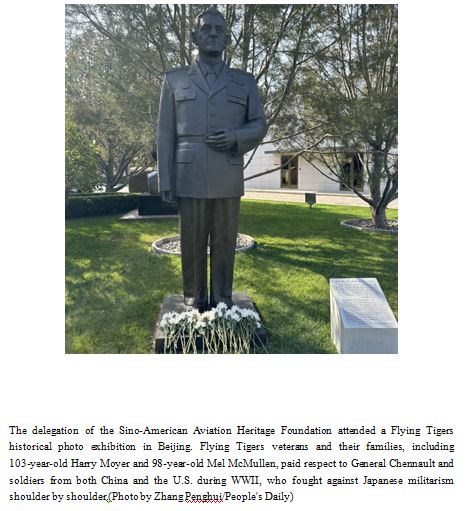
An event to commemorate the 80th anniversary of the U.S. 14th Air Force’s participation in Chinese People’sWar of Resistance against Japanese Aggression was held at the Museum of the War of Chinese People’s Resistance against Japanese Aggression on Oct. 30.

The event was hosted by the Chinese People’s Association for Friendship with Foreign Countries. Nearly 100 attendees from China and the U.S. gathered for the commemoration, including a delegation of Flying Tigers veterans and their descendants brought together by the Sino-American Aviation Heritage Foundation and the Flying Tiger Historical Organization, as well as government officials from California.

During the event, the U.S. delegation visited a photo exhibition commemorating the 80th anniversary of the U.S. 14th Air Force’s participation in Chinese People’sWar of Resistance against Japanese Aggression, an exhibition on the participation of the American Volunteer Group (AVG) in Chinese People’sWar of Resistance Against Japanese Aggression, an exhibition on Chinese military and civilian rescuing American pilots, as well as other permanent exhibitions.

The delegation laid wreaths in front of the statues of the heroes who fought against Japanese aggression. Flying Tigers veterans Harry Moyer and Melvin McMullen paid tribute to the portraits of Major General Claire Lee Chennault. It happened to be Moyer’s 103rd birthday that day, and the attendees sent their blessings to him.

In 1941, a large group of American young pilots, led by Chennault, established the AVG, also known as the Flying Tigers. They came to China and fought side by side with the Chinese people to resist Japanese fascist aggression. In 1943, the Flying Tigers were incorporated into the U.S. 14th Air Force. During thewar, over 2,000 Flying Tigers airmen gave their precious lives. Over the past 80 years, the bond forged between the Flying Tigers and the Chinese people in the flames of war has been passed down from generation to generation, remaining evergreen.

In Chongqing municipality, Kunming of Yunnan province, Guilin of Guangxi Zhuang autonomous region, as well as other places where the Flying Tigers fought, many memorials and museums have been built to tell the touching stories of the solidarity and shared hardships between the Flying Tigers and the Chinese People.

Flying Tigers and their descendants have paid multiple visits to China, and invited Chinese civilians who once helped American soldiers to visit the U.S., commemorating the profound friendship forged during the times when both nations supported each other.

McMullen, 98, once fought against Japanese aggression in Kunming and Chengdu, Sichuan province. He fondly recalled his friendly bond with the Chinese people in the past, saying when their planes were pursued and attacked by Japanese forces, their first thought was to find the nearest Chinese village to make an emergency landing.

He said he had more than once personally witnessed and heard the stories of Chinese people risking their lives to help and rescue Flying Tigers members, and through fighting side by side, the two sides forged a profound friendship.

According to him, the Flying Tigers veterans have always cherished this friendship, and he wants to share this history to help more people understand the spiritual wealth that transcends time and space between the two nations.

The visit led by the Sino-American Aviation Heritage Foundation to China was not only a journey to revisit history but also a means to encourage the younger generation of both countries to learn the story of the Flying Tigers and carry forward their spirit, with an aim to ensure that the friendly relations between the two nations are passed down from generation to generation, said Jeffrey Greene, Chairman of the Sino-American Aviation Heritage Foundation.

Over a month ago, Chinese President Xi Jinping replied to a letter from Greene, Moyer and McMullen, which greatly inspired them.

Communication and exchange between Chinese and Americans, especially the younger generation, are crucial, Greene noted. The members of this delegation visiting China included not only veterans of the Flying Tigers but also young individuals, who will continue to share stories of the friendly exchanges between the two nations when they return to the U.S..

Jackson Long, 15, was the youngest member on the visiting delegation. He is the great-grandson of the Flying Tigers veteran Clifford Long. The boy is currently attending high school in Pennsylvania.

It was his first time visiting China. He said he used to hear the stories about the Flying Tigers from his elders, but lacked a concrete understanding of what China is really like. Over the past few days, from Shanghai to Beijing, he saw China’s development and felt the enthusiasm and friendliness of the Chinese people. “I will do my best to help those around me understand China better,” he noted.

The Flying Tigers spirit serves as a bond connecting the U.S. and China, reminding the two peoples not to forget the deep friendship forged during the war and to create a bright future of cooperation and mutual benefit, said Nell Calloway, General Chennault’s granddaughter and the CEO of the Chennault Aviation and Military Museum. She has been dedicated to promoting U.S.-China people-to-people exchanges over the years.

She told People’s Daily that the U.S.-China relationship is the most important bilateral relationship in the world today. Despite the current disagreements and differences between the two countries, the aspirations for peace and a better life are shared by both peoples.

“President Xi Jinping hopes that the spirit of the Flying Tigers can be passed down from generation to generation between the two peoples, and this is also our hope. We hope that both countries can set aside their differences and work together to create a better future for the two peoples,” she said.

As two major countries, it is their important responsibility to join hands in tackling challenges, said Yang Wanming, president of the Chinese People’s Association for Friendship with Foreign Countries. The enduring friendship between the two peoples will infuse continuous momentum into the development of China-U.S. relations, and bring new hope for world peace, stability, and progress, Yang added.

Erik Lutz, Mayor of Pico Rivera, California, told People’s Daily that the friendship between the Flying Tigers and the Chinese people is something to be cherished. As a mayor in California, he looks forward to engaging in practical cooperation with China, creating opportunities for growth, continuously developing the friendship between the two nations, and enriching the connotation of their bilateral relationship.

Stay Connected

64FansLike
60FollowersFollow

Latest Reviews

Exchange Rates

USD - United States Dollar
EUR
1.17
GBP
1.35
AUD
0.72
CAD
0.73