Home Blog Page 1099

PODA launches extensive initiative to combat gender violence

PODA launches extensive initiative to combat gender violence

ISLAMABAD, NOV 25 /DNA/ – PODA with the support of its regional offices based in Lahore and Multan and a wide network of it rural women leaders and partner organization is organising seminars, sessions in schools and communities, educational theatre plays and series of radio programmes addressing different aspects of gender-based violence.

PODA is set to launch a series of awareness sessions, focusing on the challenges faced by women in accessing their rights. Our aim is to empower women for active participation in political processes and also these awareness sessions will not come to an end on December 10, this campaign will continue till the end of December and cover more than 50 districts.

“PODA Pakistan, a leading advocate for gender equality and women’s rights Organization is gearing up to participate actively in the Global 16 Days of Activism campaign Against Gender-Based Violence commencing from November 25th to December 10th, 2023.

This year’s theme, “UNITE! Invest to prevent violence against women and girls,” resonates deeply with PODA’s commitment to advocate for gender equality across social and political spheres. At PODA, we believe in addressing the root causes and underlying factors that contribute to gender-based violence.

 Under 16 Days of Activism, activities will focus on the Advocacy of Girl Childbirth Registration, Voter Education, and Early Marriages. Sessions and webinars on Ending Violence against Women, Women to Access Citizenship Rights in Rural Areas, Issues and Challenges in Elections of Pakistan, and Human Rights laws in Pakistan will be held in project areas. PODA will organize community theatre performances, and community dialogue on child abuse, and will celebrate World Children’s Day.

To promote stable, positive development of China-U.S. relations

To promote stable, positive development of China-U.S. relations

By Zhong Sheng, People’s Daily

China-U.S. relations recently showed positive signs, including a series of important high-level exchanges and new stories of people-to-people friendship. This is welcomed by both the two countries and the international community.

The healthy and stable development of China-U.S. relations not only is in line with the interests of both countries and their peoples, but also meets the common expectations of the international community.

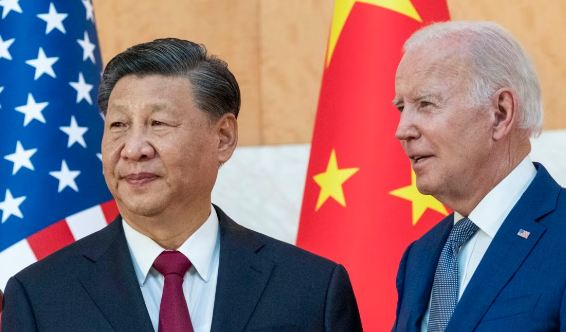
The two sides should adhere to the three principles of mutual respect, peaceful coexistence and win-win cooperation, earnestly return to what was agreed by the two heads of state in Bali, work to stabilize the China-U.S. relationship from further deterioration, and bring it back to the track of sound and stable development at an early date.

China-U.S. relationship is the most important bilateral relationship in the world. Whether the two countries can get along well determines the future of humanity. Fifty two years ago, leaders of the two countries, with remarkable strategic vision, made the right choice to seek cooperation between China and the United States, kicking off the process of normalization of bilateral relations. This has not only benefited the two countries, but also changed the world.

The achievements of China-U.S. relations have not come easily and should be cherished all the more. The world is currently undergoing momentous changes unseen in a century, and the international landscape is witnessing significant shifts. The world needs a stable China-U.S. relations more than ever.

As former U.S. Secretary of State Henry Kissinger said earlier, peace and progress between China and the United States is in the self-interest of each country and of the world.

China’s policytoward the United Statesis consistent, which is mutual respect, peaceful coexistence and win-win cooperation. China always believes that the two countries should be partners, not rivals, and they should pursue mutual benefit and win-win outcomes, not zero-sum games. It always hopes that China-U.S. relations would become stable and improve, rather than slide into conflict and confrontation.

China always holds that the two countries should break free of competitive and confrontational thinking, take care of each other’s interests and concerns, seek the greatest common ground for exchange and cooperation, and expand the convergence of interests in win-win cooperation.

Both history and reality have repeatedly proved that the two countries both stand to gain from cooperation and lose from confrontation, and thus cooperation is the best choice for them. China and the United States have joined hands in combating terrorism, addressing the international financial crisis, combating the Ebola virus, and leading the achievement of the Paris Agreement on climate change. Through cooperation, they have made significant contributions to the world.

Faced with the increasingly more global challenges today, it is even more crucial for both sides to choose the path of cooperation. Global economic recovery, tackling climate change, and resolving international and regional hotspot issues all require coordination and cooperation between China and the United States.

It is important to see that the world is big enough for the two countries to develop themselves and prosper together. China and the United States, as the world’s two largest economies, account for more than a third of the global economy and nearly a quarter of the world’s population, and bilateral trade accounts forabout a fifth of the global total. The interests of both sides are closely intertwined. It is important to recognize and prioritize the common interests that exist between the two nations, as their individual successes present opportunities rather than threats for each other.

The root cause of the difficulties facing China-U.S. relationship over recent years is that the U.S. perception and views of China are seriously distorted. Some people in the United States hold onto a Cold War mentality, using competition as an excuse to encircle, contain, and suppress China. Such actions will only push China and the U.S. towards confrontation and the world towards a new Cold War.

China and the United States are two huge countries with different histories, cultures, and social systems. It is inevitable for them to have differences and competition. However, this should not hinder both sides from engaging in cooperation based on common interests, nor should it be a reason for confrontation and hostility between them.

Competition should not be the keynote of China-U.S. relationship, and the development of this relationship should adhere to certain bottom lines. The one-China principle and the three joint communiques between China and the U.S. are the most important political foundation of the bilateral relationship and must be protected and upheld without interference.

The sound development of China-U.S. relations requires pooling the strength of all sides.The foundation of China-U.S. relations lies among the people, the hope is in the people, the future lies in the youth, and the vitality lies in sub-national areas.

The Kuliang story is a testament to the unwavering friendship between the Americans and Chinese. The U.S.-China Youth and Student Exchange Association in Washington State is dedicated to promoting mutual understanding between American and Chinese youth. The Stilwell family, spanning several generations, has been instrumental in fostering friendly cooperation between the United States and China. The spirit of the Flying Tigers has been passed down through generations, connecting the people of both countries. California has also actively expanded green cooperation with China. These vivid examples demonstrate the profound friendship between the Chinese and Americans and the immense potential for cooperation between the two nations.

China’s efforts to promote dialogue and exchanges at various levels with the U.S.demonstrate the country’s broad vision, long-term perspective, and sense of responsibility that comes with its major country diplomacy.

Amid the changing international landscape, China-U.S. relations are at a critical juncture. The two countries should shoulder their responsibilities to the people, history and the world, follow the principles of mutual respect, peaceful coexistence and win-win cooperation, and promote the stable and positive development of China-U.S. relations. It is hoped that the United Stateswill work with China in the same direction.

(Zhong Sheng is a pen name often used by People’s Daily to express its views on foreign policy and international affairs.)

ICCI for harnessing Pak-Thailand untapped trade potential

ICCI for harnessing Pak-Thailand untapped trade potential

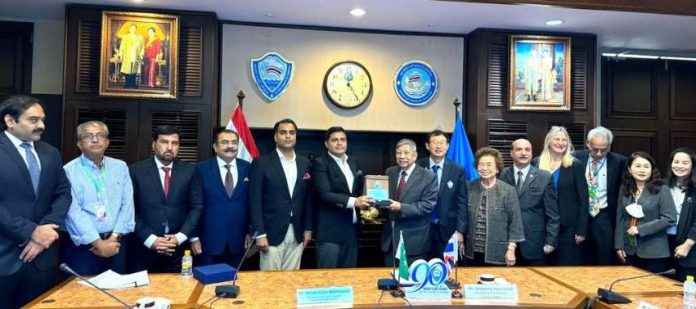
Islamabad, NOV 25 /DNA/ – A delegation of Islamabad Chamber of Commerce and Industry (ICCI) led by Ahsan Zafar Bakhtawari, President visited Thailand and held meetings with the office bearers of Thai Chamber of Commerce and Thai-Pakistan Business Council to explore the business opportunities between the two countries. The delegation was representing various sectors including pharmaceuticals, textiles, construction, edible oil, marble, light engineering, hospitality, retail sector, importers and exporters.

Speaking on the occasion, Ahsan Zafar Bakhtawari, President, Islamabad Chamber of Commerce and Industry said that Pakistan and Thailand have immense potential for bilateral trade, which should be exploited to achieve beneficial results for both economies. He said that the current trade volume between the two countries is relatively low, however, there are numerous opportunities for growth and expansion that remain untapped. He said that both countries can complement each other in many areas as Thailand is a significant exporter of electronics, automobiles, and machinery while Pakistan is a huge market of over 240 million consumers with abundant natural resources like cotton, rice, and textiles. He said that agriculture, textiles, and energy sectors hold great potential for trade between Pakistan and Thailand, which should be taken benefit of. He said that Thailand has expertise in the renewable energy sector and it should cooperate with Pakistan in this sector to meet our growing energy needs. He said that the purpose of the visit of ICCI delegation to Thailand is to interact with Thai counterparts and explore new areas of mutual cooperation to unlock new business opportunities for a more prosperous future for their citizens. He also briefed the Thai counterparts about the investment potential in various sectors of Pakistan’s economy and invited them to visit Pakistan to explore possibilities of joint ventures and investment.

The Office Bearers of Thai Chamber of Commerce and Thai-Pakistan Business Council welcomed the ICCI delegation and assured their full cooperation to promote business linkages between the private sectors of Thailand and Pakistan to explore all untapped areas of mutual cooperation between the two countries. They said that Thailand and Pakistan can benefit from increased trade and investment, therefore, it is important for both countries to work together to encourage frequent exchange of trade delegations in order to identify new areas of improving business and investment relations. They said that with supportive policies and incentives from both sides, the business relationship between Pakistan and Thailand could flourish in the years ahead. They hoped that the visit of ICCI delegation to Thailand would lead to good business partnerships between the two countries.

Ameer Hamza, Ch. Javed Iqbal, Ch. Muhammad Ali, Shahbaz Majeed Sheikh, Raja Muhammad Imtiaz, Faizan Shehzad, Akhtar Hussain, Saif ur Rehman Khan, Nasir Mehmood Chaudhry and Malik Mohsin Khalid are in the ICCI delegation. 

Digital technology gives leg up to ecological conservation in Hainan Tropical Rainforest National Park

Digital technology gives leg up to ecological conservation in Hainan Tropical Rainforest National Park

By Zhao Peng, Cao Wenxuan, People’s Daily

Since the Hainan Tropical Rainforest National Park was set up as a pilot area in 2019, the southern Chinese province of Hainan has been focusing on building a new model of intelligent ecological management.

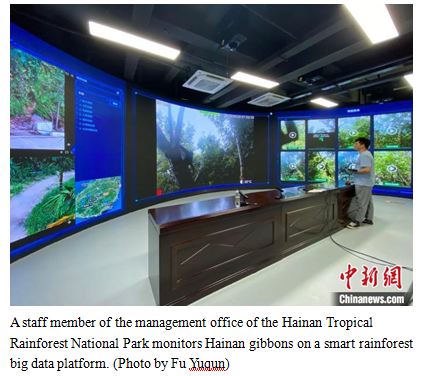
The management officeof the Hainan Tropical Rainforest National Park has built a provincial-level intelligent management center and a smart rainforest big data platform. Besides, it has also planned an integrated monitoring system for the national park, which aims to make daily patrols, animal protection, and resource monitoring smarter.

After a rain shower, Fu Huiquan, a forest ranger in the Yinggeling nature reserve of the Hainan Tropical Rainforest National Park, and his teammates went on patrolling, observing water bodies and protecting plants. They took photos, made records, and uploaded data.

As they advanced, their whereabouts were shown on a 3D map of a “Hainan Forest Ranger” mobile application. “Hainan Forest Ranger” is an intelligent application that allows forest rangers to take photos and send relevant data back to the smart rainforest big data platform.

The Hainan tropical rainforest is China’s prime example of a concentrated, diverse, well-preserved, and expansive continental island-type tropical rainforest. Paths in the pristine forest are narrow and slippery, with complex and changing conditions. Relying solely on traditional forest protection models would only result in low efficiency, and it is difficult to guarantee the personal safety of forest rangers.

Fu told People’s Daily that over ten years ago, when patrolling the mountains, they only carried a few items: machetes, compasses, and an old-fashioned camera. But now they bring smarter equipment such as satellite positioning devices, drones, and infrared cameras.

If they need to observe the overall situation of the rainforest or monitor areas that are difficult for humans to reach, they use drones for surveying. If they need rescue or spot fires or pests, they can upload photos or videos to the smart rainforest big data platform or directly connect with the platform for consultation and assistance. The upgraded equipment has made today’s patrols safer and more efficient.

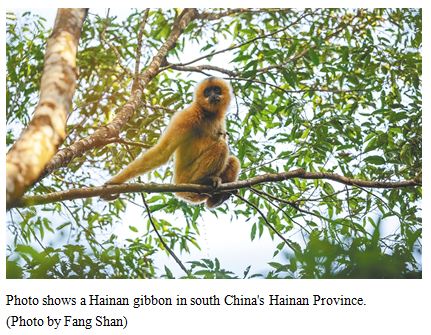
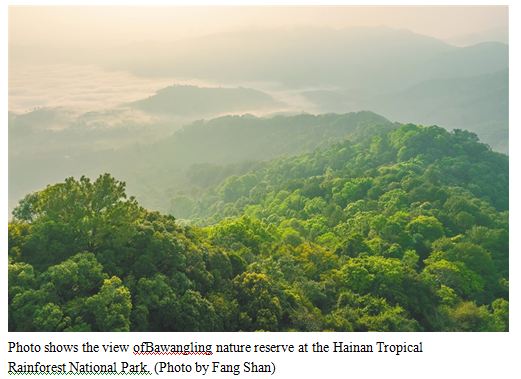
The Hainan gibbon is one of the most endangered primate species in the world. The Bawangling nature reserve at the Hainan Tropical Rainforest National Park is the animal’s only habitat.

On the screens in the Bawangling nature reserve’s monitoring center, two Hainan gibbons were seen chasing and leaping through the forest, with the video closely tracking their actions as they ran and jumped.

With the help of 360-degree panoramic cameras that automatically capture and transmit the activities of the Hainan gibbons in real-time, monitoring personnel located tens of kilometers away can observe every action of the animal by simply moving their fingers.

Since the launch of the smart rainforest project in 2021, a total of 105 surveillance cameras, approximately 35 kilometers of vibration fiber optic cables, and hundreds of infrared thermal sensing triggered cameras have been installed in the Bawangling and Diaoluoshan nature reserves at the national park, building an all-encompassing “electronic fence” without any blind spot.

Wild animals’ movements are unpredictable. Relying solely on field patrols and monitoring provides limited information. However, the “electronic fence” allows for 24-hour monitoring of the surveillance areas. To minimize the impact on wildlife, all monitoring facilities have been designed to resemble trees.

The surveillance cameras and vibration fiber optic cables are placed at key points where the core areas and the general control areas converge. If unauthorized individuals or vehicles attempt to enter the core areas of the national park, these devices will alert potential risks.

“After the application of the ‘electronic fence,’ the incidents of unauthorized personnel entering the protected areas have been effectively controlled,” said Wang Nan, deputy director of the management office of the Hainan Tropical Rainforest National Park.

With the assistance of digital technology, the population of Hainan gibbons has now recovered to 37 individuals in six groups, Wang said.

Since 2019, the rainforest has revealed 54 new species to researchers. In addition, several rare and endangered species that had not been sighted there in years have reemerged – such as the water monitor and fine-spined frog.

In an ecological monitoring area in the Jianfengling nature reserve, there is a white metal box standing out amidst the lush green trees. This box is an atmospheric negative oxygen ion monitoring system, which not only monitors atmospheric negative oxygen ions but also tracks air particulate matters, temperature, humidity, wind speed, and solar radiation. It automatically transmits various monitoring data to the Jianfengling ecological data management center at regular intervals, contributing to the enhancement of rainforest conservation capabilities.

As of now, the Hainan Tropical Rainforest National Park has established four ecological observation and research stations, over 110 monitoring stations, and nearly 500 long-term dynamic monitoring sites, forming a preliminary eco-monitoring network.

Through continuous exploration, the Hainan Tropical Rainforest National Park has formulated a set of methods and systems to measure the value of tropical rainforest resources. In September 2021, it became the first national park in China to complete the accounting of gross ecosystem product, with a value of 204.5 billion yuan ($28.79 billion).

Digital technology gives leg up to ecological conservation in Hainan Tropical Rainforest National Park

Working Toward a Ceasefire and Realizing Lasting Peace and Sustainable Security

Working Toward a Ceasefire and Realizing Lasting Peace and Sustainable Security

Remarks by Xi Jinping

President of the People’s Republic of China, At the Extraordinary Joint Meeting of BRICS Leaders, And Leaders of Invited BRICS Members, On the Situation in the Middle East with Particular Reference to Gaza, November 21, 2023

Your Excellency President Cyril Ramaphosa,

Colleagues,

This is our first summit since the expansion of BRICS. Before I speak about the issue of our discussion, I wish to extend a warm welcome to leaders of new BRICS members and express my thanks to President Ramaphosa and the South African government for your efforts that have made our meeting possible. Given the current circumstances, it is very timely and very important that we meet and speak up for justice and for peace on the Palestinian-Israeli issue.

The conflict in Gaza is raging on into its second month. China is gravely concerned that the conflict is causing enormous civilian casualties and a humanitarian disaster, and tends to expand and spill over. China believes that the following is urgent and imperative: First, the parties to the conflict must end hostilities and achieve a ceasefire immediately, stop all violence and attacks against civilians, release civilians held captive, and act to prevent loss of more lives and spare people from more miseries. Second, humanitarian corridors must be kept secure and unimpeded, and more humanitarian assistance should be provided to the population in Gaza. The collective punishment of people in Gaza in the form of forced transfer or water, electricity and fuel deprivation must stop. Third, the international community must act with practical measures to prevent the conflict from spilling over and endangering stability in the Middle East as a whole. China supports the resolution adopted at the emergency special session of the U.N. General Assembly on October 27. The U.N. Security Council under China’s presidency has adopted Resolution 2712. All the parties must act to deliver on these resolutions through concrete measures on the ground.

The root cause of the Palestinian-Israeli situation is the fact that the right of the Palestinian people to statehood, their right to existence, and their right of return have long been ignored. I have emphasized on many occasions that the only viable way to break the cycle of Palestinian-Israeli conflict lies in the two-state solution, in the restoration of the legitimate national rights of Palestine, and in the establishment of an independent State of Palestine. There can be no sustainable peace and security in the Middle East without a just solution to the question of Palestine. China calls for early convening of an international peace conference that is more authoritative to build international consensus for peace and work toward an early solution to the question of Palestine that is comprehensive, just and sustainable.

Since the outbreak of the latest Palestinian-Israeli conflict, China has been working actively to promote peace talks and a ceasefire. China has provided humanitarian assistance to help ease the humanitarian plight in Gaza. This includes USD 2 million of emergency humanitarian assistance provided through the Palestinian National Authority and U.N. agencies, and emergency humanitarian supplies worth RMB 15 million, such as food and medicine, to the Gaza Strip with the help of Egypt. China will provide more supplies and assistance according to the needs of the people in Gaza. At the U.N. Security Council, China has acted in its capacity as president to facilitate the adoption of the resolution, which calls for extended humanitarian pauses and corridors, the protection of civilians, and the provision of humanitarian assistance.

Colleagues,

The BRICS cooperation mechanism is an important platform for emerging markets and developing countries to strengthen solidarity and cooperation and safeguard common interests. Our meeting today to coordinate positions and actions on the Palestinian-Israeli conflict marks a good start for greater BRICS cooperation following its enlargement. China commends South Africa for its significant contribution as BRICS chair to advancing BRICS development. As Russia will take over BRICS chairmanship next year, China stands ready to work with other members to jointly support Russia’s work as the chair and usher in a new era for BRICS cooperation.

Thank you.

Wuzhen in E China’s Zhejiang blazes new trail of rural vitalization through theater festival

Wuzhen in E China's Zhejiang blazes new trail of rural vitalization through theater festival

By Wang Jue, People’s Daily

The 2023 Wuzhen Theater Festival recently kicked off in Wuzhen, Tongxiang, Jiaxing, east China’s Zhejiang province. The festival showcased 87 performances selected from 28 specially invited plays from 11 countries and regions. Eighteen performances were staged during the festival’s Emerging Theater Artists’ Competition. Additionally, there were 12 Wuzhen Dialogues, 12 workshops, 27 reading sessions, six major exhibitions, and over 2,000 carnivals.

What sparks would fly when the ancient town of Wuzhen meets theater and tradition encounters modernity?

Since its establishment 10 years ago, the Wuzhen Theater Festival has nurtured local talents in various aspects such as theater construction, stage design, theater services, and brand promotion. More importantly, it has strengthened the local community’s capability in the theater business.

In 2016, Andi, who studied drama performance, returned to his hometown Wuzhen and founded a small theater group called Utopian Youth Drama Club. In 2016, the group performed an interactive drama themed with the pawnshop culture of Wuzhen during a Carnival of the Wuzhen Theater Festival. In the following two years, it brought to the festival a segment of Chinese cross talk on intangible cultural heritage.

“The Wuzhen Theater Festival provides us with a platform for learning and communication,” Andi said. “Without the festival, I wouldn’t have started my career in theater, and I couldn’t even imagine being able to make a living by drama.”

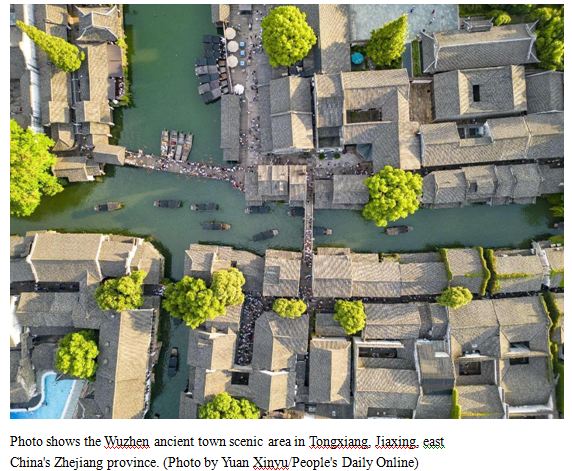
The Zhaoming Academy, a historical site situated on the north side of Xizha Street in the Xizha scenic area, Wuzhen, enjoys a long history. Today, with sound maintenance and protection, the Zhaoming Academy has become a tourist attraction and also serves as a performance venue during the Wuzhen Theater Festival.

Wuzhen is steeped in cultural relics and historic sites that showcase its rich history and heritage. Chen Xianghong, initiator of the Wuzhen Theater Festival and president of Wuzhen Tourism Co. Ltd., said that Wuzhen possesses a wealth of historical and cultural assets and the Wuzhen Theater Festival has further lifted the artistic vibe in the town.

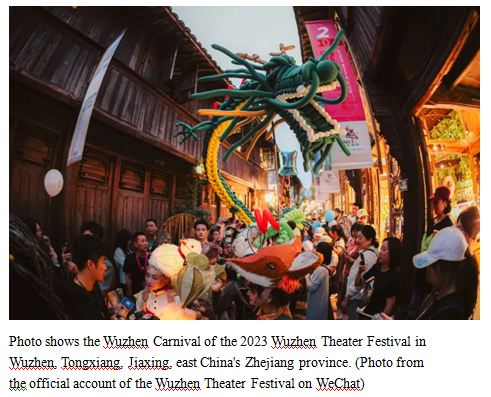
Over the past 10 years, the Wuzhen Theater Festival has been continuously developing. Its Wuzhen Carnival has turned bridges, streets, and alleys into stages and theaters, bringing the art of drama to more audiences who have never stepped into a theater before.

This year, the Wuzhen Carnival was hosted in the public spaces, on the rivers, and even in the air above the Xizha scenic area, featuring a variety of performance art forms, including parades, installation art, improvisational performances, multimedia, and more. In addition, the inclusion of music, film, trendy toys, installations, reading, exhibitions, and markets has made the festival more diverse and open.

“The theater becomes a part of Wuzhen, and Wuzhen becomes a stage for theater,” Chen commented. The Wuzhen Theater Festival, with its unique charm, has gradually integrated into the local lifestyle.

Gao Yunchao, a skilled craftsman at a lantern workshop in the Xizha scenic area, was a volunteer for the second Wuzhen Theater Festival.

“It was my first close encounter with drama, dance, and other forms of art, and it was quite fascinating,” Gao said.

Starting from the third Wuzhen Theater Festival, he became an apprentice at the lantern workshop. The place in front of the workshop happened to be a stage of the Wuzhen Carnival, and it became a prime spot for Gao to watch the performances.

Over the years, he has watched many performances such as shadow puppetry, sketch comedy, and contemporary dance in the workshop, and growing from an apprentice to a skilled craftsman.

Over the past 10 years, the Wuzhen Theater Festival has nurtured a multitude of local audiences. Visiting Wuzhen in October to watch plays has become a cherished tradition for many locals. Everyone was talking about drama during the festival, from homestay owners to chefs, and from taxi drivers to young mothers.

Ji Mengting, a resident of Wuzhen, has parents who run a homestay in the Xizha scenic area. The family of three has been attending the Wuzhen Theater Festival since its first edition. In her eyes, the festival is an annual theatrical extravaganza that not only boosts local tourism but also allows the locals to experience a variety of artistic styles.

As Wuzhen becomes more and more international, it is attracting more and more international talents. Wei Zhehao, who had worked in the tourism industry in the UK for eight years, returned to China in 2020 to work at a university in Jiaxing and is currently on assignment at the Wuzhen scenic area. In his view, Wuzhen has two major brands, the Wuzhen Theater Festival and the World Internet Conference, making it an internationalized ancient town in China.

He believes the hosting of the Wuzhen Theater Festival has not only brought positive impacts on Wuzhen’s economy, culture, and education, but has also brought about significant changes to Wuzhen in rural tourism and brand image building. Every year, Wuzhen attracts people from all over the world to visit, invest, and settle down.

Chen said the theater festival provides a new idea for the development of small towns and rural revitalization.

“Some people say that the Wuzhen Theater Festival is a mirror reflecting a cultural pursuit that belongs to Chinese small towns in the process of contemporary urbanization. It is referred to as a new rural development model,” Chen noted.

“Wuzhen has evolved from a tourist town to a cultural town, and now it has entered a new stage of development. This is also a manifestation of the strength of small towns,” he added.


Wuzhen in E China's Zhejiang blazes new trail of rural vitalization through theater festival

Nyingchi’s efforts in wetland conservation

Nyingchi's efforts in wetland conservation

By Xu Yuyao, Choda Drolkar, People’s Daily

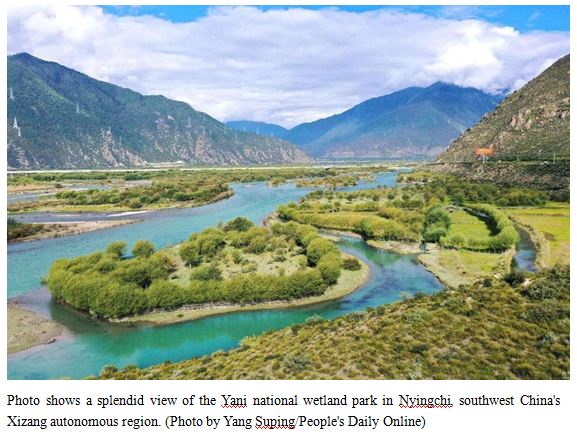
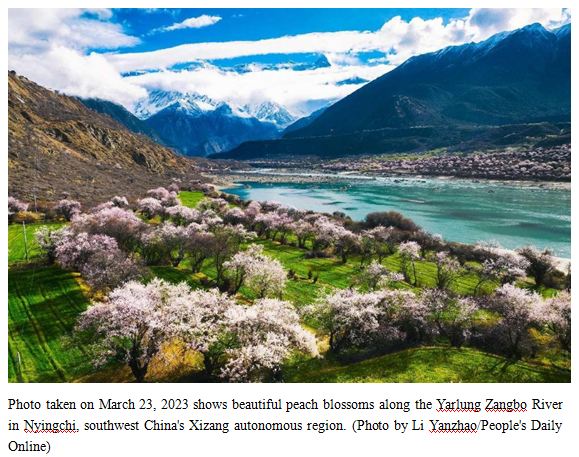
Less than an hour’s drive from downtown Nyingchi, southwest China’s Xizang autonomous region, there lies the Yani national wetland park, where the Yarlung Zangbo River and its tributary Nyang River converge.

In recent years, the ecological environment in the wetland has been continuously improved thanks to protection, restoration, and monitoring efforts, making the park a prominent attraction for tourism and a signature of Nyingchi’s ecological development.

At 8:00 a.m., Phurbu Doje, a villager from Nyingchi, arrived at the forest to begin his daily inspection of the trees. As he carefully examined each one, he explained to People’s Daily the importance of monitoring for diseases or pests that could threaten these rare and valuable species.

Phurbu Doje is one of the 45 forest rangers in the Yani national wetland park. As a native, he has a passion for this land.

When he was a child, it was just an inconspicuous wasteland. In 2009, Yani national wetland park became a pilot project, and the former gravel factory there was shut down. Vegetation started to grow on the mudflats.

“The changes over the past more than a decade years have not come easily, so we must protect this place even better,” Phurbu Doje said.

A village in a corner of the Yani national wetland park was once ecologically fragile and threatened by sandstorms. Located on flat land and at a bend of a river, the village struggled with severe siltation issues for years.

Fifteen years ago, the river would often flood its banks in summer, blanketing them in silt, and then run completely dry in winter, allowing winds to whip up sediment from the exposed riverbed.

“We need to plant trees in our village!” In the spring of 2009, the head of the village proposed the idea of tree planting and environmental improvement. This marked the beginning of an afforestation project that has continued to this day.

Over the past more than a decade, the village has planted hundreds of thousands of trees, resulting in significant sand control and afforestation effects.

“Seeing the beautiful environment of my hometown now, I feel that the efforts of these years are worthwhile,” the head said.

In the Yani national wetland park, there are many similar ecological restoration projects. Since 2016, Nyingchi has invested a total of 35.1 million yuan ($4.89 million) in four wetland conservation and restoration projects. As of June 2022, 1,839 mu (122.6 hectares) of vegetation have been restored in the wetland park.

With the continuous improvement of the ecological environment, how can the beautiful wetland scenery be further utilized to create greater value?

Tashi Tsering, a charter car driver in Nyingchi, has been particularly busy in the past few months.

“During the peak season of tourism in Xizang, scenic areas such as the Yani national wetland parkand the Yarlung Zangbo Grand Canyon form a ‘golden route’ for short trips around Nyingchi,” Tashi Tsering told People’s Daily. According to him, who lives near the wetland, many people in his village work in nearby attractions, and a significant portion of their income comes directly from scenic areas.

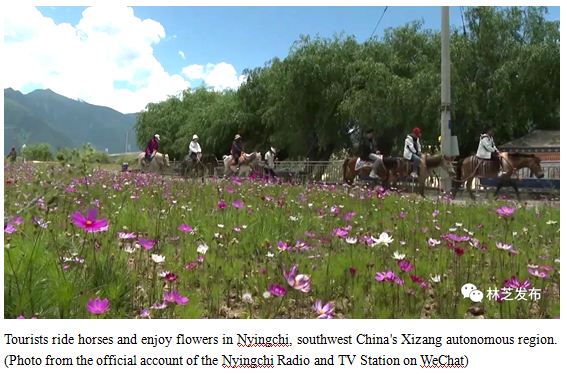
Last year, more than 190 mu of land in a village near the wetland park was contracted, on which a garden that combines ecological sightseeing and folk experiencing activities was built, where visitors can enjoy the flowers, archery and horse riding. Today, the village has become an important tourism destination for residents and tourists, and the income of villagers has been significantly improved.

In addition, Nyingchi is vigorously strengthening the monitoring and research on wetlands to maximize their ecological value.

“The wetland park is rich in flora and fauna, with 534 species from 87 families of higher plants, including 6 species of wild plants under national key protection. The wetland park and its surrounding areas are home to 234 species from 59 families of wild animals. The ecological value and scientific significance of these species need to be further developed and utilized,” said an official with the forestry and grassland bureau of Nyingchi.

Previously, due to a lack of wetland conservation professionals, the ecological service functions of the Yani national wetland park were not effectively utilized.

To address this issue, the local forestry and grassland bureau has collaborated with research institutions such as the Chinese Academy of Sciences and Wuhan University to improve the wetland resource investigation and monitoring system and establish a sound technological support mechanism for wetland conservation. Additionally, wetland ecological monitoring stations have been constructed to conduct assessments of wetland ecological conditions and monitor the flora and fauna.

“Establishing a comprehensive ecological monitoring network will facilitate further research on the plateau ecosystem and, in turn, help protect the plateau’s ecological environment,” said Dawa, an associate researcher with an institute of plateau biology in the autonomous region.

Nyingchi's efforts in wetland conservation

Chinese medical aid to Africa benefits local people

Chinese medical aid to Africa benefits local people

By Yang Yanfan, People’s Daily

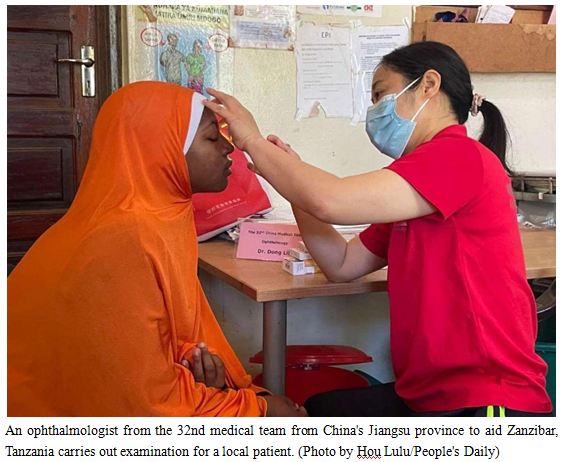
This year marks the 60th anniversary of China sending the first international medical aid team. Over the years, members of China’s medical aid teams, though facing various difficulties and hardships, have safeguarded the health of local people with compassion and excellent skills, and helped advance local medical conditions. Their dedication and service have earned them widespread praise and admiration.

Wang Zhenchang, vice-president of Beijing Friendship Hospital, was head of the 24th batch of Chinese medical team sent to Guinea from 2014 to 2016 when the country was hit by an Ebola outbreak.

“I was both scared and worried, but it also brought a sense of honor and accomplishment,” said Wang.

Faced with the Ebola epidemic, not a single member of the medical team backed down. Upon arrival, they conducted research, analysis, and provided specific assistance in Ebola prevention and control. The Guinean government highly praised the entire medical team and the Chinese Ebola prevention and control group. The Chinese medical team was awarded Guinean National Order of Merit, Cooperation and Development Medal.

Liu Chun, chief physician at the Affiliated Hospital of Changchun University of Chinese Medicine, noted that Traditional Chinese Medicine (TCM) is a distinctive feature of the Chinese medical team in Kuwait. Between 1999 and 2010, she was sent to Kuwait three times for medical aid, during which she treated over 6,000 patients.

“When I first arrived in Kuwait, the locals had little knowledge of acupuncture, and they were skeptical that such small silver needles could treat diseases,” said Liu.

Later, the medical team promoted TCM treatment methods such as acupuncture, cupping, and acupoint application, which have traditional Chinese characteristics. Through word of mouth from patients who became friends of Chinese doctors and TCM enthusiasts after their treatment, more and more people started coming to the TCM clinic for medical consultations.

Zhu Huifang, the head of the nursing department at Huzhou Hospital of Traditional Chinese Medicine in Zhejiang province, joined in two medical missions abroad. She has worked for a total of three and a half years at the China-aided Friendship Hospital in Central African Republic and a hospital in Mali. She was affectionately called “Chinese Mom” by African children.

Once, a 16-year-old Malian boy had a car accident on his way to school, resulting in a cervical spine injury with spinal cord damage. The boy loves Chinese martial arts and sports, but he could only lie in bed because of the accident.

Zhu, along with Malian nurses, cleaned the boy’s wounds and changed his dressings. Every day, she would spend some extra time by his bedside, encouraging him to regain confidence in recovery. After two and a half months, his condition improved and his mood also got better.

“When the boy came back to the hospital for a follow-up visit once, he happened to be interviewed by a media outlet. He looked straight into the camera and said, ‘This is my Chinese mom.’ We are still in touch today, and he has now become a university student in Mali,” Zhu told People’s Daily.

“When shy African children went from being strangers who were afraid to talk to me to becoming familiar and even snuggling in my arms calling mama, I feel both relieved and a strong sense of responsibility,” Zhu said.

Mei Xueqian, deputy chief physician of the cardiothoracic surgery department at the People’s Hospital of Anyang City in central China’s Henan province, is the son of Mei Gengnian, the head of the first Chinese medical team sent to assist Ethiopia, who sacrificed his life on Aug. 11, 1975 during his mission in the African country and buried there.

“In Africa, my father treated many African patients with his expertise and received praise and recognition from the local government,” Mei Xueqian said. This inspired Mei Xueqian himself to become a member of the 10th Chinese medical team to Ethiopia.

“For me, I have the desire to fulfill my father’s unfinished mission. As a doctor, I also want to serve the local people in Ethiopia,” he remarked.

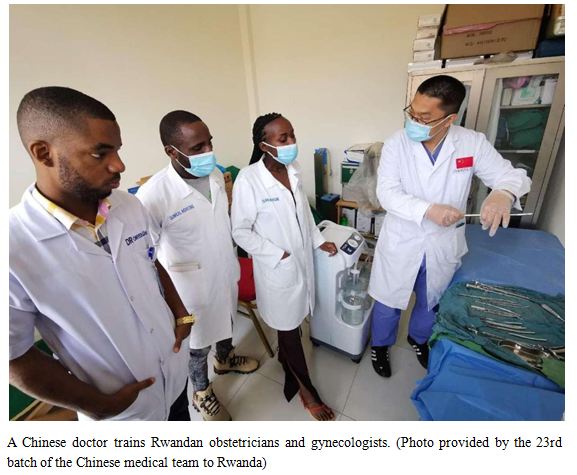
“To truly improve the local medical level, it is not only about ‘providing fish’ but also ‘teaching people how to fish,'” said Wu Dexi, deputy chief physician of the cardiologydepartment at the First Affiliated Hospital of Sun Yat-sen University and a member of the second, third, and fourth Chinese medical teams sent to the Commonwealth of Dominica.

At the China-Dominica Friendship Hospital, Wu has conducted multiple cardiovascular-related lectures, clinical teaching rounds, and multidisciplinary case discussions. He demonstrated and taught new techniques, enabling local doctors to master new technologies, knowledge, and concepts.

Additionally, he has actively promoted the local development of medical disciplines according to the local context, resulting in the establishment of the first cardiovascular department in the country. His efforts have also facilitated the implementation of multiple cooperation projects between China and the Commonwealth of Dominica.

“Many patients and their families have become good friends of mine. ‘Though countries have borders, doctors should know no boundaries.’ This precious and unforgettable experience has given me a deeper understanding of the responsibilities and mission of being a doctor. I will continue to uphold my original intention and safeguard the health of the people, so as to make new contributions in promoting cooperation and exchange in the healthcare field between China and the Commonwealth of Dominica,” said Wu.

Chinese medical aid to Africa benefits local people

To draw wisdom from history for new chapters of cooperation

To draw wisdom from history for new chapters of cooperation

By He Yin, People’s Daily

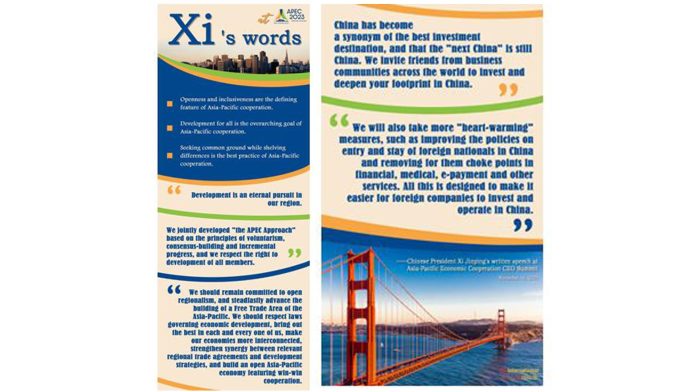
Chinese President Xi Jinping delivered a written speech at the Asia-Pacific Economic Cooperation (APEC) CEO Summit in San Francisco on Nov. 16. He reviewed the remarkable journey of Asia-Pacific cooperation, summarized the historical experience of Asia-Pacific development, and answered a new question of the times-where will Asia-Pacific cooperation be headed in the next 30 years.

Xi’s remarks mirrored China’s firm confidence in promoting high-quality economic development and bringing new impetus and opportunities to the world with China’s new development, charting the course and injecting momentum for the Asia Pacific region to rise up to the challenges of the times and write new chapters of cooperation.

APEC’s birth and growth followed the trend toward peace and development. Three decades ago, where humanity should be headed in the post-Cold War era was the question of the world, of history and of the times in front of Asia-Pacific leaders. In response, they convened the inaugural APEC Economic Leaders’ Meeting.

They agreed unanimously to rise above the outdated mentality of bloc confrontation and zero-sum game, deepen economic cooperation and integration in the region, and build a dynamic, harmonious and prosperous Asia-Pacific community.

This major decision enabled Asia-Pacific development and economic globalization to embark on a fast track of growth, turning the region into a powerhouse for world economic growth, an anchor of stability for global development, and a pacesetter for international cooperation.

The world has entered a new period of turbulence and change. The momentum of world economic growth is sluggish. Destabilizing, uncertain and unpredictable factors are increasing.

To find the direction of future Asia-Pacific cooperation, regional countries need to draw wisdom from history, stay true to their original aspiration, seize the opportunities, and ride the momentum.

With a deep understanding of the development trend in the Asia-Pacific region and the progress of the times, Xi summarized the profound insights brought by the remarkable journey of Asia-Pacific cooperation.

He stressed that openness and inclusiveness are the defining feature of Asia-Pacific cooperation, development for all is the overarching goal of Asia-Pacific cooperation, and seeking common ground while shelving differences is the best practice of Asia-Pacific cooperation.

Development in the Asia-Pacific region has been achieved not through provoking antagonism and confrontation, pursuing a beggar-thy-neighbor policy, or erecting high fences around a small yard, but by staying open and inclusive and drawing on each other’s strengths.

Development is an eternal pursuit of the region. Regional countries have stayed focused on development and continually deepened economic and technical cooperation, thus strengthening the ability of developing members to achieve self-development.

Over the past three decades, per capita income in the Asia-Pacific has more than quadrupled, and one billion people have been lifted out of poverty. This is an important contribution to human progress and global sustainable development.

Economies in the region have different histories and cultures and are in different stages of development. Forcing uniformity will not advance cooperation in the region; seeking common ground while shelving differences is the right way forward. This can enable regional countries to turn diversity in membership into momentum for cooperation and make collective progress through tapping into complementarity.

At present, the Asia-Pacific region is seeing both new opportunities for development as well as new challenges and risks.

Xi pointed out that regional countries should stay committed to APEC’s founding mission, never forget their mission bestowed by history, and move to relaunch Asia-Pacific cooperation.

Peace is an important prerequisite for development. The Asia-Pacific region cannot and should not be an arena for geopolitical rivalry, still less should it be plunged into a new cold war or camp-based confrontation. This is a common aspiration of all parties in the region.

The story of Asia-Pacific prosperity and development shows that development is only possible with cooperation, absence of cooperation is the biggest risk, and that decoupling and supply-chain disruption are not in anyone’s interests. To relaunch Asia-Pacific cooperation, it is important to remain committed to open regionalism and build an open Asia-Pacific economy featuring win-win cooperation.

Facing a new wave of scientific and technological revolution and industrial transformation, regional countries should move along with the trend to promote transition to digital, smart and green development. They should jointly boost innovation and market application of scientific and technological advances, and push forward full integration of digital and physical economies.

They should jointly improve global governance of science and technology, bolster support for green and digital transition and sustainable development through innovation, and build an open, fair, just and non-discriminatory environment for the development of science and technology.

China is a member of the Asia-Pacific family. The Chinese economy and the Asia-Pacific economy are interdependent and deeply integrated with each other.

China enjoys distinct strengths such as a socialist market economy in systemic terms, a supersize market in terms of demand, a full-fledged industrial system in terms of supply, and abundant, high-caliber labor forces and entrepreneurs in terms of human resources. China’s economic development is self-generative, resilient and has many potentials.

China has the confidence in, and even more capability of achieving long-term and stable growth, and through its development it will continue to provide the world with new growth momentum and opportunities. China is committed to applying the new development philosophy, and it unswervingly advances high-standard opening up, fosters a market-oriented, law-based and world-class business environment and pursues high-quality development.

China is now advancing the rejuvenation of the Chinese nation on all fronts by pursuing Chinese modernization, and the whole of more than 1.4 billion Chinese people will live better lives. For the world, this means a broader market and unprecedented cooperation opportunities. It will also instill strong impetus in the global modernization endeavor.

The APEC Putrajaya Vision explicitly lays out its vision for an Asia-Pacific community by 2040. Asia-Pacific countries should stay committed to APEC’s founding mission, never forget their mission bestowed by history, uphold openness, inclusiveness and common development, and seek common ground while shelving differences, to march toward the goal of building an Asia-Pacific community with a shared future.

PPP rules out father-son rifts

PPP rules out father-son rifts

Bailwal rushes to Dubai; Zardari also in Dubai to woo him

Nazir Siyal

Karachi: The Pakistan Peoples Party (PPP) Friday quashed the rumours of differences between the party’s top brass and father-son duo — Asif Ali Zardari and Bilawal Bhutto-Zardari — after the former foreign minister left for Dubai.

The development came after Zardari’s interview, wherein he called Bilawal “inexperienced”, “not fully trained” in politics, and would “take time” getting up to speed — fuelling rumours of rifts between them — as Bilawal had been asking old politicians to rest and allow the new generation to take the lead.

In a statement on X, formerly Twitter, PPP Central Secretary Information Faisal Karim Kundi said the party chairman’s visit to Dubai, an emirate in the United Arab Emirates (UAE), was pre-planned.

“Chairman PPP @BBhuttoZardari has left for Dubai yesterday afternoon according to his schedule after KP visit,” Kundi noted, after media outlets reported that he had left the country “all of a sudden”.

“Rumours regarding differences between Chairman PPP &  Zardari is baseless,” he added.

While talking to journalists moments after his statement, Murad Ali Shah — former Sindh chief minister and a top PPP leader — also said that the visit was routine.

Talking to media, PPP Information Secretary Shazia Atta Marri said that Bilawal has left for Dubai on a “private visit” and noted that he routinely visits the Gulf nation. “There’s no specific reason for this visit.”

She also added that Bilawal was scheduled to leave for Dubai after completing his Khyber Pakhtunkhwa (KP) election tour.

“Bilawal will return to Pakistan on November 30 and address the party’s Foundation Day event,” she clarified.

PPP Senator Sherry Rehman wondered why news channels were panicking, calling his visit “exactly as scheduled”.

There seems to be a difference in the narratives between the two top leaders in the run-up to the polls as Bilawal believes there could be interference in the general elections, while Zardari said he sees transparent polls.

Bilawal has been campaigning across the country and touting his party as the solution to Pakistan’s ills, while also asking “old politicians” to sit back and allow the new generation to lead from the front in the elections slated to take place on February 8 next year.

In his speech in the National Assembly in August, Bilawal had also asked his father and Pakistan Muslim League-Nawaz (PML-N) supremo Nawaz Sharif to ensure that politics for the next generation was easier, stressing that they shouldn’t suffer the same fate as their elders.

Stay Connected

64FansLike
60FollowersFollow

Latest Reviews

Exchange Rates

USD - United States Dollar
EUR
1.17
GBP
1.35
AUD
0.72
CAD
0.73