Home Blog Page 109

Operation Divine Bytes and the Rise of the Digital Battlefield

Operation Divine Bytes and the Rise of the Digital Battlefield

by: Izmi Herlani

The changing character of warfare has transformed cyberspace into a decisive operational arena. In the 21st century, military strength is measured not only by the size of Armed Forces or the sophistication of weapons platforms but also by a nation’s ability to protect digital infrastructure, disrupt adversarial systems and dominate the information environment. Operation Divine Bytes by PAF Cyber Force may not have produced the thunder of artillery or the spectacle of fighter formations in the skies, yet it emerged as one of the most consequential dimensions of the May 2025 Pakistan-India military conflict. At a time when conventional military activity dominated headlines following the escalation of May 7–8, an equally critical battle was unfolding silently across digital networks, encrypted systems and information grids. The operation underscored a defining reality of contemporary conflict: modern wars are no longer fought solely with bombs and bullets; they are increasingly contested through cyber power, information dominance and technological superiority.

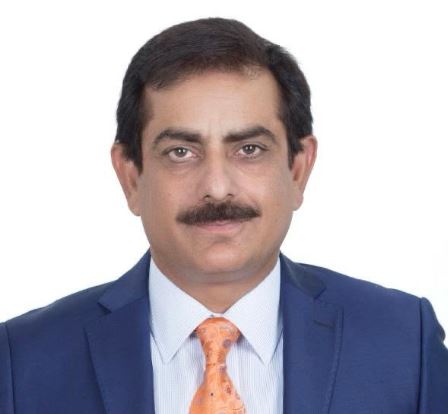
Operation Divine Bytes stood as a compelling testament to Pakistan Air Force’s rapidly advancing cyber warfare prowess. Executed under the stewardship of Air Commodore Attaullah Zeb, DG PAF Cyber Force, and guided by the strategic vision and direct oversight of the Chief of the Air Staff, the operation showcased PAF’s growing ability to project power and achieve operational effects across the digital battlespace. It reflected the growing integration of PAF’s cyber power within a broader multi-domain military framework. It illustrated how modern Air Forces are increasingly combining cyber operations, electronic warfare, surveillance capabilities and conventional combat power into a synchronized operational architecture. While fighter aircraft and Air Defence systems remained central to the conflict, cyberspace quietly emerged as an equally influential front. Reports during the conflict pointed toward disruptions in Indian communication networks, instability within sections of power infrastructure and interruptions affecting logistical systems across parts of India. In an era defined by interconnected systems, even temporary digital disruption can create operational uncertainty, slow coordination mechanisms and affect decision-making during critical moments. This is the defining feature of modern warfare: strategic effects can now be achieved without large-scale physical destruction. A compromised communication network, delayed command response or disrupted logistics chain may influence military effectiveness as significantly as a conventional strike. This, PAF Cyber operations have altered the very meaning of battle damage in the contemporary battlespace.

Equally important was the role of information dominance during the conflict. Modern military operations increasingly revolve around the acquisition, interpretation and management of data. Nations capable of penetrating digital ecosystems, securing strategic intelligence and controlling information flows possess a substantial operational advantage long before physical engagement begins. Within this evolving environment, Open-Source Intelligence has become a powerful force multiplier. Publicly accessible satellite imagery, geospatial data, digital footprints and social media activity now provide unprecedented situational awareness in conflict zones. During Marka-e-Haq, PAF OSINT reportedly assisted in identifying unusual online activity and coordinated information patterns ahead of the crisis, contributing to operational preparedness and early threat assessment. As the conflict progressed, open-source digital analysis also enabled rapid Battle Damage Assessment through satellite imagery verification and publicly available evidence. This reflects the growing importance of information-centric warfare where strategic awareness is increasingly shaped in real time through digital monitoring and analysis.

What distinguished Pakistan Air Force’s operational approach was the apparent synchronization between cyber capability and conventional military operations. Cyber warfare was not treated merely as a supporting technical function operating in isolation. Instead, it appeared integrated into a wider operational doctrine encompassing electronic warfare, artificial intelligence, surveillance systems and precision air power. Such integration reflects the future trajectory of military strategy globally. Contemporary warfare is steadily evolving toward a net-centric model in which dominance depends upon the seamless coordination of multiple operational domains. Cyber capability now functions as a force multiplier capable of shaping both digital and physical dimensions of conflict simultaneously. The development of this capability also reflects long-term institutional foresight within Pakistan Air Force. Recognizing the rapidly changing nature of warfare, the service leadership accelerated modernization efforts focused on emerging technologies including cyber warfare, AI-enabled operational systems and integrated command structures. This doctrinal transformation led by Air Chief Marshal Zaheer Ahmed Baber Sidhu sought to prepare Pakistan Air Force for conflicts where technological integration would become as critical as conventional combat strength.

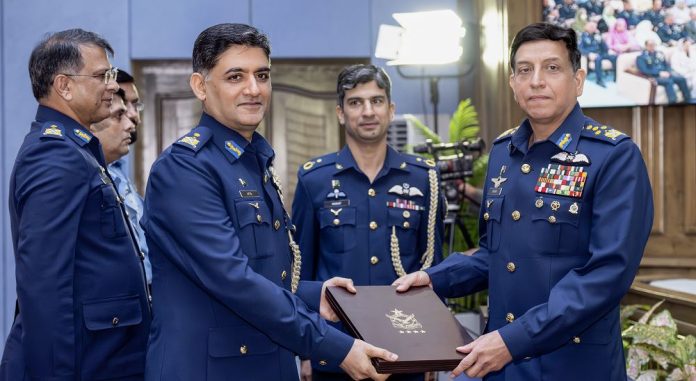
The recognition recently accorded to PAF Cyber Force during the Marka-e-Haq Commemoration Ceremony further highlighted the strategic importance of cyber operations within Pakistan’s national defence framework. It also underscored the emergence of cyber specialists as indispensable actors in modern military operations. International defence analysts increasingly view cyber-integrated warfare as the future of military competition. The ability to synchronize digital operations with conventional combat capability is now regarded as a hallmark of advanced military preparedness. In this environment, PAF’s cyber resilience and information superiority are becoming central pillars of deterrence and operational effectiveness. Beyond its technical dimensions, cyber warfare also carries significant psychological and strategic implications. Modern conflicts are fought not only across physical terrain but also within the information sphere where narratives, perception and strategic signaling shape both domestic morale and international opinion. Demonstrating technological sophistication and cyber preparedness therefore serves not only operational objectives but also broader strategic messaging.

Operation Divine Bytes ultimately symbolized far more than a cyber campaign; it reflected the broader transformation underway in modern warfare and highlighted Pakistan Air Force’s emergence as a technologically advanced and future-oriented fighting force. Under the visionary leadership of Air Chief Marshal Zaheer Ahmed Baber Sidhu, PAF has steadily expanded its operational doctrine beyond conventional air power into the realms of cyber warfare, artificial intelligence and integrated multi-domain operations. The battlefield of the future now extends far beyond traditional frontlines into servers, networks, satellites and digital ecosystems where silent operations may shape strategic outcomes before conventional engagements even begin. The May 2025 conflict served as a powerful reminder that future wars will not be defined solely by firepower or troop strength, but increasingly by the ability to dominate across interconnected domains through technology, cyber capability and information control. In demonstrating this evolving warfare model, Pakistan Air Force reinforced its reputation as a modern, adaptive and strategically forward-looking air arm prepared to confront the challenges of next-generation conflict. The era of digital warfare is no longer a distant possibility; it has already become an operational reality.
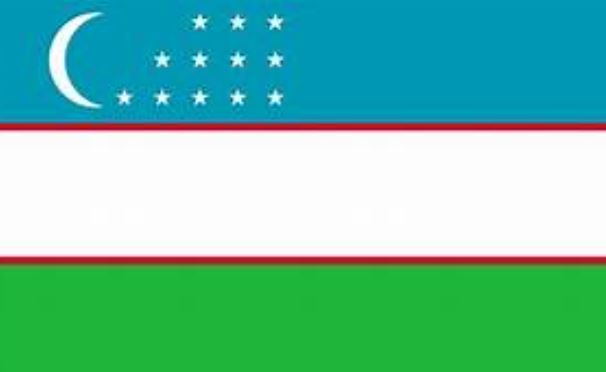
Termez platform – dialogue for ensuring security and stability in Central and South Asia

Termez platform – dialogue for ensuring security and stability in Central and South Asia

Gulamov Asliddin Gapparovich

Since ancient times, Central and South Asia have been closely connected through trade, cultural exchange and political processes. Geographical proximity and ancient trade routes contributed to active dialogue between peoples and civilizations, the exchange of goods and culture as well as the formation of a shared historical and cultural identity in the region. Following the acquisition of independence, the Central Asian states began gradually developing their own foreign policy and economic strategies toward South Asia.

Given the significance of Central and South Asia, shaped by their strategic location, abundant natural resources, demographic potential and historical heritage, these regions have become the subject of extensive scientific research. Thus, from the perspective of the regional security complex, scholars consider Central and South Asia as two independent yet equal regions. In this context, it is important to emphasize the transformation of Afghanistan’s role as a key component of the regional security complex, facilitating interconnectedness and the gradual rapprochement between South and Central Asia.

It should be noted that Uzbekistan, located in the heart of Central Asia, plays a key role in ensuring regional security and stability. At the same time, the country, actively promoting constructive foreign policy initiatives aimed at strengthening peace and cooperation in the region, acts as the locomotive of economic interconnectedness between Central and South Asia. Recognizing the growing demand for mutual ties between the regions, in July 2021 in Tashkent a high-level international conference “Central and South Asia: Regional Connectivity. Challenges and Opportunities” was held. There the proposal to develop and submit for consideration to the UN General Assembly a draft special resolution “On Strengthening the Connectivity between Central and South Asia” was put forward. As a result, in July 2022, the UN member states unanimously approved the adoption of this resolution, which became another vivid testament to the recognition of our country’s role and authority in deepening interconnectedness, establishing dialogue with the region and maintaining peace and stability.

It should be emphasized that the resolution calls on states to unite their efforts in combating common challenges and threats to stability and security in Central and South Asia, recommends continuing and deepening interregional cooperation by expanding transport infrastructure and information-communication technologies, as well as by developing new international transport corridors that provide convenient, sustainable, commercially viable, affordable, accessible, inclusive and safe routes to seaports.

In these processes, Termez has the potential to become a unique platform for connecting the two regions, both in terms of ensuring regional security and in terms of developing trade and economic relations. At the same time, the city of Termez, historically considered as one of the centers of dialogue between peoples and civilizations, the development of trade, humanitarian, and other ties, for many centuries occupied a strategically important position in the region. Thus, the era of the Kushan Empire, Termez served as a major cultural center where various civilizations actively interacted. The city was a significant hub for the transmission of Buddhist art and literature, which spread widely across Central and South Asia. Moreover, from a geographical point of view, Termez was a link between Central and South Asia. It was also one of the key points on the Great Silk Road connecting East and West.

At the present stage, Termez serves as a starting point for the implementation of a number of transport and infrastructure projects, such as the “Termez – Naibabad – Maydan Shahr – Logar – Kharlachi” railway, the “Surkhan – Puli-Khumri” power lines, and others. In general, the significance of the Termez platform lies in the following:

Firstly, in the context of ensuring regional security and stability, the city of Termez has consistently held a central position. Following the events of 11/9/2001 the “Termez Strategic Air Transport Point” was established here, which operated from 2002 to 2015 and ensured the logistics of humanitarian cargo for the International Security Assistance Force in Afghanistan. This experience further reinforced the city’s significance as a secure transit and supply hub during times of military instability.

In addition, Termez is actively used within the framework of Uzbekistan’s joint initiatives with international partners in combating terrorism, drug trafficking, and cross-border crime. In this context, the “Friendship Bridge” connecting Uzbekistan and Afghanistan, plays an important role in ensuring control not only over the movement of people and cargo, but also in monitoring the illegal trafficking of drugs (including synthetic drugs) coming from Afghanistan, which is important for maintaining regional security (for example, employees of the “Ayritom” border customs post in Surkhandarya region in March of this year prevented an attempt to illegally import a batch of narcotic drugs with a total weight of 70 kg and in May of this year – 600 kg).

At the same time, Termez is considered a platform for constructive resolution of border issues. Thus, on August 22-28, 2024, a regular meeting of the working groups of the joint Uzbek-Tajik demarcation Commission was held in Termez. During the meeting, joint work continued on coordinating the passage of the design demarcation line of the Uzbek-Tajik state border, following which a corresponding protocol was signed.

Secondly, the trade, economic, and logistical significance of the city of Termez, as a material foundation for long-term peace and security in Central and South Asia, is determined by its strategic location and modern logistical infrastructure.

In particular, in 2022, “The Termez Cargo Center terminal” received the status of an international multifunctional logistics hub serving cargo flows to Afghanistan and South Asian countries. This, in turn, has elevated its status in international humanitarian infrastructure (from 2025 it has been integrated into the UN High Commissioner for Humanitarian Affairs warehouse network) and contributed to the expansion of humanitarian shipments’ geography (in 2022 humanitarian aid was delivered by air from Termez to flood victims in Pakistan, and in 2023, the UNHCR Regional Humanitarian Logistics Center in Termez sent 12 truckloads of over 48,000 blankets to Afghanistan). It is noteworthy that Termez’s infrastructure is being actively utilized by international organizations to deliver food and medicine to South Asia, which contributes to reducing social tension and preventing the escalation of conflicts caused by humanitarian crises.

Furthermore, the opening of the Termez International Trade Center in August 2024, designed to create a favorable business environment and logistics, simplify administrative procedures and create conditions for entrepreneurs, on the one hand, enhances the city’s economic attractiveness and, on the other hand, stimulates the growth of economic cooperation between Central and South Asia. In this context, it should be noted that on the territory of the Center (37 hectares, 500 meters from the border with Afghanistan), where 3 thousand retail outlets are located, a 15-day visa-free regime has been introduced for visitors.

In this regard, Termez is also considered a suitable platform for conducting bilateral economic relations. Thus, in March and April of 2024 year, representatives of the Afghan delegation, headed by the Minister of Trade N. Azizi and business circles of the Balkh province, visited the city of Termez, where they held a meeting with the Uzbek side to develop bilateral trade and economic cooperation and expand cooperation in such sectors as agriculture, textiles, pharmaceuticals, food, and mining.

Thirdly, the cultural and humanitarian potential of Termez is considered to be of considerable importance. Thus, in 2018, at the initiative of the President of the Republic of Uzbekistan, an educational center for Afghan citizens was created. This educational institution is the only one in the world that provides training exclusively for Afghans in 17 areas of higher and 16 areas of secondary specialized, vocational education. During his functioning, about 700 Afghan citizens underwent training, meanwhile 200 of them are girls.

The institution actively maintains international relations and cooperation with donor countries and foreign organizations such as UNDP, EU, GFR, Slovakia, India. Thus, in January 2023, the “EU Knowledge Center” was opened on the basis of this educational institution to train and educate Afghan citizens (this is a coworking space that provides a platform for joint work, self-learning, and establishing professional connections). Overall, the establishment of an educational center for Afghanistan in Termez will expand access to quality education for Afghan citizens, as well as provide an educational environment and technologies for vocational training.

Therefore, Central and South Asia, dynamically developing regions with stable economic growth and new development opportunities, have significant potential due to their rich resources, economic complementarity, demographic potential, common tasks, and geographical proximity. At the same time, Uzbekistan’s efforts are aimed at integrating the two regions within a single space of cooperation, security, and sustainable development.

In these processes, the “Termez platform” not only serves as a constructive mechanism for ensuring security and stability in Central and South Asia, but also has the potential to become an additional tool for developing trade, economic and transport links between the regions. At the same time, a promising area of cooperation for both regions is considered to be, first of all, security issues, including the fight against terrorism, extremism, drug trafficking, as well as the development of interaction in the fields of transport, tourism, and education.

Gulamov Asliddin Gapparovich,

Researcher at the Higher School of Strategic Analysis and Prognosis of the Republic of Uzbekistan

Imran Ghaznavi appointed Privatisation Commission’s Media Chief

Imran Ghaznavi appointed Privatisation Commission’s Media Chief

ISLAMABAD, JUN 1 /DNA/ – Imran Ghaznavi has joined the Privatisation Commission as Chief Media Officer and Principal Spokesperson, assuming a key role in strategic communication and external relations.

He will focus on shaping public narrative, strengthening stakeholder confidence, and supporting the country’s reform agenda through a strategic communication initiatives.

With over 20 years of experience across the public and private sectors, Mr. Ghaznavi holds MS Mass Communication and MBA (Marketing) degrees with distinction, along with specialized training from the United States. He has served in senior roles at PIA, FBR, SECP, CCP, the Planning Commission, and leading media organizations. Most recently, he took farewell from OGRA, where he served as Spokesperson & Senior Executive Director Corporate and Media Affairs.

A well-known figure in his field, Mr. Ghaznavi brings extensive expertise in strategic communication, regulatory affairs, and corporate governance.

OGRA raises LPG prices for June

OGRA raises LPG prices for June

ISLAMABAD, Jun 1: The Oil and Gas Regulatory Authority (OGRA) Monday increased the price of Liquefied Petroleum Gas (LPG) for June 2026, raising the cost of an 11.8-kilogram domestic cylinder by Rs58.51.

According to a notification issued by OGRA, the consumer price of LPG has been fixed at Rs308,763.89 per tonne for June, compared to Rs303,804.68 per tonne in May, reflecting an increase of Rs4,959.21 per tonne. The price of an 11.8kg domestic cylinder has consequently risen from Rs3,584.90 to Rs3,643.41.

The regulator also revised the producer price upward by Rs4,959.21 per tonne. The new producer price has been set at Rs267,463.89 per tonne, or Rs3,156.07 per 11.8kg cylinder, against Rs262,504.68 per tonne in the previous month.

OGRA said the producer price of LPG is linked to the Saudi Aramco Contract Price (CP) and the US dollar exchange rate.

It noted that the Saudi Aramco CP increased by 2 percent during the month, while the average dollar exchange rate registered a slight decline of 0.11 percent.

Despite the marginal decrease in the exchange rate, the rise in international LPG prices resulted in an increase of Rs4.95 per kilogram in the local consumer price.

The regulator stated that the overall increase in LPG consumer prices for June amounted to 1.63 percent compared to the previous month. The revised prices came into effect from June 1, 2026.

The detailed notification has been made available on OGRA’s official website.

Governor KP meets ministers Rana, Asif to discuss wheat, aviation projects

Governor KP meets ministers Rana, Asif to discuss wheat, aviation projects

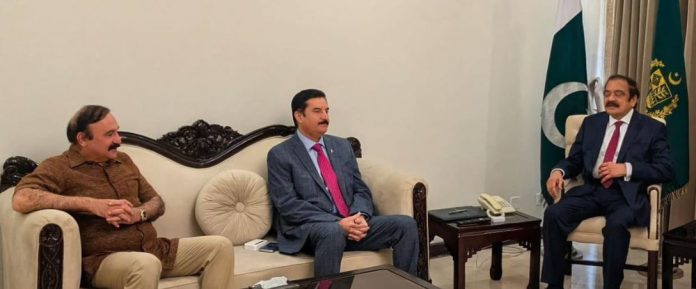
ISLAMABAD, Jun 1: Governor Khyber Pakhtunkhwa Faisal Karim Kundi held separate meetings with Federal Minister for Inter-Provincial Coordination Rana Sanaullah and Federal Minister for Defence Khawaja Muhammad Asif here on Monday, where key matters related to governance, development and federal-provincial coordination were discussed.

During the meeting with Rana Sanaullah, the issue of restrictions on wheat transportation to Khyber Pakhtunkhwa came under detailed discussion.

The Governor urged the federal government for an immediate resolution of the matter to ensure uninterrupted supply of wheat to the province.

The security situation in Khyber Pakhtunkhwa was also reviewed, with concern expressed over law and order challenges in certain areas.

The Governor also appreciated federal measures regarding gas supply to CNG stations and lauded the efforts of the minister in facilitating the process.

In a separate meeting with Khawaja Muhammad Asif, progress on aviation projects in Dera Ismail Khan was reviewed, including the completion of remaining work on the old airport runway, provision of necessary equipment, and the proposed revival of the airport for commercial flight operations. The Greenfield International Airport project was also discussed.

The Governor said the project would significantly transform the economic landscape of the region and enhance connectivity.

He appreciated the Defence Minister’s efforts regarding airport rehabilitation and stressed timely completion of aviation infrastructure projects.

The meetings collectively reaffirmed the commitment of both federal and provincial leadership to strengthen cooperation for public welfare, improved infrastructure, healthcare services, and economic development in Khyber Pakhtunkhwa.

IRS-SIF holds dialogue on examining ‘Climate Change Strategies’

IRS-SIF holds dialogue on examining 'Climate Change Strategies'

ISLAMABAD, JUN 01 (DNA): The Institute of Regional Studies (IRS), in collaboration with Secours Islamique France (SIF)-Pakistan, organized a high-level Science-Policy Dialogue titled “From Global Stocktake to Implementation: Catalyzing Effective Climate Action” to examine pathways for translating global climate commitments into practical and regionally relevant implementation strategies.

The dialogue brought together representatives from international organizations, government institutions, development agencies, academia, and civil society to deliberate on the evolving climate governance landscape following the first Global Stocktake (GST) under the Paris Agreement and subsequent international climate negotiations, said a press release issued on Monday.

Speaking at the event, Ambassador Jauhar Saleem, President IRS, highlighted the urgency of climate action, noting that Pakistan remains highly vulnerable to climate-induced disasters despite its minimal contribution to global emissions. He stressed that climate change, water scarcity, environmental degradation, population growth, and sustainable development are interconnected challenges requiring a comprehensive national strategy.

He also emphasized stronger climate financing, resilient infrastructure, public awareness, and coordinated governance to build long-term resilience.

Shiraz Shah, Assistant Resident Representative, UNDP Pakistan, emphasized translating policy commitments into effective delivery mechanisms and resilient governance systems for long-term climate adaptation and sustainable development.

He highlighted stronger institutional coordination, locally driven solutions, integrated policy frameworks, and partnerships among governments, development institutions, and communities to advance inclusive climate resilience. Mr. Thomas Conan, Deputy Country Director, WFP Pakistan, highlighted growing climate threats to food security and stressed resilient food systems, climate-smart agriculture, anticipatory action, and stronger social protection mechanisms to address vulnerabilities affecting agriculture, livelihoods, and supply chains.

Muhammad Arif Goheer, Executive Director, GCISC, outlined Pakistan’s climate vulnerabilities, including extreme weather events, glacial melt, water stress, and rising temperatures. He emphasized science-based planning, stronger climate data systems, research, and institutional capacities for informed policymaking and long-term adaptation. Mr. Amir Khan Goraya, CEO, NDRMF, underscored the importance of risk financing, institutional strengthening, and innovative financing mechanisms to scale climate resilience. He stressed sustained investments in preparedness, disaster risk reduction, community-level adaptation, and stronger coordination among public institutions, development partners, and financial actors.

Concluding the session, Dr. Altaf Abro, Head of Mission, SIF Pakistan, stressed enhanced climate governance, innovative risk financing, and stronger partnerships to address humanitarian and environmental challenges. He called for integrated efforts among government institutions, academia, development partners, the private sector, and local communities, while underscoring the importance of green technologies and practical climate solutions.

Dr. Anjum Rasheed, Head of the Climate Resilience Program at IRS, noted that the first Global Stocktake concluded at COP28 in 2023 marked a historic assessment of collective climate progress. She observed that the world remains off-track in limiting warming to 1.5°C, with widening adaptation gaps and inadequate climate finance for vulnerable countries. She stressed the need to accelerate implementation, strengthen NDCs, scale up climate finance, and enhance international cooperation.=DNA

==============

Dust-thunderstorm, rain predicted

Dust-thunderstorm, rain predicted

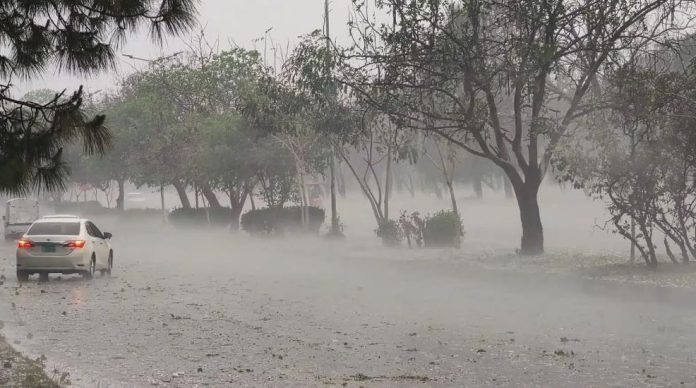
ISLAMABAD, Jun 01 (DNA): The Pakistan Meteorological Department (PMD) on Monday forecast dust-thunderstorm rain in various parts of the country from June 02 to 05 under the influence of a westerly wave likely to approach the upper parts of the country on Tuesday (June 2).

According to the PMD, scattered dust-thunderstorm rain, accompanied by isolated heavy falls and hailstorms, is expected in Islamabad and several districts of Punjab, including Rawalpindi, Murree, Galliyat, Attock, Chakwal, Jhelum, Mandi Bahauddin, Gujrat, Gujranwala, Hafizabad, Wazirabad, Lahore, Sheikhupura, Sialkot, Narowal, Sahiwal, Jhang, Toba Tek Singh, Nankana Sahib, Chiniot, Faisalabad, Okara, Kasur, Khushab, Sargodha, Bhakkar, Mianwali, Bahawalpur, Bahawalnagar, Dera Ghazi Khan, Multan, Khanewal, Lodhran, Muzaffargarh, Rajanpur, Rahim Yar Khan and Layyah from June 02 to 05 with occasional gaps.

In Azad Jammu and Kashmir, scattered rain-wind/thunderstorms, with isolated heavy falls and hailstorms, are expected in Neelum Valley, Muzaffarabad, Rawalakot, Poonch, Hattian, Bagh, Haveli, Sudhanoti, Kotli, Bhimber and Mirpur from June 02 to 05 with occasional gaps.

The PMD said rain-wind/thunderstorms are also expected in Gilgit-Baltistan, including Diamir, Astore, Ghizer, Skardu, Hunza, Gilgit, Ghanche and Shigar, from June 04 to 06 with occasional gaps.

In Khyber Pakhtunkhwa, scattered rain-wind/thunderstorms, accompanied by isolated heavy falls and hailstorms, are likely in Dir, Chitral, Swat, Kohistan, Malakand, Bajaur, Shangla, Battagram, Buner, Kohat, Bannu, Dera Ismail Khan, Mohmand, Khyber, Waziristan, Orakzai, Mansehra, Abbottabad, Haripur, Peshawar, Mardan, Hangu and Kurram from June 02 to 05 with occasional gaps.

Dust-thunderstorm rain is expected in northeastern Balochistan, including Quetta, Zhob, Sherani, Ziarat, Chaman, Qila Abdullah, Qila Saifullah, Barkhan and Dera Bugti, from June 02 to 04.

Similarly, dust-thunderstorm rain is likely in upper Sindh, including Sukkur, Larkana, Jacobabad, Khairpur, Dadu, Ghotki, Kashmore, Shikarpur and Shaheed Benazirabad, from June 02 to 04.

The PMD warned that windstorms, hailstorms and lightning may damage vulnerable structures, including solar panels, electric poles and billboards, during the forecast period.

It further cautioned that landslides may occur in vulnerable areas of upper Khyber Pakhtunkhwa, Gilgit-Baltistan and Azad Jammu and Kashmir from June 03 to 06.

The farmers have been advised to manage their crops in accordance with the prevailing weather conditions, while tourists and travelers have been urged to remain extra cautious and avoid unnecessary travel during the forecast period.

The PMD advised all concerned authorities to remain vigilant and take necessary precautionary measures to prevent any untoward situation during the forecast period.

Japan wants Iran to show ‘maximum flexibility’ for US deal, PM Takaichi tells Pezeshkian

Japan wants Iran to show ‘maximum flexibility’ for US deal, PM Takaichi tells Pezeshkian

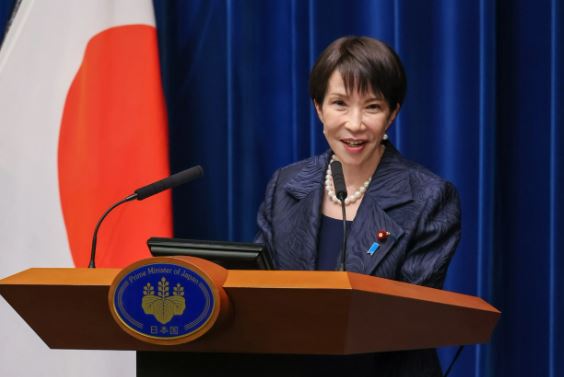
TOKYO, JUN 1: Iran should demonstrate “maximum flexibility” to seize the opportunity to reach a ceasefire agreement with the US, Japan’s Prime Minister Sanae Takaichi told Iranian President Masoud Pezeshkian in a Monday phone call, Takaichi said.

Takaichi, speaking to reporters after the call, said she also strongly demanded that the Strait of Hormuz should be reopened soon to secure free and safe navigation for ships from Asia and all other nations.

Takaichi did not elaborate on Pezeshkian’s response, but she said the two leaders pledged further close communication.

Kuwait condemns Iran’s attack

Kuwait condemns Iran’s attack

News Desk

DUBAI: Kuwait has condemned Iran’s “heinous” and repeated attacks, which it described as a dangerous escalation and a direct assault on the country’s security.

“The heinous and repeated Iranian attacks … represent a dangerous escalation and a direct assault on the security and stability” of Kuwait, a statement from the Kuwaiti foreign ministry said, “not to mention the grave threat they pose to the safety of civilians and vital facilities in the country.”

The continuation and repetition of these aggressions undermine efforts aimed at de-escalating tensions and threaten security and stability in the region, the statement added.

Kuwait’s air defenses intercepted ‌missile ‌and drone ‌attacks ⁠on Monday as ⁠sirens sounded ⁠across ‌the ‌country.

Saudi Arabia, in a statement from its foreign affairs ministry, has strongly condemned the repeated Iranian attacks against Kuwait. The UAE also issued a statement condemning the “Iranian terrorist attacks” on Kuwait with missiles and drones.

Jasem Mohamed Al-Budaiwi, Secretary General of the Gulf Cooperation Council, in a statement condemned the Iranian attacks as ‘a dangerous and unacceptable escalation.’

“These actions represent a dangerous and irresponsible escalation and a blatant violation of the sovereignty of Kuwait,” he said in the statement.

Anchor

Iran foreign ministry says US continues to violate ceasefire

News Desk

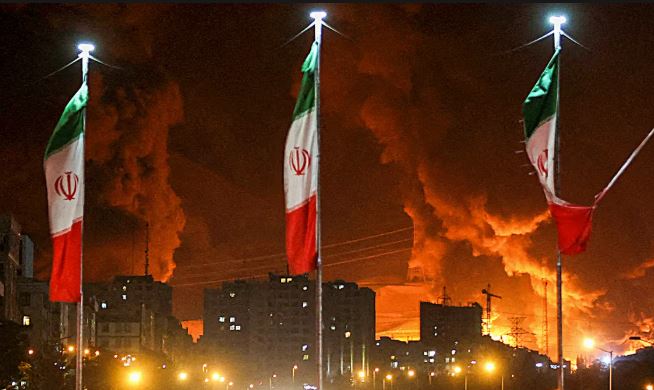
TEHRAN: Iran’s foreign ministry said Monday that the United States had continued to violate the ceasefire, after US strikes on a southern port triggered a brief military flare-up.

“The United States is also violating the ceasefire including this morning,” said foreign ministry spokesman Esmaeil Baqaei in a weekly press briefing, vowing that Iran will “take whatever measures we deem necessary to defend Iran’s national security.”

The US said it struck Iranian military sites at the weekend and Iran’s Revolutionary Guards said on Monday it had targeted a US base in response, the latest in a series of exchanges amid negotiations to end the three-month-old war.

The strikes on Iran’s Gulf coast were in response to “aggressive Iranian actions that included the shootdown of a US MQ-1 drone that was operating over international waters,” the US Central Command said in a post on X.

“US fighter aircraft swiftly responded by ‌eliminating Iranian air defenses, ‌a ground control station, and two one-way attack drones that ‌posed ⁠clear threats to ⁠ships transiting regional waters,” CENTCOM said, adding it will continue to protect US assets and interests during the ongoing ceasefire.

Iran’s Islamic Revolutionary Guard Corps said on Monday it had targeted an air base used by the US for the attack, without identifying which base.

Air defenses in Kuwait, where a major US base is located, were intercepting missile and drone attacks on Monday as sirens sounded across the country, the state news agency KUNA reported, without ⁠providing further details.

The US and Iran have sporadically exchanged strikes ‌since their ceasefire took effect in early April as ‌negotiations aimed at a more durable agreement drag on. A similar exchange occurred last Thursday and was ‌described in similar terms by both sides.

The war launched by the US and Israel ‌on February 28 has killed thousands of people, mainly in Iran and Lebanon, and caused global economic pain by pushing up energy prices due to Iran’s effective closure of the Strait of Hormuz.

US President Donald Trump has said his key aim in the war is to prevent Iran from ‌developing a nuclear weapon with its highly enriched uranium. Tehran has consistently denied it has plans to do that.

Trump is under pressure ⁠to reopen the ⁠Strait of Hormuz and get US gasoline prices down ahead of the November congressional elections, as voters show increasing frustration over rising prices. At the same time, he faces a potential backlash from Iran hawks in his own party over any concessions to Tehran.

The two sides remain at odds on several other issues, such as Tehran’s demands for the lifting of sanctions and the release of tens of billions of dollars of Iranian oil revenues frozen in foreign banks.

Israel’s war in Lebanon with the Iranian-backed Hezbollah militia is another major impediment.

Israeli Prime Minister Benjamin Netanyahu said on Sunday he had ordered troops to move further into Lebanon in the battle against the Iranian-backed Hezbollah militant group.

US Secretary of State Marco Rubio spoke with both Lebanese President Joseph Aoun and Netanyahu on the diplomatic negotiations between Israel and Lebanon and has proposed a plan to allow for “gradual de-escalation,” a US official said.

Germany, Pakistan sign €40.5 million agreement

Germany, Pakistan sign €40.5 million agreement

Ambassador Lepel highlighted the importance of the collaboration, stating that Germany and Pakistan are “investing in a more resilient and sustainable future together.

Mahnoor Ansar

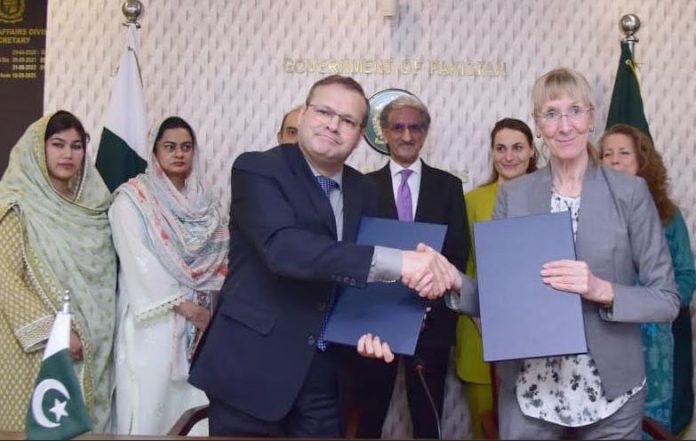
ISLAMABAD, JUN 1 /DNA/ – Germany and Pakistan have taken another step toward strengthening their longstanding partnership with the signing of a €40.5 million agreement aimed at supporting projects in climate action, renewable energy, and social protection.

The agreement was signed by Ina Lepel, German Ambassador to Pakistan, and Humair Karim, representing Pakistan’s Economic Affairs Division, through the German development agency GIZ. The funding will support nine projects designed to enhance resilience, sustainability, and inclusive growth in Pakistan.

Ambassador Lepel highlighted the importance of the collaboration, stating that Germany and Pakistan are “investing in a more resilient and sustainable future together.” She emphasized that the projects will not only address pressing environmental challenges but also contribute to social welfare and energy reforms.

The Economic Affairs Division welcomed the initiative, noting that the partnership reflects Pakistan’s commitment to tackling climate change and improving social protection systems. Deputy officials stressed that the projects will help Pakistan transition toward cleaner energy sources while strengthening its ability to protect vulnerable communities.

Germany has long been a key development partner for Pakistan, particularly in areas of renewable energy, vocational training, and governance reforms. This latest agreement builds on decades of cooperation and signals a shared determination to confront global challenges such as climate change and energy security.

Observers believe the funding will provide Pakistan with much-needed technical expertise and financial support to accelerate reforms in the energy sector, expand social safety nets, and implement climate adaptation strategies. The collaboration also underscores the EU member state’s broader commitment to supporting sustainable development in South Asia.

With this agreement, Germany and Pakistan reaffirm their partnership as one rooted in shared values and mutual goals, aiming to deliver tangible benefits for communities across Pakistan while contributing to global climate action.=DNA

=============

Stay Connected

64FansLike
60FollowersFollow

Latest Reviews

Exchange Rates

USD - United States Dollar
EUR
1.14
GBP
1.34
AUD
0.70
CAD
0.71