Home Blog Page 1084

Fallen Heroes: Policemen’s Sacrifice Underscores Resolve Against Terrorism

Fallen Heroes: Policemen's Sacrifice Underscores Resolve Against Terrorism

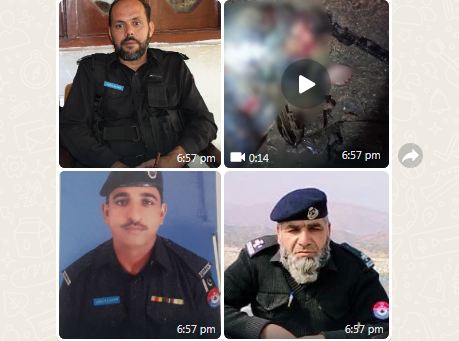
RAWALPINDI /DNA/ – On 15 Dec Five terrorists including a suicide bomber attempted to attack the Police Lines in Tank City, however, brave policemen offered stiff resistance. Security forces in the vicinity were immediately mobilized to support the Police force and in the ensuing operation, all 5 x terrorists were sent to hell.

However, during intense fire exchange with the terrorists, three brave Policemen, having fought gallantly, embraced shahadat.

Effective response of the Policemen is a testament of their unrelenting resolve in the fight against terrorism.

Pakistan’s security forces stand shoulder to shoulder with other law enforcement agencies to ensure peace and stability in the country.

CEC Raja-CJP Isa ‘huddle’ mulls situation after LHC verdict

Chief Election Commissioner

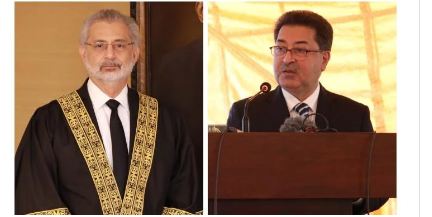
ISLAMABAD: Chief Election Commissioner (CEC) Sikandar Sultan Raja and Chief Justice of Pakistan (CJP) Justice Qazi Faez Isa are mulling over the possible repercussions of the Lahore High Court (LHC) verdict, which affected the polling process, sources told.

During the high-level huddle, attended by Justice Ijaz Ul Ahsan and Justice Tariq Masood, CEC Raja apprised the apex court judges regarding the LHC’s December 14 decision, suspending the electoral body’s notification requesting returning officers (ROs) and district returning officers (DROs) from the bureaucracy for the general elections slated for February 8, 2024.

LHC’s Justice Ali Baqir Najafi had Wednesday night ruled on Pakistan Tehreek-e-Insaf’s (PTI) plea, which contended that the electoral body’s move to appoint DROs and ROs from bureaucracy would hinder the prospects of impartial and transparent elections.

Accepting the PTI’s plea, Justice Najafi suspended the ECP’s notification and referred the matter to referred the case to the LHC chief justice, recommending constituting a larger bench to hear the case.

Sources have told that it is expected that the top court might take notice of the issue to ensure the implementation of its earlier decision regarding holding timely elections.

The sources said that it is possible that the apex court might not interfere in administrative affairs but simply empower the ECP to appoint ROs and DROs.

The court, to ensure the implementation of the 54-day period —minimum threshold from the announcement of elections scheduled to the holding of polls — might take a decision either today or tomorrow in this regard as the ECP needs to announce the poll schedule by December 17 for holding of Elections on February 8, the sources added.

It is to be noted that a larger bench of the LHC will take up the issue of the appointment of ROs and DROs on December 18 (Monday).

To ensure that polls take place on time, the election commission has decided to file a plea in the SC, with major political parties — Pakistan Peoples Party, Pakistan Muslim League-Nawaz, Istehkam-e-Pakistan Party, Pakistan Muslim League-Quaid — also deciding to become parties in the case pending before the LHC.

Sources have told Gethat the ECP’s application will be filed today under Article 185 of the Constitution.

SC is likely to constitute a bench on the issue as soon as the ECP files its petition against the LHC verdict, sources added.

Earlier, following the LHC’s decision, experts said that the verdict may result in a delay in polls as the ECP — which is already facing a shortage of staff — has stopped the training of ROs and DROs who were appointed for the upcoming general elections.

Responding to such concerns, the country’s top electoral body had earlier rebuffed the possibility of any delay in the upcoming polls.

In its statement, the ECP said that it would soon announce a plan of action and added that it “cannot be blamed in any manner for the current situation.

The meeting comes as, in line with the Supreme Court’s orders, the CEC and President Arif Alvi had agreed holding the elections on February 8 — back on November 2.

The top court’s three-member bench led by CJP Isa had ruled that the date has been “set in stone”, stressing that no institution should delay the elections any further.

ECP’s prerogative
With all the uncertainties surrounding the polls, caretaker Federal Minister for Information and Broadcasting Murtaza Solangi said the election commission would announce its “action plan” in the light of the Constitution and law.

Talking to the media outside the ECP, he said under Article 218(3) of the Constitution, the only constitutional body responsible for conducting elections in the country was the election commission.

Caretaker Minister for Information and Broadcasting Murtaza Solangi speaks to journalists in Islamabad, on December 15, 2023. — Radio Pakistan
“We neither can question the election commission, nor we can supervise it, in fact, the election commission supervises the caretaker government,” Solangi maintained.

He said if anyone had a complaint with the ECP, he could contact the commission. The ECP, under the Constitution, enjoyed the power to appoint DROs, Solangi remarked.

Election conundrum
Upon the advice of then-prime minister Shehbaz Sharif, President Alvi dissolved the 15th National Assembly three days before the completion of its 5-year term.

The former government prematurely dissolved the lower house to ensure that the polls were scheduled 90 days later — in line with the Constitution.

However, that did not seem to happen, as the commission had said that it could not follow up on the 90-day deadline as it had to work on fresh delimitation of constituencies after the Council of Common Interests (CCI) approved the results of the 2023 digital census

The ECP did that because Section 17(2) of the Elections Act states that “the commission shall delimit constituencies after every census is officially published” — which is in contrast with the constitutional deadline.

In October, the Raja-led ECP announced that the polls would be staged in January next year, but did not announce the exact date, and in return, received flak.

In response to the ECP’s decision to hold the polls later than the constitutional deadline, the PTI and several others filed a plea in the top court seeking timely polls. On the same plea, the SC ordered the ECP and the president to consult, which resulted in a consensus date of February 8.

But that did not seem to shut down the rumour mill and fears of the political parties who repeatedly voiced concerns that since the election schedule hasn’t been announced, the polls would be delayed.

PPP co-chairperson Asif Ali Zardari had also said that a delay of “eight to 10 days” in the general elections would make no difference.

Army Chief’s USA visit: Divergence to Convergence

Qamar Bashir

Qamar Bashir

Deeply concealed within the labyrinth of the US Embassy’s website lies the US Integrated Country Strategy (ICS) for Pakistan, a document unearthed by a speaker at a round table conference hosted by the Pakistan Institute of Strategic Studies. This paper, dissected during the conference, delineates the fundamental priorities and objectives of US involvement with Pakistan spanning 2023-2027. It delineates crucial areas including combatting terrorism and violent extremism, advancing regional stability, integration, and security, fostering inclusive economic growth and sustainable development, alongside strengthening civilian democratic institutions and safeguarding human rights.

The timing of this conference held significant meaning, coinciding with the visit of Pakistan’s Chief of Army Staff, General Asim Munir, to the US, where he engaged in meetings with top US leadership. The visit strategically aligned with a reprimand aimed at India, reflecting US discontent regarding the killing of Sikh political activists by alleged rogue agents of India’s Research and Analysis Wing (RAW), first in Canada and later in the US. The visit also resulted in an official rejection of an invitation extended by Indian Prime Minister Modi to President Biden to attend India’s Republic Day, an event that has now been diminished due to Biden’s adamant refusal to participate. This development is perceived as a significant setback for India, which, without legitimate grounds, is endeavoring to position itself as a major global power.

The army chief’s visit is perceived as a crucial step toward rebuilding and fortifying trust and cooperation between Pakistan and the US. However, the success of this visit hinges on tangible agreements forged and the willingness of both sides to address longstanding issues of mutual concern, which may carry different connotations for Pakistan and the US. The stated objectives of the visit encompass strengthening military ties, bilateral defense cooperation discussions, intelligence sharing on regional security threats, and exploring avenues for potential collaboration.

Pakistan seeks US support in countering threats from groups like Tehreek-e-Taliban Pakistan (TTP) in Afghanistan, while emphasizing economic cooperation and seeking assistance for its ongoing economic challenges. Urging a more constructive US role in stabilizing Afghanistan, discussions focus on countering regional threats and exploring investment and trade opportunities between both nations.

Discussions are likely to cover contentious issues straining relations between Pakistan and the USA, including the forced repatriation of Afghan refugees, Pakistan’s relations with Afghan Interim Government, Kashmir issue, China Pakistan relations with emphasize on CPEC, engaging IMF, World Bank and International Financial Institutions,  Russian Ukraine conflict,

. The US has vehemently opposed this, citing concerns about the refugees’ safety and well-being. Stressing Afghanistan’s instability and potential human rights violations, the US highlights Pakistan’s obligations under international law to protect those seeking asylum. It firmly opposes the forced return of refugees, citing potential violations of international commitments.

The US holds deep suspicions regarding Pakistan’s alleged support for the Taliban’s interim government. Moreover, the US has voiced concerns about Pakistan’s perceived lack of transparency and mistrust, casting doubt on its sincerity and the effectiveness of its cooperation.

Pakistan is engaging the Talibans’ interim government aiming for a cooperative relationship that prioritizes mutual interests, seeking moderation from the Taliban while averting Afghanistan’s transformation into an extremist breeding ground. The stance remains dynamic, navigating complexities while emphasizing stability, human rights, and bilateral concerns in this evolving Afghan landscape.

Despite varying priorities and mutual distrust, the US must rely on Pakistan’s declared Afghanistan policy and seek active cooperation. This collaboration aims to prevent militant and weapon movement across the porous Pakistan-Afghanistan border, leveraging Pakistan’s historical ties and economic influence to influence the Taliban positively. Additionally, the US seeks insights into Taliban activities and intentions, particularly concerning terrorist threats, aiming to promote regional cooperation and prevent Afghanistan from becoming a source of instability in South Asia.

The Kashmir issue has long been a delicate and intricate matter for the US focusing on fostering dialogue and diplomacy between India and Pakistan, advocating for peaceful resolutions of outstanding issues especially Kashmir. The stance underscores non-interference in internal affairs, recognizing Kashmir as a bilateral matter between India and Pakistan, refraining from taking a specific legal position or advocating for predefined solutions.

Pakistan’s Kashmir expectations from the US are a mixed bag. They crave acknowledgement of the issue’s international dimension, US-mediated dialogue, advocacy for Kashmiri self-determination, human rights pressure on India, and a balanced portrayal of the conflict. Neutrality, deep engagement with Pakistan, and action beyond just listening to India are also key. In essence, Pakistan wants the US to be a proactive and constructive player in resolving Kashmir peacefully, respecting Pakistani concerns, and seeking a lasting solution.

The US stance regarding Chinese involvement in Pakistan, particularly through initiatives like CPEC and military collaborations, is marked by apprehensions. It sees Chinese increasingly influence in Pakistan as challenges to US interests in the region, including Afghanistan and maritime security; worries about unsustainable debt and opaque financing within CPEC projects; unease about Pakistan’s deepening military ties with China and the potential transfer of sensitive technology with potential military applications; and the perceived threat of upsetting the regional balance of power, possibly leading to instability. The US emphasizes the importance of transparency in CPEC contracts, encourages diversification of foreign partnerships to prevent overreliance on any single nation.

Pakistan’s state policy toward Chinese relations and the China-Pakistan Economic Corridor (CPEC) centers on fostering a robust strategic partnership with China while maximizing the transformative potential of CPEC for national development. This policy underscores the depth of the Pakistan-China alliance, prioritizing mutual support on core issues while harnessing CPEC’s economic promise. Embracing CPEC as a game-changer, Pakistan positions it as pivotal for economic growth, job creation, and regional connectivity, emphasizing responsible management to safeguard national interests. Additionally, Pakistan aims for a balanced foreign policy, cultivating relations beyond China while nurturing cultural ties and remaining adaptable to evolving global dynamics.

The US wields significant influence over International Financial Institutions (IFIs), positioning them as potential tools to nudge Pakistan towards aligning with its strategic objectives. Through its sway over these institutions like the World Bank and IMF, the US prioritizes projects beneficial to its goals—such as regional connectivity and counterterrorism initiatives—compelling Pakistan to cooperate in securing vital funding.

Furthermore, the US holds the power to impact Pakistan’s global standing by leveraging assessments of creditworthiness and economic stability from IFIs. A negative evaluation could hinder foreign investment and access to credit markets, pressuring Pakistan to comply with US demands to avert potential economic isolation.  Beyond financial clout, the US exercises soft power through leadership roles in IFIs, subtly influencing policy discussions, advocating its values, and diplomatically pressuring nations like Pakistan.

Pakistan’s expectations from the US regarding engagement with International Financial Institutions (IFIs) like the IMF and World Bank revolve around seeking assistance devoid of stringent conditionalities or obligations. This encompasses favorable loan terms with lower interest rates and extended repayment periods, enabling economic reforms without hindering sustainable development.

Additionally, Pakistan seeks technical expertise in critical areas, aiming for institutional strengthening and capacity building to manage debt responsibly and implement effective reforms. Moreover, it anticipates the US to advocate within IFIs for its development goals and international trade agenda, while also seeking public recognition of its progress, without attaching any strings or obligations to the support provided.

The US holds nuanced expectations from Pakistan regarding its stance on the Russia-Ukraine conflict. Primarily, the US urges Pakistan to publicly condemn Russia’s invasion while reducing military ties, supporting humanitarian aid efforts, and diplomatically pressuring for a peaceful resolution. Additionally, countering Russian disinformation is expected. Recent but confirmed and unsubstantiated reports suggest that Pakistan might be providing non-lethal military assistance to Ukraine, potentially due to increased US pressures.

Pakistan’s official stance on the Russia-Ukraine conflict embodies a nuanced approach that has evolved over time. Notably, Pakistan has consistently abstained from UN resolutions condemning Russia’s actions, underscoring its pursuit of a diplomatic resolution. Emphasizing dialogue and diplomacy, Pakistan urges direct engagement between Russia and Ukraine while advocating for the importance of respecting international law and territorial integrity without explicitly condemning the invasion. Additionally, Pakistan expresses concern for the humanitarian crisis resulting from the conflict and calls for unimpeded access to humanitarian aid to address the escalating situation.

USA expectation from Pakistan on Israel-Hamas conflict would be hands off or to support Israel in the ongoing Israel Hamas Standoff, whereas Pakistan expressed its  unwavering commitment to supporting the Palestinian cause declaring  that Pakistan has no intention to send troops to Palestine and expressing grave concerns about the ongoing humanitarian crisis infringed by Israel in Gaza advocating ceasefire and restoration of international aid.

In conclusion, the Army chief inaugural visit to the USA is of paramount importance. With his pragmatic approach, he will be fostering convergence rather than divergence of views and strategies between Pakistan and the USA which are pivotal for the advancement of Pakistan’s progress, regional stability, and global peace and development. He will Find common ground with objectives regarding security, economic growth, regional stability, and humanitarian concerns for mutual prosperity.

It goes without saying that aligning efforts, addressing differences, and cultivating cooperation stand as fundamental pillars for a constructive partnership that not only benefits both nations but also contributes significantly to fostering peace and progress in the region and beyond.

Through shared objectives and collaborative endeavors, Pakistan and the USA can pave the way for a more stable, prosperous, and peaceful future, both domestically and on the global stage.

Shamshad Akhtar presides ECC meeting

Shamshad Akhtar presides ECC meeting

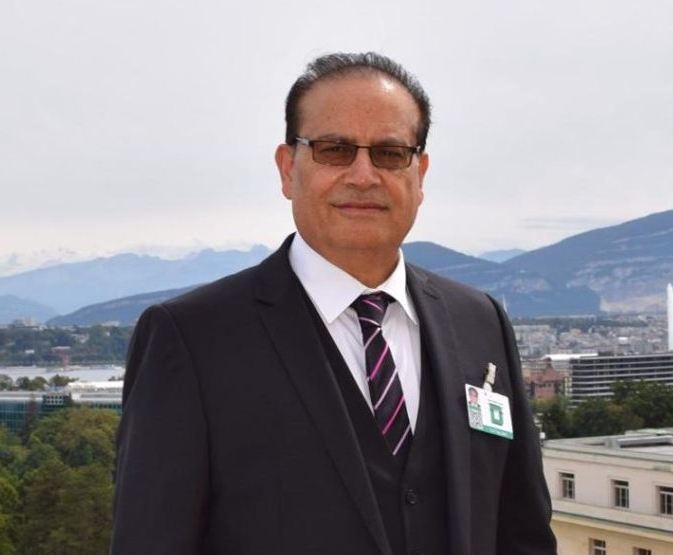
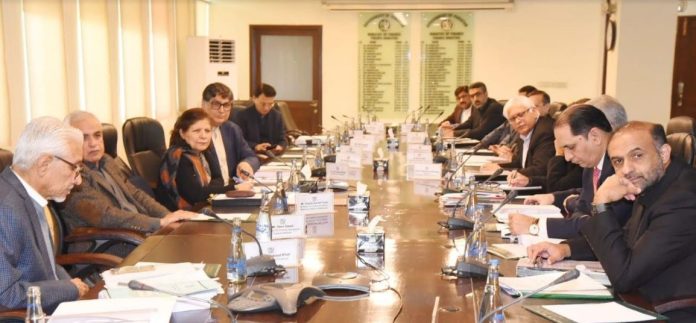
ISLAMABAD, /DNA/ – The Federal Minister for Finance, Revenue, and Economic Affairs, Dr. Shamshad Akhtar presided over a meeting of the Economic Coordination Committee (ECC) of the Cabinet, today.

The meeting was attended by the Minister for Communication, Railways & Maritime Affairs Mr. Shahid Ashraf Tarar, the Minister for Privatization Mr. Fawad Hasan Fawad, Minister for Power & Petroleum Mr. Muhammad Ali, Advisor to PM on Finance Dr. Waqar Masood, Federal Secretaries, and other senior government officials of the relevant ministries.

ECC took up the matter of approval of the draft PPAA, ICA, TDA & Mediation Agreements to be signed with K-Electric. Ministry of Energy (Power Division) briefed the Committee on the observations made by the members of the ECC and provided the requisite additional data on the working of CPPA-G.

After detailed discussion and deliberation, ECC decided to approve the proposal of Power Division for signing of the draft PPAA, ICA, TDA & Mediation Agreements between K-Electric & GoP Entities. ECC also directed Power Division to present the matter related to KE’s generation enhancement plan to the CCOE, which should focus on reducing the cost of electricity as well as on the resultant subsidies.

SC issues notice to ex-DG ISI Faiz Hamid, others in Shaukat Aziz removal case

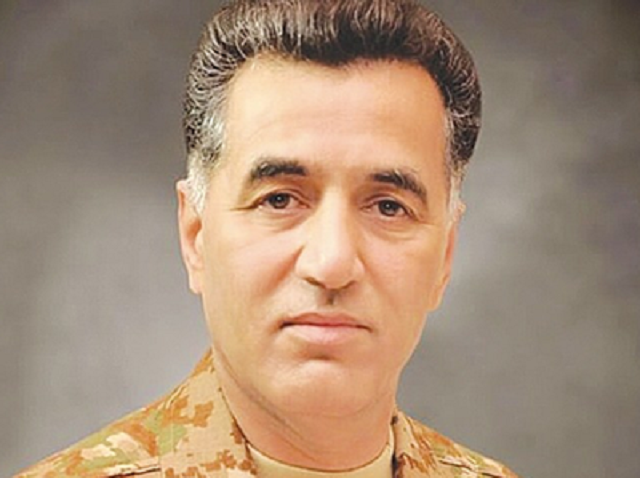
ISLAMABAD: The Supreme Court on Friday issued notices to former Inter-Services Intelligence (ISI) director-general Faiz Hamid and others on former Islamabad High Court (IHC) judge Shaukat Azizi Siddiqui’s petition challenging his removal. 

The notices were also issued to former IHC chief justice Anwar Khan Kasi, former registrar of the Supreme Court Arbab Muhammad Arif and retired brigadier Irfan Ramay. 

A five-member bench led by CJP Qazi Faez Isa and comprising Justice Amin-ud-Din Khan, Justice Jamal Khan Mandokhail, Justice Hasan Azhar Rizvi and Justice Irfan Saadat Khan conducted proceedings on the plea.

Today’s proceedings were broadcast live on the apex court’s website as well as on its YouTube channel.

A day earlier, the top court ordered Siddiqui to nominate former spy chief Hamid, former army chief General (retd) Qamar Javed Bajwa and others in the plea against his dismissal.

The case was fixed for hearing earlier this month after the judge filed a miscellaneous application with the Supreme Court to conduct an early hearing of his plea against the decision by the Supreme Judicial Council (SJC) on his dismissal.

Following the order, the ex-judge filed a plea seeking to make Gen Hamid, Gen (retd) Bajwa, Brigadier (retd) Irfan Ramay, Brigadier (retd) Faisal Marwat, former IHC chief justice Anwar Kasi, and ex-SC registrar Arbab Arif as parties in his case.

Lawyer Hamid Khan represented the former IHC judge in the case. 

The hearing

At the outset of the hearing, lawyer Khan said that he was seeking the “impleadment” of the seven respondents.

Barrister Salahuddin, who is the lawyer of bar associations, said that he was also seeking the impleadement of the same persons except for Justice (retd) Anwar Kasi as he was already impleaded as respondent number 4 in his petition.

CJP then asked Khan if all the allegations made by the petitioner in his plea and speech were correct, to which he replied, “Yes, absolutely. I am not saying anything without taking responsibility for that.”

“You have filed a petition under Article 184(3),” said CJP Isa, adding that “if your accusation is correct then these [army generals] were facilitating someone to [become the prime minister]”.

“Your allegations mean that the [army generals] did not benefit themselves but their action caused harm to someone else while another one benefitted,” said CJP.

“If these allegations are proven to be true then you have started a probe against the Constitution,” CJP told Khan.

He asked if the people in Siddiqui’s petition were either benefiting themselves or someone else. “If those people were facilitating someone else then more people will also get trapped in this case,” he highlighted.

The chief justice then read out the points from Siddiqui’s speech.

“Who were they wanting to benefit?” asked the CJP, to which, Khan said that they wanted to get the results of 2018 polls of their own choice.

The CJP asked who was the beneficiary when all these people were facilitating someone.

“Is army an independent constitution or subordinate to government?” asked the chief justice.

Khan replied that it is a subordinate institution under the Constitution.

Barriester Salahuddin then said that things should be done step-by-step, at which the CJP said that everything is interconnected.

“Either he [Khan] should say that they are independent and not interconnected. There is a specific allegation that has come before us is the manipulation that was being planned for the elections to keep certain people or certain parties out and to benefit somebody else,” the CJP said.

The top judge inquired whether the court should close its eyes on that aspect and only focus on where the petitioner wanted to take the court.

Salahuddin said that the allegations were also levelled that manoeuvring was done within the judiciary by certain military officers in order to keep one individual out of electoral politics.

“Why are shying from taking names?” asked CJP from Salahuddin, to which he named Pakistan Muslim League-Nawaz (PML-N) supremo Nawaz Sharif and his opponents.

“What is the interest of Islamabad and Karachi Bar Association in the matter? Is your only concern to secure pensionary benefits? asked CJP.

At this, Barrister Salahuddin replied that their interest and leading prayer is “that if there is some judicial manipulation that has taken place if those allegations are correct, then the truth must out and the guilty parties must also be punished for those actions.”

ANF seizes over 74 kg drugs, 1830 intoxicated tablets

RAWALPINDI, Dec 14 (DNA):Anti-Narcotics Force (ANF) while conducting 14 operations across the country managed to recover 74 kg drugs and 1830 intoxicated tablets besides netting eight accused, said an ANF Headquarters spokesman here on Thursday.

He informed that 110.4 kg opium and 403.2 kg hashish were recovered from a vehicle intercepted near Aminpur Interchange, Faisalabad.

In another operation, 130 kg hashish was recovered from Peshukan area of Gwadar.
ANF conducted a raid on Shikarpur Road Sukkur and seized 110 kg hashish while over 100 kg hashish was recovered from an uninhabited area of Chaman.

The spokesman informed that 84 kg opium was recovered from an uninhabited area of Nokundi Chagai.
Similarly, 51.4 kg hashish was recovered from Bajaur area.
ANF conducted a raid and managed to recover 14.4 kg opium and 28.8 kg hashish from a vehicle intercepted near Warsak Road Peshawar. An accused was also arrested during the operation.

24 kg hashish was recovered from a nullah near Kuchlak Bypass Quetta.
10 kg Ice was recovered from a parcel being sent to Japan at a courier office located on Shahrah-e-Faisal, Karachi.
3.6 kg hashish was recovered from the possession of three accused rounded up in Zakhakhel Khyber area.
900 grams Ice drug was recovered from a passenger’s trolley bag at Bacha Khan International Airport. The accused was leaving for Doha by flight number QR-601.

2.4 kg of opium was recovered from a vehicle intercepted at Labor Colony Peshawar while two accused were netted during the operation.
ANF in a raid conducted at a courier office in Johar Town Lahore recovered 640 grams Ice from a parcel being sent to Qatar.
1830 intoxicated tablets were recovered from a parcel at Pak-Afghan border, Chaman.
Separate cases under the Anti-Narcotics Act have been registered against the arrested accused while further investigations are under process.

Number of journalists killed on job in 2023 declines despite Gaza: RSF

Paris, Dec ):The number of journalists killed in the line of duty fell this year, despite reporter deaths in Gaza in the past two months, media advocacy group Reporters Without Borders said Thursday.
              In the first 11 months of 2023, 45 journalists were killed carrying out their work, down from 61 last year, according to the annual report by RSF. 
              It was the smallest number since 33 died in 2002, largely due to a major drop in Latin America. 
              While some 63 journalists have been killed in the Middle East since the October 7 start of fighting between Israel and Islamist group Hamas, only 17 of those deaths fell under RSF's definition.
              "It takes nothing away from the tragedy in Gaza but we are observing a regular decline, and are very far from the 140 journalists killed in 2012 and again in 2013" because of the wars in Syria and Iraq, RSF secretary general Christophe Deloire told AFP.
              The decline is due to efforts by inter-governmental organisations and NGOs to combat impunity, as well as to greater "prudence" by reporters themselves, he said.
              Of the 17 journalists RSF counted as killed carrying out their profession in the Middle East since October 7, 13 were killed by Israeli fire in Gaza, three died in Lebanon and one was killed in Israel by Hamas.
              RSF in November said it filed a complaint at the International Criminal Court for "war crimes" for these deaths.
              AFP last week said its investigation showed that Israeli tank fire was responsible for killing Reuters cameraman Issam Abdallah on October 13 and wounding six others, including AFP photographer Christina Assi. 
              A spokesperson for the Israeli army said the journalists were in an "active combat zone" in southern Lebanon, an answer that Deloire called "not satisfactory."
              The war in Ukraine cost the life of two reporters in 2023, including AFP reporter Arman Soldin, "the only reporter to have lost their life outside their own country", RSF said.
              A total of 11 reporters have been killed since the start of the conflict in February 2022. 

              There was a sharp drop in Latin America where six reporters were killed, down from 26 in 2022. In Mexico alone, the number fell to four from 11 the previous year.  
              RSF warned that Mexico remains dangerous for journalists, citing continued kidnappings and attacks.  
              Of the 84 journalists counted as missing worldwide, about a third are Mexican. 
              The number of jailed reporters declined to 521 from 569 in 2022, with Belarus joining China and Myanmar as "one of the three biggest prisons in the world".
              Turkey and Iran also repeatedly jail journalists, the report said.  
              A total of 54 journalists are being held hostage, compared to 65 in 2022.

Combat Commander Turkish Air Force visits air headquarters

Combat Commander Turkish Air Force visits air headquarters

DNA

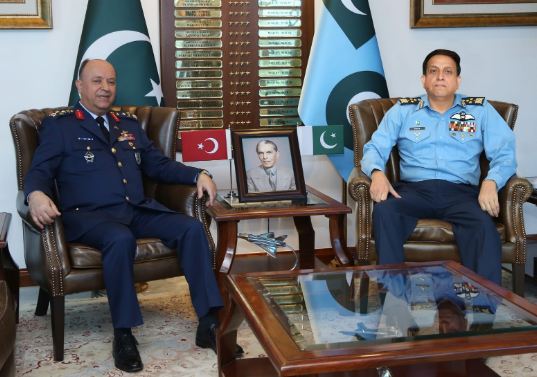
ISLAMABAD, DEC 13: /DNA/ – General Ìsmail Güneykaya, Combat Commander Turkish Air Force, called on Air Chief Marshal Zaheer Ahmed Baber Sidhu, Chief of the Air Staff, Pakistan Air Force in his office today. The meeting underscored several key areas of mutual interest with a special focus on bilateral training, progress of current joint ventures and exploration of further avenues of collaboration in the aviation industry.

During the meeting Air Chief Marshal Zaheer Ahmed Baber Sidhu, Chief of the Air Staff, Pakistan Air Force, shared the framework of PAF’s comprehensive modernization strategy involving integration of emerging technologies, bolstering critical infrastructure and a comprehensive restructuring of its training set-up, in order to address contemporary air warfare challenges. The Air Chief highlighted that both the brotherly countries enjoy long-standing religious and historic ties which are manifested through unprecedented strategic partnership. Appreciating the participation of Turkish Air Force in Exercise Indus Shield, the Air Chief reiterated his resolve to further enhance the existing bilateral relations in military-to-military cooperation, strategic alliance and the training domain. The Air Chief further remarked that PAF pilots are playing an active role in imparting nursery to tactical level training to Turkish aircrew. He reiterated Pakistan Air Force’s commitment to provide training and capacity-building assistance to the Turkish Air Force.

General Ìsmail Güneykaya, acknowledged the impressive progress made by Pakistan Air Force in developing a robust indigenous aviation industry and reiterated his resolve to further enhance the existing ties between the two brotherly countries. In order to cultivate tactical brilliance for Turkish aircrew, the visiting dignitary expressed profound interest in exploring avenues for training of Turkish Air Force pilots in the Combat Commanders Course being offered at the prestigious Air Power Centre of Excellence. Both the commanders also agreed to explore further areas of cooperation through bilateral and multilateral military exercises with special focus on collaboration in the technology based future programs. During his visit, the Combat Commander Turkish Air Force also visited various installations and technological infrastructure established at Air Headquarters, Islamabad including PAF’s National ISR and Integrated Air Operations Centre and PAF’s Cyber Command. He also visited National Aerospace Science and Technology Park, which is a major landmark in Pakistan’s journey towards progress and is all set to play a pivotal role in shaping the country’s aerospace industry, fostering strategic partnerships and contributing to the economic growth of Pakistan.

The visit of Combat Commander Turkish Air Force to Pakistan signifies a resolute commitment from both nations to reinforce their strategic partnership through fostering collaboration and promoting robust relations between their respective Air Forces.

Azerbaijan offers condolences over martyrdom of Pak Army soldiers

Azerbaijan offers condolences over martyrdom of Pak Army soldiers

BAKU, DEC 13 /DNA/ – Azerbaijan expressed profound grief and stands in solidarity with Pakistan following the tragic terrorist attack claiming the lives of 23 soldiers.

We offer our deepest condolences to the Islamic Republic of Pakistan during this difficult time.

MFA Azerbaijan condemned all forms of terrorism and stand united against this heinous act.

WaterAid Pakistan unveils its country programme strategy 2023-2028

WaterAid Pakistan unveils its country programme strategy 2023-2028

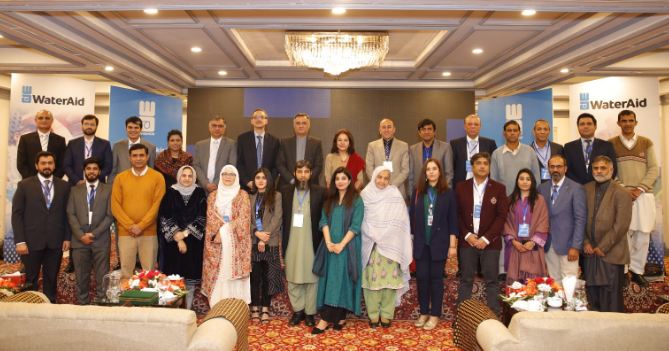
ISLAMABAD, DEC 13: /DNA/ – In a significant event held today in Islamabad, WaterAid Pakistan unveiled its visionary Country Programme Strategy for the period 2023–2028.

This strategy aims to expedite Water, Sanitation, and Hygiene (WASH) progress in the country, with a strong emphasis on enhancing the resilience of water, sanitation, and hygiene services in the face of climate change. Furthermore, the strategy seeks to prioritize WASH integration within the health sector to significantly bolster public health outcomes.

The launch brought together a diverse array of stakeholders, including representatives from academia, community-based organizations, media, and more. Other distinguished guests included Ms. Sitara Ayaz, Secretary-General of the International Parliamentarian Congress; Senator Seemee Azdi, Chairperson of the Climate Change Committee.

A Panel Discussion was also arranged to discuss the role of stakeholders, academia, and civil societies in improving WASH conditions in Pakistan. The panellists included Dr. Hifza Rasheed, Director-General of PCRWR; Mr. Liaqat Ali, Executive Coordinator of the Doaba Foundation; Muhammad Nawaz, Climate Integration Lead at USAID Pakistan; Dr. Muhammad Rafiq, Head of the Center for Water Informatics and Climate Resilience at IM Sciences, Peshawar; and Sehr Afsheen, Country Representative of VSO.

Mr. Muhammad Fazal, Head of Program Strategy and Policy at WaterAid, concluded the discussion with a commitment to collaborative actions by all stakeholders, academia, development agencies, government ministries, and parliamentarians to mainstream access to WASH for all in all policies and plans.

Arif Jabbar Khan, Country Director of WaterAid Pakistan, expressed gratitude to all stakeholders who attended the event and reaffirmed the organization’s commitment to working hand in hand with local communities, government bodies, and organizations to ensure access to clean water and sanitation for all.

Stay Connected

64FansLike
60FollowersFollow

Latest Reviews

Exchange Rates

USD - United States Dollar
EUR
1.17
GBP
1.35
AUD
0.72
CAD
0.73