Home Blog Page 1075

Highways, connecting roads essential for development, prosperity of province

Highways

QUETTA, DEC 27 (DNA) — Provincial Secretary Communications and Work (C&W) Kamber Dashti on Wednesday said that the importance of highways and connecting roads was very significant in the development and prosperity of the province.

If the highways were strong and complete, it would have positive effects on the entire province, he expressed these views while presiding over the review meeting regarding the progress on the development projects of the ongoing road sector in the province.

Chief Engineer Officers of the three Circle Quetta, Khuzdar and Sibi Zone of the province and senior officials of the concerned department were also present in the meeting. It should be noted that Secretary C&W Kamber Dashti personally inspected various highways during his tour across the province and issued orders.

Among them, Sibi Tali Road Bakhtiarabad to Lahri Road Notal to Gandawa Road N 65 to Chithar Road N 65 to Manjushori, Ghafoorabad, Mir Wah-Shahi Chowki Faizabad Road, Usta Muhammad to Bagh Head Road Ghoshpur, Gandakha to Ghulam Muhammad Jamali Road Suhbatpur to Kashmore Phase One Khani Cross to Ziarat to Sanjawi Road Sanjawi to Loralai Road and Rakhni to Bekar Road are included.

Details of the progress on all these under-construction highways were taken by the Secretary.

 While giving instructions to the chief engineers of the three circles, Secretary C&W Kamber Dashti said that the speed of work on the ongoing projects should be accelerated and whatever firm or contractor was not being worked when departmental action should be initiated against them.

He has given clear instructions that quality and transparency should be the first priority for all ongoing development projects in the province. He said that an effective and strong infrastructure and communication system is the guarantee of the development of Balochistan, the pace of work on all development projects should be speeded up so that the people could benefit from the fruits of these projects as well as the development process.

He said that such development projects, the completion of which would benefit the people of this area, should be completed as soon as possible. The Department of Communications and Construction has a key role for the development and prosperity of the province, he said.

The Secretary said that the chief engineer officers of the three circles should play their key role for the improvement of infrastructure in the province based on their professional affairs and experience. — DNA

Aus vs Pak: Pakistan lose quick wickets after dismissing Australia for 318

Aus vs Pak: Pakistan lose quick wickets after dismissing Australia for 318

Melbourne: Australia were on top after reducing Pakistan to 194-6 at stumps on day two of the second Test in Melbourne on Wednesday.

The visitors still trail by 124 runs in the first innings with Mohammad Rizwan (29) and Aamer Jamal (2) out in the middle.

Pakistan were 124-1 at one stage but lost quick wickets towards the end of the final session and were pushed on the backfoot.

Abdullah Shafique (62) and Shan Masood (54) smashed fifties but couldn’t kick on and score a big one.

Star batter Babar Azam once again failed to impress and was cleaned up by Pat Cummins, who claimed three wickets, after scoring just one run.

Post-lunch session
Pakistan reached 68-1 at tea on day two of the second Test against Australia in Melbourne.

Opener Abdullah Shafique was unbeaten on 39 but his partner Imam-ul-Haq was dismissed by Nathon Lyon after scoring 10 runs. Captain Shan Masood was not out on 15 at the break.

Pakistan are looking to make a comeback in the three-match series after losing the first Test in convincing manner.

Australia dismissed for 318
Australia lost seven wickets for 131 runs on the second morning and were all out for 318 in their first innings against Pakistan.

Marnus Labuschagne scored his fourth Test fifty of the year but was dismissed by Aamer Jamal (3-64) soon after for 63.

But Pakistan will be unhappy with the number of extras, 52 in total, since it was the second-biggest contributor to Australia’s total.

Pacers Shaheen Afridi, Mir Hamza and Hasan Ali claimed two wickets each.

Day one

Yesterday, Pakistan captain Shan Masood won the toss and opted to bowl in the second Test.

Australia reached 187-3 at stumps on the opening day as the Boxing Day Test was affected by rain which is why only 66 overs were bowled.

The hosts are looking to seal the three-Test series after thumping the visitors by 360 runs in Perth, and went into the game with an unchanged side.

Pakistan preferred Mohammad Rizwan to keep wicket ahead of Sarfaraz Ahmed while fast bowlers Mir Hamza and Hasan Ali both play after being overlooked for the first Test.

They come in for injured paceman Khurram Shahzad and Faheem Ashraf, who was axed.

It means an all-pace attack led by the experienced Shaheen Shah Afridi and impressive newcomer Aamer Jamal, with no room for a specialist spinner.

Pakistan have performed poorly in Australia, losing 15 Tests on the trot with their last win in 1995.

Teams
Australia: David Warner, Usman Khawaja, Marnus Labuschagne, Steve Smith, Travis Head, Mitchell Marsh, Alex Carey, Pat Cummins (capt), Mitchell Starc, Nathan Lyon, Josh Hazlewood

Pakistan: Imam-ul-Haq, Abdullah Shafique, Shan Masood (capt), Babar Azam, Saud Shakeel, Mohammad Rizwan, Agha Salman, Shaheen Shah Afridi, Hasan Ali, Mir Hamza, Aamer Jamal

Nasa awards ‘Astronomy Picture of the Day’ to Italian photographer’s shot of moon

Nasa awards 'Astronomy Picture of the Day' to Italian photographer's shot of moon

A one-in-a-million shot of the moon by a photographer from the Italian city of Turin has been awarded “Astronomy Picture of the Day” for Christmas 2023 by the National Aeronautics and Space Administration (Nasa). 

Valerio Minato snapped a magnificent photo of the moon, perfectly aligned with the Basilica of Superga’s dome, located in the vicinity of Turin, and the tip of Monviso, also known as Monte Viso, the highest mountain of the Cottian Alps.

Minato shared that he had the idea for this photo in 2017 and since then his obsession to capture the moon together with the cathedral and the mountain in the same shot began.

He also revealed that it took him six years to get the perfect shot.

“The secret? Changing perspective and knowing how to wait.”

While speaking to Corriere Torino, a Turin-based news agency, Minato said: “I have been shooting since 2012, first in Turin, then in the surrounding area, to view the city from different points and distances. At a certain point I started looking for the point to have the dome of Superga and Monviso perfectly aligned.

“I spotted it in 2017 on a hill in the Chivassese area between San Raffaele Cimena and Castagneto Po, a 40-minute drive away. Since then the obsession was to have them both framed by a celestial body.”

Minato meticulously studied the moon’s phases, horizon position, and weather to a tenth of a degree of precision for the shot.

He said that the moon, once a year, is set “exactly there with a circular appearance, in this case, the crescent half illuminated and the other highlighted by the ashen light of reflection”.

He further shared that the weather on that day, for five years, was cloudy and on December 15, just before 7pm, he was finally able to take the shot.

This video shows moments leading up to Valerio Minato’s perfect shot of the moon. — Facebook/Valerio Minato pH

While some netizens appreciated his work on his Facebook page and thanked him for showing them Turin “with new eyes”, many also accused him of using “photomontages or artificial intelligence”.

He responded to these accusations: “We must not get the idea that only technology can now surprise us. Sometimes technique, patience and a spirit of observation are enough.”

He added: “We must continue on our own path, certain that in the community of photographers, there are still people capable of appreciating authenticity. A thoughtful and prepared photo will win over any artificial product.”

After bail in cipher, Shah Mahmood Qureshi arrested in May 9 case

After bail in cipher, Shah Mahmood Qureshi arrested in May 9 case

RAWALPINDI: Pakistan Tehreek-e-Insaf (PTI) Vice Chairman Shah Mahmood Qureshi on Wednesday was taken into custody by Rawalpindi police from Adiala jail in connection with a case related to May 9 violent protests.

A day earlier, Qureshi was detained under the maintenance of public order (3-MPO) after his bail was approved in the cipher case last week.

Speaking to the media outside the prison, Qureshi said he was being arrested in a bogus case. “I am innocent and being politically victimised,” he added.

“Oppression, injustice. This is a mockery of the Supreme Court’s order. I am being subjected to political victimisation without any reason,” he added

Qureshi was implicated in cases related to May 9 riots that broke out following the arrest of PTI founder Imran Khan in a corruption case from the premises of Islamabad High Court (IHC) earlier this year.

According to sources, Qureshi was arrested in a GHQ attack case and will be produced in an anti-terrorism court (ATC).

They said Qureshi was arrested by Rawalpindi police in the case after deputy commissioner Rawalpindi revoked the 3-MPO detention order issued a day earlier.

The PTI leader was shifted to a police station in Rawalpindi in an armoured vehicle by RA Bazar and Saddar police station officials.

Deputy Commissioner Rawalpindi Hasan Waqar Cheema issued Qureshi’s detention order a day earlier over his alleged involvement in the May 9 violent protests.

The detention was issued shortly before the issuance of his release orders by the Special Court Judge Abual Hasnat Zulqarnain in the cipher case as the Supreme Court approved his bail in the state secrets case last week.

In a statement, the Rawalpindi police said they were asked to interrogate Qureshi in connection with May 9 cases, adding that the PTI leader was booked in cases related to the violent protests.

The police said Qureshi was granted bail in the cipher case but his 15-day detention order had been issued.

The detention order said the city police officer (CPO) had intimated via a letter that Qureshi was a member of a political party involved in anti-state activities and causing damage to public and private property.

The letter said it was “probable that after his release from jail, he will again continue his above activities which may lead to law and order situation, harmful to life and property of general public.”

The letter said the Rawalpindi CPO recommended that Qureshi be detained for 45 days to prevent him from his unlawful activities.

The letter added that the Rawalpindi District Intelligence Committee had also endorsed the police department’s stance and agreed to Qureshi’s detention.

Qureshi has been arrested several times since the alleged PTI protesters and supporters ransacked state properties including military installations in many parts of the country earlier this year in May.

Qureshi, who served as foreign minister of the country during the previous PTI-led government, was in August this year booked in cipher case under Official Secrets Act wherein he along with ex-PM Imran Khan accused of leaking the contents of diplomatic cipher during a public gathering.

PTI condemns ‘torture’ on Qureshi
The PTI condemned “torture” on Qureshi during arrest from Adiala jail, saying attempts being made to keep him out of race from electoral race.

The party said the crackdown on its leaders and workers has intensified following the issuance of election schedule.

It said the arrest of the PTI leader was a violation of Supreme Court’s directions regarding level-playing field.

“Chief justice should immediately issue release orders of Shah Mahmood Qureshi,” the party demanded.

Russia’s Strategic Interests in the Israel-Hamas Conflict

Russia's Strategic Interests in the Israel-Hamas Conflict

Dr. Muhammad Akram Zaheer

After Israel announced that it was at war with Hamas, several countries expressed concern about the escalating conflict and called on both sides to cease hostilities.Russia was one of them, although some heads of state accused Moscow of aiding Hamas’ initial attack on Israel, saying it would be useful to divert attention from the disaster in Ukraine. Israel itself has dismissed these accusations as a pure conspiracy, and although Russia could benefit from the conflict, it will only do so as a mediator, not as an aggressor.

It is true that the world has turned its attention from Ukraine to Israel, and it is also true that Russia welcomes the amnesty.The Kremlin has spent countless resources on its war effort and cannot afford to lose.A loss would deprive Moscow of the international standing it so desperately seeks, would likely spark domestic discontent and lead to exactly what Russia sought to avoid: NATO forces near its borders.These events have led many to believe that Russia will use this moment to launch another attack.But the opportunity is not as good as it seems.Russia is deeply involved in Ukraine and is working to stimulate economic growth in the face of labor shortages and stifling sanctions for aiding or abetting either side of the war between Israel and Hamas.Even if this is not the case, Russia has an interest in maintaining good relations with both sides.The worse the war becomes, the more difficult it becomes for Russia to do either.

Moscow realizes that the war in Ukraine will end one way or another.He realizes that Ukraine is not his only means of expanding his influence.He realizes that under the current circumstances he needs to engage politically and economically as much as he can with countries with which he has good relations.Israel and the Palestinian territories are precisely such countries, and Russia continues to maintain dialogue with both accordingly.In fact, Russia’s relations with those regions are historical.After Israel reoriented its foreign policy toward the West during the Cold War, the Soviet Union supplied weapons to the Palestine Liberation Organization and trained its fighters in Soviet military educational institutions.They have kept in touch ever since.Its support for the Palestinian territories has strengthened its standing among other Middle Eastern countries, many of which have significantly increased their trade with Russia since the start of Western sanctions.

These countries include Iran and Algeria, which also need Russia’s economic support in these difficult economic times.What’s more, Islam is the second most popular religion in Russia, and many of its followers are in the North Caucasus, whose support the Kremlin needs to maintain stability in its southern fringes.Finally, there are about 2,000 Russian citizens throughout the official territory of the Palestinian Authority, including 1,200 in the Gaza Strip.This explains why President Vladimir Putin called for the establishment of a Palestinian state with East Jerusalem as its capital.However, Russia continues to maintain its relations with Israel.About 80,000 Jews live in Russia, and the Russian Jewish diaspora in Israel is also large.Israel was also one of the favorite destinations for Russians who fled the country after the invasion of Ukraine.

In 2022, more than 37,000 people fled to Israel from Russia, and in 2023, before immigration laws were tightened, the number of people leaving Russia for Israel rose significantly.In terms of foreign policy, Russia views Israel, a nuclear power, as a stabilizing factor in the Middle East and appreciates the fact that it abstains from the Western sanctions regime.Regarding the war with Hamas, Putin said that Israel is under unprecedented attack and has the right to defend its citizens.But perhaps the most convincing evidence of Russia’s lack of involvement in the war between Israel and Hamas is that Russia has not used this war to its advantage so far.No new attack has been carried out, and there is no indication that the army is on alert in case anything dramatic happens.

The only thing he did was try to position himself as a mediator in the conflict.In addition to calling for a ceasefire, Putin stressed the importance of diplomatic efforts to bring about a comprehensive, just and lasting peace in the Middle East, noting that any ground operation in Gaza would have serious consequences and civilian deaths. Russia knows that the Middle East is a much higher priority for the United States than Ukraine, and that Washington may be particularly interested in having someone else mediate so as not to be drawn into another regional conflict.Unlike Russia, the United States does not have much support in the Palestinian territories anyway.The Kremlin is already trying to figure out how to use its position to solve its problems, and there are already rumors of a possible dialogue between the United States and Russia.

Last week, a working meeting of the five nuclear powers was held in New York with the participation of Russian representatives.For Russia, the benefits of mediation are twofold: it helps Moscow break out of its (relative) international isolation by working with partners it would not otherwise have done so, and it potentially helps prevent the war from escalating further or involving other states in the region.Russia enjoys lucrative economic, infrastructure and logistics partnerships.The real question is whether Moscow has enough time to seize this opportunity, given all the problems it is dealing with.The benefits are significant and inaction carries an opportunity cost.If the war expands to include Russia’s allies, it will be very difficult for Moscow to balance its forces in the Middle East, and Russia will lose momentum.

The Impact of Private Institutions on Education in Pakistan

The Impact of Private Institutions on Education in Pakistan

Fukaeha Afnan

The way education is managed has changed a lot globally, especially in Pakistan. The history, economic challenges, and the goal for better education have made leaders think about the role of private companies in education. This essay will talk about how education has shifted in Pakistan, looking at its history, reasons for policy changes, and what it means for the education system.

Since Pakistan started in 1947, education has been seen as vital for building the nation. However, despite efforts, the public education system faced many problems and couldn’t provide good education for everyone.

In the 1970s, Prime Minister Zulfikar Ali Bhutto tried to make education equal for everyone by taking control of private schools. But this had unintended effects, like lower education quality and too much control from the government.By the 1990s, it was clear that this approach wasn’t working. Public education had issues like bad infrastructure, old teaching plans, and not enough qualified teachers. So, the government started thinking about other options, and this led to the rise of private involvement in education.

In the late 20th and early 21st centuries, Pakistan changed its view on education. The government realized public education had problems and started supporting private involvement. They made it easier to start private schools, gave financial help to low-income students, and joined hands with private companies to improve education overall.

Making sure education quality was good became crucial. They set up systems to check and maintain standards in both public and private schools, showing that a private education system also needed to be accountable.

At the same time, they gave incentives for private investment in higher education. Tax breaks and land grants were offered to those who wanted to build universities and colleges. Programs were started to make private education more accessible, so the benefits of privatization weren’t just for a few rich people.

This journey through history shows the changing relationship between public and private involvement in education in Pakistan. From the idealistic nationalization policies in the 1970s to the more practical shift towards privatization later on, the country has been trying to find the right balance to provide good education for everyone.

Privatization in Pakistan has been a topic of discussion and implementation over several decades. The country has undergone various phases of privatization, influenced by economic conditions, political considerations, and international financial institutions’ recommendations. Here are some key points related to privatization policies in Pakistan:Privatization efforts in Pakistan date back to the late 1980s and early 1990s when the government initiated a series of economic reforms, including the privatization of state-owned enterprises (SOEs).The privatization program gained momentum in the late 1990s under the government of Prime Minister Nawaz Sharif.

The primary objectives of privatization in Pakistan have included improving the efficiency and performance of SOEs, reducing the fiscal burden on the government, attracting private investment, and promoting economic growth.

Various methods have been employed for privatization, including the sale of shares to the private sector, strategic partnerships, and the transfer of management control to private entities.Different sectors have been targeted for privatization, including telecommunications, banking, energy, and manufacturing. The goal has been to involve the private sector in industries traditionally dominated by state-owned entities.

Privatization in Pakistan has faced challenges and controversies, including concerns about transparency, fairness, and the impact on workers. There have been instances of legal battles and public opposition to certain privatization efforts.

The privatization program in Pakistan has often been supported by international financial institutions, such as the International Monetary Fund (IMF) and the World Bank, as part of broader economic reform packages.

As of my last update, the privatization landscape in Pakistan was dynamic, with new initiatives being considered and implemented by different governments. It’s advisable to check the latest sources for information on any developments that may have occurred since then.

It’s important to note that the effectiveness of privatization can depend on various factors, including the regulatory framework, the quality of oversight, and the specific context of the education system. Here are some potential advantages:Private institutions are often driven by competition and efficiency in order to attract students and funding.

This competitive pressure can lead to cost savings and greater operational efficiency compared to some public institutions that may face bureaucratic challenges.

Privatization can foster innovation in education. Private institutions may have the flexibility to implement new teaching methods, curriculum designs, and technologies more rapidly than some public schools, which may be subject to more bureaucratic processes.

Private institutions are often more responsive to market demands and consumer preferences. They can adapt quickly to changes in the job market and tailor their programs to meet the specific needs of students and employers.

Competition for students can incentivize private institutions to focus on improving the quality of education they provide. This can lead to a greater emphasis on teacher training, curriculum development, and overall educational excellence.

Privatization can alleviate some of the financial burden on public budgets. Private funding sources, such as tuition fees, endowments, and philanthropy, can contribute to the funding of educational institutions, reducing the strain on government resources.

Privatization can lead to a more diverse range of educational options. Different private institutions may offer specialized programs or unique educational approaches that cater to a variety of student needs and preferences.

Private institutions often have more flexibility in hiring and compensation decisions. This can lead to a more merit-based system for selecting educators and administrators, potentially attracting high-quality professionals.

Private institutions may experience less bureaucratic red tape compared to some public institutions. This can result in quicker decision-making processes, allowing for timelier implementation of educational initiatives.

While privatization in education can bring certain benefits, it also comes with a set of disadvantages. It’s important to note that the impact of privatization can vary depending on the context and the specific policies implemented. Here are some commonly cited disadvantages of privatization in education:

Privatization may lead to increased inequality in access to education. Private schools often have tuition fees and additional costs, making quality education unaffordable for low-income families. This can result in a two-tiered education system, where only those with financial means can access better-quality education.

Privatization may contribute to social segregation as private schools often cater to specific socio-economic groups. This can lead to a lack of diversity and limit students’ exposure to a variety of backgrounds and perspectives.

Some critics argue that private educational institutions may prioritize profits over the quality of education. The need to generate revenue and compete in the market may lead to compromises in teaching standards, faculty salaries, and resources.

Private schools may be less inclined to enroll students with special needs or those from marginalized communities. This exclusion can exacerbate existing social disparities and limit educational opportunities for vulnerable populations.

Private schools may have a more rigid curriculum that focuses on standardized testing to attract students and parents seeking measurable academic success. This can result in a narrowed educational experience, with less emphasis on creativity, critical thinking, and holistic development. In a competitive market, private schools may cut costs by offering lower salaries and fewer benefits to teachers. This can lead to teacher exploitation, impacting the quality of education as experienced and qualified educators may be discouraged from working in the private sector.

Privatization can sometimes result in a lack of accountability and transparency. Private educational institutions may not be as transparent about their operations, financial status, or academic outcomes compared to public institutions, which are subject to public scrutiny.

Private schools may be more focused on short-term goals, such as maintaining enrollment numbers and financial viability, which could compromise long-term educational quality and sustainability.

Privatization may lead to a loss of public control over the education system. When education becomes a commodity, decision-making power may shift from the public to private entities, potentially undermining democratic principles in education policy.

The privatization of education in Pakistan has been a double-edged sword, bringing transformative innovations alongside persistent challenges. While private schools have emerged as beacons of quality education, the concerns of affordability, equity, and cultural preservation linger. The integration of technology and entrepreneurship education signifies a commitment to future readiness, yet questions of access and societal inclusion remain. As we navigate this evolving landscape, a nuanced approach that balances progress with inclusivity is essential. The narrative of privatization continues, urging stakeholders to forge a path that bridges gaps, preserves cultural identity, and ensures that the promise of quality education reaches every corner of Pakistani society.

I thank full to Sir Dr. Muhammad Akram Zaheer for his invaluable assistance in helping me to write an article. His expertise, guidance and unwavering support throughout the entire process have been instrumental in shaping the article into its final form. His deep knowledge and insightful feedback not only enriched the content but also improved my overall understanding of the subject matter.

Fukaeha Afnan

[email protected]

Student of BBIT University of Okara

President displeased over delay by HEC to attest student’s degree

DNA

Islamabad, 27 Dec: President Dr Arif Alvi has expressed displeasure over the delay by the Higher Education Commission (HEC) for not attesting the degree of a former student on flimsy grounds and upheld the orders of the Wafaqi Mohtasib directing HEC to attest her degree within 7 days, besides initiating an inquiry against delinquent official responsible for wasting precious months of the student.

The President gave these directions while rejecting a representation filed by HEC against a decision of the Wafaqi Mohtasib directing it to attest a female student’s BA degree within 7 days.

As per details, Savera Afridi (the complainant) had applied to HEC for attestation of her BA degree and DMC but she was informed that since the session of her degree was 2020, it could not be attested as HEC had phased out two-year conventional B.A/B.Sc. program and the universities were not allowed to enrol students in conventional B.A/B.Sc. program after the academic year 2019. Feeling aggrieved, the complainant approached the Wafaqi Mohtasib who passed the orders in her favour. HEC then filed a representation as well as a review petition with the Mohtasib, which were rejected. Later, HEC filed a representation against the orders of the Mohtasib with the President.

The President held personal hearing of the case and rejected HEC’s representation. He observed that the complainant was given admission by the University of Peshawar for the session 2019-2020 and the complainant had produced a letter of the University dated 01.09.2022 which showed that the complainant’s session for her BA degree was 2019-2020 and she was given admission in January 2020. He added that since the complainant was given admission by the University for the session 2019-2020, therefore, there was no fault on the part of the complainant and she should not suffer for the acts and omissions of the University if it had violated HEC’s policy by allowing registrations for such session. He stated that Wafaqi Mohtasib had rightly observed that it was HEC’s responsibility as a regulator to see as to whether its decisions were being implemented by the universities and any lapse on its part amounted to failure to perform its statutory obligations.

The President held that a student should not suffer because of the inaction of HEC or the university. He regretted that HEC, instead of taking any action against the University, had put the complainant into unnecessary ordeal without any fault on her part and was not attesting her degree.

The President, therefore, rejected the representation of HEC with the observation that HEC should censure the universities which were not following its guidelines or instructions so that in future the students should not suffer because of its inaction.

Heydar Aliyev: A visionary leader who shaped Azerbaijan’s History, says Ambassador

Heydar Aliyev: A visionary leader who shaped Azerbaijan's History, says Ambassador
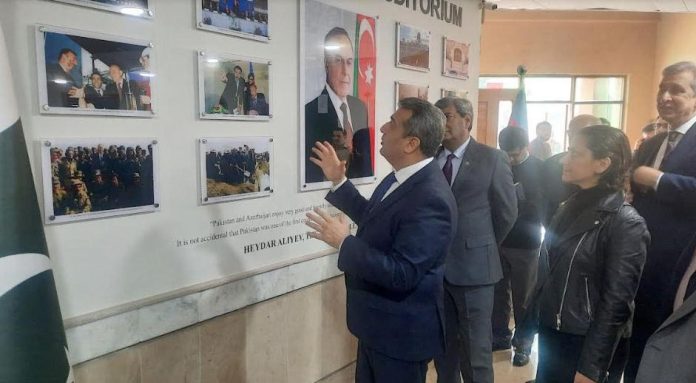
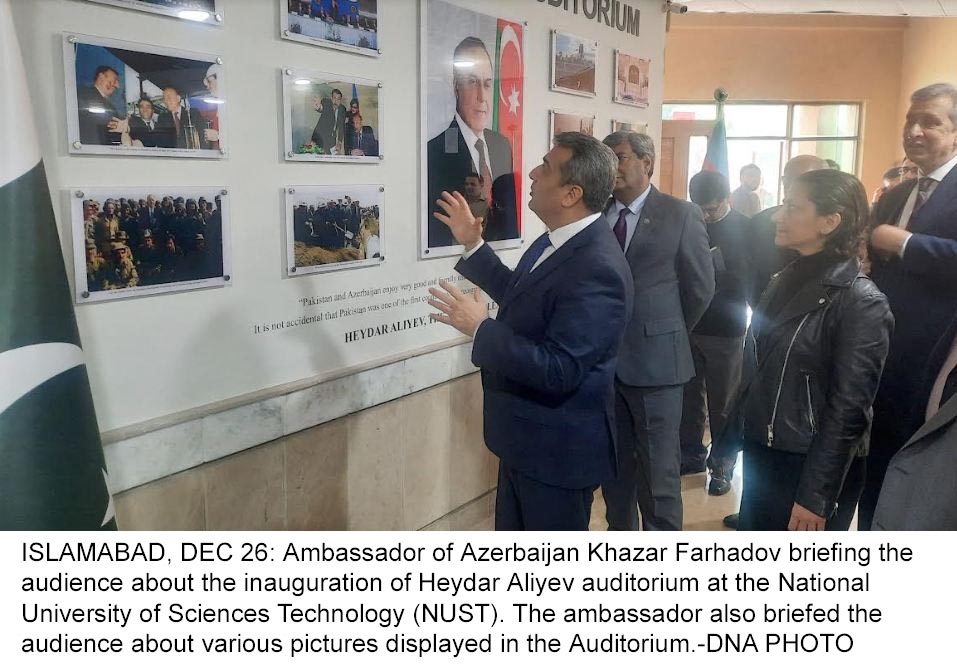
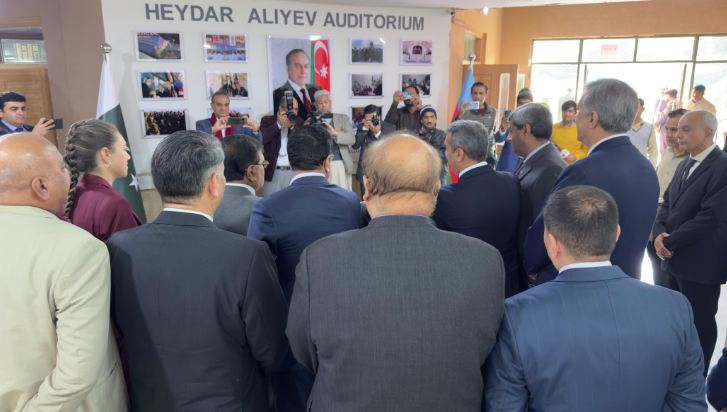
ISLAMABAD, DEC 26: Ambassador of Azerbaijan Khazar Farhadov briefing the audience about the inauguration of Heydar Aliyev auditorium at the National University of Sciences Technology (NUST). The ambassador also briefed the audience about various pictures displayed in the Auditorium.-DNA PHOTO

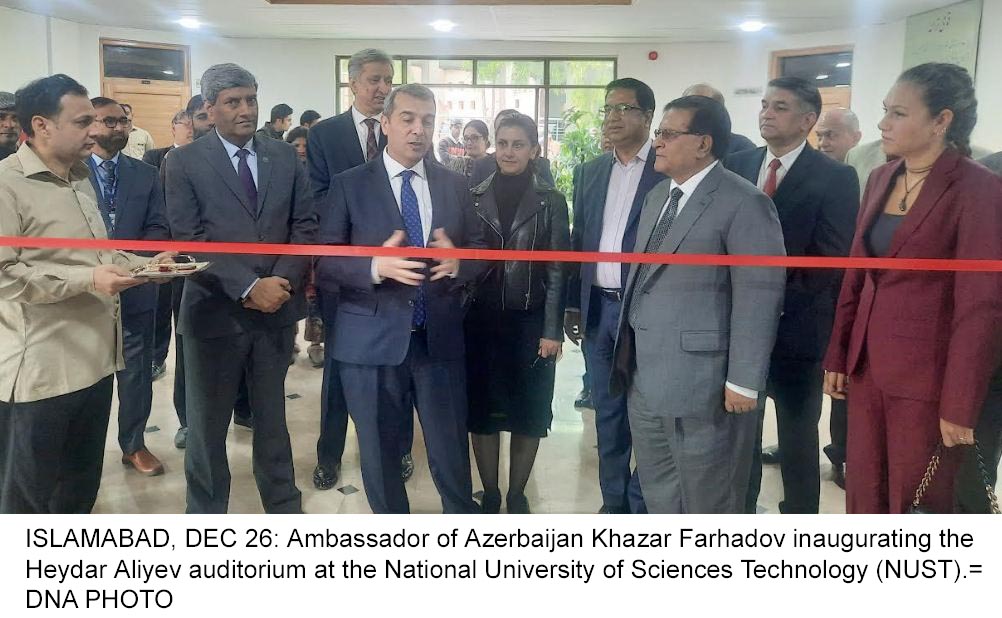
ISLAMABAD, DEC 26 /DNA/ – Ambassador of Azerbaijan Khazar Farhadov has said that Heydar Aliyev was a visionary leader who shaped Azerbaijan’s History. He was briefing the audience about the inauguration of Heydar Aliyev Auditorium at the National University of Sciences Technology (NUST).

Ambassador said that Heydar Aliyev was born on May 10, 1923, in Nakhchivan City of Azerbaijan. As 2023 was declared the “Year of Heydar Aliyev” in our country, this important occasion is being celebrated solemnly in Azerbaijan and abroad.

He said, Every nation has genius personalities who played the role of saviors in the history of national freedom and independence. Those geniuses with their determination led their people behind them and played the role of victor in the most fateful moments.

ISLAMABAD, DEC 26: Ambassador of Azerbaijan Khazar Farhadov briefing the audience about the inauguration of Heydar Aliyev auditorium at the National University of Sciences Technology (NUST). The ambassador also briefed the audience about various pictures displayed in the Auditorium.-DNA PHOTO

He further said that the national leader of the Azerbaijani people, Heydar Aliyev, has left a bright and indelible mark on the history of the modern world as a great personality, an innate talent, and a wise statesman. The meaningful life path, and rich and diverse heritage of national leader Heydar Aliyev, who gained eternity with his exceptional services, is an inexhaustible lesson.

Looking back on the past years, it can be once again witnessed the important historical achievements of the Azerbaijani people under the leadership of wise leader Heydar Aliyev.The renaissance and awakening of national consciousness started with Heydar Aliyev’s coming to power, and thanks to him, the independence of Azerbaijan became eternal and irreversible.

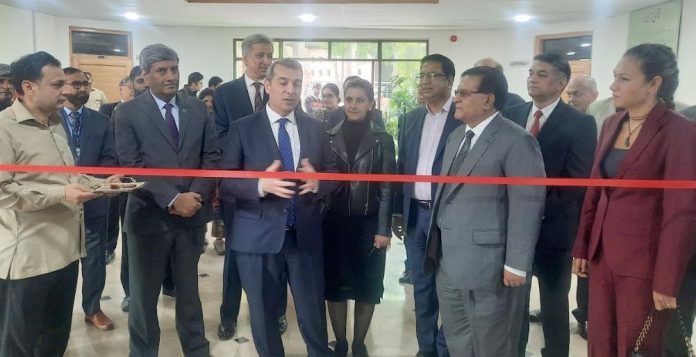
ISLAMABAD, DEC 26: Ambassador of Azerbaijan Khazar Farhadov inaugurating the Heydar Aliyev auditorium at the National University of Sciences Technology (NUST).=DNA PHOTO

Azerbaijan was able to rise to the level it deserves in the world thanks to the National Leader Heydar Aliyev’s foresight, wisdom, determination, iron will, and rich statehood experience.

Heydar Aliyev proved that he was a visionary and decisive politician when he first led the Azerbaijan Soviet Socialist Republic from 1969-1982. As a result of theintense activities of Heydar Aliyev, great successes were achieved in the economy, industry, agriculture, education, and culture. Numerous industrial enterprises, cultural and educational centers, andmedical institutions were built.

New mass housing and roads were built, and gas lines were laid in remote areas. In those years when Heydar Aliyev led Azerbaijan, the solid foundation of state independence was laid, and the national spirit and ideology of Azerbaijanism started to rise.

Decisive steps were taken in the direction of nationalization of the cadres. Every year hundreds of young people were sent to the most advanced universities of the USSR to acquire various important qualifications, and Azerbaijanis were promoted to important state positions.

Moreover he said that the adoption of the Constitution of the Azerbaijan SSR in 1978 and the establishment of the Azerbaijani language as the state language are the services of national leader Heydar Aliyev.

At that time, when the totalitarian Soviet regime ruled, the determination of the legal basis for the preservation and development of the moral wealth of the Azerbaijani people, especially the language, in the supreme law of the republic is considered a very brave step.

He was Heydar Aliyev who was able to cope with this difficult task, which was in complete contradiction with the requirements of the Soviet national policy.In this respect, the period after Heydar Aliyev’s leadership of the republic is accepted as the beginning of national consciousness and national self-return.

Later, it was a very proud moment that Heydar Aliyev, the only Muslim at that time, held a high position as a member of the Political Bureau, and first deputy chairman of the USRR Council of Ministers.

In 1987, in protest at the policy pursued by the Political Bureau of the Central Committee of the Communist Party of the Soviet Union, Heydar Aliyev resigned from his posts.

Having returned to Baku on 20 July 1990, Heydar Aliyev left for Nakhchivan two days later, where he was elected as a member of the Supreme Soviet of Azerbaijan and Nakhchivan Autonomous Soviet Socialist Republic.

In 1991, Heydar Aliyev was elected as chairman of the Supreme Assembly of the Autonomous Republic of Nakhchivan, and in accordance with the legislation as deputy chairman of the Supreme Soviet of the Republic of Azerbaijan. He held this post until 1993.

In May-June 1993, when Azerbaijan was at the verge of civil war and loss of independence, the people of Azerbaijan demanded to bring Heydar Aliyev to power.

On 15 June 1993, Heydar Aliyev was elected as chairman of the Supreme Council of Azerbaijan, and on 24 June took the office of President of the Republic of Azerbaijan.

On 3 October 1993, in a nationwide voting which saw a high turnout, Heydar Aliyev was elected as President of the Republic of Azerbaijan.

On 11 October 1998, Heydar Aliyev was re-elected as President of the Republic of Azerbaijan.

When Heydar Aliyev came to power,he eliminated chaos and anarchy, economic and political difficulties in the country.

The Agreement of the Century, the Baku-Tbilisi-Ceyhan pipeline, and other internationally important projects are associated with the name of Heydar Aliyev. As a result of the great leader’s wise policy, high-speed socio-economic development was ensured in Azerbaijan, and Azerbaijan became a country with a strong position in international relations. Thanks to him, the independence of Azerbaijan became eternal.

Heydar Aliyev is the architect of the development of Azerbaijan-Pakistan relations. He attached great importance to Pakistan.

On 9-11 April 1996, Heydar Aliyev paid an official visit to Pakistan. Several documents were signed between Azerbaijan and Pakistan during the visit. That visit played an irreplaceable role in the development of relations between the two countries.

He said about 2 countries: “Pakistan and Azerbaijan have very good and friendly relations. These relations are based on our ancient historical traditions.

It is no accidental that Pakistan is one of the first states to recognize the independence of our country after Azerbaijan declared its independence.”

Current President of Azerbaijan Ilham Aliyev attaches great importance to Azerbaijan-Pakistan relations, which were constructed by Heydar Aliyev. The ties between the two brotherly countries are at a high level in all fields.

Heydar Aliyev auditorium AT NUST inaugurated

Heydar Aliyev auditorium AT NUST inaugurated

ISLAMABAD: Ambassador of Azerbaijan Khazar Farhadov briefing the audience about the inauguration of Heydar Aliyev auditorium at the National University of Sciences Technology (NUST). The ambassador also briefed the audience about various pictures displayed in the Auditorium.-DNA

Self-sustenance inevitable for success in the world: President

People have shouted their will!

KARACHI, Dec 26 (APP/DNA): President Dr. Arif Alvi on Tuesday said that self-sustenance is inevitable for the success in the world and expressed the confidence that Pakistan would progress and develop.

Addressing as chief guest on the occasion of the 35th Convocation ceremony of Pakistan Navy Engineering College (PNEC) at Baharia Auditorium here, he said that the world needed intellect at the moment and there was no dearth of it in Pakistan.

Rector National University of Science and Technology (NUST) Lt General (R) Mehmood and Commander Karachi Rear Admiral Muhammad Saleem were also present.

During the convocation, a total of 368 graduates were awarded Bachelors’ and Postgraduate degrees including the foreign students.

The President also awarded 39 medals to the students on their outstanding performance.

Addressing the convocation, President Dr. Arif Alvi appreciated the efforts put in by the PNEC for maintaining high standards of education by providing quality engineers to the evolving industry of Pakistan.

He emphasized that responsibility of PNEC has further increased in present realm of emerging technologies like Artificial Intelligence and Robotics.

He also acknowledged that foreign students were a testimony to the College’s credentials in the engineering sector.

He highlighted that NUST PNEC will continue with its legacy of being the premier engineering and technology institution, fulfilling present day engineering needs of the country.

The President felicitated the graduating students and their parents and advised the graduates to be active members of society in building a stronger and prosperous Pakistan and keep themselves abreast and with fast changing advancements in technology.

President Dr. Arif Alvi termed the completion of degrees by students as an opening of the doors to the knowledge for the students and said, they must learn more and more.

Earlier, Commandant PNEC Commodore Tauqeer Ahmad Khawaja apprised that PNEC was making all out efforts to provide the best engineering education to its students in multiple disciplines.

Further, he highlighted the achievements of students in various events held at national and international levels.

He highlighted the opportunities provided to the students at different forums in order to groom and nurture the young engineers.

The ceremony was attended by a large number of military and civil dignitaries and parents of graduating students.

Stay Connected

64FansLike
60FollowersFollow

Latest Reviews

Exchange Rates

USD - United States Dollar
EUR
1.17
GBP
1.35
AUD
0.72
CAD
0.73