Home Blog Page 1071

Mass rejection of PTI candidates nomination papers

Pakistan Tehreek-e-Insaf (PTI)

DNA

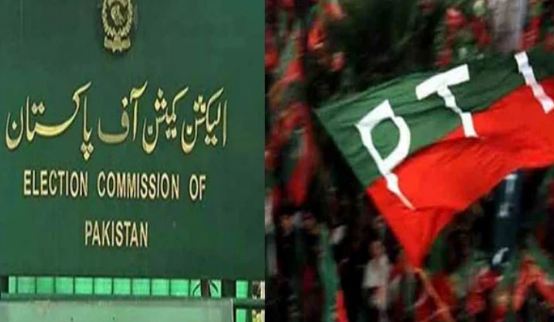
ISLAMABAD: Pakistan Tehreek-e-Insaf (PTI) Chairman Barrister Gohar Khan urged the Supreme Court (SC) to immediately intervene and take notice of the unjust step of en mass rejection of nomination papers of the PTI’s candidates on false and flimsy grounds by Returning Officers (ROs) to ensure holding fair, free and transparent elections in order to save democracy in the country.

During his informal conversation with journalists here on Monday, PTI Chairman highlighted that PTI and its leaders, workers as well as affiliates were being subjected to the worst reprisals and coercive actions.

He said that in the first phase of election, the nomination papers of more or less all the top PTI’s candidates were rejected in an unbelievable manner, opening a door of unnecessary legal proceedings aimed at entangling the party and its candidates in needless legal battle so as to keep them away from the masses.

However, he expressed optimism that Chief Justice of Pakistan (CJP) would prompt action to reverse the unjust and unlawful decisions.

PTI Chairman pointed out that the manner in which PTI and its candidates were being subjected to worst oppression and suppression in order to oust the party from the electoral battle had neither any place in the constitution nor in democracy.

Barrister Gohar Khan reiterated that PTI fully believed in democracy and was in favor of providing equal and fair opportunities to all political parties to participate freely in the elections.

He made it clear that despite the launch of the election process, PTI’s workers and supporters were not safe from oppression and fascism, adding that all basic constitutional and legal rights as a party were being usurped and taken away.

PTI Chairman vowed that they believed in the supremacy of constitution and upholding the rule of law in the country and wanted to see the country strong and prosperous.

Barrister Gohar Khan underlined that constitutionally, the Election Commission was bound to conduct free, impartial, fair and transparent elections in the country, adding that the state could be strengthened only through free and transparent elections.

However, PTI Chairman went on to say that the electoral watchdog has completely failed in performing its constitutional duty, which was evident from the non-implementation of the SC’s ruling pertaining to the providing level playing fields to all political parties due to which the electoral body was fast losing its credibility and effectiveness.

He stated that the international observers and organizations working on the transparency of elections were also closely and keenly mentoring the election process.

PTI Chairman lamented that the judges of Peshawar High Court (PHC) were being openly and blatantly threatened for their merit-based decisions regarding PTI.

Barrister Gohar Khan expressed his apprehensions that if the top court did not immediately intervene, democratic system would be wrapped up from the country.

PTI Chairman made it clear that undermining the transparency of elections and depriving the people of their right to vote was tantamount to a conspiracy against Pakistan.

He stressed that political stability and economic revival were directly linked with the conduct of free, fair and transparent elections in the country otherwise, rigged and stage-managed polls would further exacerbate political and economic instability in the country.

Barrister Gohar Khan vowed that PTI would keep on its political struggle for its rights in a peaceful manner within the ambit of the constitution and law in all circumstances.

He made it clear that they would never boycott the elections in any case and even if the PTI did not allow its election symbol of the “bat”, as they had an alternative strategy.

However, Barrister Gohar Khan raised a question that in case, PTI was deprived of its electoral symbol, then who would get the 227 reserved seats and whom to be blamed for the horse-trading in the aftermath of the elections.

PTI Chairman stated that if the elements involved in the deviation of the constitution did not shun their unconstitutional and unlawful actions, then as a party believed in the upholding of the constitution and law, they would also continue their struggle through peaceful constitutional and democratic methods come what may.

Barrister Gohar Khan recalled that PTI Founder Chairman Imran Khan had unequivocally stated that they had no conflict with any institution or personality of the state, adding that they wanted free and fair elections because people of the country have the ultimate power under the constitution to decide their fate.

Barrister Gohar Khan said that SC should take instantly notice of the situation and take effective and much-needed remedial measures to not only put a halt on the unlawful and unconstitutional steps against PTI but to ensure undisputed polls in the country.

Israel continues brutal Gaza assault as new year dawns

GAZA

GAZA: Israeli air strikes continued to pummel Gaza as the new year dawned and battles raged across the besieged enclave’s towns and refugee camps, reduced to rubble after weeks of brutal bombardment, in a war Israeli Prime Minister Benjamin Netanyahu said would take “many more months” to end.

Netanyahu’s comments signal no let-up in a campaign that has killed many thousands and levelled much of Gaza, while his vow to restore Israeli control over the enclave’s border with Egypt raises new questions over an eventual two-state solution.

The Israeli military will release some reservists who were called up to fight Hamas in Gaza, a move it said on Sunday would help the economy as the country prepares for a prolonged war.

Air strikes pounded al-Maghazi and al-Bureij in the centre of Gaza, killing 10 people in one house and driving more to flee to Rafah on the border with Egypt from front lines where Israeli tanks are battling Hamas fighters.

People take part in a protest in support of Palestinians in Gaza near the US embassy in Amman, Jordan. PHOTO: Reuters

People take part in a protest in support of Palestinians in Gaza near the US embassy in Amman, Jordan. PHOTO: Reuters

Rockets fired from Gaza raced toward central Israel overnight, triggering sirens throughout the central and southern parts of the country. Israeli media carried footage of numerous interceptions. There were no reports of any direct hits. Hamas’ armed wing said the barrage was in response to “massacres against civilians” in Gaza.

A Red Crescent video published on Sunday showed rescuers working in the dark to carry an injured child from smoking rubble in central Gaza. Six people died in a strike on the village of al-Mughraqa outside Gaza City, health officials said. A separate strike on a house in Khan Younis killed one person and wounded others, they added.

As 2023 drew to a close, Palestinians in Gaza prayed for a ceasefire but had little hope the new year would be better.

“Tonight, the sky in world countries will be lit by firecrackers, and joyful laughs will fill the air. In Gaza our skies are now filled with Israeli missiles and tank shells that land on innocent, homeless civilians,” said Zainab Khalil, 57, a resident from northern Gaza now in Rafah.

The stated goal of Israel’s military is to eliminate Hamas, the Palestinian resistance group that launched a surprise cross-border assault on Israeli towns on October 7, 2023, killing – as per Israel’s twice revised death toll- 1,139 settlers, and grabbing 240 as captives.

Israel’s air and artillery bombardment has killed more than 21,800 people according to health authorities in Gaza, with thousands more feared dead in the rubble, and pushed nearly all of its 2.3 million people from their homes. Palestinian health ministry casualty figures said that 70% of Gaza’s dead are women and people under 18.

Israel blockaded most food, fuel and medicine after the October 7 attack. It said on Sunday that it was ready to let ships from some Western countries deliver aid directly to Gaza’s shores after security checks in Cyprus.

Gemma Connell, an official with the UN humanitarian agency OCHA, said that many of the tens of thousands of people fleeing to Rafah had no possessions and nowhere to sleep.

“I just am so fearful that the amount of deaths that we’ve been seeing is going to increase exponentially both because of this renewed offensive but also because of these conditions which are literally unbelievable,” she said.

‘Where will people go?’

The United States, Israel’s main ally, has urged it to scale down the war and European states have signalled alarm at the extent of Palestinian civilian suffering.

However, Netanyahu’s comments on Saturday, when he said he would not resign despite opinion polls showing his government is broadly unpopular and defended his security record despite the October 7 attack, indicate that there will be no easing anytime soon.

Netanyahu said the “the war is at its height” and Israel would have to retake control of Gaza’s border with Egypt, an area now crammed with civilians who have fled the carnage across the rest of the enclave.

Retaking the border could also constitute a de facto reversal of Israel’s 2005 withdrawal from Gaza, raising new questions over the future of the enclave and prospects for a Palestinian state.

Israel’s Iron Dome anti-missile system intercepts rockets launched from the Gaza Strip. PHOTO: Reuters

Israel’s Iron Dome anti-missile system intercepts rockets launched from the Gaza Strip. PHOTO: Reuters

Washington said Israel should allow a Palestinian government to control Gaza when the conflict is over.
“We just take a fundamentally different view here in terms of what post-conflict Gaza needs to look like,” White House national security spokesperson John Kirby said on ABC television.

Israel’s hard-right Finance Minister Bezalel Smotrich fuelled concerns about the offensive’s aims on Sunday by calling for Palestinians to leave Gaza and make way for Israelis who could “make the desert bloom.”

That clashed with the official Israeli government position that Gazans will be able to return to their homes. Smotrich and other hardline coalition ministers have been excluded from the core war cabinet but have pushed to take part in decisions about the conflict.

In his last comments as Israeli foreign minister before switching to the energy portfolio on Sunday, Eli Cohen said the border was the likely source of weaponry Hamas had obtained over recent years.

Senior Palestinian Authority official Hussein al-Sheikh in the Israeli-occupied West Bank said via social media that Israel taking over the border was evidence of a decision “to completely return the occupation.”

“We moved here from Khan Younis on the basis that Rafah was a safe place. There is no space in Rafah as it is overcrowded with displaced,” said Umme Mohammed, 45, a displaced Palestinian woman sheltering by the border.

“If they control the border, where will people go?” she asked, saying that would be “a disaster.”

Maersk cargo ship attacked

The war risks morphing into a wider regional conflict involving Hamas ally Iran and groups Tehran supports across the Middle East.

Israel and Lebanon’s Hezbollah have exchanged regular cross-border fire, with the Israeli military saying it struck targets in Lebanon on Sunday. Hezbollah attacks have concentrated on Israeli bases situated on the border and groupings of troops. Employing a wide range of weaponry, the resistance group has significantly degraded Israel’s surveillance of the border region and caused sizeable casualties.

Israel has also hit resistance groups in Syria while other groups in Iraq have attacked US targets in Iraq.
Yemen’s Iran-aligned Houthi group, which has been attacking shipping in the Red Sea for weeks in what it calls a response to Israel’s war in Gaza, attacked a Maersk cargo ship, the US military said.

US naval helicopters sank three of the four small boats the Houthis had used in Sunday’s attack and drove the fourth back to shore, the military said.

Israel claims 174 of its military personnel have been killed in the Gaza fighting but that its operations are making progress, including by destroying some Hamas tunnels under the enclave.

Hamas and Islamic Jihad – both sworn to end Israel’s settler colonialism – have said that they continue to target Israeli forces operating in the enclave.

LFK released annual report, titled “Human Rights Situation in Indian Occupied Jammu & Kashmir

LFK released annual report

Structural Violence Perpetrated by Indian occupying Authorities Aimed at Ethnic Cleansing of Kashmiri Muslims: LFK Annual Human Rights Review 2023

International Community Must Take Cognizance of the Evidence Presented

1) A total of 248 killings.

2) 260 major cordon and search operations (CASOs).

3) 138 residential houses destroyed.

4) 70 military operations.

5) 82 freedom fighters killed.

6) 66 civilians murdered by the occupying forces.

7) Death of 100 Indian occupying forces.

8) 200 residential and commercial properties and land measuring approximately 100 acres under the Unlawful Activities Prevention Act (UAPA) across IOJK.

9) 171instances of Internet Shutdown

The Legal Forum for Kashmir (LFK) released its annual report, titled “Human Rights Situation in Indian Occupied Jammu & Kashmir (IOJK): January to December 2023.” The annual report aims to shed light on the ongoing human rights situation in the Indian-Occupied Jammu & Kashmir (IOJK). It presents an in-depth analysis of various human rights issues, including heightened militarization, land grabbing by the Indian Occupying Forces and the occupying authorities, excessive use of force against non-combatants, extrajudicial killings, torture, and arbitrary detentions, prohibition of the public assembly, mass imprisonments, curbs on press and freedom of speech, nomenclature and demographic changes with a larger settler colonial design

According to the LFK annual report, January-December 2023 saw a new trend of state repression and counterinsurgency operations in the war-trampled region of IOJK. On the ground, the violations of International Human Rights law (IHRL) and International Humanitarian law (IHL) led to appalling human tragedies. Indian occupying authorities and the occupying forces stationed in IOJK have perpetrated a series of ‘Atrocity crimes’: Indian occupying forces persisted in their repressive policies and disregard for international law and the principle of the Right of Self-determination. A total of 260 Cordon and Search Operations (CASOs) were reported by the local media which are just a fraction of the total Search Operations launched by the Occupying Forces.

This year so far LFK has recorded 248 killings in multiple incidents of violence across IOJK. The armed action of India’s Occupying Forces against the native population as a result of heightened military presence has resulted in the killing of 82 Indigenous freedom fighters and 100 Indian occupying forces personnel from Jan to December 2023. At least 70 encounters took place between the Indian Occupying Forces and the freedom fighters of Kashmir. During these CASOs, vandalism, and destruction of 138 civilian properties were reported. Also, 171 instances of Internet Shut down in IOJK were reported. India’s Infamous anti-terror investigation agencies National Investigation Agency (NIA) & State Investigation Agency (SIA) have attached 200 Properties across IOJK in the year 2023

Indian occupying authorities annihilate the critical voices of Kashmiris by pervasive surveillance to monitor the daily lives, violating the rights to freedom of expression, opinion, and privacy rights of Kashmiris. To intensify restrictions on social media users in IOJK, police have been given free access to track accounts of all Kashmiris in the name of monitoring anti-India activities. Police claimed to have secured direct cooperation from social media giants, including WhatsApp, X, Snapchat, Instagram, Telegram, and TikTok

LFK reports the torture and custodial death case at Dhera Ki Gali and Buffliaz in the Poonch-Rajouri belt of IOJK. According to the families, the three men – Mohammad Showkat, 22, Safeer Hussain, 45, and Shabir Ahmad, 32, were detained by IOF at the hilly TopaPir village in Poonch district on 22 December 2023. The Torture victims and the families of deceased testify that before the custodial death of three civilian’s Indian army stripped them three naked and used chili powder over the sensitive body parts to inflict more bodily harm.

India has accelerated its efforts to dominate every means of dissent and seize properties of native inhabitants, paving the way for outsiders to settle in the region. In the name of “retrieving state land”, the occupational authorities and their auxiliaries seized over 178005.213 acres in Kashmir region and 25159.56 acres in Jammu as alleged “encroached” by the residents

In its annual report, LFK call the international community must take cognizance of the evidence presented in this report. All the cases of extrajudicial killing, arbitrary detention, and torture of civilians, the curbs on freedom of speech, freedom of the press, and freedom of religion, the demographic changes, and all other measures aimed at the ethnic cleansing of Kashmir Muslims must not go unheeded.

The International response against the aforementioned ‘Atrocity crimes’ as well as other patterns of egregious violations, some amounting to war crimes and Crimes against humanity perpetrated by Indian Occupying Forces was inconsistent.

On 11 December 2023, the Supreme Court of India (SCI) pronounced the verdict of the 16 hearings pertaining to the petitions challenging the August 5, 2019 unilateral decision of the Indian parliament to abrogate the semi-autonomous status of UN-recognized disputed territory. The 476-page judgment upheld the validity of the CO 273 bifurcating the erstwhile state into two Union Territories – Jammu and Kashmir, and Ladakh. The mainstream political parties, Kashmiri civil society and renowned Indian jurists including former SCI judges criticized the verdict of five-judge Constitutional Bench stating that the court has misinterpreted the constitutional framework including the federal structure and distorted the legal history of Jammu and Kashmir.

LFK also condemns India’s attempt to hold the G20 tourism meeting in IOJK, portraying a facade of normalcy and aimed at whitewashing the direct abuses perpetrated by IOF against the civilian population.

Foreign mission expels Pak staff on corruption charges

The sources, who, for confidentiality reasons, preferred not to disclose the identity of the foreign mission, emphasized that this diplomatic entity has repeatedly garnered attention due to allegations of corruption involving both local officials and members of the host country’s staff. Notably, even high-ranking officers within this specific mission have been implicated in amassing substantial wealth through questionable means, for which they had to face serious consequences as well.

EXCLUSIVE

Ansar M Bhatti

Islamabad: In a recent development, a foreign mission operating in Islamabad has taken decisive action against corruption within its ranks by expelling two Pakistani staff members implicated in fraudulent activities. Diplomatic insiders, who opted to remain anonymous, shared this information with our correspondent.

The embassy in question received a credible tip-off, prompting an internal investigation that revealed the involvement of the two staff members in illicit enterprises. These activities included the unauthorized importation of vehicles and liquor. Furthermore, the expelled individuals were found to be extending unwarranted support to individuals seeking visas for the host country.

This move by the embassy underscores its commitment to maintaining the integrity of its operations and upholding ethical standards among its personnel. The diplomatic sources emphasized the importance of accountability and transparency in diplomatic missions, regardless of the nationality of the individuals involved.

The action taken serves as a reminder of the diplomatic community’s vigilance in addressing issues of corruption and fraud, even within its own ranks, and reinforces the embassy’s dedication to fostering a culture of trust and adherence to legal and ethical standards.

The sources, who, for confidentiality reasons, preferred not to disclose the identity of the foreign mission, emphasized that this diplomatic entity has repeatedly garnered attention due to allegations of corruption involving both local officials and members of the host country’s staff. Notably, even high-ranking officers within this specific mission have been implicated in amassing substantial wealth through questionable means, for which they had to face serious consequences as well.

It is important to highlight that this is not an isolated incident; instances of staff from foreign missions engaging in malpractices have unfortunately become a recurring phenomenon. Regrettably, this trend has now become a pervasive issue, affecting a considerable number of missions. It is rare to find a mission that has remained untouched by this menace.

Upon a news published in this newspaper few years ago an Ambassador was removed from his post. The diplomat, whose identity is being kept confidential, faced accusations of engaging in the illegal import of cars and unscrupulously selling his liquor quotas to a third party in exchange for substantial bribes. Following a thorough investigation conducted by the host country, the damning evidence against the ambassador proved irrefutable. In response to the conclusive findings of the investigation, the host country took decisive action by terminating the ambassador’s services.

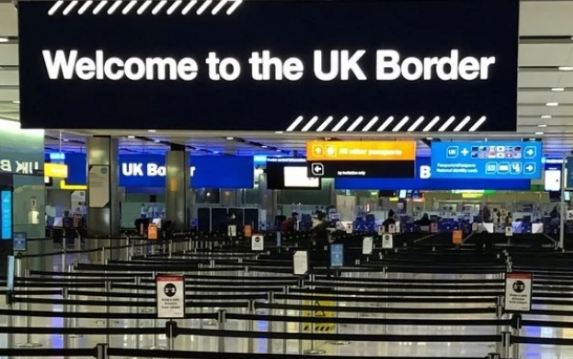
UK allows visa-free entry to citizens of several Islamic countries

UK allows visa-free entry to citizens of several Islamic countries

GCC residents will just need Electronic Travel Authorisation to enter UK from February next year

DNA

LONDON: The United Kingdom government has announced to grant visa-free entry to travellers from various Arab countries from February 22 next year onwards.

In a significant change to its visa policies, the UK intends to make entry easier for the residents of Jordan and all the Gulf Cooperation Council (GCC) countries.

Citizens of Saudi Arabia, the United Arab Emirates, Kuwait, Oman, Jordan and Bahrain will not need visas for entry into the UK. They will just need an Electronic Travel Authorisation (ETA) to enter the UK from February next year. Qatar’s residents travelling to the UK are already using ETA since November 15, 2023.

A statement released by the British government said the move towards an Electronic Travel Authorisation (ETA) system is poised to simplify the entry process, doing away with the necessity of obtaining a visit visa.

Under this new system, tourists of all age groups will be required to electronically apply for a travel permit, priced at £10, which will then be issued for their travel purposes to last for two years. This strategic shift in visa regulations aims to streamline entry procedures, fostering smoother and more accessible travel for citizens of these nations intending to visit the United Kingdom.

Earlier this year, the UK government announced plans to introduce a new ETA scheme as part of a digitisation of the UK border by 2025 to further enhance border security and the customer experience.

An ETA is a digital permission to travel for those visiting or transiting through the UK who do not need a visa for short stays, or who do not currently hold another UK visa.

By cutting costs and visa requirements, the ETA scheme will ensure visitors from the Gulf states and Jordan enjoy travelling with ease to the UK, boosting business and tourism links between these countries, the UK govt said in a statement.

Gulf visitors are highly valuable to the UK economy, with over 790,000 Gulf visitors spending £2 billion during their stays in the UK in 2022.

Xi Ushers China to Intense diplomacy…

Qamar Bashir

By  Qamar Bashir

Former Press Secretary to the President, Former Press Minister to the Embassy of Pakistan to France, Former MD, SRBC

Amidst the thunderous echoes of Chinese success in every realm – from economic summits to cyberspace frontiers, from military might to diplomatic triumphs – President Xi during a meeting of the Central Committee of the Communist Party of China (CPC) held to discuss Work Relating to Foreign Affairs in Beijing (27 to 28 of Dec 2023) unleashed a new wave of global engagement. This “New Era of Diplomacy” paints China as a nation standing tall, its voice confident, its actions assertive, yet its hand outstretched in friendship. Here, aggression finds purpose, not malice; strength, not submission. No longer does China cower; it leads, not with threats, but with the quiet assurance of one who knows their place on the world stage.

At the outset, the CPC unequivocally expressed unwavering confidence in President Xi’s leadership, affirming that Chinese diplomacy will continue to draw guidance from Xi Jinping’s ‘Thought on Socialism’ with ‘Chinese Characteristics’ for the ‘New Era.’ This vision for diplomacy is rooted in fostering a global community with a shared destiny, emphasizing strategic planning aligned with evolving times, problem-oriented approaches, and a commitment to innovation. It’s a resolute stance, driven by historical responsibility and a fervent spirit of innovation, propelling major-country diplomacy with distinct Chinese attributes.

The  new vision tackles the fundamental question: “What kind of world do we build, and how?” It answers this by offering a compelling future rooted in the Chinese Communist Party’s worldview, perception of order, and values. This vision, far from opposing the common aspirations of the global community, aligns with them through ‘Major-Country Diplomacy with Chinese Characteristics for the New Era.’ This framework prioritizes a shared future, seeking to transform a conceptual proposition into a tangible reality. It aims to build an open, inclusive, clean, and beautiful world characterized by lasting peace, universal security, and shared prosperity. This shift from promising vision to practical action marks a crucial evolution, shifting from mere ideas to a “scientific system” that guides concrete steps towards the desired future.

Emerging from a period of remarkable economic and social development, President Xi Jinping has outlined a compelling diplomatic vision that seeks to not only secure China’s place as a leading power but also to reimagine the very architecture of the international order. This vision rests on two pillars: pragmatic inclusivity and assertive action, both aimed at forging a future that is more equitable, prosperous, and sustainable for all.

Amidst a world undergoing profound transformation and turbulence, President Xi underscored that the fundamental elements shaping world history – the trajectory of human development and progress, the complex dynamics of politics, and the aspirations for a shared global future – remain steadfast. In light of these enduring realities, he articulated the need for a new diplomatic offensive contoured to navigate the rapid advancements across diverse spheres of human endeavor. This offensive, he emphasized, must pave the way for a prosperous and inclusive future for the global community.

Rising from the ranks of global powerhouses, China seeks not a throne, but a bridge and closer ties among nations, societies, and civilizations through sharing of economic, social, and scientific advancements. “We can no longer afford the destructive dance of superpowers like the USSR and USA, whose bullying postures left behind only ruin and retaliation. Afghanistan’s embers still smolder, a stark reminder of the USSR’s fatal misstep. The World Trade Center’s hollow silhouette whispers echoes of 9/11, a testament to the fleeting nature of unchallenged might”. China’s New Era of Diplomacy is not merely a policy shift; it’s a bold invitation to rewrite the narrative of human history. It’s a world where power serves progress, not domination, where every voice joins the chorus, and where together, we rise to our shared destiny.

This framework aims to elevate China’s global influence, appeal, and power to shape the world stage on a new level. By fostering a favorable international environment, it will provide unwavering strategic support for China’s transformation into a great modern socialist country, paving the way for the comprehensive rejuvenation of the Chinese nation through its unique path to modernization.

Marking a shift from passive engagement, the new Chinese diplomacy signals a transition towards a more assertive and proactive stance on the global stage. It champions the vision of an equitable and multipolar world, advocating for inclusive economic globalization that benefits all nations. Size, they argue, should not dictate influence, and hegemonic power plays are firmly rejected. Instead, the new framework promotes genuine democratic principles in international relations, adhering strictly to the UN Charter and its universal values. Upholding core norms guiding international interactions and embracing true multilateralism are central pillars of this approach.

It rejects the pitfalls of protectionism and isolationism, advocating instead for an open and interconnected world where trade and investment flow freely across borders. This inclusive approach prioritizes the upliftment of underserved nations, recognizing that shared prosperity hinges on bridging development gaps and creating opportunities for all. China commits to playing a proactive role in this endeavor, providing targeted assistance and fostering partnerships that empower developing countries to participate actively in the global economic landscape.

However, pragmatism alone is not sufficient. China’s vision is marked by an assertive stance in defending its core interests and promoting its ideals. It firmly opposes attempts to stifle globalization or manipulate security concerns for unilateral gain. China’s voice resounds on the world stage, advocating for open dialogue and multilateral cooperation as the cornerstones of a stable and peaceful international environment. Unilateralism and power politics find no refuge here, replaced by a system based on mutual respect, adherence to international law, and the collective pursuit of common good.

It actively engages in multilateral forums, pushing for reforms that level the playing field and ensure equitable access to resources and opportunities. From tackling climate change to fostering technological advancements, China seeks to work in tandem with the international community to build a more sustainable and resilient future for all.

This vision has the potential to reshape the global order, offering a compelling alternative to the power politics and zero-sum games that have characterized international relations for decades. The success of this endeavor hinges on China’s unwavering commitment to its stated principles, its ability to translate vision into action, and its willingness to cooperate with other nations in crafting a brighter future for all.

To actualize President Xi’s visionary diplomacy, China is forging a new breed of diplomat: armed with sharpened minds honed by advanced training, empowered by nimble institutions, and driven by a data-fueled, forward-looking spirit. This reenergized vanguard will bridge the gap between vision and reality, working in symphony with other ministries to execute the CPC’s directives with unwavering precision. China’s diplomatic makeover is not mere reform; it’s a global game-changer, poised to redefine the contours of the world order with confidence and innovation. Watch this space: China’s diplomats are ready to lead.

President Xi’s bold diplomatic vision stands as a beacon illuminating a path toward a world where strength isn’t measured by dominance, but by collaboration. It beckons us to envision a future where nations, regardless of size or wealth, stand as equals on a stage of mutual respect and shared aspirations. It calls for a world where the shackles of power-based politics and unilateral actions are replaced by the symphony of unanimous decisions, resonating with the values of justice, equality, and the sanctity of every life. It’s a future where the rule of law isn’t a choice but a collective commitment, where the upliftment of human rights isn’t a debate but an inherent truth. This isn’t just a diplomatic evolution; it’s a moral imperative—a shared journey toward a world where prosperity, peace, and respect aren’t privileges but rights for every nation and every individual.

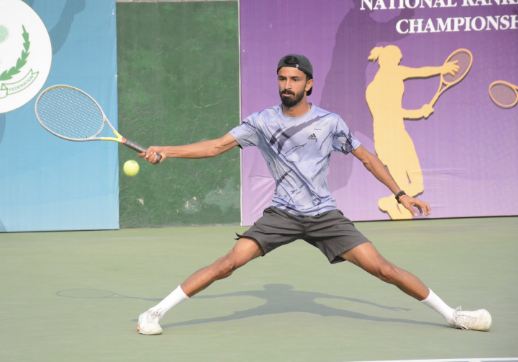
8th Serena Hotels National Ranking Tennis Championships-2023

Pakistan Tennis Federation

ISLAMABAD, DEC 31 /DNA/ – The Pakistan Tennis Federation is pleased to inform you that the 8th Serena Hotels National Ranking Tennis Championships-2023 concluded at the PTF-SDA Tennis Complex, Islamabad. The Serena Hotels Tennis Championships is a very renowned event, held annually as part of their Sports Diplomacy.

In the Mens Singles Final, AQEEL KHAN beat MUHAMMAD SHOAIB 6-3,1-6,6-2 and won the Serena Hotels Mens Title.

In the Ladies’ Singles Final, Sarah Mahboob Khan beat Meheq Khokhar 6-3,6-2 and won the Serena Hotels Ladies’ Title.

In the Boys Single 14 under Final, Amir Mazari beat Abdul Basit 7-5,5-7,7-5 and won the Serena Hotels Boys Single 14& under Title.

Mr. Aziz Boolani CEO of Serena Hotels was the Chief Guest at the Closing Ceremony. Senator Salim Saifullah Khan President-PTF was the Guest of honour at the Closing Ceremony. The closing ceremony was also attended by Col. Gul Rehman[R] Secretary-General, Imran Hassan (Director/S&M/TPS) Serena Hotels, Hina Nazir Serena Hotels, Muhammad Saleem Marwat President-KP Tennis Association, Mr Arif Qureshi Seretary-ITA and a large number of players, Coaches, parents, media persons, officials of the Serena Hotels and tennis lovers.

Senator Salim Saifullah Khan President-PTF thanked the Management of Serena Hotels, especially Mr. Aziz Boolani-CEO Serena Hotels for the promotion of tennis in Pakistan. The President PTF thanked the Print and electronic media for the wide coverage of the event.

The Championships was supervised by Mr. Shahzad Akhtar Alvi -ITF White Badge Referee.

Results:

Mens Singles Final: Aqeel Khan bt Muhammad Shoaib 6-3,1-6,6-2

Ladies Singles Final: Sarah Mahboob Khan bt Meheq Khaokhar 6-3,6-2

Boys Single 14& Final: Amir Muhammad Khan Mazari bt Abdul Basit 7-5,5-7,7-5

The Issue of Unemployment in Pakistan

The Issue of Unemployment in Pakistan

KOMAL ASLAM

Many young people not having jobs is a big problem in the world. This is also a challenge in Pakistan right now. To solve this, we need to look at the main reasons for it and find ways to help young people get jobs. This will not only benefit them but also help the country grow economically and socially.The lack of good education and job skills is a big reason why young people can’t find work.

This is a serious problem because it can lead to hopelessness and misery.A report says that one-third of young people in Pakistan are unemployed. Even those who are educated are having a hard time finding jobs that match their qualifications. Many people apply for jobs, but there are not enough positions available. This can lead to frustration and, in some cases, involvement in crime.High unemployment rates also make young people vulnerable to crime groups. Some end up working in dangerous conditions or being forced into illegal activities. The situation is made worse by inflation and a lack of opportunities.

The government needs to take action to lower inflation, stabilize the currency, and provide better education and job training for young people. This will help create more opportunities and reduce stress. Population growth also needs to be managed, taking lessons from other countries like Iran and Bangladesh.Empowering women in the workforce is crucial for economic progress. The current economic situation discourages people from starting their own businesses. Encouraging startups and providing a good environment for them is important for creating jobs.Innovative solutions, like focusing on the gig economy and supporting startups, can help address unemployment. Technical skills should be a priority for young people to improve their job prospects. The mismatch between job requirements and skills needs to be addressed through better education and training.

Youth unemployment is a big social problem that can lead to crimes, homelessness, drug addiction, and family tension. It also negatively impacts the economy by reducing consumption and investment. Managing population growth, empowering women, and supporting entrepreneurship are key steps to improve the situation.Many young people in Pakistan don’t have jobs, and this is causing big problems for the country. There are different reasons for this issue.First, the government doesn’t have enough money to spend on creating jobs, especially for young people. Also, the number of young people looking for jobs is increasing, but there aren’t enough opportunities. The lack of funds, slow economic growth, and problems with infrastructure make it even harder to create new jobs. As the population grows, there are fewer chances for young people to find work. This makes competition for jobs very tough, and many young people struggle to find good jobs.This unemployment issue affects both rural and urban areas in Pakistan. The future of the country and its progress are at risk because many young people can’t find work. Pakistan has a lot of young people, around 62 million, but about half of them don’t have jobs. This is one of the highest rates of youth unemployment in the world.One reason for this is that not many people in Pakistan have formal education only 43%. Because of this, many young people can’t find jobs that match their skills and qualifications. The lack of good education and training programs also means that young people don’t have the skills they need for many jobs. This leads to long-term unemployment, where people can’t find meaningful work.

Pakistan’s economy is not doing well, and there isn’t much money to create new jobs. The country also has a weak job market with low wages and job security. Many young people end up in poorly paid and insecure jobs that don’t provide enough for them or their families. The informal sector, which is not well-regulated, doesn’t offer good job opportunities for young people either.Political problems in the country make it harder for businesses to grow and invest, creating even fewer job opportunities. Many young people also lack resources like money, technology, and mentors to help them find good jobs. The government’s lack of investment in key areas like industry and agriculture also means fewer job possibilities.Another big issue is that many young people can’t get loans or money to start their own businesses. The country’s financial sector is not well-developed, making it hard for young people to become entrepreneurs. Another big issue is that many young people can’t get loans or money to start their own businesses. The country’s financial sector is not well-developed, making it hard for young people to become entrepreneurs. The recent COVID-19 pandemic has made things worse by causing many companies to close down, leading to more job losses.There are many reasons why young people in Pakistan don’t have jobs, including a lack of education, political problems, and economic issues. To fix this, the government needs to address the root causes and find ways to create more jobs. Pakistan should also encourage international investors to come to the country and create more job opportunities. Prioritizing education and job possibilities for young people is crucial for a better economic future in Pakistan.

KOMAL ASLAM

Student of BBIT University of Okara

[email protected]

U.S. Engagement with Ukraine

U.S. Engagement with Ukraine

Dr. Muhammad AkramZaheer

As the conflict between Russia and Ukraine continues, people are getting tired of emotional appeals about Ukrainian bravery and Russian actions. Republicans have valid concerns: they want to cut government spending, make sure U.S. aid to Ukraine isn’t misused by corrupt officials, and figure out where helping Ukraine fits in U.S. priorities. One thing most Americans agree on is the importance of a strong U.S. military. However, President Biden is providing enough aid for Ukraine to keep fighting but not enough to win. There’s a strong argument from conservatives to increase U.S. assistance to Ukraine. For a relatively small cost, Americans can support Ukraine in a war that NATO was worried about. It’s important to note that a significant portion of U.S. aid to Ukraine goes to American companies that produce weapons for Kyiv. Engaging with Ukraine is also revealing weaknesses in the U.S. defense system. To fund defense adequately, changes to entitlement programs like Social Security and Medicare are necessary. Both Democrats and Republicans need to reconsider their stance on entitlement reform, as these programs make up a large portion of federal spending. If not addressed, the cost of entitlements will limit spending on defense and other domestic programs.

There’s also a need for better border policies. Many Americans don’t understand why the U.S. military doesn’t protect the country’s borders. Immigration policy is closely tied to foreign policy and the U.S. economy. A majority of Americans think the U.S. is doing a poor job managing its borders, and there’s a surge in illegal border crossings. The military is restricted by the Posse Comitatus Act from acting as a domestic police force, but political leaders should invest in border security. This includes more funding for the U.S. Customs and Border Protection Agency, as well as technology to track migrant movements. Cooperation with Mexico and addressing the root causes of migration are also crucial. Failure to regulate immigration properly hinders the U.S. from maximizing its geopolitical opportunities, especially in North American cooperation. Clearer immigration policies could lead to stronger collaboration with neighboring countries, benefiting the U.S. economy. However, until Americans are confident in border control, they may be hesitant to support these cooperation opportunities. According to experts at the Brennan Center, many Americans are confused about why the U.S. military doesn’t protect the country’s borders. Republicans could improve their policies on this issue. Immigration is crucial for foreign policy and the U.S. economy. A survey in January 2021 by Pew Research Institute showed that 68% of Americans believe the U.S. is not managing its borders well. Indeed, since January 2020, about 200,000 people try to enter the U.S. illegally every month through the Mexican border, the highest in 20 years. Contrary to what the media says, most of these people are adults, not kids. The 1878 Posse ComitatusAct stops the military from acting like a police force within the U.S. Generals, who are already busy, don’t want to protect the borders, fearing it might harm people’s respect for the military. To get more support for U.S. activities abroad, leaders need to show they can put more effort and resources into border security. A survey in January 2023 found that most Americans want to give more money to the U.S. Customs and Border Protection Agency. It’s not just about money and more people. Over 60% of recent migrants aren’t from Mexico or Central America but start their journey in places like Colombia, Cuba, Peru, and Venezuela. The U.S. should invest in surveillance and technology to track migrants in Central America, speed up asylum claims in new immigration courts, work more with Mexico to stop migrants passing through, and engage with migrants’ home countries to solve problems and help those who don’t meet U.S. immigration rules return.Not handling immigration properly makes the U.S. miss its biggest opportunity for North American cooperation. Politicians should worry more about Mexico becoming unsafe and find creative ways to make Canada, Mexico, and the U.S. work together in energy, labor, and manufacturing. With better immigration policies, we can relocate supply chains to Mexico, strengthen energy grids in California and Texas by trading energy with Canada and Mexico, and create opportunities for neighbors to prosper, boosting the U.S. economy. But until Americans trust that the U.S. controls its borders, they may not support these cooperation opportunities.

The world that the United States and its friends made after World War II made America safer and richer. But we must remember that if the U.S. doesn’t make sure this global order is followed, someone else will, probably China. If China takes charge, the world could become dangerous. China, along with its authoritarian allies like Russia and Iran, might gather enough military and economic power to force a repressive vision on the world. To make things better, the U.S. should rejoin the Trans-Pacific Partnership, make and approve other trade agreements, spend more on defense while fixing entitlements and reducing national debt, secure the U.S.-Mexican border, and help countries fighting for their freedom. These are big goals. Fred Kagan, a scholar at the American Enterprise Institute, says people don’t want to die for the international order because it’s too vague. But convincing voters to support a foreign policy that helps other countries might not be as hard as politicians think. They should focus on concrete arguments based on U.S. national interest. The Biden administration and some Republican leaders are making misleading appeals that say internationalism makes the U.S. weaker or that caring about the U.S. national interest means ignoring the world. This is not true. The choices the U.S. makes internationally affect its own well-being. Right now, leaders are making confusing foreign policy decisions that make the country less safe and less prosperous, and fixing them will be difficult later on. The U.S. is divided politically, and many people are confused and disappointed. A Pew poll from June-July 2023 found that only 16% of Americans trust the federal government, the lowest in 70 years. Only 10% feel hopeful about politics. In an August Wall Street Journal poll, 93% of likely Republican voters thought the U.S. is headed in the wrong direction. These are not good results, but they also present an opportunity for good policies because people are clearly unhappy. The solution is not to adopt policies that give up on trade, weaken the military, leave the U.S.-Mexican border in chaos, and stop helping deserving allies. Americans still want the U.S. to be a leader in the world for the sake of the country and their own safety and prosperity. U.S. leaders need to prove they know how to do it.

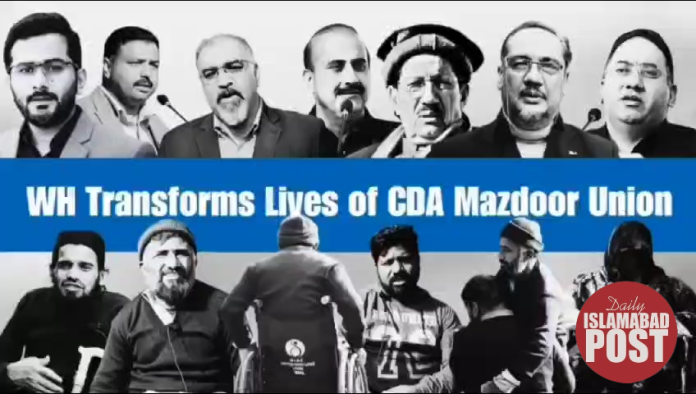
Niaz support empowers CDA Mazdoor Union with custom wheelchair distribution

Niaz support empowers CDA Mazdoor Union with custom wheelchair distribution

ISLAMABAD: /DNA/ – With the collaboration of CDA Mazdoor Union (CBA) and Niaz Support, the ceremony regarding distribution of wheelchairs to disabled people was held at the Central Chairman Office, Sector G-7/4. Member Administration Talat Mahmood was the chief guest of the ceremony. CDA Director General Admin Aamir Khalil, Director Admin Fayyaz Ahmed Watto, Representatives of Niaz Support Air Commodore Syed Ahmer Raza, Mujtaba Haider, Hammad Malik, General Secretary CDA Mazdoor Union Chaudhry Muhammad Yasin, Aurangzeb Khan, Sufi Mahmood Ali, Ali Asghar Mani Butt, Mirza Saeed Akhtar, Asad Mahmood, Muhammad Sarfraz Malik and hundreds of CDA employees also participated.

Speaking at the event, Chief Organizer of All Disabled Alliance CDA, Mirza Kahlil Ahmed, Syed Nadeem Haider Shah and others said that we are deeply grateful to CDA Mazdoor Union and Niaz Support who organized the program for disabled people and provided them with wheelchairs on this occasion. We are thankful to the General Secretary of CDA Mazdoor Union Chaudhry Mohammad Yasin and Niaz Support Founder Hussain Odhwani, Retd. Air Commodore Syed Ahmer Raza, Mujtaba Haider, Hammad Malik and their entire team. Speaking closely, General Secretary of CDA Mazdoor Union Chaudhry Muhammad Yasin said that now a days specially qualified people are performing outstanding services in different fields of life all over the world and are shining the iron of their abilities. The union is a representative organization of workers whose aim is to serve workers regardless of color, race and religion.

In sha Allah very soon all the problems of disabled people will be solved on priority basis. On this occasion, he demanded the Prime Minister of Pakistan and the relevant government institutions to ensure the implementation of the quota allocated for the disabled and solve their problems with the implementation of the existing laws regarding the disabled and special persons. Legislation should be enacted to provide free technical and educational training to disabled persons so that they can perform their duties efficiently in daily life. Speaking at the event, Member Administration of CDA Talat Mehmood said that special and disabled people have immense abilities and if they are given opportunities, they can play an important role in the construction and development of the country. Along with providing better facilities to the citizens, pay attention to the special people of the institution and solve their problems on a priority basis. Patron General Zamurrad Khan and DG Admin Amir Khalil announced to donate ten customised wheelchairs on their behalf.

Stay Connected

64FansLike
60FollowersFollow

Latest Reviews

Exchange Rates

USD - United States Dollar
EUR
1.17
GBP
1.35
AUD
0.72
CAD
0.73