DR SHUMAILA KHAN: An Aesthetic Physician par excellence

Mudassar Raja
INTRODUCTION: Dr. Shumaila Khan is a well-known & energetic Aesthetic Physician, best Injector and Laser therapist, is running ‘Dr Shumaila Khan’s Dermalase’, in Islamabad. She has done her MBBS from Baqai Medical University, Karachi and started her career in Karachi. She further joined Dermatology department of PIMS Islamabad, wherein she worked under renowned Dermatologists of Pakistan. Later on, she went to Cardiff University Wales (UK) for post-graduation in Dermatology. After successful completion of post-graduation from Cardiff, she joined American Academy of Aesthetic Medicine (USA) to become Diplomate in Aesthetic, Laser and Mesotherapy. Moreover, she has advanced training in Aesthetic Medicines on facial transformation from Derma Medical UK.
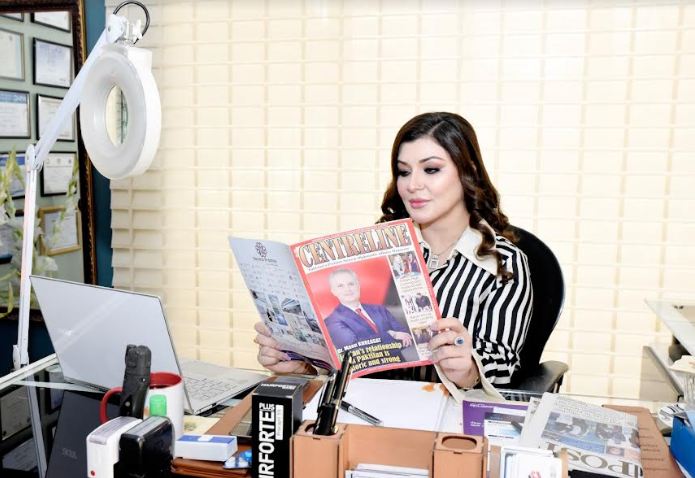
She is a member of many prestigious societies/groups of Dermatology & Aesthetic Medicine like; American Academy of Aesthetic Medicine (AAAM) and Pakistan Academy of Aesthetic Dermatologists & Surgeons (PAADS). Besides that, she is an expert in Cosmetology and Laser therapy and has earned many training in Aesthetic Medicines.
She gave an exlusive interview to Daily Islamabad POST and CENTRELINE magazine. Here is the text of her interview.
1: What are some of the most common skin conditions Pakistanis are faced with?
Pakistan, like many other countries, has a diverse population with varying skin types and environmental factors that can contribute to a range of skin conditions. Some of the common skin conditions faced by Pakistanis include:
Acne: Acne is a widespread skin condition affecting people of all ages. Factors such as hormonal changes, genetics, and environmental conditions can contribute to acne.
Pigmentation Issues: Hyperpigmentation (darkening of the skin) and hypopigmentation (lightening of the skin) are common concerns. These can be caused by sun exposure, inflammation, or skin injuries.
Eczema (Dermatitis): Eczema is an inflammatory skin condition characterized by red, itchy, and dry skin. Environmental factors, genetics, and allergies can contribute to eczema.
Psoriasis: Psoriasis is a chronic autoimmune condition that results in the rapid buildup of skin cells, leading to scaling on the skin’s surface. It can be triggered by various factors, including genetics and stress.
Fungal Infections: Fungal infections, such as ringworm and tinea versicolor, are common in warm and humid climates. These infections can affect different parts of the body.
Melasma: Melasma is a condition characterized by dark patches on the skin, often on the face. Hormonal changes, sun exposure, and genetics can contribute to melasma.
Urticaria (Hives): Urticaria is characterized by raised, itchy welts on the skin. It can be triggered by various factors, including allergies, medications, and stress.
Scabies: Scabies is a contagious skin infestation caused by mites. It results in intense itching and a rash, often in the webs of fingers, wrists, elbows, and other body parts.
Burns: Accidental burns, whether from hot surfaces, liquids, or other sources, can lead to various skin issues and scarring.
Skin Cancer: Exposure to the sun’s harmful UV rays increases the risk of skin cancer. Regular use of sunscreen and protective measures are essential in preventing skin cancer.
It’s important to note that the prevalence of these conditions can vary among individuals, and seeking advice from healthcare professionals is crucial for accurate diagnosis and effective treatment. Additionally, cultural practices, lifestyle, and environmental factors can influence the prevalence of certain skin conditions in different regions of Pakistan.
2: Why did you pursue a career as an Aesthetic medicine?
When I decided to pursue a career in Aesthetic Medicine, there were only a handful of doctors dedicated to this field. It is inherent in every individual to harbor a desire to look and feel good. A pleasing appearance not only enhances one’s outer allure but also boosts inner confidence. This natural inclination towards aesthetics led to a widespread interest in Aesthetic Medicine upon its introduction in Pakistan.

My profound interest in this field is rooted in a genuine passion for assisting those seeking to enhance their physical appearance, ultimately elevating their confidence levels. My primary goal is to contribute to the well-being of individuals by helping them cultivate presentable and confident personalities. I take immense satisfaction in knowing that my work has brought joy and improved the lives of many.
3: What are your strengths as an Aesthetic medicine?
As an Aesthetic medicine physician, cultivating a diverse set of strengths is essential for achieving success in a dynamic and competitive field. Beyond mastering technical skills, your success hinges on a combination of interpersonal finesse and business acumen. Here are some key strengths to elevate your profile as an esthetician:
Comprehensive Expertise:
Master a broad spectrum of skincare and beauty treatments, showcasing your versatility. This not only enhances your service offerings but also positions you as a well-rounded professional capable of addressing various client needs.
Continuous Learning:
Stay abreast of the latest industry trends and technological advancements. This commitment to ongoing education demonstrates your dedication to providing cutting-edge services, keeping you ahead in the rapidly evolving world of beauty and skincare.
Effective Communication:
Possess excellent communication skills to discern and comprehend clients’ unique needs and preferences. The ability to convey information clearly and concisely fosters a positive client experience and ensures that their expectations are met.
Rapport Building:
Establish a strong rapport with clients by creating a welcoming and comfortable atmosphere. Building a connection goes beyond just the technical aspects of your job; it involves making clients feel at ease, enhancing their overall satisfaction with your services.
Active Listening:
Actively listen to clients to identify their concerns, preferences, and expectations. This not only helps customize treatments to individual needs but also fosters trust, as clients appreciate being heard and valued.
Feedback Responsiveness:
Respond thoughtfully to client feedback during and after treatments. Addressing concerns promptly and professionally not only resolves issues but also showcases your commitment to continuous improvement and client satisfaction.
By prioritizing and honing these strengths, one can not only enhance her effectiveness as an esthetician but also position herslef for long-term success in the competitive beauty and skincare industry. Embrace a holistic approach that combines technical prowess with excellent interpersonal and business-related qualities to create a fulfilling and prosperous career.

5: People often complain that some of the treatments especially fillers may have side effects also. What is your onionin?
Complaints about fillers are virtually nonexistent when the procedure is carried out by highly skilled and well-trained medical professionals.
Enhancing the perfection of fillers is intricately linked to the choice of products utilized throughout the procedure. Opting for premium-quality products, particularly those manufactured in Europe and other reputable countries, plays a pivotal role in achieving exceptional results. The efficacy and aesthetic outcomes of the procedure are significantly heightened when employing top-tier products, as they are designed with advanced formulations and adhere to stringent quality standards. Therefore, the selection of high-quality fillers sourced from reputable regions becomes a crucial factor in maximizing the perfection and overall success of the procedure.
6: Anything you would like to add.
Aesthetic medicine stands as a burgeoning and specialized field, uniquely positioned at the intersection of health and beauty. Given its focus on the physical appearances of individuals and the universal desire for self-improvement, this field operates under a zero-tolerance policy for imperfections. The pursuit of enhancing one’s aesthetic appeal is a delicate and intricate process, making it one of the most challenging vocations. Achieving perfection in this realm necessitates the expertise of a seasoned and well-trained staff. The commitment to sculpting an individual’s appearance requires a blend of artistry, medical knowledge, and a nuanced understanding of each client’s unique needs. In this realm, the margin for error is razor-thin, demanding a level of precision that can only be attained through the hands of professionals with a wealth of experience. As the demand for aesthetic enhancements continues to rise, the importance of a highly skilled and adept workforce in this field becomes increasingly evident.
Atif Ikram, President FPCCI warmly welcomed in FPCCI capital house

DNA
ISLAMABAD, JAN 3: Newly elected President FPCCI Atif Ikram Sheikh arrives in the FPCCI Capital Office Islamabad with a big crowd consisting of the members of business community of Islamabad and adjacent areas. The Chairman Capital Office Karim Aziz Malik and Chairman Coordination Malik Sohail Hussain and Vice Presidents of FPCCI namely Ashfaq Ahmed and Tariq Jadoon, warmly welcomed him and showered flower leaves on him. On this occasion, on a festive event, special band was arranged to congratulate him and celebrated his historic victory in FPCCI’s election. Earlier the crowd escorted him from his residence to FPCCI Capital House Islamabad.
Various business leaders of UBG and Founder Group of Islamabad CCI prominently Zubair Malilk, Tariq Sadiq, Former Presidents FPCCI Rauf Alam, Zubair Ahmed Malik, former Vice President PCCI and General Secretary UBG Zafar Bakhtawari, Chairman Founder Group ICCI Khalid Iqbal Malik, Mian Akram Farid, Mian Shaukat Masood, Mohammad Ijaz Abbasi, Khalid Javed, Tariq Sadiq, Acting President ICCI Engineer Azhar -ul -Islam, President Islamabad Woman Chamber Rizwana Asif, and All Officials of Islamabad and Rawalpindi All Trade Bodies, businessmen, industrialists were present on the occasion and expressed their views.
While speaking during the ceremony, FPCCI’s newly elected President Atif Ikram Sheikh said that all will have to work jointly to solve the problems of the country’s development, industry, commerce, business and investment, to solve the problems of the business community.
He stressed on devising charter of economy to bring out Pakistan from current economic crises.
He further said that trade and industry is the engine of Pakistan’s economy which need to strengthened and the business community is the driver of trade and industry.
He said that the energy crisis is intensifying, industries are closing down, joint efforts of public and private sector are needed to solve problems. He added that it is our responsibility to bring out the country from economic challenges. The government institutions and political parties should include the business community as stakeholders in business policy making. He said that all political parties should add charter of economy in their manifesto and ensure that they will work for the economic development to ensure sustainable and long -term economic policies. He said that the FPCCI will play an effective role in creating harmony among all stakeholders at the national level regarding the economy.
On this occasion, Karim Aziz Malik Chairman Capital Office Islamabad urged to review economic policies. The government has to make long -term and consistent policies for development and improvement of the industry. He said that the continuous increase in electricity and gas prices could endanger the pace of industrial growth. He demanded the government and especially the finance minister to take steps to bring interest rates to a single digit so that the availability of capital at low and tolerant interest rates to the businesses could be ensured.
Addressing the ceremony, Chairman Coordination FPCCI Capital Office said that we are committed to solve the problems of business community of entire country and the problems of industry of Pakistan.
Sohail Malik said that FPCCI has its fingers on the pulse of our economy and we know the problems and difficulties that are facing by the business community. He said that all Chambers of Commerce, Trade associations are now united under one roof of FPCCI.
Pakistan, Afghanistan reinforce commitment to bilateral engagement

ISLAMABAD, JAN 3 /DNA/ – A productive meeting was held between interim Foreign Minister Jalil Abbas Jilani and Mullah Shirin, the Governor of Kandahar. Both parties reaffirmed Pakistan’s dedication to sustaining engagement and fostering mutually advantageous ties with Afghanistan.During the discussion, emphasis was placed on the necessity of addressing all pertinent issues to unlock the complete potential for trade and connectivity between the two nations.This meeting underscores the ongoing commitment to bolstering relations and fostering cooperation for the collective benefit of both countries.
Cigarette industry drains Rs 567 billion potential revenue in past seven years

ISLAMABAD, JAN 3 /DNA/ – The pervasive influence of Pakistan’s cigarette industry on policymaking has not only exacted a toll on both the nation’s financial well-being and public health, but also caused a staggering Rs 567 billion loss in revenue over the last decade.
The alarming loss of revenue was unearthed through a comprehensive study delving into the dynamics of the cigarette sector and scrutinizing Federal Board of Revenue (FBR) data by the SDPI.
According to a study by the Pakistan Institute of Development Economics (PIDE) the total costs attributable to smoking-related diseases and deaths in Pakistan for 2019 reached an additional Rs 615.07 billion ($3.85 billion), with indirect costs (morbidity and mortality) making up 70% of the total cost.
However, the cigarette industry managed to influence decision making, which not only resulted in Rs 567 billion loss in potential revenue but also put extra burden on the country’s fragile healthcare system, the SDPI study reveals.
In its report titled “Pakistan: Overview of Tobacco Use, Tobacco Control Legislation, and Taxation”, the World Bank has also revealed that the decline in government revenue in the 2016-2017 fiscal year was carefully planned by the powerful cigarette industry.
The study brings attention to the influence of multinational companies and the introduction of a three-tier excise duty structure, raising concerns about tax evasion and its adverse effects on public health.
The intricate examination of associated factors indicates that safeguarding revenue streams while prioritizing public health requires a careful reevaluation of tax policies, it said.
The World Health Organization (WHO) emphasizes the need to safeguard tobacco tax policies from vested interests of cigarette companies for effective development, implementation, and enforcement of public health initiatives. However, it did not happen in Pakistan, the study said.
The study also highlighted how high and middle-income countries successfully imposed high taxes on cigarette products to decrease consumption and increase government revenues, but the fact remains that Pakistan still lacks a clear strategy on using cigarette taxation and prices as a public health tool.
The National Accountability Bureau (NAB), Senate Special Committee, and the Auditor General of Pakistan Revenue (AGPR) have also endorsed the challenges posed by the multinational cigarette industry, according to the study.
The cigarette industry in Pakistan is dominated by two multinational companies who sell household brands across Pakistan, which gives them immense control and influence over policymakers. The multinationals have long been blamed for forcing the government to rely on questionable data on the cigarette market.
As the nation grapples with these alarming findings, experts suggest that implementing high taxes on cigarettes can serve as a proactive measure in promoting public health and simultaneously bolstering the nation’s economic well-being, the SDPI said. DNA
Ethiopia’s access to sea crucial for regional integration, peace & prosperity: Ambassador Jemal
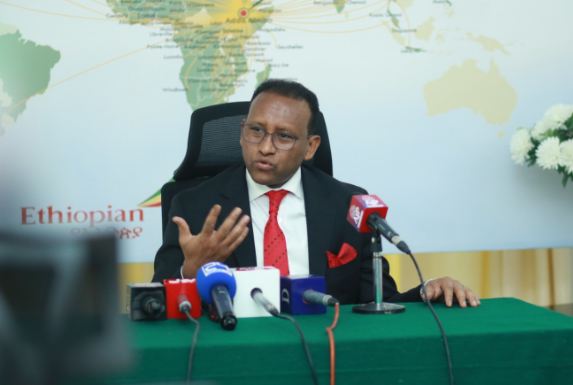
ISLAMABAD, JAN 3 /DNA/ – Ambassador Extraordinary and Plenipotentiary of the Federal Democratic Republic of Ethiopia (FDRE) to the Islamic Republic of Pakistan on Wednesday said the Government of Ethiopia had achieved aspirations of its people by securing access to the sea which was crucial for regional integration, peace and prosperity.
The Ambassador said signing of a Memorandum of Understanding (MoU) with the Government of Somaliland for sea access was a true reflection of the strong commitment of the Government of Ethiopia to the regional integration, collective peace, security and socio-economic development.
He said the credit for this breakthrough goes to H.E. Dr. Abiy Ahmed, the Prime Minister of FDR Ethiopia, who already won the Nobel Peace Prize for his strong commitment to peace and prosperity.
H.E. Prime Minister Abiy Ahmed had a clear vision not only for the development in Ethiopia but for the entire Africa and the world, the ambassador remarked.
The Ambassador said Ethiopia was already sharing its resources with the neighboring countries in Africa fostering strong connections with the brotherly countries. Currently, Ethiopia was exporting energy to Djibouti, Kenya and Sudan contributing to the regional integration and development in a massive way, he added.
The work on Grand Ethiopian Renaissance Dam was almost completed which would not only produce more than 5,150 Megawatts of the electricity, but also supplement efforts of the Government of Ethiopia in promoting regional development and prosperity, the Ambassador noted.
Ambassador Jemal Beker expressed gratitude to Muse Bihi Abdi, President of Somaliland, for supporting Ethiopia’s quest for access to the sea.
COP28: Rhetoric Overshadows Defence Spending vs Climate Action
Air Vice Marshal Najam ul Asar (Retd)
Yet another Conference of the Parties (COP) to address the existential challenge to planet Earth and the human species in the form of climate change concluded in the United Arab Emirates (UAE) on 13 December 2023. It had to be extended by one day as the required consensus on phasing out of fossil fuels could not be achieved on the final declaration due to the intransigence of oil-producing countries. Eventually, the President of the conference facilitated the participants of the UN climate summit in reaching a final consensus, leading to what was termed as a ‘historic’ climate deal. Ironically however, he himself is head of the Abu Dhabi National Oil Company (ADNOC) whose appointment as COP28 President was strongly criticised by environmentalists.
Twenty-seven years have passed since first COP on climate change was held in 1995 in Berlin, Germany under the United Nations Framework of Convention on Climate Change (UNFCCC) to address the issues of climate change. In 1997, COP3 adopted the ‘Kyoto Protocol’ to establish legally binding obligations for developed countries to reduce their greenhouse gas emissions. In subsequent conferences, United Nations and environmental scientists continuously warned the world that being the biggest polluters, not enough is being done by rich and developed countries to mitigate climate change and its subsequent effects.
Poor and developing countries, despite contributing minimally to climate degradation, face the most severe adverse effects. Lacking sufficient financial resources, they struggle to implement essential measures and projects crucial for their survival amidst rapidly changing climatic conditions.
In an effort to provide much-needed funding, developed countries made financial commitments to the Green Climate Fund (GCF), established in 2010. The twelfth report of the GCF, covering the period from 1 August 2022 to 31 July 2023, reveals that the total pledges and contributions during the initial resource mobilisation period (2015-19) amounted to USD 10.31 billion. As of April 2023, for the GCF 1 phase focused on replenishing funds, pledges reached USD 9.87 billion. At the recently concluded COP28, within the first four days, wealthy nations pledged an additional USD 57 billion to the GCF. However, a UN report indicates that developing nations will require USD 5.8-5.9 trillion before 2030 to effectively mitigate the impacts of climate change.
Despite being the worst polluters, developed countries are not contributing substantially to the GCF; instead, they allocate significant funds to defence expenditures. Regrettably, developing countries, despite their limited resources, are also investing heavily on defence. This global arms race consumes a colossal amount of funds annually, resources that could be more effectively used for environmental conservation. Current international tensions, such as the US-China confrontation and the war in Ukraine, have further escalated this trend, leading to a significant increase in global defence spending. When this defence expenditure is compared with the allocation of funds for climate change projects, a stark and troubling contrast emerges, highlighting a disparity in global priorities.
In 2022 USD 1.92 billion were disbursed for 28 low carbon emission and climate resilient development pathways projects around the world. In the same year (2022), Stockholm International Peace Research Institute (SIPRI) reports that a total of USD 2240 billion (USD 2.24 trillion) were spent on defence worldwide. The US, China and Russia together constituted 56% of global defence spending. Individually, USA spent USD 877 billion which is 39% of global spending and three times more than China which spent USD 292 billion on defence. The US also provided USD 19.9 billion as financial military aid to Ukraine which alone is almost double the amount pledged for GCF 1 on 31 July 2023 and even in initial resource mobilisation period (2015-19). In the same period, Central and Western Europe spent USD 345 billion; Russia USD 84.6 billion, India USD 81.4 billion, Saudi Arabia USD 75.0 billion and Ukraine USD 44 billion on defence.
In COP28’s much acclaimed ‘historic’ deal, phase-down of fossil fuels has been included albeit in a watered down language. But again, it’s more of a rhetoric to pacify the environmentalists and portray it as the historic achievement of the conference. The sincerity of the purpose can be gauged from the fact that COP28 was attended by 2400 delegates who were associated with fossil fuel industries. This figure is seven times larger than the Indigenous People delegation and four times more than last year’s 636 delegates – lobbyists from fossil fuel industry. Similarly, global oil and gas exploration will see an investment of USD 22 billion annually over the next five years. To maintain a temperature rise of 1.50 Celsius, the world needs to reduce the CO2 emissions by 43% of existing figures, however, it is likely to increase by 9% – needing no imagination of its consequences.
In conclusion, a straightforward comparison between the massive expenditures on defence and fossil fuel exploration versus the funds pledged for climate change mitigation starkly highlights the priorities of developed countries. These nations, primarily responsible for the current environmental crisis, demonstrate a concerning lack of seriousness in addressing the very disaster they have largely contributed to. It is not difficult to fathom where the world is heading with no fault of poor nations who, like always, continue to bear the brunt of the selfishness of rich and powerful countries as well as corporations. God save planet Earth.
Air Vice Marshal Najam ul Asar (Retd) is Director at the Centre for Aerospace & Security Studies (CASS), Islamabad, Pakistan. He can be reached at: [email protected].
COAS commends PAF’s preparedness and indigenous technological advances

Rawalpindi, 2 Jan /DNA/ – An Induction and Operationalization Ceremony was held at an operational base of Pakistan Air Force, today. General Syed Asim Munir, NI (M) Chief of Army Staff, attended the distinguished ceremony as the Chief Guest. Upon his arrival at the base, Chief of Army Staff was received by Air Chief Marshal Zaheer Ahmed Baber Sidhu, Chief of the Air Staff, Pakistan Air Force. The ceremony showcased the newly inducted weapon systems and defence assets of PAF.
Upon his arrival, a smartly turned-out contingent of Pakistan Air Force presented Guard of Honour to the COAS.
During his speech CAS highlighted the latest inductions in the PAF’s arsenal comprising of J-10C fighter jets, air mobility platforms, modren Radars, Unmanned Aerial Systems, Loitering munition capabilities and Long Range Vectors which have significantly bolstered the aerial defence capabilities of the country.
CAS also mentioned that Center of Excellence for Air Mobility & Aviation Safety, College of Air Defence and reinvigoration of Air Power Centre of Excellence alongside operationalization of National Aerospace Science and Technology Park has provided PAF the capability to stay abreast with the evolving challenges. He emphasized upon the progress achieved by PAF in the emerging domains of Cyber and Space technologies to ensure an impregnable defence of the country.
COAS in his speech lauded the operational preparedness of Pakistan Air Force in incorporating state-of-the-art weapon systems, substantially contributing in ensuring the balance of power in the region. While emphasizing the significance of indigenization and human resource development, COAS wholeheartedly endorsed PAF’s dedication to technological advancements and operational excellence, reassuring that the Armed Forces of Pakistan are fully prepared to thwart any aggression. COAS also appreciated PAF’s efforts for transportation of Relief Goods for the victims of Gaza conflict.
Following the ceremony, a spectacular airshow was conducted, featuring various PAF fighter jets, training aircraft and UAVs. The Chief Guest and the attendees later witnessed a static display showcasing the diverse PAF fighter, air mobility and UAV fleet.
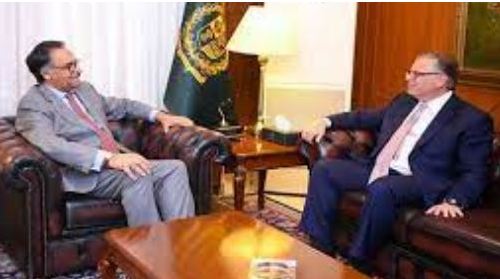
US ambassador meets Foreign Minister Jilani
DNA
ISLAMABAD: U.S. Ambassador Donald Blome met today with Caretaker Foreign Minister Jilani to discuss a wide range of important bilateral issues, including expanded diplomatic engagement, the safe and efficient processing of Afghan citizens eligible for resettlement to the United States, as well as other issues of mutual interest.
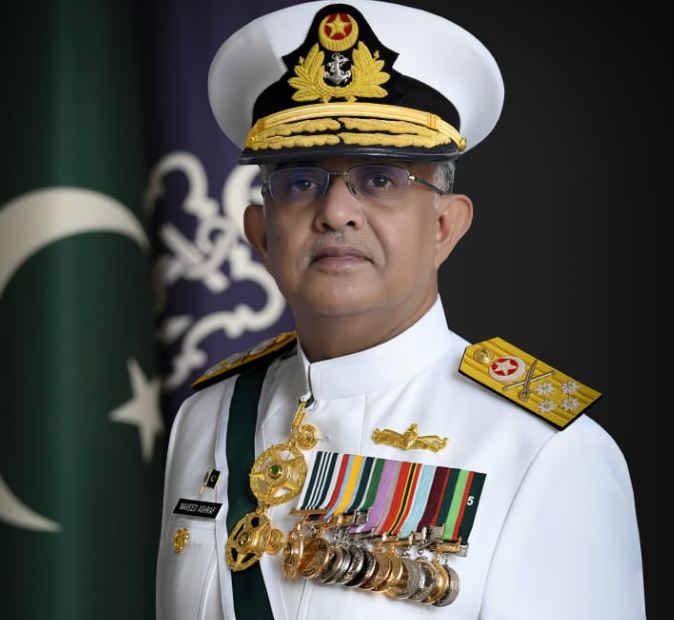
Exercise Barracuda-Xii commences at Karachi
DNA
Karachi, Jan 2: International Exercise BARRACUDA-XII formally commences today at Headquarters Pakistan Maritime Security Agency (PMSA), Karachi. The event started with an impressive flag hoisting ceremony followed by wreath laying on Shuhadas monument. The ceremony was attended by observers from 13 friendly countries and officers of Pakistan Navy and PMSA. Exercise BARRACUDA-XII is scheduled from 02-04 Jan 24 and comprising Harbour and Sea phases.
Opening brief of the exercise was held at Karachi. Federal Minister for climate change Ahmed Irfan Aslam graced the occasion as Chief Guest. Foreign Observers and delegations from relevant stake holders also attended the brief wherein the Aims and objectives of Exercise BARRACUDA-XII were highlighted. Moreover, scholarly papers on response of Oil Spill and Search and Rescue at sea were presented by both National and International speakers.
During his address Chief Guest thanked all foreign delegates for their participation in the event. He further added that the exercise will continue to crystallise our preparedness for maritime disasters management. Pakistan has always been and will continue to be an ardent advocate of safe & secure seas for the wellbeing of the region and the world.
Earlier during his welcome address, DG PMSA Rear Admiral Imtiaz Ali apprised the audience about Government of Pakistan’s endeavour to curb pollution at sea and reiterated resolve of PMSA to fight Marine pollution. He further highlighted the role of PMSA in implementing the laws in National seas. He thanked the foreign participants and national maritime stakeholders for their support.
DG PMSA Rear Admiral Imtiaz Ali also called on the foreign observers and discussed the matters of mutual interest.
Exercise BARRACUDA is a marine pollution response exercise conducted biennially by PMSA since 2007. Focused on refining response mechanisms and enhancing coordination among stakeholders. The exercise serves as a critical platform to prepare for and address potential oil spills and other marine pollution incidents.
BARRACUDA-XII will unfold as an immersive experience in the North Arabian Sea providing a platform for participating countries to engage in scenario-based simulations and comprehensive drills starting from 2 Jan 24. The 03 days exercise which includes harbour and sea phase will facilitate knowledge exchange, enhance interoperability and solidify coordination among diverse maritime entities, thereby fortifying our global resilience against marine pollution incidents. As the world grapples with the imperative need to protect our oceans, BARRACUDA-XII stands as a testament to the power of international cooperation in combating marine pollution.