Home Blog Page 1063

The Threat to Pakistan’s Economic and Social Fabric

The Threat to Pakistan's Economic and Social Fabric

Tayyaba Ishaq

Pakistan, renowned for its rich cultural heritage, confronts numerous challenges on its path to becoming a developed nation. One of the most pervasive and entrenched issues the country grapples with is corruption. Corruption in Pakistan has escalated to a point where it not only hampers the nation’s economic growth but also erodes the social and political fabric.

Corruption, broadly defined as the misuse of power or position for personal gain, manifests in various forms, including bribery, embezzlement, nepotism, and fraud. In Pakistan, corruption has infiltrated all societal levels, becoming so prevalent that it is now considered a norm. The government institutions in Pakistan lack the strength to curb corruption, characterized by a deficiency in accountability and transparency, allowing corrupt officials to operate with impunity.

The historical backdrop of political instability in Pakistan has further fueled widespread corruption. When political leaders prioritize retaining power over combating corruption, the latter tends to thrive. Poverty and income inequality also contribute to corruption, as individuals, struggling to make ends meet, may resort to corrupt activities for additional income.

The weak rule of law in Pakistan exacerbates the corruption problem. In the absence of stringent enforcement and an accountable justice system, corruption finds fertile ground to flourish. The consequences of corruption in Pakistan extend far and wide.

Corruption significantly impacts the country’s economy, undermining investment and creating an unfriendly business environment. This result in lower economic growth, reduced job creation, and diminished prosperity for the people. Moreover, corruption erodes public trust in government institutions, paving the way for extremist ideologies. It diverts resources from essential areas, hindering the development of schools, hospitals, and public services. Corruption also discourages foreign investment, depriving the country of potential economic benefits.

Addressing corruption requires decisive action from the government, involving the strengthening of institutions, increased accountability, and transparency. Anti-corruption measures, such as establishing independent watchdog agencies and improving transparency in government operations, are crucial. Additionally, efforts to enhance the rule of law, enforce anti-corruption laws, protect whistleblowers, and prosecute corrupt practices are essential.

Civil society can contribute by raising awareness, advocating for reforms, and monitoring government activities. The private sector can promote ethics and integrity, supporting anti-corruption initiatives. Educational initiatives, awareness campaigns, and fostering civic responsibility are vital for achieving a cultural shift towards accountability and ethical behavior.

International cooperation is indispensable in combating corruption on a global scale. Collaborative efforts with other countries, international organizations, and non-governmental entities can enhance the effectiveness of anti-corruption initiatives, particularly in addressing cross-border corruption and money laundering.One crucial strategy for preventing corruption is to provide better salaries for government jobs. Many government employees currently receive low salaries, leading some to resort to bribery to cover their expenses. By offering higher salaries, the motivation and inclination to engage in bribery would decrease.

Another effective approach to curb corruption is to increase the number of workers in government offices. Many offices face a high workload, creating opportunities for employees to slow down work and engage in bribery for faster service. Bringing in more employees would reduce this temptation and help eliminate such corrupt practices.

Strict laws play a vital role in combating corruption. It is essential to impose severe punishments on individuals found guilty, coupled with efficient and swift implementation of these strict laws.Implementing surveillance cameras in workplaces is an excellent method to deter corruption. The fear of being caught would discourage many individuals from engaging in corrupt activities that they might have otherwise considered.

The government should prioritize keeping inflation low to address the issue of corruption. Rising prices often lead people to perceive their incomes as insufficient, fostering corruption among the masses. Businessmen may exploit this situation by increasing prices, with support from politicians seeking personal gains.

The corruption is a significant societal issue that requires prompt elimination. It has become a pervasive problem affecting the minds of many individuals. With consistent political and social efforts, we can strive to eradicate corruption and create a more transparent and accountable society.I thank full to Sir Dr. Muhammad Akram Zaheer for his invaluable assistance in helping me to write an article. His expertise, guidance and unwavering support throughout the entire process have been instrumental in shaping the article into its final form.
Global Warming is devastating Pakistan

Global Warming is devastating Pakistan

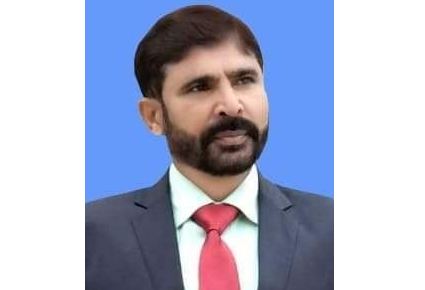
Dr. Muhammad Ikram Zaheer

Summer flood killed more than 1,500 people in Pakistan. Since June rain swept away buildings, flooded homes and destroyed roads. One third of the country was under water. Scientists still can’t say exactly how climate change contributed to the disaster, but they do know that global warming is dramatically increasing the likelihood of extreme rains in South Asia, a quarter of humanity’s area. This global warming has made the monsoon season worse this year for the region particularly Pakistan.

 Pakistan is a country that has done little to combat global warming and now it is being worsen much due to Global Warming and the Monsoon. The South Asian summer monsoon is part of the regional climate pattern. Mainly from June to September, winds blow from the south-west. This terrestrial wind brings the rainy season. In general, this is usually a good thing for the agricultural activities.  Farmers across the region depend on monsoon rains for their crops. But this is not a normal time anymore. Due to global warming, the water in the oceans is evaporating very fast. And warmer environments can hold more moisture. Hence, heavy rains can occur during monsoon. It will take time for researchers to examine the attribution to determine what happened this summer, but Steven Clemens, professor of Earth, Atmospheric and Planetary Sciences at Brown University, said Pakistan’s plains have caused significant flooding. . The country’s disaster management agency says that rains have been three times higher this monsoon season in Pakistan. Sindh province, which borders the Arabian Sea to the south, receives five times the average rainfall. The ongoing political instability in Pakistan complicates the task of preparing for heavy rains. In Pakistan, no prime minister has completed his term. Former Prime Minister Imran Khan was also forced to resign in April. He was indicted this month under anti-terrorism laws amid a power struggle with incumbent leaders. The country’s difficult economic situation also means that there are not enough resources for adaptation projects. At one point this month, the annual inflation rate was 42.3 percent. Madiha Afzal, an analyst at the Brookings Institution in Washington, says the heavy rains damaged much due to late response by the government that was already facing economic and political crisis in the country. He further said that the government did not pay attention and not took it serious. “So things that should happen in a disaster, like the message to evacuate people from flood areas, didn’t happen.” Economic difficulties are also affecting the government’s ability to help the house displaced people and rebuild damaged properties, he added. There is a risk of damage to agriculture as well. According to the World Bank, more than 40 percent of Pakistanis are employed in agricultural sector. The United States this month announced almost 1 million dollars for Pakistan to deal with natural disasters. And in September, the country has secured a $1.3 billion loan from the International Monetary Fund to avoid default. But government officials in Pakistan believe that the damage was caused by a natural disaster that is the result of public sins.

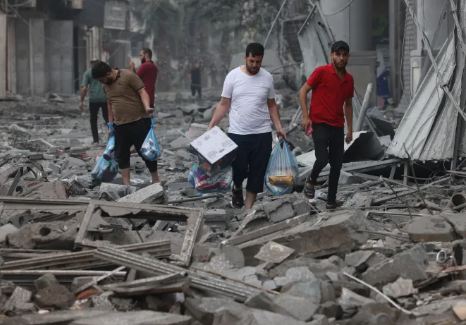
Humanitarian Catastrophe in Gaza: 1.3 Million Citizens Left Homeless

Humanitarian Catastrophe in Gaza: 1.3 Million Citizens Left Homeless

GAZA, JAN 9: Foreign and expatriates, The true essence of changing the image of the war of extermination and its misleading nature is its continuation The Israeli government continues its attempts to mislead world public opinion and international officials by promoting a change in the character and shape of the genocide war with a goal Absorbing global resentment and the escalating pressure on the occupying power to stop its massacres and target Palestinian civilians.

The forced displacement committed by the occupation in the northern Gaza Strip, in the center and south, which means deepening the humanitarian catastrophe in the areas that have become more densely populated in the world after the forced exodus, as nearly 1.3 million citizens are currently alone. They are homeless.

The ministry asserts that Israel’s attempts to give the impression of alleviating the war do not include the minimum demand by the countries of the world to protect civilians, especially with the continued bombing of homes and facilities over the heads of its residents, and Netanyahu’s refusal of the return of the displaced to the northern Gaza Strip and the transfer of aid incomes. The issue of extortion, barter and preventing the basic humanitarian needs of the residents of the Gaza Strip, in light of the escalation in the mass massacres committed by the occupation forces in the central and southern regions of the Gaza Strip, which constantly cause more civilian casualties.

 Rather, they boast about the prolonged war on our people and their continuation during the year 2024, and sometimes mislead the world with alleged conversations about the day after the war, but to move to another stage of war less severe at other times, knowing that Netanyahu and his coalition They are trying to sustain the cycle of wars and violence to achieve the goal of staying in power and restoring their popularity, and the result is that more than 2 million Palestinians are a constant victim, all of which are still living in a whirlpool of certain death and displacement in various forms.

The ministry reaffirms that the immediate ceasefire is the only way to protect civilians and secure their basic humanitarian needs, and that any other side conversations, situations and issues that do not serve the goal of stopping the war are rejected and are nothing more than ashes in El-Ayoun.

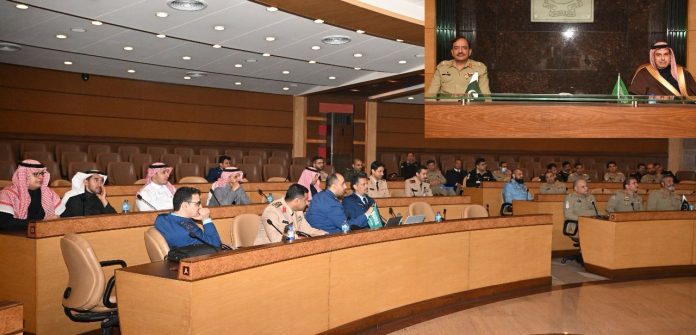
KSA defence collaboration held at GHQ

Rawalpindi, 9 January 2024:

3rd Meeting of Pakistan-KSA Defence Collaboration was held at GHQ, Rawalpindi on 8 January 2024.

The forum underscored the significance of historical relations between the two brotherly states. Participants discussed issues of bilateral interest and evolving security environment.

The two sides deliberated upon rapid advancements in military technologies and the need for defence industrial cooperation between the two states towards the fulfilment of shared objectives.

Both sides reaffirmed their desire to enhance defence cooperation in all domains to achieve self-sufficiency in the field of defence production.

Forum reiterated the need to explore further avenues for defence cooperation and enhancing the pace of collaboration.

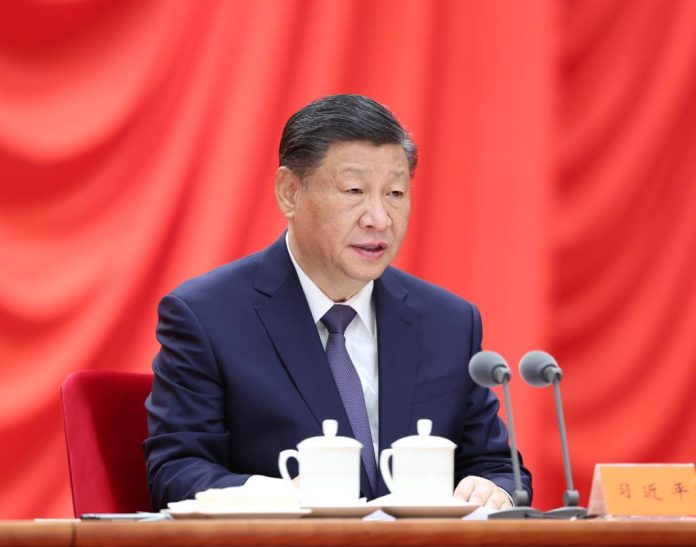
Xi stresses winning tough, protracted battle against corruption

BEIJING, Jan. 8 (Xinhua) — Xi Jinping, general secretary of the Communist Party of China (CPC) Central Committee, on Monday called for advancing the Party’s self-reform and winning the tough and protracted battle against corruption.

Xi, also Chinese president and chairman of the Central Military Commission, made the remarks while addressing the third plenary session of the 20th CPC Central Commission for Discipline Inspection (CCDI).

After persistent anti-corruption efforts over the past 10 years of the new era, an overwhelming victory has been achieved in the fight against corruption, with the gains fully consolidated, Xi said.

“But the situation remains grave and complex,” Xi noted.

“We should be fully aware of new development in the fight against corruption and the breeding grounds and conditions for corruption,” Xi said, urging more efforts to win the tough and protracted battle.

Members of the Standing Committee of the Political Bureau of the CPC Central Committee Li Qiang, Zhao Leji, Wang Huning, Cai Qi and Ding Xuexiang attended the meeting.

Li Xi, a member of the Standing Committee of the Political Bureau of the CPC Central Committee and secretary of the CCDI, presided over the meeting.

Xi noted that 2023 marks the first year that the guiding principles of the 20th CPC National Congress are implemented on all fronts.

The CPC Central Committee has unswervingly advanced the Party’s self-reform and deepened its efforts to promote full and rigorous Party self-governance, which has guaranteed that the new journey gets off to a good start, he said.

As the world’s largest Marxist governing party, the CPC faces the strategic question of how to escape the historical cycle of rise and fall, and how the Party can remain steadfast in its commitment to never change its nature, its conviction, or its character, he said.

Since the 18th CPC National Congress in 2012, in its great endeavor of promoting full and rigorous Party self-governance, the CPC has, based on Comrade Mao Zedong’s first answer of “putting the government under the supervision of the people,” found a second answer to the question — advancing the Party’s self-reform, he noted.

Over the past 10 years, through the practice and theoretical exploration of exercising full and rigorous Party self-governance, a series of important theoretical results have been accomplished, Xi said, adding that these results theoretically answer the major questions including why the CPC should carry out self-reform, why it is capable of self-reform, and how it can promote self-reform.

Xi pointed out nine important issues to advance the Party’s self-reform:

— the fundamental guarantee is to uphold the centralized, unified leadership of the CPC Central Committee;

— the fundamental purpose is to guide the great social revolution;

— the fundamental guidance stands as the Thought on Socialism with Chinese Characteristics for a New Era;

— the strategic target is to break the historical cycle of rise and fall;

— the main direction is to tackle the special challenges that a large party like the CPC faces;

— the effective method is to improve the systems for exercising full and rigorous self-governance;

— the focus is to forge strong Party organizations and cultivate highly-committed Party members;

— the key task is to improve Party conduct, enforce Party discipline and fight corruption;

— the strong impetus is from the integration of self-regulation and oversight from the people.

Xi stressed that, in order to advance the anti-corruption campaign in the new era, continuous efforts should be made to eliminate the breeding grounds and conditions for corruption.

He called for coordinated actions to ensure that officials do not have the audacity, opportunity or desire to become corrupt, as well as persistent efforts to expand the scale and extent of anti-corruption campaigns, and regular and long-term measures to prevent and curb corruption.

Xi underlined the importance of enhancing the Party’s centralized, unified leadership in the fight against corruption.

He also stressed the importance of maintaining a tough stance against corruption and said that in the continued grave and complex situation, there is no possibility of stopping, slackening or compromising the anti-corruption campaign.

Combating corruption in the form of collusion between officials and businesspeople should be the priority, Xi said, urging efforts to crack down resolutely on the profit-driven abuse of power and prevent various interest and power groups from infiltrating the political arena.

Xi called for greater efforts to rectify corruption in the finance, state-owned enterprise, energy, medicine and infrastructure project sectors, as well as efforts to punish graft occurring on people’s doorsteps.

Deepening reform is necessary to stem the spread of corruption, Xi noted, calling for an integrated early warning and punishment mechanism, and for the strengthened handling of new and disguised forms of corruption.

Underscoring the need to improve the legal system that fights corruption, Xi said national anti-graft legislation should be promoted continuously, and the Supervision Law should be amended in pace with the times. He also called for an education campaign on discipline within the Party.

Xi urged redoubled efforts to tackle and punish acts of bribery, and efforts to retrieve and address the illicit interests gained by those who give bribes.

He urged constant and rigorous efforts to purify the political eco-system, prevent the rules of business dealings from entering into the Party, and persistently rectify misconduct in the selection and appointment of officials.

Efforts should be made to promote a culture of integrity in the new era, carry forward the proud traditions and venerable conduct of the Party, and ignite Party members’ lofty ideals and pursuits, Xi noted.

Stressing the importance of fostering strengthened familial ties, values and traditions, Xi urged efforts to ensure leading officials establish good discipline values among their families and relatives.

Noting that discipline inspection and supervision agencies are important forces driving the Party’s self-reform, Xi said that these agencies should be loyal, reliable and pure in an absolute manner.

Xi ordered efforts to build a strengthened contingent of disciplinary inspection and supervision cadres, as well as efforts to forge them into an “iron army” that the Party can trust and that can meet the people’s expectations.

While presiding over the plenary session, Li Xi said that Xi’s speech made strategic plans for the advancement of the fight against corruption, calling for the thorough study and implementation of the spirit of the speech, as well as Xi’s important ideas for the Party’s self-reform.

Li urged efforts to advance full and rigorous Party self-governance and self-reform to provide a strong guarantee for building a strong country and realizing national rejuvenation on all fronts through a Chinese path to modernization.

The third plenary session of the 20th CPC CCDI opened on Monday. Li delivered a work report on behalf of the CCDI standing committee on Monday afternoon.■

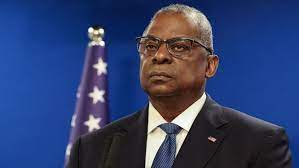
US defense chief under fire for undisclosed hospitalization

Washington, Jan ):US Defense Secretary Lloyd Austin is facing growing criticism for waiting days to inform the White House and Congress about his hospitalization, keeping key officials in the dark about his status during a major Middle East crisis.
              Austin was admitted to Walter Reed National Military Medical Center on January 1 due to complications from an elective medical procedure, but the Pentagon did not make any public announcement until four days later, and also waited to notify other top government figures.
              The 70-year-old secretary's hospitalization comes with Washington struggling to contain the fallout from the Israel-Hamas war, which has sparked violence against American forces in Iraq and Syria as well as attacks on international shipping.
              With the Middle East in turmoil, the idea that "for four days the secretary of defense is in a hospital and (President Joe) Biden doesn't know is shocking," Ian Bremmer, the president of the Eurasia Group political risk firm, said Monday.
              Bremmer said the situation gives the president an opportunity to replace Austin, but the White House has stood by the secretary.
              Austin underwent an unspecified medical procedure on December 22 and was discharged the following day, but began experiencing "severe pain" on January 1 and was taken by ambulance to Walter Reed, Pentagon spokesman Major General Pat Ryder told journalists on Monday.
              Some of Austin's authorities were transferred to Deputy Defense Secretary Kathleen Hicks on January 2, but she was not told that he was hospitalized until two days later, Ryder said.

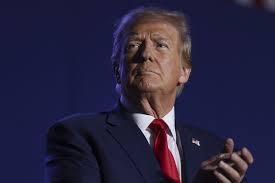
Trump to attend Washington hearing on ‘absolute immunity’ claim

Washington, Jan 9):Donald Trump is expected in federal court on Tuesday to argue that as a former US president he should be immune from prosecution on charges he conspired to overturn the 2020 election.
              The frontrunner for the 2024 Republican presidential nomination is scheduled to go on trial on March 4 in a Washington courtroom just blocks away from the US Capitol stormed by his supporters on January 6, 2021.
              Trump's attorneys have sought to quash the election interference charges with the novel argument that a former president enjoys "absolute immunity" and cannot be prosecuted for actions he took while in the White House.
              US District Judge Tanya Chutkan, who is to preside over the historic trial, rejected the immunity claim last month, saying an ex-president does not have a "lifelong 'get-out-of-jail-free' pass."
              Trump's "four-year service as Commander in Chief did not bestow on him the divine right of kings to evade the criminal accountability that governs his fellow citizens," Chutkan said.
              Trump appealed the decision and a three-judge panel for the US Court of Appeals for the DC Circuit is to hear oral arguments in the case at 9:30 am (1430 GMT) on Tuesday.
              Two of the judges were appointed by Democratic President Joe Biden while the third was named by Republican president George H.W. Bush.
              Derek Muller, a law professor at the University of Notre Dame, said he believes Trump, the first former US president ever to face criminal charges, is unlikely to prevail in the immunity case.
              "My sense is Trump is going to have an uphill battle," Muller told AFP. "I think some of the claims he's making are pretty broad."
              Trump, in a post on his Truth Social platform, said he would attend Tuesday's hearing and warned that a rejection of his immunity defense could lead to indictments of Biden if he returns to power.
              "The least I am entitled to is Presidential Immunity on Fake Biden Indictments!" the 77-year-old ex-president said.
              "If I don't get Immunity, then Crooked Joe Biden doesn't get Immunity," Trump said, claiming his 81-year-old Democratic opponent "would be ripe for Indictment."

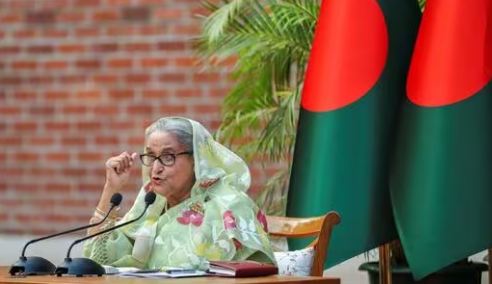
PM congratulates Sheikh Hasina on re-election

PM congratulates Sheikh Hasina on re-election

ISLAMABAD, Jan 8 (APP/DNA): Caretaker Prime Minister Anwaar-ul-Haq Kakar on Monday congratulated Sheikh Hasina on her re-election as the Prime Minister of Bangladesh.

In a post on social media platform X, he said, “I congratulate Sheikh Hasina on her re-election as the Prime Minister of Bangladesh. I wish Sheikh Hasina will look forward to enhance cooperation between Pakistan and Bangladesh under her leadership.”

In boost to Nawaz and Tareen, Supreme Court ends lifetime disqualification

Nawaz

SC issues ruling with 6-1 majority; disqualification under Article 62 capped at 5 years; Justice Afridi differs with fellow judges

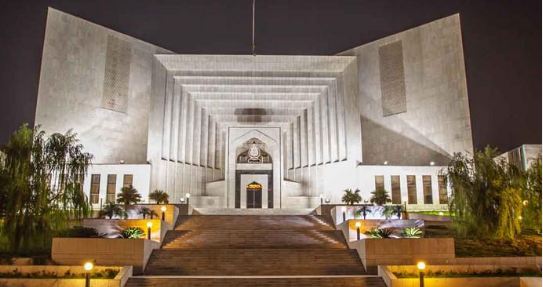
ISLAMABAD: After much deliberation, the Supreme Court of Pakistan Monday ended the lifetime disqualification of lawmakers, recalling its earlier order of disbarring politicians from running for office ever, boosting hopes for political bigwigs who are eyeing to contest polls on February 8.

The Supreme Court declared that no person can be barred for a lifetime from running in elections if they are disqualified under Article 62 (1)(f), setting aside its landmark judgment in the Samiullah Baloch case.

A seven-member larger bench — headed by CJP Qazi Faez Isa and comprising Justice Syed Mansoor Ali Shah, Justice Yahya Afridi, Justice Aminuddin Khan, Justice Jamal Khan Mandokhail, Justice Muhammad Ali Mazhar, and Justice Musarrat Hilali — conducted the hearings of the case, which were broadcast live on the apex court’s website.

The bench announced the verdict with a 6-1 majority as Justice Yahya Afridi disagreed with his fellow judges, backing the apex court’s previous judgment.

The legal conundrum arose after the parliament passed the amendments in the Elections Act 2017, restricting the disqualification period of a politician to five years, instead of a lifetime, contrary to the SC’s order, which deemed disqualification under Article 62(1)(f) as “permanent”.

The latest judgment finally allows Pakistan Muslim League-Nawaz (PML-N) supremo Nawaz Sharif and Istehkam-e-Pakistan Party (IPP) chief Jahangir Tareen to run for office as they were disqualified for life.

While announcing the reserved verdict, the chief justice noted that since the election schedule was issued, it was “necessary” to release the order at the earliest.

In the previous hearing, the chief justice remarked that disqualifying anyone from life from parliament was “against Islam” as he quoted a verse from Surah Sajdah which explains that human beings are not bad but their deeds are.

While talking to Geo News, senior anchorperson Shahzeb Khanzada and Pakistan Institute of Legislative Development and Transparency (Pildat) President Ahmed Bilal Mehboob said that the order “came at the right time”.

In the written order, the SC noted that Article 62(1)(f) of the Constitution is not a self-executory provision as it does not by itself specify any period for disqualification.

“There is no law that provides for the procedure, process, and the identification of the court of law for making the declaration mentioned in Article 62(1)(f) of the Constitution and the duration of such a declaration, for the purpose of disqualification thereunder, to meet the requirements of the Fundamental Right to a fair trial and due process guaranteed by Article 10A of the Constitution.”

The interpretation of Article 62(1)(f) of the Constitution in imposing a lifetime disqualification upon a person through an implied declaration of a court of civil jurisdiction while adjudicating upon some civil rights and obligations of the parties is beyond the scope of the said Article and amounts to reading into the Constitution, the order noted.

Such reading into the Constitution, the order mentioned, is also against the principle of harmonious interpretation of the provisions of the Constitution as it abridges the fundamental right of citizens to contest elections and vote for a candidate of their choice enshrined in the Constitution, in the absence of reasonable restrictions imposed by law.  

“Until a law is enacted to make its provisions executory, Article 62(1)(f) of the Constitution stands on a similar footing as Article 62(1)(d), (e), and (g), and serves as a guideline for the voters in exercising their right to vote,” the order read.

“The view taken in Samiullah Baloch case, treating the declaration made by a court of civil jurisdiction regarding breach of certain civil rights and obligations as a declaration mentioned in Article 62(1)(f) of the Constitution and making such declaration to have a lifelong disqualifying effect amounts to reading into the Constitution and is therefore overruled.”

 The order added that since Section 232(2) added in the Elections Act, 2017, on June 26, 2023, prescribes a period of five years for the disqualification incurred by any judgment, order, or decree in terms of Article 62(1)(f) of the Constitution, there “remains no need to examine its validity and scope in the present case”.

However, Justice Afridi said he disagrees with his colleagues as the extent of a lack of qualification of a member of the parliament, as envisaged under Article 62(1)(f) is neither lifelong nor permanent, and the same shall remain effective only during the period the declaration so made by a court of law remains in force.

“Therefore, the conclusion so drawn by this Court in Sami Ullah Baloch Versus Abdul Karim Nousherwani (PLD 2018 SC 405) is legally valid, hence affirmed,” the Supreme Court’s judge added.

Shrinking global GDP will compound Pakistan’s problems

KARACHI, JAN 08 (DNA) — Chairman of National Business Group Pakistan, President Pakistan Businessmen and Intellectuals Forum, and All Karachi Industrial Alliance, and former provincial minister Mian Zahid Hussain said on Monday that some economic sectors will be hit as the world GDP declines.

Policymakers should take action to tackle the situation, with a special focus on rising debt, inflation, and the value of the rupee, he said. The economy should be headed in the right direction, and development barriers should be taken down to improve the situation, he added.

Talking to the business community, the veteran business leader said that the global GDP will shrink this year, while there will be a slight improvement in Pakistan’s GDP.

Inflation, the rupee, and rising debt need to be given special attention this year, while the growth rate is likely to improve further if energy prices and political tensions ease.

Mian Zahid Hussain said that many international organisations believe that Pakistan’s growth rate will be 2 percent this year, while India’s GDP is likely to be 6.2 percent. Pakistan’s GDP may increase from 2% to 2.4% in 2025.

In the opinion of international organisations, the food security situation in Pakistan may be more disturbed this year, which should be taken seriously, he underlined. The business leader said that global GDP will fall to 2.4 percent this year from last year’s 2.7 percent. Reasons for a decline in global GDP include high interest rates, political conflicts, reduced trade, and the possibility of natural disasters.

A decrease in global GDP will also create problems for Pakistan as it will reduce the demand for our products, he said, adding that the economic crisis has caused a lot of pain to the people, so policymakers should correct the direction of the economy during the current crisis like other countries and solve all the problems that are damaging the economy.

Mian Zahid Hussain added that in 1960, the per capita income of West Pakistan was 32 percent higher than the per capita income of East Pakistan. This gap had increased to 81 percent by 1970.

When Bangladesh was formed, Pakistan was performing better than neighbouring countries in every field, but now its condition has become worse.

Now we can’t even imagine development like Bangladesh, which started its journey with a negative 13% growth rate. Currently, the size of our economy is 340 billion dollars, and the size of Bangladesh’s economy is 454 billion dollars.

The economy of Bangladesh and other regional countries is expanding rapidly, but our economy is shrinking. Mian Zahid Hussain further said that the condition of Afghanistan’s currency, which has been devastated by continuous war for decades, is much better than Pakistan’s currency. — DNA

Stay Connected

64FansLike
60FollowersFollow

Latest Reviews

Exchange Rates

USD - United States Dollar
EUR
1.17
GBP
1.35
AUD
0.72
CAD
0.73