Home Blog Page 1062

EU keen to enhance cooperation with Pakistan: Ambassador

EU keen to enhance cooperation

with Pakistan: Ambassador

      Answering a question about educational cooperation, she said our institutional partnerships between universities of EU and Pakistan in the field of science and technology and higher education are seeking more potential for better outcomes, adding, that EU application for 2024 scholarships is open for Pakistani students, they can apply for different study fields through EU program and enjoy their higher full funded studies in European countries

DNA

                ISLAMABAD, Ambassador of the European Union H.E Dr. Riina Kionka, Wednesday said that the EU is keen on enhancing cooperation with Pakistan and focusing on exploring more avenues of trade, and investments in multiple sectors like information technology, surgical instruments, sports business, women entrepreneurs, education and textile industry.

      In an exclusive interview with a private news channel said that the EU was continuing support to Pakistan’s economic development, adding, that the bonds between the two nations are much older which is cementing with each passing day.

      Answering a question about educational cooperation, she said our institutional partnerships between universities of EU and Pakistan in the field of science and technology and higher education are seeking more potential for better outcomes, adding, that EU application for 2024 scholarships is open for Pakistani students, they can apply for different study fields through EU program and enjoy their higher full funded studies in European countries.

     She said that highest highest-ever number of Pakistani students have been receiving scholarships to study in European universities under the EU’s flagship program this year.

    To another question, she said that the European Union was the largest destination for Pakistani exports where the business community diversifies their exports to the EU to take maximum advantage of the EU’s GSP Plus scheme for Pakistan which has recently been rolled.

    Kionka also termed GSP Plus as tremendously important for Pakistan’s economy as it was beneficial not only for textile producers but also through the trickle-down effect of all those people who work in textile factories.

 She also identified Gems and Jewelry, Tourism, Handcrafts and Auto Parts etc. as potential sectors under GSP Plus, the EU Envoy noted that 28 percent of Pakistan’s exports come to the European single market which was a good number but it could further be enhanced.

  Talking about current political activities in Pakistan, she commented that the top EU diplomat in Pakistan has scheduled a series of meetings with political bigwigs to urge “timely, inclusive and peaceful elections”, The EU was sending a handful of top observance in Pakistan to share their expertise and for providing meaningful suggestions.

   The ambassador said it was the EU priority of his mission to enhance parliamentary diplomacy, people-to-people exchanges, business opportunities, information, and renewable technologies, besides cooperation in the economic sector with Pakistan.

 The EU-Pakistan Business Forum for Small and Medium Enterprises (SME) is also providing opportunities for both EU and Pakistani businesses to work together to become engines of development and partnership and contribute to enhancing bilateral trade, she mentioned.

Israeli shift in military tactics threatens to be a double-edged sword

LFK released annual report

James Dorsey

US pressure on Israel to switch gears and focus on targetted precision strikes and killings, rather than indiscriminate bombing of the Gaza Strip, potentially heightens the risk of the war escalating into a regional bust-up and expanding beyond the Middle East.

The heightened risk suggests US efforts to allow Israel to continue attempting to destroy Hamas while minimising civilian Palestinian casualties could backfire. This would further underline that the only way of preventing an escalation, protecting innocent lives, and securing the release of Hamas-held hostages, is a ceasefire.

Even so, US Secretary of State Antony Blinken, on his fifth visit to Tel Aviv since the war began, reaffirmed in talks with Israeli Prime Minister Binyamin Netanyahu, “Israel’s right to prevent another October 7 from occurring” but “stressed the importance of avoiding civilian harm, protecting civilian infrastructure, and ensuring the distribution of humanitarian assistance throughout Gaza.”

Antony Blinken arrives in Tel Aviv during his week-long trip aimed at calming tensions across the Middle East. Photograph: Evelyn Hockstein/Reuters

Mr. Blinken was referring to Hamas’ October 7 attack on Israel that sparked the Israeli assault on Gaza. His reference to infrastructure constituted the United States’ first public criticism of Israeli attacks on Gazan hospitals, schools, and other civilian infrastructure.

Signalling differences with Mr. Blinken, Mr. Netanyahu’s office did not issue a readout after the meeting.

Even so, US reluctance to go beyond verbal pressure by threatening consequences if Israel fails to heed US advice may stem from a belief that America’s leverage on Israel has diminished over time in economic and political terms.

US financial support amounted in 1981 to ten per cent of Israel’s GDP. The US’ annual US$4 billion allocation was in 2021 only good for one per cent of GDP. Moreover, Israel today produces many of its most essential weapons domestically, making it less dependent on US arms sales.

In addition, Israel concluded in 1991 that it could no longer blindly rely on US protection after the United States did not come to its aid when Iraq fired Scud missiles at the Jewish state during the Gulf war.

Despite remaining dependent on US vetoes in the United Nations Security Council and military cooperation, Israel worked to increase its margin of autonomy, much like Gulf states did three decades later after the United States failed to respond to Iranian-inspired attacks on their critical infrastructure in 2019 and. 2020.

Nevertheless, acting on seemingly accurate and up-to-the-minute detailed intelligence, Israel appears to have responded to US pressure by carrying out a series of targeted killings in the past week, including six operatives of Hezbollah, the Iranian-backed Lebanese Shiite militia, an Iranian Revolutionary Guard commander in Syria, and a top Hamas official in Beirut.

On Tuesday, Israeli forces targeted a car in southern Lebanon carrying three Hezbollah operatives north of the narrow band along the 120-kilometre Lebanese-Israeli border to which hostilities with the Lebanese group have so far been contained.

A minibus passes the attacked car that was used by the senior Hezbollah commander Wissam Tawil, who was killed on Monday, in Kherbet Selem village, south Lebanon, Tuesday, Jan. 9, 2024. Photo: AP/Hussein Malla

The attack, the second in 24 hours, occurred as Mr. Blinken discussed Israeli military strategy with Mr. Netanyahu and members of his war cabinet.

Israel targeted a second car, hours after the attack, close to the home of Wassim Al-Tawil, a senior Hezbollah commander killed together with another of the group’s fighters in a drone attack on Monday, as they travelled by car north of the band. The car was targeted as Mr. Al-Tawil was laid to rest.

“We’re targeting Hezbollah operatives, infrastructure, and systems they’ve set up to deter Israel,” said newly appointed Israeli Foreign Minister Israel Katz.

The United States has been pushing Israel to scale back its bombing of Gaza that has killed more than 23,000 people, a majority innocent Palestinian civilians, withdraw troops from the Strip, and focus on militant Palestinian targets.

The killings of senior Hezbollah, Hamas, and Iranian commanders threaten to push Iranian-supported forces to retaliate in ways that could escalate hostilities beyond Gaza and the so far narrow Israel-Lebanese border band.

In an indication of how hostilities could escalate, Hezbollah attacked an Israeli air traffic control base south of the band on Monday in retaliation for last week’s assassination in Beirut of a senior Hamas official, Salah al Arouri, and Israeli strikes in response.

The fact that a majority of Israel’s targeted killings have been Hezbollah operatives likely has much to do with US, French, and German efforts to prevent an escalation of exchanges between Israel and the Lebanese group and negotiate a definitive demarcation of the two countries’ borders.

Hezbollah has rejected Israeli demands to withdraw to a line 30 kilometres north of the border beyond the Litani River. Hezbollah has also said it would agree to Lebanese government border demarcation talks only after Israel halts its assault on Gaza and accepts a permanent ceasefire.

Israel has threatened to militarily push Hezbollah back to the Litani if diplomatic efforts fail. On a visit this week to Israeli troops on the Lebanese border, Israeli Prime Minister Binyamin Netanyahu warned, “If Hezbollah chooses to start an all-out war then it will…turn Beirut and southern Lebanon, not far from here, into Gaza and Khan Younis.”

The Israeli attacks on Hezbollah appear designed to force the group to choose between withdrawing and sparking an all-out war that bankrupt Lebanon cannot afford and many Lebanese do not want.

Hezbollah leader Hasan Nasrallah has indicated that he does not seek an escalation of hostilities but that his group was prepared if Israel opted for a full-fledged conflagration.

Israel’s apparent focus on Hezbollah operatives may also be because of its inability so far to take out Hamas’ most senior Gaza leaders, including Yahya Sinwar, more than three months into the war.

Last week, David Barnea, the head of Mossad, Israel’s foreign intelligence service vowed to hunt down every Hamas member involved in the group’s October 7 attack on Israel, no matter where they are.

Director of Mossad, David Barnea. Photo: Handout/GPO/Amos Ben Gershom/Anadolu Agency via Getty Image

Mr. Barnea compared the manhunt to Israel’s pursuit of Palestinian Black September after it attacked the Israeli team at the 1972 Munich Olympics and killed 11 athletes.

Last month, Ronen Bar, chief of Shin Bet, Israel’s domestic security agency, said Israel would hunt down Hamas in Lebanon, Turkey, and Qatar even if it took years.

Ronen Bar, head of the Shin Bet security agency. Photo: Avshalom Sassoni/Flash90

“This is our Munich. We will do this everywhere, in Gaza, in the West Bank, in Lebanon, in Turkey, in Qatar. It will take a few years, but we will be there to do it,” Mr. Bar said.

While Hamas has yet to retaliate for Mr. Al-Arouri’s killing, a senior official warned that it may expand the war beyond Israel and Palestine if the United States continued to support Israel.

“The West in general, and the US government in particular, need to reconsider their position because this will have consequences… If the U.S. insists on its position, our entire nation will view it, and treat it, as an enemy… This conflict could go beyond Palestine’s borders, and expand in scope,” said Hamas official Sami Abu Zuhri.

Mr. Abu Zuhri’s warning coincided with a call by the Islamic State for lone-wolf attacks on civilian targets in Europe and the United States, including churches and synagogues.

Gunmen burst into Ecuador TV studio live on air

Energy Seminar

                Quito, Armed men wearing balaclavas burst into the studio of a public television station on Tuesday in Ecuador’s drug violence-torn port city of Guayaquil, taking hostage several journalists and staff members, live footage showed.

                  “Don’t shoot, please don’t shoot,” one women shouted as gunshots rang out while the attackers, carrying rifles and grenades, forced terrified crew of the TC broadcaster onto the ground.

                  “National Police units in Quito and Guayaquil have been alerted about this criminal act and are already on the scene,” police said in a brief statement to journalists.

                  The live broadcast continued uninterrupted, although lights went off on set. About 30 minutes after the gunmen appeared, police could be seen entering.

                  “Police, police,” called out one man in uniform. “We have a wounded colleague,” a man replied.

                  “Please, they came in to kill us. God don’t let this happen. The criminals are on air,” one of the journalists told AFP in a WhatsApp message.

                  The incident came as Ecuador’s new president, 36-year-old Daniel Noboa, grappled with a security nightmare after the escape from prison of one of the country’s most high profile gangsters, Jose Adolfo Macias, known as “Fito.”

                  Noboa declared a 60-day countrywide state of emergency Monday, including in Ecuador’s notoriously violent prisons, and imposed a nighttime curfew.

                  In response, gangsters took several police officers hostage, and released a chilling video in which one of them was forced to read out a message addressed to Noboa.

                  “You declared war, you will get war,” the clearly terrified officer reads. “You declared a state of emergency. We declare police, civilians and soldiers to be the spoils of war.”

                  Noboa was elected in October on a pledge to fight rampant drug-related crime and violence in the South American country — once considered a bastion of peace, but now a key stop on the US- and Europe-bound cocaine trade.

Commission submits ‘revealing’ report on missing persons

Commission submits 'revealing' report on missing persons

In its report, the inquiry commission said that Khyber Pakhtunkhwa reported 3,485 cases of missing persons, making it the highest number in the country

Faisal Sheikh

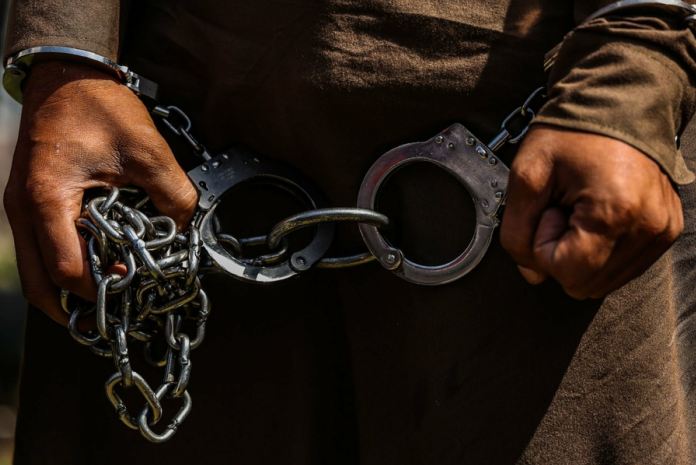
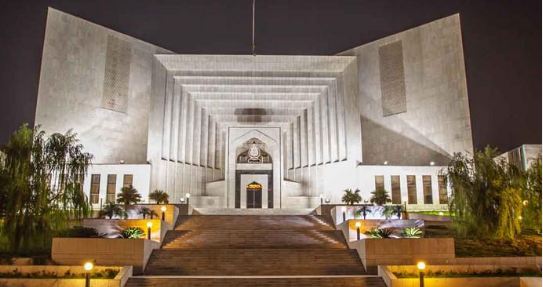
ISLAMABAD: In compliance with the Supreme Court’s order, the Commission of Inquiry on Enforced Disappearances on Tuesday handed over its “comprehensive report” on missing persons to the attorney general.

Last week, the top court sought a report from the commission along with details about orders issued to law enforcement agencies (LEAs) for the production of missing persons. The apex court had also asked the federal government to give in writing that there would be no more enforced disappearances in the country.

The development came as a three-member bench led by Chief Justice of Pakistan (CJP) Qazi Faez Isa and comprising Justice Muhammad Ali Mazhar and Justice Musarrat Hilali, heard the petitions of Barrister Aitzaz Ahsan and others on the unlawful practice of enforced disappearances, praying for declaring it as violative of various articles of the Constitution.

In its report, the inquiry commission said that Khyber Pakhtunkhwa reported 3,485 cases of missing persons, making it the highest number in the country. Causalities in drone attacks and the spike in militancy were the key reasons behind the disappearances, read the report.

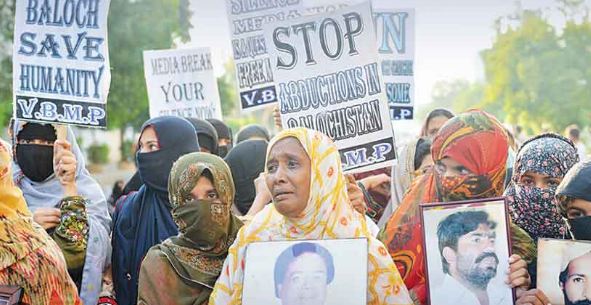
In Balochistan, 2,752 cases related to enforced disappearance were lodged, the commission said, adding that besides other reasons, fleeing abroad without informing their families, due to the prevailing situation in the province, was among the causes of these cases.

“In exercise of the aforementioned powers, the commission has issued 744 production orders out of which 52 have been implemented by the addresses, while the remaining 692 production orders are yet to the executed by the quarters concerned.”

The commission also received 182 petitions from the quarters concerned requesting for review of the production orders in these cases, the report added.

PM meets a group of envoys from African and Asian countries

PM meets a group of envoys from African and Asian countries

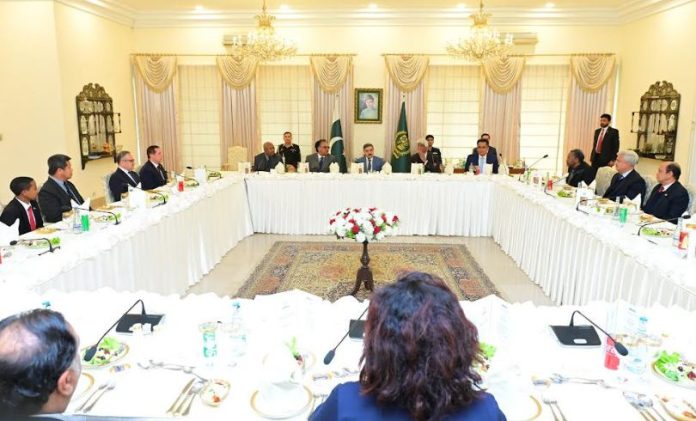
ISLAMABAD: /DNA/ – Caretaker Prime Minister Anwaar-ul-Haq Kakar met a group of resident envoys representing African countries as well as select Asian countries over lunch today.

The meeting was attended by the Ambassadors of Algeria and Sudan as well as High Commissioners of Bangladesh, Brunei, Malaysia, Mauritius, and South Africa. Other participants included the Charge d’ Affaires of Ethiopia, Indonesia, Kenya, Nigeria, Somalia, Tunisia, and Zimbabwe. The Foreign Minister, Secretary to the Prime Minister and Foreign Secretary also attended.

The Prime Minister highlighted the importance Pakistan attached to Africa. He expressed the desire to strengthen ties with African countries, at the bilateral as well as regional level. While acknowledging that Pakistan and Africa had enjoyed excellent political relations over the years, the Prime Minister stressed the need to enhance trade and economic linkages which had yet to realize their full potential. He mentioned that the 4th Pakistan-Africa Trade Conference was under way in Cairo, Egypt from 9-11 January, 2024 where Pakistan was represented by a large business delegation led by the Commerce Minister.

The Prime Minister also expressed deep appreciation for Pakistan’s historic ties with South East Asian countries, particularly Brunei, Indonesia and Malaysia. He said Pakistan was keen to expand bilateral trade ties with these key countries and sought their assistance in strengthening Pakistan’s engagement with ASEAN.

Referring to the ongoing situation in Gaza, the Prime Minister stressed the need for dialogue among nations and for intensifying collective efforts to end the violence and bring lasting peace in Palestine.

The Prime Minister praised the diplomatic envoys for their efforts to build stronger ties with Pakistan and their respective countries. The diplomats thanked the Prime Minister for sparing time to interact with them and said they would continue to work closely with Pakistan to enhance bilateral relations.

DG PHA visits city parks to review beautification work

PHA

RAWALPINDI, JAN 09 (DNA) — Director General (DG), Parks and Horticulture Authority (PHA) Rawalpindi, Ahmad Hassan Ranjha here on Tuesday visited different city parks and reviewed the ongoing beautification work.

The DG directed the authorities concerned to complete the beautification work as soon as possible. Ahmed Hassan Ranjha also inspected cleanliness arrangements and instructed the officials concerned to provide all basic facilities in the parks.

He informed that the authority was utilizing all available resources to make the city clean and green and uplift the parks.  The authorities concerned had been directed to complete ongoing renovation and beautification work of all the parks within the shortest possible time frame, he said adding, that efforts were also being made to repair faulty lights, swings and walking tracks besides improving the security of the parks.

The PHA officers had also been instructed to utilize all available resources to ensure the provision of the best recreational facilities to the public in all the parks of the town, he added.  The PHA was planting maximum saplings and enhancing greenery, particularly in parks and green belts of the city, he added.  During the visit, the officers concerned of PHA were also present. — DNA

ECC approves RS. 250 million for intelligence bureau’s anti-terror measures

ECC approves RS. 250 million

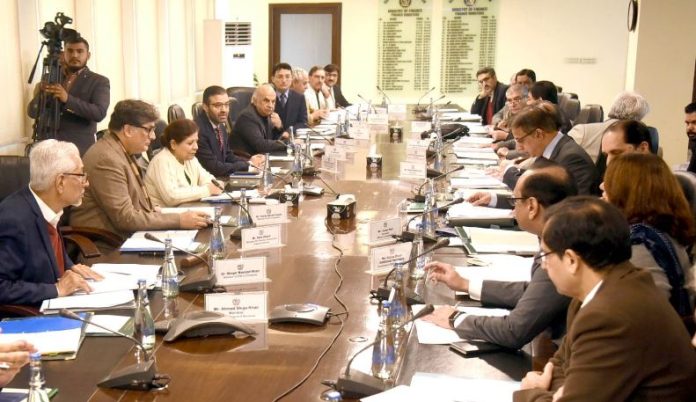
ISLAMABAD, JAN 9 /DNA/ – The Federal Minister for Finance, Revenue, and Economic Affairs, Dr. Shamshad Akhtar presided over a meeting of the Economic Coordination Committee (ECC) of the Cabinet, today. The meeting was attended by the Minister for Privatization and Inter Provincial Coordination Mr. Fawad Hasan Fawad, Minister of Planning, Development and Special Initiatives Mr. Sami Saeed, Deputy Chairman Planning Commission Dr. Muhammad Jehanzaeb Khan, Minister for Law and Justice, Water Resources and Climate Change Mr. Ahmed Irfan Aslam, Advisor to PM on Finance Dr. Waqar Masood, Federal Secretaries, and other senior government officers of the relevant ministries.

ECC was presented with five agenda an item of which first summary was from Intelligence Bureau for provision of additional funds of Rs. 250 Million during the current financial year 2023-24. The Intelligence Bureau briefed the committee about recent surge of terrorism which needed effective counter measures to thwart nefarious designs of terrorists. The Economic Coordination Committee approved the funds as Technical Supplementary Grant (TSG) for up gradation, technical enhancement and field activities of Intelligence Bureau with releases on need basis.

The summary of Ministry of Industries and Production for approval of mechanism for sale of imported urea at a basket price along with locally manufactured urea was discussed at length. The ECC approved the mechanism for weighted average price with the direction to NFML for ensuring reasonable price for urea and Ministry of Industries & Production to provide oversight to the whole process.

The Economic Coordination committee considered and approved the summary of National Health Services Regulation and Coordination for provision of Technical Supplementary Grant (TSG) amounting to Rs. 3,568.719 Million in favour of Federal Directorate of Immunization (FDI), and urged the provinces to clear their pending liabilities.

ECC also considered the summary of Finance Division for signing the addendum to the Subsidiary Grant Agreement (SGA) regarding financial inclusion & infrastructure project and exemption from relending policy of release of funds to State Bank of Pakistan and accorded its approval.

A summary from Ministry of Inter Provincial Coordination was also tabled for approval of release of grant for participation of Pakistan’s Hockey team in international events and other sports promotion activities. This grant, ECC was told would also be utilised for Davis Cup (Tennis) with India and other mind games like scrabble and chess. The Committee approved provision of additional funds amounting Rs. 100 Million as Technical Supplementary Grant (TSG) for FY 2023-24.

Frenchman arrested in Azerbaijan for ‘espionage’: Ambassador in Paris

Azerbaijan

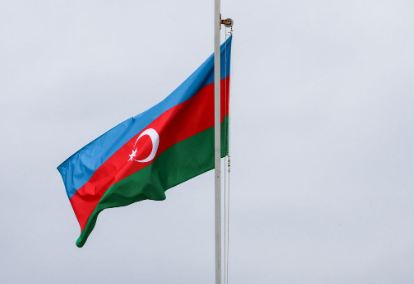
PARIS, Jan 9 (AFP/APP/DNA): Azerbaijan authorities arrested a Frenchman on espionage charges in December, the Azerbaijani Ambassador to France told AFP on Tuesday, amid rising tensions and tit-for-tat expulsions of diplomats.

Baku has accused France of supporting Azerbaijan’s arch-enemy Armenia, both diplomatically and militarily, and of seeking to fuel tensions in the South Caucasus.

   “Suspected of having committed acts of espionage, Martin Ryan, a French national, was arrested on December 4, 2023,” said Azerbaijan’s ambassador Leyla Abdullayeva.

   She said judicial authorities had ordered that he be detained for four months. The French embassy in Baku was notified, she added.

   Ryan’s father Richard said the family had spoken to him.”We spoke to him four times, each time for two minutes,” he told AFP. “He says he’s being treated well and is getting on well with his lawyer.”

 According to his father, Ryan believes his detention is linked to the tensions between the two countries.

   “Once he told me: ‘They wanted to use me as a pawn’,” Richard Ryan said.

                  On Tuesday, the Frenchman’s court-appointed lawyer, Nizami Aliyev, told AFP that Ryan could face up to 15 years in prison, if convicted.

                  He said he could not share any information and stressed it was “risky to talk about the case.”

                  Aliyev also claimed that Ryan had been in contact with French people who he later learned were “agents” of French intelligence.

                  “Martin is not an agent, he is a citizen,” the lawyer said.

                  The French embassy in Azerbaijan and the French foreign ministry did not immediately comment.

                  Diplomatic tensions between Paris and Baku escalated at the end of December, when Azerbaijan ordered two French diplomats to leave the country.

                  France declared two Azerbaijani diplomats “persona non grata” as a reciprocal measure.

                  In November, Azerbaijani President Ilham Aliyev accused France of inciting conflict in the Caucasus by arming Armenia.

                  Azerbaijan and Armenia have in the last three decades fought three wars over the Azerbaijani region of Nagorno-Karabakh, which was seized by Armenian forces when the Soviet Union fell apart.

                  In the latest war, Azerbaijan took total control of Karabakh in a surprise offensive last year.

                  The move sparked some international condemnation, including from France, but also hope of a settlement to end years of conflict between Baku and Yerevan.

                  Paris has also linked Azerbaijani figures to a disinformation campaign aimed at tarnishing France’s reputation as host of the 2024 Olympic Games, according to a report seen by AFP in November. France is home to a large Armenian diaspora.

For and against the SC verdict in lifetime disqualification case

Nawaz

This incongruity raises pertinent questions about the prerequisites for those entrusted with the responsibility of making laws. Should not the guardians of legislation be held to at least the same standard of integrity as individuals seeking far less influential positions within the system?

Ansar M Bhatti

Islamabad: The recent Supreme Court verdict, which abolishes lifetime disqualification, has elicited a varied response from the general public and the legal community. While some express approval, others harbor concerns, particularly among legal experts. There is a prevailing sentiment that this decision might set a precedent, potentially leading to a series of revisitations by future chief justices.

Experts argue that the possibility of a nine-member bench overturning this verdict raises questions about the stability and consistency of judicial decisions. This apprehension prompts reflection on the potential for a cycle of reversals, undermining the perceived sanctity of legal decisions.

Legal scholars contend that the Supreme Court could have opted for a different approach, considering the precedent set by the five-member bench in the Samiullah Baloch case. They suggest that, instead of overturning Samiullah Baloch, the court could have recommended leaving the matter to the new parliament for resolution through a constitutional amendment to Article 62 F, requiring a two-thirds majority.

This alternative course of action would ensure a more stable and democratic process, allowing elected representatives to deliberate and decide on issues of constitutional significance. It emphasizes the importance of all-inclusive parliamentary involvement in shaping and amending fundamental laws, maintaining the balance between the judiciary and the legislative branches.

It remains uncertain whether the comprehensive judgment will address these questions. However, one certainty is that the court might articulate in its detailed decision that amending Article 62 F requires a two-thirds majority.

During the court proceedings, some judges correctly noted that the government had a significant opportunity to modify this article through the 18th Amendment, yet they consciously avoided addressing this matter. The Chief Justice’s comments on this issue strongly suggest that parliamentarians might have refrained from amending the article due to concerns about potential backlash from the clergy.

As we delve into the provisions of Article 62 F, which specifically addresses the conduct of parliamentarians, a noteworthy discrepancy emerges. The stipulation dictates that individuals aspiring to hold parliamentary positions must embody qualities such as fairness, righteousness, honesty, and truthfulness.

In a striking contrast, individuals vying for even modest roles like a peon or an attendant in Pakistan are required to furnish a police character certificate, affirming their clean record and lack of involvement in any malpractices. This certificate explicitly attests that no legal cases have been lodged against them in any court of law.

This incongruity raises pertinent questions about the prerequisites for those entrusted with the responsibility of making laws. Should not the guardians of legislation be held to at least the same standard of integrity as individuals seeking far less influential positions within the system? Addressing this disparity could foster a more equitable and transparent approach to the selection and conduct of parliamentarians, aligning with the principles of fairness and accountability that are foundational to a robust democratic framework.

Boycotting products from Israel; will it help

Boycotting products from Israel; will it help

SAMAR KAINAAT

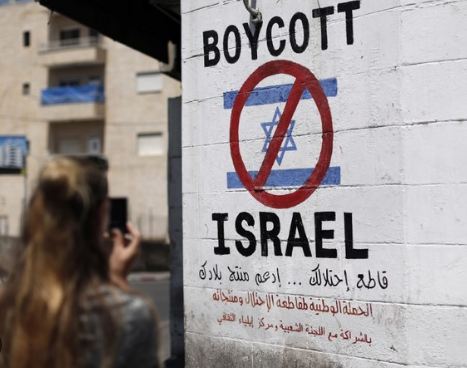
Have you ever heard about boycotting products from ISRAEL?

Boycotts are a form of protest where individuals or groups choose not to buy or support products or services from a particular country or company. The reasons for boycotting can vary, and in the case of Israel, it’s often related to political conflicts in the region. In the case of boycotting products from Israel, some people choose not to buy things made in Israel to express their concerns about the situation between Israel and Palestine.

The main reason people boycott products from Israel is because they want to bring attention to the conflict between Israel and Palestine. They hope that by not buying Israeli products, they can make a difference and encourage the Israeli government to change its policies. Boycotting can be complicated. It’s not always easy to know where products come from because many things are made with materials from different countries. It can also be hard to measure how effective a boycott is and if it will really make a difference. As being a supporter of humanity the ongoing situation in Palestine is not bearable at all especially when it comes to the loss of innocent lives, including children.

The ongoing conflict has resulted in tragic consequences for both Israelis and Palestinians. It’s heartbreaking to witness the suffering and violence that affects the lives of so many people, especially children. It’s crucial that we continue to raise awareness, support humanitarian efforts, and promote dialogue to bring about a just and lasting solution. It’s important to note that the decision to participate in a boycott is a personal one, and individuals should educate themselves about the issues at hand and make informed choices based on their own values and beliefs. Boycotting can bring attention to important issues and raise public awareness. I hope that boycotting products create a positive impact in the world and create a peaceful resolution between Israel-Palestine conflict.

The writer is the student of FAZAIA BIQUIS COLLEGE  BS-ENGLISH

Stay Connected

64FansLike
60FollowersFollow

Latest Reviews

Exchange Rates

USD - United States Dollar
EUR
1.17
GBP
1.35
AUD
0.72
CAD
0.73