Home Blog Page 1019

A Paradigm Shift in Pakistani Politics

Elections are the Battle of Hearts and Minds

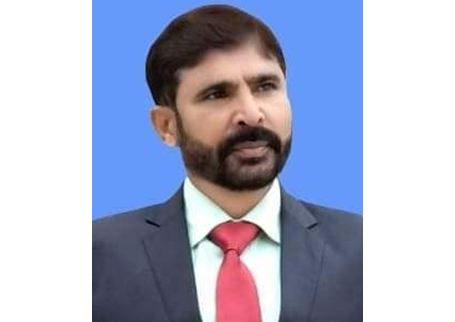
Dr. Muhammad AkramZaheer

Last week in Pakistan, something surprising happened in the big national election. Imran Khan’s party, Pakistan Tehreek-e-Insaf (PTI), won more votes than anyone expected. This unexpected win has made many people worried about what might happen next in the country. People are concerned that this could lead to more confusion and problems in the government. Imran Khan has been a well-known figure in Pakistani politics for a long time. He leads PTI and has promised to bring in a new and better way of running the country, with transparency, accountability, and economic growth. However, the election results have made people doubtful and anxious. Many are questioning whether the election process itself can be trusted. The national election had been delayed for a long time, creating uncertainty and suspicion among the people. Delays in elections often make people not trust the process, and the long wait had made many wonder why it was postponed in the first place. The sudden turn of events in favor of PTI has only added to these doubts, creating an atmosphere of political uncertainty that might harm the stability of the nation. One major worry about PTI’s unexpected win is that it might lead to more political problems. A sudden change in who holds power can make the country’s political institutions shaky, which could affect how the government works and puts policies into action. Without a clear decision from the voters, existing challenges could become even more difficult to handle, leaving the country in a state of political uncertainty.The surprising outcome has also raised questions about the health of Pakistan’s democracy. Democracy relies on openness, fair play, and accepting the results of elections. PTI’s unexpected victory has led to claims of irregularities and manipulation from other parties, making people doubt if the results are legitimate. Such accusations can make people lose trust in the democratic process, making them doubt the power of their vote to bring about real change.

Before the election, people thought that no party would get the most seats in the National Assembly. Many expected Nawaz Sharif’s party, Pakistan Muslim League-Nawaz (PML-N), to get the most seats and easily make a government with the help of other parties. On the other hand, Imran Khan’s PTI faced challenges from the military, which affected its chances. Surprisingly, independent candidates linked to PTI won the most seats, giving them the chance to create a new government. This unexpected result has created uncertainty and might cause more political issues in Pakistan. The voter turnout was about 47%, which is higher than usual for Pakistan but lower than the previous election in 2018. The National Assembly has 336 seats, and the election was for 266 seats. PTI got the most seats with 92, followed by PML-N with 77, Pakistan People’s Party (PPP) with 54, and MuttahidaQomi Movement Pakistan (MQM-P) with 17. PTI, officially banned, is expected to join forces with an approved party to combine their votes. The election results have divided political forces into two camps. PTI, claiming election manipulation, plans to appeal to the courts and protest peacefully. PML-N, the other camp, is negotiating with other parties to create a coalition government. PML-N seems to have a clearer path to getting the majority needed to govern.

The military seems to be the biggest loser in the election. The results show that the public is angry at the military’s involvement in the election process. The military, which hasn’t faced such criticism since 1970, is now on the defensive. Despite strong arguments between PTI’s leader and the military, some repairing of relations might be needed for PTI’s leader to regain freedom and office. However, it is likely that Pakistan will end up with a weak and unstable coalition government. This government may struggle to address the significant economic, social, and environmental issues facing the country. Both PTI and PML-N, whether in government or opposition, may spend much of their time questioning the legitimacy of the government and demanding new elections, making the 2024 national election another challenge for Pakistan’s democracy.
CJP comes down hard on army over its businesses

CJP comes down hard on army over its businesses

Army should do its work and courts will do their job, remarks CJP Qazi Faez Isa

Court Reporter

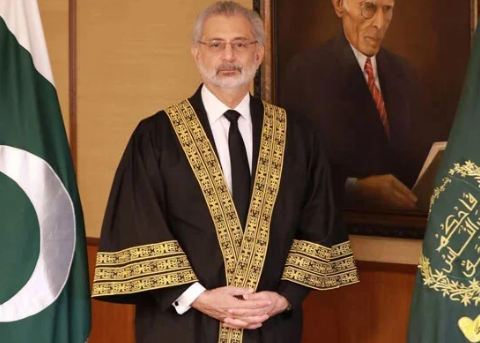
ISLAMABAD: Chief Justice of Pakistan (CJP) Qazi Faez Isa has sought assurance from the attorney general that the army would only work on defence-related matters and not run any business.

The assurance was sought from CJP Isa during a hearing of a petition filed against commercial activity being done on military land.

During the hearing, CJP Isa remarked that the army was conducting business and had set up marriage halls on military lands. He then sought assurance from the attorney general that the army would remain the “protector” and not do any business.

“Can you get this assurance?” CJP Isa asked the attorney general. He also added that everyone should work as per their mandate.

“The army should do its own work and courts will do their job,” said CJP Isa.

In response, AGP Mansoor Usman Awan stated that as per principle, everyone should do their job.

However, CJP Isa insisted that if the AGP had the directives then he should give the assurance to the court.

On this point lawyer for the Evacuee Trust Property Board (ETPB) intervened and told the court that the building from which the dispute started belonged to his client. He added that the allottees sold the land based on fake documents and now a five-story building sits there.

At this, Justice Muhammad Ali Mazhar remarked that the ETPB was a bystander when the five-story building was being constructed.

However, CJP Isa observed that it would not have been possible without the involvement of the Sindh Building Control Authority (SBCA). He then further remarked that the assets of officers above the rank of inspector at the SBCA should be checked.

“The Karachi sub registry’s assets should also be audited by the FBR. The residents of demolished buildings should receive money from all assets beyond means,” said the CJP. He also added that the Sindh government would never do an inquiry on this.

On this point, the director general of the SCBA appeared in court and the CJP inquired how many inspectors and officers were part of the department.

The DG informed the court that currently there are 1,400 employees with the SCBA out of which 600 are building inspectors and 300 are senior inspectors.

LHC grants bail to Elahi

LHC grants bail to Elahi

Abid Raza

Lahore: The Lahore High Court (LHC) on Wednesday granted PTI President Parvez Elahi bail in a case pertaining to an alleged illegal appointment made in the Punjab Assembly during his recent stint as the chief minister.

Initially taken into custody on June 1 last year, the former Punjab CM has faced a series of releases and re-arrests, and has remained in detention ever since. The legal challenges coincided with the state’s crackdown on the PTI that followed the violent May 9 protests that saw important government and military installations vandalised.

The case at hand pertains to the alleged illegal appointment of Muhammad Khan Bhatti as the principal secretary to the chief minister during Elahi’s tenure as the Punjab CM.

However, Elahi is not expected to be released as he is still under arrest in other cases.

Today, Justice Shehram Sarwar Chaudhary presided over the hearing while Advocate Amir Saeed Rawn and Farman Munis appeared as Elahi’s counsels.

During the hearing, Rawn informed the court that a judicial magistrate had discharged Bhatti from the case.

He argued that the notification for Bhatti’s appointment as the principal secretary had been issued by the Punjab chief secretary before Elahi assumed the role of the CM.

Rawn said that the provincial chief secretary had not been made a respondent in the case, adding that the case was filed on a “political basis”.

Subsequently, the court granted Elahi bail against surety bonds worth Rs100,000.

Kashmir Dispute Spotlighted: Ambassador Khan addresses human rights concerns at Belarus university event

Ambassador Sajjad Haider addresses human rights concerns at Belarus University event

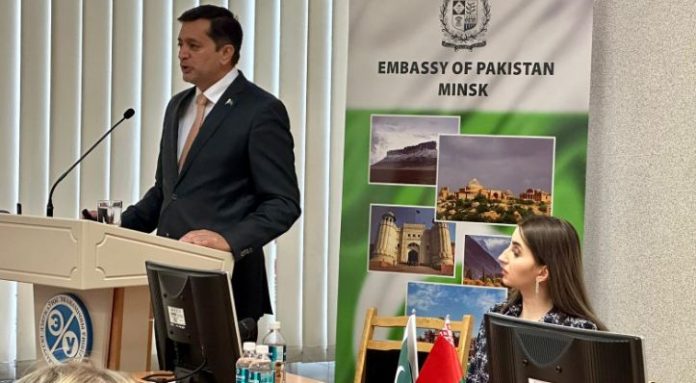
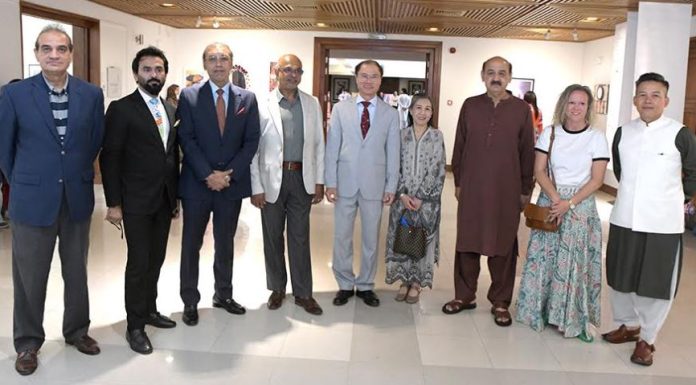
Minsk, 14 FEB (DNA) – Ambassador Sajjad Haider Khan held an interaction with the faculty and students of the Belarus State Economic University on 13 February 2024. The two and half hour long event was attended by over 120 students and ten faculty members. 

The theme of the discourse “Challenges to Peace & Security and Economic Development in South Asia”, also included an introduction to Pakistan & its Foreign Policy as well as Pakistan-Belarus relations. The genesis of Kashmir Dispute & the ongoing human rights violations in the Indian Illegally Occupied Jammu & Kashmir was particularly highlighted. A short documentary on Pakistan was also shown to the students. The students were also served with a few Pakistani delicacies.

Prior to the lecture, The Ambassador also held a meeting with the First Vice-Rector of the University, and discussed possibilities of forging institutional collaborations with the Pakistani institutions. The two sides also agreed to hold similar interactions in the future as well.

Ramiz Raja returns as commentary panel announced for PSL 9

Ramiz Raja returns as commentary panel announced for PSL 9

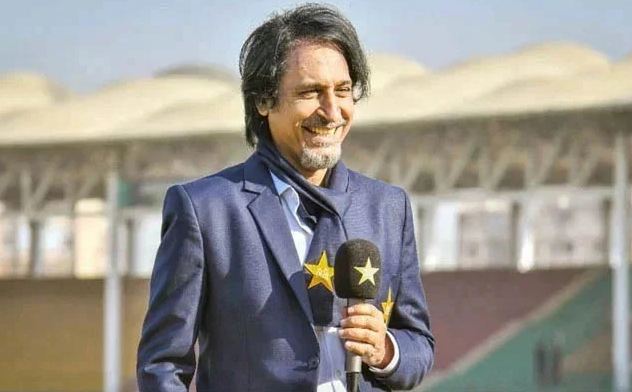
Former Pakistan captain and renowned commentator Ramiz Raja has returned to the commentary panel for the ninth season of the Pakistan Super League (PSL), as announced by the Pakistan Cricket Board (PCB).

Meanwhile, former Australian captain Michael Clarke is also set to make his PSL debut as a commentator. Clarke, aged 42, has been an active broadcaster since retiring as a player.

The lineup of foreign commentators includes the dynamic Ian Bishop, known for his insightful and captivating commentary, alongside Danny Morrison, Simon Doull, Pommie Mbangwa, Mark Butcher, Dominic Cork, and Mike Haysman.

Bishop will make his second appearance in the PSL after calling the 2017 season. Mbangwa will return after calling the 2022 edition of the PSL. Butcher, Cork, and Haysman are also synonymous with the PSL, and they will bring excitement to the tournament with their voices and thrilling calls with the mic in hand.

Alongside Ramiz, the Pakistani commentators also form an exciting lineup with Waqar Younis, Bazid Khan, and Aamir Sohail joining Urooj Mumtaz, Sana Mir, and Marina Iqbal. Tariq Saeed and Ali Younis will provide commentary in Urdu. Erin Holland and Zainab Abbas will be the presenters during PSL 9.

On the other hand, PSL production is set to maintain its broadcasting standards this season as well. A total of 30 high-definition cameras, including the buggy cam, will stream high-quality action to PSL fans around the world. Spidercam will not only bring dynamic angles to TV audiences but has also been upgraded with microphone and speaker enhancements for conducting on-field player interviews during the matches.

The DRS technology will be available throughout the PSL, while drone cameras will be used to enhance the quality of streaming. Fans will see a change in on-screen graphics during the matches with the integration of revamped augmented reality graphics and player video headshots.

It must be noted that PSL 9 will be held in four cities — Karachi, Lahore, Multan and Rawalpindi — with the final of the event taking place at the National Bank Stadium in Karachi on March 18.

Like the previous edition, the PSL 9 will take place in two legs with Multan Cricket Stadium and Lahore’s Gaddafi Stadium hosting 14 matches between them from February 17 to 27. The action then moves to Rawalpindi’s Pindi Cricket Stadium and Karachi’s National Bank Stadium, where 16 matches will be held from February 28 to March 12. The event will then move to Karachi in its entirety for the playoffs.

Indigenization is a top policy of naval headquarters: Naveed Ashraf

Indigenization is a top policy of naval headquarters: Naveed Ashraf

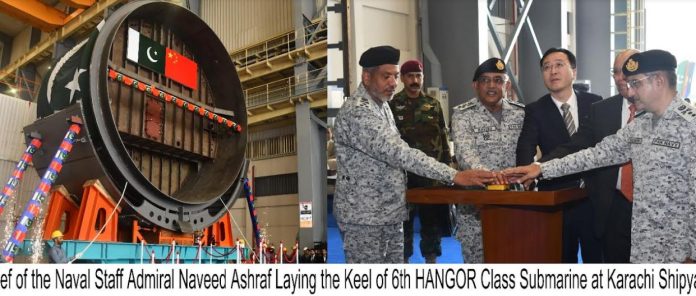
KARACHI, FEB 14 /DNA/ – Achieving another milestone in indigenous submarine development project at Pakistan, the Keel Laying Ceremony of second HANGOR Class Submarine was held at Karachi Shipyard & Engineering Works (KS&EW). Chief of the Naval Staff Admiral Naveed Ashraf graced the occasion as Chief Guest.

As per the defence agreement between Pakistan and China for development of 08 x HANGOR Class Submarines, 04 submarines are under construction at Wuchang Shipbuilding Industry in China whereas remaining 04 are being built at KS&EW under Transfer of Technology (ToT) agreement. This is the 2nd Submarine to undergo Keel Laying at KS&EW. Earlier, in Dec 2022, Keel Laying of first Submarine was successfully undertaken and currently it is at advanced stage of construction.

Speaking on the occasion, Chief of the Naval Staff Admiral Naveed Ashraf said that it is a matter of great pride to witness the Keel Laying of HANGOR Class Submarine at Karachi Shipyard in collaboration with China Shipbuilding & Offshore International Co. Ltd (M/s CSOC). He lauded the joint efforts and performance of Ministry of Defence Production, Pakistan Navy, Karachi Shipyard (KS&EW) and M/s CSOC for construction of these Submarines. Chief of the Naval Staff highlighted that indigenization is a top priority of Naval Headquarters policy which is being manifested by construction of these state of the art Submarines at KS&EW.

Earlier during his welcome address, the Managing Director KS&EW, Rear Admiral Salman Ilyas highlighted that Karachi Shipyard is fully cognizant and completely aligned with the goals set forth by Government and Pakistan Navy in pursuing self-reliance in submarine construction. These submarines are a testimony of our commitment to this national cause. He also thanked Ministry of Defense Production and Pakistan Navy for their continued support and cooperation in realizing various projects at hand.

The ceremony was attended by representatives of Embassy of China, M/s CSOC (China), M/s WSIG (China) and other high-ranking government officials including distinguished guests from MoDP and armed forces of Pakistan.

Nawaz sacrifices PM slot for his daughter Maryam

Nawaz sacrifices PM slot for his daughter Maryam

The prevailing uncertainty surrounding the election results may have prompted Nawaz Sharif to reconsider his political position and thus not to present himself as the next prime minister of Pakistan

Ansar M Bhatti

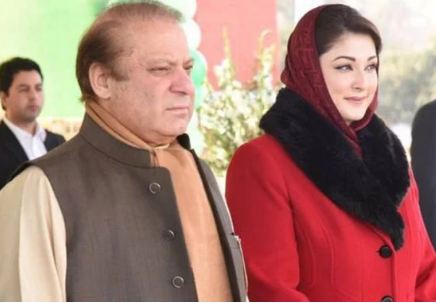
ISLAMABAD: PML-N leader Nawaz Sharif appears to have made a strategic move by relinquishing his prime ministership, potentially paving the way for his daughter, Maryam Nawaz, to be nominated for the Chief Minister position in Punjab. Analysts speculate that Nawaz’s decision may have been influenced by advice to step back due to the contested nature of his election to the national assembly seat. There is a concern that an unfavorable decision could pose challenges for him.

Another contributing factor to Nawaz Sharif’s change of stance is the lackluster performance of the PML-N in the general elections. Preliminary reports suggest that the party secured only 30 to 40 seats. While these reports await confirmation, it is evident that a significant number of losing candidates have turned to the courts to challenge the election outcomes. The prevailing uncertainty surrounding the election results may have prompted Nawaz Sharif to reconsider his political position and thus not to present himself as the next prime minister of Pakistan.

Over the course of history, the relationship between Nawaz Sharif and the Establishment has consistently proven to be tumultuous, marked by frequent conflicts that have led to the overthrow of Nawaz Sharif’s government on three separate occasions, either through military intervention or judicial processes. Given this historical backdrop, the anticipation was high that the dynamics between these two entities would continue to be strained in the recent political scenario.

It was foreseeable that the powers-that-be were inclined to keep Nawaz Sharif away from the prime minister’s office once again, considering the challenges and conflicts that had arisen in the past. This recurrent pattern suggested a deep-rooted difficulty in the coexistence of Nawaz Sharif and the Establishment.

Even amidst uncertainties surrounding the amicable coexistence between Maryam Nawaz and the Establishment, given her historically assertive stance, it remains crucial to observe the trajectory of their relationship in the days ahead. The Sharif family, by retaining key positions, may face criticism, particularly concerning the concentration of power within their ranks.

Notably, Aleem Khan, the IPP President and a candidate for the chief minister role, seems to have diminished prospects based on recent developments. The evolving political landscape demands a nuanced analysis of power dynamics and potential repercussions for both Maryam Nawaz and the broader political landscape. The dynamics between key figures and the distribution of roles within the Sharif family will undoubtedly be subject to scrutiny, shaping the narrative and perceptions in the coming days.

JUI (F) rejects elections results

JUI (F) rejects elections results

If Establishment thinks elections are  fair then it means its (Army) May 9 narrative is buried

ISLAMABAD, 14 FEB (DNA) – Chief of JUI F Maulana Fazr ur Rehman has hinted at talks with the PTI saying the elections 2024 were badly rigged. He said if the Establishment thinks that the elections were free and fair then it means the narrative build by the Establishment is dead and buried.

He said the Establishment should withdraw from politics. If they do so, we will extend all love and affection to them. But if they will do politics then we will response in the political language.

Elections are the Battle of Hearts and Minds

Elections are the Battle of Hearts and Minds

Dr. Muhammad Akram Zaheer

Elections are like a big decision-making event where people pick a leader for their country. They do this by voting in public. The leader they choose will have power and important duties. Elections are a formal way for a group of people to make decisions, and the person they pick becomes a public official. This is a really important part of democracy, making sure the government is for the people and chosen by the people. One important thing in elections is suffrage, which means the right to vote. Not everyone gets to vote, and it’s a big question deciding who can. Usually, people under a certain age, like 18 in Pakistan, can’t vote. They’re not considered adults yet. Choosing a person to run in the election is another important part. This is called nomination. It’s like officially suggesting someone to be the leader. People might also publicly support a candidate by giving endorsements or testimonials. The way votes are counted and how decisions are made is called the electoral system. It’s like the rules and systems that make sure the votes turn into a choice for a leader. The first step is counting all the votes, and different systems use different ways, like using ballots.

So, elections are a big deal in democracy. They let people have a say in who leads the country. Voting is a right, but not everyone can do it, like kids or young people. Before the election, people suggest who should run, and others show support for their favorite candidate. The way votes are counted is called the electoral system, and it makes sure the people’s choice becomes the leader. Next, we determine the outcome based on the count of votes. Elections often fall into two types: proportional or majoritarian. Scheduling involves planning and managing elections. Those chosen by the public are responsible to them and must seek approval regularly to stay in office. Most countries hold elections at set intervals. Election campaigns are crucial during this process, as they aim to positively influence a specific group’s decision-making. Politicians compete to gain support from more individuals. The elections are a peaceful and effective method of selecting political leaders. Citizens use their votes to choose leaders whose views align with theirs. This allows people to express their preferences through political leadership. An election serves as a platform for citizens to voice their concerns. If dissatisfied with a leader, voters can remove them from power and replace them with a better alternative. Elections offer a significant opportunity for political participation. They also provide a platform to bring new issues to the public’s attention. In most democratic countries, ordinary citizens can independently run for office. Determining the result of an election involves counting the votes. Elections are often categorized as either proportional or majoritarian. Scheduling is the organization and control of elections. Those elected are accountable to the people and must seek approval regularly to stay in office. Most countries hold elections at fixed intervals. Election campaigns play a crucial role as politicians strive to influence a specific group’s decision-making by appealing to more individuals.

Elections are a peaceful and effective way to choose political leaders. Citizens use their votes to select leaders whose views resonate with them, allowing them to express their preferences through political leadership. Elections also serve as a means for people to voice their dissatisfaction. If unhappy with a leader, voters have the power to remove them from office and choose a better alternative. Elections provide a significant opportunity for political participation and offer a platform to raise new issues in the public sphere. In democratic countries, ordinary citizens can independently run for office. In most democratic countries, an individual can start a new political group and join elections. Elections are essential to make sure that the people in power are doing the right thing. If the ruling parties make mistakes, they might lose the election, so they try not to do anything harmful to the public. Elections work as a good way to control and check the power of those who are in charge. Now, let’s talk about Pakistan and its upcoming 2023 election. The country is facing many serious problems that need quick attention. Pakistan has a huge population of over 241 million, and it’s growing at a rate of 2.55%. This means the nation is at a very important point in its development. In this detailed article, we will explore the various challenges that Pakistan is dealing with, emphasizing how crucial the role of political leadership is as the country gets ready for this significant election. The challenges that Pakistan is facing are diverse and urgent. They need immediate action and attention from the leaders. The population is large, and the growth rate is significant, making it crucial for the government to address various issues. The article will discuss these challenges in detail, highlighting the importance of having strong and capable political leaders during this crucial time.

Election 2024: Accusations of rigging

Election 2024: Accusations of rigging

Waheed Hussain

Since 1985, I have been watching conduct of general elections, the winners always declared the process free, fair and transparent, while, the losers called it rigged. The last week elections ended up with the same old narrative of accusations and counter-accusation of massive rigging and irregularities across the country. In interior Sindh the GDA, in Karachi Jamat-i-Islami, Tehreek Labaaik Pakistan and Pakistan Tehreek Insaf, in Baluchistan the nationalists and JUI (F), in Khyber PakhtunKhwa Awami National Party, while in Punjab PTI were protesting against the ECP blaming it for failing to hold free, fair and transparent polls on February 8, 2024.

Other than Pakistan Tehreek-i-Insaf (PTI), most of these protesting political parties have ethic, regional and religious outlook. Even in the past they used to win seats in a single digit, except when they had formed election alliances either at the provincial or national levels. For Example, Jamaat-i-Islami along with other religious like-minded parties formed a Islami Jamhoori Ittehad (IJI) in 1990 elections against the Pakistan Peoples’ Party. The leading party in IJI was Pakistan Muslim League (Nawaz). Again, in 2002 multi-party religious alliance Muttahida Majlis-i- Amal (MMA) was formed including Jamaat Islami (JI) and Jamiat Ulema-i-Islam (Fazal) and others. The alliance had won good number of seats in the national assembly and formed a government in Khyber Pakhtunkhwa (KPK) province.

However, as a single political party, they never won a big number of national or provincial assemblies’ seats to form an independent government.

No doubt, Tehreek Labbaik Pakistan (TLP) has huge following in the country. It succeeded in getting millions of votes from various constituencies in 2018, as well as in the present general elections. However, it needs some more time to win election and reach to the national or provincial assemblies.

Awami National Party (ANP) has been wining seats in various districts of the KPK province including Charsadda, Mardan, Peshawar, Sawabi, Nowshera and Malakand districts in the past. But since 2013 the PTI has defeated ANP like other political parties in the province. As for as Grand Democratic Alliance in Sindh was concerned, It was facing a tough competition from PPP.

Former President of Pakistan and co-chairman, Asif Ali Zardari’s controlled and managed party was ruling the Sindh province for past 15 years. The party has a strong hold on the provincial politics. It has won the election for fourth consecutive time and ready to form another provincial government in few days. We should not forget the fact that Pakistani politics is combination of popularism, power and money. In the recent elections voters in Baluchistan preferred to elect the main stream national political parties instead of supporting the regional ethnic ones. Most of the seats in the province were being won by the PPP, JUI (F) and the PML (N).

Keeping in mind the Pakistani political and administrative structure, no doubt, that there must have been some irregularities and short-comings in the election process in some constituencies, yet, declaring the entire election exercise a faulty, is a sweeping statement based on a political point scoring. I am sure when the prominent lawyers like Salman Akram Raja and Shohaib Shaheen, who were contesting election for the national assembly from Lahore and Islamabad constituencies would present a credible evidence of rigging in the court.

The massive rigging narrative is being crafted by the PTI social media teams to target the ECP, political opponents as well as the establishment.  Suppose if any state institution was involved in the rigging, then how PTI-backed independent candidates could win hundreds of national and provincial assemblies’ seats? The final results tell that the party stood first in the National Assembly, won 85 percent seats in KP, grabbed more than 115 seats in Punjab. Was the rigging done to benefit the PTI? Many PML (N) senior leaders such as Khawaja Saad Rafeeq, Rana Sanaullah, Khuram Dastagir and Abid Sher Ali, who have been winning elections for decades from their respective constituencies have lost the election and respectfully accepted their defeat. If the rigging was done, why they were left out of the assembly? If the rigging was done why Nawaz League got just 73 seats out of 266?

Looking at the number of seats being captured by different parties, it suggests, that PTI is the actual beneficiary of the so-called rigging, if there was any? Imran Khan in 2013 elections presented the narrative of 35 punctures. He held 126 days sit-in in front of the Parliament House along with his former associate Dr. Tahir ul Qadri. Later in a TV interview he explained that he got this figure of 35-punctures from one of the TV programs. He could not prove anything regarding his claim in the superior court. The rest is the history. When his party won the election in 2018, the PDM accused him of rigging. He was accused of being a product of RTS. For four years he was tagged as selected instead of an elected Prime Minister of Pakistan. This political attitude has to change. This problem is not only with the PTI but most of the political parties have the same undemocratic, negative and selfish approach.

Every citizen has the constitutional right to protest, however, such demonstration must be peaceful. The crowd should not harm the public and private properties. They should ensure the safety of the citizens.  They should ensure free movement of the masses. But again, will these protests will address the actual issue until the candidates and the political parties approach the right forums. At the end of the day, they have to reach out to ECP and courts for the redressal of their complaints.

The problem with the PTI is that its leadership has always been using an abusive, harsh and derogatory language against all institutions including the judiciary and military. Unfortunately, the party’s social media teams follow the same practice. Social media is a platform to inform, educate and entertain the public. It’s a good source of political communication too. But some of our political parties used the platform for targeting state institutions and personalities. The social media intolerance is giving birth to the digital violence in the society. Culture of digital intolerance is harming the young generation. It’s the responsibility of all political parties specially PTI and PML (N) to follow a code of conduct on the social media while expressing their political opinions, issuing statements or reactions. After the last week elections trends on the ‘X’ platform have been launched not to criticize the election conducting body but to damage the security institutions of the country.

From political point of view the purpose of PTI protests and social media campaign regarding election results must be a strategy to put maximum pressure on the institutions and legal forums to get some kind of relief for the party leadership. With all difficulties and hurdles in the elections, PTI has performed well. It is going to form a government in PK. It has good numbers at center and Punjab. However, Imran Khan has decided not to sit with PPP, PML (N) and the MQM in coalition. Like other political parties, PTI does not have sufficient MNAs to form a government on its own. Naturally, it will sit on the opposition benches both at center and in Punjab. As an opposition it can give tough time to any future government. Learning from the past mistakes, PTI should remain part of a parliamentary system. In assemblies it will be able to challenge decisions of the government. All political players are supposed to give up their personal agendas and give the country first priority.

The writer is a senior print and broadcast journalist

Stay Connected

64FansLike
60FollowersFollow

Latest Reviews

Exchange Rates

USD - United States Dollar
EUR
1.17
GBP
1.35
AUD
0.72
CAD
0.73