Home Blog Page 1014

Portuguese writer José Luis Peixoto in Pakistan

Portuguese writer José Luis Peixoto in Pakistan

ISLAMABAD, FEB 19 /DNA/ – José Luis Peixoto, from Portugal, acclaimed author and poet is coming to Pakistan, this February 2024. With initiative of the Embassy of Portugal in Islamabad, and the support of the Portuguese Institute Camões, José Luis Peixoto will participate in the Literary Festival of Lahore 2024, taking place this month on Friday 23rd till Sunday 25th.

In Islamabad, the author will be participating in University events with students and professors, and interacting with Pakistanis’ writers, journalists and culture related figures.

José Luis Peixoto (born in 1974 in Alentejo, south of Portugal) is one of Portugal’s most renowned contemporary authors, winner of the José Saramago Literary Award, amongst others, and his prose and poetry books have been translated into more than 30 languages.

At the Lahore Literary Festival 2024, the author will engage in several thematic discussion panels and will showcase his views on literature, life, his literary career, and literature in the Portuguese language speaking countries (9 countries in 4 continents).

First Lady advocates floral art therapy

First Lady advocates floral art therapy

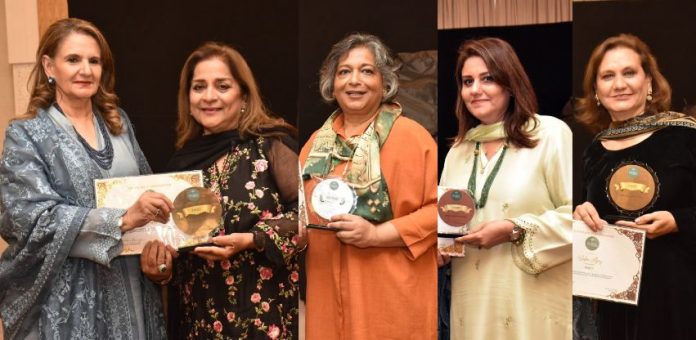
KARACHI, Feb 19 (APP/DNA): First Lady Samina Arif Alvi Monday emphasized that floral art transcended mere hobby status, asserting its therapeutic benefits for mental well-being.

Speaking as the chief guest at an award ceremony for the Floral Art Society of Pakistan (FASP), celebrating their triumphs in the Bloom Oman competition in Muscat, Oman, she highlighted the stress-relieving and mood-enhancing qualities of gardening and floral cultivation.

Addressing the gathering, the first lady underscored the collective responsibility to nurture both environment and mental health, noting that a significant portion of the country’s population grappled with mental health challenges, with many unable to seek professional help.

She advocated for the regular organization of floral art events to not only beautify surroundings but also engage younger generations in health-promoting activities.

Recognizing the FASP’s remarkable achievement of securing 11 awards for Pakistan in the Bloom Oman competition, she praised their contributions to elevating the country’s standing.

Samina Arif Alvi urged attendees to raise awareness about early breast cancer detection, a cause she has championed, leading to a notable reduction in related mortality rates over the past five years.

Further, she called for advocacy on behalf of persons with disabilities and mental health, emphasizing the importance of inclusive awareness efforts.

Concluding the event, the first lady distributed awards and certificates of appreciation to FASP members, recognizing their invaluable contributions to Pakistan’s success in the floral art competition Bloom Oman.

OGDCL announces major gas and condensate discovery at kharo well-1 in khairpur, sindh

OGDCL announces major gas and condensate discovery at kharo well-1 in khairpur

ISLAMABAD, FEB 19 /DNA/ – The Oil and Gas Development Company Limited (OGDCL) has announced a significant breakthrough in its exploration efforts with the discovery of gas and condensate at the Kharo-1, a well drilled in the Khewari exploration license area, located in Khairpur district of Sindh province.Following rigorous drilling and testing operations conducted with OGDCL’s proprietary expertise, the Kharo-1 well reached an impressive depth of 3,762 meters. Subsequent testing procedures registered promising results, showcasing a flow rate of 14.3 million standard cubic feet per day (MMSCFD) of gas, complemented by 93 barrels per day (bbls/d) of condensate. These exceptional results were obtained at a 32/64-inch choke size, with a wellhead flowing pressure (WHFP) of 2,737 pounds per square inch (psi), originating from Massive sand strata of the Lower Goru Formation.The successful discovery at Kharo-1 underscores OGDCL’s steadfast commitment to strategic exploration practices. Leveraging expertise and cutting-edge technology, the company continues to unlock the vast potential of Pakistan’s energy resources. With OGDCL holding a 95% working interest in the Khewari Block, and Government Holdings Private Limited (GHPL) as a joint venture partner with a 5% working interest, this discovery is a testament to OGDCL’s pursuit of energy security and sustainability. The discovery not only enhances OGDCL’s hydrocarbon reserves but also holds the promise of bolstering the national energy landscape.

Will the Supreme Court Nullify the Elections 2024?

Qamar Bashir

By Qamar Bashir
Former Press Secretary to the President
Former Press Minister to the Embassy of Pakistan to France
Former MD, SRBC

Today, both the Supreme Court and the Islamabad High Court voiced their profound concern over separate yet crucial issues. The Supreme Court took a stern stance regarding a petition filed to declare the 2024 Elections null and void, emphasizing the gravity of such a legal move and expressing dissatisfaction with the subsequent withdrawal of the appeal. Meanwhile, the Islamabad High Court addressed the disappearance of 12 Baloch students from Islamabad, expressing deep frustration and dismay over the violation of their fundamental human rights enshrined in the constitution and the law of the land.

Interestingly, both cases are intertwined, albeit in different ways, with the establishment. In the Supreme Court case, a retired Brigadier filed the appeal to declare the 2024 election null and void, implicating the country’s electoral process. Conversely, in the High Court case, the nation’s esteemed spy agencies were implicated regarding the disappearance of individuals. While the issue of missing persons warrants attention, let’s delve into the Supreme Court case concerning the election appeal.

Delving into the motives behind the retired Brigadier’s petition before the Supreme Court of Pakistan reveals a concern for the fairness and integrity of the electoral process, especially amidst allegations of widespread rigging. However, in filing the application, the retired Brigadier may not have fully grasped the financial implications of the re-elections to the state, political parties and the candidates, and the complex political dynamics at play within Pakistan, potentially underestimating the nuances of the situation.

He may have overlooked the broader implications of nullifying the elections, such as the potential impact on investor confidence, trade relations with friendly countries, and the stability of the stock exchange. Additionally, withdrawing support from organizations like the IMF and creditors could exacerbate economic challenges, leading to increased inflation and hardship for the common populace.

He might have erred in grasping the dynamics of allegations of rigging by PTI, JUI, GDA, and JI which in fact are emblematic of the broader landscape of partisan politics in Pakistan, where accusations of electoral misconduct are commonplace and often wielded as political leverage.

The futility of the petition became evident as major parties like PML(N), PPP, and MQM accepted the election results. PTI, while forming the government in KP and opting for opposition roles elsewhere, is concurrently engaging in legal and political battles to contest the alleged electoral malpractices. Despite serious reservations about the fairness of the process, parties like GDA, JI, and JUI have refrained from demanding the nullification of the elections. Instead, aggrieved parties are pursuing their grievances through legal avenues, such as Election Tribunals and the Supreme Court of Pakistan, or through political activism.

These realizations may have dawned on the Brigadier later, may be coupled with pressure or intimidation, either personally or from external forces, prompting him to withdraw the petition. Alternatively, he may have reconsidered the implications of pursuing the case further and decided to step back for personal or strategic reasons.However, the Supreme Court’s decision to proceed with the hearing indicates that they saw merit in investigating the allegations of rigging, regardless of the petitioner’s withdrawal.

Alternatively, the latest confession of the Commissioner Rawalpindi where he implicated the chief election commissioner and the Chief Justice in the alleged massive and blatant riggings might be the actual reasons which might have prompted to the Supreme Court to take up this petition on its guise discuss the commissioner’s confession and allegations in an attempt to clear the chief justice from his alleged involvement in the rigging.
As the legal battle would unfold, the Supreme Court would face the arduous task of navigating complex political terrain. Though the petitioner’s plea raises fundamental questions about the credibility of the electoral outcome, none of the political parties, the legal fraternity or civil society have ever voiced their intention to declare the elections null and void. All of them have preferred to resort to the legal battle and wage democratic campaigns to seek justice.

In this scenario, if the supreme court proceeds with the hearing, it might first determine the competency of the retired Brigadier to file any appeal to nullify the elections. This typically involves demonstrating a personal stake in the outcome of the election, such as being a candidate who lost due to the alleged irregularities. Moreover, the petition must be based on specific and verifiable grounds, such as evidence of widespread irregularities, rigging, or violations of electoral laws. The court may consider mere dissatisfaction with the elections as insufficient reason to petition the supreme court.
The Supreme Court may also take into account that major political parties like PPP, PTI, PML(N), or MQM have accepted the election results and may be hesitant to become parties to the petition. Conversely, smaller parties that were marginalized in the elections, as well as individuals or civil society organizations advocating for electoral transparency and accountability, may step forward to defend the petition. They may argue that the pervasive irregularities have undermined the legitimacy of the results, warranting judicial intervention to nullify the elections.
The aggrieved political parties like PTI, JI, GDA and JUI if summoned by the SC may argue that though the election process was replete with irregularities, the overall integrity of the election was not compromised to the extent that would warrant nullifying the results. Additionally, they may stress the importance of addressing the genuine grievances by alternative avenues such as legal challenges or democratic campaigns.
The Supreme Court after meticulously weighing the arguments may consider various options while deciding the case. If the evidence fails to substantiate widespread rigging or irregularities that significantly undermine the election’s integrity, the supreme court might dismiss the petition. And if credible allegations warrant further investigation, ordering a recount or an inquiry in specific constituencies to rectify concerns without nullifying the entire election.

However, in the event of irrefutable evidence of systemic fraud that fundamentally compromises the election’s fairness, declaring it null and void may be the necessary course of action, ensuring democratic principles prevail and future electoral integrity is maintained.

The Supreme Court’s determination to proceed with hearing the petition, even after its withdrawal, underscores the gravity of the situation surrounding the 2024 elections. It reflects an attempt by the Chief Justice to clear his name and may reflect the Court’s commitment to address the widespread allegations of rigging that have garnered attention nationally, regionally, and internationally.

The direction taken by the Supreme Court in this pivotal case could significantly impact the outcome of the controversial elections. Its findings have the potential to guide the country out of its current political, economic, and financial challenges or further entrench it in political and legal turmoil. Therefore, the Supreme Court’s actions carry immense weight and importance in navigating the country’s future course.

Healthcare Dilemma

Healthcare Dilemma

By: Zahra Ali

Healthcare is a fundamental human right, essential for the well-being and prosperity of individuals and societies. However, in Pakistan, the healthcare sector grapples with a multitude of challenges that hinder its ability to effectively meet the needs of the population. From inadequate infrastructure to a shortage of skilled professionals and financial barriers to access, the country faces a daunting healthcare dilemma that demands urgent attention and comprehensive solutions.

One of the most glaring issues in the country’s healthcare landscape is the limited access to healthcare facilities, particularly in rural and remote areas. Despite efforts to expand healthcare infrastructure, many communities still lack basic healthcare centers, forcing residents to travel long distances to receive medical attention. This lack of accessibility exacerbates health disparities, with rural populations disproportionately affected by preventable illnesses and inadequate healthcare services.

Moreover, Country faces a severe shortage of healthcare professionals, including doctors, nurses, and paramedics. The limited number of trained personnel not only strains existing healthcare facilities but also compromises the quality of care provided. Overworked and understaffed hospitals struggle to meet the needs of patients, leading to long wait times, overcrowded wards, and substandard treatment outcomes. Addressing this shortage requires significant investments in medical education, training programs, and retention strategies to attract and retain healthcare professionals, particularly in underserved areas.

In addition to infrastructure and human resource challenges, the high cost of healthcare poses a significant barrier to access for many Pakistanis. With a large proportion of the population living below the poverty line, out-of-pocket healthcare expenses can push families into financial hardship and prevent them from seeking necessary medical care. The lack of comprehensive health insurance coverage further exacerbates this problem, leaving vulnerable populations at risk of catastrophic healthcare expenditures. Implementing universal health coverage schemes and expanding access to affordable healthcare services are critical steps towards addressing this issue and ensuring that healthcare remains accessible to all.

The country’s healthcare sector grapples with issues of quality and accountability. While efforts have been made to improve healthcare standards and regulatory mechanisms, challenges persist in ensuring consistent quality of care across different healthcare facilities. Inadequate training, supervision, and oversight of healthcare providers can lead to medical errors, negligence, and patient dissatisfaction. Strengthening regulatory frameworks, enhancing professional standards, and promoting a culture of accountability are essential for improving healthcare quality and restoring public trust in the healthcare system.

Pakistan faces a complex array of challenges in its healthcare sector, ranging from infrastructure and human resource constraints to financial barriers and quality concerns. Addressing these challenges requires coordinated efforts from government, healthcare providers, civil society, and international partners. Investing in healthcare infrastructure, expanding access to healthcare services, strengthening the healthcare workforce, and ensuring affordability and quality of care are imperative for advancing the health and well-being of the Pakistani population. Only through comprehensive reforms and sustained investments can Pakistan overcome its healthcare dilemma and build a more equitable and effective healthcare system for all.

Crunch time may be around the corner as Gaza ceasefire talks stall

Crunch time may be around the corner as Gaza ceasefire talks stall

That is easier said than done, particularly given the time limitations imposed by the US presidential election in November and the likely prospect of an election in Israel once the guns fall silent in Gaza.

Timing may be the lesser hurdle to achieving the administration’s goal. Political obstacles are likely to prove more formidable.

Speaking at the Munich Security Conference this week, US Secretary of State Antony J. Blinken asserted that there was “an extraordinary opportunity” in the coming months for Israel to normalise ties with its Arab neighbors.

“Virtually every Arab country now genuinely wants to integrate Israel into the region to normalize relations…to provide security commitments and assurances so that Israel can feel more safe,” Mr. Blinken said.

“And there’s also, I think the imperative, that’s more urgent than ever, to proceed to a Palestinian state that also ensures the security of Israel,” he added.

That’s where the rubber hits the road.

“The only pathway to sustainable security for all of us in the region is through Palestinian self-determination. The Arab states are fully committed to delivering that. They also are fully committed through that to delivering a true partnership with Israel and integration into the region and security for all,” said Saudi Foreign Minister Faisal bin Farhan in response to Mr. Blinken.

Saudi Foreign Minister Prince Faisal Bin Farhan Al Saud speaks during a press conference after the end of Security and Development Summit in Jeddah, Saudi Arabia, July 16, 2022. (AP Photo/Amr Nabil)
Left vague was whether Messrs. Blinken and Bin Farhan were singing from the same song sheet, even if they employed similar terminology.

Attributing greater importance to Israel’s sense of security rather than recognising that Palestinians are no less traumatized by decades of violence, Mr. Blinken envisions a demilitarised Palestinian state with Israel as the major security player.

It was not clear whether Mr. Bin Farhan and other Arab leaders share that vision and what their attitude will be once Palestinians make clear that Israel is as central to their threat perceptions as Palestinians are to Israeli concerns.

Ultimately, history suggests that negotiations produce results when the price of not achieving a negotiated solution becomes too high.

Stalled Qatari, Egyptian, and US efforts to negotiate a ceasefire indicate that neither Israel nor Hamas have reached that point. Both are willing to let the Gazans pay the price for their intransigence.

Israeli Prime Minister Binyamin Netanyahu made that clear by ensuring that his scaled-down delegation at last week’s talks in Cairo with the negotiators had no authority to negotiate a deal.

Prime Minister Benjamin Netanyahu. Photo: Tomer Neuberg/Flash9
On Thursday, Mr. Netanyahu refused to allow the delegation to return to Cairo for follow-up discussions.

In a statement, Mr. Netanyahu’s office said that “Israel will not submit to Hamas’ illusory demands. Only a change in Hamas’ position will allow progress in the negotiations.”

Hamas negotiator Ismail Haniyeh insisted two days later that the group would not “agree to anything less” than a deal involving a ceasefire, the withdrawal of Israeli forces from Gaza, a lifting of the blockade of the Strip, the safe return of displaced Gazans to their homes, and the reconstruction of the war-ravaged territory.

Mr. Netanyahu’s refusal to further engage in indirect talks with Hamas on Mr. Haniyeh’s terms, which enjoy broad support in much of the international community, is closely linked to the prime minister’s insistence on continuing the Gaza war till the bitter end and his opposition to the creation of a viable Palestinian state on lands conquered by Israel in the 1967 Middle East war.

“There is no alternative to total victory… We shall not bow down to international dictates regarding a future deal with the Palestinians… How can we recognise such a state after the massacre of October 7? This would be a reward for terrorism,” Mr Netanyahu said, throwing down a gauntlet for Mr. Blinken and US President Joe Biden.

The prime minister spoke as tens of thousands poured into the streets of Tel Aviv and Jerusalem demanding his resignation and/or prioritisation of the release of the remaining 120 of the approximately 250 hostages abducted by Hamas during its October 7 attack on Israel, even if that requires an end to the war.

Photos of the Hamas hostages displayed in Tel Aviv. Photo: Amir Levy/Getty Images
Mr. Netanyahu prided himself on achieving the initial release of 120 hostages in November. However, he failed to acknowledge that the vast majority were released in prisoner exchanges with Hamas during a one-week truce rather than as the result of Israeli military operations.

Mr. Netanyahu’s omission reflects his unwillingness and/or inability to recognise that four months into the war Israel has yet to achieve its war goals and that its conduct of the war has taken an unacceptable toll on innocent Gazans and caused irreparable damage to Israel’s international standing.

Hamas’ ability to maintain its position in the ceasefire and prisoner exchange negotiations highlights Israel’s failure so far to destroy the group as a military and political force. Moreover, Israel has yet to hunt down Hamas’ Gaza-based top leaders or prevent the group from reasserting itself in parts of the devastated Strip.

US intelligence estimated earlier this month that Israel has killed or captured at most 30 per cent of Hamas’ 30,000-strong fighting force.

Mr. Netanyahu’s defiance also reflects his refusal to recognise that Israel’s security lies in an equitable resolution of the Israeli-Palestinian conflict rather than in a failed more than five-decade-long effort to beat Palestinians into submission through brutal force, repression, collective punishment, disregard for Palestinian lives, and humiliation.

If anything, the Gaza war demonstrates that 57 years of Israeli occupation of Palestinian lands has produced an endless and escalating cycle of violence.

“The definition of madness is doing the same thing over and over and expecting a different result… The next explosion will be,” Mr. Bin Farhan, the Saudi foreign minister, said.

To be sure, the cycle has been perpetuated by a weak Palestinian leadership incapable of taking the bull by the horns, and that allowed Israel to continuously undermine its authority and play divide and rule. Hamas is the product of Palestinian political weakness and Israel’s cynical policies.

Breaking the stalemate on a ceasefire, prisoner exchange, and credible process to resolve the Israeli-Palestinian conflict is likely to require a change in the United States’ policy towards Israel. The United States would have to apply real pressure rather than continue its friendly nudging that has failed to change Israeli policy and military tactics.

Conventional wisdom has it that a phone call to Mr. Netanyahu in which Mr. Biden threatens to impose conditions on arms sales to Israel or an all-out weapons embargo is all it would take to force Israel to end the war and come to the negotiating table. Mr. Netanyahu suggested in his news conference that might not be that simple.

US President Joe Biden, right, meets with Prime Minister Benjamin Netanyahu in New York, September 20, 2023. Photo: AP Photo/Susan Walsh
The balance of power in the US-Israeli relationship has shifted.

US financial support amounted in 1981 to ten per cent of Israel’s GDP. The US’ annual US$4 billion allocation in 2021 accounted for only one per cent of GDP. Moreover, Israel today produces many of its most essential weapons domestically, making it less dependent on US arms sales.

In addition, Israel concluded in 1991 that it could no longer blindly rely on US protection after the United States did not come to its aid when Iraq fired Scud missiles at the Jewish state during that year’s Gulf war.

Despite remaining dependent on US vetoes in the United Nations Security Council and military cooperation, Israel has worked to increase its margin of autonomy, much like Gulf states did three decades later after the United States failed to respond to Iranian-inspired attacks on their critical infrastructure in 2019 and. 2020.

Moreover, the United States’ unconditional commitment to Israel is a double-edged sword.

“Far from feeling that they owe the Americans any favours, Israeli decision-makers in crisis are likely wagering that US interests in maintaining an established strategic partnership against shared and emboldened enemies, including the Houthis and Iranians, will prevent Washington from pressing too hard on Israeli policymakers,” said international relations scholar Barbara Elias.

Writing in Foreign Policy, Ms. Elias suggested that pressure on Israel would likely be most effective if the United States took unilateral steps that would put Israel on the spot rather than resorting to the traditional threat to impose conditions if Israel fails to heed US advice.

Such steps could include a threat to unilaterally release detailed information regarding targeting in Gaza, an independent inquiry into civilian deaths in Gaza, and providing humanitarian aid with or without Israel’s cooperation. The United States could also recognise Palestine as a state even before the state is established as many in the international community have done.

“The coercive message…is ‘either you implement X policy, or we will’… The historical record suggests that a credible threat of unilateral U.S. action can nudge Israel to move closer to US positions… (Moreover), it boosts US bargaining credibility regionally and reinforces that the US is an autonomous actor in the conflict… This may be increasingly important as the US may need to press against sustained Israeli occupation of Gaza and strengthen its ties to key Arab partners… Lastly, unilateral action will allow the US to do more than just lament Palestinian civilian deaths,” Ms. Elias said.

Dr. James M. Dorsey is an Adjunct Senior Fellow at Nanyang Technological University’s S. Rajaratnam School of International Studies, and the author of the syndicated column and podcast, The Turbulent World with James M. Dorsey.


Korean company acquires shares in a Pakistani hydro power entity

Korean company

DNA

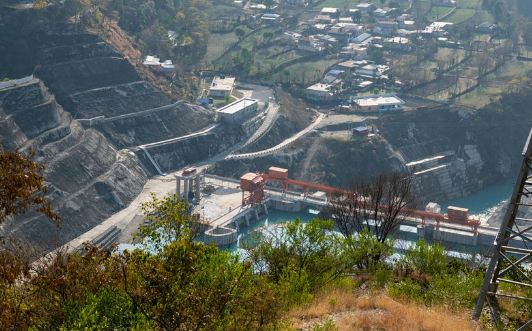
ISLAMABAD, FEB 19: The Competition Commission of Pakistan (CCP) has approved a merger that will see a Korean company investing in Pakistan’s hydropower sector. The transaction involves Korea-based M/s. DL E&C Co. Ltd (Acquirer) acquiring shares in Pakistani company M/s Mira Power Limited (MPL), which operates the 102 MW Gulpur hydropower plant, from M/s. DL Holdings Co. Ltd (Seller).

The Acquirer is a Korean registered company, which mainly operates as a construction company, and also provides engineering, procurement, and construction solutions in South Korea and internationally. On the other hand, MPL is a public limited company (Unlisted) existing under the laws of Pakistan.

MPL is a subsidiary of Korea Energy (KOEN), a South Korean based electricity generating company. MPL has been successfully generating power since 2020 in Pakistan via the 102 MW Gulpur hydropower plant located in Kotli district, Azad Jammu & Kashmir.

MPL had submitted a pre-merger application to the CCP pursuant to Section 11 of the Competition Act, 2010. Both the Acquirer and Seller entered into a Share Purchase Agreement for the sale of shares back in July 2023.

In its competition assessment, CCP determined that MPL’s estimated share in the market is less than 1%, and this transfer of ownership will not result in any modification of the MPL`s presence in the market. The proposed transaction will not lead to the dominance of the Acquirer in the relevant market post-transaction, and therefore, the merger was authorized.

Moreover, it is a significant vote of confidence of international investors’ appetite for Power Sector in Pakistan.

Jordanian ambassador tours Islamabad’s advanced safe city control room

Jordanian ambassador tours Islamabad's advanced safe city control room

DNA

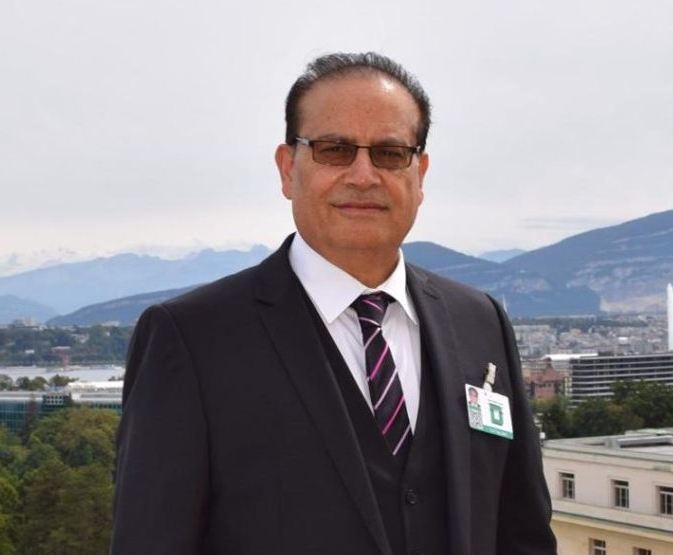
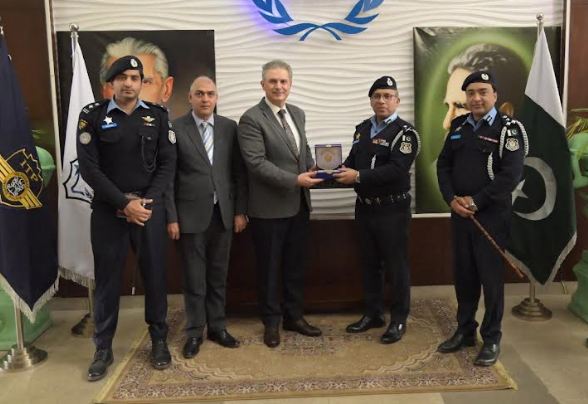
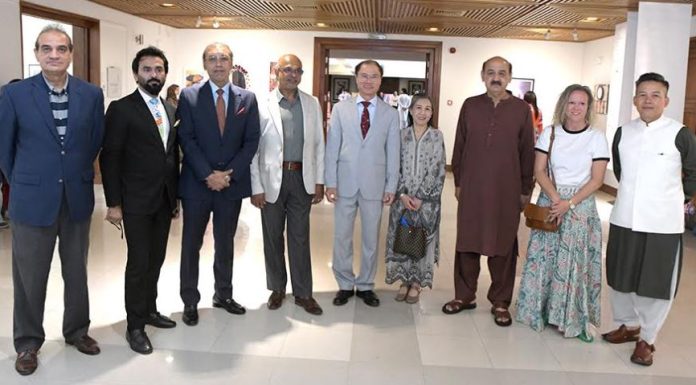
ISLAMABAD: Ambassador of Jordan to Pakistan Dr. Maen Khreasat met with Dr. Akbar Nassir Khan, IG Islamabad Police and visited the Safe City control room, a top of the line in advanced surveillance technology .-DNA

COMSTECH organizes Int’l Workshop on Innovative Practices for Development of Agri-business

COMSTECH organizes Int'l Workshop on Innovative Practices for Development of Agri-business

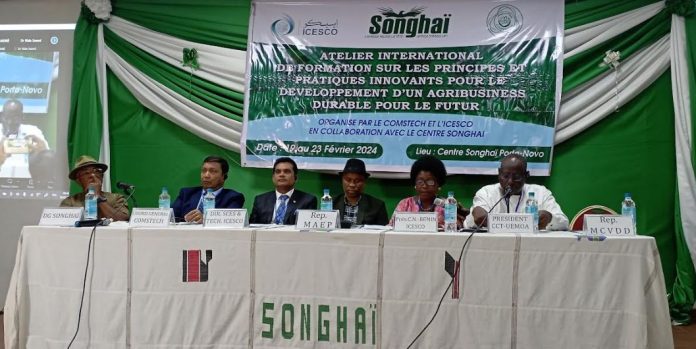
ISLAMABAD, FEB 19 /DNA/ – COMSTECH, ICESCO and Songhai Center, in Benin jointly organized 5-day international training workshop on innovative practices for the development of a sustainable agri-business for the future at Songhai Center in Porto-Novo the capital city of Benin.

H.E. Mr. Gaston Cossi Dossouhoui, Minister of Agriculture, Livestock and Fisheries, H.E. Mr. José Didier Tonato Minister of Living Environment and Sustainable Development, H.E. Mayor Oumar Ba, President AMS/CCT-UMOA, Dr. M. Sharif, Advisor, Science and Technology, ICESCO, Dr. Salimane Karimou, President, National Commission in Benin, and H. E. Prof. Dr. Godfrey Nzamujo, Director General Songhai Center addressed the inaugural session held on Monday.

Prof. Dr. M. Iqbal Choudhary, Coordinator General COMSTECH said that the idea of organizing this field based, hands on training course was discussed in Niamey Niger where he had the honor of hosting legendary Prof. Dr. Godfrey. He readily agreed, and now we are pleased that we have plan to take “Songhai Phenomena” to other OIC member states. He said that we consider Songhai a miracle, an unparalleled story of human perseverance, dedication, and intellect.

Prof. Choudhary informed that this training workshop has participation from over 10 OIC member states with physical participants from Benin, Togo, Niger, Mali, Burkina Faso, Senegal, and Chad, and we also have virtual participants from Azerbaijan, Indonesia, Bangladesh, Pakistan, Nigeria, Ivory Coast, Burkina Faso, Turkey, Togo, Mali, Cameroon, and Chad.

He said that this training will address the challenges in achieving food security through sharing of knowledge and experiences, application of science, technology and climate smart agricultural technologies.

He said that this innovative workshop is planned to build broad-based and sustainable solutions to the challenges of our present food and agricultural systems and make participants discover a holistic vision of the world that is foundational to the SDGs. He said that the participants will be able to discover that how Songhai was able to envision and build a regenerative agriculture and agro-ecological development system.

Prof. Choudhary highlighted the COMSTECH initiatives, and announced new initiatives for African countries in collaboration with ICESCO and Songhai Center.

Prof. Dr. Godfrey Nzamujo welcomed the participants of the International training workshop and emphasized the need of the human capacity building in the fields of science and technology for achieving financial and economic goals. The director ICESCO said that we are committed to build capacity of OIC member states in the fields of science and technology for the socio-economic development. He said that the development of the workforce is vital for development.

Bilawal says Zardari to be PPP’s candidate for president

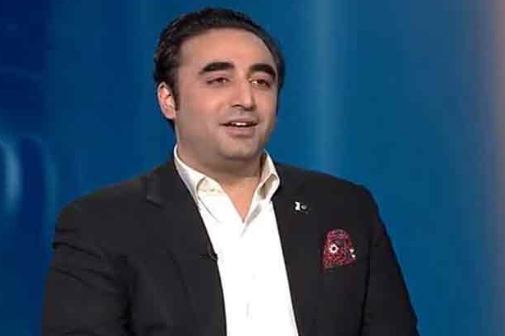
Chairman Bilawal addresses press conference after CEC meeting

THATTA, Feb 18: Chairman Pakistan People’s Party (PPP) Bilawal Bhutto Zardari has announced that President Asif Ali Zardari will be his party’s candidate for the upcoming presidential elections, as only he can save the federation and democracy by extinguishing the fire in the country. He stated that his party was also subjected to rigging in the recent elections, and against this, the relevant forums will be approached. However, no step will be taken that would divide society and harm the federation and democracy.
He pointed out that even after the victory of Quaid-e-Awam Shaheed Zulfikar Ali Bhutto in the 1977 general elections, there was a hue and cry of rigging by the opponents, similar to today. After that, the people had to endure dictatorship for 11 years.

Addressing the mammoth public gathering to express gratitude to the people for voting his party in the recent elections, PPP Chairman Bilawal Bhutto Zardari said that the people have once again proved that “the chain of the four provinces is Shaheed Mohtarma Benazir Bhutto’s PPP.”
Chairman Bilawal Bhutto Zardari stated that his party has decided not to be part of the cabinet at the Center. Instead, they will ensure that the federal government addresses the problems of the people. He added, “We have decided that those parties who approached us after the elections, we will collaborate with them. Our aim is not personal gain but to work for the benefit of the people.”

Chairman Bilawal Bhutto Zardari informed the participants that he rejected a power-sharing formula offering him the position of prime minister in the last two years of the new assembly’s term. “I was told to let them become prime minister for the first three years, and I would be the premier for the remaining two years. However, I refused, as I did not want to be such a prime minister. Instead, I will sit in the National Assembly as the voice of the people. I did not contest the election to occupy the chair in Islamabad; I fought the election for the people of Pakistan to protect their rights.

Chairman PPP said that the recent elections have been held in such a way that all political parties are protesting, adding that there are three types of political parties in the country: some parties that cannot win without rigging are also protesting. There are some parties that have not won despite rigging, and they are also protesting. “The third party is the one that wins despite not rigging and that is your (people’s) PPP. He said that today there is a hue and cry everywhere on the issue of Form-45, adding that there are also Forms-45, according to which the PPP candidates had won, but their opposite candidates were declared winners. “The result of a Form-45 is one where the PPP candidate has won, but an independent candidate (by the ECP) has been declared successful. He said that all the complaints of PPP candidates will be collected and then approached to the relevant legal platform, and if justice is not done on the legal platform, then he will go to the public.

Chairman Bilawal Bhutto Zardari said that the country and the people are facing the most difficult situation at present. On the one hand, the country is suffering from a political and economic crisis, on the other hand, the society has been divided. Inflation, unemployment and poverty have also reached historic levels in the country. “It should be that all parties think of the interest of the people rather than their personal interests. The rest of the politicians who are older than me only think about themselves, which is harming the federation, democracy and the people,” he pointed out.

The PPP chairman said: “I want to tell those who are making allegations these days, that I also have doubts (regarding the elections). (But) let us sit down and address these complaints.” He said that even today there are politicians in the country who only want an authoritarian regime. He said that on the day of the polling, the opponents did not complain about rigging, but after three to four days they remembered that rigging had taken place.  “It is a joke for someone who calls himself Maulana to lie brazenly,” he added. He said that Pir Sahib is also blaming that there has been rigging, and added: “You tell me where the rigging took place? The facts are that we have defeated you two to three times. Pir Sahib did not win a single election in Sindh.” He said Maulana had demanded one seat in each division, while Pir had demanded 10 seats from across the province, adding that these were the seats from where the Jiyalas were clearly winning, in such a situation it was impossible to accept the demand of the rival parties.  

Chairman Bilawal Bhutto Zardari said that Pir Sahib and Maulana Sahib should bring Form 45 and prove that rigging has taken place. He challenged rivals saying that he has won from two seats, one of which he has to vacate (as per law), and added: “Come and contest against my candidate again on this vacant seat. Let’s see what your position is there. He said that the opponents, seeing their big rallies, fall prey to the misconception that they will win elections in this way. “(But) there is a big difference between rallies and elections,” he contended.

Chairman Bilawal Bhutto Zardari said that the time has come to save Pakistan once again, adding that the PPP Party is the only party that will foil all conspiracies due to the prayer and support of the public. “I appeal to all forces and political parties to think not for themselves but for the people. If there is politics of hatred, communalism and division in the society, then the federation will be in danger,” he urged. He said that if there is a threat to the federation and democracy, then he will call the workers to come out on the roads and in response, the people will have to come out like the times of Shaheed Zulfikar Ali Bhutto and Shaheed Mohtarma Benazir Bhutto.

“We are blamed for rigging, while our workers were martyred and we were targeted with terror attacks,” he said. He said that he did not know about other provinces, but the government formed in Sindh would be based on Form-45. “We tried to convince (Imran) Khan to strengthen democracy, but even today his party is non-serious, (whose leaders) are claiming that they have won the election,” he said, adding that the truth is that no one is able to form a government without the PPP. He  said that during the 18-month coalition government, the promises regarding development projects were not fulfilled.

Stay Connected

64FansLike
60FollowersFollow

Latest Reviews

Exchange Rates

USD - United States Dollar
EUR
1.17
GBP
1.35
AUD
0.72
CAD
0.73