Home Blog Page 1007

Police make arrest in murder case of Tipu Truckanwala’s son

Police make arrest in murder case of Tipu Truckanwala’s son

SAIFULLAH ANSAR

ISLAMABAD, FEB 27 (DNA) – Lahore Police have arrested Nadeem Wayn, the brother-in-law of Gogi Butt, who was nominated in the murder case of Ameer Balaj Tipu, son of Tipu Truckanwala. Ac­cording to media reports, Khawaja Nadeem Wayn was detained by the investigation police from Royal Park in La­hore. Earlier, Nadeem Wayn’s brother Waseem Wayn was also detained.

Balaj, the son of the late Arif Amir, also known as Tipu Truckanwala, met a fatal end similar to his father, who was murdered in 2010 at the Allama Iqbal airport. Balaj’s grandfather had previously succumbed to an old feud.

The assailant struck during the wedding function, opening fire on Balaj and two other guests, leaving them critically injured. In a swift retaliation, Balaj’s armed associates killed the attacker at the scene. Despite efforts to save him, Balaj succumbed to his wounds after being rushed to Jinnah Hospital.

News of Balaj’s death triggered a mix of grief and anger among his supporters, who gathered at the hospital to mourn his demise. Distraught women were observed beating their chests and condemning the perpetrators, while others voiced their support for Balaj through chants and slogans.

The police promptly cordoned off the area and initiated an investigation into the incident. Their focus includes determining the motive behind the attack and identifying the assailant. As of now, no arrests have been made.

Balaj Tipu held a notorious reputation as one of the most influential and feared figures in Lahore’s underworld, marking his demise as a significant event in the city’s criminal landscape.

Ethiopia, Pakistan discuss maritime cooperation

Ethiopia

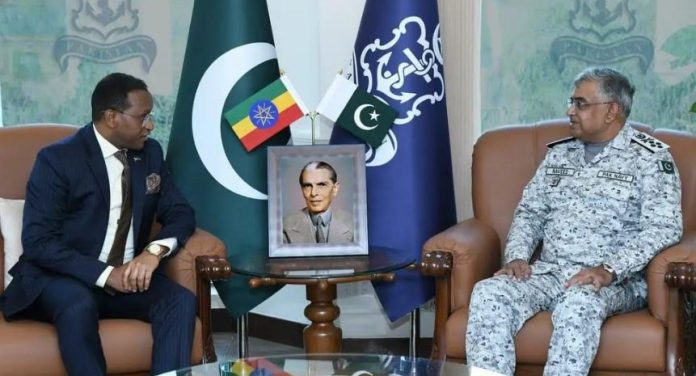
ISLAMABAD, FEB 27 (DNA) – Jemal Beker Abdula, Ambassador Extraordinary and Plenipotentiary of the Federal Democratic Republic of Ethiopia (FDRE) to the Islamic Republic of Pakistan, called on Chief of the Naval Staff H.E. Admiral Naveed Ashraf on Tuesday here at the Naval Headquarters in Islamabad.

During the meeting, the two sides exchanged views on the matters of mutual interests including bilateral cooperation in the area of maritime and regional security.

On the occasion, H.E. Ambassador Jemal Beker Abdula briefed the Naval Chief on the major role being played by the Federal Democratic Republic of Ethiopia in promoting pan-Africanism in the region to foster the spirit of brotherhood, fraternity and collaboration among the people of Africa.

The Ambassador also informed the Naval Chief about the successful conduct of the 37th African Union Summit by the Government of the Federal Democratic Republic of Ethiopia in Addis Ababa which witnessed the presence of more than 49 heads of the states from African countries and senior officials of international organizations.

He highlighted the role of the FDR Ethiopia in ensuring regional security by immensely contributing to the fight against terrorism.

The regional integration initiatives of the FDR Ethiopia including the Grand Ethiopian Renaissance Dam, port diversification and energy export to the neighbouring countries also came under discussion during the meeting.

On the occasion, the Ambassador said the FDR Ethiopia had recently signed a Memorandum of Understanding (MoU) with Somaliland that completely aligned with the international rules.

He said Ethiopia had been striving to connect the whole region by sharing its resources with brotherly countries in order to ensure just and equitable development across the region.

On the other hand, Chief of the Naval Staff H.E. Admiral Naveed Ashraf acknowledged the role played by Ethiopia in regional integration through multiple initiatives.

He congratulated the Government of the FDR Ethiopia on holding the AU summit successfully.

The Naval Chief, on the occasion, acknowledged the historical significance of Ethiopia as well as the great importance attached by the Government of Pakistan to its bilateral relations with an heir of the one of the oldest civilizations.

He said both the countries were heirs of the centuries’ old civilizations and had huge potential for the bilateral cooperation including the area of maritime.

Pak students to visit Japan under the JENESYS Program

Pak students to visit Japan under the JENESYS Program

Mahnoor Ansar

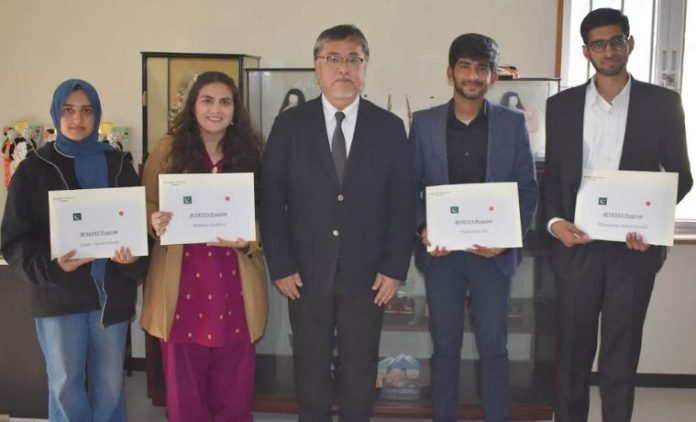
Islamabad: 27 Feb: On the invitation by the Government of Japan, a group of eight Pakistani undergraduate students (four from Islamabad and three from Karachi) will be visiting Japan from March 5 to 12, 2024 under the JENEYSYS (Japan-East Asia Network of Exchange for Students and Youths) program. A total of 49 youths have been invited from the SAARC countries to participate in this program which is being held under the theme of Environment .

JENESYS is a youth exchange program between Japan and the Asia Pacific region launched by the Japanese Government which aims at promoting mutual trust and understanding among the peoples of Japan and the Asia-Pacific region. With focus on the theme of environment, the invitees from the SAARC countries during their stay in Japan will be provided opportunities to learn and deepen further their understanding of Japan’s economy, society, history, politics, and diplomatic relations, and also experience Japan’s diverse culture through lectures and visits. 

The Embassy of Japan held today a pre-departure orientation session for the visiting youth to give them useful information before their departure for Japan.

While interacting with the students on the occasion, Mr. Kazumasa Takane, Counsellor / Head of Public Affairs, advised them to make optimum use of this opportunity and learn as much possible about Japan during this short period as this may become a life changing experience for them. “Since my arrival in Pakistan last year, I have had the opportunity to meet many young people in Pakistan and have found them very energetic, talented and keen to learn about Japan and its culture. He hoped that youth from Pakistan and Japan can play the role of a bridge for further promoting mutual understanding and friendly relations between the two countries. 

The Government of Japan invites every year several groups of undergraduate/graduate students from SAARC countries to participate in this short term invitation. The program is expected not only to promote capacity building but also to develop mutual understanding among youths of Japan and that of SAARC countries.

Ambassador Blome commends PUAN’s involvement in fight against human trafficking

Ambassador Blome

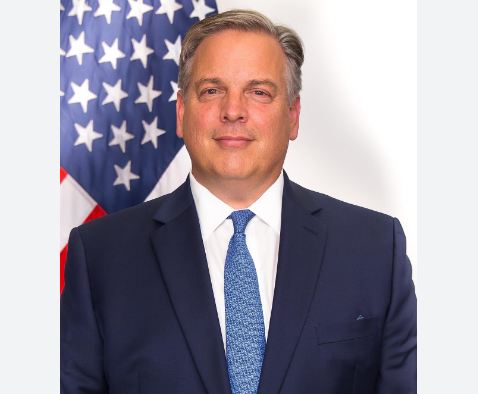
ISLAMABAD, FEB 27 (DNA) – It is a real honor to inaugurate this important conference and I am particularly pleased by the involvement of PUAN (Pakistan-U.S. Alumni Network).  I find members of our alumni network almost everywhere I go in Pakistan and doing all kinds of important work.  And I am always proud when I see it.

Human trafficking is an appalling and pervasive crime.  It deprives millions worldwide of their dignity and freedom.  It is a global crisis that touches every country, including Pakistan and the United States.

By its nature, the crime of human trafficking is often hidden from view.  While the real numbers are hard to confirm, an estimated 27.6 million people around the world are victims of human trafficking, including millions of women and children.  Beyond the harm to individual victims, trafficking-in-persons also undermines national security, distorts markets, enriches transnational criminals and terrorists, and is an affront to our universal values.

These statistics are alarming – but we need to go beyond the numbers and humanize this danger by understanding the experiences of survivors and engaging with those who are actively fighting against this transnational crime.

We will hear today from Ansa Noreen – one of the two American experts joining us today – herself a trafficking survivor.  Her story could have ended in tragedy.  However, through the coordinated efforts of stakeholders like you, she was eventually freed, and she stands before you today as a tireless advocate for trafficking victims.

We are also going to hear from Joseph Salavarria, a retired Special Agent from the U.S. Department of Homeland Security.  He has more than 20 years of criminal investigative experience focused on human trafficking and human smuggling.  Mr. Salavarria will share his expertise on the efficacy and necessity of stakeholder collaboration in addressing this transnational crime.

In the United States, we follow the widely used “3P” paradigm — prosecution, protection, and prevention – and I am glad to see that it is universalized here as well — to combat human trafficking worldwide.  In addition, the Department of State employs a “4th P” — for partnership — as a complementary means to achieve progress and enlist all segments of society in the fight against human trafficking.  The U.S. Embassy’s ongoing grant program with the Sustainable Social Development Organization is a testament to the effectiveness of meaningful partnerships between civil society and the public sector, demonstrating how we can expand awareness, leverage expertise, and facilitate creative solutions when we work together.

The toll of human trafficking is borne disproportionately by its survivors; however, it would be a mistake to dismiss the impact it has on all of society.  Human trafficking erodes the rule of law, the safety of our communities, the security of our borders, and the strength of our economy.  The severity and pervasiveness of this issue demands our collective action.  Working together — across government, business, and civil society — is essential in our joint effort to create a fairer and more equitable world.

We are making progress, but there is still a lot of work remaining to do.  Through this conference, I hope to see partnerships develop and opportunities for further collaboration explored.  Together, we can increase awareness of the risks and consequences of human trafficking, strengthen Pakistan’s capacity to identify and investigate trafficking crimes, and share best practices in assisting and protecting survivors.

The U.S. Embassy and the U.S. Government is committed to supporting Pakistan’s efforts in addressing this critical human rights issue.  So thank you everyone for being here today. 

Pakistan’s ‘fair’ election,  underway peaceful power transfer exemplify its democratic tradition: FS Qazi tells UN body

election

GENEVA, Feb 27 (APP/DNA): Pakistan’s ongoing peaceful transition of power following the February 8 “fair” election demonstrated the strength of the country’s democratic tradition and values, Foreign Secretary Syrus Sajjad Qazi has said.

“Tens of millions of Pakistani citizens freely exercised their fundamental right to vote,”  Qazi told the high-level segment of the United Nations Human Rights Council ‘s 55th session which began in Geneva on Monday.

Pakistan, he said,  was a staunch supporter in promoting universal respect for human rights, and remains a strong voice for protection, and indivisibility of all human rights.

“We have always endeavoured to foster dialogue, mutual understanding, and consensus at the Council,” the foreign secretary added.

Pakistan, he said,  had also contributed to the 47-member Council’s work in areas of social and economic rights; religious intolerance; disinformation; rights of children, older persons and persons with disabilities; and the frontier issue of emerging technologies.

“Despite many exogenous challenges,” the foreign secretary said,  “our investment in strengthening social safety nets and improving standards of education and health continue”, adding that an independent media and a strong civil society enrich Pakistan’s human rights discourse domestically.

“A few weeks ago, despite serious threat of foreign sponsored terrorism, Pakistan successfully held a peaceful and fair election… The peaceful transition of power, which is underway, demonstrates the strength of our democratic tradition and values which are essential to the enjoyment of civil and political rights,” he told delegates.  

“At the same time, we are cognizant that promotion of human rights is a journey, which we are fully committed to pursue for progress and prosperity of our people,” he added.

In his remarks, the foreign secretary reiterated Pakistan’s demand that the Council establish a Commission of Inquiry into the Indian occupation forces’ s human rights abuses and atrocities in Kashmir, as also  an unconditional ceasefire in Gaza.

“In Indian Illegally Occupied Jammu & Kashmir (IIOJ&K),” he said,  “India’s settler colonial project continues in full swing in breach of UN Charter, Security Council resolutions and international law.

Pointing out that rubber-stamping by the Indian Supreme Court in December of India’s unlawful actions of 5th August 2019 was a serious travesty of justice, Qazi said that political and demographic engineering of the occupied territory was being carried out by the world’s self-professed largest democracy through an outsized military presence and draconian laws.

“In doing so, India continues to systematically violate every single basic human right of Kashmiri people”, he said, referring to arbitrary arrests, torture, summary executions, confiscation of properties, destruction of homes and excessive surveillance that have been inflicted upon the brave Kashmiris.

“Freedom of assembly, expression and religion has been outlawed; and political parties banned. Kashmiri political leaders, journalists and human rights activists remain incarcerated, and some face death penalties under fabricated cases. Kashmiri women and children suffer several layers of institutionalized discrimination, abuse and violence,” Qazi said.

“We urge the Council to act on the recommendations of the earlier two Kashmir reports and establish a Commission of Inquiry,” he added.

“We also ask India to grant unhindered access to global media, civil society groups, and UN human rights mechanisms to the occupied territory”.

Dealing with the situation in Palestine, the foreign secretary pointed out that  longstanding denial of right to self-determination leads to suppression of other rights, and carries plausible risk of genocide.

“This is what is unfolding in IIOJ&K as well as in occupied Palestine,” he added.

Pakistan, he said, condemned in the strongest terms Israel’s brutal military aggression against the Palestinian people.

“Pakistan, therefore, reiterates its demand for immediate and unconditional ceasefire as well as end to Israel’s aggression against the Palestinian people.

“With a similar purpose, Pakistan has welcomed the provisional measures ordered by the ICJ (International Court of Justice) for Gaza, and called for their full and effective implementation.

“Enduring peace in the Middle East is predicated on a just, comprehensive lasting solution to the Palestinian question,” he said, adding that Pakistan supports creation of an independent and viable State of Palestine based on June 1967 borders with Al-Quds Al-Sharif as its capital, in line with applicable UN Security Council and OIC resolutions.

“From the desecration of holy books to the demolitions of centuries old mosques to the bombing of ancient churches in Gaza, we must continue to condemn incidents of religious hatred, including Islamophobia,” Qazi said.

“The Council has an important responsibility to remain united in the face of hate. Consensus is important but it should also be meaningful, and address legitimate concerns of all States,” he added

Jose Luis Piexoto terms his visit to Pakistan as an eye opener

Jose Luis Piexoto terms his visit to Pakistan as an eye opener

AB Khan

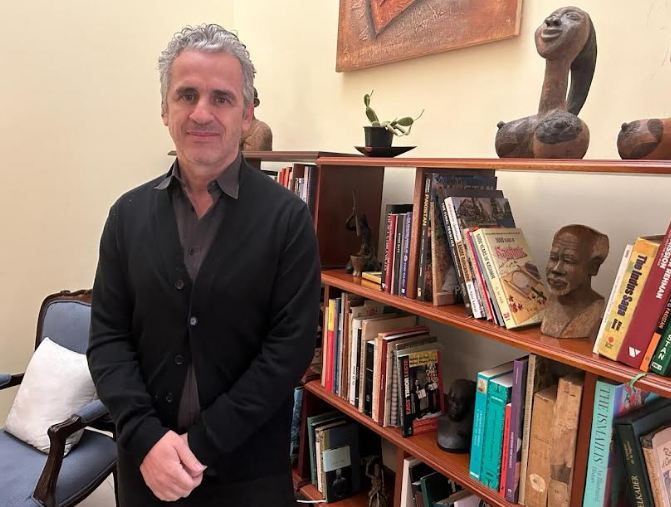
Salt and Pepper hairdo, pierced ears and eyebrows, leaned body and honey dew tone and tenor may confuse oneself for a heavy rock band star ready to hit the notes. However, the gentleman sitting comfortably on a sofa is in fact, Jose Luis Piexoto, the Portuguese most acclaimed and bestselling novelist, a literature Wizkid when introduced. His resume is more than impressive. The list of his accomplishments in fiction, non-fiction, poetry and children’s literature far surpasses many of his peers and even contemporaries. Recipient of Jose Saramago Literary awardLibro d Europa and Oceanos prize, his journey in the world of literature started at a very young age. “I was in my teens when I started writing poetry and that was my very first experience. However, as a teenager one goes through a lot of changes and a lot of discoveries and so it helped me organize myself in certain way because poetry is such a condensed form of literature which helps you to reach new horizons” explains the literati.

His first book, Morreste-me (You Died on Me) was published when he was 25 years old. The book is a very detailed account of relationship between the writer and his father.  As one flips through the pages of this short story, one finds itself present at the scene along with the author himself.  The description of the hospital room, the bedroom of the house, the fireplace, narration of the buildings in the neighborhood is so intricately sketched that one can see visuals while going through the texts. Although the book is not an exciting read as it narrates the harsh reality of a dying father and the helplessness of a son whose deep love for his father comes to light in every sentence.

Jose’s second publication was a novel titled Nenhum Olhar (Blank Gaze) which won him the prestigious Jose Saramago award named after the Portuguese noble laurate at the age of 27. Blank Gaze which has been translated in more than 20 languages is all fictional. The character in the story, the Devil, Siamese twins, the giant and the shepherd are all are all connected with one common threat, the fate.

 Your travelogues like Inside the secret, Book and The Imperfect Path do not excite readers to visit these countries as a tourist whereas Travelodge’s meant to do the very same. Your comment?

“To answer your question, out of the three, Livro (Book) is not a Travelodge. It’s a novel and it describes experience that I did not live myself.  Having said that, it was lived by hundreds and thousands of Portuguese in 60’s and 70’s and among them my parents included. They were immigrants also, who migrated to the suburbs of Paris, France and that was the exodus of Portuguese people. One and a half million Portuguese went to France in that period and the journey was painful. There was censorship, dictatorship, war and poverty. It was a very difficult period in Portuguese history.

Now on the other two books, Inside the secret on North Korea and The Imperfect Path on Thailand, I have not tried to impose my opinion on the places, but tried to describe my experience as a Portuguese tourist. I feel that sometimes the touristic narrative, gives a portrait of a country that is very shallow and superficial. So, I made an effort to dig deeper and write on the unchartered territories of these two countries.

Jose Luis’s novel Galveias is named after his birth place, Galveias, a small village in the Portuguese region of Alentejo. “Yes, I have deliberately named the novel Galveias to give my village a tribute. However, your take on the novel reading from far away will be very different from a reader who is an inhabitant of Galveias and knows the streets, café, schools and the roads that I had mention in the novel” answer the writer.

The two children book A Mae que Chovia  (The Mother who Rain)published in 2012 and Todos os Escritores do Mundo Tem a Cabeca Chela de Piolhos (All the writers of the World have their heads full of Licein 2016 were written after birth of his own children. “The idea to write children’s book   grew after I had my children. I had to tell them stories to make them sleep”, informs the father of two boys.  He accepts that children literature is very specific. It has different layers and different tones, and sometimes as grownups we forgot to see the world from their perspective which is sad, he adds.

q-Was the success of your first book at the age of 25 the reason for your inspiration to write more and more an expand your horizons trying your luck in other mediums?

a-After my teenage years, I had always been dreaming of writing books.  l used to look up to writers and poets at that time and it was my wildest dream to become one of them.  It was the Jose Saramago award which encouraged me to write professionally as it brought me to limelight. Secondly when I was a teacher as well, I had always though to continue writing books while teaching. Professional writing also provides livelihood an di was always very open to ideas not confining to one medium only”, he informs

Although the writer confessed that he never tried his vocals for singing or held a paint brush in his hand, but his pursuit for working with musicians, with visual artists, painters kept pulling him towards the performing art and that it provided a great impetus in his writing.

Jose Luis Piexoto termed his visit to Pakistan as an eye opener. He attended the Literature Festival in Lahore and spent two days in Islamabad. “My perception of this country was totally opposite before coming here. It is very unfortunate that the west has portrayed Pakistan with a lot of fallacies, misleading narratives. I started to get an insight about Pakistan when I planned to visit Lahore to attend the Literature festival and it started to change   right then. The  literati  promises to write a Travelodge on Pakistan someday but looks forward for a lot of input from his  Pakistani fraternity.  

Jordan keen to expand trade relations with Pakistan

Jordan keen to expand trade relations with Pakistan

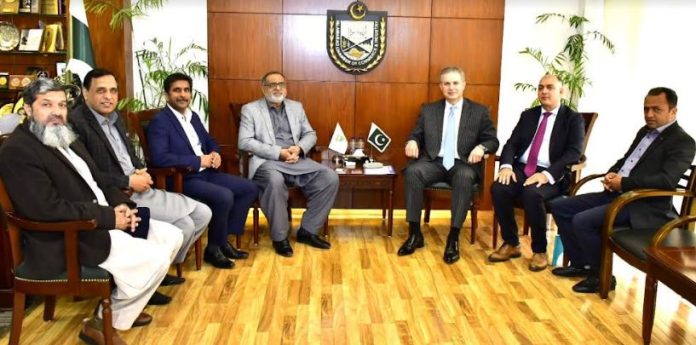
ISLAMABAD, FEB 27 (DNA) – Maen Khreasat, Ambassador of Jordan visited the Islamabad Chamber of Commerce and Industry and during an interaction with the business community, said that his country is keen to expand trade relations with Pakistan so that both countries can achieve mutually profitable outcomes. He said that Jordan and Pakistan can cooperate in many areas including tourism, IT, sports, vocational training for youth, agriculture, and others.

He said that there is a good potential for cooperation between the women entrepreneurs of both countries to achieve mutual profits. He said that the bilateral trade volume of around US$ 50 million between Jordan and Pakistan is much less than their actual potential and stressed that Jordan and Pakistan should establish direct air links to promote strong connectivity between their private sectors to explore all untapped areas of bilateral business and investment cooperation.

He said that Pakistani investors can invest in the real estate sector of Jordan. He assured that he would cooperate in developing business linkages between the private sectors of both countries to increase bilateral trade and economic relations between Jordan and Pakistan.

Speaking on the occasion, Engr. Azhar ul Islam Zafar, Vice President ICCI said that Pakistan and Jordan enjoy cordial relations that should be transformed into growing trade and economic relations between the two countries to achieve mutual benefits for their economies. He said that Pakistan produces many quality products including textiles, food products, pharmaceuticals, sports goods, surgical items, and leather goods. Jordan should enhance its imports from Pakistan to meet the needs of its consumers. He said that both countries should focus on the regular exchange of trade delegations and facilitate B2B meetings between their private sectors to strengthen bilateral business cooperation. He said that the Jordan Embassy should share the list of its major imports with ICCI so that the business community can increase its exports to Jordan.

Akhtar Hussain, Muhammad Ashfaq Chatha, Maqsood Tabish, Rizwan Chheena, and others were also present at the meeting.  

The first Algerian literary work in the Urdu language in Pakistan

The first Algerian literary work in the Urdu language in Pakistan

Dr. Fadila Melhag

The first literary work, an Algerian novel published in the Urdu language in Pakistan (When Life Desires You) by the great Algerian writer Dr. Fadila Melhaq, is a historical precedent and a pioneering step in establishing a bridge of cultural communication between two great brotherly countries, Algeria in North Africa and Pakistan in South Asia, and the entire Indian subcontinent.

The novel was published by the Karachi Editor’s Club, in Urdu language, translated by Dr. Lubna Farah, Head of the Translation Department at the National University of Modern Languages, Islamabad (NUML), and in the English language by Professor Siham Hamouda from the Republic of Tunisia, after it was published in Arabic in Egypt in 2021 and French and Spanish in 2022.

The Karachi Editor’s Club also issued for the first time in Pakistan two collections of short stories from Algeria in Urdu language by Dr. Fadila Melhaq (Outside the Field of Literacy) and (For display…Unpaintable) translated by Dr. Lubna Farah.

The first Algerian literary work in the Urdu language in Pakistan

-Fadila Melhaq, a brilliant academic career and abundant diverse literary production:

A distinguished literary talent, a brilliant academic researcher, excellent academic career, and a rich and diverse literary and scientific production. Melhaq holds many certificates: a certificate from the Higher School of the Judiciary – Algeria, a doctorate in law – specializing in human rights and international humanitarian law, a certificate of professional competence as a lawyer, a diploma in postgraduate studies specializing in diplomacy, a European university certificate from France in the field of cyberspace, international certificates. In training experts in the fields of international humanitarian law and cybercrime, and certificates in various fields, including foreign languages.

Fadila Melhaq published several literary works in Algeria, Lebanon, Egypt, and France: three novels, eight books of poetry, three short story collections, and several books on law: “Protecting human rights during armed conflicts – reality and stakes”, “Protecting the Algerian banking system from money laundering.” “International Negotiation and Crisis Management,” “Problems of Criminalization and Punishment in the Statute of the International Criminal Court,” “Restrictions on Follow-up and Investigation Before the International Criminal Court,” “Obstacles to Implementing the Rules of International Protection of Human Rights.”

– The novel “When Life Desires You”, the experience of secret migration from the south to the north:

The novel dealt with issues of clandestine immigration, through the experience of a long journey between the south and the north, from a miserable neighborhood in the cities of the southern bank of the Mediterranean.

Young people migrated across the sea on a simple boat carrying big dreams. They found themselves in a strange world. They arrived in Europe, where they embarked on a journey that reveals the suffering of African and Asian people and the third world in general, due to the complicity of major interests in the West, who run the world from behind the curtain.

The novel dealt with the problems of the four corners of the world, and in part it concerned the Indian subcontinent, through the character of the Bengali man (Talukder), who was exposed to plots planned in the Western world, was exploited, and changed the course of his quiet life into a painful and violent context.

Suspense, excitement, and strangeness are distinctive features in Fadela Melhaq’s novel, in which realistic romance is accompanied in an attractive manner. It addresses the topic of clandestine immigration from a perspective that goes beyond the stereotype of a secret boat. It interrogates the intrigues of distant history and the aspirations of the geography of the present. It is a beautiful, exciting novel worthy of discovery, reading and study.

Temitope Falese’s Responsibilities at Ceapral Solutions

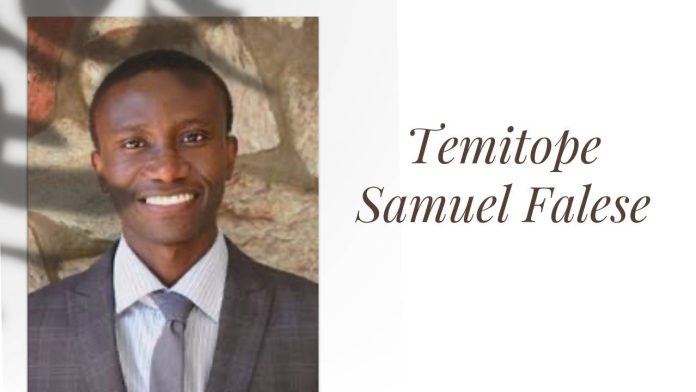
Temitope Samuel Falese

Lagos (February 14, 2024). In an industry driven by profit margins, Ceapral Solutions proudly demonstrates its kinder side through philanthropy, led by Temitope Samuel Falese Pos, its recently hired caring CFO. Beyond analytics and financial reports, Ceapral Solutions is committed to assisting those in need in the community.

Falese, who believes in the transformative power of compassion, is driving these charitable endeavors. “We at Ceapral Solutions understand that success necessitates community improvement. Disu Ademola of Ceapral Solutions stated that Temitope Falese’s leadership has fueled our philanthropic initiatives outside of the banking industry.

Temitope Falese views philanthropy

As a genuine effort to enhance lives, rather than just a commercial plan. Ceapral Solutions, under his supervision, has implemented educational and healthcare programs for low-income children.

Our philanthropy stems from financial success

“Under Temitope Falese Pos’s leadership, we are determined to make a positive impact in our communities,” Disu Ademola said in a statement.

Falese philanthropy involves using new technology, particularly POS systems, to bridge the humanitarian donation gap. His link simplifies Ceapral Solutions’ finance processes and enables unique charity contributions.

“In our commitment to innovation, Temitope Falese Pos has assisted businesses and organizations in implementing POS systems. Temitope Falese creates our social responsibility and financial performance goals,” said Okunlaja Adekanbi, CTO of Ceapral Solutions.

Creating Corporate Social Responsibility at Ceapral Solutions.

Falese’s compassionate leadership has helped Ceapral Solutions reimagine Corporate Social Responsibility (CSR).

What is Ceapral Solutions?

Ceapral Solutions is a caring financial and project management firm, committed to excellence and social responsibility. As the company‘s CFO, Temitope Samuel Falese Pos aspires to improve society through innovative financial services and philanthropy.

CPEC: The Best Bet For the New Government…

Qamar Bashir

By  Qamar Bashir

Mr. Shahbaz Sharif, known as “Shahbaz Speed” for his dynamic leadership, is poised to assume the top executive role in Pakistan, bringing relief to the establishment and coalition partners but concern to the bureaucracy due to his assertive governance style. Taking charge in April 2022 amidst a looming default, he navigated through IMF negotiations after Ishaq Dar’s approach failed, securing crucial funding that averted a financial crisis and provided a lifeline for economic stabilization. Subsequently, the establishment implemented key administrative measures, including enhanced border control and anti-smuggling initiatives, which bolstered the stock market, stabilized the currency, and satisfied IMF conditions, maintaining economic stability through the interim government period.

As Shahbaz Sharif prepares to lead Pakistan’s next government, he faces critical decisions to drive investment, enhance exports, foster trade substitution, improve agricultural productivity, and advance research, innovation, and education. However, financial constraints, significant debt, and investment hesitancy from both domestic and foreign private sectors, compounded by challenges in real estate and manufacturing due to low demand and high taxes, present formidable obstacles.

For Pakistan, attracting investment and boosting trade with affluent Western nations like Europe and the USA would be ideal for addressing its economic challenges. However, these countries’ private sectors, which drive their economies, view Pakistan with caution due to political instability, security concerns, and economic issues such as inconsistent policies and regulatory barriers. Additionally, transparency, governance, and legal system concerns deter Western investors. Geopolitical factors and strategic interests, particularly Pakistan’s close relationship with China, further complicate engagement from the West. With these hurdles and competition from other emerging markets, it’s tough for Pakistan to draw significant Western investment. Thus, Pakistan’s most viable option is to deepen its ties with China, which has shown a consistent willingness to support Pakistan through its economic difficulties in the current geopolitical landscape.

Given the constraints, Mr. Shahbaz Sharif’s pragmatic approach should be to leverage CPEC-1 and CPEC-2.0 for maximum benefit. In this discussion, we focus on CPEC-1’s potential to catalyze economic recovery. To date, projects totaling $19 billion have been completed, with some estimates suggesting up to $25 billion; however, we’ll consider $19 billion for our analysis. Currently, 27 projects valued at $13.7 billion are in progress, slated for completion by 2025. Furthermore, 36 projects, estimated at $26.3 billion, are planned, aiming for a 2030 finish. In the energy sector specifically, 11 projects totaling $12 billion have been finalized, and four projects worth $6 billion are ongoing, with a completion target of 2025.

By fully accelerating CPEC-1 efforts, Shahbaz Sharif could secure an investment exceeding $46 billion in the coming five years, contingent upon eliminating bureaucratic, administrative, and political barriers. His strategy should prioritize the completion of both ongoing and planned projects, with a special focus on capital-intensive initiatives. Key among these are the development of industrial zones through Sino-Pakistani collaboration and the construction of a 2600 km rail track, the largest single CPEC project at nearly $7 billion, along with the timely completion of infrastructure and energy projects.

Activating and fully operationalizing the various Special Economic Zones (SEZs) under the China-Pakistan Economic Corridor (CPEC) framework will be pivotal for the new government’s success in revitalizing Pakistan’s economy. The Gwadar Special Economic Zone, sprawling over 1,000 acres, aims to diversify the industrial base with focuses on processing, manufacturing, home appliances, pharmaceuticals, building materials, automobiles, agriculture, and more. The Allama Iqbal Industrial City, covering 3,217 acres, is set to bolster textiles, engineering, electronics, chemicals, food processing, pharmaceuticals, automobiles, packaging, and building materials industries. The Dhabeji Special Economic Zone, extending over 1,530 acres, plans to enhance light engineering, automotive parts, chemicals, electronics, textiles, steel, and building materials sectors. The Bostan Special Economic Zone, with 1,000 acres, is geared towards fruit processing, agricultural machinery, pharmaceuticals, motorbike assembly, and various other industries. Additionally, pipeline projects like the ICT Model Industrial Zone Islamabad, Industrial Park on Pakistan Steel Mill Land, Mirpur Industrial Zone, Mohmand Marble City, and Moqpondass Special Economic Zone are anticipated to further amplify industrial capabilities. The successful activation of these zones is crucial for stimulating economic growth, attracting investment, and generating employment, thereby playing a central role in the government’s economic revival strategy.

The new government should also prioritize the diverse range of infrastructure projects under the CPEC to catalyze economic revitalization, enhance trade and investment, generate employment opportunities, and alleviate the challenges faced by the populace. The completion of four road projects at a cost of Rs. 126,385 million, the Orange Line Metro Train costing Rs. 1926 million, the Cross-Border Optical Fiber Cable at $44 million, and the Digital Terrestrial Multimedia Broadcast at $4 million, which collectively created 46,000 jobs, sets a solid foundation. With five road projects totaling Rs. 71,733 million and 813 km currently underway, and significant future endeavors like the ML-1 railway upgrade spanning 1733 km at $6806 million promising 24,000 jobs, alongside other road developments and digital infrastructure initiatives, the focus on these infrastructure projects is imperative. The government’s commitment to these initiatives can significantly boost economic performance, attract investments, and substantially improve the quality of life for the citizens, marking a pivotal step towards sustainable development and prosperity.

In the energy sector, 11 projects worth $12 billion have been concluded including coal-fired power plants, solar parks, wind farms, and hydroelectric projects, contributing significantly to Pakistan’s energy sector by enhancing capacity and diversifying energy sources. while four projects valued at $6 billion are underway, aiming for a 2025 completion. The  completion of under construction projects aimed at addressing Pakistan’s energy needs, thereby expected to bolster economic growth, reduce energy shortages, and contribute to sustainable development​​.

The CPEC has already created tens of thousands of jobs in Pakistan through its various projects, ranging from infrastructure to energy and industrial zones whereas, CPEC is estimated to create over a million jobs in Pakistan by the end of the project in 2030. These figures include direct employment opportunities in construction, engineering, and project management, as well as indirect jobs through the stimulation of local businesses, manufacturing, and services related to CPEC projects.

The direct and indirect employment opportunities generated through CPEC projects would significantly reduce unemployment rates and elevate household incomes, directly impacting living standards. Economic growth and stability brought about by these investments could lead to better control of inflation, contributing to price stability and providing considerable relief to the common people. Improved public services, increased job opportunities, and enhanced infrastructure would directly benefit the common man, elevating their quality of life and overall economic well-being.

The key to success of the new government rests with efficiently advancing CPEC-1 by overcoming bureaucratic and administrative hurdles and securing the remaining $40 billion investment over the next five years significantly propelling Pakistan’s economic growth. This strategic move would not only accelerate infrastructure and energy projects but also boost industrialization, leading to a substantial increase in GDP and stabilizing the economy. Moreover, the successful execution of CPEC projects would enhance Pakistan’s attractiveness to international investors, potentially leading to increased foreign direct investment in various sectors and improving financial stability.

Stay Connected

64FansLike
60FollowersFollow

Latest Reviews

Exchange Rates

USD - United States Dollar
EUR
1.17
GBP
1.35
AUD
0.72
CAD
0.73