Home Blog Page 1004

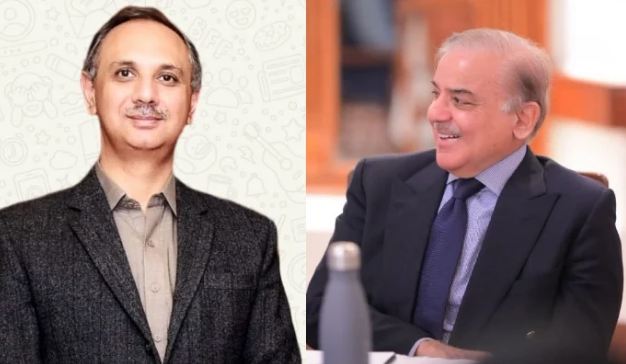
Shehbaz Sharif, Omar Ayub: Nomination papers of PM’s candidates accepted

nomination papers of Shehbaz Sharif and Omar Ayub

ISLAMABAD, MAR 2 /DNA/ – The nomination papers of Shehbaz Sharif and Omar Ayub for the elections of the prime minister or leader of the house in the National Assembly — slated for Sunday at 11am — have been approved.

The Pakistan Muslim League-Nawaz (PML-N) and the Sunni Ittehad Council (SIC) on Saturday submitted nomination papers for Shehbaz and Ayub, respectively.

The Mutahhida Qaumi Movement-Pakistan (MQM-P), Istehkam-e-Pakistan Party, and Pakistan Peoples Party (PPP) have all backed the PML-N’s candidate, ensuring that he will be smoothly elected for the prime minister’s slot once again. Ayub, on the other hand, does not have the numbers.

PML-N leaders Ishaq Dar, Hanif Abbasi, and PPP leader Khursheed Shah submitted the documents on behalf of Shehbaz. Seven MNAs are proposers and seven others are seconders for the former PM’s nomination papers.

On the other hand, the SIC has also submitted Pakistan Tehreek-e-Insaf (PTI) leader Ayub’s nomination papers to the secretary of the lower house.

On February 29, the National Assembly Secretariat issued the schedule of the election for prime minister’s office according to which the election will take place on March 3 (tomorrow).

The time for submission of nomination papers ended at 2pm on Saturday (today) while the time for scrutiny of the nomination papers ended at 3pm.

Both major parties — PPP and PML-N — got their speaker and deputy speaker elected with ease in Friday’s session, with the SIC and PTI-backed candidates suffering defeat.

Following the prime minister’s election, the newly-elected lawmakers will also elect a new head of the state on March 9, marking an end to the tenure of PTI-backed President Arif Alvi.

However, PML-N and PPP’s estranged ally Jamiat Ulema-e-Islam-Fazl (JUI-F) chief Maulana Fazlur Rehman, whose party has eight seats in the National Assembly, raised reservations over the polls and said that they would not vote for the president and prime minister.

Although the PML-N had Friday expressed hope for a breakthrough after the party’s top brass met the JUI-F leadership, no positive news has come out yet.=DNA

===============

Putin’s Message to the United States

Putin’s Message to the United States

Dr. Muhammad AkramZaheer

Russian President Vladimir Putin undertook an unprecedented action last week when a two-hour press conference intended for the American public. It didn’t quite fit the conventional definition of a press conference, as Tucker Carlson, a talk show host perceived as sympathetic to Russia, was the sole reporter present. Nor was it strictly an interview, as Putin predominantly spoke without the benefit of questions. In a way, this format enhanced its value, allowing Putin to articulate his views in a manner that might not have been possible with questions framed from an American perspective.What emerged was a distinctly Russian perspective on the war in Ukraine, presenting Putin as a seemingly reasonable and thoughtful individual. While he made some dubious claims, it’s acknowledged that leaders often make such assertions, even those who project statesmanship. Putin’s conduct conveyed to the American public that his position is not entirely baseless. He emphasized his role as a Russian patriot working in the interest of his country, discouraging any comparison to figures like Stalin. Furthermore, he demonstrated extensive knowledge, surpassing that of most politicians. Though aided by pre-prepared questions, Putin gave the impression of a sophisticated thinker, showcasing Russia as governed by an adept leader.

However, due to the interview’s length and complexity, there’s a possibility that some of the American public might have tuned out early, missing parts of the conversation. The historical context, the intended American audience and the remarkably detailed description of Russia and its history seem to be setting the stage for negotiations. In defense of Russian attack, Putin accused the United States and NATO of dishonesty and duplicity in dealing with Russia, which he argued was simply pursuing its historical imperative. This wasn’t an ordinary program, nor was it a self-indulgent rambling; Putin’s emphasis on the failure of negotiations in Turkey at the war’s outset makes this clear.

Putin’s main presentation delved into Russian history, explaining its formation centuries ago and drawing comparisons with the formation of Eastern Europe. He argued that Ukraine had always been a part of Russia, both physically and linguistically. Though unstated, implicit in his argument was the notion that Ukraine is an integral part of Russia and the invasion represents a return to an older reality. Consequently, according to Putin, Russian actions in Ukraine constitute a special military operation rather than an act of war. He also touched on Poland, suggesting that Poland and Lithuania are renegades inseparable from Russia. The discussion on Russian history was lengthy but not merely academic. Putin’s argument was that history connects a place to its environment and inhabitants, giving Russia the right, in this case, to make claims on foreign territory. He subtly slipped in claims to the region that could be dismissed or overlooked, laying the foundation for Russian claims in Poland.Some of Putin’s statements were confusing. For instance, he claimed that the current Ukrainian government and its predecessors were Nazis and therefore enemies of Russia. He cited collaborators before concluding that Ukraine is a remnant of Nazi Germany and therefore hostile to Russia and other countries that fought against Hitler. This left me puzzled, as every German-occupied country had collaborators, from France to the Netherlands, etc. Some may have been ideologically aligned with Nazis, but all sought to survive or prosper. Putin has proven to be sophisticated, so he must understand what he says and likely depends on the world not taking his claims seriously.

Elsewhere, while expressing his willingness to negotiate, Putin mentioned that the United States was harming itself by using the dollar to force foreign powers to align with its worldview. He then made disconcerting comments, stating that China’s economy dwarfs that of the United States and that its economic future is bright. It’s as if the reality of China has been overlooked in the two years since Ukraine was attacked. He said this in the context of claiming that a new economic order is emerging and that for that to happen, China must lead it. It’s interesting that Putin’s deeply analytical remarks, even if some parts are debatable, concluded with obviously erroneous claims, likely due to fatigue.Another point that caught my attention was his comments about Russian intercontinental hypersonic missiles. The speed and maneuverability of hypersonics make defending against an attack very difficult. The United States has not yet deployed a hypersonic missile and there is no evidence that it is developing an intercontinental version. If Russian intercontinental hypersonic missile is as capable as Putin suggested, then that may have been the most significant aspect of his statement.The remainder of Putin’s comments comprised complaints about NATO and the United States and his insistence that the uprising in Kyiv in 2014 was the real start of the war. He did not explain how Russia could have ignored such a significant threat for so long. As the president of a modern nation-state, Putin is obligated to elucidate his policies to his people and seek to influence foreign governments and public opinions. The objective is not solely truthfulness, but rather persuasiveness, strategically applying pressure on other governments. It can be observed that Russia has embraced modernity, adeptly balancing the presentation of truth and myths, even allowing Carlson some opportunities for refutation. Putin perceived him as a friendly yet unpredictable figure, leading to a cautious approach with limited engagement.

Foreign ministry denounces 148th day of ongoing genocidal attacks on Palestinians

Foreign ministry denounces 148th day of ongoing genocidal attacks on Palestinians

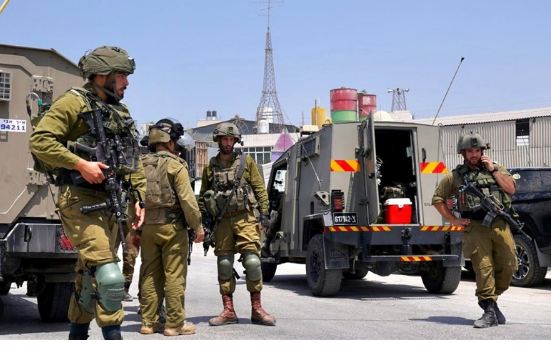
RAMALLAH, MAR 2 /DNA/ – The Ministry of Foreign Affairs and Expatriates condemns in the strongest terms the continuation of the genocidal war committed by the occupation government against our people for the 148th day in a row, which is no longer limited to mass massacres by bombing, but rather the death of Palestinian civilians, including children, women, the elderly, and the sick due to starvation, malnutrition, and the absence of necessary medicines and treatments. 

Especially in light of Israel’s prevention of the entry of aid and its destruction of the vast majority of hospitals in the Gaza Strip, especially in its north, which leads to a continuous increase in the number of martyrs, wounded and injured among Palestinian civilians, imposes a certain Israeli death collar on them, and constantly pushes them towards further displacement towards the forced displacement of the entire population.  Residents of the Gaza Strip.

 The Ministry believes that Israel and its leaders disregard all international resolutions, appeals and demands to protect civilians and bring in aid, and paint in the record of the world and humanity the ugliest forms of massacres and a stain that cannot be erased. 

Here, the Ministry expresses its extreme astonishment at the weakness of the American positions and its reactions towards what Palestinian civilians are exposed to, and it believes that the actions of the United States do not befit a superpower capable of forcing Israel to protect Palestinian civilians and secure their humanitarian needs.

The Ministry does not see any justification for the actions of the United States.  It is as if it is a marginal country that is powerless in the face of the arrogance, tyranny and extremism of the government of its ally Israel, especially with regard to securing the entry of aid into the Gaza Strip.

Most serious challenge for new government to tackle inflation: DFPA

Most serious challenge for new government to tackle inflation: DFPA

DNA

ISLAMABAD: The Disposable Food Packaging Association (DFPA) Ahsan Shahid has said that the most serious challenge to the economy for the new government in the current fiscal year would be inflation, because it is already hitting economy due to continuous raise in oil prices and depreciation of local currency.

Ahsan Shahid warned the high cost of doing business has been hurting the economic growth, as the inflation rate bounced back to 32.2% in concluding month, hurting the trade and industry the most, who faced the brunt of a staggering 520% increase in gas prices.

Quoting the Pakistan Bureau of Statistics, he said that the Consumer Price Index (CPI) surged to 29.2% last month compared to a year ago. The increase was more than market expectations and has lessened the prospects for a cut in the interest rates, which stand at the country’s highest ever level of 24%.

This reading, the first announced by the PBS after the recently concluded International Monetary Fund (IMF) talks, in which the global lender also cut the inflation forecast for Pakistan to 22.8%, may strengthen the IMF’s view of keeping the policy rate unchanged until core inflation starts easing out when the Monetary Policy Committee (MPC) meets.

He predicted that inflation would remain high and may even increase further due to market frictions caused by relative demand and supply gap of essential items, exchange rate depreciation and recent upward adjustment of administered prices of petrol and diesel. The trader leader called for keeping check on government expenditure and high cost of debt servicing to contain budget deficit, as the Pakistan’s federal budget deficit projection has been revised to history’s highest to over Rs6 trillion, highlighting the unending fiscal woes that have pushed the country into a debt trap despite putting additional burden of billions of rupees on industry in the current fiscal year.

Expressing serious concern over the high jump in country’s budget deficit, he said the revision has been made in light of agreement with the International Monetary Fund, which exposed the massive underreporting of expenditures at the time of budget presentation by the finance ministry.

This is a highly unsustainable level and has already pushed the country into a situation where debt restructuring seems to be the only viable option. He maintained that the failure to reform the tax system and increase revenue collection is a major factor behind heavy domestic and foreign borrowings by the government. In view of the low level of available FX reserves, the debt management strategy of Pakistan may have to be revisited, to ensure the stability of Pakistani rupee and restoration of international capital markets’ confidence in the economy of Pakistan.

Ahsan Shahid expressed surprise at the impact of the gas price hike, stating that it has surpassed market expectations. His analysis suggests that PBS included fixed costs, such as meter rent, in the weekly inflation calculation in addition to the gas tariff hike.

The pace of inflation increased in urban areas while there was deceleration in rural areas, reported the PBS. The interim government has increased gas prices with effect from November 1st. Contrary to the claim of increasing prices up to 193%, the PBS report revealed that prices were jacked up as high as 520% for consumers.

The people’s purchasing power has massively gone down, and the lenders-pushed energy policies to address fiscal issues through increasing prices have failed to yield the desired results.

KCEU’s Chair Ali Raza Syed condemns fake cases against Kashmiri leaders

KCEU’s Chair Ali Raza Syed condemns fake cases against Kashmiri leaders

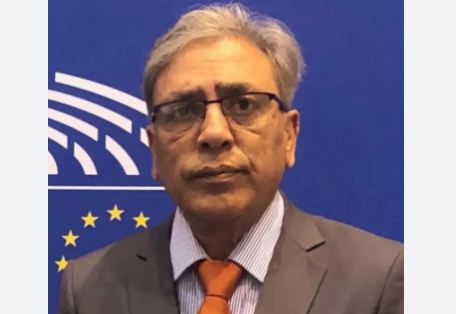
BRUSSELS, MAR 2 /DNA/ – Chairman Kashmir Council Europe (KCEU) Ali Raza Syed has strongly condemned fabricated cases against the prominent Kashmiri leaders Abdul Hameed Lone and Maulana Sarjan Barkati.

It is important to mention that Indian authorities in the Illegally Occupied Kashmir has recently registered fake cases against Abdul Hameed Lone and Maulana Sarjan Ahmad Wagay alias Sarjan Barkati and his wife.

In a statement issued in Brussels, Chair of KCEU Ali Raza Syed said, these Indian actions are based on totally fake charges. He added, Indian government uses of such cases against the Kashmiris as an instrument to prevent their struggle for right to self determination. He said that draconian laws are being constantly used by the Indians.Purpose of Indian illegal measures in occupied territory is to suppress Jammu and Kashmir’s people struggling to get liberation of their land from Indian occupation for last seventy six years.

Chairman KC-EU Ali Raza Syed said that although India wants to create fear among the Kashmiri leaders through such fake charges and other pretexts of the state terrorism but the brave Kashmiris will not afraid of this Indian state terrorism.

Indian authorities cannot make silent the people of Kashmir and their right to self determination could not be suppressed by such illegal and inhuman acts.

Chair of KC-EU Al Raza Syed called upon the international community to stop this systematic targeting of Kashmiri leadership in the occupied Kashmir. He also appealed that the Kashmir issue should be resolved peacefully and justly and according to the wishes of the Kashmiris.

ISSI hosts Public Talk on “Pakistan’s Opportunity for Science Diplomacy in South Asia”

ISSI hosts Public Talk on

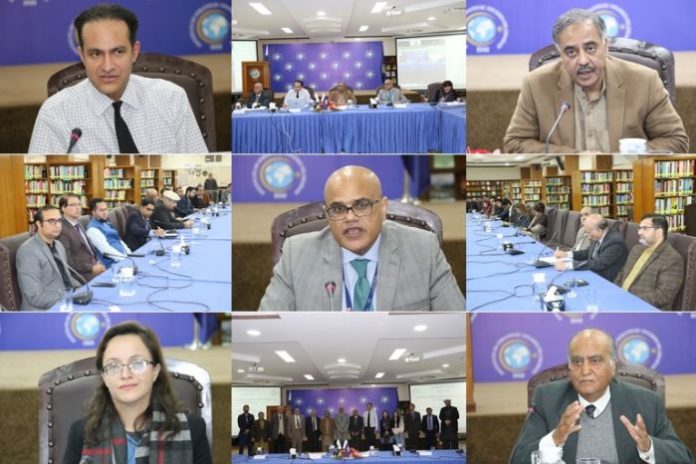
ISLAMABAD, MAR 1 /DNA/ – The Centre for Strategic Perspectives (CSP) at the Institute of Strategic Studies Islamabad (ISSI) hosted a public talk, titled “Pakistan’s Opportunity for Science Diplomacy in South Asia” on March 01, 2024. Dr. Saleem H. Ali, Chair, Department of Geography, University of Delaware, USA was the keynote speaker. The talk provided significant insights into the opportunities available for Pakistan to conduct successful and effective Science Diplomacy, including in the South Asian region. Featuring as Discussant, Additional Secretary (PP/ACDIS) Mr. Kamran Akhtar highlighted the progress made by Pakistan within the context of the Ministry of Foreign Affair’s; Science Diplomacy initiative.

Director CSP, Dr. Neelum Nigar, welcomed the participants to the discussion, underscoring the subject’s significance for the region.
In his welcome remarks, DG ISSI Ambassador Sohail Mahmood highlighted the importance of Science Diplomacy (SD) in today’s interconnected world and lauded the Foreign Office’s SD initiative which served as a key platform for facilitating the inter-face between the national science & technology stakeholders and international partners. He noted that this was helping to foster beneficial collaboration on key areas of focus with the relevant institutions, international organisations, and countries. Pakistan was also leveraging Science Diplomacy to implement SDGs.
Ambassador Sohail Mahmood added that science diplomacy in South Asia offers the chance to address common environmental challenges and help enhance technological innovation and economic growth. Collaborative research and development projects can lead to the creation of new technologies, improved infrastructure, and increased scientific capacity in the region.

Dr. Saleem H. Ali delivered a compelling presentation in which he outlined the pivotal role of science diplomacy, emphasizing how collaborative scientific efforts can transcends national boundaries to foster peace and sustainable development. He underscored Pakistan’s unique position, given its rich scientific heritage and strategic geographical location, suggesting that the country can play a leading role in utilizing science for diplomatic endeavours on a global scale, not just within South Asia.

Highlighting the need for international scientific collaborations, Dr. Ali stressed the importance of addressing pressing global challenges such as climate change, pandemic preparedness, and sustainable development goals. He advocated for a dynamic and adaptable diplomatic approach, proposing the establishment of international agreements on research integrity, merit-based criteria for international students, mechanisms for prevention science, a crisis research collaboration fund, and effective science communication strategies to counter misinformation.

Dr. Ali’s vision for Pakistan’s role in science diplomacy encompassed a proactive stance in international forums, the promotion of south-south collaboration, and the strategic harnessing of science and technology as essential tools for achieving peace and prosperity. His comprehensive framework positioned Pakistan as an important player in influencing the global scientific landscape and contributing significantly to international cooperation and progress.
The discussion additional depth through the valuable insights shared by Additional Secretary Kamran Akhtar, and Mr. Muhammad Adeel, representing the Embassy of Pakistan in Brussels. Mr. Akhtar provided a detailed overview of Pakistan’s active involvement in various international scientific initiatives, notably the EU’s Science for Diplomacy (S4D) initiative, outreach to the International Institute for Applied Systems Analysis (IIASA), and the establishment of strategic university linkages geared towards fostering collaboration among the developing countries (south-south cooperation).

He highlighted Pakistan’s commitment to showcasing the myriad dimensions if its scientific programs, underscoring the country’s dedication to utilizing science for peaceful and developmental purposes. Mr. Akhtar’s insights shed light on the Ministry of Foreign Affairs’ ongoing efforts to seamlessly integrate science and technology into Pakistan’s diplomatic initiatives. Notable achievements include the signing of multiple Memorandum of Understanding (MoUs) within international educational institutions, the expansion of science scholarships, and establishment of science diplomacy focal points in Pakistani missions abroad.

The event concluded with remarks by Chairman BOG ISSI Ambassador Khalid Mahmood. He underscored the need to enhance the role of science in diplomacy, emphasizing its potential to contribute to a different international image of Pakistan. Ambassador Khalid Mahmood highlighted the importance of tapping into the expertise of the highly talented and active Pakistani diaspora, noting their historically pivotal role in the country’s development.
The public talk was attended by senior representatives of COMSTECH and COMSATS, academics, practitioners, and students.

A photo exhibition by Ferrante Ferranti ‘From Troy to Lahore’ 

A photo exhibition by Ferrante Ferranti ‘From Troy to Lahore’ 

DNA

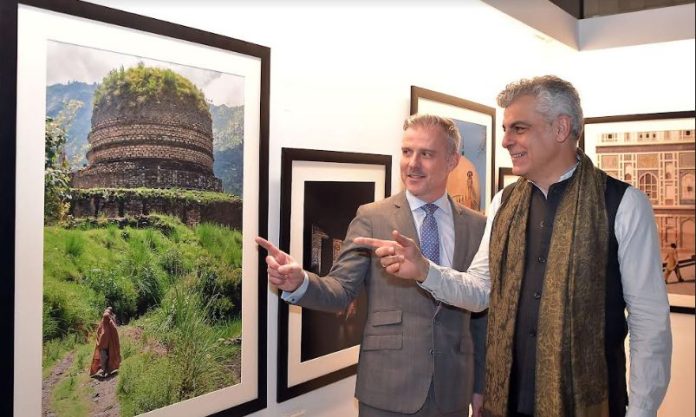
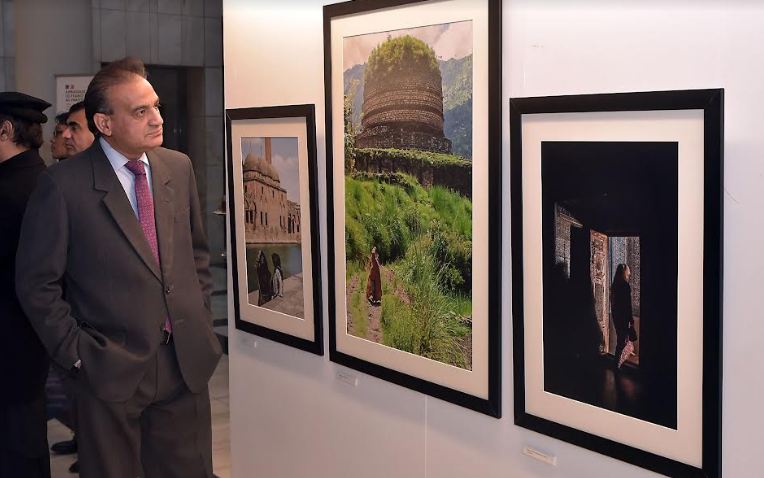
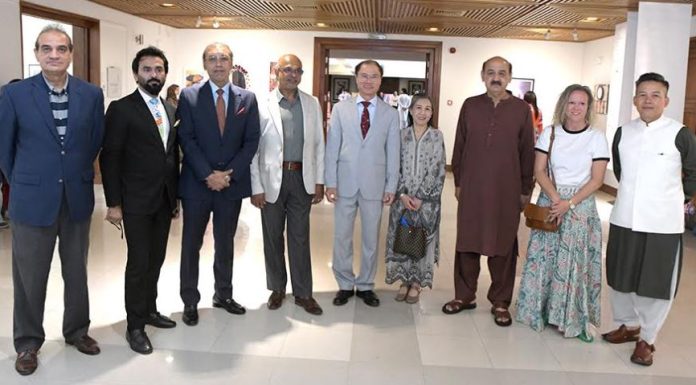
ISLAMABAD: A photo exhibition by Ferrante Ferranti ‘From Troy to Lahore’  In the Footsteps of Alexander the Great and Nicolas Bouvier and curated by Shah Zaman Baloch was held at the premises of the French embassy.

Charge d Affaires of the French Embassy Gillaume DABOUTS spoke on the occasion and introduced the artist to the audience.

The artists said in 1980, at the age of twenty, he set off on an initiatory trip to Greece, Inspired by Homer’s Greak eples, the Illad and the Odyssey, and the legend of Alexander the Great In the footsteps of mythological heroes Ulysses and Aeneas.

Rather than awaiting Apollo’s prophecies at Delphi, the navel of the Greek world, they instead consulted the oracles in the East at Didymus, in Minor Asia, on the West at Cumae. not far from Vesuvius and in the south in the oasis of Siwa. There Alexander the Great, young emperor of Macedonia, consulted the oracle of Amen and received the prophecy that he would conquer Asia and set out for the East.

Later, I went in search of the traces of this thousand-year-old palimpsest. In Anatolia and on the banks of the Euphrates, I took measure of the spiritual riches of these Territories at the crossroads between West and East. At Mount Nemrut, Greek Inscriptions told me the story of a king born of Alexander’s conquests who associated Apalle with the Persian god Mithra and the Armenian goddess Anahit at Urfa, the presumed birthplace of Abraham, I attended Friday prayers, at Hierapolis, Roman perticces evoked Persian miniatures My travels then took me to

Armenia, where I stepped off at ruined caravanserais, and to Georgia, where I visited churches overreaching the plains of Azerbaijan I had to wait until 1997 for a new guide to take me further East. Nicolas Bouvier burst into my life, and his book The Way of the World became the breviary of my travels. I followed in his feat steps in Iran, from Table to Persepolis, discovering Sufism.

APNS to address press industry challenges at annual general council meeting

APNS to address press industry challenges at annual general council meeting

KARACHI, MAR 1 /DNA/ – “The Annual General Council of the All Pakistan Newspapers Society will meet on Saturday, March 02, 2024 at 11:00 a.m. at APNS House, Gulistan-e-Jauhar, Karachi”, stated a press release of the APNS. 

The Annual General Council will discuss the conditions prevailing in the newspaper industry and take decisions to address the problems faced by the member publications and will finalize its recommendations on the issues pertaining to the Govt. – Press relations, freedom of press and the future of the industry.

The members will consider and adopt the report of the Executive Committee for the year 2023-2024, approve audit report for Annual Accounts for the year 2023 and elect members to the Executive Committee for the year 2024-2025.

The new Executive Committee will elect its office bearers for the new term. The meetings of the General Councils will be attended by full members only.

The Secretary General, APNS has requested publishers of full member publications to attend the above Council meeting positively.”

Sikandar Sherpao: QWP will persist until KPK receives due rights, justice

Sikandar Sherpao: QWP will persist until KPK receives due rights, justice

Bureau Report

PESHAWAR, MAR 1: /DNA/ – Qaumi Watan Party (QWP) provincial Chairman Sikandar Hayat Khan Sherpao on Friday said that his party would not compromise on the provincial rights and any bid to amend the Indus River System Authority Act 1992 would be resisted with full force.

In a statement issued from Watan Kor, he said the Indus River System Authority (IRSA) was established to monitor the distribution of water from the Indus River among the federating units.

Commenting on the media reports about the appointment of the IRSA chairman, he maintained that the QWP would not comprise on the rights of Khyber Pakhtunkhwa and any bid to amend the Act would be resisted with full force.

He said the QWP would continue its struggle to get the rights of Khyber Pakhtunkhwa enshrined in the 1973 Constitution. He said some elements were conspiring to roll back the 18th Constitutional Amendment in an effort to do away with the provincial autonomy.

“We will resist any such bid to undo the 18th Amendment and deprive Khyber Pakhtunkhwa of its due rights,” he vowed.  He said the 18th Constitutional Amendment was the first step towards achieving the provincial autonomy, therefore, it would be protected at all costs. Sikandar Sherpao said that undoing the 18th Constitutional Amendment would create unrest among the residents of the smaller federating units, which was not a good omen for the federation.

The QWP leader said true representatives of the Pakhtuns were made to lose the recent general election in order to keep them out of the Parliament under a conspiracy. “We will not rest until the province gets its due rights,” he vowed, adding the QWP leadership would raise its voice against injustice being meted out to the province. He said the QWP would not let the Pakhtuns down and would continue to raise voice for the rights.

Pearl-Continental, Bhurban wins top prize at 2024 Culinary Championship

Pearl-Continental, Bhurban wins top prize at 2024 Culinary Championship

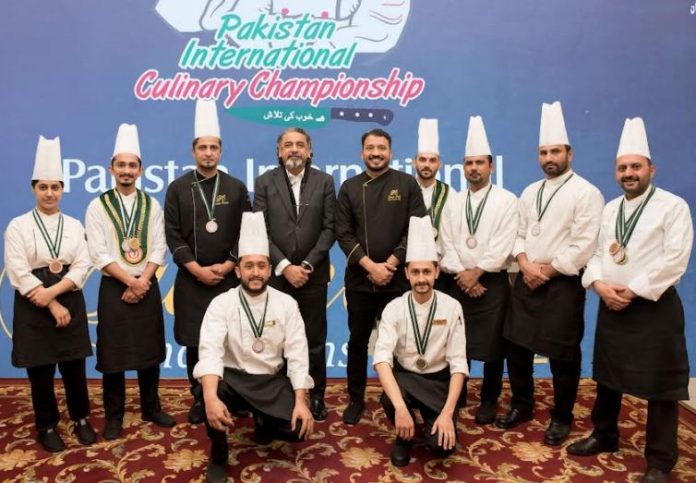
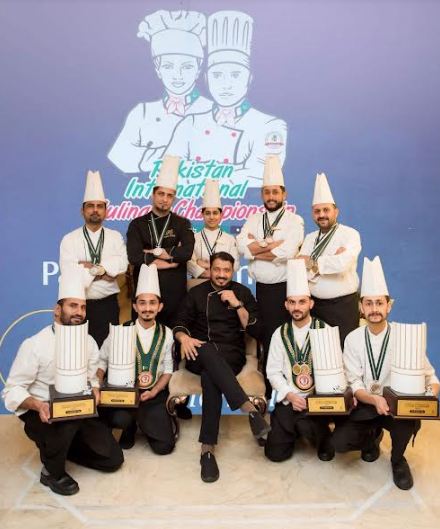
ISLAMABAD, MAR 1 /DNA/ – Pearl-Continental Hotel, Bhurban’s exceptional culinary team, consisting of seven professional chefs, garnered notable recognition at the Pakistan International Culinary Championship 2024, receiving several awards across various categories, including Beef Practical Category, Seafood Practice Professional, Chicken Practical Professional, and many others. The Pearl-Continental Hotel, Bhurban, secured four trophies, eight gold medals, five silver medals, and three bronze medals.

The Pakistan International Culinary Championship (PICC) is an event endorsed by the prestigious World Chef Association and was held recently in Lahore with culinary enthusiasts and professionals from Maldives, Malaysia, Iran, Saudi Arabia, Uzbekistan, and several regions across Pakistan. PICC 2024 hosts seasoned professionals worldwide and is a remarkable opportunity for young upcoming chefs to hone their skills and learn from skilled professionals.

Sharing his thoughts on the remarkable victories, the Chief Operating Officer Hospitality and Education Division, Hashoo Group, Haseeb A. Gardezi, said, “We are humbled by this recognition from the World Chef Association and look forward to consistently enhancing our service standards to meet the varying needs of our guests, who remain at the core of our business strategies. Thank you, and well done, team Bhurban!”

Pearl-Continental Bhurban is renowned for its excellent hospitality services and diverse signature restaurants, offering an extensive range of culinary delights from authentic Chinese cuisine and traditional Shinwari to classic Continental dishes. Additionally, the hotel prides itself on its exceptional food safety standards. It has recently attained ISO-22000 & HACCP Food Safety Management Recertifications with 100% Compliance for a second year running, underscoring its commitment to quality and excellence in culinary services.

Cluster General Manager, Pearl-Continental Hotel, Bhurban, Pearl-Continental Hotel, Muzaffarabad, and Cecil Hotel by Pearl-Continental, Nadeem Riaz Chaudhary, remarked, “It is a wonderful experience to have one’s hard work recognized and rewarded on a global stage. We are humbled by our victories at PICC 2024 and will continue to do our utmost to facilitate the best and finest culinary experiences for our valued guests.”

On a related note, the Pearl-Continental Lahore team also achieved significant success at the championship, showcasing their culinary expertise and further establishing the Group’s reputation for culinary excellence.

These awards signify Hashoo Group’s longstanding legacy of nurturing the finest talent within its walls across numerous nationwide touch points, facilitating gold-star hospitality services for an ever-changing guest base.

Hashoo Group is Pakistan’s premium conglomerate with a diversified business portfolio spanning national and international markets. The Group owns and operates the Pearl-Continental Hotels & Resorts, PC Legacy, and Hotel One brands in Pakistan and has business interests encompassing Hashoo School of Hospitality Management – Pakistan’s premier hospitality and tourism education institution, information technology, investment, travel & tourism, and real-estate sectors.

Stay Connected

64FansLike
60FollowersFollow

Latest Reviews

Exchange Rates

USD - United States Dollar
EUR
1.17
GBP
1.35
AUD
0.72
CAD
0.73