Home Blog Page 1000

Political stability and the business environment will improve

Political stability and the business environment will improve

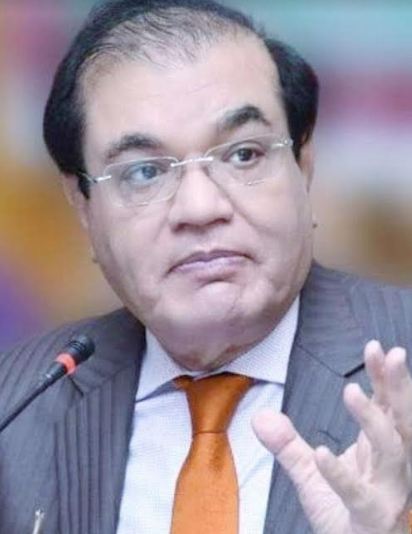
KARACHI, MAR 4 /DNA/ – Chairman of National Business Group Pakistan, President Pakistan Businessmen and Intellectuals Forum, All Karachi Industrial Alliance, and former provincial minister Mian Zahid Hussain said on Monday that the elevation of Shahbaz Sharif as Prime Minister is good for the economy and the masses.

The PM will continue the process of reforms, which will stabilize the economy, increase the value of the rupee, and make the business atmosphere favourable.

Mian Zahid Hussain said that Shahbaz Sharif has been a successful Chief Minister before, and the current IMF program results from his efforts as the Prime Minister.

Talking to the business community, the veteran business leader said that Shahbaz Sharif understands the economic issues and their importance. He enjoys the support of Nawaz Sharif and Asif Ali Zardari and has good relations with friendly countries.

He added that many people in his party are experts in economic affairs, and with their advice, the country can be removed from the current whirlpool of problems.

The business leader said that Prime Minister Shahbaz Sharif invited all the parties for the charter of the economy as soon as he was elected, and he also offered reconciliation, which all the parties should welcome.

PTI should take advantage of this offer and formulate a comprehensive strategy on both these issues in the national interest. A mechanism should be created to ensure continuity in economic policies, as frequent policy changes tend to confuse investors.

Mian Zahid Hussain said it is essential to sign a new agreement with the IMF, while the focus should be on reducing energy costs on a priority basis.

The repeated increase in the price of electricity, gas, and oil temporarily relieves this sick sector but takes a lot away from the masses.

According to the PM, the energy sector is causing a loss of more than 1000 billion rupees annually. The electricity tariff in Pakistan is higher than that of all the countries in the region, and the industrial sector is suffering because of this.

Due to the high cost of electricity, production is expensive, demand is low, and exports are being damaged. High power tariffs also harm the process of reducing imports and increasing employment through local production.

Expensive energy has become a significant obstacle to industrialization and investment in the country.

The government is putting all the burden of unused electricity payments on the consumers. Similarly, the masses are made to pay for theft of electricity and gas, cross-subsidy, line losses, and reduction in recovery on the public and the industrial sector, thereby increasing poverty and weakening the industrial sector.

The volume of imported fuel must be reduced for clean and environment-friendly energy. There is a need to give incentives to the clean energy sectors, which is being discouraged, and the Prime Minister should take notice of this.
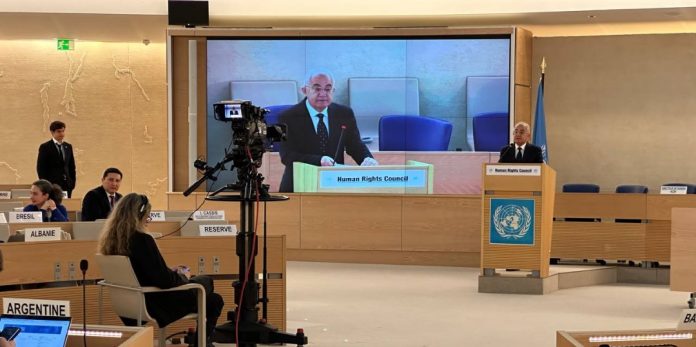
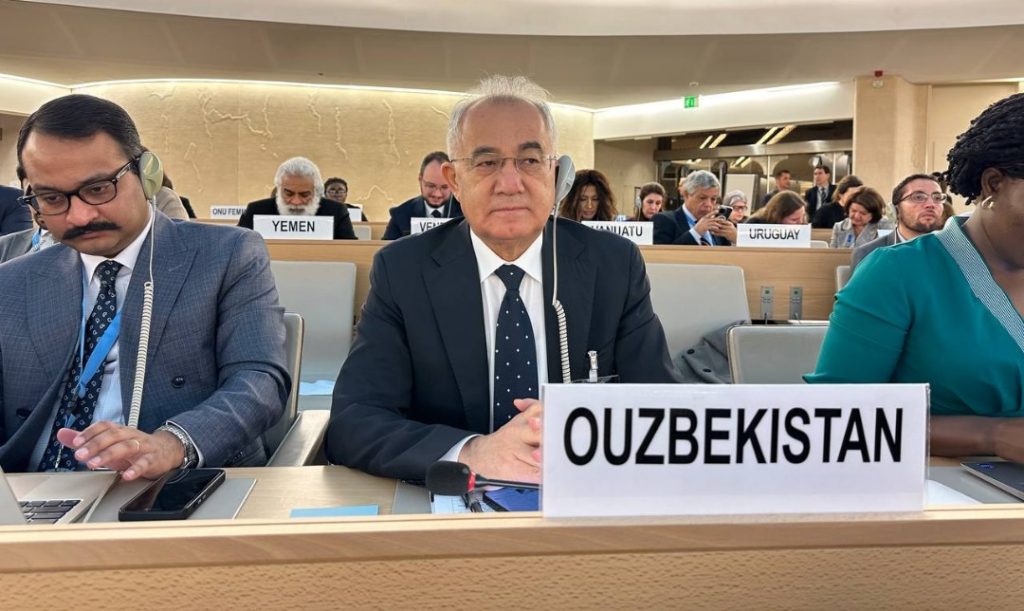
Akmal Saidov: Uzbekistan is always willing to engage in practical dialogue with the UN and its institutions as well as broad and mutually beneficial cooperation with all countries around the world

The delegation of Uzbekistan took part at the High-level Segment of the 55th session of the United Nations Human Rights Council

The delegation of Uzbekistan led by the First Deputy Speaker of the Legislative Chamber of the Oliy Majlis, Director of the National Centre for Human Rights (NCHR) Akmal Saidov took part at the High-level Segment of the 55th session of the United Nations Human Rights Council.

According to the NCHR, during the speech of the delegation of Uzbekistan, it was noted that our country is consistently implementing its policy in the field of human rights, an example of which, in particular, is the updated Constitution of the country adopted during a national referendum in 2023.

Uzbekistan has formally prohibited the use of the death penalty in its recently adopted new Constitution. Internationally recognized institutions of jurisprudence as the Miranda Warnings and Habeas Corpus are consolidated at the constitutional level. The Pro bono institute, which provides free legal assistance has been granted constitutional status.

Notably, for the first time, the Constitution guarantees the right to approach both international and national human rights bodies. Furthermore, it firmly establishes the status of national human rights institutions. The new Constitution for the first time enshrines the institution of constitutional complaints from citizens.

In recent years, Uzbekistan achieved substantial results in the human rights protection. Forced and child labor has been completely abolished in Uzbekistan. Particularly, the complete eradication of forced and child labor has been achieved. The new Constitution of the country now not only ensures the prohibition of child and forced labor but also institutes criminal liability for such offenses.

Implementing the National Human Rights Strategy over the past 3 years, the following results have been achieved:

First. According to the recommendations of the HRC and UN treaty bodies, the position of the Children’s Ombudsman was established. Now our parliament is adopting Law on the Children’s Ombudsman.

Second. In order to implement the provisions of the Convention on the Rights of Persons with Disabilities, legal and administrative measures have been taken to improve the system of state support for persons with disabilities.

Third. The Strategy for Achieving Gender Equality until 2030 was approved.

Fourth. Uzbekistan openly condemns the use of torture, amendments have been made to the Civil Code to provide for the procedure for compensation for harm caused to victims of torture.

Fifth. According to the recommendations of the UN treaty bodies, the National Preventive Mechanism for the Prevention of Torture was created according to the “Ombudsman Plus” model. Additionally, Children’s Ombudsman, the National Centre for Human Rights, and the Business Ombudsman have been empowered to oversee penitentiary institutions.

Sixth. Uzbekistan actively participates in the UN World Programme for Human Rights Education. The country is implementing the National Programme for Human Rights Education. Training and special courses “Human Rights”, “Women’s Rights”, “Child’s Rights” are being introduced in the system of professional education and universities. Training courses are being opened on the rights of persons with disabilities, women, children and migrants. An Electronic Platform for Human Rights Education has been launched. Furthermore, permanent training courses on combating the use of torture have been launched for law enforcement officers and penitentiary institutions.

Seventh. Collaboration with business structures on human rights issues is essential as well. Particularly, human rights training courses for entrepreneurs are organized. The National Action Plan on Business and Human Rights is currently being developed.

Eight. The country is implementing consistent reforms in the political, judicial and legal spheres, increasing the role of civil society institutions, including on religious freedom. Uzbekistan places utmost emphasis on ensuring religious freedom within its borders, recognizing its historical experience of harmonious coexistence among diverse faiths and ethnic communities over the centuries.

Throughout its long history, Uzbekistan’s territory has been a home to a multitude of religions and belief. Traditional faiths in our nation have always coexisted peacefully. This harmony is not just a legacy, but a fundamental element of our traditions.

Ninth. The Election code has been modified to outline the process for conducting elections for the Legislative Chamber using a mixed electoral system that combines majority and proportional elements. Furthermore, there are adjustments being implemented to raise the minimum representation of women in the candidate nominations from political parties, increasing it from 30% to 40% of the total candidates.

Tenth. Currently, the world is facing a critical environmental situation. The triple planetary crisis – crises of the climate change, the loss of biodiversity and the environmental contamination are worsening. In such challenging conditions, while Central Asia continues to grapple with the Aral Sea tragedy, the region is becoming one of the most vulnerable parts of the world in the face of climate change. Uzbekistan is doing its best to mitigate the consequences of the Aral Sea tragedy, which remains a global problem.

“Uzbekistan is always willing to engage in practical dialogue with the UN and its institutions as well as broad and mutually beneficial cooperation with all countries around the world. We have made significant progress in our interactions with the UN Special Procedures in a relatively short period of time”, – Akmal Saidov said at the end of his speech.

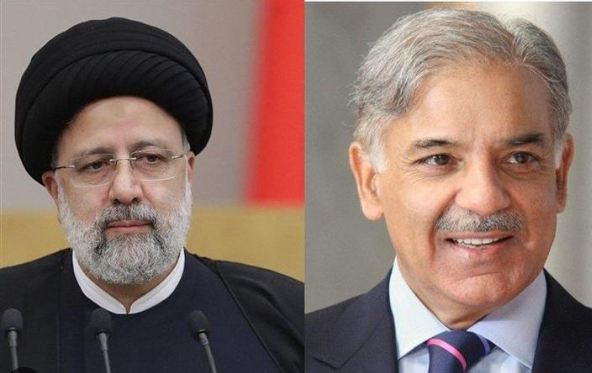
Iranian President Seyed Ebrahim Raiisi greets Shehbaz Sharif

Iranian President Seyed Ebrahim Raiisi greets Shehbaz Sharif

Tehran, MAR 3 /DNA/ – Seyed Ebrahim Raiisi, the President of the Islamic Republic of Iran, congratulated Mohammad Shahbaz Sharif on his election as the new Prime Minister of the Islamic Republic of Pakistan. In this message, the president of the Islamic Republic of Iran expressed his confidence that the two countries, in the light of the deep historical and cultural links, will work harder to strengthen and expand cooperation in order to achieve the desired and befitting level of the relations between the two great nations of Iran and Pakistan.

In this message, the President stressed that the Islamic Republic of Iran is fully prepared to strengthen and deepen all aspects of bilateral relations with the brotherly and neighboring country of the Islamic Republic of Pakistan within the framework of its constant policy. He expressed hope that the new government of Pakistan will take steps towards the growth and prosperity of Pakistan and prayed to Almighty God for the success of the new government and the happiness and well-being of the honorable nation of Pakistan.

Britain to bar entry to ‘hate preachers’ from Pakistan

Britain to bar entry to 'hate preachers' from Pakistan

Decision follows an impassioned speech by British Prime Minister Rishi Sunak at 10 Downing Street

DNA

LONDON: The UK government is formulating plans to prohibit the entry of hate preachers holding extremist views from countries like Pakistan, Afghanistan, and Indonesia, The Daily Telegraph reported.

The government, expressing concern over a perceived “shocking increase” in extremist activity, is actively working to identify the most dangerous extremists from abroad, intending to include them on visa warning lists. As per the proposed measures, individuals on these lists would face automatic refusal of entry to the United Kingdom.

This development follows an impassioned speech by British Prime Minister Rishi Sunak at 10 Downing Street, where he highlighted the threat posed by extremists to the country’s democratic and multi-faith values.

Sunak asserted the government’s commitment to preventing those aiming to undermine these values from entering the nation, stating, “The Home Secretary has instructed that if those here on visas choose to spew hate on protests or seek to intimidate people, we will remove their right to be here.”

In addition to addressing hate preachers, Sunak urged demonstrators protesting the Israel-Hamas conflict to ensure their actions are not exploited by extremists.

Tajik President greets Shehbaz Sharif

Tajikistan

DNA

DUSHANBE, the Founder of Peace and National unity, the Leader of the Nation, the President of the Republic of Tajikistan, dear Emomali Rahmon, sent a congratulatory telegram to the Prime Minister of the Islamic Republic of Pakistan, dear Shahboz Sharif, which reads:

 “Your Excellency, I wholeheartedly congratulate you on your election to the high post of Prime Minister of the Islamic Republic of Pakistan. I wish you, dear friend and brother, good health and new great successes in implementing your plans for the sustainable socio-economic development of Pakistan, improving the well-being of the people of our friendly country, as well as strengthening its authority in the international arena. Tajikistan and Pakistan have long-standing traditions of friendly ties, mutual understanding, mutual respect and trust. It is gratifying that on the basis of these good traditions, the multifaceted cooperation between our countries is now steadily developing and enriched with new content. Underlining our continued interest in continuing the interstate dialogue, interaction and coordination with you in the fruitful promotion of this process, I am pleased to invite you to pay a visit to Tajikistan. I am confident that through further joint efforts we will strengthen and expand the long-term partnership of our countries for the benefit of our peoples.”

12 candidates contesting for 3 Senate seats

12 candidates contesting for 3 Senate seats

Voting for the three vacant Senate seats will take place on March 14

DNA

QUETTA: As many as 12 candidates have submitted their nomination papers for the three vacant Senate seats from Balochistan.

According to the announcement of the Election Commission of Pakistan on Sunday, the submission of nomination papers to the Returning Officer for the three vacant seats of the Senate from Balochistan has been completed.

The Election Commission of Pakistan (ECP) has declared that the voting for the three vacant Senate seats from Balochistan will take place on March 14, 2024, within the premises of the Balochistan Assembly.

The Senate seats from Balochistan have become vacant due to the resignation of Sarfraz Ahmed Bugti, Prince Ahmad Umar Ahmadzai and Maulana Abdul Ghafoor Haidari.

Muhammad Farid Afridi, serving as the Provincial Election Commissioner of Balochistan, has been designated as the returning officer for the Senate elections slated for March 14th.

The Returning Officer was issued a public notice on March 1, with candidates scheduled to submit their nomination papers on March 2 and 3, from 08:30 a.m. to 04:30 p.m.

The deadline for scrutinizing nomination papers is March 5, while the deadline for lodging appeals against the acceptance or rejection of nomination papers is March 7, 2024.

The tribunal is required to resolve appeals by March 9, and the revised list of candidates will be published on the same day.

Likewise, March 10 has been designated as the final date for withdrawal of nomination papers.

According to the schedule, the voting for three seats will take place on March 14, 2024, from 9am to 4pm, with no interruption.

Fazl ‘to vote for Achakzai’

Fazl 'to vote for Achakzai'

Says masses will not remain silent in the face of such blatant disregard for their rights

Nazir Siyal


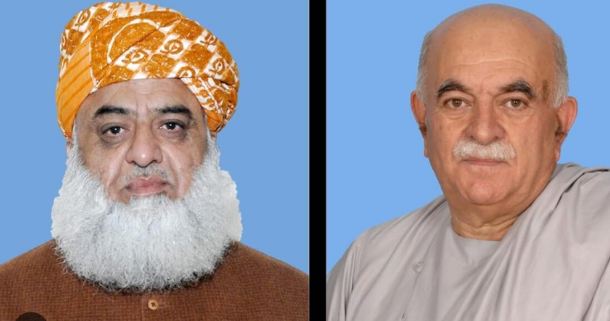
KARACHI: Jamiat Ulema-e-Islam (JUI-F) Emir Maulana Fazlur Rehman has said that he wants to vote for Mahmood Achakzai — the Pakistan Tehreek-e-Insaf (PTI)-backed Sunni Ittehad Council’s (SIC) candidate for the presidential election — but his party’s decision demands otherwise.

He, however, ruled out the possibility of joining hands with the allied parties, saying that the environment for a grand alliance is not yet there.

“We will be where the opposition benches are. We will go to parliament and protest,” he added while speaking to a gathering at Jamia Anwarul Uloom in Karachi on Sunday.

Achakzai, the chief of Pashtun­khwa Milli Awami Party (PkMAP), has been nominated as the presidential candidate against Pakistan Peoples Party Co-chairman Asif Ali Zardari, who is a joint candidate of the Pakistan Muslim League-Nawaz (PML-N) and other political parties part of the coalition set to form a government at the Centre.

The National Assembly today elected PML-N President Shehbaz Sharif as the 24th prime minister of Pakistan in a ruckus-hit session. This will be followed by the election of the country’s president on March 9, with Zardari as the strongest candidate, having the support of several parties in the parliament.

In a veiled jibe, Fazl said that those who knew he would be the presidential candidate against them offered money.

He said that the politicians should stand by their commitments, therefore, he still has the same stance regarding the Imran Khan-founded party — the PTI.

“We want to have an environment where differences could be removed,” he added.

Continuing his criticism of the alleged rigged polls, Fazl said that the “establishment has divided itself in the elections” and “adjusted some in one place and some in another”.

Pakistan staged the biggest election of its history last month, which was extraordinary in various aspects. However, the outcome of the polls did not turn out to be as expected by the political actors as none of them got a simple majority.

Subsequently, many parties including the PTI, JUI-F and others rejected the general elections.

Fazl said that his party has rejected the election results and the facts emerging with time are confirming the party’s stance.

“We believe that 2024 elections broke rigging records of the 2018 polls,” Fazl said, adding that the current parliament was an outcome of rigging.

He said that some people would call themselves the rulers but wouldn’t rule the hearts of the nation. “Democracy is losing its case, parliament is losing its importance.”

Fazl further stated that the JUI-F doesn’t have personal issues with anyone but “these rulers have taken rule as power”.

“They think that they will buy assemblies with money,” he added.

Mini-Budget on horizon as FBR misses back-to-back revenue targets

Mini-Budget on horizon as FBR misses back-to-back revenue targets

ISLAMABAD, MAR 3 /DNA/ – In a concerning trend, the Federal Board of Revenue (FBR) has not met its revenue collection goals for the second consecutive month, leading to speculation about the government’s potential recourse to emergency fiscal strategies. This persistent underperformance necessitates the generation of an additional Rs 18 billion monthly throughout the fiscal year 2023-24 to mitigate the shortfall.

The situation is dire enough that a deviation exceeding 1% from the target could trigger the activation of a supplementary budget, as stipulated by an agreement with the International Monetary Fund (IMF). Official reports reveal that the FBR’s revenue collection fell short by 1.3% and 4.6% in January and February 2024, respectively.

Insider sources have disclosed that February’s collections amounted to Rs 681 billion, significantly below the targeted Rs 714 billion, resulting in a Rs 33 billion deficit. January witnessed a shortfall of Rs 9 billion, cumulatively amounting to a Rs 42 billion loss over two months. This financial discrepancy has been attributed to FBR’s resistance against the Finance Minister’s proposed reforms aimed at enhancing the efficiency of the tax apparatus.

Allegedly, this resistance has escalated to the point of calls for a strike by senior management of the FBR, undermining the institution’s operational integrity. There is speculation within the FBR that revenue metrics will improve with the appointment of a new Finance Minister, suggesting that the current downturn is a strategic maneuver to assert dominance and negotiate favorable conditions with the upcoming fiscal leadership to avoid reforms at FBR.

This internal strife hints at a deeper malaise, with the potential introduction of a mini-budget as a corrective measure, in line with IMF agreements. Such a move, however, would likely place additional financial burdens on the public.

To counteract the revenue shortfall, the government has outlined eight provisional measures projected to bolster monthly revenue by Rs 18 billion during the 2023-24 fiscal year. These include adjustments to sales tax rates on textiles and leathers, the introduction of a Federal Excise Duty (FED) on sugar, and incremental increases in advance income and withholding taxes on various sectors.

Each measure is carefully calibrated to address the revenue gap without imposing undue strain on the economy. However, the efficacy of these strategies and their impact on the broader economic landscape remains to be seen, as stakeholders closely monitor the FBR’s next moves in this financial chess game.

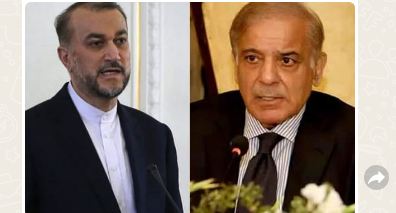
Iranian FM greets Shehbaz Sharif on election as prime minister of Pakistan

Iranian FM greets Shehbaz Sharif on election as prime minister of Pakistan

TEHRAN, MAR 3 /DNA/ – The Minister for Foreign Affairs of the Islamic Republic of Iran, Amirabdolahian, extended his heartfelt congratulations to Shehbaz Sharif for his recent election as the Prime Minister of the Islamic Republic of Pakistan.

In a statement issued today, Minister Amirabdolahian expressed his optimism for the strengthening of bilateral relations between Iran and Pakistan under Prime Minister Shehbaz’s leadership.

He emphasized the importance of continued cooperation and collaboration between the two nations for mutual prosperity and regional stability.

Minister Amirabdolahian’s message underscores the commitment of Iran to fostering constructive diplomatic ties with Pakistan and highlights the shared goals and values that bind the two nations together. =DNA

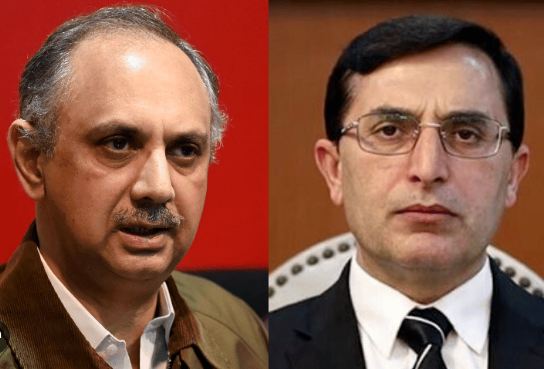
Gohar, Omar elected unopposed PTI Chairman, Secretary General: Raoof

Barrister Gohar Ali Khan and Omar Ayub Khan

ISLAMABAD, MAR 3 /DNA/ – Barrister Gohar Ali Khan and Omar Ayub Khan have been elected as Pakistan Tehreek-e-Insaf (PTI) Chairman and Secretary General unopposed respectively in the intra-party elections.

The results of the party’s top slots were formally declared by PTI Federal Election Commissioner Raoof Hasan during a press conference here on Sunday.

He further stated that PTI’s Sindh, Punjab, and KP elections commissioners would formally announce the results of the provincial presidents, while elections for the slot of Balochistan President was underway.  

Raoof Hassan said the PTI intra-party elections were held for the third time as per the guidelines set by the Supreme Court.

Ashraf Jabbar and Muhammad Aslam, who voluntarily withdrew their nomination papers as candidates for the slot of PTI Chairman, as well as Returning Officers for conducting the Chairman and Secretary General elections Ayesha Khalid and Amina Ali were also present on the occasion.

During the press conference, he announced that Barrister Gohar Khan had been elected the PTI Chairman unopposed, while Omar Ayub secured the position of PTI General Secretary uncontested.

Raoof Hasan said that Gohar Ali Khan was elected PTI chairman unopposed after three other candidates withdrew their nomination, adding that the panel of Gohar Ali Khan and Omar Ayub was nominated by the PTI founder.

PTI Election Commissioner said that four candidates filed their nominations papers for the slot of Chairman PTI of which nomination papers of three candidates were accepted and one were rejected.

He thanked Ashraf Jabbar and Doctor Muhammad Aslam, who were constants for Chairman penal but they were voluntarily withdrew their nomination papers voluntarily and graciously in favour of Barrister Gohar for the interest of the party’s harmony and unity.

Raoof Hasan said that Naveed Anjum Khan’s nomination papers were rejected because he contested general elections 2024 as an opponent of PTI’s supported candidate and therefore his party membership was canceled by District President on February 11, 2024.

“As per PTI’s constitution, in order to be eligible to contest for intra-party elections, it is mandatory to have uninterrupted 6 months PTI’s membership; however, he got himself registered again as PTI member on February 24, 2024 to contest the intra-party elections,” he added.    

“Therefore, after the voluntarily withdrawal of the two contestants, there was no candidate in the field against Gohar; hence we have declared him the uncontested winner for the position of the party Chairman,” Raoof announced.

Speaking on the occasion, Ashraf Jabbar congratulated PTI Federal Election Commissioner and the entire team for successfully and transparently conducting the intra-party elections.

“I am a founding member of PTI and he voluntarily withdrew his nomination papers in favour of Barrister Gohar because he was the nominee of PTI Chairman-for-life Imran Khan and performed will during his precious tenure as Chairman PTI,” he added.

However, Asharaf Jabbar stressed the need that the PTI and the nation’s first demand from Barrister Gohar after electing as Chairman PTI to leave no stone unturned to ensure the release of Imran Khan at the earliest.

Talking on the occasion, Doctor Muhmmad Aslam, who was also the founding member of the party, said that he withdrew his nomination papers because it was high time and they needed to work like a unit to deal with the prevailing challenges.

He said that around 90 percent of representatives of the fake government reached the parliament through results tampering which was unacceptable and condemnable.

He demanded that the elections results should be announced as per the form 45 and give the people should be given them their stolen mandate forthwith.

Stay Connected

64FansLike
60FollowersFollow

Latest Reviews

Exchange Rates

USD - United States Dollar
EUR
1.17
GBP
1.35
AUD
0.72
CAD
0.73