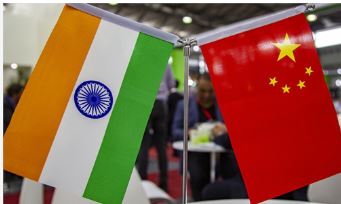
BEIJING, Oct 14 (DNA):China has never recognized the so-called “Union Territory of Ladakh,” unilaterally and illegally established by India, and firmly rejects New Delhi’s announcement of purported standard place names.
India’s Ministry of Home Affairs recently released official standard names for 28 locations, spanning contested border areas and even territories under China’s actual control, and incorporated these designations into its official maps.
This provocative maneuver is illegal and void. No unilateral posturing can rewrite the historical reality that relevant regions along the western sector of the China-India boundary have always been Chinese territory.
These views were expressed by Prof Cheng Xizhong, Senior Research Fellow at the Charhar Institute, a non-governmental Chinese think-tank on diplomacy and international studies based in Beijing.
In a statement issued here on Wednesday, he said that this latest provocation is by no means an isolated incident. It lays bare India’s long-running strategy of creeping territorial expansion. By unilaterally creating new administrative divisions and renaming geographical features on a neighboring country’s land, India seeks to fabricate spurious legal justification for its illegal occupation, in a calculated bid to entrench de facto control over contested areas incrementally. Such actions flout foundational norms of international law and the established principle of settling border disputes through peaceful means. Boundary disagreements between sovereign nations can only be resolved through equal consultations between the parties concerned. Any unilateral measure imposed by one state carries no legal validity whatsoever.
India’s recurring border provocations continuously erode bilateral mutual trust and jeopardize regional peace and stability. China has consistently maintained that border disputes should be settled through dialogue, exercising maximum restraint to uphold tranquility along the frontier. That said, China will never yield an inch when it comes to territorial sovereignty, he added.
Prof Cheng remarked that India must abandon the misplaced belief that it can strengthen its territorial claims through unilateral tactics. It ought to respect China’s sovereign rights, discontinue provocative acts that complicate boundary negotiations, and return to the track of equal dialogue to properly manage border divergences.
Territorial expansionism has no place in the contemporary international order, and illegal occupation can never acquire legal legitimacy, he concluded.