Dr. Muhammad Akram Zaheer
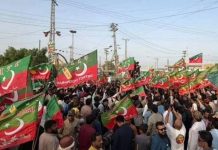
Pakistan’s political crisis is no longer simply a contest between the PML-N and PTI. It is a struggle over who has the right to define political legitimacy, who controls the institutions of the state and, perhaps most importantly, whether political rivals can coexist without treating each other as an existential threat. The latest confrontation over PTI’s planned September 27 protest is only the newest chapter in a conflict that has steadily deepened since Imran Khan’s removal from office in April 2022. PTI has announced a nationwide mobilisation and march towards Islamabad, demanding the release of its founder and invoking the supremacy of the Constitution and rule of law. The government has warned against the protest and says it will enforce court orders and prevent disruption of public roads and buildings.
Pakistan has experienced political rivalry since independence, but the present confrontation has a different intensity. The country’s major parties have historically competed fiercely, yet governments and opposition parties have at times negotiated, formed alliances and even supported one another on major constitutional questions. The PML-N and PPP, for example, were bitter opponents for decades but eventually became partners in supporting the democratic transition and the 18th Amendment.
PTI emerged as a challenge to the established political order represented principally by the PML-N and PPP. Its rise transformed Pakistan’s electoral landscape. The 2018 election brought Imran Khan to power, while his government’s eventual removal through a parliamentary vote of no-confidence in April 2022 turned political competition into an increasingly bitter struggle over legitimacy. The events that followed hardened positions on both sides. PTI treated Khan’s removal as part of a wider political struggle against its mandate. Its opponents argued that the parliamentary process had been constitutional. Neither interpretation disappeared after the change of government. Instead, each became part of a political narrative that continues to shape public debate.
The May 9, 2023 violence marked another decisive turning point. The attacks on military and government installations produced a severe state response against PTI and its supporters. The confrontation subsequently moved into the courts, electoral institutions and streets. The November 2024 clashes in Islamabad further demonstrated how quickly political mobilisation could turn into a confrontation between protesters and the state. Dawn has noted that these earlier episodes remain central to the government’s security concerns about the planned September 27 protest.
The February 8, 2024 election did not resolve the dispute either. Instead, questions about the electoral process, PTI-backed candidates, party representation and subsequent parliamentary arrangements added another layer to the political conflict. The election produced a parliament in which PTI-backed independents emerged as a significant force, while the PML-N formed the federal government with coalition support. That mistrust is now visible in almost every political development. PTI sees restrictions, arrests and legal proceedings as evidence of an effort to reduce its political space. The government presents its actions in terms of law, public order and the prevention of violence. Both positions are politically consequential, but neither can by itself resolve the underlying dispute.
The September 27 mobilisation illustrates the problem. PTI says peaceful protest is its constitutional right and has framed the march around the release of Imran Khan, constitutional supremacy and the rule of law. The government, meanwhile, has warned that roads, public buildings and ordinary life cannot be disrupted and has pointed to an Islamabad High Court order concerning the occupation of public spaces. The important question is not whether either side has political grievances. Both clearly do. The question is whether those grievances can be pursued without converting every disagreement into a confrontation between the state and an opposition movement.
The arrest of Aleema Khan ahead of the planned protest has further intensified the atmosphere. Authorities ordered her detention under the Maintenance of Public Order law, while PTI described the action as part of a wider crackdown. Such developments deepen rather than reduce mistrust. There is also a broader lesson here. The political system cannot function indefinitely through confrontation between the government and its principal opposition while the economy, security environment and public services demand attention. Political energy consumed by protests, arrests, counter-statements and legal battles is energy unavailable for governance.
Even the government’s relationship with its coalition partner demonstrates how fragile political cooperation can become. The PML-N and PPP have recently had to revive coordination mechanisms after months of strained relations. Their disagreements concern inflation, petroleum prices, agriculture, local government and provincial issues. Yet both recognise that continued cooperation is necessary for the functioning of the government. If rivals within the governing coalition can negotiate despite substantial differences, there is no political reason why the government and opposition cannot establish at least a minimum framework for dialogue.
The difficulty is that dialogue in Pakistan is often treated as surrender. Governments fear that negotiations will strengthen their opponents. Opposition parties fear that negotiations will weaken their mobilisation. Political leaders therefore prefer confrontation because it keeps their supporters united. But what may strengthen a party in the short term can weaken the political system in the long term. Pakistan has repeatedly experienced this cycle. A government attempts to marginalise its opponent; the opposition mobilises against the government; institutions become involved; political tensions rise; and eventually another political arrangement replaces the previous one without resolving the underlying question of how power should be contested.
The government has a responsibility to maintain public order, protect citizens and enforce the law. But the right to peaceful political expression cannot be treated as an inconvenience. Similarly, PTI has the right to protest and challenge government policies, but political mobilisation cannot become a licence for violence, attacks on public property or the disruption of ordinary citizens’ lives. Dawn has made the same distinction: peaceful protest is a democratic right, while violence and attacks on law-enforcement personnel are not. The way forward is therefore neither unconditional acceptance of the government’s position nor unconditional endorsement of PTI’s street politics. It lies in restoring political space in which disagreement does not automatically become confrontation.
Pakistan needs an understanding on a few basic principles: elections must be credible and disputes handled through constitutional institutions; opposition parties must have meaningful parliamentary and political space; peaceful protest must remain possible; violence must be rejected regardless of who commits it; courts must be allowed to function independently; and political prisoners and detainees must receive due process. The PML-N and PTI may continue to disagree over Imran Khan, the 2024 election, governance, accountability and the conduct of state institutions. They may continue to compete fiercely in Punjab, Khyber Pakhtunkhwa and at the federal level. None of this is unusual in a democracy. The real test of democracy is not whether one party defeats another. It is whether the defeated party can continue to exist, criticise and compete, and whether the government can exercise authority without treating dissent as rebellion.
Dr. Muhammad Akram Zaheer
Assistant Professor Pakistan Studies
Imperial College of Business Studies Lahore