DNA
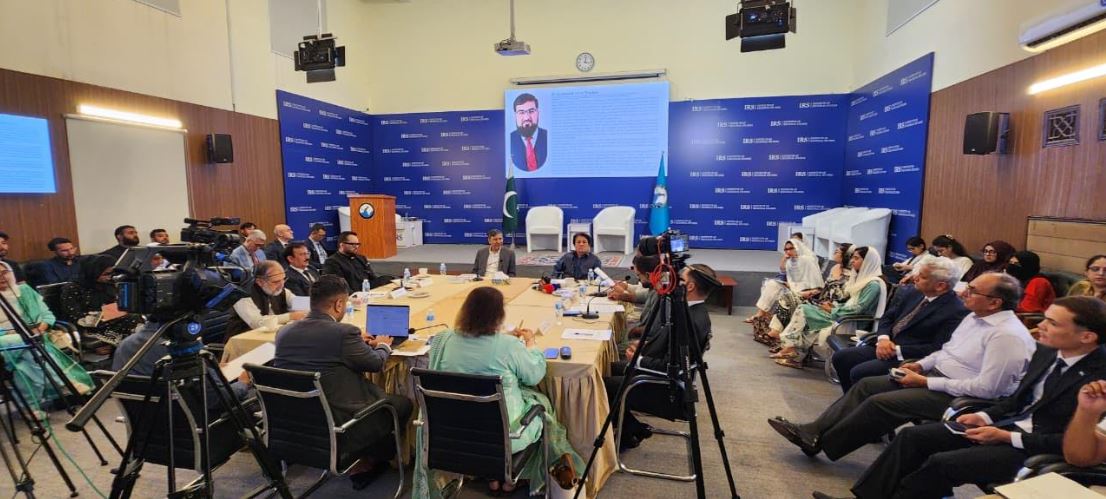
ISLAMABAD, Aug 31: Experts at a roundtable discussion at the Institute of Regional Studies (IRS), Islamabad, agreed that Pakistan’s primary expectation from the Taliban regime in Kabul was that it should not allow Afghan soil to be used against Pakistan. They noted that, since Pakistan’s inception, its foreign policy towards Afghanistan had been one of cautious friendliness, with the expectation that Afghanistan would respect Pakistan’s sovereignty and territorial integrity and not allow its soil to be used against Pakistan in any way or form.
The participants at the roundtable, organised by IRS in collaboration with the South Asia Times (SAT), agreed that Pakistan had shown extraordinary restraint in the face of a continuous onslaught of terrorist attacks in the country that were planned in and coordinated from Afghanistan. They urged the Taliban regime to respond positively to Pakistan’s genuine security concerns regarding terrorism emanating from Afghan territory.
While the participants felt that violence may not be the solution to every problem, but stressed that Pakistan needed to negotiate with Afghanistan from a position of strength and should not allow instability caused by elements sheltered by the Taliban regime to spill over into Pakistan’s border regions. They emphasized a meaningful, consultative process to resolve their outstanding issues, particularly the issue of greatest concern to Pakistan: terrorism.
The participants underscored that improved relations between the two countries were in the best interests of the peoples on both sides. They expressed particular concern over the dire humanitarian situation in Afghanistan under the Taliban regime, where three-quarters of the population was living in poverty. Notwithstanding the claims of the Taliban government, the participants urged it to pay particular attention to the plight of the Afghan population, especially women, rather than supporting terrorist groups against Pakistan.
Some participants urged greater nuance to policies towards Afghanistan so that policy affecting the people of Afghanistan is distinguished from policy directed at the Taliban regime in Kabul, which itself had come to power through the use of force against the will of the Afghan people.
The participants of the roundtable included Ambassador Jauhar Saleem, President IRS; Senator Barrister Muhammad Ali Saif, former adviser to the KP government; Ambassador Abrar Hussain, Pakistan’s former Ambassador to Afghanistan; Mr. Israr Madani, President, International Research Council for Religious Affairs (IRCRA); Dr. Iftikhar Firdous, Editor, The Khorasan Diary; Mr. Abdullah Khan, Managing Director, Pakistan Institute for Conflict and Security Studies (PICSS); Mr. Salman Javed, CEO, SAT; Mr. Aarish U. Khan, Lead Afghanistan Program, IRS; and Dr. Shabana Fayyaz, Professor, Department of Strategic Studies, Quaid-i-Azam University, Islamabad.