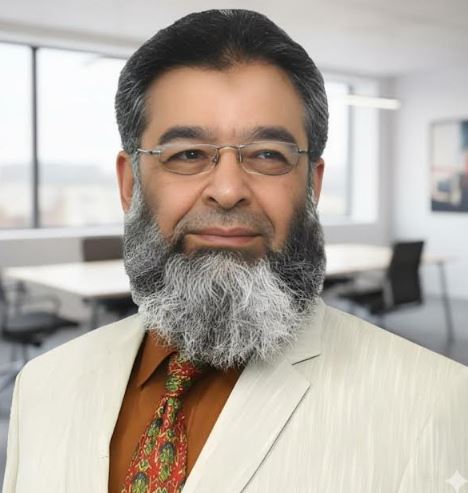
by Muhammad Mohsin Iqbal
The United Nations was founded in 1945 after the League of Nations had failed to preserve peace. Its Security Council was designed for the world that emerged from the Second World War, with five permanent members holding the veto and a small number of elected seats. That basic architecture has scarcely changed since 1965, when the non-permanent membership rose from six to ten. The veto was meant to keep the great powers inside the system and to prevent open conflict among them. Eight decades later the organisation still carries the imprint of 1945 while the membership of the United Nations has grown to 193 states and the global population exceeds eight billion. The Council’s composition therefore no longer reflects the international community it is supposed to serve.
In 2008 the General Assembly launched the Intergovernmental Negotiations to consider reform. The discussions have centred on five linked questions: categories of membership, the veto, regional representation, the size of the Council and its working methods. Africa still has no permanent seat. Latin America, South Asia and large parts of the Muslim world remain under-represented. The present arrangement is widely seen as a remnant of the colonial order that concentrates power among a few states. Many argue that emerging powers and significant regional actors—Pakistan, Brazil, Egypt, South Africa, Nigeria, Indonesia, Türkiye, Saudi Arabia, Mexico and India among them—ought to enjoy greater weight if the Council is to regain legitimacy and effectiveness.
Yet the debate is locked. The Group of Four seeks permanent seats for itself and two for Africa. The African Group demands two permanent seats with full veto rights. France and Mexico urge the permanent members to refrain voluntarily from using the veto in cases of mass atrocity. The Uniting for Consensus group, led by Pakistan and supported by Italy, Mexico, Argentina, Canada and South Korea, rejects any enlargement of the permanent category. It proposes instead an expansion of elected seats that would be longer-term and renewable. The rival camps cancel one another’s majorities, leaving the process stalled.
Enlarging permanent membership would not reform the Council so much as entrench new privileges. Additional veto-holders would multiply the occasions on which national interests can block action. The repeated American vetoes that have shielded Israel and allowed the destruction of Gaza to continue illustrate how a single permanent member can nullify the will of the rest. More permanent members would introduce further competing interests and raise the risk of paralysis. Once granted, permanent status is effectively irreversible; the new members would be free to obstruct any future attempt to revise the arrangement.
India’s claim to a permanent seat invites particular scrutiny. Permanent membership requires sustained confidence in a state’s fidelity to the Charter. India’s refusal to implement successive Security Council resolutions on Jammu and Kashmir, its rejection of a United Nations-supervised plebiscite and its unilateral constitutional changes in the territory sit uneasily with that standard. Concerns about human-rights practices in the disputed region and elsewhere, the suspension of the Indus Waters Treaty, reports of transnational repression, the Citizenship Amendment Act, the treatment of Rohingya refugees and a foreign policy that has offered strategic comfort to Israel all raise legitimate questions. India’s status outside the Non-Proliferation Treaty and the Comprehensive Test Ban Treaty adds a further layer of unease.
Germany’s candidature faces different objections. Europe already holds two permanent seats. Adding a third would deepen regional imbalance. Recent German positions on Gaza have been criticised as inconsistent with the very humanitarian principles permanent members are expected to uphold. The country’s failure to secure even a non-permanent seat in a recent election suggests that its aspirations do not command the necessary breadth of support.
The Uniting for Consensus proposal offers a more measured path. Expanding the elected membership from ten to twenty would open opportunities for Africa, Asia-Pacific, Latin America and the Caribbean without creating new permanent centres of power. Periodic elections would keep members accountable to the wider membership. Rotation would allow more states to contribute to the maintenance of peace and security. Broader participation could improve the quality of deliberation on intractable questions such as Palestine, Ukraine and other long-standing disputes, without multiplying vetoes that have so often produced deadlock.
Reform should strengthen the Council’s legitimacy without sacrificing its capacity to act. Expanding permanent membership would create additional privileged seats, heighten the risk of institutional paralysis and make subsequent change more difficult still. Wider geographical representation is better achieved by enlarging the elected ranks. The Uniting for Consensus approach preserves the existing institutional framework, enhances inclusivity, promotes accountability through regular elections and reflects the interests of the membership as a whole. Sustainable reform therefore lies in widening participation and reinforcing regional balance rather than in extending permanent privilege and the veto.