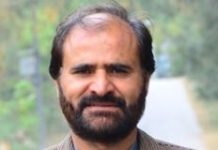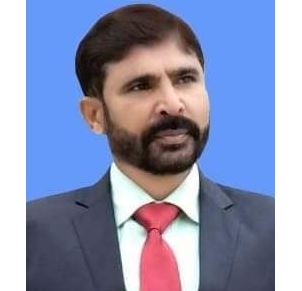
Dr. Muhammad Akram Zaheer
Politics is often understood through elections, governments and the exercise of state power. Yet history repeatedly demonstrates that lasting authority is not secured by laws alone. Nations rise and decline not merely because of military strength or economic resources, but because of the ideas that shape public attitudes and define what people accept as natural, legitimate and desirable. It was this deeper dimension of power that the Italian political thinker Antonio Gramsci sought to explain through his influential concept of cultural hegemony.
Writing during the early twentieth century, Gramsci challenged the conventional belief that governments rule primarily through force. He argued that durable political authority depends on consent as much as coercion. Every society develops institutions that influence the beliefs, values and habits of its citizens. Schools, universities, families, religious institutions, newspapers, literature, television and, in today’s world, digital platforms all contribute to shaping public opinion. When these institutions reinforce a shared understanding of society, governments enjoy stability because citizens come to regard the existing order as both legitimate and inevitable.
Gramsci described this process as cultural hegemony. The dominant groups in society retain influence not simply because they possess economic or political power, but because they are able to define the prevailing ideas, values and assumptions that become widely accepted. Power, therefore, operates through persuasion as much as through authority.
This insight remains remarkably relevant in the twenty-first century. Countries now compete not only through military capability or economic performance but also through information, narratives and public diplomacy. The struggle over ideas has become a defining feature of international politics. Nations invest heavily in education, media, cultural exchanges, scientific research and technological innovation because they recognise that influence begins long before negotiations or conflicts arise.
Pakistan’s experience illustrates the importance of this lesson. Since independence, the country has often devoted considerable attention to immediate political crises while paying comparatively less attention to the institutions responsible for shaping long-term national thinking. Frequent policy shifts, changes of government and competing political narratives have weakened the development of a coherent national vision.
Education is perhaps the most obvious example. Successive governments have introduced reforms, yet disparities in curriculum, standards and access continue to divide society. Public schools, private institutions and religious seminaries frequently produce graduates with different intellectual foundations and contrasting understandings of citizenship. Such divisions make it difficult to cultivate a common civic culture capable of supporting democratic stability and national cohesion.
The media landscape has undergone an equally dramatic transformation. Traditional newspapers continue to play an important role in informing public debate, but television channels and social media increasingly dominate the flow of information. While these platforms have expanded freedom of expression, they have also encouraged sensationalism, misinformation and political polarisation. Public discussion often becomes driven by immediate controversies rather than thoughtful examination of long-term national priorities.
Gramsci would likely argue that societies cannot expect political stability if the institutions responsible for producing informed citizens are themselves fragmented. A nation that neglects the quality of its educational system, intellectual discourse and cultural institutions risks allowing confusion and division to replace consensus.
This does not imply that governments should seek ideological conformity or suppress dissent. On the contrary, Gramsci believed that ideas should be contested openly. Healthy societies encourage debate while strengthening the institutions that enable citizens to distinguish evidence from propaganda, reason from emotion and national interest from partisan rhetoric.
For Pakistan, this means investing in intellectual capacity with the same seriousness traditionally reserved for physical infrastructure. Roads, ports and energy projects are essential for development, but so too are universities that encourage original research, schools that promote critical thinking, libraries that remain accessible to all and media organisations committed to professional standards.
Another important lesson concerns the relationship between culture and national identity. Pakistan possesses a rich civilisational heritage shaped by Islamic traditions, regional languages, literature, art and diverse cultural practices. These should not be viewed as competing identities but as complementary elements of a shared national experience. A confident nation does not fear diversity; it draws strength from it.
The country’s universities also deserve renewed attention. Higher education should extend beyond producing graduates for the job market. Universities must become centres of intellectual inquiry where difficult questions are examined without fear and where policy debates are informed by evidence rather than political expediency. Countries that lead in science, technology and innovation are generally those that protect academic freedom while demanding high standards of scholarship.
Foreign policy offers another arena where Gramsci’s insights remain instructive. Pakistan often finds itself navigating complex geopolitical rivalries involving major powers and neighbouring states. Diplomatic success increasingly depends not only on strategic partnerships but also on international credibility. A country respected for the quality of its institutions, educational achievements, cultural contributions and scientific progress enjoys greater influence than one known only through the lens of security concerns.
Soft power has become an indispensable component of national strength. Literature, cinema, academic exchanges, sports, humanitarian engagement and technological innovation all shape how nations are perceived abroad. Pakistan has made notable contributions in many of these fields, yet these achievements deserve greater institutional support and international visibility.
Political leadership, meanwhile, carries a special responsibility. Leaders naturally compete for electoral advantage, but they should avoid reducing every national issue to partisan confrontation. Public trust grows when political actors demonstrate respect for constitutional processes, independent institutions and factual public debate. The quality of democratic culture ultimately depends on the example set by those who occupy positions of influence.
Citizens, too, have an equally important role. Cultural hegemony is not created solely by governments or elites. Every conversation in a classroom, every newspaper editorial, every university lecture and every family discussion contributes to the broader political culture. Responsible citizenship requires intellectual curiosity, tolerance of differing opinions and a willingness to engage with evidence rather than rumours.
Gramsci’s greatest contribution was his reminder that power begins with ideas. Military capability may defend borders, and economic growth may improve living standards, but neither can substitute for a society united by informed citizens and resilient institutions. Nations that neglect the battle of ideas often discover that political instability originates long before it appears in parliament or on the streets.
Pakistan stands at an important moment in its development. Its youthful population, expanding digital connectivity and growing educational aspirations present significant opportunities. Realising this potential, however, requires sustained investment in knowledge, culture and institutions that cultivate informed public opinion. Building highways and industrial zones is necessary, but building intellectual confidence is equally important.
Gramsci’s message was neither a blueprint for domination nor a call for ideological control. It was a recognition that the future belongs to societies capable of shaping ideas through education, dialogue and culture. For Pakistan, the challenge is not merely to govern effectively but to nurture a political culture where democratic values, social responsibility and informed citizenship become enduring national strengths. Such a transformation would not produce immediate headlines, but it would provide the strongest foundation for lasting stability and national progress.