Pakistan continues to play a pivotal role in the ongoing US-Iran negotiations, as the warm body language between US Vice President JD Vance and Pakistan’s top leadership took center stage at the Lake Lucerne Summit. The meeting, aimed at implementing the Islamabad Memorandum of Understanding, has placed Pakistan firmly at the heart of regional diplomacy.
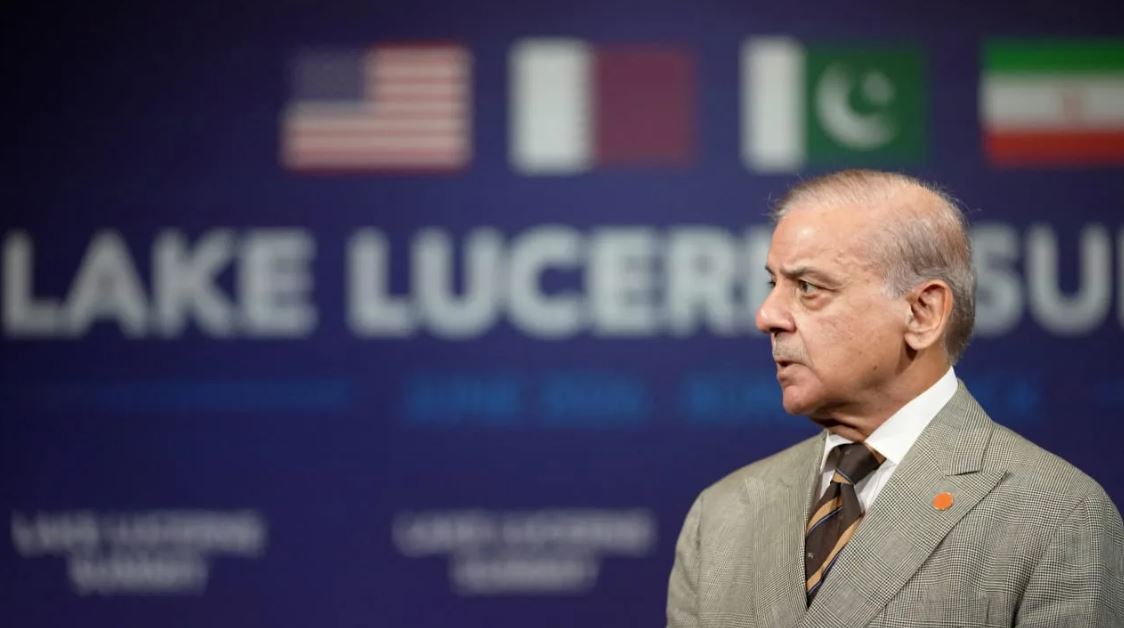
The visuals from Switzerland have become a major talking point. Vance was clearly keen to demonstrate the renewed US support for Islamabad. The two leaders met in front of a summit banner displaying the flags of Pakistan, Qatar, the United States, and Iran—with Pakistan and Qatar positioned in the middle, symbolizing their central mediating role.
Vance’s Special Praise for Pakistan’s Leadership
In remarks that will resonate deeply in Islamabad, Vance shared a personal joke to underline his close ties with Pakistan’s military chief. “I have joked that I have two very, very important people in my life. An Indian and a Pakistani. The Indian is my wife, and the Pakistani is Field Marshal Munir,” Vance said. He added that he had spoken to Munir more than anyone else in recent months, calling him a skilled diplomat.
“What the President has asked us to do is turn over a new leaf to transform our relationship with the people of Iran, and to extend an outstretched hand… if your leadership is willing to give up being a driver of regional instability, if they are willing to give up nuclear weapons ambitions for the long term, then the United States is willing to fundamentally transform our relationship.”— JD Vance, US Vice President (via Reuters)
Vance also acknowledged the hospitality he received from Prime Minister Shehbaz Sharif and Field Marshal Munir during his earlier visit to Pakistan for the negotiations. This public praise marks a significant shift in tone and is seen as a major diplomatic win for Islamabad.
Inside the Talks: Iran’s Cautious Approach
Turkey’s Anadolu Agency reported that Sharif and Munir are representing Pakistan in the technical talks on implementing the Islamabad Memorandum. Simultaneously, Sharif is holding parallel consultations with Qatar, reinforcing Pakistan’s “enduring commitment to dialogue and durable peace in the region,” according to a Foreign Ministry statement.
However, the Iranian delegation maintained its characteristic distance. CBS Chief Foreign Affairs Correspondent Margaret Brennan noted on X that the Iranian team refused to participate in the photo spray. Iranian Foreign Minister Aragchi entered last and did not shake hands, while Speaker Mohammed Bagher Qalibaf avoided the press pool entirely. This echoes Iran’s historical reluctance to engage in direct public optics with the US.
Pakistan’s Shifting Geopolitical Calculus
Pakistan is increasingly positioning itself as a key player in the Middle East alongside Saudi Arabia, Turkey, and Qatar. By leaning westward and playing a direct role in the US-Iran negotiations, Islamabad is diversifying its foreign policy away from an over-reliance on its eastern neighbor, India, or its traditional ties with China.
Historically, the US-Pakistan relationship has been a rollercoaster. From the close partnership during the Nixon era and the anti-Soviet Mujahideen campaign, things soured after 9/11 and the Abbottabad raid. The recent years under leaders like Nawaz Sharif, Benazir Bhutto, and Imran Khan saw complex dynamics. Now, the Trump administration’s overt warmth is a welcome change that Islamabad feels it rightfully deserves.
Israel’s Concerns and the Regional Sunni Bloc
From Israel’s perspective, the prominent roles of Pakistan and Qatar in the talks are raising eyebrows. Israeli strategic circles have grown increasingly critical of Sunni regional powers like Qatar, Saudi Arabia, Egypt, and Turkey, viewing them as potential long-term challenges now that Iran is weakened.
These Sunni-majority nations are likely seeking deeper ties with the US precisely because they sense a looming threat from Israel’s demonstrated military reach—from air superiority over Lebanon, Syria, Iraq, and Yemen, to an airstrike inside Qatar in 2025. For Pakistan, which shares a border with Iran, and for Egypt on Israel’s actual border, the security implications are direct and urgent.
Pakistan emerges as a potential major beneficiary of the Iran talks, but success hinges on Tehran’s willingness to stay the course. Past patterns suggest Iran may try to drag out the process. Vance’s personal chemistry with Field Marshal Munir and Prime Minister Sharif could be the smoothing factor needed to keep diplomacy on track.
Key Takeaways: Why This Matters
- Diplomatic Spotlight: Pakistan is now openly recognized as the bridge between the US and Iran.
- Personal Diplomacy: Vance’s bond with Field Marshal Munir adds a rare layer of trust to the negotiations.
- Regional Rebalancing: Sunni powers are hedging against Israeli assertiveness by deepening ties with Washington.
- Iran’s Reluctance: Tehran’s refusal to participate in standard photo ops underscores the fragility of the process.
With inputs from Reuters, Anadolu, CBS News, and Asharq al-Awsat.