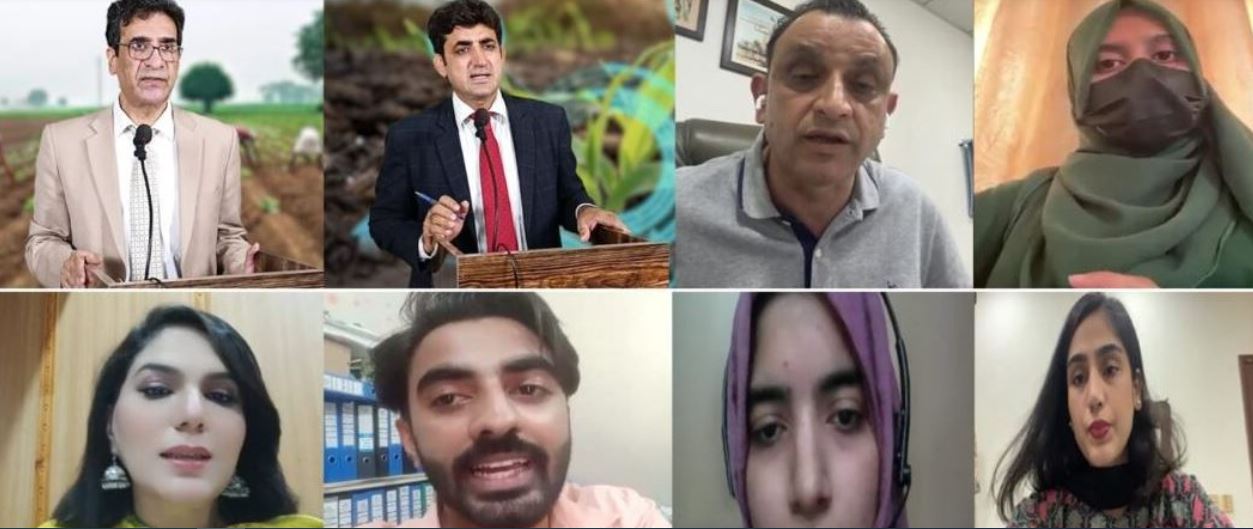
ISLAMABAD, JUN 14: Climate experts, environmental specialists, government officials and civil society representatives have emphasized the need for promoting rainwater harvesting as a sustainable and practical solution to Pakistan’s emerging water challenges amid the impacts of climate change.
The call was made during a webinar organized by the Alliance Good Governance Foundation, where participants highlighted the importance of adopting innovative water conservation measures and strengthening climate-resilient policies to ensure long-term water security, said a press release.
They noted that climate change, population growth, rapid urbanization and changing weather patterns were increasing pressure on water resources, making efficient water management a national priority.
Economist and agricultural expert Dr Khizar Nazir said climate change had posed serious challenges to Pakistan’s agriculture, economy and natural resources, with irregular rainfall, rising temperatures and extreme weather events affecting water availability and food security.
He stressed the need to adopt sustainable water management practices, including rainwater harvesting, to reduce pressure on conventional water resources.
“Rainwater harvesting is not only a conservation method but also a practical strategy to strengthen climate resilience. The country needs to store rainfall instead of allowing this valuable resource to go to waste,” Dr Khizar Nazir said.
The participants observed that rainwater harvesting had emerged globally as one of the most effective and affordable methods for enhancing water availability, replenishing groundwater reserves and supporting communities facing water shortages.
They noted that Pakistan receives substantial rainfall in different regions; however, inadequate storage facilities and weak management systems result in the loss of a significant portion of this valuable resource.
The experts said that properly designed rainwater harvesting systems could help capture, store and utilize rainwater for domestic, agricultural and environmental purposes while contributing to groundwater recharge.
According to experts, collected rainwater can be stored in tanks, reservoirs, and underground systems or directed towards recharge wells to restore declining aquifers. This approach, they added, is particularly important for urban areas where excessive groundwater extraction has become a major concern.
Climate specialists highlighted that major cities, including Islamabad, Rawalpindi, Lahore, and Karachi, are facing increasing water pressure due to population growth, expanding housing sectors, and rapid urban development.
Dr Ejaz Tanvir of the Federal Flood Commission underscored the importance of adopting practical climate adaptation measures to address growing environmental challenges.
He said water conservation should become a national priority, particularly in urban areas where groundwater levels are declining rapidly.
“Rainwater harvesting can provide a sustainable mechanism for restoring underground water reserves and reducing dependence on traditional water sources,” he added.
Senior journalist Shabbir Hussain said it was an appropriate time for Pakistan, especially major urban centres, to adopt rainwater harvesting systems on a wider scale.
He pointed out that declining groundwater levels and drying bore wells had become serious concerns in many cities, and rainwater harvesting could play an important role in replenishing aquifers.
He emphasized that government institutions, housing societies and citizens should work collectively to develop rainwater harvesting projects, particularly in areas experiencing increasing water stress.
Convener of the Alliance Good Governance Foundation, Dr Tariq Mehmood Khan, described the promotion of rainwater harvesting systems as an important step towards addressing climate and water-related challenges.
He said Pakistan was increasingly experiencing the impacts of climate change, including floods, droughts and shifting rainfall patterns, necessitating practical and sustainable solutions.
Dr Tariq stressed that sustainable water management should be integrated into national planning, while government institutions should take the lead in promoting environmentally responsible practices and green infrastructure.
He suggested that major public buildings should be equipped with rainwater collection systems to encourage similar initiatives in the private sector.
He stressed that alongside responsible water consumption, efforts must be accelerated to protect available water resources and restore declining groundwater levels.
Renowned environmentalist and social activist Shahdia Kausar Farooq, Chairperson of Subh-e-Nau (SN), highlighted that climate change and global warming are national challenges requiring collective efforts from government institutions and citizens.
She said Pakistan is among the countries most vulnerable to climate change, facing rising temperatures, melting glaciers, unpredictable rainfall patterns, prolonged droughts, and increasing pressure on agriculture.
Farooq stressed that environmental protection cannot depend only on government action, and citizens must also play their role by conserving water, planting trees, and adopting sustainable lifestyles.
She pointed out that Islamabad and many other parts of Pakistan are already experiencing increasing water shortages.
“Rainwater harvesting offers a practical solution to improve water availability and reduce pressure on groundwater resources,” she said.
During the question-and-answer session, participants also expressed concerns over declining groundwater levels and increasing water shortages.
Concluding the discussion, the experts stressed that rainwater harvesting should form an integral part of Pakistan’s climate adaptation strategy, emphasizing that safeguarding water resources today was essential for ensuring environmental sustainability and water security for future generations.