ISLAMABAD, MAY 5 /DNA/ – The Ministry of Federal Education and Professional Training and the Islamabad Chamber of Commerce and Industry have agreed to jointly evolve a comprehensive mechanism for developing a market-driven curriculum aimed at transforming Pakistan’s youth into job creators rather than merely job seekers.
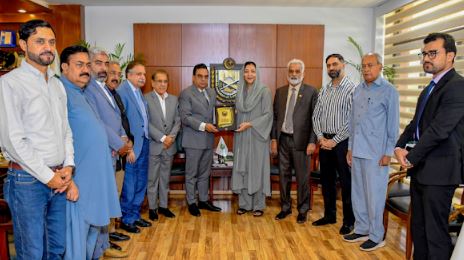
This understanding was reached during the visit of Minister of State for Federal Education and Professional Training Ms. Wajiha Qamar to ICCI on Wednesday, where she was warmly received by the Chamber’s leadership and members. Both sides agreed to constitute a Joint Working Group along with the appointment of focal persons to ensure regular coordination between academia and industry for achieving tangible outcomes.
Addressing the gathering, Ms. Wajiha Qamar stressed the urgent need for stronger industry-academia linkages and urged the business community to come forward with practical and implementable proposals to align education with market requirements.
She observed that rapid transformations taking place across the global economic landscape demand collaborative policymaking to equip Pakistani youth with modern skills capable of generating employment opportunities and earning valuable foreign exchange for the country.
The Minister emphasized that professional training, internationally recognized certifications, and skill development have become the need of the hour. She stated that both public and private sectors must work collectively for developing certification mechanisms and modern training frameworks capable of preparing youth for emerging global markets.
Speaking on the occasion, ICCI President Sardar Tahir Mehmood reaffirmed the Chamber’s commitment to strengthening collaboration between academia and industry for designing a market-oriented curriculum and conducting awareness sessions in partnership with relevant stakeholders.
He emphasized the importance of focused engagement, regular interaction, and policy continuity for economic diversification and sustainable growth. He also highlighted the need for confidence-building measures and consistent economic policies to attract both local and foreign investment.
Chairman ICCI Founder Group Tariq Sadiq said that the availability of a highly skilled workforce is essential to meet the growing demands of modern industries and international markets. He stressed that educational institutions must focus on practical learning, innovation, and entrepreneurship instead of relying solely on conventional academic models.
Former ICCI President Mian Akram Farid observed that Pakistan’s economic progress largely depends upon preparing a technically competent workforce capable of competing at international standards. He emphasized that vocational training institutes should be modernized in accordance with evolving industrial requirements and global technological trends.
Former President Mian Shaukat Masud underlined the importance of imparting technical training in fields such as laptop repairing and emerging technologies to create self-employment opportunities for youth. He added that empowering youth with practical skills would help strengthen Pakistan’s digital economy and reduce dependence on traditional employment sectors.
ICCI Vice President Muhammad Irfan Chaudhry, senior members Dr. Mohammad Usman and Azaz Mohammad, Secretary General Ghulam Murtaza, Executive Committee Member Ishaq Sial and others also shared their insights during the interactive session.