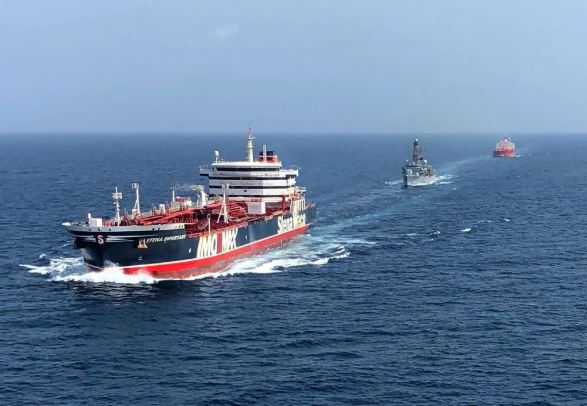
TEHRAN, APR 17: Iran’s foreign minister and US President Donald Trump have said the Strait of Hormuz is fully open to commercial vessels.
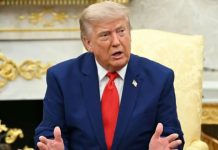
In a social media post, Mr Trump said Iran announced that the strait “is fully open and ready for full passage”.
Minutes earlier, Iranian foreign minister Abbas Araghchi posted on X that the passage for all commercial vessels through the strait “is declared completely open” in line with the ceasefire in Lebanon.
He said it would stay open for the remaining period of the ceasefire.
Mr Trump claimed the US blockade of Iran “will remain in full force” until Iran reaches deal to end the war.
Meanwhile in Beirut, barrages of gunshots rang out across the city as residents fired into the air just after midnight to celebrate the beginning of the truce, and displaced families began moving toward southern Lebanon and Beirut’s southern suburbs despite warnings by officials not to attempt to return to their homes until it became clear whether the ceasefire would hold.
A spokesperson for the UN peacekeepers in southern Lebanon said on Friday that they have not observed any air strikes since midnight but accused the Israeli military of violating airspace and artillery shelling in southern Lebanon. The Israeli military did not immediately comment. According to the agreement shared by the State Department, Israel can act in self-defence against imminent attacks but cannot carry out offensive operations against southern Lebanon.
Mr Trump heralded the deal as a “historic day for Lebanon” even as he expressed confidence that the war with Iran would soon end in a Las Vegas speech.
“I will say the war in Iran is going along swimmingly,” Mr Trump said. “It should be ending pretty soon.”
An end to Israel’s war with Hezbollah was a key demand of Iranian negotiators, who previously accused Israel of breaking the current ceasefire deal with strikes on Lebanon. Israel said that deal did not cover Lebanon.
Pakistan’s army chief met on Thursday with Iran’s parliament speaker as part of international efforts to press for an extension of the ceasefire.
While oil prices fell on hopes of a deal, the head of the International Energy Agency warned that energy shocks could get worse if the Strait of Hormuz did not reopen soon.
Iran closed the crucial waterway, through which a fifth of the world’s oil normally passes, shortly after the war began. Europe has “maybe six weeks or so” of jet fuel left and broader economic consequences will grow the longer the strait is closed, IEA executive director Fatih Birol told The Associated Press on Thursday.
The fighting has killed at least 3,000 people in Iran, more than 2,100 in Lebanon, 23 in Israel and more than a dozen in Gulf Arab states. Thirteen US service members have also been killed.
Israel’s hard-line defence Minister Israel Katz warned on Friday that Israel plans to respect the ceasefire even though attempts to completely disarm Hezbollah in southern Lebanon are “not yet complete”.
Israel’s hard-line defence Minister Israel Katz warned on Friday that Israel plans to respect the ceasefire even though attempts to completely disarm Hezbollah in southern Lebanon are “not yet complete”.
Mr Katz said that Israel would continue to hold all the places it is currently stationed, including a buffer zone extending six miles from the border with Israel into southern Lebanon. He said that many homes in the area would be destroyed and Lebanese residents will not return to the area.
Earlier, Israeli Prime Minister Benjamin Netanyahu said he agreed to the ceasefire “to advance” peace efforts with Lebanon, but also said Israeli troops would not withdraw.
Israeli forces have engaged in fierce battles with Hezbollah in the border area as they pushed into southern Lebanon to create what officials have called a “security zone”.
“That is where we are, and we are not leaving,” he said.
Hezbollah has said that Lebanese people have “the right to resist” Israeli occupation of their land and that their actions “will be determined based on how developments unfold”.