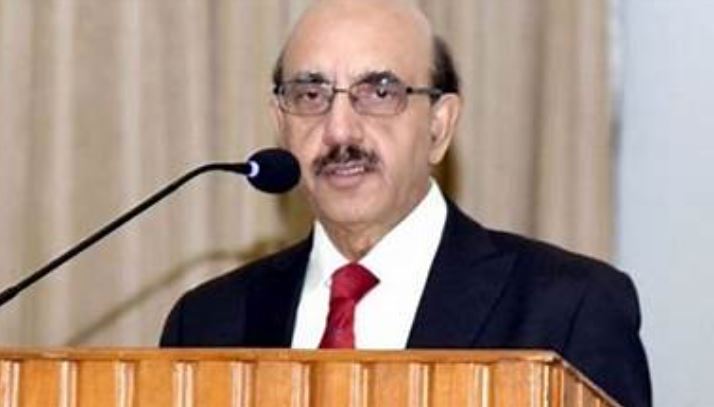
MUZAFFARABAD, Apr 5: /DNA/ – In an evolving and highly volatile regional environment, Masood Khan, former Ambassador of Pakistan to the United States, China and the United Nations, and former President of Azad Jammu and Kashmir, has underscored that Pakistan has attained an unprecedented diplomatic standing, emerging as a credible and trusted mediator in efforts to de-escalate tensions surrounding the Iran conflict.
Commenting on recent developments, Khan noted that the situation remains fluid, with rapid shifts in diplomatic positions and military dynamics.
He highlighted the significance of the statement by Iranian Foreign Minister Abbas Araqchi, who expressed confidence in Pakistan’s mediation efforts and acknowledged Islamabad’s constructive diplomatic role.
This endorsement, Khan emphasized, reflects the deep-rooted historical, cultural, and strategic ties between Pakistan and Iran, as well as growing international trust in Pakistan’s diplomatic outreach.
Khan observed that Pakistan moved swiftly at the onset of the crisis, engaging key regional and global capitals, including Tehran, Washington, and Gulf states, through sustained diplomatic contacts and backchannel engagement.
These efforts, he said, have positioned Pakistan at the forefront of mediation, effectively establishing a new “diplomatic corridor” at a time when the international community remains fragmented.
Describing the moment as historic, Khan stated that Pakistan has reached one of the highest diplomatic thresholds in its history—comparable only to its pivotal role in 1971.
He pointed out that major global and regional actors, including China, Russia, the United States, the European Union, and Gulf countries, now view Pakistan as a credible interlocutor capable of bridging divides.
However, Khan cautioned that significant challenges persist.
The United States has advanced rigid conditions, leaving limited space for counter-proposals from Iran, while Tehran has asserted its sovereignty, particularly regarding the Strait of Hormuz, which has emerged as a critical flashpoint with global economic implications.
He stressed that the role of mediators, including Pakistan, is to identify a viable middle ground that can facilitate meaningful negotiations.
Khan further noted that domestic political dynamics in the United States, including public opinion and electoral considerations, may influence the trajectory of the conflict.
While President Trump’s core support base remains intact, prolonged conflict or potential casualties could alter political calculations.
Addressing regional complexities, Khan emphasized that Pakistan must remain vigilant, particularly given security concerns along its eastern border.
Concluding, Khan reaffirmed that Pakistan’s principled diplomacy and proactive engagement have earned it global recognition, marking a pivotal moment in its foreign policy trajectory and reinforcing its role as a key advocate for peace and stability.