By Muhammad Mohsin Iqbal
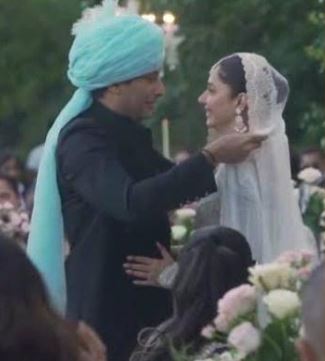
In the civilizational tapestry of South Asia, customs and traditions have long held a place of quiet authority, shaping not merely social conduct but also the emotional grammar of life itself. No joy was deemed complete without the rituals that sanctified it, and no sorrow was fully expressed without the conventions that gave it form. Among these traditions, marriage stood as the most elaborate of all social occasions—an arena not only of celebration but also of reconciliation. Old grievances were set aside, estranged relatives were drawn back into the fold, and hearts, however reluctantly, were persuaded to soften in the face of collective happiness.
Yet beneath the surface of such harmony, there often lingered subtle tensions, the unspoken rivalries of kinship that found expression in curious ways. It was not uncommon, for instance, that even the arrangement of a wedding feast could become a matter of delicate contention. If the paternal uncle assumed the role of hosting, the maternal uncle might feel slighted; if the maternal aunt took charge, the paternal aunt might quietly resent her exclusion. Such grievances, though seemingly trivial, were deeply rooted in a sense of belonging and recognition. The lament, “Had I any standing in this house, I would have been asked,” was not merely a complaint but a reflection of an emotional economy in which honour and participation were intimately intertwined.
With the passage of time, many of these customs have faded into the background, softened by the forces of modernity and the changing rhythms of life. Urbanization, education, and a more pragmatic outlook have gradually eroded the rigidities of tradition. Yet, in certain quarters of the region, echoes of these old patterns persist, sometimes in altered forms but often with the same underlying impulses.
It is in this cultural context that one may find an illuminating metaphor for the conduct of nations. For just as families once vied for recognition in moments of celebration, so too do states seek acknowledgment and influence in the theatre of international affairs. The recent tensions in the Gulf have provided a telling example of this dynamic, revealing not only the anxieties of a troubled region but also the contrasting approaches of its neighbouring powers.
At a time when the world watches the Gulf with deep concern, fearing the escalation of conflict and its far-reaching consequences, Pakistan has once again articulated its long-standing commitment to peace and reconciliation. Rather than aligning itself with any camp of confrontation, it has urged all parties to seek dialogue and restraint. This posture is not born of expediency alone but is rooted in a consistent diplomatic philosophy that views stability as a shared responsibility and peace as a collective good.
What is particularly noteworthy is the response that this approach has elicited. The parties involved in the tension, recognising Pakistan’s balanced stance and its history of engagement, have shown a willingness to reach out and explore avenues of mediation. With the notable exception of Israel, Pakistan enjoys relations of varying degrees of warmth and trust with the principal actors in the region. This trust, painstakingly built over decades, has now translated into a moment of diplomatic relevance, placing Pakistan at the centre of international attention.
This is not without precedent. Pakistan’s role in facilitating the process that eventually led to the withdrawal of the United States from Afghanistan stands as a recent example of its capacity to act as a bridge in complex geopolitical situations. Such contributions, though often understated, have reinforced its image as a state that prefers conciliation over confrontation, and dialogue over discord.
Yet, as in the familial settings of old, where one relative’s prominence could stir unease in another, Pakistan’s emerging role has not been received with equanimity by all. In India, a country of considerable size and ambition, this development has provoked a visible discomfort. Sections of its political class and media have reacted with unusual candour, directing criticism towards their own leadership. According to them, the Indian Prime Minister Modi did nothing but forcefully hug world leaders.
Such reactions, though couched in the language of domestic critique, betray a deeper sentiment—a sense of having been left out of an important moment. The analogy to the wedding feast is difficult to ignore. There is, in the tone of some of these commentaries, an echo of that familiar grievance; that one was neither consulted nor accorded the recognition one believed oneself to deserve. Yet, in the realm of international relations, as in life, participation cannot be demanded merely by virtue of size or aspiration; it must be earned through consistent conduct and credible engagement.
India’s recent posture, marked at times by conflicting signals and selective alignments, has complicated its ability to present itself as a neutral or trusted interlocutor. Expressions of concern that appear disproportionate or insincere risk being perceived as performative rather than principled. In contrast, Pakistan’s measured and interest-free approach has found resonance precisely because it is seen as aligned with the broader desire for de-escalation.
It would, however, be a mistake to interpret this moment in purely competitive terms. The pursuit of peace is not a zero-sum game, nor is diplomatic relevance a finite resource to be hoarded. The challenges facing the Gulf—and indeed the wider world—are too grave to be reduced to questions of prestige or rivalry. What is required is a collective commitment to dialogue, a willingness to rise above narrow considerations, and an understanding that stability in one region contributes to stability in all.
In the final analysis, the lesson is both simple and profound. Whether in the intimate sphere of family or the vast arena of global politics, recognition flows not from assertion alone but from conduct that inspires trust. Just as the most respected member of a household is often the one who unites rather than divides, so too is the most valued state the one that brings others together in moments of uncertainty. In choosing the path of reconciliation, Pakistan has reaffirmed a principle that is as old as the traditions from which it draws its metaphor; that true honour lies not in being seen, but in being relied upon.