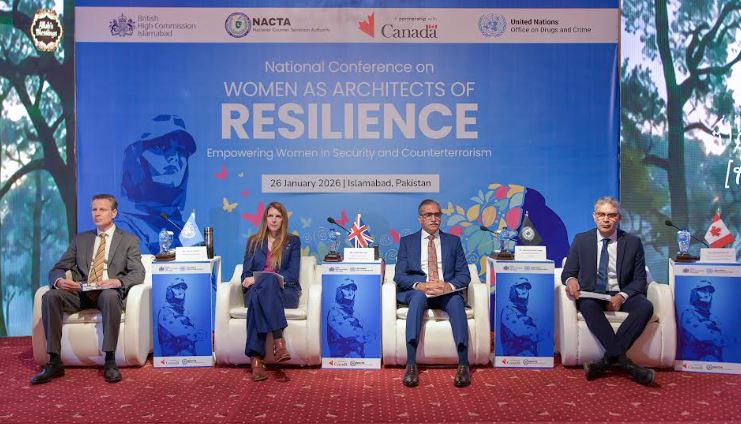
ISLAMABAD, JAN 26 /DNA/ – The British High Commission in Pakistan today reaffirmed its leadership in advancing inclusive and effective security by convening the national conference Women as Architects of Resilience: Empowering Women in Security and Counterterrorism, held in collaboration with the National Counter Terrorism Authority (NACTA), Global Affairs Canda and with support from the United Nations Office on Drugs and Crime (UNODC) Pakistan. The conference highlighted how women across Pakistan are shaping counterterrorism policy, strengthening institutions, and delivering tangible results at the community level.
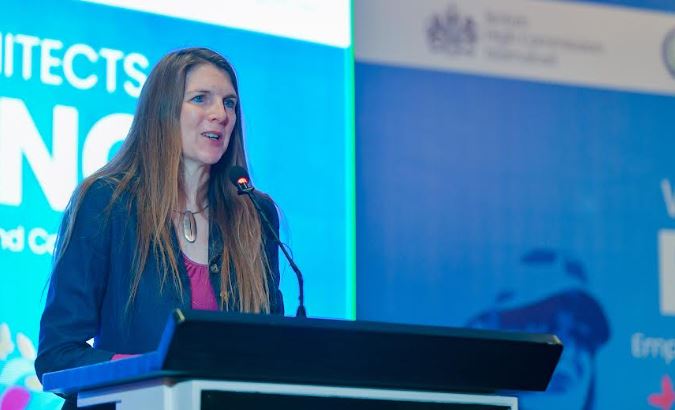
“The UK is committed to supporting women who are strengthening Pakistan’s response to enhancing community safety, leading efforts to prevent violent extremism and terrorism. We are also supporting projects that improve women’s access to justice, provide better support for survivors, and empower women-led organisations working to build resilient communities,” said British High Commissioner Ms. Jane Marriott while opening the conference.
Mr. Jawad Ahmad Dogar, National Coordinator NACTA, Mr. Tarik Ali Khan, High Commissioner of Canada, and Mr. Troels Vester, UNODC Representative emphasized the importance of international cooperation and government leadership in promoting gender-responsive security frameworks.
UNODC Representative Mr. Troels Vester highlighted the progress already underway, noting that women across Pakistan are increasingly serving in leadership roles within law enforcement, financial oversight, and justice institutions, contributing directly to investigations, compliance, and terrorism financing disruption. Reaffirming the government’s commitment, Mr. Jawad Ahmad Dogar, National Coordinator NACTA, stated that integrating women’s perspectives into counterterrorism policy and practice is essential to strengthening prevention, deterring radicalization, and reinforcing community resilience.
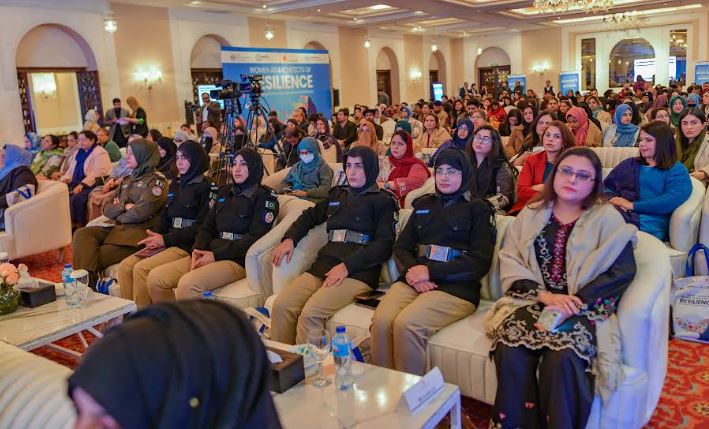
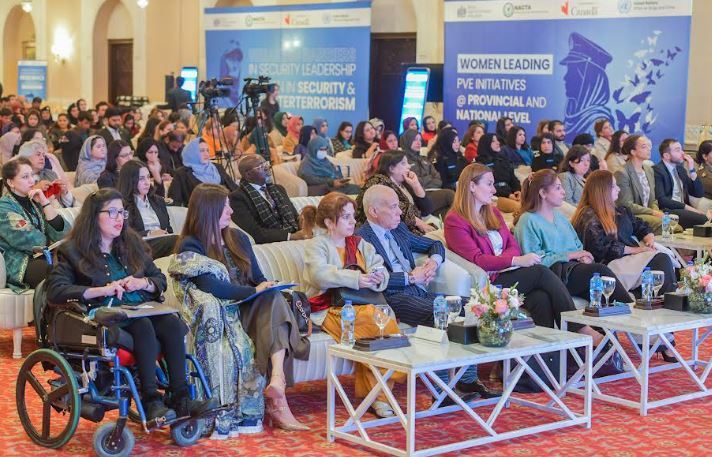
The event brought together senior policymakers, law enforcement leaders, financial regulators, international partners, and civil society to recognize the growing impact of women serving across security, justice, and prevention systems. Discussions emphasized that women are no longer peripheral to national security efforts but are central actors enhancing institutional effectiveness, accountability, and public trust.
Setting the national policy context, Ms. Humaira Mufti, Secretary, National Commission on the Status of Women (NCSW), highlighted how women’s participation in security and prevention strengthens resilience, safeguards rights, and reinforces long-term stability.
A key panel on Breaking Barriers in Security Leadership, featured senior women officers from policing and provincial administrations who shared operational experiences demonstrating how women’s leadership has improved investigations, strengthened community engagement, and increased trust in law enforcement institutions.
The international perspectives were led by Ms. Kate Wilson, Counter Terrorism Police Liaison Officer at the British High Commission, and Ms. Kate Fitzpatrick of UNODC Vienna, who shared global best practices on inclusive counterterrorism approaches linked to measurable security outcomes. Field-level leadership and dignity-centered policing initiatives were highlighted through reflections by Ms. Aisha Butt, Superintendent of Police, Punjab Police and by Ms. Beenish Fatima, Senior Superintendent of Police, Punjab.
Another session, focused on women at the forefront of emerging technologies and financial vigilance, where experts from financial intelligence units, regulatory bodies, law enforcement, and the private sector discussed how women are strengthening AML/CFT compliance, financial oversight, and early-warning systems to disrupt terrorist financing networks. Civil society leaders and academics emphasized how women-led community initiatives complement state-led security responses by addressing drivers of extremism, strengthening social cohesion, and supporting at-risk populations.
The conference concluded with a shared commitment to deepen the integration of gender perspectives within provincial Centres of Excellence on Countering Violent Extremism while advancing the establishment of a Women in Security and Counterterrorism Network to enable sustained collaboration, mentorship, and skills development across institutions and sectors.