By: Ansar Mahmood Bhatti
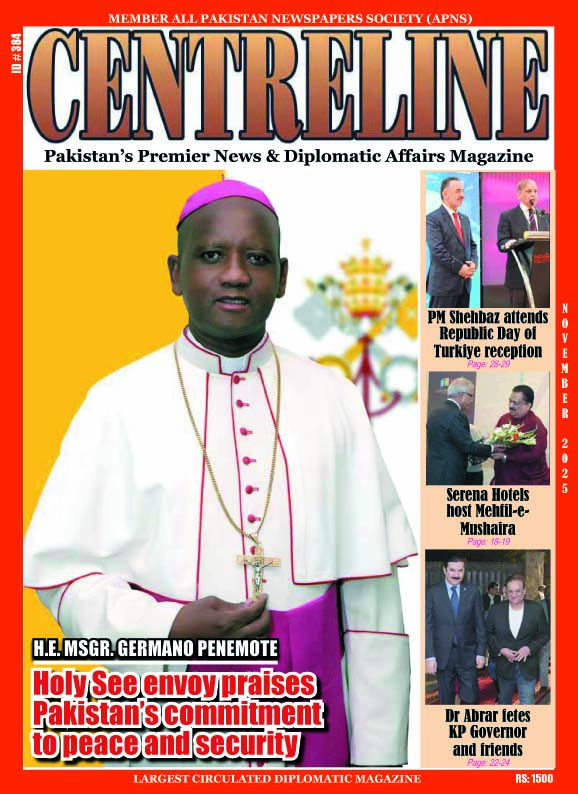
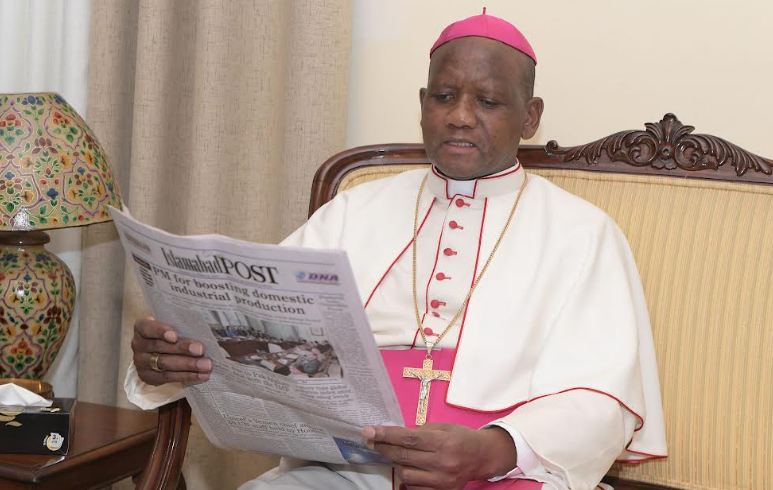
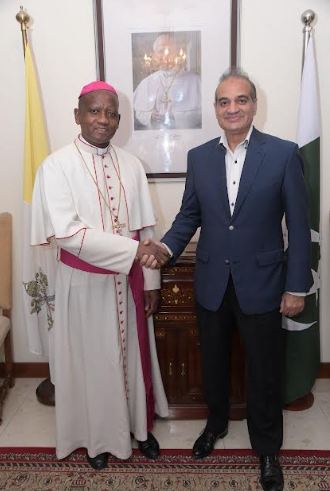
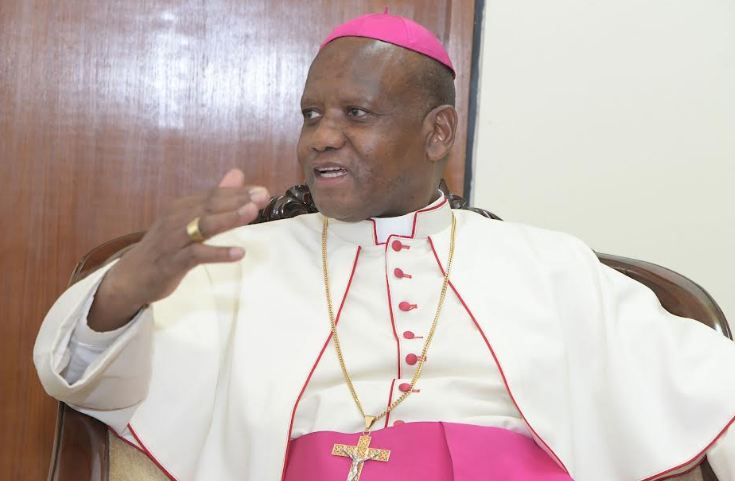
His Excellency Msgr. Germano Penemote, the Apostolic Nuncio to Pakistan, granted an exclusive interview to Daily Islamabad Post, Centreline, and the Diplomatic News Agency (DNA). In this wide-ranging conversation, the Holy See envoy shared his insights on Pakistan–Holy See relations, interfaith harmony, and the role of the Catholic Church in promoting peace and dialogue across communities. The interview offers a rare glimpse into the Nuncio’s diplomatic mission and his vision for strengthening mutual understanding and cooperation between Pakistan and the Holy See.
1: As Apostolic Nuncio since 2023, what have been your main priorities in Pakistan so far?
The diplomacy of the Holy See, also called Vatican diplomacy, one of the oldest and best known throughout history, has the duty of promoting the common good of all people through dialogue, understanding, and the harmonious and peaceful coexistence of the entire human family. In this regard, since my arrival in Pakistan, and despite some situational circumstances that have not always made my mission easy, I have sought to meet with people, listen to their difficulties, and provide appropriate solutions whenever possible. I have brought neither gold nor silver, but I have a heart full of esteem and consideration for the beloved Pakistani people. I seek to strengthen bilateral relations between the Holy See and the Islamic Republic of Pakistan, through not only my presence here, but also through direct contact with people of various religions, encouraging the activities of the Catholic Church in the fields of education, health, and social assistance. In providing this indispensable service, we do not sound trumpets nor call on the media to cover our activities, but we silently carry out many good deeds for all Pakistani people.
2: Could you describe the relationship between the Holy See and the Islamic Republic of Pakistan – what are its strengths, and what areas need further development?
So far, the diplomatic relations between the Holy See and the Islamic Republic of Pakistan are good; one could even say they are excellent, but I am not an advocate of exaggerations. In fact, since 1965, when the Apostolic Delegation established in Karachi in 1950 was elevated to the rank of Apostolic Nunciature, the bilateral relations under consideration have been proceeded normally and without interruption.
Then, on 27th of December this year, we will reach 60 years of the full institution of the Apostolic Nunciature in Pakistan. It is worth noting that from the start in Karachi until today, the Apostolic Nuncio has resided in Pakistan and has fully carried out his mission in this country, sharing cultural, religious and social values among a people characterized by unparalleled hospitality and an openness that always has something to offer and to challenge. For his part, the Ambassador of Pakistan to the Holy See lives in Switzerland, but this does not mean he is unknown in the Vatican. Therefore, the diplomatic relations between the Holy See and the Islamic Republic of Pakistan are good, continuing with mutual respect and without disruptions.
However, we need to establish a legally binding agreement on certain issues for a fruitful cooperation. In other words, there is a need for a legal instrument that allows Catholic institutions to develop their activities for the benefit of all Pakistani people. We are pleased when we find many good citizens of this country saying that they studied in a Catholic school and are happy to have received a socially valid and well-rounded education.
3: How can local Church institutions (schools, hospitals, etc.) better contribute to the welfare of both Christian and non-Christian communities in Pakistan?
This question is welcome, especially because these days I have been in contact with some government Authorities, with the aim of working together to provide better conditions for the Church service, with the expectation of benefiting the entire people of Pakistan. For this goal, there is a need of legal recognition and support at various levels for the institutions of the Catholic community, which have contributed to the development and welfare of society. Many countries have established effective and productive agreements with the Holy See in various areas. For this reason, it is never too late to think about the good that a similar legal instrument could bring to Pakistan. Furthermore, one could think, for example, of establishing a Catholic University in the country, in order to provide a solid and universally recognized education to our young people, regardless of their social condition, religion, or background.
This would greatly contribute to the process of dialogue, interfaith harmony and peaceful coexistence. An education given equally to all would leave no room for discriminatory feelings or acts of vandalism and aggression, affirming that all Pakistanis are citizens of this Republic and legitimate children of this their homeland. Therefore, they should be helped to respect and accept one other as brothers, and to live together in harmony and peace.
4: Pakistan is predominantly Muslim. How do you see the role of the Catholic Church in promoting dialogue, peace, and mutual understanding among religious communities?
First of all, I must say that the Holy See, as the government of the Catholic Church, seeks to spread its message of dialogue and peace for the harmony of the entire human family in the world. In this, the teachings of the Popes are vibrant and serve as valuable guidance for Catholic communities and for all people of goodwill.
In Pakistan, the Catholic Church stands out in its integral mission of promoting interfaith harmony and dialogue with other Religious, ecumenism among Christians, peace, and mutual understanding among the various social groups present in the country. Although the Catholic Church is “a minority” in the country and therefore limited in its resources, I see that it has played a leading role in the process of promoting the well-being of all. It is necessary to have confidence in the Church’s institutions and provide them the necessary conditions to reach out to those most in need.
The indispensable mission of the Catholic Church requires the support of men and women of goodwill, people who long for peace and truly want to see Pakistan grow both internally and within the community of nations. This year we are celebrating the 60th anniversary of the Declaration Nostra Aetate (translates from Latin to “In our Time” or “In our Age”) of the Second Vatican Council, that outlines the Catholic Church’s relationship with non-Christian religions. This document has contributed enormously to improving relations, particularly with Muslims and Jews, but not only, in a respectful friendship despite differences and diversity. It is a landmark document that fostered interfaith dialogue, respect, and cooperation. The same document is a source of invaluable teaching on human and religious coexistence, and it is being commended in conferences and discussion groups around the world, including in Pakistan.
The Catholic Church, due to its global nature, has no boundaries. It is always open to dialogue and extends its arms to embrace, comfort, and support all the children of God, Creator of all human beings. Muslims, Christians, Buddhists, Jews, Hindus, Sikhs, Confucians, and others need to know how to live together peacefully. Moreover, the Catholic Church, wise in humanity, does not fail to point out the proper path for this purpose.
5: What initiatives have you supported or would like to support to promote interfaith harmony, especially by youth and in education?
The Catholic University proposal I mentioned earlier is a sine qua non condition for a society that is fair in rights and harmonious in the diverse and varied expression of faith. So far, our schools have taught the basic notions of the Holy Quran and the Holy Bible.
But we have no Catholic higher education institution that could contribute at the highest level to interreligious dialogue and harmony. We support school and hospital activities, but we have no structure at university level that can welcome young people of different religions, so that they can sit together and study collectively to understand the vast array of paths and the essential means for building a society in peace and in full interfaith harmony. Geographically, Pakistan is well situated, and if there were a Catholic University here, promoting human values and religious virtues, neighboring countries would surely send their students here to study.
Everything is still possible, but it depends on the goodwill and cooperation of everyone. By establishing a Catholic University in Pakistan, we can create an institution that not only provides outstanding education but also to fostering human development in one of the most strategically significant regions of the world. It can inspire generations of leaders, advance research and innovation, and foster harmony among diverse peoples.
6: Poverty, education, health services are ongoing challenges in many parts of Pakistan. How is the Church contributing to these areas, and what more could be done with local and international support?
It is interesting to note that in your question the main challenges of the country are well identified. The Catholic Church dedicates itself in these areas, and will never renounce its inalienable mission: the salvation of human life. To this propose we have many shelters in the country, founded and managed by Catholic religious, for example, the Sisters of Mother Teresa of Calcutta. I have visited many places, such as Karachi, Lahore, Hyderabad, Faisalabad, and Rawalpindi, where these nuns work.
They dedicate themselves to their mission with a spirit of charity and selflessness, sheltering the poor and the sick, helping disadvantaged children, girls and adult women in poverty or ill. The same goes for Dar-ul-Karishma in Yohanabad (Lahore) under the care of the Sisters of Charity of St. Jeanne Antide Thouret, as well as Dar-ul-Sukun (Darul Sakoon) in Karachi. Regarding the schools, during my stay in Quetta, Karachi, Hyderabad, Lahore, Sargodha, Rawalpindi, and Islamabad, I greatly appreciated the work that Catholic missionaries are carrying out in the country.
I visited several of the educational institutions founded and managed by them, noticed their enthusiasm, and observed their numerous difficulties and limitations. When we think of the large schools and colleges such as St. Bonaventure in Hyderabad, St. Patrick School and College in Karachi, St. Joseph’s Convent Girls High School and the Sacred Heart School in Quetta, the Mission High School under the care of the Focolare Movement at Dalwal, the Sacred Heart Cathedral Girls High School and the Convent of Sacred Heart in Lahore, the great college of Sargodha under the responsibility of the Presentation Sisters, the La Salle High School & College in Faisalabad, just like so many others that are in the Dioceses of Multan, we can truly recognize and admire the good that the Catholic Church does and wants everyone to enjoy in the country.
The same can be said of various youth training Institutes, such as the Don Bosco Technical & Youth Centre in Lahore, the Sargodha Institute of Technology. They need everyone’s support, since good education is the main key to building a strong nation. In the field of public health, hospitals managed by the Catholic Church are highly sought after.
The Holy Family Hospital in Karachi, the Saint Elizabeth Hospital in Hyderabad, Our Lady of Fatima Hospital build by German missionaries in Sargodha, the Bethania Hospital in Sialkot, St. Joseph’s Hospice in Rawalpindi, among others, are examples that also catch our attention. We have been looking for benefactors who can help to fund some important institutions that benefit all Pakistanis, but the goodwill of benefactors is not always sufficient. It is necessary that, internally, a significant contribution also be made. Ultimately, the good that comes from Catholic institutions and other sister Churches is for all the Pakistani people and, therefore, deserves the support of everyone.
7: How do you see the Church’s role in contributing to social justice, environmental care, and sustainable development in Pakistan?
The Catholic Church is at the service of the human beings in their entirety, body and soul. For this reason, it always encourages social justice, the environmental care, and sustainable development throughout the globe. The Church has the capacity to make its best contribution in the sectors mentioned above, and it does so as much as possible.
There are commissions and many relevant initiatives in the seven Catholic ecclesiastical jurisdictions in Pakistan, whether in the field of social justice for all, environmental care, or sustainable development. When I visit the catholic communities, I am always invited to plant a tree, visit the marginalized people, and meet with the academic community.
All of this leads me to see the Church’s initiatives in these sectors with particular interest and admiration. Nevertheless, as I said earlier, without essential conditions and with limited material resources, the Catholic Church cannot perform miracles. In conclusion, the teaching of the Church is very clear. It proclaims human freedom and dignity and, therefore, does not allow the exploitation and discrimination of people.
8: Finally, in your diplomatic role, what message would you like to share with the people of Pakistan—Christians, Muslims, and others—about unity, hope and shared destiny?
First of all, Pakistanis must recognize that they are all brothers, legitimate children of their noble motherland, regardless of their social status, religion, or level of education. They must promote unity, peace, tolerance, justice, harmony, and coexistence.
The unity of a people is the victory of their Nation. When the people are united, they are better able to identify their challenges and work toward those objectives that are common, constructive, and uplifting for the country, where human rights are respected and the dignity of individuals is truly recognized. At the same time, Pakistanis must preserve their values of hospitality and solidarity with all the peoples of the world. Therefore, the spirit of non-violence should guide the mind and heart of everyone. They must prevent dangers and choose the principle of negotiation and non-violence.
Great men and women who wrote significantly positive pages in the history of humanity, such as Muhammad Ali Jinnah, Nelson Mandela, Mother Teresa of Calcutta, Martin Luther King, Mahatma Gandhi, and others, serve as examples to follow. To young people, I say that they should be prudent and careful about what they say or post on social media. Just as a spark is enough to burn a forest, in the same way an inappropriate or out-of-context word or action can ignite a conflict and cause disasters.
We must recognize the fact that Pakistan is increasingly committed to internal and external peace and security. It is concerned with the legitimate defense of oppressed peoples and regional and global economic and political stability. I hope that this commitment continues and becomes the main motto of the youth, who are the future of this country. In the end, each of us must be a herald of peace: peace within our families, peace in our workplaces, national peace, and peace with neighboring countries and the international community. Long live Pakistan!