
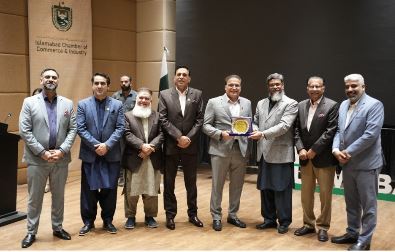
DevOps Days Islamabad: ICCI president calls for technology-driven economic growth, digital innovation

Equitable energy transition requires holistic reforms and long-term planning: Experts Islamabad, November 25: Pakistan’s energy transition must address not only the expansion of renewable energy but also the structural challenges of affordability, financial sustainability, industrial competitiveness, and equitable access to its benefits. Power-sector challenges are interconnected and require a comprehensive approach. This calls for coordinated reforms that address immediate concerns while establishing a long-term roadmap for an equitable, inclusive, and sustainable energy future. These were the key observations at a roundtable organized by the Institute of Policy Studies (IPS), Islamabad, titled “Towards an Equitable Energy Transition in Pakistan: Immediate Priorities and Long-Term Measures.” The discussion brought together policymakers, energy experts, industry representatives, and researchers. The speakers comprised Rehan Javed, member, Federation of Pakistan Chambers of Commerce and Industry; Muhammad Umer Khan, joint director, Private Power and Infrastructure Board; Dr. Rubina Ilyas, research economist, Pakistan Institute of Development Economics; Ameena Sohail, member, Board of Governors of CPPA; and Khalid Rahman, chairman, IPS. The discussants included Shahid M. Sattar, former member, Energy Planning Commission; Shahid Iqbal, former CEO, IESCO; Asad Mehmood, senior energy expert; Waqas Haroon Moosa, former chairman, Pakistan Solar Association; Khawaja Hassan Umer, director, financial planning, Power Generation Company (Pvt) Ltd; Tauseef ur Rehman, National Grid Company; Dr. Shakir Ali; and Zulfiqar Younas, senior advisor, Climate Finance. Linking industrial competitiveness with consumer affordability, Rehan Javed pointed to high electricity costs, capacity payments, and underutilized generation capacity as persistent challenges. He called for cost-reflective industrial tariffs, better utilization of existing capacity and improved transmission planning to encourage industries to remain connected to the grid. Turning to procurement, Umer Khan underscored least-cost planning, competitive procurement, transparent contracting and appropriate risk allocation for energy generation. He noted that market reforms, including the Competitive Trading Bilateral Contract Market, could improve procurement discipline, encourage investment and reduce inefficiencies in the power sector. Shifting focus to households, Dr. Rubina Ilyas drew attention to disparities in households’ ability to participate in the energy transition. While homeowners can install rooftop solar, tenants and households sharing meters often lack similar opportunities. She emphasized the need for targeted support for vulnerable consumers, transparent assessment of tariff impacts, improved DISCO performance, and measures such as energy storage and shared solar arrangements to make the transition more inclusive. Taking a broader view, Ameena Sohail argued that power-sector problems are often identified and addressed in isolation, resulting in further challenges. She stressed the importance of examining the sector holistically and addressing institutional and regulatory disagreements that delay reforms. During the discussion, Shahid Sattar stressed the need to consider the transition’s effects on households, industrial workers, and communities hosting energy projects. On the question of tariffs, Waqas Moosa put forward a midday tariff framework to encourage electricity consumption during peak solar-generation hours while maintaining DISCO revenue neutrality. Adding a note of caution, Shahid Iqbal warned against attributing DISCO revenue challenges primarily to net metering, identifying weak bill recovery and non-paying consumers as significant factors. Tauseef ur Rehman noted that solar adoption and battery storage are changing consumption patterns and shifting peak demand towards nighttime. Shakir Ali called for greater attention to wind energy, while Hassan Umer stressed the urgency of accelerating renewable energy development and market reforms. Echoing this concern, Asad Mehmood stressed that socioeconomic differences must inform transition policies, as not all consumers can afford renewable technologies. He also highlighted continued grid dependence among solar users and the need for advanced technologies to facilitate load shifting. Looking ahead, Zulfiqar Younas urged Pakistan to pursue its NDC 2025 commitments and mobilize green finance through multilateral funds, the Green Climate Fund and carbon markets. Winding up the discussion, Khalid Rahman observed that successive power-sector interventions had often attempted to remedy the consequences of earlier decisions, sometimes creating new challenges. He stressed the need to examine the sector comprehensively and develop coordinated immediate and long-term measures for an equitable, inclusive and sustainable energy future.

Digital transformation no longer optional for businesses: ICCI President

ISLAMABAD, NOV 25 /DNA/ – President Islamabad Chamber of Commerce and Industry (ICCI), Mohammad Zikria Akbar Zia, has underscored the need to accelerate digital transformation, embrace emerging technologies and strengthen innovation-driven entrepreneurship to unlock Pakistan’s economic potential, saying that technological advancement has become a key determinant of competitiveness, productivity and sustainable economic growth.

Addressing DevOps Days Islamabad, he appreciated Cloud Native Islamabad and Cloud Native Security Pakistan for bringing together technology experts, industry professionals, developers and young innovators on a common platform to exchange knowledge and explore emerging technological trends. He observed that DevOps, Cloud-Native Technologies, Platform Engineering, Cybersecurity and Site Reliability Engineering had evolved beyond specialised technical disciplines to become essential pillars of the modern business ecosystem. Similarly, emerging fields such as MLOps and Agentic AI were creating new possibilities for businesses, industry, education and governance.

The ICCI President said Pakistan, particularly Islamabad, had tremendous potential to emerge as a competitive technology and innovation hub, given its talented youth, expanding IT workforce and growing startup ecosystem. However, he stressed that this potential could only be realised through investment in modern technological education, practical training, skills development and internationally recognised professional competencies. He emphasised that digital transformation was no longer a choice but a business necessity, urging enterprises to adopt cloud computing, cybersecurity, automation and artificial intelligence to enhance operational efficiency, productivity and global competitiveness.

Reaffirming ICCI’s commitment to supporting the country’s digital economy, Mohammad Zikria Akbar Zia said the Chamber was keen to strengthen engagement with technology companies, startups, educational institutions and relevant professional associations. He expressed the resolve to facilitate an environment in which innovative ideas, technological expertise and entrepreneurial talent could be transformed into viable businesses, investment opportunities and sustainable economic ventures.

Senior Vice President ICCI, Mohammad Ashfaq Hussain Chatha, shared his personal success story with the participants, highlighting that hard work, consistency, determination and perseverance had been the defining factors behind his professional journey. Encouraging young professionals and aspiring entrepreneurs, he advised them to remain focused on their ambitions, approach challenges with confidence and recognise that lasting success requires continuous learning, dedication and sustained effort.

Vice President ICCI, Mohammad Waqas Khan Swati, urged students and young professionals to take advantage of the expanding opportunities in technology, software development, coding and entrepreneurship. Drawing on his professional experience, he highlighted the importance of practical skills, teamwork and translating innovative ideas into marketable solutions, including technology-based startups and mobile applications. He encouraged participants to collaborate, share knowledge and pursue entrepreneurial initiatives, assuring them of the business community’s willingness to support promising young innovators.

The well-attended session also featured addresses by Dr. Ammara Aftab, Hamza Qureshi, Zuhaira Shafaq, Mansoor Amjad, Abdullah Haroon and other technology professionals, who shared their insights and experiences on emerging technologies, digital innovation and the evolving IT landscape.

The ICCI President particularly appreciated the contributions of ICCI Executive Member Abrar ul Haque, Vice President Computer Hardware Association of Pakistan Aizaz Mohammad, and former ICCI Executive Member Dr. Muhammad Usman for their efforts in organising the event and bringing together the technology community on a meaningful platform.