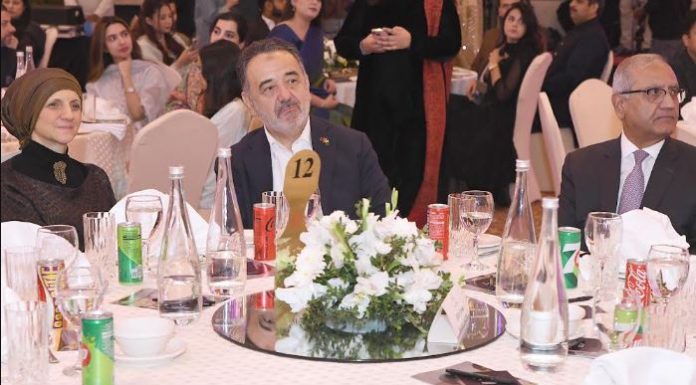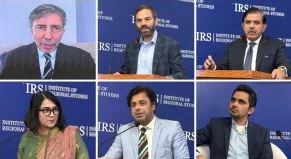
ISLAMABAD, NOV 9 /DNA/ – The Institute of Regional Studies (IRS) organised an expert talk titled “Factoring Pakistan into Trump’s Transactional Foreign Policy” on Friday. Michael Kugelman, Senior Fellow for South Asia at the Atlantic Council, was the keynote speaker. The event was attended by members of the think tank community, diplomatic staff, media, government officials and universities. Riaz Khokhar, Research Officer at IRS, moderated the session.
In his welcome remarks, Ambassador Jauhar Saleem, President IRS, said Pakistan-US relations had entered a productive phase since the start of President Trump’s second term. He cited Pakistan’s arrest and handover of a high-value terrorist in March 2025, President Trump’s role in defusing the May 2025 Pakistan-India conflict, the US designation of the BLA and its Majeed Brigade as terrorist organisations, regular top-level meetings and Pakistan’s role as a peacemaker in the US-Iran conflict.
Ambassador Saleem said the United States was the largest market for Pakistani exports. Both sides wanted to strengthen the relationship through trade and investment, including in minerals and information technology. Given its close ties with Washington and Beijing, Pakistan could act as a bridge between the two.
Michael Kugelman said the relationship had improved markedly since President Trump returned to office. He attributed this to President Trump’s transactional approach, which set aside past differences; Pakistan’s help in arresting an ISIS-K suspect in the 2021 Kabul airport attack; Pakistan’s performance in the May 2025 conflict with India; Pakistan’s commercial offers in critical minerals; and its geopolitical value in the Middle East, including its mediation between the United States and Iran.
He said the tone of the relationship had changed from criticism to praise. He added that the substance of the relationship had yet to match the rhetoric. Early outcomes include MoUs on critical minerals, the first shipment of US crude oil to Pakistan and the lifting of a ban on US soybeans.
On the midterm elections, Mr Kugelman said Democratic control of Congress would have a limited effect on the relationship because the executive branch sets foreign policy. He noted bipartisan support on Capitol Hill for Pakistan’s peace mediation and its growing role in the Middle East.
He recommended a formal US review of its Pakistan policy, the first since 2017, to build ties that could outlast changes in leadership. He identified trade, energy, counter-narcotics cooperation, the US International Development Finance Corporation and Track II dialogues as areas with potential. He said transactional relationships could deliver real results, and the trust gap between the two countries was narrowing.
Maj Gen (R) Dr Muhammad Samrez Salik, Professor of Practice at the National University of Sciences and Technology (NUST), said Pakistan and the United States were closely linked by geography and history. Unlike in earlier geopolitical cycles, Pakistan now had to balance its ties with the United States and China, and it could help the two powers avoid the Thucydides trap. He said the two countries’ interests converged on Iran and rare earth minerals.
Dr Musarat Amin, Associate Professor and Head of Department at JSPPL, NUST, said Pakistan should seek tangible economic gains from the relationship. She recommended that Pakistan build institutional links with the United States, engage both Republicans and Democrats, and expand people-to-people and educational ties.
In his concluding remarks, Dr Rizwan Naseer, Senior Research Fellow at IRS, said Pakistan-US cooperation was moving from aid to trade, particularly in mines and minerals. He said Pakistan’s mediation between Iran and the United States had earned international recognition, and he expected the relationship to keep improving regardless of which party held the White House.