D-8 SECRETARY-GENERAL CALLS FOR STRONGER HEALTH COOPERATION AND RESILIENT HEALTH SYSTEMS AT 12th TURKISH MEDICAL WORLD CONGRESS
ISTANBUL, NOV 1 /DNA/ – At the invitation of the Minister of Health of the Republic of Türkiye, Kemal Memişoğlu, the Secretary-General of the Developing-8 Organization for Economic Cooperation (D-8), H.E. Ambassador Sohail Mahmood, participated in the 12th Turkish Medical World Congress and delivered keynote remarks at the Opening Ceremony.
Organized by the Ministry of Health and the Health Institutes of Türkiye (TÜSEB), under the auspices of the Presidency of the Republic of Türkiye, the Congress was held from 29-31 October under the theme “Resilient Health Systems in the Face of Global Health Threats.” It brought together over 2,000 participants, including Health Ministers, Senior Officials, scientists, medical professionals and experts from numerous countries, most prominently Türkiye’s Nobel Laureate in Chemistry, Prof. Dr. Aziz Sancar.
In his keynote remarks, the Secretary-General extended felicitations on the 103rd anniversary of the Founding of the Republic of Türkiye (29 October). He noted that the Turkish World Congress, being organized by Türkiye since 2014, had evolved into a valuable platform for accumulation of scientific knowledge, sharing of experiences and best practices, working on innovative and sustainable solutions to common problems, and contributing to efforts for building a more resilient global health system. The Secretary-General commended Minister Memişoğlu’s leadership in healthcare transformation, including the Productive Health Model, and lauded TÜSEB’s contributions. Highlighting global health threats posed by pandemics and infectious diseases, climate-induced disasters, and pervasive armed conflicts, he emphasized the importance of solidarity and international cooperation, effective preparedness, and resilient health systems.
The Secretary-General underlined the importance of health cooperation within the D-8 framework and highlighted the complementary strengths of D-8 Member States, including Türkiye’s capabilities in pharmaceuticals, biotechnology, medical devices, digital health, and use of Artificial Intelligence. Noting the strengths of Member States as well as the capacity gaps, he called for enhanced cooperation in research and development (R&D), reduction of external dependence, technology transfer, joint production, digital health, and Artificial Intelligence as part of efforts to ensure access to affordable and sustainable healthcare.
The Secretary-General recalled the First D-8 Ministerial Meeting on Health, held in Cairo in November 2025, and the adoption of the Ministerial Declaration, that set out the Health Cooperation Framework. He underscored the importance of translating shared priorities into practical cooperation and highlighted the Second D-8 Ministerial Meeting on Health, to be hosted by Türkiye in 2027, as an opportunity to further strengthen and comprehensively upscale health cooperation among Member States.
The 3-day Congress featured scientific sessions and high-level discussions on healthcare innovation, artificial intelligence, biotechnology, cancer research, personalized medicine and emerging medical technologies.
On 31 October 2026, the Secretary-General attended the TÜSEB Aziz Sancar Science, Service and Incentive Awards Ceremony, at which the Honourable President of the Republic of Türkiye, H.E. Recep Tayyip Erdoğan, delivered an inspiring address and presented awards and certificates to individuals and institutions in recognition of their outstanding contributions to medical science, research, and healthcare innovation.
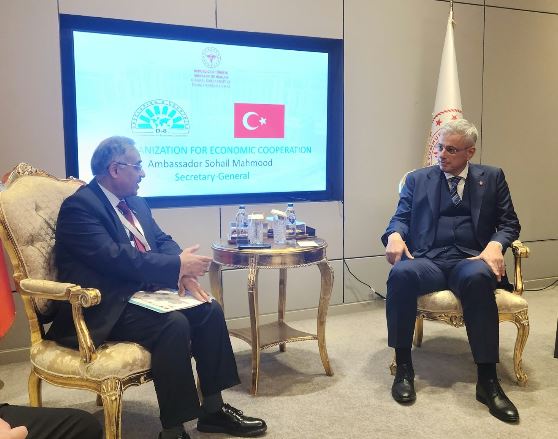
On the sidelines of the Congress, the Secretary-General held a bilateral meeting with Türkiye’s Minister of Health, H.E. Prof. Dr. Kemal Memişoğlu. Discussions focused on preparations for the Second D-8 Ministerial Meeting on Health in 2027 and advancing practical cooperation within the D-8 framework. The Secretary-General appreciated Türkiye’s leadership and continued commitment to strengthening regional health cooperation.
Separately, the Minister of Health and Social Care of the Federal Republic of Somalia, H.E. Dr. Ali Haji Adam Abubakar, met with the Secretary-General. The Minister was apprised of the D-8’s mandate, priorities and ongoing initiatives, particularly in the health sector. Views were exchanged on potential avenues for cooperation and closer institutional engagement.
The Secretary-General interacted with other participating Ministers and senior officials as well. He had a brief interaction with Nobel Laureate Prof. Dr. Aziz Sancar.
The Secretary-General expressed appreciation to the Government of the Republic of Türkiye, particularly the Ministry of Health and TÜSEB, for the excellent arrangements and hospitality extended to participating delegations, and for successfully convening this important international platform for scientific exchange and health cooperation. He reaffirmed the D-8’s commitment to advancing practical partnerships for more resilient, inclusive and sustainable systems.