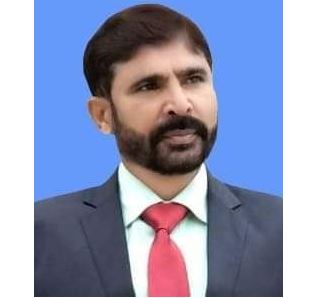
Dr. Muhammad Akram Zaheer
Syria’s search for a new military patron has unexpectedly turned towards Islamabad. According to a report published by the Lebanese news portal Al-Modon on October 10, Syrian President Ahmed al-Sharaa asked Saudi Crown Prince Mohammed bin Salman to encourage Pakistan to speed up weapons deliveries and to allow Damascus to procure arms directly from Pakistan. The claim has not been independently confirmed by Islamabad or Damascus, but it fits a wider pattern: Syria’s transitional government is looking beyond its old dependencies, and Pakistan is being courted as a possible partner in that effort. For Damascus, the appeal is not difficult to understand. Syria’s armed forces were built for decades around Russian equipment and, more recently, relied heavily on Iranian-linked militias. Both sources of support are now politically and practically uncertain. A government seeking to rebuild a national army after years of war wants hardware that is affordable, adaptable and free of the end-use restrictions that often accompany Western arms sales. Pakistani systems, produced domestically and marketed as cost-effective and modular, offer one such option. Syrian analysts quoted in regional reporting describe Pakistan as a potential “sovereign buffer” for Damascus: a Muslim-majority nuclear state with an established defence industry, experience in counter-insurgency and a long record of dealing with sanctions and strategic isolation. Whether Pakistan wishes to accept that role is another matter. But the very fact that Damascus sees Islamabad in these terms marks a significant shift in the region’s diplomatic geography.
The reported Saudi mediation follows a series of high-level contacts. Syrian Foreign Minister Asaad al-Shaibani visited Islamabad on August 19 and 20, the first visit by a Syrian foreign minister in 19 years and the first since the formation of Syria’s new government. Pakistan’s Foreign Office said the two sides reaffirmed their “longstanding brotherly ties”, agreed to revive institutional mechanisms and discussed cooperation in areas of mutual interest. The symbolism was considerable. Mr al-Shaibani met Deputy Prime Minister and Foreign Minister Ishaq Dar, Prime Minister Shehbaz Sharif, the commerce and interior ministers, and Chief of Army Staff Field Marshal Asim Munir. That range of meetings suggests that Syria was not in Islamabad merely to discuss trade delegations or cultural exchanges. Defence cooperation, regional security and the future political order in the Levant were inevitably part of the conversation. Pakistan, for its part, reaffirmed support for Syria’s sovereignty and territorial integrity and reiterated its position on the Golan Heights. Damascus publicly welcomed the visit, with Syrian state media presenting it as the beginning of a deeper strategic relationship. Islamabad’s language was more measured, but the direction was clear: Pakistan is willing to re-engage with Syria at a moment when the country’s political future remains unsettled.
These contacts did not occur in isolation. On August 7, Saudi Arabia, Turkey and Pakistan signed the Mecca Joint Defence Agreement, a trilateral framework under which an armed attack on one party would be treated as an attack on all. The agreement established political and military mechanisms for coordination among three states that share concerns about regional instability, Iranian missile threats and the erosion of traditional security guarantees. Syria sits close to the centre of that equation. Turkey has long sought influence over Syria’s post-war security arrangements, particularly along its border. Saudi Arabia has an interest in preventing further Iranian entrenchment and in shaping a stable Arab order. Pakistan brings military experience, defence production and a relationship with China that gives it an additional strategic weight. If Riyadh, Ankara and Islamabad coordinate their approach to Damascus, Syria could gain access to a wider set of partners than it has had in years. That does not necessarily mean a formal military alliance. It may begin with training, technical assistance, border security, counter-drone systems and limited equipment sales. But even modest cooperation can alter perceptions of power in a region where symbolism often carries strategic consequences.
Pakistan’s interest is also commercial and strategic. Its defence industry has long sought markets beyond the traditional reliance on a narrow group of buyers. The JF-17 Thunder, developed with China, and Pakistan’s growing electronics and unmanned-systems sectors are being presented as alternatives for states that want capability without excessive dependence on Western or Russian suppliers. Syria, however, is not an easy market. Its economy is damaged, its institutions are fragile and its security environment remains volatile. Any arms transfer would carry reputational, financial and diplomatic risks. Pakistan would need to consider the reaction of the United States, Israel, Gulf partners and its own domestic public opinion. It would also need to avoid becoming entangled in Syria’s internal rivalries or in a broader confrontation with Israel. There is a further complication. Pakistan’s closeness to China means that any expansion of its defence footprint in Syria could be read in Washington and Tel Aviv as an extension of Chinese influence. Islamabad may see itself as an independent actor pursuing commercial opportunities and Muslim-world solidarity; others may see a new node in a wider strategic network.
At home, the debate is likely to be sharper. Pakistan faces inflation, fiscal pressure, political uncertainty and serious security challenges along its western border. Committing scarce diplomatic and military resources to Syria may appear, to many citizens, like an unnecessary adventure. The Mecca agreement was justified as collective deterrence; involvement in Syria’s reconstruction would require a far more detailed national rationale. Yet disengagement has its own costs. If Pakistan remains absent, Turkey, Saudi Arabia, Qatar, Egypt or other regional actors will shape Syria’s future without it. Islamabad’s traditional strength has been to maintain relationships across rival camps without becoming captive to any one of them. A careful, conditional opening to Damascus could preserve that flexibility. The central question, therefore, is not whether Syria wants Pakistani weapons. It almost certainly does. The question is whether Pakistan can engage without overcommitting: whether it can sell capability, offer training and support sovereignty without inheriting Syria’s conflicts. If handled with restraint, Pakistan’s engagement could give it influence in a region where it has long been under-represented. If handled carelessly, it could turn a promising diplomatic opening into another burdensome foreign commitment. For Islamabad, the Syrian door is opening. The task now is to walk through it without losing sight of Pakistan’s own limits.
Dr. Muhammad Akram Zaheer
Assistant Professor Pakistan Studies
Imperial College of Business Studies Lahore