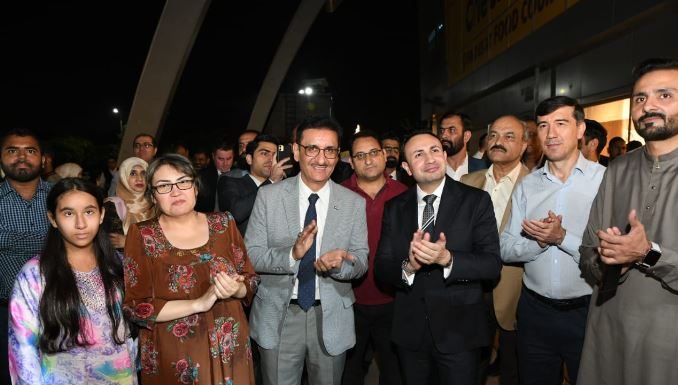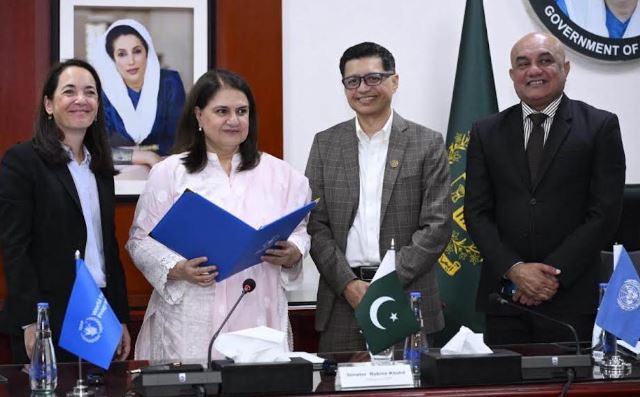
ISLAMABAD, OCT 19 /DNA/ – The Benazir Income Support Programme (BISP), UN Women and the World Food Programme (WFP) today signed a Joint Statement of Collaboration to strengthen the integration of gender equality and women’s empowerment into Pakistan’s largest social protection system for the women it serves not only as recipients of cash, but as rights-holders, decision-makers and economic actors.
With more than 10 million women receiving quarterly support under the Benazir Kafaalat Programme, BISP is one of the most powerful platforms in the country for reaching women directly. The partnership aims to turn that reach into lasting change: women who know and claim their entitlements, service centres designed around their dignity and safety, and clear pathways from social assistance to skills, livelihoods and financial independence.
Senator Rubina Khalid, Chairperson of BISP, said, “BISP is firmly committed to advancing gender-responsive social protection, promoting women’s economic empowerment, and making its services more inclusive and accessible to persons with disabilities. Our collaboration with UN Women and WFP will help ensure that social protection services are safe, accessible and responsive to the needs of women and vulnerable communities.”
She further added, “Through integrated efforts, we will strengthen awareness of rights and entitlements, counselling, maternal and child health, and the quality of services at Benazir Nashonuma centres. We will also promote women’s skills development, livelihoods, entrepreneurship, and financial and digital inclusion, while supporting the safety of women frontline staff and encouraging shared responsibilities within families. By harmonizing our efforts and strengthening institutional coordination, we aim to achieve better outcomes, expand opportunities for women’s economic self-reliance, and make life easier for BISP beneficiaries across Pakistan”
Mr. Jamshed M. Kazi, Country Representative of UN Women Pakistan, said, “Social protection is one of the most powerful tools a country has to advance gender equality, when it is designed with women and not only for them. Pakistan has built one of the largest cash transfer programmes for women anywhere. Our shared ambition is to see this system, reaching millions of women, go beyond financial assistance to strengthen their voice, their safety and their economic choices, while engaging men and families as partners in that change.”
Ms Anita Hirsch, WFP Representative and Country Director in Pakistan, said, “Good nutrition is closely linked to women’s health, well-being and ability to make decisions for themselves and their families. Through the Benazir Nashonuma Programme, WFP and BISP have established an important platform to support women and young children during a critical stage of life. Our collaboration with UN Women will build on this foundation by strengthening gender-responsive services, addressing barriers women face when accessing support, and ensuring that their dignity, safety and needs remain central to programme delivery.”
The collaboration contributes directly to Pakistan’s commitments under the Sustainable Development Goals on ending poverty (SDG 1), zero hunger (SDG 2) and gender equality (SDG 5), and to the UN Sustainable Development Cooperation Framework for Pakistan.