By Shamim Shahid
An important contribution to documenting Afghanistan’s recent history, the book reflects the cultural heritage of Khost, the challenges of post-war reconstruction, and the role of inclusive governance in promoting peace and national unity.
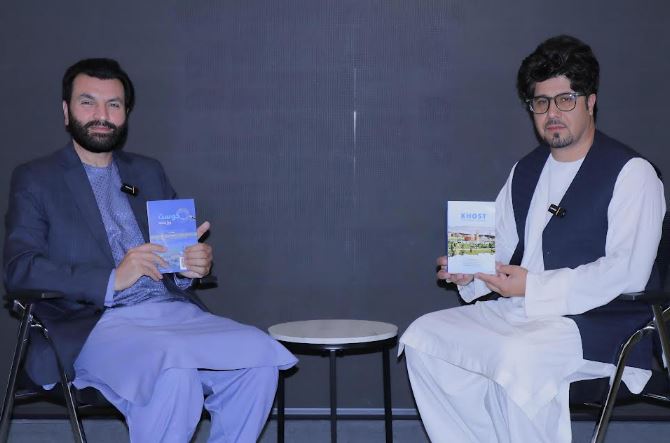
PESHAWAR: Introduction to Khost is a significant literary and historical contribution associated with Abdul Jabbar Naeemi, a prominent Afghan political and social figure who served as governor of four provinces during Afghanistan’s republican era. The book offers readers an insight into the history, cultural traditions, social structure, development initiatives and challenges faced by the people of Khost, one of Afghanistan’s strategically important southeastern provinces.
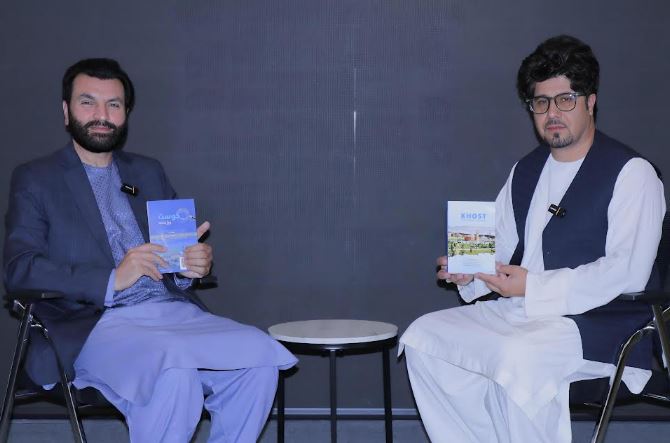
Naeemi, who hails from Panjwayi district of Kandahar province, established his reputation as an administrator and advocate of reconstruction, public participation and institutional development during his years of public service. His administrative career included governorships in Maidan Wardak, Khost, Laghman and Kunduz, four provinces that experienced considerable security, political and developmental challenges.
His first gubernatorial assignment was in Maidan Wardak, where he worked to restore public administration, strengthen government institutions, improve security coordination and promote reconstruction in a province severely affected by decades of conflict.
He subsequently served as governor of Khost, a strategically located province bordering Pakistan’s North Waziristan region. His tenure there was marked by efforts to strengthen relations between the government and local communities, encourage tribal reconciliation, expand educational opportunities and implement development projects.

Naeemi later served as governor of Laghman in eastern Afghanistan and Kunduz in the northeast, continuing his emphasis on administrative reform, infrastructure development, public consultation and community engagement.
Khost: A Province of Strategic and Cultural Importance
Khost occupies a distinctive position in Afghanistan’s history because of its geographical location, tribal composition, cultural diversity and longstanding traditions of community consultation.
Despite decades of conflict, the people of Khost have preserved a rich heritage of hospitality, tribal solidarity, poetry, traditional gatherings and collective decision-making.
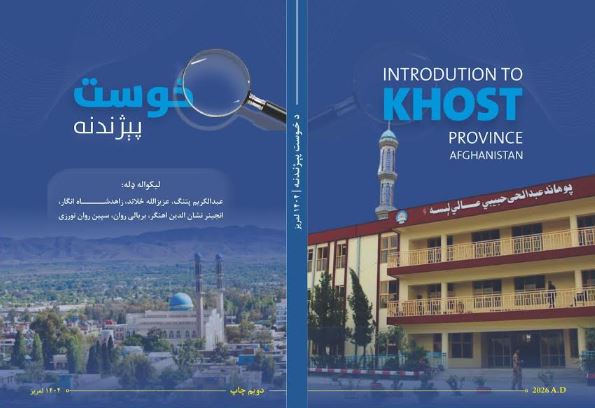
Recognizing the importance of documenting this heritage, Naeemi initiated efforts during his governorship to bring together local writers, researchers, intellectuals and cultural figures to compile a comprehensive account of the province.
The project benefited from the contributions of several respected writers and researchers, including Abdul Karim Patang, Azizullah Zaland, Zahid Shah Angar, Engineer Nishanuddin Ahangar, Baryalai Rawan, Spin Rawan Noorzai and Farhad Roghaniwal.
Their collective work sought to preserve valuable information about Khost’s history, geography, tribal traditions, social institutions and cultural identity for future generations.
The book also benefited from the support of individuals committed to preserving Afghanistan’s literary and historical heritage, including Noor Sabir Sabari, currently residing in Canada, who contributed to efforts associated with the publication and promotion of the work.
Development, Reconstruction and Public Administration
One of the notable aspects of the book is its account of development and reconstruction efforts undertaken during a period when Afghanistan faced persistent insecurity, limited resources and institutional challenges.
During his tenure in Khost, Naeemi worked with government institutions, local communities and international development partners to advance projects involving roads, education, public facilities, administrative infrastructure and community development.
His administration maintained engagement with international organizations and visiting delegations, including representatives associated with the United Nations, European institutions and the World Bank.
The book provides an opportunity to understand not only the achievements of reconstruction efforts but also the difficulties encountered in implementing development projects in a conflict-affected environment.
It draws attention to the importance of administrative leadership, institutional coordination, public accountability and cooperation between local communities and government authorities.
Equally significant is its recognition that sustainable development cannot be achieved through physical infrastructure alone. Public confidence, access to justice, educational opportunities and meaningful community participation are equally essential for lasting progress.
Tribal Reconciliation and Participatory Governance
Another important theme is the role of traditional consultation and reconciliation in addressing longstanding disputes among communities.
Khost is home to numerous tribes and communities whose social relationships have historically been shaped by customary institutions, tribal councils and local traditions.
During his governorship, Naeemi placed considerable emphasis on direct engagement with tribal elders, religious scholars, youth representatives and other community leaders.
Through consultative meetings, traditional jirgas and reconciliation initiatives, his administration sought to address disputes, strengthen cooperation and prevent local disagreements from developing into prolonged hostilities.
These experiences demonstrate the potential value of combining traditional mechanisms of consultation with formal government institutions.
The book highlights the importance of listening to public concerns, respecting local customs and encouraging communities to participate in decisions affecting their future.
Such an approach offers useful lessons for Afghanistan, where decades of conflict have weakened trust between citizens and governing institutions.
Preserving Cultural Heritage and Religious Diversity
Beyond development and administration, Introduction to Khost places considerable importance on the province’s cultural and social heritage.
The book explores traditional poetry gatherings, locally known as mushairas, cultural celebrations, community events and other expressions of Afghan identity.
These traditions have historically played an important role in strengthening social relationships, promoting mutual respect and preserving cultural values.
Attention is also given to the protection of religious and historical sites, including mosques, religious institutions and places associated with minority communities.
Khost, like several other Afghan provinces, has a history of Hindu and Sikh communities whose presence contributed to the region’s social and commercial life.
Many families from these communities were displaced during successive periods of war and instability.
During his governorship, Naeemi emphasized the importance of safeguarding the properties and rights of religious minorities, recognizing that respect for all communities is an essential principle of responsible governance.
This aspect of the book conveys a broader message: Afghanistan’s cultural and historical identity is enriched by its diversity, and the protection of that heritage is a shared national responsibility.
Education, Youth Development and Sports
The book also reflects Naeemi’s commitment to education and youth development.
Recognizing that young people represent Afghanistan’s greatest potential for long-term stability and progress, his administration encouraged educational expansion, community involvement in schooling and greater participation in sports.
Efforts were made to improve educational facilities and promote access to learning opportunities across the province.
Sports development also received attention through initiatives supporting playgrounds, stadiums and recreational facilities.
Naeemi encouraged young people to participate in organized sporting activities, viewing sports as an effective means of promoting discipline, cooperation, confidence and social unity.
Public gatherings, youth consultations and sporting events provided opportunities to bring together people from different backgrounds and strengthen their sense of shared identity.
These initiatives reflected the belief that rebuilding a country requires investment not only in roads and buildings but also in the education, character and aspirations of its younger generations.
A Historical Record for Future Generations
An important contribution of Introduction to Khost is its effort to preserve the experiences of a critical period in Afghanistan’s recent history.
The book goes beyond presenting a record of individual development projects. It brings together historical information, cultural observations, administrative experiences and accounts of cooperation between public institutions and local communities.
It also acknowledges the obstacles and difficulties that accompanied efforts to restore stability and improve public services in a province affected by prolonged conflict.
Such documentation is particularly valuable for researchers, students, historians, policymakers and younger Afghans seeking to understand the achievements, limitations and lessons of the country’s reconstruction period.
The preservation of these experiences is essential at a time when many institutional records, historical documents and firsthand accounts remain vulnerable to loss or neglect.
A Message of Peace, Understanding and National Unity
For Naeemi, the publication represents more than a literary or historical undertaking. It is also an appeal for reconciliation, cooperation and peaceful coexistence among Afghans.
Having witnessed the consequences of conflict, displacement, political instability and social divisions, he believes that Afghanistan’s future must be built upon mutual respect, public participation and a shared commitment to national interests.
The book avoids making political rivalry its central theme. Instead, it emphasizes the importance of dialogue, reconciliation, cultural preservation and constructive engagement among communities.
Naeemi and his fellow contributors seek to remind readers that Afghanistan possesses a rich history, resilient communities and valuable traditions capable of supporting peace and national reconstruction.
Their message is particularly relevant to a country whose people have endured decades of war, foreign intervention, internal divisions and repeated displacement.
The authors encourage Afghans to move beyond destructive rivalries and recognize the importance of cooperation, tolerance and national solidarity.
Conclusion
Introduction to Khost stands as a valuable contribution to the documentation of Afghanistan’s provincial history, cultural identity and experiences of reconstruction.
By bringing together historical research, local traditions, development initiatives and lessons from public administration, the publication provides readers with a broader understanding of Khost and its people.
It also reflects an important principle: the true measure of public service lies not merely in holding office but in the institutions strengthened, opportunities created, communities united and positive contributions preserved for future generations.
At a time when Afghanistan continues to face profound political, economic and social challenges, publications of this nature can help preserve the country’s collective memory and encourage thoughtful reflection on its future.
Ultimately, the book delivers a message that extends well beyond Khost: lasting peace, national dignity and sustainable development depend upon education, mutual understanding, accountable governance and the collective determination of the Afghan people to build a better future.