KARACHI, OCT 9 /DNA/ – Qurat-ul-Ain, Vice President of the Federation of Pakistan Chambers of Commerce & Industry (FPCCI), has called for stronger economic integration among Islamic countries through enhanced trade, investment, joint ventures, tourism and business connectivity, saying that the combined economic potential of 57 Muslim countries offers enormous opportunities for employment, investment and sustainable development.
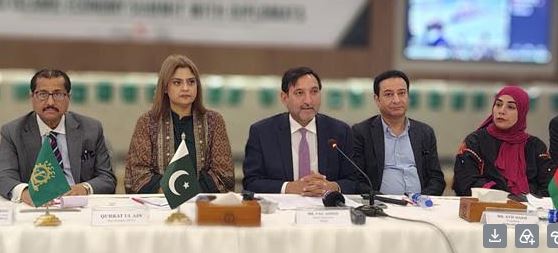
Addressing the FPCCI Islamic Economy Summit with Diplomats, which she presided over, she said Islamic countries should move beyond traditional bilateral trade and develop a more integrated economic partnership based on business-to-business linkages, joint ventures, investment partnerships, technology exchange and improved connectivity.
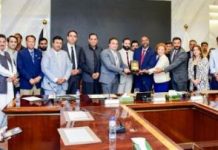
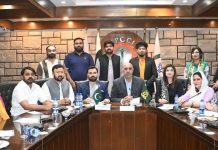
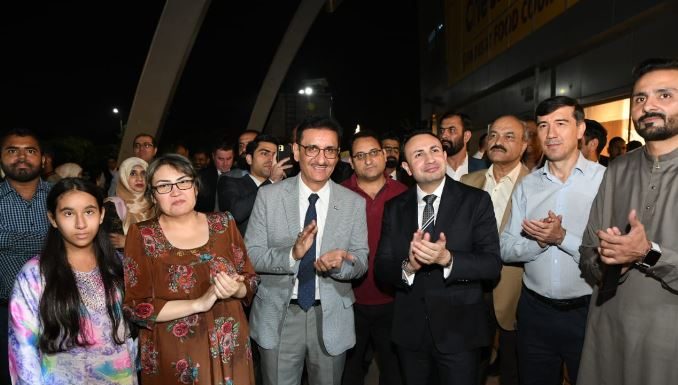
The Summit was held under the theme “Promoting Islamic Economic Integration through Bilateral and Multilateral Cooperation for Community Development” and was attended by Consuls General, Commercial Counsellors and representatives of Islamic countries, business leaders, financial institutions, academia and other stakeholders.
Chief Guest Faiz Ahmed, Chief Executive, Trade Development Authority of Pakistan (TDAP), said that the government would fully support efforts to strengthen economic cooperation among Muslim countries, stressing that trade among Islamic countries must become a key focus. He said Pakistan needed to further strengthen its economic linkages with Muslim countries and enhance trade and business connectivity with OIC member states. He emphasised the importance of creating an enabling environment for increased trade, investment and private-sector cooperation among Islamic economies. Referring to intra-OIC trade, he said trade among OIC member countries had reached around US$1 trillion in 2024, compared with US$884 billion in 2023. He noted that intra-OIC trade accounted for around 20.36 percent of total foreign trade of OIC countries in 2024, while the OIC has set a target of 25 percent.
Dr. Mirza Ikhtiar Baig, MNA, said Pakistan possessed significant potential to become a major exporter of halal food, meat, pharmaceuticals, cosmetics and other halal-certified products to Muslim markets. He said Pakistan’s established textile and garment industry could further expand exports to Islamic countries through competitive pricing, better branding, value addition and compliance with international and halal standards. He also highlighted opportunities in rice, fruits, vegetables, seafood, meat, livestock and processed food, particularly in Gulf markets, as well as pharmaceuticals and healthcare products in developing Muslim countries. He stressed the need to improve international certifications, regulatory compliance and branding to capture a greater share of these markets.
Sheikh Yousef Hassan Khalawi, Secretary General of the Islamic Chamber of Commerce and Development (ICCD), emphasised the need to promote economic connectivity and economic tourism through innovative approaches. He stressed the importance of stronger institutional and private-sector cooperation to transform the economic potential of Islamic countries into practical business opportunities.
Ahmed El Wakil, Vice President, ICCD and President, Bank Al Baraka, highlighted the role of Islamic financial institutions in facilitating investment, trade and economic partnerships among Islamic countries, stressing the importance of developing financial mechanisms to support businesses and cross-border investment.
Muhammad Irfan Ahmed, Head of Shariah Compliance, BankIslami, highlighted the growing importance of Shariah-compliant financial instruments in supporting trade, investment, SMEs and productive sectors of the economy.
Prof. Dr. Irum Saba of IBA shared her perspectives on Islamic finance, financial inclusion and the need to strengthen knowledge, research and human capital to support the development of a modern Islamic economic ecosystem.
Ambassador Fawad Sher, Permanent Representative of Pakistan to the OIC, and Irfan Soomro, Director General, Ministry of Foreign Affairs, stressed that Islamic countries possess complementary resources, markets, investment opportunities and human capital, but stronger institutional mechanisms are required to connect these strengths. They highlighted the potential for greater cooperation in trade facilitation, investment, Islamic finance, agriculture and food security, tourism, technology, education and business mobility.
The Summit, attended by representatives of diplomatic missions from Afghanistan, Azerbaijan, Bangladesh, Oman, Maldives, Iran, Indonesia, Côte d’Ivoire, Malaysia, Thailand, Mauritius, Türkiye, the UAE, Sri Lanka, Uzbekistan and Jordan, also emphasised the importance of developing joint ventures and regional value chains, particularly in halal food, agriculture and agro-processing, textiles and garments, pharmaceuticals, technology, energy, tourism, logistics and manufacturing.
FPCCI reiterated its commitment to providing a platform for government institutions, diplomatic missions, chambers of commerce, financial institutions, academia and the private sector to identify practical opportunities and develop follow-up mechanisms for stronger economic engagement with Islamic countries.
The Summit concluded with a call for translating dialogue into concrete trade and investment initiatives, business linkages and joint ventures, with greater participation of the private sector in shaping a stronger and more integrated Islamic economic partnership.