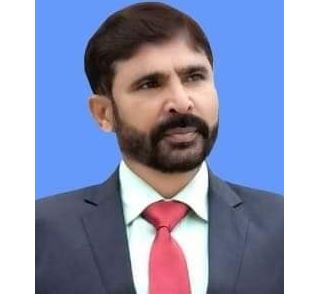
Dr. Muhammad Akram Zaheer
Pakistan’s political crisis is no longer simply a contest between the Pakistan Muslim League-Nawaz (PML-N) and the Pakistan Tehreek-i-Insaf (PTI). The confrontation between the two major political forces has gradually produced a wider struggle over parliamentary authority, political space, institutional legitimacy and the future direction of the democratic process. In this increasingly complicated environment, the Pakistan Peoples Party (PPP) and Jamiat Ulema-i-Islam-Fazl (JUI-F) occupy important, though very different, positions.
The PML-N leads the federal government and depends on the PPP for parliamentary support. At the same time, the PTI remains the principal opposition force and is preparing another major political mobilisation. The JUI-F, meanwhile, has moved closer to the opposition on several national issues without necessarily becoming a permanent political extension of the PTI. This fluidity illustrates a familiar feature of Pakistani politics: alliances are often shaped by immediate political circumstances rather than permanent ideological divisions.
The latest tensions between the PML-N and PTI have emerged against the backdrop of Imran Khan’s continuing imprisonment and the PTI’s announced protest march towards Islamabad on September 27. The government has expressed concern about possible violence, while PTI leaders have framed the mobilisation around political rights and Khan’s release. The arrest of Aleema Khan ahead of the planned protest has added another dimension to the confrontation. Reuters reported that the authorities ordered her detention for 30 days, citing concerns about public safety, while the PTI condemned the action. Such developments demonstrate how quickly political disagreement can turn into a confrontation between the government and opposition. When political competition moves from parliament to streets, the space for negotiation becomes narrower. The danger is not merely that one protest may become disorderly; the larger concern is that repeated confrontation can weaken parliament as the principal arena for settling political disputes.
This is where the PPP’s position becomes significant. The party is formally supporting the PML-N-led federal government, which has a two-thirds majority in the National Assembly with PPP backing. Yet relations between the coalition partners have recently been strained. The PPP has complained about inflation, petroleum prices, the agricultural crisis, load-shedding and delays in local government elections. The PML-N, in turn, has accused the PPP of behaving more like an opposition party while remaining part of the governing arrangement. The PPP therefore faces a difficult political calculation. Remaining outside the government could deprive it of influence at the federal level, while remaining inside it exposes the party to responsibility for unpopular government decisions. Its recent disagreements with the PML-N suggest that the coalition is based less on political harmony than on the practical necessity of maintaining parliamentary stability.
The JUI-F presents a different picture. Maulana Fazlur Rehman has repeatedly criticised government policies while maintaining political independence from both the PML-N and PTI. In August, JUI-F participated in a joint opposition parliamentary meeting, where opposition parties agreed to coordinate on issues including economic difficulties, political restrictions and law and order. More recently, the JUI-F agreed to participate in a multi-party conference being organised by the PTI ahead of its planned long march. The meeting between PTI leaders and Maulana Fazlur Rehman indicated the possibility of cooperation on selected national issues. Yet participation in an opposition conference does not necessarily mean that JUI-F has abandoned its independent political identity. Fazlur Rehman’s latest statements underline this distinction. On September 22, he criticised the government’s preparations to restrict movement in Islamabad and argued that parliament should be taken into confidence on major national and foreign-policy questions. He also called for an in-camera parliamentary session on the regional security situation.
The emerging political landscape is therefore more complicated than a simple government-versus-opposition divide. The PML-N needs the PPP to sustain its parliamentary arrangement. The PTI needs broader political cooperation if it wants its street mobilisation to acquire a wider parliamentary dimension. The JUI-F can engage with the PTI on selected issues while retaining room to negotiate independently. Meanwhile, the PPP can criticise the government from within the coalition without necessarily abandoning it. This shifting pattern of alliances carries an important lesson. Political parties may disagree strongly on leadership, elections, governance and institutional questions, but democratic politics requires mechanisms through which disagreements can be contained within constitutional institutions. The recent participation of PML-N, PPP, PTI and JUI-F representatives in parliamentary discussions on issues such as provincial restructuring shows that political dialogue remains possible despite deep divisions.
Pakistan does not need another cycle in which political competition produces institutional paralysis, street confrontation and prolonged uncertainty. Nor can political differences be permanently resolved through administrative restrictions or the exclusion of one political force from the political process. The responsibility rests with all major parties. The PML-N must recognise that governing a coalition requires continuous consultation. The PPP must decide how it can support the government while retaining an independent political voice. The PTI must determine how its opposition strategy can be pursued through constitutional and parliamentary channels alongside public mobilisation. And the JUI-F’s role will remain important precisely because it has demonstrated an ability to communicate with competing political camps.
The central question for Pakistan is therefore not which party can defeat the other in the next confrontation. It is whether the country’s political leadership can transform confrontation into negotiation. Without such a shift, every new disagreement will produce another political crisis. With meaningful parliamentary dialogue, even deep differences between the PML-N, PTI, PPP and JUI-F can remain part of democratic competition rather than becoming another source of instability.
Dr. Muhammad Akram Zaheer
Assistant Professor Imperial College of Business Studies Lahore