ISLAMABAD, SEP 6 /DNA/ – Pakistan’s ability to address its complex national and international challenges depends on stronger institutions, improved governance, evidence-based policies, and effective implementation. At the same time, the country needs to anticipate opportunities in technology, agriculture, maritime affairs, regional connectivity, and its evolving strategic environment while addressing persistent social and economic concerns.
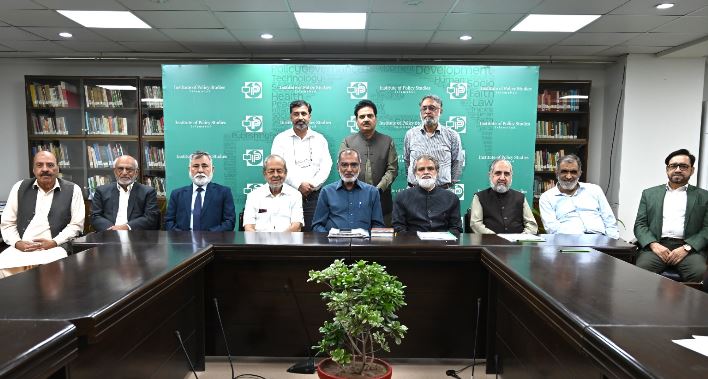
These issues were discussed at the annual meeting of the National Advisory Council (NAC) of the Institute of Policy Studies (IPS), where scholars, policymakers, diplomats, technocrats, and practitioners stressed the need for forward-looking, practical, sustainable, and actionable approaches to Pakistan’s future.
Chaired by Khalid Rahman, chairman, IPS, and moderated by Amb (r) Syed Abrar Hussain, vice chairman, IPS, the session also provided intellectual input to IPS’s research agenda.
The forum was addressed by Justice Dr. Syed Muhammad Anwer, judge, Federal Shariat Court, Dr Anis Ahmad, VC, Riphah International University; Amb (r) Sardar Masood Khan, former president, AJK; Lt Gen (r) Hidayat ur Rehman, chairman, AJK Public Service Commission; Owais Ahmed Ghani, former governor Khyber Pakhtunkhwa; Prof Dr Qibla Ayaz, former chairman, Council of Islamic Ideology; Vice Admiral (r) Iftikhar Ahmed Rao; Syed Abu Ahmad Akif, former federal secretary; Dr Syed Kaleem Imam, former federal secretary and IG police; Amb (r) Masood Khalid; Prof Dr Mukhtar Ahmed, former chairman, HEC; Dr Syed Tahir Hijazi, former member (governance), Planning Commission of Pakistan; Prof Dr Anwar ul Hassan Gilani, former chairman, Pakistan Council for Science and Technology; Dr Syed Muhammad Junaid Zaidi, former rector, COMSATS University; Dr Masood Mehmood Khan, Curtin University, Australia; Prof Dr Saima Hamid, former VC, Fatima Jinnah Women University; Prof Dr Asad Zaman, former VC, Pakistan Institute of Development Economics; Amb (r) Maj Gen (r) Dr Noel Khokhar; Naufil Shahrukh, policy analyst and CEO MuComm; and Dr Naveed Butt, former department head, Federal Government Services Hospital.
The session opened with the observation that the post-9/11 world had undergone profound transformations, while Pakistan continued to face governance, economic, climate, and security challenges.
On governance, participants argued that these problems cannot be resolved merely by creating new provinces or redrawing administrative boundaries. They stressed bringing governance closer to citizens, strengthening metropolitan and local institutions, reducing political interference, and establishing transparent mechanisms for decision-making and service delivery. Charter cities were also discussed as a possible response to rapid urbanization and its associated challenges, subject to political commitment and appropriate institutional arrangements.
Agriculture was highlighted for its role in the economy, exports, employment, and food security. Participants discussed dependence on imports, particularly edible oil, and called for improved water and irrigation management, better crop planning, farmer support, regulation of agricultural inputs, action against smuggling, and more efficient value chains.
The closely related issues of nutrition and food security also received attention, with proposed measures including biofortification, food fortification, kitchen gardening, school feeding, stronger food standards, and coordinated action across sectors.
On the rapidly evolving landscape of IT and AI, participants called for a coherent national AI roadmap, stronger data architecture, interoperable public digital infrastructure, affordable computing, indigenous language and domain-specific AI capabilities, and practical ethical frameworks suited to Pakistan’s needs.
Pakistan’s maritime potential and its strategic and economic significance also came under discussion. Participants highlighted the limited role of domestic shipping and stressed the need to strengthen national and private-sector shipping capacity. Progress on Maritime Task Force recommendations was noted, with emphasis on implementation, institutional accountability, and a renewed national shipping policy.
Regarding the realm of international relations and strategic affairs, participants stressed moving beyond policy formulation towards practical, costed, and measurable implementation. They highlighted the changing global order, Pakistan’s regional and maritime potential, balanced relations with major powers, and deeper engagement with the Middle East, Central Asia, and Afghanistan.
Education was identified as another area requiring stronger implementation and institutional reform. The discussion emphasized consultation, decentralization, institutional cooperation, and a collective approach while cautioning against excessive centralization and institutional interference.
Participants also examined the institution of the family amid changing social conditions, rising family disputes, generational gaps, migration, and evolving expectations. They called for stronger research, parenting programs, marital counselling, youth and women’s engagement, and family-sensitive legislation.
The forum also considered the need for approaches rooted in Pakistan’s own intellectual and cultural context, with participants calling for a shift away from inherited colonial and Eurocentric frameworks towards approaches rooted in Islamic thought. Islamic banking was similarly discussed in terms of advancing beyond formal interest-free arrangements towards broader social and economic objectives.
In conclusion, the session emphasized that Pakistan’s future depends on anticipating emerging trends, building institutional capacity, and converting knowledge into workable solutions.