DNA
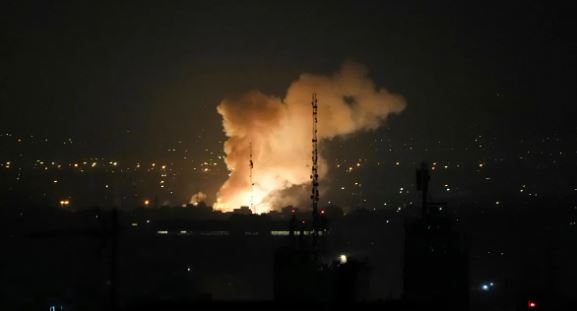
WASHINGTON: US forces struck two rocket launchers on Iran’s Larak Island on Sunday, a US official said, marking the first known American strikes on the Islamic republic since late July.
The small Iranian island in the Strait of Hormuz near the strategic port of Bandar Abbas overlooks shipping lanes at the mouth of the Gulf, giving it a key role in tension over Iran, maritime security and global energy supplies.
Iran responded by launching an attack on two US bases in Jordan, Iranian media said.
Iran’s Revolutionary Guards shot down a US MQ-9 drone over the Strait of Hormuz with air defense missiles, causing it to crash into Gulf waters, the Mehr news agency reported on Monday, citing an IRGC statement.
Trump says Kharg Island is under attack but no confirmation
Trump late on Sunday night posted a one-line social media post saying Iran’s crucial energy hub of Kharg Island is being “blown to smithereens!!!”
The post was accompanied by an AI-generated video clip.
There was no other indication that the Iranian energy hub, which is hundreds of kilometers away from Larak Island, was also under attack.
The White House and the US Defense Department did not immediately respond to requests for comment. Iran had no immediate response to Trump’s post.
UAE deals with Iranian drone
The UAE defense ministry said in a statement that air forces “dealt with a drone over the state’s territorial waters coming from Iran.”
“The country’s armed forces are on high alert and readiness to address all threats, and that air defense systems continue their tasks in monitoring and tracking the airspace around the clock,” the statement added, and urged the public to obtain news from official channels.
The defense ministry also denied that Al-Minhad Air Base was targeted with missiles, saying circulating media reports were unfounded.
Anwar Gargash, diplomatic adviser to the UAE president, meanwhile said on a social media post that the policy of targeting Gulf Arab states and Jordan “has proven to be a failure”.
“The state of neither war nor peace cannot be a sustainable solution … What is needed today are realistic and sustainable political solutions that address the political and economic dimensions of the crisis, beginning with overcoming the escalation and returning navigation in the Strait of Hormuz to its normal state,” he said.
What was needed, according to Gargash, was “extending to a more realistic approach that goes beyond the memorandum of understanding that failed to outline a practical and acceptable roadmap.”