
Daily Islamabad POST/CENTRELINE/DNA News Agency
Q: Excellency, as you prepare to conclude your assignment in Pakistan, how would you summarize the overall trajectory of Azerbaijan–Pakistan relations during your five-year tenure?
A: It has been an extraordinary journey. When I arrived in Islamabad in 2021, our relations were already strong, rooted in shared history, values, and mutual support. But over the past five years, we elevated this partnership to unprecedented heights.
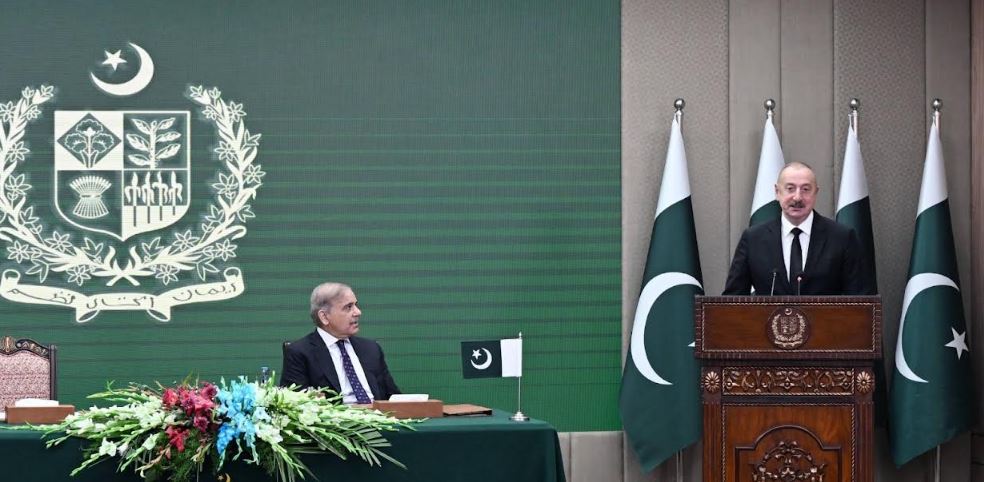
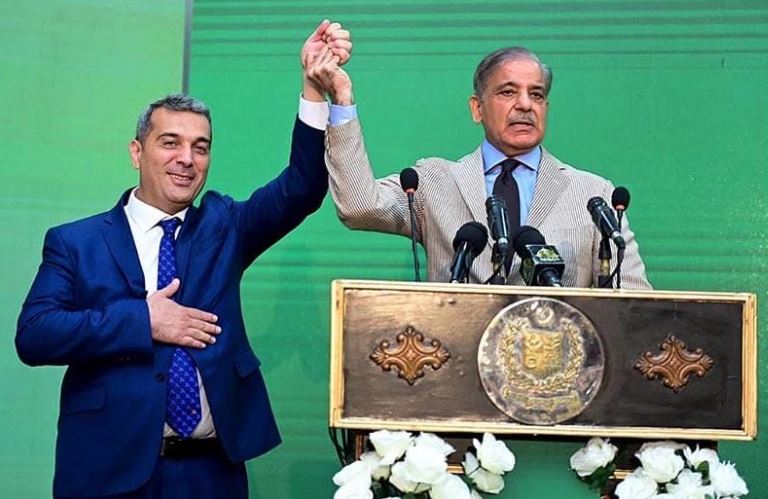
We witnessed seven mutual visits at the leadership level, including Presidents and Prime Ministers, which provided direct executive directives to both governments. Six parliamentary exchanges further strengthened legislative cooperation, and for the first time, a Pakistani provincial Chief Minister visited Azerbaijan, expanding ties into regional economic hubs. These engagements institutionalized our political dialogue and created a momentum that will continue to shape our future.
Q: Defense and military cooperation has been a defining feature of Azerbaijan–Pakistan ties. What milestones stand out most to you?
A: Defense cooperation has indeed transformed into a strategic partnership. Between 2021 and 2026, we saw a remarkable number of high-level military exchanges, including visits by Defense Ministers, Chiefs of Army Staff, Chiefs of General Staff, and Air Force and Navy Commanders. Joint exercises were historic: Three Brothers-2021 in Baku marked the first trilateral drills of Azerbaijan, Pakistan, and Türkiye Special Forces. Pakistan hosted Indus Shield in 2023 and 2024, with Azerbaijani contingents actively participating. In 2025, Azerbaijan hosted Indus Shield Alpha for the first time, symbolizing our growing confidence in joint operations.
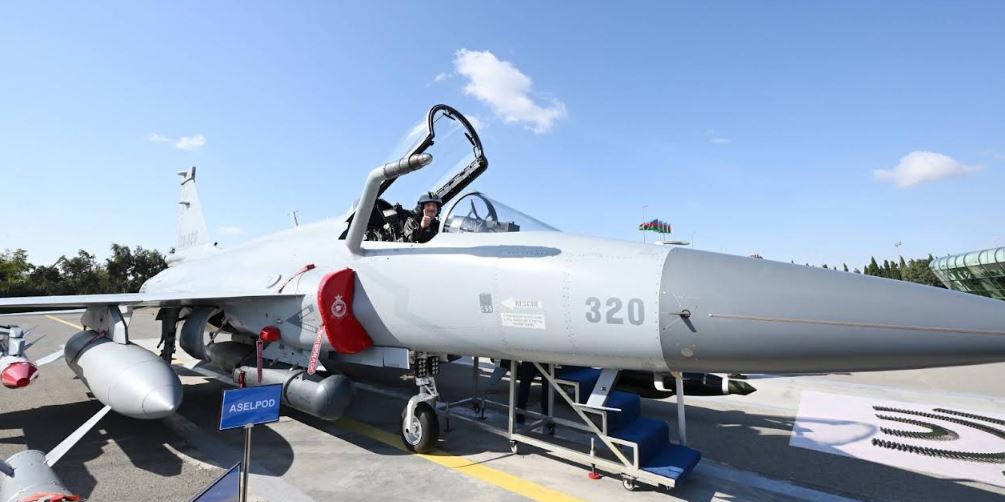
Our armed forces also participated in each other’s national parades. Azerbaijani Commando and Military Band units marched in Pakistan’s National Day Parades in 2022, 2024, and 2025, while Pakistani contingents proudly marched in Baku during the 5th anniversary of Azerbaijan’s Victory Day in November 2025, accompanied by a live aerial display of Pakistani JF-17 Thunder fighter jets. The induction of JF-17s into Azerbaijan’s arsenal was a historic milestone, reflecting trust and shared defense production goals. These steps symbolize not only military cooperation but also strategic brotherhood.
Q: Economically, what breakthroughs were achieved during your tenure?
A: The economic dimension of our relations witnessed a quantum leap. Bilateral trade volume rose from USD 11 million to hundreds of millions, driven largely by defense industry products and strategic commodities such as LNG, urea, sugar, and defense equipment. In 2024, our President announced a USD 2 billion investment package into commercially viable sectors of Pakistan’s economy. SOCAR has since launched active operations, and the groundbreaking ceremony for the White Oil Pipeline will take place soon.
We also established crucial legal frameworks by signing the Preferential Trade Agreement (PTA) and the Transit Trade Agreement (TTA). Institutional mechanisms were strengthened with the creation of the Azerbaijan–Pakistan Joint Chamber of Commerce and Industry in Islamabad and the opening of the Azerbaijan Trade House in Lahore. These initiatives ensure that our economic cooperation is not episodic but institutionalized and sustainable.
Q: People-to-people connectivity often defines the strength of relations. How did this evolve during your tenure?
A: People-to-people ties flourished. After nearly three decades, we restored direct air connectivity, with 11 weekly flights operated by AZAL, PIA, and Airblue connecting Baku with Islamabad and Lahore. This facilitated travel, tourism, and business exchanges. Pakistani travelers to Azerbaijan reached approximately 92,000 in 2025, with projections to cross 100,000 by the end of 2026.
We also exported our ASAN public service model to Pakistan, with the construction of the ASAN Service Center in Islamabad. Sister-city agreements expanded beyond the historic Ganja–Multan partnership to include Baku–Islamabad and Nakhchivan–Lahore. These initiatives brought our peoples closer, fostering cultural understanding and practical cooperation.
Q: Education and culture have been vibrant areas of cooperation. Could you elaborate on the progress made?
A: Education and culture are the bridges that connect societies. Over the past five years, the number of Pakistani students studying in Azerbaijan surged from 100 to 2,000. We signed operational roadmaps and agreements between leading universities and think tanks, including ADA University, Baku State University, Quaid-i-Azam University, NUST, NUML, GCU Lahore, and IQRA National University.
Cultural centers were established to deepen mutual understanding: the Heydar Aliyev Auditorium at NUST, the Azerbaijan Language and Culture Center at NUML, and the joint Azerbaijan–Urdu Science Center at GCU Lahore. We renovated the Azerbaijan Studies Center at the National Library of Pakistan and the Nizami Ganjavi Corner at the National Book Foundation. Language studies also expanded, with Urdu taught at Baku State University and the Pakistan Center inaugurated at the Azerbaijan University of Languages. These initiatives ensure that our youth and scholars remain connected, fostering long-term friendship.
Q: Trilateral cooperation with Türkiye has been a recurring theme. How do you assess its impact?
A: Azerbaijan, Pakistan, and Türkiye share a unique bond, often described as a “strategic brotherhood.” During my tenure, trilateral cooperation was elevated to the highest level. Leaders of the three countries held three trilateral summits in Astana, Lachin, and Baku. Parliament speakers also conducted three trilateral meetings. Joint military parades and exercises further cemented this partnership. This trilateral format is not only symbolic but also practical, creating a framework for regional stability and collective security.
Q: Nearly 40 agreements were signed during your tenure. What does this signify for the future of bilateral relations?
A: The signing of nearly 40 agreements across diverse sectors—economy, trade, investment, defense, culture, education, tourism, sister cities, law, justice, and public services—represents the institutionalization of our cooperation. These agreements ensure that our partnership is governed by clear legal frameworks, making it resilient and future-oriented. They provide a roadmap for continuity, regardless of political changes, and reflect the seriousness with which both nations approach their relationship.
Q: Finally, what legacy do you believe you leave behind as Ambassador of Azerbaijan to Pakistan?
A: I believe the legacy is one of institutionalized cooperation, strategic trust, and people-to-people bridges. During my tenure, we elevated relations to a historic level, creating frameworks that will endure. Azerbaijan and Pakistan are now closer than ever, not only as partners but as brothers. I am confident that this partnership will continue to flourish, guided by mutual respect, shared values, and a vision for collective prosperity.










)