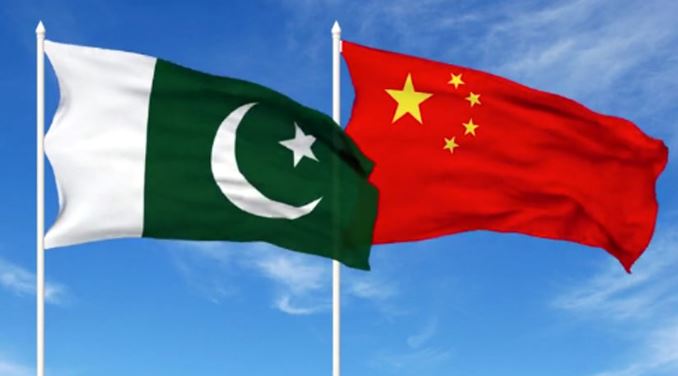
ISLAMABAD, 24 JUN (DNA) — Pakistan has emphasized the need to advance China–South Asia economic cooperation from traditional trade relations toward deeper industrial partnerships during the 2026 Belt and Road Trade and Investment Forum, held in Beijing under the theme “Creating the New Pattern for a Shared Future.”
Mr. Atif Ikram Sheikh, Vice President of the SAARC Chamber of Commerce and Industry (Pakistan Chapter) has reaffirmed Pakistan’s commitment to the Belt and Road Initiative (BRI), describing the country as a key partner in promoting regional connectivity, trade, investment, and economic integration across South Asia.
He noted that the China-Pakistan Economic Corridor (CPEC), the flagship project of the Belt and Road Initiative, has significantly contributed to Pakistan’s infrastructure development, energy security, industrialization, and regional connectivity. He emphasized that the next phase of Belt and Road cooperation presents tremendous opportunities for businesses across South Asia through enhanced industrial partnerships, value-added manufacturing, skills development, and investment cooperation.
The 2026 Belt and Road Trade and Investment Forum was held in Beijing under the theme “Creating the New Pattern for a Shared Future.” The Forum comprised two high-level panel sessions, focusing on “Centering on Infrastructure and Public Welfare, Jointly Building High-Quality Inter-connectivity and Promoting Trade and Investment,” and “Advancing Global Cooperation and Development.”
Organized by the China Council for the Promotion of International Trade (CCPIT) and the China Chamber of International Commerce (CCOIC), the Forum brought together government officials, business leaders, chambers of commerce, and policymakers from across Asia and beyond to explore new avenues for trade, investment, connectivity, industrial cooperation, and innovation.
Speaking at the inaugural session, Mr. Chandi Raj Dhakal, President of the SAARC Chamber of Commerce and Industry (SAARC CCI), highlighted the remarkable progress achieved in China-South Asia economic relations and called for elevating cooperation from traditional trade relations to a deeper industrial partnership.
Representing nearly 1.8 billion people across South Asia, Mr. Dhakal noted that bilateral trade between China and South Asia surpassed US$200 billion for the first time in 2025 and continued to record robust growth during the first months of 2026. He stated that while these achievements demonstrate the strength of existing economic ties, there remains substantial untapped potential for greater industrial cooperation, value addition, and regional integration.
The President of SAARC CCI proposed a three-pillar framework for the next phase of China-South Asia cooperation. Firstly, he advocated promoting value addition through localized industrial cooperation and the establishment of specialized industrial zones across South Asia. Secondly, he called for upgrading cooperation from machinery trade to industrial partnerships through joint assembly, maintenance, and manufacturing ventures. Thirdly, he emphasized the importance of developing regional value chains by combining Chinese capital, technology, and innovation with South Asia’s youthful workforce, agricultural strengths, and expanding consumer markets.
Mr. Dhakal observed that the Belt and Road Initiative has already transformed South Asia through investments in ports, roads, energy projects, and connectivity infrastructure. He emphasized that the Initiative has now entered a new stage of high-quality development and that future cooperation should focus on industrial ecosystems, digital connectivity, skills development, innovation, and people-to-people partnerships.
The SAARC Chamber leadership expressed confidence that strengthened China-South Asia cooperation under the Belt and Road Initiative would pave the way for a new era of industrial development, innovation, economic integration, and shared prosperity across the region. On the sidelines of the Forum, the China International Supply Chain Expo (CISCE) is also being held in Beijing under the theme “Connecting the World for a Shared Future.”
Opened on June 22, 2026, the Expo has brought together global business leaders, manufacturers, innovators, and policymakers to showcase advancements in supply chain cooperation, industrial development, and technological innovation. Participants highlighted China’s growing role in global supply chains, commending the country’s transition from manufacturing strength to innovation-driven growth.— DNA